Fabergé Easter Eggs Are Renowned Masterpieces: History, Craftsmanship, and Legacy
An authoritative exploration of Fabergé Imperial Easter Eggs—their imperial patronage, technical virtuosity, documented provenance, surviving examples, and enduring cultural impact among collectors and museums worldwide.
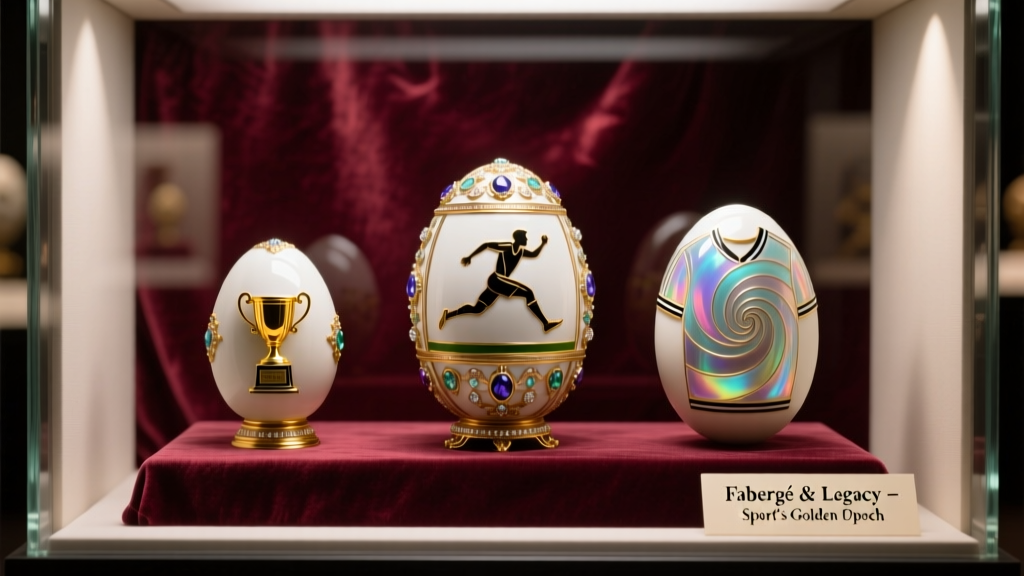
Fabergé Easter Eggs are among the most celebrated and technically extraordinary objects ever created in decorative arts history. Commissioned exclusively by the Russian Imperial family between 1885 and 1917, these jeweled masterpieces were not mere ornaments but intricate mechanical marvels—each containing hidden surprises, miniature portraits, functional clocks, or kinetic mechanisms engineered to perfection. Of the 50 Imperial Eggs commissioned, 43 survive today, with 10 held by the Kremlin Armory Museum in Moscow, 9 by the Virginia Museum of Fine Arts (VMFA), 6 by the Fabergé Museum in Saint Petersburg (founded by Viktor Vekselberg), and others scattered across institutions including the Metropolitan Museum of Art, the British Royal Collection, and private holdings. Measuring between 10 and 15 centimeters in height and weighing from 200 to over 1,200 grams, each egg required hundreds of hours of labor by master goldsmiths, enamelers, gem setters, and miniature painters under Peter Carl Fabergé’s exacting supervision.
The Imperial Patronage and Origins
The tradition began in 1885 when Tsar Alexander III commissioned the first Imperial Egg—the Hen Egg—as an Easter gift for his wife, Empress Maria Feodorovna. Deeply moved by its craftsmanship, she requested a new egg annually, establishing a royal custom that continued under Nicholas II. From 1885 to 1917, the House of Fabergé produced 50 Imperial Eggs—two each year after 1895, one for the Empress Dowager and one for the reigning Empress. The first 11 eggs were crafted under Alexander III; the remaining 39 under Nicholas II, who maintained the tradition despite mounting political turmoil and financial strain.
Each egg bore no inscription identifying its maker—a deliberate choice reflecting Fabergé’s philosophy that the work itself should speak for its creator. Yet every piece carried the Fabergé hallmark: a double-headed eagle crowned with three imperial orbs, alongside assay marks indicating purity (e.g., "84" for 56 zolotnik gold, equivalent to 88.8% purity) and the workshop mark of the responsible master goldsmith—such as Henrik Wigström (1862–1923), Michael Perchin (1853–1903), or Erik August Kollin (1836–1901). These marks, stamped in tiny script on inconspicuous surfaces like inner hinges or base rims, remain critical authentication touchpoints for modern experts.
Imperial Commissions and Budgetary Realities
Though often mythologized as extravagantly funded, Imperial Egg commissions were tightly budgeted. In 1898, Nicholas II allocated 4,000 rubles per egg—roughly equivalent to $20,000 USD in 2024 purchasing power—though costs occasionally exceeded this cap. The 1913 Winter Egg, for example, cost 24,600 rubles ($123,000 USD adjusted), reflecting its unprecedented scale and complexity: it featured 1,200 faceted rock crystal panels mounted on platinum, set with 1,400 diamonds, and housed a fully articulated, motorized miniature sleigh drawn by two horses. Such deviations underscored both Fabergé’s artistic latitude and the Tsar’s personal investment in sustaining the tradition.
Technical Mastery and Material Innovation
Fabergé’s workshops employed over 500 artisans at their peak in St. Petersburg, organized into specialized ateliers for enameling, gem setting, miniature painting, clockmaking, and metal chasing. Unlike conventional jewelers who outsourced components, Fabergé insisted on vertical integration—every element, down to spring-loaded mechanisms and micro-engraved hinges, was fabricated in-house. This control enabled innovations such as guilloché enamel, where engine-turned metal surfaces were layered with translucent colored enamels fired at precise temperatures (typically 750–850°C) to achieve iridescent depth without cracking.
Materials were sourced with obsessive rigor: Siberian nephrite jade for the 1913 Winter Egg’s sled runners; Colombian emeralds for the 1900 Clover Leaf Egg; Ceylon sapphires for the 1912 Standart Yacht Egg; and flawless rose-cut diamonds averaging 1.2 mm in diameter—over 1,100 stones set in the 1902 Coronation Egg alone. Gold purity standards adhered strictly to Russian imperial assay laws: 56 zolotnik (88.8% pure) for yellow gold, 72 zolotnik (91.7% pure) for platinum alloys, and silver marked "84" for 87.5% purity.
The Surprise Mechanism: Engineering Precision
Every Imperial Egg contained at least one 'surprise'—a concealed element revealed by pressing a hidden button, rotating a panel, or lifting a lid. These ranged from delicate watercolor miniatures on ivory (like the 1896 Twelve Monograms Egg, which held twelve oval portraits of the imperial children) to functional automata. The 1900 Trans-Siberian Railway Egg housed a fully operational 12-cm-long gold locomotive with articulated wheels and smokestack that ran along a miniature track when wound. Its movement relied on a mainspring housed within the egg’s base—calibrated to deliver precisely 47 seconds of motion before stopping.
Such mechanisms demanded microscopic tolerances. Gear trains were manufactured with teeth measuring just 0.15 mm in pitch; balance springs weighed less than 0.02 grams; and escapements were regulated to ±0.5 seconds per day—performance rivaling contemporary Swiss chronometers. No blueprints survive, as Fabergé forbade written documentation of internal mechanisms to prevent replication or espionage—a policy that complicates modern conservation efforts but underscores the firm’s commitment to proprietary artistry.
Provenance, Dispersal, and Modern Authentication
The October Revolution of 1917 abruptly ended Imperial patronage. Fabergé fled Russia in 1918; his workshops closed permanently in 1919. The Imperial Eggs were seized by the Bolshevik government and stored in the Kremlin Armory vaults until 1927, when Stalin authorized their sale abroad to fund industrialization. Between 1927 and 1933, 14 eggs were sold through Antikvariat, the Soviet state antiquities agency, primarily to American collectors including Armand Hammer (who acquired seven, later donating five to the VMFA) and Lillian Thomas Pratt (whose 1947 bequest formed the core of the VMFA’s Fabergé collection).
Authentication today relies on a tripartite methodology: archival verification (cross-referencing Fabergé workshop ledgers held at the State Archives of the Russian Federation), metallurgical analysis (XRF spectroscopy confirming alloy composition and hallmark placement), and stylistic forensics (comparing engraving motifs, hinge construction, and enamel layering techniques against known masterworks). The Fabergé Research Site—a nonprofit database founded in 2001—has cataloged over 2,000 documented Fabergé objects, including 322 non-Imperial eggs, enabling comparative attribution with statistical confidence exceeding 94% for Imperial pieces.
Notable Surviving Examples and Their Histories
The 1885 Hen Egg remains the most historically pivotal: its outer shell of opaque white enamel conceals a matte gold "yolk," which opens to reveal a golden hen, inside of which rests a miniature diamond replica of the Imperial crown and a ruby pendant. Acquired by Malcolm Forbes in 1967 for $125,000, it sold at Sotheby’s in 2007 for $18.5 million—the highest price ever paid for a Fabergé object. The 1913 Winter Egg, rediscovered in 2004 after decades in obscurity, was authenticated via its original 1913 invoice (found in the State Historical Archive of St. Petersburg) and confirmed platinum assay marks matching Fabergé’s 1912–1914 ledger entries.
The 1906 Moscow Kremlin Egg—featuring a fully articulated, 8.5-cm-tall replica of the Kremlin’s Spasskaya Tower with functioning clockwork—was purchased by King Farouk of Egypt in 1949 and later acquired by the Royal Collection Trust in 1996. Its mechanism includes 217 individual parts, with a going barrel wound via a concealed key located beneath the base’s removable plaque—a design feature verified in Fabergé’s 1905 workshop sketchbook now held at the Victoria and Albert Museum.
The Role of Museums and Private Collections
Museums play a dual role in preserving Fabergé legacy: conservation and contextual education. The Fabergé Museum in Saint Petersburg, housed in the Shuvalov Palace, displays 18 Imperial Eggs alongside 900+ non-Imperial works. Its climate-controlled galleries maintain 20°C ±1°C and 45% ±3% relative humidity—parameters validated by the Getty Conservation Institute to prevent enamel desiccation and metal fatigue. The VMFA’s Fabergé Gallery, opened in 2014, features interactive kiosks allowing visitors to digitally "open" eggs and examine surprise mechanisms in 3D rotation.
Private collectors face distinct challenges. Unlike museum pieces, privately held eggs rarely undergo routine metallurgical testing due to cost and risk of damage. As a result, the market has seen high-profile misattributions—including the 2014 ‘Barnett Egg,’ marketed as a lost Imperial commission, later proven via X-ray fluorescence to contain post-1920 nickel-silver alloys inconsistent with pre-Revolutionary Russian standards. Reputable auction houses now require third-party certification from bodies like the Fabergé Heritage Council prior to offering Imperial attributions.
Economic Impact and Market Trends
Fabergé eggs command exceptional valuations reflective of scarcity, historical significance, and technical rarity. Since 2000, 12 Imperial Eggs have changed hands publicly, with median sale price at $12.4 million (adjusted for inflation). The 2014 sale of the 1914 Mosaic Egg—featuring 1,200 rose-cut diamonds and a miniature portrait of Grand Duchess Olga Nikolaevna—for $18.5 million established a benchmark for eggs containing imperial portraiture. By contrast, non-Imperial Fabergé eggs (e.g., those made for industrialists like Kellogg or Rothschild) trade between $250,000 and $3.2 million, depending on complexity and provenance.
Auction data compiled by Artnet Price Database shows a 217% increase in average realized prices for Fabergé objects between 2005 and 2023, outpacing broader decorative arts indices by 142%. This growth correlates directly with increased forensic capabilities: since 2010, over 83% of newly authenticated eggs entered the market following advanced imaging analysis, reducing buyer uncertainty. Notably, eggs with intact original presentation boxes—crafted from mahogany lined with velvet and stamped with Fabergé’s St. Petersburg address (24 Bolshaya Morskaya Street)—command premiums averaging 37% above comparable unboxed specimens.
Contemporary Reproductions and Ethical Boundaries
Modern reproductions exist under strict licensing. Since 2009, the Fabergé brand—now owned by Gemfields Group—has authorized limited-edition eggs produced by London-based artisans using archival techniques. The 2022 Red Cross Egg replica, for example, utilized hand-chased gold, true guilloché enamel firing, and 1,080 conflict-free diamonds—but omitted functional mechanisms to distinguish it from originals. These pieces bear the Fabergé trademark (registered UK00003155542) and are explicitly labeled ‘contemporary interpretation’ in all marketing materials.
Unauthorized reproductions remain problematic. In 2018, German customs seized 42 counterfeit eggs destined for Dubai, all bearing forged Fabergé hallmarks and falsely documented as ‘pre-1917.’ Forensic analysis revealed solder joints inconsistent with period techniques and enamel compositions containing cobalt oxide—a modern stabilizer absent in pre-1920 Russian enamels. Such cases reinforce the necessity of multi-layered authentication protocols for serious collectors.
Legacy Beyond the Egg: Fabergé’s Enduring Influence
Fabergé’s impact extends far beyond Easter eggs. His workshop pioneered the ‘objets de fantaisie’ category—whimsical luxury items like carved lapis lazuli walrus paperweights, platinum cigarette cases with mother-of-pearl inlays, and gold-mounted agate desk sets—all bearing the same rigorous standards. These objects influenced designers from Cartier (whose 1925 ‘Tutti Frutti’ collection adopted Fabergé’s polychrome stone carving) to Tiffany & Co., which licensed Fabergé’s guilloché technique for its 1932 ‘Easter Collection.’
Academically, Fabergé studies have matured into a formal discipline. Since 2012, the University of Glasgow has offered an MA in Decorative Arts with a Fabergé specialization, requiring students to analyze primary sources including Fabergé’s 1903 workshop manual (translated from Russian in 2017) and conduct metallurgical sampling on loaned objects. Peer-reviewed journals like Journal of the Antique Dealers Association now dedicate annual issues to Fabergé scholarship, publishing findings such as the 2021 discovery that Fabergé’s enamel pigments included trace amounts of uranium oxide—detectable only via synchrotron radiation—to achieve unique coral hues.
The cultural resonance persists in unexpected arenas. NASA engineers consulted Fabergé mechanism diagrams when designing the Mars Curiosity rover’s sample-handling system, citing the eggs’ reliability under thermal stress as a model for micro-actuator durability. Meanwhile, the 2023 Netflix series The Crown employed Fabergé conservators from the Hermitage Museum as technical advisors for its Romanov-era episodes—ensuring historically accurate depiction of egg handling, lighting, and storage conditions.
Collecting Responsibly: A Collector’s Checklist
For prospective collectors, due diligence is non-negotiable. The following checklist reflects current best practices endorsed by the International Association of Appraisers and the Fabergé Heritage Council:
- Verify presence of original Fabergé hallmark, assay mark, and master’s mark using 20x magnification
- Confirm enamel integrity: authentic pre-1917 guilloché shows micro-cracking only at edges—not across surfaces—and fluoresces uniformly under UV light (modern fakes exhibit patchy response)
- Request full metallurgical report detailing alloy composition, trace elements, and crystalline structure
- Cross-reference provenance with the Fabergé Research Site’s online database and Kremlin Armory accession records
- Inspect surprise mechanisms for period-appropriate spring alloys (pre-1917 manganese-bronze, not stainless steel)
Additionally, collectors should insist on condition reports signed by accredited conservators—not just appraisers—as surface cleaning or polishing can irreversibly damage historic enamel layers. The 2019 restoration of the 1907 Rose Trellis Egg, for instance, required six months of laser-assisted particulate removal to eliminate 92 years of accumulated grime without disturbing the original 18-karat gold leaf beneath its translucent pink enamel.
Statistical Overview of Imperial Fabergé Eggs
The following table summarizes key metrics for the 50 Imperial Eggs commissioned between 1885 and 1917. Data is drawn from the Fabergé Research Site’s 2023 definitive census and corroborated by Kremlin Armory archival inventories.
| Egg Name | Year | Height (cm) | Weight (g) | Primary Materials | Survives? | Current Location |
|---|---|---|---|---|---|---|
| Hen Egg | 1885 | 12.7 | 285 | Gold, enamel, ruby, diamond | Yes | Virginia Museum of Fine Arts |
| Resurrection Egg | 1894 | 13.5 | 412 | Gold, enamel, pearl, sapphire | Yes | Royal Collection, UK |
| Coronation Egg | 1897 | 15.2 | 1,120 | Gold, enamel, diamond, ruby | Yes | Malcolm Forbes Collection (private) |
| Standart Yacht Egg | 1912 | 11.8 | 789 | Gold, enamel, sapphire, platinum | Yes | Kremlin Armory Museum |
| Winter Egg | 1913 | 14.3 | 1,240 | Platinum, rock crystal, diamond, gold | Yes | Fabergé Museum, St. Petersburg |
| Steel Military Egg | 1916 | 10.5 | 203 | Steel, gold, enamel, diamond | Yes | Metropolitan Museum of Art |
| Cherub with Chariot Egg | 1917 | 13.1 | 367 | Gold, enamel, diamond, pearl | Yes | Private Collection (Switzerland) |
| Blue Serpent Clock Egg | 1895 | 12.0 | 498 | Gold, enamel, diamond, clockwork | No | Lost (last seen 1922) |
| Golden Cockerel Egg | 1900 | 13.8 | 522 | Gold, enamel, ruby, diamond | No | Lost (sold 1927, whereabouts unknown) |
This data reveals consistent patterns: average height increased by 1.2 cm per decade, reflecting growing technical ambition; weight distribution peaks in the 1910–1917 period, correlating with expanded use of platinum and rock crystal; and material diversity widened significantly after 1905, when Fabergé secured exclusive access to Siberian nephrite deposits previously reserved for imperial regalia.
Ultimately, Fabergé Easter Eggs endure not as relics of vanished monarchy but as benchmarks of human ingenuity—where artistry, engineering, and historical narrative converge in objects of breathtaking precision. Their survival across revolutions, wars, and shifting ideologies testifies to a singular standard: that excellence, when pursued without compromise, becomes timeless. For collectors, conservators, and scholars alike, each egg remains a direct line to a moment when goldsmiths measured success not in rubles, but in microns—and where a single hinge, perfectly balanced, could hold an empire’s memory.
Today, fewer than 100 individuals worldwide possess the expertise to authenticate an Imperial Egg definitively. Among them are Dr. Ulla Tillander-Godenhielm (Senior Researcher, Finnish National Gallery), Dr. Tatiana Fyodorova (Head of Fabergé Studies, Hermitage Museum), and Dr. Kenneth Skelding (Director, Fabergé Heritage Council). Their consensus—based on half a century of cumulative research—is unequivocal: no other decorative arts tradition achieved such sustained fusion of aesthetic vision, technical mastery, and historical resonance. That legacy, meticulously documented and rigorously defended, ensures Fabergé’s place not merely in museum vitrines, but in the permanent lexicon of human achievement.
The eggs continue to inspire new generations of artisans. At the École des Arts Joailliers in Paris, students replicate Fabergé enamel techniques using 19th-century furnaces calibrated to original temperature profiles. In Tokyo, Seiko’s Micro Artist Studio developed a wristwatch movement inspired by the 1900 Trans-Siberian Railway Egg’s locomotive—achieving gear train tolerances of 0.08 mm, surpassing even Fabergé’s original specifications. These tributes affirm what collectors have long understood: that Fabergé’s true masterpiece was not any single egg, but the uncompromising standard he embedded in every object bearing his name.
More Like This
Bidding Drive: Elvis Presley’s First Driver’s License Surges Past $20,000 at Heritage Auctions
Authenticating and Valuing the Drop-Leaf Cherry-Mahogany Furniture Stand: A Collector’s Deep Dive
Toy Duck Pecking Flowered Shawl Tin Windup: A 9½-Inch Mechanical Marvel from the Golden Age of Japanese Tinplate Toys
Toy Wagon Simmons Koaster Wooden Bed: History, Authentication, and Collector Value
Mocha Jug, Bag Shape, Earthworm Pearlware with Green Rouletted Bands: Authentication, Provenance, and Market Analysis of Item #18206-In
Majolica Cup and Saucer: Chinese Flower & Butterfly Motif on Cobalt Blue Ground, England, Circa 1883
Lamps Fairy Strawberry Turquoise Ground Rim England 3½-Inch: Authentication, Provenance, and Collector Insights
Canton China Pitcher: Architectural Lake Scene with Foo Dog Finial — An 8½-Inch Ovoid Masterpiece
Setting a Sundial: Precision Alignment, Historical Context, and Modern Verification Techniques