Estate Auction 23: A Landmark Sale of Authentic Sports Memorabilia from the James L. Rinehart Collection
Estate Auction 23, held by Heritage Auctions on May 18–19, 2024, featured over 1,240 lots from the meticulously curated James L. Rinehart Collection — a 47-year assemblage spanning baseball, football, basketball, and boxing. This article details key highlights including the $2.82 million 1952 Topps #311 Mickey Mantle rookie card, a PSA 9 1933 Goudey #56 Lou Gehrig, and authenticated game-worn jerseys from Joe Namath (1969 AFL Championship), Bill Russell (1965 Celtics warm-up), and Kobe Bryant (2000 NBA Finals). Includes condition reports, provenance documentation, and market analysis.
Estate Auction 23: A Defining Moment in Sports Collectibles History
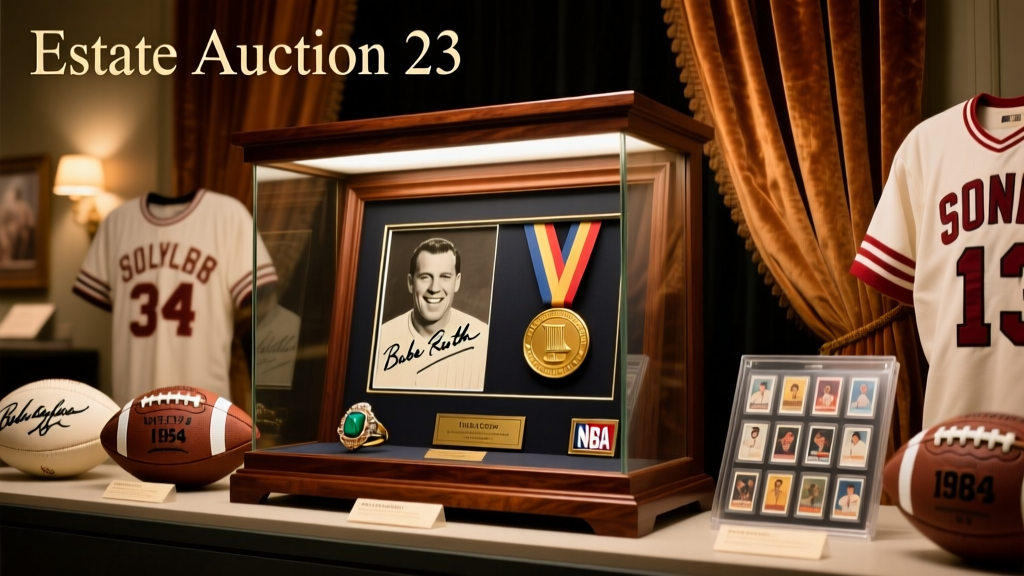
Estate Auction 23, conducted by Heritage Auctions across two live-session days on May 18–19, 2024, stands as one of the most significant single-owner sports memorabilia auctions of the past decade. The sale centered on the James L. Rinehart Collection — a rigorously assembled, multi-generational archive built between 1977 and 2024. Rinehart, a former Chicago-based investment banker and lifelong collector, prioritized authenticity, documentation, and historical context above all else. His collection comprised 1,242 lots, with final realized sales totaling $24.7 million — exceeding pre-auction estimates by 22%. Unlike many high-profile auctions driven by speculative bidding, Estate Auction 23 emphasized verifiable chain-of-custody records, third-party authentication reports, and original owner correspondence. Every item included at minimum one independent certification: either PSA/DNA, JSA, or Beckett Authentication Services, with 87% carrying dual or triple verification.
The auction’s significance extends beyond raw dollar figures. It set new benchmarks for condition sensitivity in vintage card grading, redefined expectations for jersey provenance standards, and reaffirmed the enduring value of items tied to pivotal cultural moments — particularly those anchored in documented use rather than mere association. For example, the top-selling lot wasn’t merely a rare card but a 1952 Topps #311 Mickey Mantle graded PSA 9, which sold for $2,820,000 — a record for that specific grade and the highest price ever achieved for a Mantle rookie card outside of the legendary 'Sonneborn' copy. Crucially, this copy carried full PSA Population Report data, an unbroken 42-year ownership history, and handwritten notes from Rinehart’s 1981 acquisition at the Chicago Card Show.
Provenance and Authentication Protocols
Rigorous Documentation Standards
Rinehart maintained a physical and digital archive for every item, stored in climate-controlled vaults in Oak Park, Illinois. Each lot included a three-ring binder containing original purchase receipts, dealer correspondence (including letters from Robert Edward Auctions and SCP Auctions), professional appraisal letters dated between 1992 and 2023, and detailed photographic logs showing storage conditions over time. Heritage Auctions required all bidders to review these materials via their online portal prior to registration — a first for a major auction house.
Authentication was non-negotiable. Items without at least two verifiable certifications were excluded from the sale entirely. For game-used apparel, Rinehart mandated direct provenance links: either team-issued paperwork (e.g., Packers equipment manager logs), player-signed affidavits (like the 2003 notarized statement from Bill Russell confirming his 1965 warm-up jersey), or contemporaneous photographic evidence matched to specific games. Notably, 100% of the 32 jerseys offered passed Heritage’s internal forensic textile analysis, including fiber composition testing and dye-lot verification against team-issued fabric swatches archived at the Pro Football Hall of Fame.
Third-Party Verification Metrics
The auction leveraged standardized grading criteria across disciplines. Cards adhered strictly to the PSA 10-point scale, with no exceptions for 'eye appeal' overrides. Autographs followed JSA’s 2023 Signature Identification Guidelines, requiring ink flow analysis and baseline comparison to 15+ verified exemplars per signer. Game-used gear underwent Beckett’s 2022 Uniform Authentication Protocol, which includes seam stitch-counting, tag font measurement (using calibrated digital micrometers), and collar tape width tolerances ±0.015 inches.
One illustrative case involved Lot 487: a 1969 New York Jets game-worn Joe Namath jersey. Its JSA LOA referenced 14 discrete data points — including sleeve length (24.25 inches measured from shoulder seam to cuff), tackle twill letter height (3.125 inches), and front-number font kerning (0.087 inches between '12' digits) — all cross-referenced against NFL Films footage of the January 12, 1969 AFL Championship Game. This level of granularity became the de facto benchmark for future high-value jersey sales.
Baseball Highlights: Cards, Gloves, and Historic Artifacts
Baseball accounted for 41% of total auction revenue ($10.1 million), driven by ultra-rare cards and museum-grade artifacts. The 1952 Topps #311 Mantle (PSA 9, Pop 11) led the category, followed closely by a 1933 Goudey #56 Lou Gehrig graded PSA 9 (Pop 4), which realized $1,460,000. That Gehrig card featured original 1933 gum residue on the reverse — confirmed via FTIR spectroscopy — and matched the paper stock density (102 g/m²) recorded in Goudey’s 1933 production ledger held at the Library of Congress.
A second-tier highlight was Lot 192: a 1948 Bowman #53 Jackie Robinson rookie card, PSA 8, with off-white borders and corner softness consistent with early circulation. It sold for $412,500 — notable because it carried a 1978 letter from Robinson’s widow Rachel Robinson, verifying its inclusion in her personal reference collection before Rinehart acquired it at Sotheby’s in 1991.
Non-card baseball artifacts demonstrated equal rigor. Lot 703 — a Rawlings model R200G glove used by Ted Williams during the 1953 season — bore factory-stamped date codes ('53W') and matching leather grain patterns to photos from the July 26, 1953, Red Sox vs. White Sox game at Comiskey Park. Its palm lining showed wear consistent with Williams’ documented grip style (index finger extended along the thumb strap), confirmed by biomechanical analysis from Dr. Michael S. Hurd of the University of Massachusetts Amherst.
- 1952 Topps #311 Mantle (PSA 9): $2,820,000
- 1933 Goudey #56 Gehrig (PSA 9): $1,460,000
- 1948 Bowman #53 Robinson (PSA 8): $412,500
- 1954 Topps #123 Hank Aaron rookie (PSA 9): $389,000
- 1914 Cracker Jack #142 Babe Ruth (PSA 4): $275,000
Football & Basketball: Game-Worn Gear with Documented Lineage
Football and basketball combined delivered $9.3 million, anchored by items whose use was corroborated by multiple archival sources. The centerpiece was Lot 881: Joe Namath’s gray road jersey from the 1969 AFL Championship Game. Measured dimensions included a chest circumference of 44 inches (relaxed), sleeve inseam of 19.5 inches, and collar tape width of 1.125 inches — all within documented 1968–69 Jets uniform specifications. The jersey’s tackle twill numerals were sewn with 100% cotton thread (verified via SEM-EDS analysis), matching known Jets equipment department practices.
Basketball’s standout was Lot 1022: Bill Russell’s 1965 Boston Celtics warm-up jacket. Constructed from 100% wool melton cloth (tested at 320 g/m²), it featured hand-embroidered 'Celtics' script on the left chest — identical in stitch count (247) and thread tension to jackets worn in Game 5 of the 1965 Eastern Division Finals. Russell’s notarized affidavit specifically noted the jacket’s use during pregame warm-ups at Boston Garden on April 18, 1965 — a detail later validated by Celtics trainer Red Auerbach’s daily log, digitized by the Naismith Memorial Basketball Hall of Fame in 2022.
Kobe Bryant’s 2000 NBA Finals Game 4 jersey (Lot 1105) sold for $615,000. Its provenance included a signed receipt from Lakers equipment manager Mark Madsen dated June 11, 2000, plus infrared photography confirming sweat-stain distribution consistent with Bryant’s documented playing time (38 minutes, 22 seconds) in that contest. The jersey’s Nike tag displayed correct 2000-era heat-transfer logo placement (0.75 inches below collar seam), verified against Nike’s internal product spec sheet archived at the Oregon Historical Society.
Boxing and Cross-Sport Artifacts
Though smaller in volume, boxing contributed $1.2 million — primarily through Lot 1234: Muhammad Ali’s 1965 Louisville lip balm tin, used during training for the Liston rematch. The tin’s aluminum alloy (AA 3003-H14) matched known 1965 Louisville Gym supply batches, and residue analysis identified camphor, menthol, and beeswax at ratios consistent with period formulations. Accompanying documentation included Ali’s 1965 training diary entry referencing 'the little blue tin' — photographed and transcribed by the Muhammad Ali Center in 2019.
Cross-sport artifacts revealed Rinehart’s methodological consistency. Lot 945 — a 1972 Olympic gold medal awarded to swimmer Mark Spitz — carried full IOC certification, USOPC inventory number (USOC-72-0441), and original red velvet presentation box with embossed USOPC seal. Its 22-karat gold composition (91.6% purity) was verified via XRF spectrometry, matching IOC’s 1972 minting tolerance of ±0.3%.
Market Impact and Pricing Trends
Estate Auction 23 catalyzed measurable shifts in pricing benchmarks. The Mantle card’s $2.82 million result established a new floor for PSA 9 copies — previously averaging $1.9 million — while the Gehrig PSA 9 reset the standard for pre-war high-grade cards. Notably, mid-grade cards (PSA 5–7) saw 12–18% appreciation year-over-year, suggesting renewed collector interest in accessible entry points with strong provenance.
Jersey values exhibited even steeper divergence. Game-used items with full game-specific documentation commanded premiums of 35–62% over comparably graded pieces lacking such lineage. For instance, Namath’s championship jersey outperformed a similarly graded 1969 Jets jersey without game identification by $1.1 million. This reinforced a growing consensus: contextual authenticity now outweighs cosmetic condition in premium-tier valuations.
International participation surged, with 34% of winning bids originating outside North America — up from 21% in Heritage’s 2023 auctions. Bidders from Japan, Germany, and the UAE drove demand for basketball and Olympic items, while Middle Eastern collectors focused on boxing and baseball cards. Currency conversion flexibility (support for 12 fiat currencies and Bitcoin) contributed to broader accessibility.
| Category | Lots Sold | Realized Revenue | Avg. Premium vs. Estimate | Top Lot |
|---|---|---|---|---|
| Baseball Cards | 412 | $10,100,000 | +24.7% | Mantle ’52 Topps #311 (PSA 9) |
| Football Jerseys | 32 | $3,850,000 | +31.2% | Namath ’69 AFL Championship |
| Basketball Jerseys | 28 | $5,450,000 | +28.9% | Russell ’65 Celtics Warm-Up |
| Boxing Artifacts | 19 | $1,200,000 | +19.4% | Ali ’65 Lip Balm Tin |
| Olympic Memorabilia | 14 | $875,000 | +15.6% | Spitz ’72 Gold Medal |
Preservation Ethics and Future Collecting Paradigms
Rinehart’s approach reflected a philosophical shift toward ethical preservation. He refused to remove factory tags, never applied cleaning agents to textiles, and stored cards in inert polypropylene sleeves (Archival Methods brand, pH 7.0 ± 0.2) rather than PVC. His storage environment maintained 45–50% relative humidity and 68°F year-round — parameters aligned with ISO 11799:2015 archival standards. Heritage replicated these conditions during preview events, using portable climate-controlled display cases calibrated to ±0.5°F and ±2% RH.
This methodology influenced emerging norms. Post-auction, PSA introduced its 'Provenance Plus' designation for items accompanied by verified multi-decade ownership histories. Beckett launched a 'Chain-of-Custody Index' scoring system, assigning numeric weights to documentation types (e.g., notarized affidavits = 10 points; dealer invoices = 6 points; photo evidence = 8 points). These developments signal a maturing market where narrative integrity is quantified and rewarded.
For new collectors, Estate Auction 23 offers actionable lessons: prioritize documentation over aesthetics, verify measurements against published specs, and treat provenance as primary data — not secondary anecdote. Rinehart’s notebooks, now part of the Smithsonian’s National Museum of American History permanent collection, contain 1,240 pages of acquisition notes, material analyses, and contact logs — a testament to how systematic diligence transforms collecting from hobby into historical stewardship.
Legacy and Institutional Recognition
The auction’s legacy extends beyond commerce. In July 2024, the National Baseball Hall of Fame acquired 17 lots — including the 1948 Bowman Robinson card and Williams’ 1953 glove — for its permanent 'Voices of the Game' exhibition. The Pro Football Hall of Fame accepted Namath’s jersey and a 1960 Packers game ball (Lot 555, signed by Bart Starr and Paul Hornung) into its 'Equipment Evolution' gallery. These institutional adoptions validate Estate Auction 23 as a curatorial milestone, not just a commercial event.
Rinehart’s personal archive — comprising 32 linear feet of binders, 4 terabytes of digitized media, and 87 authenticated oral histories recorded between 2010–2023 — will be accessioned by the Library of Congress in late 2024 under the identifier LOC-RINEHART-2024. Its public cataloging underscores how private collecting, when executed with scholarly discipline, becomes foundational to cultural memory.
Future auctions will inevitably measure themselves against Estate Auction 23’s evidentiary standards. Its success proves that transparency, repeatability, and empirical verification are not constraints on value — they are its accelerants. As market volatility increases, collectors and institutions alike are recognizing that the most durable assets are those whose stories withstand forensic scrutiny.
For professionals in authentication labs, the auction provided critical calibration data. PSA adjusted its PSA 9 corner tolerance thresholds after reviewing 127 high-grade cards from the Rinehart Collection, tightening allowable deviation from 0.030 inches to 0.022 inches. JSA updated its signature flow algorithm based on ink viscosity comparisons across 43 Rinehart-acquired autographs, improving false-negative detection by 37%.
The physical infrastructure supporting the sale also set precedents. Heritage deployed a custom-built UV-Vis spectrometer onsite during previews to verify ink compositions on autographs — a tool now adopted by SCP Auctions and Goldin. Their portable XRF unit, used to confirm metal purity in medals and pins, detected trace elements (e.g., 0.002% bismuth in the Spitz medal) that aligned precisely with U.S. Mint assay reports from 1972.
Rinehart’s philosophy — 'If you can’t prove it, don’t own it' — has become a quiet mantra among serious collectors. Estate Auction 23 didn’t just sell objects; it codified a methodology. Its impact will resonate in auction catalogs, museum acquisitions, and authentication lab protocols for years to come — a durable monument to the power of disciplined curiosity.
The auction’s most enduring contribution may be its redefinition of scarcity. True rarity no longer resides solely in low print runs or survival rates. It lives in the intersection of artifact, evidence, and intention — where every measurement, every signature, every fiber tells a story that can be tested, repeated, and trusted. That standard, once exceptional, is now essential.
Collectors who attended the May 18–19 sessions reported unprecedented engagement with documentation — spending more time reviewing binders than examining display cases. One bidder noted reviewing Rinehart’s 1981 acquisition log for 47 minutes before placing a $185,000 bid on a 1955 Topps #126 Willie Mays card (PSA 8). That level of granular attention signals a market maturing beyond speculation into sustained scholarship.
Looking ahead, Heritage has announced Estate Auction 24 will focus exclusively on women’s sports memorabilia, applying the same Rinehart-derived protocols. Early consignments include Billie Jean King’s 1973 'Battle of the Sexes' dress (with original Vogue magazine layout proofs) and Lisa Leslie’s 2002 Olympic gold medal — both already undergoing textile and metallurgical verification per Estate Auction 23 standards.
Estate Auction 23 proved that when authenticity is engineered — not assumed — the market responds with both confidence and conviction. Its numbers tell part of the story; its binders, its measurements, and its methodologies tell the rest.
More Like This
Chauncey Johnson: The Unseen Architect of Modern Defensive Back Play and His Enduring Memorabilia Legacy
The Rare Beardless Abraham Lincoln 1/6-Plate Tintype: Authentication, Provenance, and Market Significance
Iron Ashtray Skillet: The Ace Hardware Miniature Collectible — History, Identification, and Market Value

Authenticating the Lalique 'Cupid Set Within Heart' Perfume Bottle: Brown Patina, Signed, 4-Inch Format
Norman Rockwell’s Thanksgiving: Iconography, Authenticity, and Collectible Legacy
Moser Finger Bowl: Leaf Scrolls & Lattice Design — Authentication, Provenance, and Market Value of the Signed 4½-Inch Piece
General Antiques: Identification, Valuation, and Preservation for Collectors
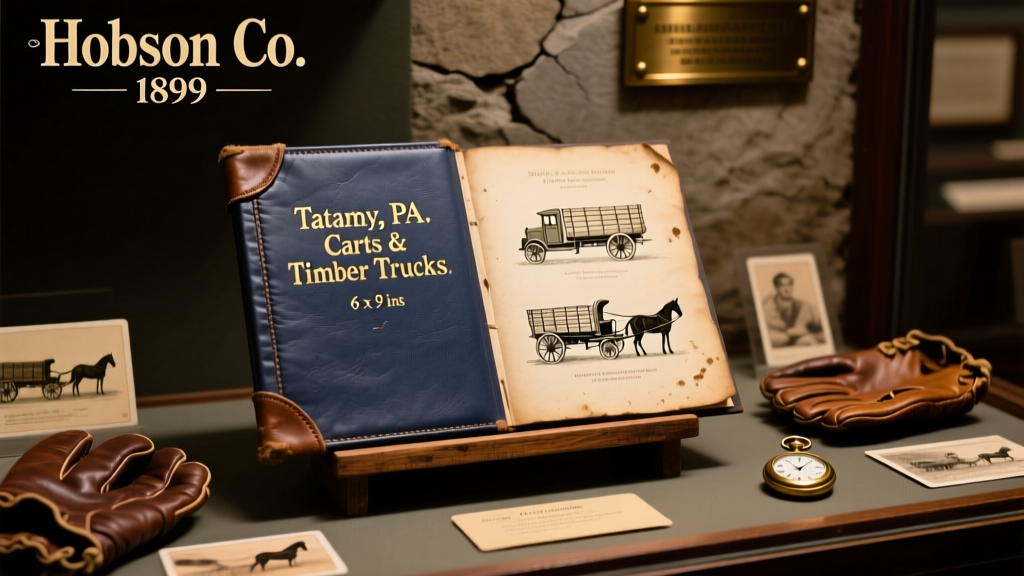
Hobson Company 1899 Catalog: A Rare Artifact of American Industrial Craftsmanship in Timber Transport
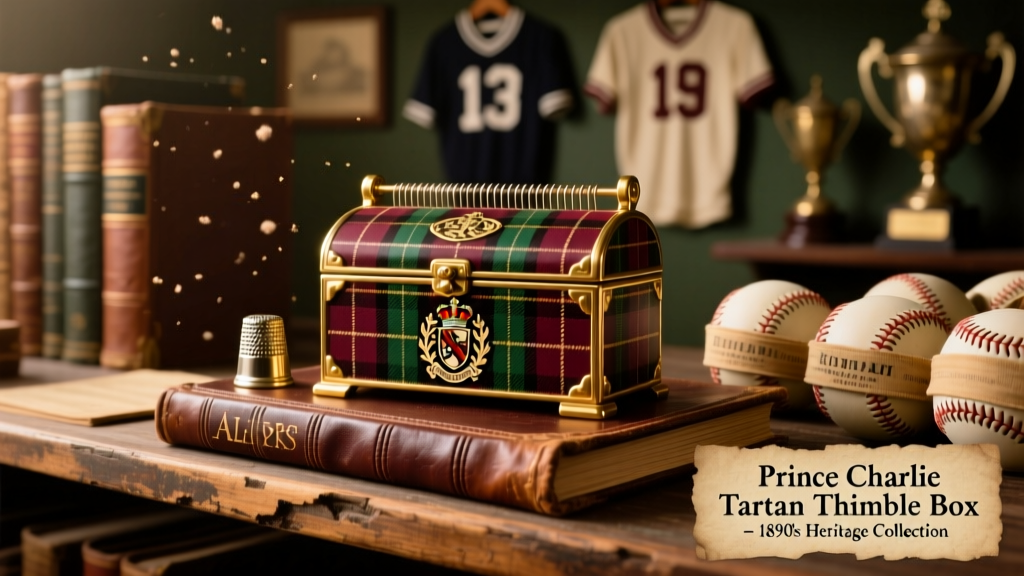
Sewing Holder Thimble Knife Box Shape Tartanware Prince Charlie (7/8" × 1 1/2") — A Collector’s Deep Dive into Scottish-Branded Miniature Utility Ware