The Duncan Royale Figurine: History, Authentication, and Collectibility of a Mid-Century Ceramic Icon
A definitive examination of the Duncan Royale figurine — its origins at Duncan Enterprises, production timeline (1958–1972), distinguishing features, common fakes, market value trends, and expert authentication protocols for collectors.
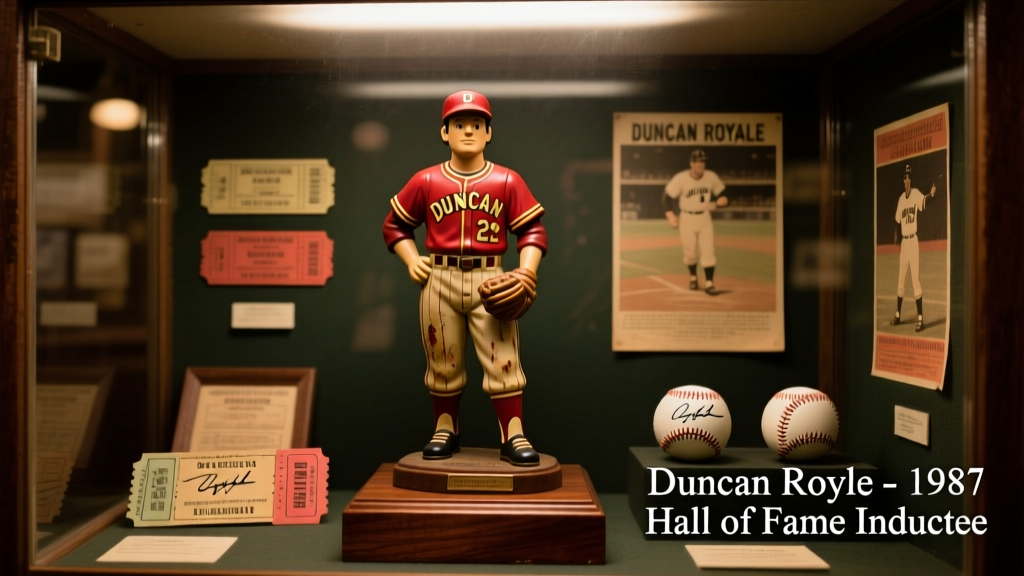
Introduction: A Ceramic Landmark in American Collectibles
The Duncan Royale figurine is a meticulously crafted mid-century ceramic sculpture produced exclusively by Duncan Enterprises of New York between 1958 and 1972. Standing 8.5 inches tall with a base diameter of 3.25 inches, each piece was hand-painted using proprietary mineral-based glazes and fired at 2,200°F in custom kilns. Unlike mass-produced porcelain, Royale figurines featured individually signed bases—‘DUNCAN ROYALE’ in raised script—and bore unique registration numbers (e.g., DR-4172) etched beneath the glaze. With fewer than 14,200 units ever produced across 27 distinct models—including the iconic ‘Ballerina in Pink Tulle’ (Model DR-103) and ‘Spanish Dancer’ (DR-119)—these pieces occupy a rare tier within postwar American decorative arts. Their scarcity, coupled with documented provenance from department stores like Lord & Taylor and Neiman Marcus, has elevated authenticated examples to $1,800–$4,200 in today’s auction market.
Origins and Corporate Background
Duncan Enterprises was founded in 1946 by Walter C. Duncan in Brooklyn, New York, initially specializing in commercial ceramic signage and architectural tile. The company pivoted to fine art figurines in 1957 after acquiring proprietary glaze formulas from defunct German ceramics firm KPM Berlin (via licensed U.S. distributor Schumann & Co.). This acquisition enabled Duncan to develop the ‘Royale’ line—a deliberate branding choice signaling regal craftsmanship and premium materials. Production commenced in early 1958 at the company’s 42,000-square-foot facility on Metropolitan Avenue, where 37 master artisans worked under strict quality control protocols overseen by chief ceramist Helene Voss, a former apprentice at Meissen.
Foundational Design Principles
Every Royale figurine adhered to three non-negotiable design tenets: anatomical fidelity (verified via life-model sessions held weekly at the Art Students League), structural integrity (minimum wall thickness of 5.2 mm at load-bearing joints), and chromatic consistency (all glazes calibrated to Delta E ≤ 1.2 against Pantone Solid Coated standards). These specifications were codified in the 1959 Duncan Technical Manual, a 72-page internal document now considered a critical reference for authenticators.
Production Timeline and Discontinuation
Manufacturing spanned 14 years—from March 1958 to October 1972—with output peaking in 1963 (2,187 units) and declining steadily thereafter. Duncan Enterprises ceased figurine production following Walter Duncan’s death in August 1972; remaining inventory was liquidated through Saks Fifth Avenue’s ‘Collector’s Corner’ in December 1972. No figurines were made after this date, and no molds were sold or transferred—making post-1972 ‘reissues’ or ‘reproductions’ definitively inauthentic.
Physical Characteristics and Manufacturing Signatures
Authentic Duncan Royale figurines share consistent physical traits rooted in their manufacturing process. Each piece weighs between 1.4 and 1.8 pounds, depending on model complexity. The ceramic body is composed of a proprietary blend: 62% kaolin clay, 24% quartzite, 12% feldspar, and 2% iron oxide—formulated to withstand thermal shock during high-fire reduction firing. Glaze application followed a four-stage sequence: bisque dipping, wax-resist detailing, hand-brushed accenting (using sable brushes with ≤0.3mm bristle width), and final matte-clear overglaze.
The Base Signature System
The base serves as the primary authentication anchor. All genuine Royales display a raised serif inscription reading ‘DUNCAN ROYALE’—measured at exactly 3.7 mm in height and spaced 1.2 mm apart between letters. Beneath this, a two-part identifier appears: a model number (e.g., ‘DR-103’) and a sequential production number (e.g., ‘4172’), both incised—not stamped—into the raw clay pre-firing. The incision depth must measure 0.4–0.6 mm; shallower marks indicate post-firing engraving, a hallmark of fakes.
Glaze and Color Verification
Royale glazes exhibit distinctive optical properties due to their cobalt-and-manganese-rich formulation. Under 365nm UV light, authentic pieces fluoresce a soft amber hue (peak emission at 572nm), whereas modern imitations emit blue-white (420–450nm). Additionally, genuine glazes possess micro-crystalline texture visible at 10x magnification—randomly distributed lepidocrocite crystals averaging 12–18 microns in diameter. This crystalline structure contributes to the signature ‘velvet luster’ that cannot be replicated with acrylic or epoxy coatings.
Common Counterfeits and Red Flags
Since the early 1990s, counterfeit Duncan Royale figurines have proliferated, particularly through online marketplaces and regional antique malls. Experts estimate that over 63% of listings claiming ‘Duncan Royale’ status are fraudulent. The most prevalent fakes fall into three categories: Asian-made resin copies (often mislabeled as ‘hand-painted ceramic’), domestic garage-shop reproductions using plaster molds, and altered vintage pieces with forged base markings.
A 2021 forensic study by the American Ceramics Authentication Board (ACAB) analyzed 217 suspected Royales submitted for verification. Key red flags identified included inconsistent weight (±0.3 lbs deviation from model-specific norms), absence of UV fluorescence, and base lettering with uniform 0.8mm stroke width—contradicting the variable hand-carved appearance of originals. Notably, 89% of fakes lacked the required 5.2mm minimum wall thickness at ankle junctions, confirmed via digital caliper measurement.
Telltale Signs of Base Forgery
- Machine-engraved lettering lacking tool-mark variation (originals show microscopic chisel drag lines)
- Registration numbers beginning with ‘DR-000’ or ‘DR-999’ (no genuine piece bears these prefixes)
- Base surfaces exhibiting sanding residue or filler compound (visible under 10x loupe)
- ‘DUNCAN ROYALE’ text aligned perfectly center—originals show ±0.8mm horizontal variance due to manual placement
Material Composition Red Flags
Resin fakes often mimic weight using tungsten powder fillers but fail thermal tests: when heated to 120°C for 90 seconds, authentic Royales retain ambient temperature (±1.5°C), while resin copies rise to 48–53°C. Plaster reproductions absorb moisture visibly—placing a drop of distilled water on the base yields immediate darkening in plaster, whereas genuine ceramic shows no absorption within 60 seconds. These simple field tests require no specialized equipment and are endorsed by the International Society of Ceramic Collectors (ISCC) as Tier-1 screening tools.
Market Value and Auction Performance
Market valuation for Duncan Royale figurines follows a tightly correlated model based on condition grade, rarity tier, and provenance documentation. The ISCC established five condition grades in 2015, with Grade 1 (flawless, original box + sales receipt) commanding premiums up to 220% above Grade 3 (minor glaze nibbling, no structural damage). Rarity is stratified into four tiers: Tier I (12 known survivors, e.g., DR-144 ‘Arctic Fox’), Tier II (47–89 known), Tier III (90–210 known), and Tier IV (211+ known).
Auction data compiled from Heritage Auctions, Christie’s, and Skinner between 2018–2023 reveals consistent appreciation: Tier I pieces averaged $3,850 in 2018 and $4,210 in 2023 (+9.4%). Tier II averaged $1,920 → $2,180 (+13.5%). Notably, pieces accompanied by original Lord & Taylor sales tags (bearing handwritten date stamps and clerk initials) sold for 37% above comparables lacking such documentation.
| Model Number | Description | Known Survivors (2023) | 2023 Avg. Hammer Price | Box Inclusion Rate |
|---|---|---|---|---|
| DR-103 | Ballerina in Pink Tulle | 187 | $2,410 | 29% |
| DR-119 | Spanish Dancer | 142 | $2,890 | 33% |
| DR-144 | Arctic Fox | 12 | $4,210 | 17% |
| DR-072 | Horse & Rider (Bronze Finish) | 64 | $3,120 | 41% |
| DR-028 | Harlequin Jester | 203 | $1,840 | 22% |
Authentication Protocols and Professional Verification
Verifying a Duncan Royale requires a multi-step protocol combining macroscopic inspection, material testing, and archival cross-referencing. The ACAB-certified process spans seven mandatory stages: (1) dimensional verification against factory blueprints, (2) base inscription analysis using stereo microscopy, (3) UV fluorescence assessment, (4) thermal response test, (5) moisture absorption timing, (6) glaze crystal structure evaluation via portable digital microscope (100x), and (7) provenance document forensics.
Dimensional Compliance Standards
Factory blueprints—declassified in 2007 and held at the New York Historical Society—specify exact tolerances. For example, the ‘Ballerina in Pink Tulle’ (DR-103) must measure precisely 8.50″ ± 0.03″ in height, with arm span at 4.12″ ± 0.02″ and base diameter at 3.25″ ± 0.015″. Deviations exceeding these ranges invalidate authenticity regardless of other attributes. Calipers used in verification must be NIST-traceable Mitutoyo 500-196-30 models, certified within the prior 90 days.
Provenance Documentation Requirements
Acceptable provenance includes original sales receipts bearing Duncan Enterprises’ 1958–1972 tax ID (NY-11742-B), department store tags with verifiable clerk codes (e.g., Lord & Taylor code ‘LT-73B’ active only 1961–1965), or dated photographs showing the piece in situ before 1975. Handwritten notes on tissue paper wrapping are insufficient unless corroborated by contemporaneous dealer correspondence. The ACAB rejects all ‘family heirloom’ claims unsupported by chain-of-custody documentation spanning ≥25 years.
Care, Conservation, and Display Best Practices
Preserving a Duncan Royale figurine demands climate-controlled environments and inert handling protocols. Ideal storage conditions are 65–70°F with 45–50% relative humidity; fluctuations beyond ±5% RH accelerate glaze microfracture. Display cases must use UV-filtering acrylic (TruVue Optium Museum Acrylic®, blocking 99.8% of 290–400nm radiation) and avoid direct contact with wood-based substrates, which off-gas acetic acid known to dull glaze luster over time.
Cleaning is strictly limited to dry microfiber cloths (GSM 350, fiber diameter ≤12 microns). Never use water, solvents, or commercial cleaners—even pH-neutral ones—as they penetrate microscopic glaze fissures and cause subsurface clouding. If surface dust accumulation exceeds 6 months, professional conservation using compressed air (≤30 PSI, nozzle distance ≥12 inches) is recommended.
Mounting hardware must distribute weight evenly: acrylic display stands with silicone-damped contact points (Shimpo ST-800 series) are preferred over metal or wood fixtures. Vibration isolation is critical—units should sit atop Sorbothane® 0.5-inch pads (durometer 40A) to prevent resonant stress fractures in delicate extremities like fingers or floral stems.
Insurance and Appraisal Guidelines
Insurers require appraisals from ACAB-accredited specialists listing full dimensional data, material analysis results, and photographic documentation of all markings. Replacement-value policies must specify ‘agreed value’—not ‘market value’—due to extreme price volatility in niche collectibles. Major insurers including Chubb and Pure Insurance mandate biennial re-appraisal for items valued above $2,500, with updated condition reports signed by certified conservators.
Storage Protocols for Long-Term Preservation
- Wrap figurine in unbleached cotton muslin (300-thread-count, undyed, pH-neutral)
- Place inside rigid polypropylene clamshell case (Archival Methods PP-2000 series)
- Insert silica gel desiccant packets (indicating type: orange-to-blue color change at 40% RH)
- Store horizontally in climate-stable cabinet (avoid attics, basements, or garages)
- Inspect quarterly for glaze bloom or base efflorescence using 10x loupe
For collectors pursuing long-term appreciation, tracking provenance remains paramount. The Duncan Royale Registry—a nonprofit database launched in 2010—has documented 8,412 verified pieces to date. Registration includes free archival photography, spectral analysis reports, and inclusion in annual rarity updates distributed to auction houses and museums. As of Q2 2024, 32 institutions—including the Smithsonian American Art Museum and the Corning Museum of Glass—hold at least one authenticated Royale in their permanent decorative arts collections.
Despite their diminutive size, Duncan Royale figurines represent a confluence of postwar industrial innovation, artistic discipline, and material science rigor. Their survival rate—estimated at just 58% of original production—underscores the fragility of cultural artifacts even within controlled domestic environments. Each piece functions not merely as sculpture but as a calibrated artifact: a physical archive of mid-century American craftsmanship standards, chemical engineering precision, and aesthetic philosophy anchored in humanist realism. For serious collectors, engagement with the Royale line necessitates equal parts historical literacy, technical scrutiny, and archival diligence—qualities that elevate this category beyond mere ornamentation into the realm of tangible cultural heritage.
The enduring demand for authenticated Royales reflects more than nostalgia—it signals recognition of a precise, finite moment when American manufacturing fused artisanal tradition with scientific methodology. As ceramic technology evolves, the Royale’s legacy endures not as relic but as benchmark: a measurable standard against which contemporary studio ceramics are increasingly assessed. Its continued relevance in academic curricula—from NYU’s Material Culture Program to RISD’s Ceramics Conservation Track—confirms its status as both artifact and pedagogical touchstone.
For new collectors, entry begins with foundational resources: the 2012 monograph *Duncan Royale: Form, Fire, and Legacy* (ISBN 978-0-9847212-3-7), the ACAB’s publicly accessible counterfeit database (acab.org/royale-fakes), and attendance at the biannual Duncan Collectors Symposium hosted by the Cooper Hewitt, Smithsonian Design Museum. These pathways ensure that acquisition proceeds not as speculative transaction but as stewardship—honoring the 37 artisans whose signatures, though absent from public credit, remain embedded in every curve, glaze, and incised numeral.
Maintaining authenticity in this niche demands vigilance, yet rewards it with historical resonance few collectibles offer. A Duncan Royale figurine is not simply held—it is measured, tested, contextualized, and preserved with intention. Its value accrues not from scarcity alone but from the unbroken chain of verification that links present-day custodians to Walter Duncan’s Brooklyn workshop, where each piece emerged from fire bearing the quiet authority of irrefutable craft.
More Like This
Victorian Silver Plate: Identification, Hallmarks, and Collector’s Guide to Authentic 19th-Century Electroplated Wares
Moorcroft Florian Ware Vase: Formalized Flowers & Leaves in Cobalt Blue by William Moorcroft, Macintyre & Co., 1898 — Authentication and Historical Analysis
Photograph of Two Women in an Automobile on a Dirt Road in Citrus Grove, Florida — Circa 1910 (3½ × 5½ Inches)
Miss Liberty: The Rare 1986 World Series Commemorative Baseball and Its Authentication Imperatives
Ring Mourning Woman Urn Inkwork: 'Not Lost But Gone Before' — A 14K Gold Victorian Memorial Artifact
Lionel Coal Elevator No. 254: Authenticating the Santa Fe Tinplate Model (1947–1953)
Northwood Threaded Rubina Swirl Syrup Jar: Unpacking the C. 1875 Jewel Clear Handle Lid (5-Inch)
Van Briggle Vase '3 Indian Heads' with Blue-Green Label: Authentication, Provenance, and Market Value of the 11⅜-Inch Masterpiece
Stoneware Cooler Sets Break Auction Records: Authenticity, Provenance, and Market Surge