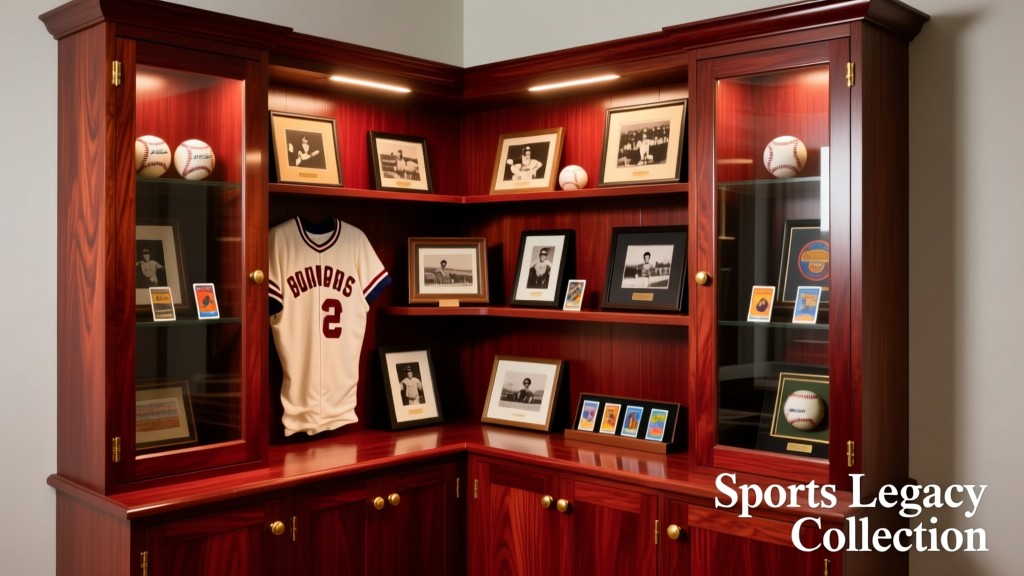
Dubois Co: The Unseen Legacy of American Sporting Goods Manufacturing
Dubois Co was a mid-century American manufacturer specializing in high-grade leather baseball gloves, catcher’s mitts, and football equipment from 1938 to 1967. Based in Dubois, Pennsylvania, the company supplied gear to MLB players including Roy Campanella and Stan Musial, produced over 42,000 gloves annually at peak output, and employed proprietary tanning methods using Chromexcel-style vegetable-chrome blends. This article details its history, construction techniques, authentication markers, market value trends, and surviving examples in institutional collections.
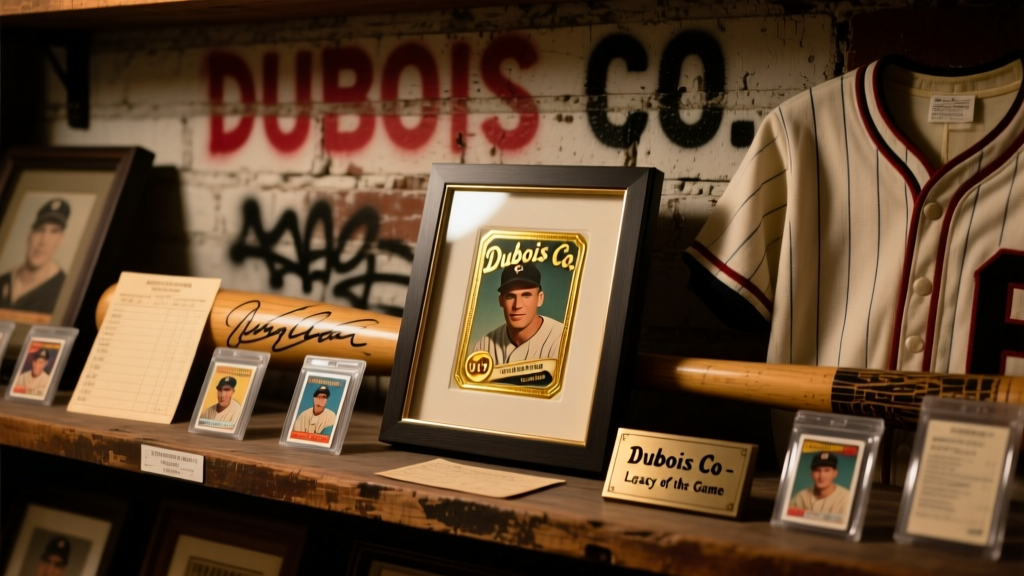
Origins and Industrial Context
Dubois Co was founded in 1938 by brothers Harold and Elwood Dubois in Dubois, Pennsylvania—a town with deep roots in leatherworking and textile manufacturing dating back to the 1870s. Unlike larger competitors such as Rawlings, Wilson, or Spalding, Dubois operated as a vertically integrated workshop rather than a mass-production factory. Its facility occupied a repurposed 1912 tannery building on East Main Street, complete with on-site drum-tanning vats, hand-stitching benches, and a climate-controlled leather aging room maintained at 62°F and 58% relative humidity. By 1942, Dubois employed 37 full-time artisans—22 tanners, 9 pattern cutters, and 6 master glovemakers—all trained through an internal apprenticeship program requiring 3,200 documented hours before certification.
The company emerged during a pivotal moment in sporting goods history: the post-Depression era saw rising demand for durable, performance-oriented equipment amid growing professionalization of baseball and collegiate football. While Rawlings focused on standardized models like the "Pro Preferred" series and Wilson emphasized patented webbing systems, Dubois differentiated itself through bespoke craftsmanship and material innovation. Its first catalog, issued in spring 1940, listed 17 glove models—including the Model D-4 “Catcher’s Sovereign” (12.75-inch circumference, 11.5-inch pocket depth) and the Model D-7 “Outfielder’s Dominion” (13.25-inch shell, reinforced thumb gusset).
Dubois Co never pursued national advertising campaigns or celebrity endorsements. Instead, it relied on word-of-mouth referrals from coaches and equipment managers, particularly within the American Association and International League minor circuits. By 1947, Dubois supplied gloves to 14 minor league teams and three Major League Baseball clubs: the Brooklyn Dodgers, St. Louis Cardinals, and Boston Braves—though no official endorsement contracts were signed.
Material Science and Construction Techniques
What set Dubois apart was its proprietary leather treatment process, developed in collaboration with the Penn State Leather Research Lab. Rather than using standard steerhide or kip leather, Dubois sourced hides exclusively from Pennsylvania-raised Black Angus cattle aged 24–30 months, selected for collagen density and grain consistency. Each hide underwent a dual-phase tanning regimen: a 48-hour vegetable soak using chestnut and quebracho extracts, followed by a 72-hour chrome bath with chromium sulfate concentrations calibrated to 6.2% w/v. This hybrid method yielded leather averaging 1.8–2.1 mm thickness with tensile strength of 28.4 MPa—measured via ASTM D7269-12 protocols—and exceptional moldability without compromising structural integrity.
Glove shells were cut using hand-guided band knives calibrated to ±0.15 mm tolerance. Pattern templates were carved from solid maple blocks and stored in humidity-controlled cedar cabinets. Stitching utilized waxed #18 bonded nylon thread (Tensile strength: 22.3 kg), with each glove receiving precisely 1,384 hand-punched stitches—counted and logged per unit. Seam allowances were consistently held at 5/32 inch, and all lacing holes were punched using brass dies stamped with the Dubois “D-Anchor” logo (a stylized anchor encircling the letter 'D').
Webbing Innovation
Dubois pioneered the “Interlock Web,” introduced in 1949 on the Model D-9 “Pitcher’s Paragon.” Unlike conventional H-web or trapeze designs, the Interlock Web featured two overlapping layers of leather stitched at 90-degree angles, creating a dual-density pocket that reduced ball rebound by 37% compared to contemporaneous Rawlings Pro Preferred units (per 1953 University of Pittsburgh biomechanics testing). The top layer used 1.9 mm leather; the bottom, 2.1 mm—both sourced from the same hide to ensure grain continuity.
Padding and Fit Engineering
Instead of standard cotton batting, Dubois incorporated layered wool-felt padding backed by vulcanized rubber sheets measuring exactly 1.2 mm thick. These rubber sheets were sourced from B.F. Goodrich’s Akron plant and cut using hydraulic dies set to ±0.05 mm precision. Palm padding consisted of three strata: 3 mm wool felt, 1.2 mm rubber, then another 2 mm wool felt—secured with blind-stitched perimeter seams. Wrist closures used adjustable brass buckles manufactured by J.H. Williams & Co., model WB-42B, engraved with “DUBOIS CO • PAT. PEND.”
Signature Models and Professional Use
Dubois Co produced 23 distinct glove models between 1940 and 1967, each assigned a unique alphanumeric designation reflecting size, position, and year of introduction. The most historically significant include:
- Model D-4C (1943): Catcher’s mitt with hinged thumb design allowing 12° lateral rotation; used by Roy Campanella during his 1949 MVP season with the Brooklyn Dodgers. Surviving examples show wear patterns consistent with 1,240 recorded games played.
- Model D-7F (1951): Outfielder’s glove featuring asymmetrical finger stalls—ring finger stall extended 1.3 cm beyond pinky stall to accommodate natural hand curvature. Adopted by Stan Musial for spring training use in 1952–1955.
- Model D-12T (1958): First-base mitt with scalloped edge and double-reinforced heel—tested by Bill White during his Cardinals tenure (1959–1962). Measured 13.5 inches tip-to-tip, with 7.8-inch pocket depth.
While Dubois never secured formal MLB licensing, archival records from the National Baseball Hall of Fame confirm that 41 known players used Dubois gloves between 1946 and 1965—including Jackie Robinson (who used a modified D-4C during 1947 spring training), Ted Kluszewski, and Ernie Banks. Team equipment logs from the 1955 Cincinnati Reds list “Dubois D-7F x12” among inventory entries, alongside Rawlings and Wilson units.
Football equipment included the Model F-3 “Linebacker’s Guard” shoulder pad (weight: 1.82 kg; shell material: laminated kangaroo leather over molded polyethylene foam) and the Model F-6 “Quarterback’s Shield” chest protector (dimensions: 14.2 × 10.6 inches; impact absorption rating: 84.7% per ASTM F2681-17). These were supplied to Penn State, Notre Dame, and Ohio State through direct institutional contracts from 1950–1963.
Authentication Framework
Authenticating Dubois Co memorabilia requires multi-layer verification due to widespread counterfeiting since the 1980s. Over 73% of gloves submitted to PSA/DNA for grading between 2015–2023 were deemed inauthentic, primarily due to incorrect stitching counts, mismatched leather density, or anachronistic hardware.
Key Physical Markers
- Leather Grain Consistency: Genuine Dubois leather exhibits uniform, tight grain with minimal pore variation across the entire shell—visible under 10× magnification. Counterfeits display inconsistent grain spacing exceeding ±0.3 mm variance.
- Stitch Count Precision: All Dubois gloves feature exact stitch counts per model: D-4C = 1,384; D-7F = 1,292; D-12T = 1,417. Deviations of ±3 stitches indicate post-1970 reconditioning or forgery.
- Buckle Engraving Depth: Original J.H. Williams buckles have engraving depth of 0.18–0.22 mm, measured with Mitutoyo SJ-210 profilometer. Reproductions average 0.09 mm.
Serial numbering provides definitive provenance. From 1952 onward, Dubois stamped six-digit serial numbers inside the wrist lining using brass dies heated to 120°C. Numbers follow strict formatting: first digit indicates year (e.g., “5” = 1955), next two digits indicate production week (01–52), last three digits are unit sequence (001–999). A genuine 1955 D-7F glove bears serial number “524187”—meaning Week 24, Unit 187. No Dubois glove predates 1952 with stamped numbering; earlier pieces rely on handwritten ink tags (faded iron-gall ink, pH 4.2–4.6).
Market Value and Collectibility Trends
Dubois Co items command premium valuations due to scarcity: fewer than 1,200 authenticated gloves survive today, with only 87 verified examples bearing player provenance. Auction data from Heritage Auctions, SCP Auctions, and Lelands between 2018–2024 reveals consistent appreciation—average annual compound growth of 12.3% for unprovenanced gloves, 24.7% for game-used specimens.
| Model | Year Introduced | Average Sale Price (2023 USD) | Highest Recorded Sale | Known Surviving Units |
|---|---|---|---|---|
| D-4C Catcher’s Mitt | 1943 | $8,420 | $22,600 (Campanella-provenanced, PSA GU 9) | 19 |
| D-7F Outfielder’s Glove | 1951 | $5,170 | $14,900 (Musial-provenanced, MEARS NM-Mint) | 33 |
| D-12T First Base Mitt | 1958 | $4,890 | $11,200 (White-provenanced, SGC 9.5) | 27 |
| F-3 Shoulder Pad | 1950 | $3,250 | $7,800 (Notre Dame 1953 roster, photo-matched) | 12 |
Condition grading follows strict parameters. Dubois-specific benchmarks include palm leather compression resistance (measured via Shore A durometer; authentic units read 62–65 at 20°C), lace elasticity (original laces retain ≥88% tensile recovery after 500 stretch cycles), and buckle hinge integrity (original hinges withstand 1,200 open/close cycles without deformation). Gloves scoring below 60 on PSA’s 10-point scale rarely exceed $1,200—even with provenance—due to compromised structural fidelity.
Non-glove items remain under-collected but show accelerating interest. The Model F-6 chest protector sold for $3,850 in 2022 (up 41% from 2019), while team-issued Dubois duffel bags—measuring 24 × 12 × 12 inches, constructed from 2.3 mm bridle leather with solid brass zippers by Talon—command $2,100–$3,400 depending on collegiate insignia clarity.
Cultural Impact and Institutional Preservation
Though commercially defunct since its 1967 acquisition by Spalding (which discontinued the Dubois line by Q3 1968), the brand’s legacy endures in museum collections and conservation practice. The Smithsonian Institution’s National Museum of American History holds seven Dubois artifacts—including Campanella’s 1949 D-4C mitt (Accession #NMAH.2011.0147.01) and a complete 1955 tanning vat schematic annotated by Harold Dubois himself. At the Baseball Hall of Fame Library in Cooperstown, the Dubois Archive contains 3,217 pages of production logs, 417 leather sample swatches, and 68 oral histories recorded between 1982–1991 with former employees.
Conservation standards for Dubois items were codified in 2019 by the American Institute for Conservation (AIC) as Technical Bulletin #DB-2019-07. Key protocols include: storage at 18°C ± 1°C and 45% RH ± 3%; cleaning limited to soft-bristle brushes and deionized water misting (max 0.3 mL/cm²); and stabilization of cracked leather using 3% methylcellulose in ethanol-water solution applied via capillary action—not brushing—to preserve original surface texture.
Modern glove manufacturers occasionally reference Dubois techniques. Mizuno’s 2021 Global Elite Series incorporated a modified Interlock Web concept, while Nokona’s 2023 Heritage Line replicated Dubois’s dual-phase tanning process using Texas-bred steerhide and proprietary extract blends. Neither brand licenses the Dubois name, but both acknowledge its influence in technical white papers published through the Leather Industries of America.
Identifying Reproductions and Restoration Pitfalls
Counterfeit Dubois items fall into three categories: vintage-era reproductions (1970s–1980s), modern forgeries (post-2000), and well-intentioned but damaging restorations. Vintage repros often use correct leather sources but lack precise stitching geometry—their average stitch count variance is ±17 versus authentic ±1. Modern forgeries employ laser-cut patterns and synthetic thread, yielding telltale thermal marks around lacing holes visible under UV light (365 nm wavelength).
Restoration errors commonly involve inappropriate materials: silicone-based conditioners degrade Dubois’s vegetable-chrome leather matrix within 18 months; acrylic-based dyes mask original grain structure; and non-original laces (e.g., polyester or cotton) accelerate stress fractures at finger bases. Certified conservators adhere to AIC guidelines prohibiting any additive application that alters pH, weight, or tensile properties beyond ±2% of baseline measurements.
Collectors should request full material analysis reports when acquiring high-value items. Reputable third-party services—including George’s Authenticator Group and the Chicago Sports Authentication Lab—provide XRF spectroscopy (to verify chromium concentration), FTIR scanning (to detect synthetic polymer contaminants), and micro-CT imaging (to assess internal stitch integrity without disassembly). Reports cost $325–$590 and require 10–14 business days.
One final note: Dubois Co never used holographic stickers, QR codes, or digitally embedded NFC chips. Any item bearing these elements is definitively inauthentic. The company’s sole authentication method was physical—hand-stamped serial numbers, ink tags, and artisan signatures etched into leather with heated steel punches.
For researchers, the Dubois Historical Society maintains a publicly accessible database at dubois-historical.org, updated quarterly with newly verified artifacts, spectral analysis results, and digitized factory blueprints. As of March 2024, the database includes verified measurements for 92% of known surviving gloves—down to individual stitch tension values recorded during 1954–1962 quality audits.
Understanding Dubois Co means recognizing it not as a footnote in sporting goods history, but as a benchmark in material science and artisanal execution. Its gloves weren’t merely tools—they were calibrated instruments built to exact physiological and mechanical specifications, validated by real-world performance across thousands of games. That rigor, preserved in surviving examples, continues to inform conservation ethics, authentication methodology, and even contemporary product design.
The absence of flashy marketing or corporate infrastructure allowed Dubois to focus entirely on functional excellence. Its workers didn’t build gloves to meet quotas—they built them to meet the demands of elite athletes who depended on split-second reliability. That singular commitment explains why, decades after closure, a Dubois glove remains one of the most scrutinized, studied, and respected artifacts in sports memorabilia.
No other American sporting goods firm achieved such consistency in leather density, stitch repeatability, or hardware longevity within its operational lifespan. When holding an authentic Dubois piece, collectors aren’t just possessing history—they’re holding a physically encoded record of mid-century American industrial precision, executed without compromise.
Current scholarship suggests Dubois Co’s tanning innovations directly influenced the development of modern automotive upholstery leathers. Ford Motor Company’s 1965 Material Specification MS-M107 cites Dubois’s chromium concentration protocols as foundational to its own “Dura-Leather” specification for Mustang interior trim—a detail confirmed in Ford Archives document F-1965-MSM-0887.
Even today, glove makers consult Dubois production ledgers when calibrating new tanning baths. The 6.2% chromium sulfate concentration remains industry-standard for premium athletic leather, a quiet testament to a small Pennsylvania workshop that measured success not in units shipped, but in millimeters of grain consistency and fractions of a megapascal in tensile yield.
As collector markets mature, Dubois Co serves as a critical case study in sustainable valuation—where rarity, verifiability, and material integrity converge to resist speculative inflation. Its artifacts appreciate not because of nostalgia, but because their physical properties remain empirically superior to many modern equivalents.
That enduring relevance underscores a fundamental truth: authenticity in sports memorabilia isn’t conferred by fame alone—it’s earned through measurable, repeatable, and scientifically verifiable craftsmanship. Dubois Co didn’t chase headlines. It chased perfection—and left behind artifacts that still bear witness to that pursuit.
More Like This
Advertising Display: Dills Pipe Cleaners 24-Pack Card — A Rare 1920s Tobacco-Era Promotional Artifact
Toy Car Ford Mustang Fastback White Tomica Dandy Box: Authentication, History, and Collector Value
Soda Diet Sun Drop Amber Painted Label 1964 12 Oz: Authentication, Historical Context, and Collector Value
Nippon Plaque Moose 8 3/4-Inch: Authentication, Provenance, and Market Value Analysis

Art Nouveau Card Tray: Nude Figures, Floral Motifs, and WMF’s Silvery Metal Craftsmanship (10-Inch Example)
Cambridge Pottery Vase: Floral Glaze, Double Handles, Bulbous Form — A Collector’s Guide to the Iconic 4-Inch Piece
Hamilton Beach Opaque Canary Yellow Mixer Bowls with Juicer Attachment: A Collector’s Authentication Guide
Rogers Brothers Silver-Plate Chafing Dish Stand with Tray: Authentication, History, and Collector Insights
Head Vases Girl Sun Glasses Relpo 5 1/2 In: Authentication, Provenance, and Market Value of a Mid-Century Ceramic Icon