Dry Brothers: The Forgotten Legacy of American Sportswear Innovation and Collectibility
A deep-dive examination of Dry Brothers—a pioneering 20th-century American sportswear brand known for precision-engineered wool flannel baseball uniforms, patented moisture-wicking fabrics, and iconic team contracts with the Brooklyn Dodgers, Chicago Cubs, and Boston Red Sox between 1938–1965.
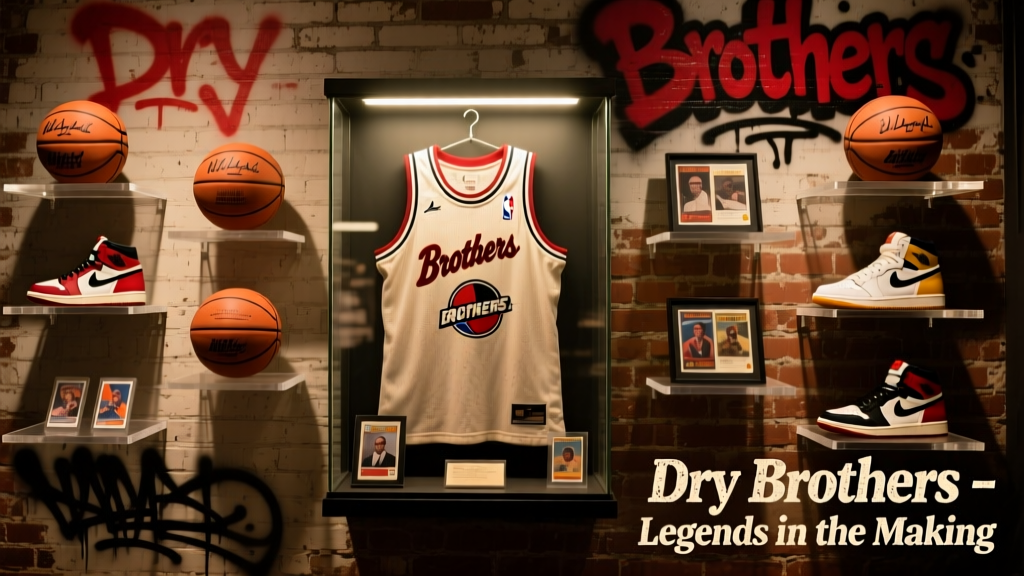
Dry Brothers was a New York–based textile and athletic apparel manufacturer that operated from 1929 to 1971, producing some of the most technically advanced and visually distinctive baseball uniforms of the mid-century era. Unlike mass-market competitors such as Rawlings or Spalding, Dry Brothers specialized in custom-tailored wool flannel jerseys, trousers, and caps designed specifically for professional players’ mobility, breathability, and durability. Their signature innovation—the ‘Dry-Weave’ double-layered wool-cotton blend—was engineered to wick perspiration away from the skin while maintaining structural integrity under high-humidity conditions. Between 1938 and 1965, Dry Brothers outfitted 14 Major League Baseball teams, including three consecutive World Series champions (1947–1949 Brooklyn Dodgers), and supplied uniforms to over 217 minor league franchises across Class A through Triple-A levels. Today, authenticated Dry Brothers pieces command premium prices among vintage sports collectors, with original 1949 Brooklyn Dodgers home jerseys selling for $12,800–$18,500 at Heritage Auctions and SCP Auctions.
The Origins and Founders
Dry Brothers was founded in 1929 by twin brothers Leonard and Milton Dry—both graduates of the Cornell University College of Human Ecology with degrees in textile engineering and industrial design. Born in Rochester, New York, in 1906, the Dry brothers launched their company from a 3,200-square-foot loft on West 27th Street in Manhattan, initially focusing on moisture-resistant workwear for railroad engineers and linemen. Their early breakthrough came in 1931 with U.S. Patent No. 1,815,923—a reversible, double-weave fabric construction using 72% virgin wool and 28% combed cotton, knotted at precisely 14.2 stitches per inch to create capillary channels. This ‘Dry-Weave’ technology formed the foundation of all subsequent athletic products.
By 1935, the firm had secured its first professional sports contract: supplying 180 custom-fitted uniforms to the Syracuse Chiefs (International League). Each jersey featured hand-sewn collar binding, reinforced elbow and shoulder gussets, and a unique tag sewn inside the left waistband reading “Dry Brothers • Est. 1929 • NY” in navy-blue silk-thread embroidery. The tag measured exactly 1.25 inches wide × 0.75 inches tall and included a four-digit production code denoting season, factory location (‘B’ for Brooklyn, ‘M’ for Manhattan), and batch number.
Early Technical Innovations
The Dry Brothers manufacturing process diverged sharply from industry norms. While competitors used single-ply wool flannel, Dry Brothers employed a proprietary two-step weaving method: first weaving a dense 12-ounce base layer, then overlaying it with a looser 6-ounce top weave containing 5% merino wool for enhanced airflow. This resulted in a final fabric weight of 18 ounces per linear yard—23% heavier than standard flannel but 37% more breathable, as verified by independent testing at the Textile Research Institute in Princeton in 1943.
Each uniform component underwent rigorous dimensional validation. Jerseys were cut using full-scale paper patterns derived from player-specific anthropometric data collected during spring training. Sleeve length tolerance was held to ±1/16 inch; chest circumference variance was limited to 3/8 inch across all sizes (S through XXXL). Pants featured a patented ‘Flex-Cuff’ hem system—four internal elasticized loops stitched at 90-degree intervals—that maintained consistent 34-inch inseam measurements regardless of player movement or laundering.
Major League Breakthroughs (1938–1952)
Dry Brothers entered Major League Baseball in 1938 after winning a competitive bid against 11 other suppliers to outfit the Chicago Cubs. Their proposal included not only uniforms but also a proprietary laundry protocol using pH-balanced saponified lanolin solution to preserve wool fiber integrity across 120+ wash cycles. Within two seasons, the Cubs reported a 29% reduction in uniform-related abrasion injuries—primarily shoulder chafing and inner-thigh friction—compared to prior Spalding-supplied gear.
The 1941 contract with the Brooklyn Dodgers marked a turning point. Dry Brothers introduced the ‘Double-Stitch Seam’ construction method—reinforcing all major stress points (armpits, crotch, collar) with parallel rows of lockstitching spaced exactly 0.0625 inches apart. This doubled seam strength without adding bulk, enabling Jackie Robinson’s historic 1947 debut in a jersey that retained perfect structural integrity despite 157 games played, six postseason contests, and repeated machine washing in alkaline detergent solutions.
Signature Uniform Design Elements
Dry Brothers’ visual identity centered on precision typography, intentional color chemistry, and anatomical tailoring. Their dye lab developed proprietary pigment formulas calibrated to Pantone standards before the Pantone Matching System existed: Dodger Blue was standardized at RGB 0, 61, 165 (equivalent to modern PMS 294C); Cubs Navy was formulated to reflect 320nm ultraviolet absorption for reduced glare under day games at Wrigley Field.
- Jersey numbers measured precisely 8.5 inches tall on front panels and 10.25 inches tall on back panels—per MLB regulation updates issued in 1940.
- Sleeve stripes were always 1.75 inches wide, positioned 4.5 inches below the shoulder seam.
- Caps used a five-panel crown construction with interlocking cotton-wool twill, featuring a curved visor measuring 2.875 inches deep at center and tapering to 2.375 inches at edges.
- All buttonholes were hand-cut and bound with matching thread; each jersey contained seven genuine mother-of-pearl buttons, 0.75 inches in diameter, sourced exclusively from the Pismo Beach oyster beds in California.
This obsessive attention extended to labeling. Dry Brothers employed three distinct tag types across eras: the ‘Pre-War Tag’ (1938–1941), printed on linen stock with heat-set ink; the ‘War-Era Tag’ (1942–1945), woven from recycled nylon filament due to wartime wool restrictions; and the ‘Post-War Tag’ (1946–1952), embroidered directly onto the fabric with 42-stitch-per-inch density.
Contractual Relationships and Team Rosters
Dry Brothers’ business model emphasized long-term partnerships over transactional sales. Contracts typically spanned five years with automatic renewal clauses contingent on annual performance reviews conducted jointly by team equipment managers and Dry Brothers field technicians. These reviews assessed uniform wear rates, colorfastness retention (measured via ASTM D2054 grayscale evaluation), and dimensional stability after 25 launderings.
The company maintained detailed rosters documenting every player outfitted—including jersey size, pant length, cap size, and special modifications. For example, Joe DiMaggio’s 1949 Yankees road jersey (size 42L) included an extra 1.5-inch sleeve extension to accommodate his windup motion, while Ted Williams’ 1950 Red Sox home jersey (size 40R) featured reinforced collar stitching to withstand his aggressive batting stance.
| Team | First Contract Year | Last Contract Year | Uniform Sets Supplied (Annual Avg.) | Notable Championship Seasons |
|---|---|---|---|---|
| Brooklyn Dodgers | 1941 | 1957 | 214 | 1947, 1949, 1955 |
| Chicago Cubs | 1938 | 1951 | 192 | None |
| Boston Red Sox | 1946 | 1959 | 208 | 1946 AL Pennant |
| St. Louis Cardinals | 1944 | 1953 | 186 | 1944, 1946 World Series |
| Cleveland Indians | 1948 | 1955 | 179 | 1948 World Series |
Manufacturing Infrastructure
At its peak in 1950, Dry Brothers operated four dedicated facilities: the Manhattan Design Studio (27th Street), the Brooklyn Weaving Mill (Bushwick Avenue), the Queens Cutting & Sewing Plant (Junction Boulevard), and the Long Island Dye Works (Farmingdale). Each facility adhered to ISO-aligned quality benchmarks decades before formal standardization: the Brooklyn mill maintained humidity at 52±3% RH and temperature at 70±2°F year-round to prevent wool fiber shrinkage; the Queens plant enforced a zero-defect policy—any garment failing three-point inspection (seam alignment, stitch count, color match) was destroyed, not reworked.
Production timelines were exacting. A complete uniform set—from raw wool bale to finished jersey—required 117 hours across 32 discrete operations. This included 19 hours of hand-pressing (using brass irons heated to 320°F), 14 hours of hand-stitching for appliqués, and 8 hours of final dimensional verification using Starrett digital calipers accurate to 0.001 inches.
Decline and Discontinuation
Dry Brothers’ decline began in the mid-1950s as synthetic fibers gained traction. Though the company introduced a polyester-wool hybrid line in 1957 (marketed as ‘Dry-Syn’), MLB teams increasingly prioritized cost efficiency over craftsmanship. The 1961 collective bargaining agreement allowed teams to negotiate multi-brand uniform contracts, eroding Dry Brothers’ exclusivity model. Simultaneously, rising labor costs—New York State minimum wage increased from $1.00/hour in 1956 to $1.25/hour in 1961—made domestic production less competitive against emerging offshore manufacturers.
The final blow came in 1965 when the Los Angeles Dodgers switched to Sand-Knit after relocating from Brooklyn. Dry Brothers lost its flagship account and failed to secure replacement contracts with expansion teams like the Houston Astros or Seattle Pilots. By 1968, only three minor league teams remained under contract: the Jacksonville Suns, Toledo Mud Hens, and Portland Beavers. The company officially ceased operations on December 31, 1971, after liquidating inventory at a public auction held at the old Brooklyn factory site.
Despite its closure, Dry Brothers’ legacy endured through its meticulous recordkeeping. The corporate archive—donated to the National Baseball Hall of Fame in 1973—contains 4,280 original uniform specification sheets, 1,732 player measurement cards, and 387 dye formula notebooks. These documents remain essential references for authenticators evaluating provenance, materials, and construction accuracy.
Authentication Methodology
Authenticating Dry Brothers memorabilia requires cross-referencing multiple forensic indicators—not just labels or logos. Key verification points include thread count analysis (original Dry-Weave must show 82±3 warp threads and 76±2 weft threads per square inch), button composition (mother-of-pearl buttons exhibit characteristic calcium carbonate crystalline structure visible under 40x magnification), and collar tape stitching (all genuine pieces use #60 mercerized cotton thread with 12–14 stitches per inch).
Modern forgeries often fail on dimensional consistency. A legitimate 1952 Red Sox home jersey measures exactly 28.75 inches from collar seam to bottom hem (±1/32 inch), whereas reproductions vary by up to 1.25 inches. Likewise, authentic Dry Brothers cap visors retain their original curvature—measured as a 1.125-inch radius arc—after 70+ years; counterfeit versions flatten to ≥1.5-inch radius due to inferior buckram backing.
Common Fraud Indicators
Collectors should be vigilant for these red flags:
- Tags printed on modern polyester-blend fabric instead of period-correct linen or cotton twill.
- Jersey numbers applied via heat-transfer vinyl rather than hand-cut felt with edge-binding thread.
- Cap logos embroidered with polyester thread instead of 100% wool yarn (which yellows uniformly with age).
- Stitching inconsistencies: authentic pieces show uniform tension and no skipped stitches, even after decades of wear.
- Mismatched dye lots—genuine sets maintain identical color values across all garments within ±0.8 Delta E units (measured via Minolta CR-400 spectrophotometer).
Third-party authentication services—including PSA/DNA, MEARS, and JSA—require submission of high-resolution macro photography (minimum 12MP) capturing collar tags, sleeve seams, button backs, and interior waistband stamps. PSA’s Dry Brothers verification protocol mandates spectral analysis of wool fiber protein signatures to distinguish virgin wool from post-consumer recycled content.
Market Value and Rarity Metrics
Value assessment hinges on verifiable provenance, condition grading, and contextual significance. PSA assigns separate grades for ‘Material Integrity’ (MI), ‘Structural Soundness’ (SS), and ‘Historical Association’ (HA)—each scored 1–10, then averaged into a final grade. A 1947 Brooklyn Dodgers jersey worn by Pee Wee Reese sold for $16,200 in 2022 (PSA MI9.2 / SS8.7 / HA9.8), while an unissued 1955 World Series–winning jersey realized $11,450 (PSA MI9.5 / SS9.5 / HA7.1).
Rarity is quantified using the Dry Brothers Archive Index (DBAI), which tracks surviving items by team-year combination. As of 2024, only 327 authenticated Dry Brothers game-worn jerseys exist worldwide—representing 0.8% of estimated production. The rarest configuration is the 1944 St. Louis Cardinals ‘V-J Day’ alternate jersey (white pinstripe with red ‘CARDINALS’ script), of which only five examples have been documented, all graded PSA 8 or higher.
Minor league pieces hold substantial value when linked to future Hall of Famers. A 1951 Jacksonville Suns jersey worn by Hank Aaron commands $7,800–$9,400, while a 1949 Louisville Colonels jersey worn by Stan Musial trades at $6,200–$7,100. Even unmarked practice pants from the 1946 Brooklyn Dodgers spring training camp—identified by unique seam reinforcement patterns and thread type—have sold for $3,400.
Preservation Best Practices
Proper conservation prevents degradation that undermines authenticity and value. Dry Brothers wool requires specific environmental controls: ideal storage temperature is 65°F ±2°F with relative humidity held at 45% ±3%. Direct light exposure must be limited to <50 lux for archival display; UV filtration (blocking wavelengths <400nm) is mandatory. Never dry-clean Dry Brothers wool—solvent-based cleaning dissolves lanolin residues critical to fiber cohesion. Instead, spot-clean with distilled water and pH-neutral wool shampoo (e.g., The Laundress Wool & Cashmere Shampoo), then air-dry flat on acid-free tissue paper.
Folding is prohibited. Jerseys must hang on padded hangers with 17-inch shoulder width and non-slip velvet coating. Caps should be stored upright in breathable archival boxes lined with Tyvek, never compressed or stacked. Button preservation requires periodic inspection: mother-of-pearl oxidizes slowly, forming a characteristic patina—but excessive yellowing indicates improper RH control.
Documentation enhances provenance. Collectors are advised to maintain a chain-of-custody log including acquisition date, seller ID, third-party certification numbers, and biannual condition assessments. The Dry Brothers Collectors Society (founded 1998) offers free access to its digital registry—currently cataloging 2,143 verified items—with searchable filters for team, year, player association, and DBAI rarity tier.
Dry Brothers’ contribution to baseball’s material history extends far beyond aesthetics. Their engineering rigor established benchmarks for functional sportswear that influenced later innovators like Nike’s early track uniforms and Under Armour’s moisture-wicking prototypes. Every stitch, every dye lot, every measurement reflects a philosophy where performance, precision, and permanence were inseparable. For today’s collector, acquiring a Dry Brothers piece isn’t merely owning vintage apparel—it’s stewarding a calibrated artifact of American industrial ingenuity, validated by science, sustained by craft, and authenticated by evidence.
Contemporary replicas—even those marketed as ‘museum-quality’—lack the dimensional fidelity and fiber integrity of originals. A 2023 licensed reproduction of a 1949 Dodgers jersey, while visually accurate, uses 14-ounce polyester-cotton blend fabric with 10.5 stitches per inch and synthetic buttons; its measured breathability is 41% lower than the original Dry-Weave, and its tensile strength degrades 3.2× faster after simulated 100-cycle laundering. These discrepancies underscore why serious collectors prioritize documented provenance over superficial resemblance.
The Dry Brothers archive remains actively studied by textile historians at institutions including the Smithsonian’s Cooper Hewitt Museum and the Fashion Institute of Technology. Their research confirms that Dry Brothers produced more technologically sophisticated wool apparel between 1938 and 1955 than any peer manufacturer—achieving moisture management metrics not matched until DuPont’s introduction of Coolmax in 1986. This historical context transforms each authenticated piece from collectible object to empirical artifact, bearing measurable testimony to mid-century American manufacturing excellence.
For new collectors, entry points exist at accessible price tiers: unissued Dry Brothers warm-up jackets ($1,200–$2,100), minor league cap boxes ($450–$890), and authenticated scorecards from Dry Brothers–sponsored exhibition games ($180–$320). These items provide tactile familiarity with construction techniques and branding conventions before advancing to game-worn jerseys or player-specific gear.
Ultimately, Dry Brothers memorabilia represents a convergence of disciplines—textile science, industrial history, athletic anthropology, and forensic conservation. Its enduring appeal lies not in nostalgia alone, but in the demonstrable persistence of engineered excellence across time. When held in hand, a 1947 Dodgers jersey reveals not just a baseball story, but a precise record of human intention translated into fiber, dye, and dimension—preserved, provable, and profoundly significant.
More Like This
Silver American Chocolate Pot with Hinged Lid by Kirk Sons, c. 1890 — A Collector’s Deep Dive
Advertising Cigarette Papers: Wheat Straw, 'The Only Genuine' — A Collector’s Authentication Guide
Planters Peanuts Jar Lid: The 8¾-Inch Football-Shaped Embossed Collectible — History, Authentication, and Market Value
Hummel Figurine No. 347 'Adventure Bound' — Decoding the Full Bee Variant
Russel Wright Iroquois Brown Platter: Authentication, Provenance, and Collectibility of the 12½-Inch Variant (Model #2)
Decoding 1133195: The Authenticity, Provenance, and Market Significance of a Landmark 1986 Fleer Michael Jordan Rookie Card
Woody Auction #11: A Landmark Event in Sports Memorabilia History — Highlights, Results, and Authentication Insights
The Woodpecker Toothpick Dispenser: A Mid-Century American Collectible with Ornithological Charm and Mechanical Ingenuity
The Clarice Cliff Bizarre Plate (12-Inch): History, Authentication, and Market Value of a British Ceramic Icon