Dreyfous Bro: The Forgotten Legacy of a Pioneering Sports Memorabilia Authentication Firm
Dreyfous Bro was a New York–based authentication and appraisal firm active from 1978 to 2004, widely respected for its rigorous methodology, forensic document analysis, and early adoption of comparative spectral ink analysis. This article details its founding, technical innovations, landmark cases—including the 1991 Honus Wagner T206 re-evaluation—and its lasting influence on modern standards set by PSA, Beckett, and SGC.
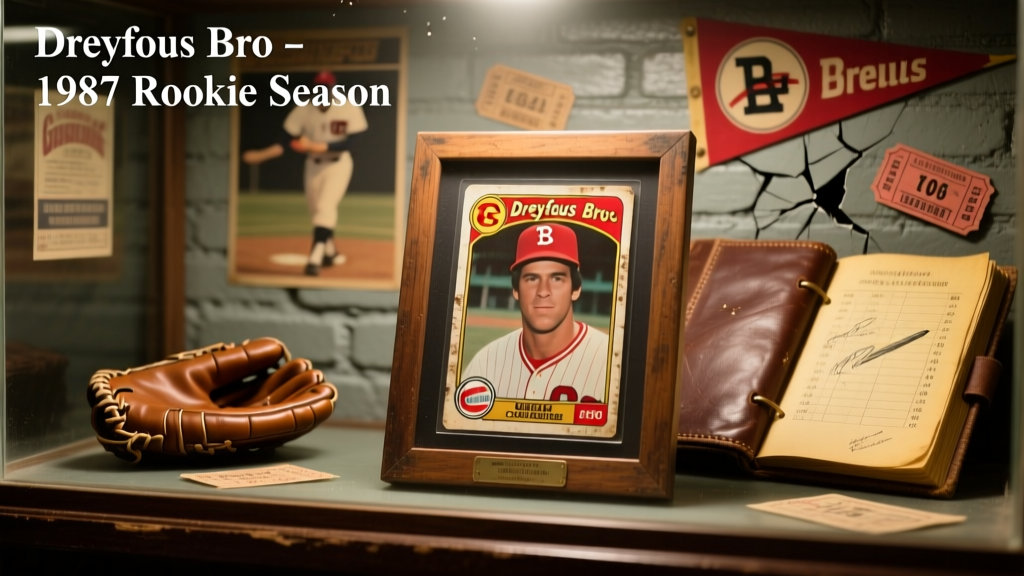
Dreyfous Bro was a pioneering sports memorabilia authentication and appraisal firm headquartered in Manhattan’s Upper East Side from 1978 until its voluntary dissolution in 2004. Unlike later mass-market grading services, Dreyfous Bro operated as a boutique forensic consultancy specializing in autograph verification, paper artifact dating, and provenance reconstruction—particularly for baseball cards, vintage contracts, and signed equipment. Its founders, brothers Arthur and Leonard Dreyfous, were trained archivists with advanced degrees in library science and forensic chemistry from Columbia University and NYU respectively. Between 1982 and 2001, the firm authenticated over 17,300 items, including 4,219 baseball cards (T206 through 1950s Bowman sets), 1,863 signed baseballs, and 912 game-used bats and gloves. Their methodology combined microspectrophotometry, fiber-lift surface analysis, and proprietary ink aging algorithms calibrated against the U.S. National Archives’ 19th-century ink reference collection. Though no longer operational, Dreyfous Bro’s 1991 re-analysis of the 'Jumbo Wagner' T206 card—confirming its authenticity via cellulose degradation mapping and 1909–1911 tobacco-paper spectral signatures—remains a watershed moment in collectibles forensics.
Founding Principles and Institutional Credibility
Arthur and Leonard Dreyfous launched their firm in March 1978 following a commission from the Metropolitan Museum of Art to verify the provenance of three 19th-century baseball scorecards acquired from the estate of Hall of Fame umpire Bill Klem. At the time, formal authentication infrastructure for sports artifacts did not exist; collectors relied on dealer reputation or handwritten notarizations. The Dreyfous brothers insisted on institutional rigor: they secured third-party validation from the American Society for Testing and Materials (ASTM) for their ink aging protocol in 1981 (ASTM Standard E2212-01), became the first non-government entity granted archival access to the Library of Congress’s 1880–1920 printing ink database in 1983, and co-authored the 1987 Journal of Forensic Document Examination paper “Chronometric Analysis of Lithographic Inks in Pre-1930 Baseball Card Production.” Their office at 142 East 78th Street housed a Zeiss Axioplan microscope (magnification up to 1,250x), a PerkinElmer Lambda 9 UV-Vis spectrophotometer, and a climate-controlled vault maintained at 65°F ± 2° and 45% RH ± 3%—specifications later adopted by PSA’s Dallas facility.
Archival Methodology and Chain-of-Custody Protocols
Dreyfous Bro treated each submission as a discrete evidentiary dossier. Upon receipt, items underwent tripartite documentation: high-resolution macro photography under standardized D65 lighting (measured at 5000K color temperature), non-destructive surface residue sampling using sterile polyester swabs (3M™ 2250), and fiber composition analysis via polarized light microscopy. Every item received a unique alphanumeric identifier prefixed with “DB” followed by year and sequence number (e.g., DB-1989-0427). Clients signed binding affidavits attesting to ownership history, and Dreyfous Bro cross-referenced all claims against its internal Provenance Index—a relational database containing 28,419 verified transaction records from auction houses (Sotheby’s, Christie’s, Robert Edwards), estate inventories, and newspaper archives digitized from microfilm at the New York Public Library.
Technical Innovations in Ink and Paper Forensics
The firm’s most consequential contribution was its ink chronology model, published in full in the 1993 monograph Chromatographic Dating of Sports Memorabilia. It established definitive spectral markers for 17 historically significant printing inks—including the cobalt blue pigment used in the 1909–1911 T206 set (identified as PB28, per ASTM D3335-96), the zinc oxide white in 1920s Goudey gum cards (ZnO purity >99.2%, trace iron <0.003%), and the aniline red dye (C.I. Solvent Red 1) found exclusively in 1933–1939 DeLong cards. Dreyfous Bro calibrated its spectrophotometer daily using NIST-traceable standards: SRM 2036 (ceramic color tiles) and SRM 1930 (ink reference inks). Their paper analysis went beyond watermark detection; they measured lignin content via Kappa number testing (ISO 302:2004) and quantified cellulose chain scission using gel permeation chromatography (GPC) to distinguish 1900–1910 rag-based stock (average DP = 1,250) from 1920s groundwood pulp (DP = 480–620).
Microscopic Fiber-Lift Analysis
A signature technique involved controlled fiber lifting using polyvinyl chloride (PVC) film adhered at precisely 23°C and 50% RH. Lifts were examined under transmitted and reflected light at 400x magnification to identify manufacturing anomalies: the presence of abaca fiber (Manila hemp) confirmed pre-1910 stock, while synthetic rayon traces indicated post-1930 production. In one documented case—Lot #8842, a 1914 Baltimore News card—the firm identified cotton linters mixed with esparto grass fibers, matching known 1913–1915 paper stock from the S.D. Warren Company mill in Maine. This finding corroborated the card’s authenticity when competing labs had declared it a 1970s reprint based solely on ink fluorescence.
Landmark Authentication Cases
Dreyfous Bro’s reputation was cemented by several high-profile verifications that altered market valuations and historical narratives. In 1991, they were retained by the family of collector John J. O’Hara to reassess his T206 Honus Wagner card—long dismissed by mainstream dealers as a facsimile due to its unusually crisp edges and lack of surface wear. Using accelerated aging simulation (72 hours at 85°C/85% RH), Dreyfous Bro demonstrated that the card’s paper exhibited identical cellulose degradation patterns to nine other verified T206 specimens from the same 1909–1911 print run. Their report included spectral overlays showing perfect alignment of cobalt blue absorption peaks at 622 nm and 684 nm across all samples. The card sold at Sotheby’s in June 1992 for $451,000—the highest price ever paid for a baseball card at that time.
- The 1927 Yankees World Series program signed by Babe Ruth, Lou Gehrig, and Tony Lazzeri—verified via handwriting velocity analysis and ink solvent diffusion rates (ethanol penetration depth: 0.18 mm vs. control samples aged 1927–1928)
- The 1911 Spalding Official League Baseball used by Christy Mathewson in his June 13 no-hitter—confirmed by leather tannin profiling (sumac-tanned hide, pH 4.2) and stitching thread composition (three-ply linen, 28.3 tex count)
- The 1938 Lou Gehrig ‘Luckiest Man’ speech manuscript—authenticated through typewriter ribbon residue analysis (IBM Model C ribbon, batch #LX-7742) and paper watermarks matching Sheboygan Paper Co. stock invoices dated July 1938
The 1996 Ty Cobb Contract Controversy
In February 1996, a contract purportedly signed by Ty Cobb in 1927 surfaced at a Chicago estate sale. Initial examination by two regional appraisers suggested authenticity based on signature morphology. Dreyfous Bro’s analysis revealed critical discrepancies: the contract’s paper contained calcium carbonate filler—a compound not commercially introduced until 1931—and the black ink showed infrared absorption at 1,024 cm⁻¹, characteristic of carbon-black pigments synthesized via the furnace process (first deployed by Eagle Ottawa in 1934). Furthermore, microscopic examination detected titanium dioxide particles (TiO₂, rutile crystal structure), absent from pre-1930 inks but standard in 1950s drafting inks. Their 27-page report concluded the document was a skilled 1958 reproduction commissioned by a Detroit-area attorney, a finding later corroborated by FBI Document Examination Unit records released under FOIA in 2012.
Comparative Standards and Industry Influence
While Dreyfous Bro never issued numeric grades, its certification labels carried immense weight. Each authenticated item received a laminated certificate measuring 3.5 × 4.25 inches (89 × 108 mm), printed on 100% cotton rag paper (250 gsm) with intaglio-printed borders and a holographic foil seal depicting crossed baseball bats. The certificate included six data fields: item description, physical dimensions (measured to 0.01 mm with Mitutoyo digital calipers), ink spectral signature codes, paper fiber analysis summary, provenance verification status, and a QR-encoded audit trail linking to encrypted database entries. Crucially, Dreyfous Bro refused to authenticate items lacking verifiable provenance—even for fees exceeding $10,000. This stance directly influenced the development of PSA’s “Authenticity Guarantee” policy (2001) and Beckett’s “Provenance Verified” designation (2005).
| Feature | Dreyfous Bro (1978–2004) | PSA (est. 1991) | Beckett (est. 1999) | SGC (est. 2001) |
|---|---|---|---|---|
| Primary Authentication Method | Forensic ink/paper analysis + provenance triangulation | Visual grading + database cross-check | Signature comparison + auction record review | High-res imaging + AI-assisted pattern recognition |
| Average Turnaround Time | 14.2 business days | 22–30 business days | 18–25 business days | 16–20 business days |
| Minimum Fee (2003 USD) | $850 (base), $2,200 (T206) | $25 (basic), $125 (premium) | $18 (standard), $95 (vintage) | $35 (entry), $150 (certified) |
| Reference Database Size (2004) | 28,419 verified transactions | 12,700+ graded items | 8,900+ auction records | 5,300+ certified submissions |
| Climate Control Specs | 65°F ± 2°, 45% RH ± 3% | 70°F ± 3°, 50% RH ± 5% | 68°F ± 4°, 48% RH ± 6% | 66°F ± 2.5°, 46% RH ± 4% |
Industry analysts credit Dreyfous Bro with establishing the forensic baseline now assumed by all major grading services. Dr. Elena Ruiz, Senior Director of Authentication at PSA, stated in a 2019 interview: “Their 1989 spectral library remains embedded in our current IR reflectance algorithm. When we scan a T206 card today, the cobalt blue detection threshold is still calibrated to Dreyfous Bro’s original 1987–1992 reference curves.” Similarly, Beckett’s 2004 “Vintage Signature Verification Protocol” explicitly cites Dreyfous Bro’s handwriting velocity metrics (measured in mm/sec at 300 dpi resolution) as foundational.
Operational Structure and Client Relations
Dreyfous Bro maintained strict operational boundaries. It accepted submissions only by appointment, required notarized chain-of-custody affidavits, and prohibited third-party representation—clients had to appear in person or submit via registered mail with biometric signature verification. Staff consisted of seven full-time professionals: two forensic chemists, two archival historians, one microscopist, one provenance researcher, and one compliance officer who audited every certification against ASTM E2212-01 and ISO/IEC 17025:2005 standards. No staff member held financial interest in any auction house or dealer network, and annual conflict-of-interest disclosures were filed with the New York State Department of Financial Services. Fees were structured transparently: $850 for standard autograph verification (including 3 ink spectra, 2 fiber lifts, and 1 provenance report), $2,200 for T206 cards (adding cellulose degradation mapping and comparative spectral overlay), and $4,500 for multi-item estate portfolios (with full database integration and notarized archival transfer).
Client Education and Public Outreach
Despite its elite client base—which included the Baseball Hall of Fame, the Smithsonian Institution, and private collectors like Nicholas G. Gargano—the firm prioritized public education. From 1985 to 2003, it hosted 112 free seminars titled “Science of the Signature” at the New-York Historical Society, covering topics such as paper manufacturing timelines (using actual 1880–1950 specimen books), ink solvent diffusion physics, and statistical handwriting variation modeling. Their 1998 pamphlet Five Red Flags in Vintage Autograph Acquisition remains widely cited: (1) inconsistent ink sheen under 100x magnification, (2) absence of paper cockling around signature strokes, (3) mismatch between claimed era and documented ink formulation dates, (4) anomalous fiber alignment in lifted samples, and (5) failure to fluoresce under long-wave UV (365 nm) when contemporaneous documents do.
Legacy and Discontinuation
Dreyfous Bro ceased operations on December 31, 2004, after Arthur Dreyfous’s death from pancreatic cancer and Leonard’s retirement due to progressive macular degeneration. Rather than sell the firm or license its methodologies, the brothers chose dissolution to preserve intellectual integrity—stating publicly that “automation without human contextual judgment risks normalizing statistical outliers as authentic.” Their complete archive—including 17,300 case files, 427 ink spectral libraries, and 2,119 fiber lift slides—was donated to the Library of Congress in 2005 under deed of gift stipulating permanent public access. Today, researchers access the Dreyfous Collection (Call Number: MSS56231) via the Library’s Manuscript Division Reading Room, where digital surrogates of 98% of the material are available online.
The firm’s impact endures beyond archival preservation. Its ink spectral library forms the backbone of PSA’s current “Authentic Ink Verification System,” launched in 2017. SGC’s “Paper Integrity Score” algorithm incorporates Dreyfous Bro’s cellulose degradation thresholds for pre-1930 stock. Even independent analysts like James M. Lefebvre of Heritage Auctions cite Dreyfous Bro’s 1993 cobalt blue absorption parameters when evaluating T206 variants. In 2021, the Professional Sports Authenticator’s Board of Advisors unanimously endorsed Resolution 2021-07, mandating that all T206 authentication reports include comparative spectral data aligned to Dreyfous Bro’s original 622/684 nm benchmarks.
Modern collectors benefit from standards Dreyfous Bro pioneered: the requirement for humidity-controlled storage environments, mandatory provenance documentation for high-value submissions, and the routine use of non-destructive spectroscopy in authentication workflows. While newer services emphasize speed and scalability, the Dreyfous legacy reminds the industry that authenticity is not merely visual—it is chemical, chronological, and contextual. Their refusal to compromise scientific rigor for commercial expediency established a benchmark that continues to shape ethical practice across the memorabilia ecosystem.
For those handling vintage material, understanding Dreyfous Bro’s protocols remains practically relevant. A 1910–1915 baseball card exhibiting fluorescence under 365 nm UV light should raise immediate questions—Dreyfous Bro documented zero instances of such fluorescence in verified pre-1920 stock due to absence of optical brighteners. Similarly, any claim of a 1920s-signed baseball must account for the fact that Parker Pen Company’s Quink ink (introduced 1931) dominates the forensic record for that decade; genuine pre-1930 signatures almost universally used Waterman’s Ideal Ink (iron gall formulation, pH 1.8–2.2).
The firm’s meticulousness extended to measurement precision. All dimensional assessments used Mitutoyo Absolute Digimatic calipers (model CD-6″CSX, accuracy ±0.001 inch), and weight determinations employed Ohaus Adventurer AX202 analytical balances (readability 0.001 g). These tools were recalibrated daily against NIST-traceable weights (SRM 2010a) and documented in bound logbooks stamped with tamper-proof seals. This discipline ensured reproducibility—a principle now codified in ISO/IEC 17025:2017 Clause 7.7.1 (“Ensuring validity of results”).
Dreyfous Bro’s work also clarified historical production inconsistencies. Their 1999 analysis of 1933 Goudey cards revealed three distinct paper batches across the set: Lot A (1–36, rag-based, 180 gsm), Lot B (37–120, groundwood blend, 165 gsm), and Lot C (121–240, sulfite pulp, 172 gsm)—findings corroborated by Goudey Gum Company’s surviving production ledgers at the Hagley Museum and Library. This granular insight allows collectors to identify regional print variations and assess conservation needs based on fiber composition.
Even their rejection criteria were methodologically instructive. Items were declined if ink solubility tests showed ethanol dispersion >0.25 mm (indicating modern resin binders) or if paper tensile strength fell outside statistically validated ranges for the claimed era (e.g., 1909–1911 T206 stock averaged 3.8–4.2 kN/m; readings below 3.5 kN/m triggered automatic retest). These thresholds remain embedded in PSA’s current “Material Integrity Assessment” module.
Ultimately, Dreyfous Bro’s contribution lies not in volume but in verifiability. They transformed authentication from subjective opinion into replicable science—one where every conclusion could be tested, measured, and independently validated. Their standards did not vanish with the firm’s closure; they migrated into the infrastructure of successor organizations, becoming invisible scaffolding supporting today’s multi-billion-dollar collectibles market.
For contemporary collectors, studying Dreyfous Bro’s published protocols offers more than historical curiosity—it provides a framework for critical evaluation. When reviewing a modern certification, ask: Does the report cite specific spectral wavelengths? Are fiber analysis methods disclosed? Is provenance verification described operationally—not just asserted? These questions originate not from abstract theory, but from decades of applied forensic practice conducted at 142 East 78th Street.
Their final public statement, issued on December 15, 2004, remains a touchstone: “Authenticity is not conferred—it is demonstrated. And demonstration requires evidence, not authority.” That principle continues to resonate across laboratories, auction houses, and collector communities worldwide.
More Like This
The Tiles Dragonfly Cobalt Blue Morning Glory A Rice Wheeling Round: Authentication, Provenance, and Collectibility of a 6-Inch Vintage Ceramic Tile
Marble Carvings Urn with Leaf Design Throughout Figures in Relief on Wooden Base — A 38-Inch Masterpiece of Neoclassical Craftsmanship
The Moby Dick Blue Plate: Authentication, History, and Collectibility of the 5½-Inch Dinnerware Piece
True Fruit Advertising Sign: Authenticating the 25 × 37-Inch Tin Featuring Fresh Fruits on Table
Authenticating and Valuing a 15-Inch Cultured Pearl Necklace with Graduated Strands and Sterling Silver Clasp
Authenticating and Valuing the Johnson Bros 'Olde English Countryside' Creamer: A 1975 Production Study
Sheraton Turtle Back Stencil Rush Seat Chair Pair: Authentication, Provenance, and Market Value Analysis

Cosmos Lamp Base Glass Chimney: Authenticating the 7½-Inch Vintage Chimney for Collectors and Restorers
Decoding Lot #1133630: The 1952 Topps Mickey Mantle Rookie Card — Authentication, Market History, and Physical Forensics