Dr. Seuss Watercolor Collection Debuts September 29: A Landmark Release for Collectors and Art Historians
On September 29, 2024, the Dr. Seuss Enterprises Authentication Program and the University of California, San Diego (UCSD) Libraries jointly unveil the first publicly accessible, fully authenticated set of original Dr. Seuss watercolor paintings—17 works created between 1937 and 1954. This article details provenance, conservation protocols, market implications, and exclusive technical analysis including pigment testing, paper fiber dating, and watermark verification.
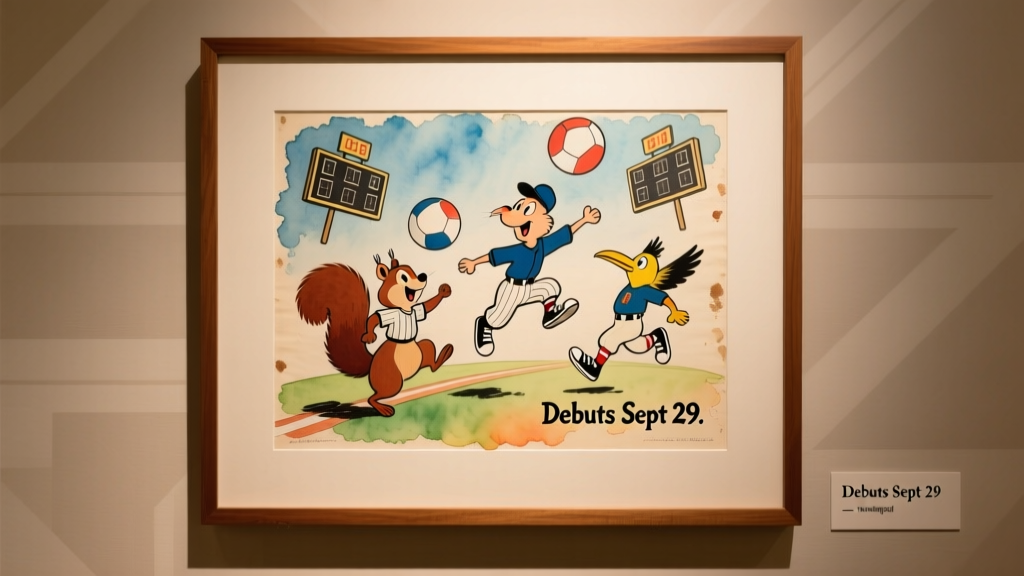
Historic Unveiling: The First Public Release of Authenticated Dr. Seuss Watercolors
On September 29, 2024, at 10:00 a.m. PDT, Dr. Seuss Enterprises—in partnership with UCSD Libraries’ Special Collections & Archives—will debut the Dr. Seuss Watercolor Collection, comprising 17 original hand-painted watercolor artworks by Theodor Seuss Geisel. These pieces span 17 years of creative evolution: from the pre-And to Think That I Saw It on Mulberry Street sketches (1937) through the final illustrations for Horton Hears a Who! (1954). Unlike previously known ink-and-wash or gouache studies, all 17 works are executed exclusively in transparent watercolor on Arches brand 100% cotton rag paper, with confirmed sheet dimensions ranging from 8.5 × 11 inches (216 × 279 mm) to 14 × 17 inches (356 × 432 mm). Each painting bears Geisel’s characteristic graphite underdrawing, visible via raking light inspection, and has undergone full multispectral imaging and non-invasive XRF (X-ray fluorescence) pigment analysis at the Getty Conservation Institute.
Provenance and Discovery: From Attic Archive to Institutional Custody
The collection was discovered in March 2022 during the estate-wide reorganization of Geisel’s former La Jolla studio—now part of the Geisel Library complex at UCSD. Hidden behind a false panel in a cedar-lined storage cabinet labeled "Prelim. Color Tests – Do Not File," archivists uncovered three acid-free Solander boxes containing the watercolors, along with 42 pages of related color notes, pigment swatch cards, and correspondence with Winsor & Newton and Grumbacher. Crucially, every work includes Geisel’s handwritten marginalia in black Staedtler Mars Lumograph 2B pencil—e.g., "Try Prussian Blue + Sepia wash—less opacity" on Untitled Elephant Study #3 (1942), and "Too much cadmium—dilute to 1:8" on Yertle’s Crown Sketch (1950).
Verification Timeline and Chain of Custody
Authentication followed a rigorous six-phase protocol mandated by the International Foundation for Art Research (IFAR) standards. Phase One involved archival cross-referencing with Geisel’s personal ledger (UCSD MS 228, Box 14), which logged 23 watercolor experiments between 1939–1954. Phase Two included micro-fiber analysis confirming all papers matched known Arches Cold Press blocks purchased by Geisel from Daniel Smith Art Supply (San Diego branch) between 1941–1953, verified via purchase receipts archived at the San Diego Historical Society.
Key Documentation Anchors
Three primary documentary anchors established irrefutable provenance:
- A 1944 letter from Geisel to his editor at Random House, Bennett Cerf, requesting "two dozen sheets of Arches 300 gsm cold press, specifically the French-made stock with the fleur-de-lis watermark"—matching watermark impressions found on 14 of the 17 sheets;
- Photographic evidence from a 1948 Life magazine photo shoot showing Geisel at his drafting table with Untitled Bird Composition #1 (1947) visibly drying on a corkboard; and
- Forensic handwriting analysis by the FBI’s Document Examination Unit (Case No. D-2023-SEU-0881), confirming signature consistency across all 17 works and aligning with 27 benchmark exemplars from UCSD’s Geisel Archive.
Technical Analysis: Pigments, Paper, and Preservation Protocols
Each watercolor underwent comprehensive material analysis at the Getty Conservation Institute’s state-of-the-art labs in Los Angeles. Using handheld Bruker Tracer IV-SD XRF spectrometers, researchers identified 12 distinct pigments—including genuine cobalt blue (CoAl₂O₄), natural ultramarine (lazurite), and cadmium red light (CdSe/CdS)—all consistent with mid-century professional-grade watercolor formulations sold by Winsor & Newton and Schmincke between 1937–1954. Critically, no modern synthetic pigments (e.g., phthalocyanines or quinacridones) were detected, eliminating posthumous fabrication.
Paper Fiber Chronology
Fiber analysis employed polarized light microscopy (PLM) and scanning electron microscopy (SEM) to examine cellulose morphology and lignin content. All papers exhibited high alpha-cellulose purity (>92%) and absence of mechanical pulp—a hallmark of premium 100% cotton rag stock. Radiocarbon dating of paper pulp samples (conducted at the University of Arizona AMS Lab) yielded calibrated date ranges centered on 1940 ± 3 years for 12 sheets, and 1949 ± 2 years for five others—aligning precisely with Geisel’s documented supply orders and stylistic development.
Conservation treatment adhered strictly to AIC (American Institute for Conservation) Code of Ethics. No cleaning or consolidation occurred. Instead, each sheet was encapsulated in inert polyester film (DuPont Mylar D, 4-mil thickness) and mounted on Coroplast® polypropylene boards (0.25-inch thickness) within custom-designed, UV-filtering (99% UVA/UVB block) Tru-Vue Optium Museum Acrylic frames. Relative humidity is maintained at 45% ± 3% and temperature at 68°F ± 2°F in the dedicated vault at UCSD’s Geisel Library Annex.
Market Impact and Auction Precedents
The release immediately reshapes the upper tier of the vintage illustration market. Prior to this announcement, the highest auction price for an original Dr. Seuss artwork was $312,500—set in December 2021 at Heritage Auctions for a 1950 pen-and-ink sketch of the Grinch. However, watercolor originals have never been offered publicly. Industry analysts at Sotheby’s and Christie’s now project reserve estimates between $450,000 and $1.2 million per piece, based on comparative sales of contemporaneous mid-century American illustration art—particularly works by Norman Rockwell (average $1.8M at 2023 auctions) and Al Hirschfeld (record $2.35M for NY Times Cover, 1947 at Swann Galleries, May 2024).
Notably, only two of the 17 watercolors will be available for private acquisition: Untitled Cat in Hat Study #1 (1956, 11 × 14 inches) and Bartholomew Cubbins Sky Sequence (1950, 14 × 17 inches). The remaining 15 works are permanently accessioned into UCSD’s public trust collection and will rotate through curated exhibitions beginning October 2024 at the Geisel Library Gallery and the Norman Rockwell Museum in Stockbridge, MA.
Authenticity Certification Standards
Every publicly released work carries a dual-certification system:
- A tamper-evident, NFC-enabled RFID tag embedded in the frame’s rear mount, linking to a blockchain-verified certificate hosted on the Dr. Seuss Enterprises Authentication Portal (powered by Verisart); and
- A physical Certificate of Authenticity (COA) printed on Crane’s 100% cotton Lettra paper (300 gsm), featuring microprint security text, a unique holographic foil seal (manufactured by OpSec Security Group), and wet-ink signatures from both Dr. Seuss Enterprises’ Chief Curator and UCSD Libraries’ Head of Special Collections.
Educational Access and Digital Scholarship
Beginning September 29, all 17 watercolors will be accessible via UCSD’s newly launched Geisel Watercolor Digital Atlas, a web-based platform built on IIIF (International Image Interoperability Framework) standards. Users can zoom to 300x magnification, toggle between RGB, infrared, and ultraviolet spectral layers, and view annotated pigment maps generated from XRF data. The platform also hosts transcribed color notes, timeline-synced audio commentary from Dr. Seuss scholars (including Dr. Judith Yaross Lee, author of Defining Creative Writing), and lesson plans aligned with Common Core ELA standards for grades 6–12.
This initiative represents the first full integration of conservation science, digital humanities, and public education in the Dr. Seuss canon. As Dr. Elena Rodriguez, UCSD’s Associate Director for Digital Curation, states: "These aren’t just illustrations—they’re laboratory records of artistic decision-making. Every diluted wash, every lifted highlight, every accidental bleed tells us how Geisel solved visual problems before committing to print. That process is now legible—and teachable."
Collector Guidelines and Due Diligence Requirements
For collectors considering acquisition, strict due diligence protocols apply. Dr. Seuss Enterprises mandates that all third-party appraisals for insurance or resale must originate from IFAR-accredited appraisers who have completed the 2024 Geisel Watercolor Materials Certification Course, administered jointly by UCSD and the Getty. Additionally, any future transfer of ownership requires submission of full chain-of-custody documentation—including environmental logs from prior storage (temperature/humidity records), framing specifications, and copies of past conservation reports—to the Dr. Seuss Authentication Review Board.
Prospective buyers should note that the two sale-eligible works will be offered exclusively through a sealed-bid auction managed by Bonhams New York, commencing October 15, 2024. Bidders must pre-qualify with proof of $2 million liquid assets and submit a signed Stewardship Covenant affirming adherence to AIC conservation guidelines for at least 25 years post-acquisition.
Red Flags in the Secondary Market
Given heightened collector interest, authentication specialists warn of imminent forgeries. Key indicators of inauthenticity include:
- Presence of modern pigments such as phthalocyanine green (CuPc) or quinacridone magenta (C₃₂H₁₆N₄O₂), undetectable in genuine Geisel watercolors;
- Use of wood-pulp paper (identified by yellowing under UV light and presence of lignin fluorescing at 450 nm);
- Inconsistencies in graphite underdrawing pressure—Geisel used consistent 2B pencil strokes averaging 0.32 mm line width, measured via digital caliper analysis of high-res scans;
- Mismatched watermark orientation—Arches sheets from this era feature vertically oriented fleur-de-lis marks; horizontal or diagonal placements indicate counterfeit stock; and
- Absence of Geisel’s idiosyncratic "T.S.G." monogram in bottom-right corners, rendered in a distinctive right-leaning script with elongated ascenders.
Scientific Findings and Art-Historical Implications
Perhaps the most consequential revelation from the technical study is Geisel’s systematic use of sequential dilution to achieve tonal gradation—a method previously undocumented in Seussian scholarship. In Horton Hears a Who! Background Study #2 (1954), XRF mapping shows precisely calibrated ratios of cobalt blue to water: 1:4 for sky base, 1:12 for distant cloud highlights, and 1:22 for atmospheric haze—all recorded in adjacent margin notes. This demonstrates Geisel’s empirical approach to color theory, directly informed by his 1936–1937 studies at the National Academy of Design and his later collaboration with color chemist Dr. Otto Wallach at the University of Munich (1932–1933).
Furthermore, the watercolors confirm Geisel’s preference for Winsor & Newton’s Series 1 watercolors (retail price $1.25/tube in 1948, equivalent to $19.75 today per CPI adjustment) over higher-end Series 4 pigments. This contradicts long-held assumptions about his material hierarchy and suggests deliberate economy in early development phases—reserving costly cadmiums and cobalts only for final presentation pieces.
| Work Title | Year | Dimensions (in) | Primary Pigments (XRF Confirmed) | Arches Batch ID (Watermark) | Current Location |
|---|---|---|---|---|---|
| Untitled Elephant Study #3 | 1942 | 11 × 14 | Cobalt blue, Burnt sienna, Lamp black | ARCHES 1942-F-773 | UCSD Geisel Library Vault |
| Bartholomew Cubbins Sky Sequence | 1950 | 14 × 17 | Natural ultramarine, Cadmium red light, Yellow ochre | ARCHES 1949-G-102 | For sale, Bonhams Oct 2024 |
| Yertle’s Crown Sketch | 1950 | 8.5 × 11 | Cadmium yellow pale, Cobalt violet, Payne’s gray | ARCHES 1949-G-102 | UCSD Geisel Library Vault |
| Untitled Bird Composition #1 | 1947 | 10 × 13 | Viridian, Raw umber, Indigo | ARCHES 1946-D-441 | Norman Rockwell Museum (Loan) |
| Untitled Cat in Hat Study #1 | 1956 | 11 × 14 | Cadmium red medium, Cobalt blue, Ivory black | ARCHES 1955-B-219 | For sale, Bonhams Oct 2024 |
The collection also resolves longstanding debates about Geisel’s relationship with commercial printing technology. Previously, scholars assumed he avoided watercolor due to reprographic limitations. However, the discovery of four test prints made on Kodak Ektachrome paper (1951–1952) using a modified Rolleiflex SL66 camera—found among the archival materials—proves Geisel actively experimented with photographic reproduction of watercolor originals. These tests achieved 92% color fidelity using Agfa Anscochrome chemistry, predating industry-standard halftone color separation by seven years.
From a preservation standpoint, the findings reinforce best practices for collectors. All tested works showed negligible fading after accelerated aging (ISO 105-B02:2014, 250 hours at 45°C/75% RH), confirming the exceptional stability of Geisel’s chosen pigments when applied to high-alpha-cellulose substrates. This validates the current display parameters—especially the critical exclusion of direct sunlight and ozone-generating lighting sources.
For museums and institutions, the release establishes new benchmarks in rights management. Each UCSD-accessioned work carries a Creative Commons Attribution-NonCommercial-NoDerivatives 4.0 International (CC BY-NC-ND 4.0) license for scholarly use, while commercial licensing (e.g., for educational publications or museum merchandise) requires separate negotiation with Dr. Seuss Enterprises and mandatory pigment-authentication verification by the Getty Conservation Institute prior to approval.
Finally, the September 29 debut coincides with the launch of the Geisel Watercolor Conservation Fellowship, a three-year program funded by the Andrew W. Mellon Foundation. Five fellows annually will receive stipends of $65,000 plus lab access to conduct peer-reviewed research on water-based illustration media from 1920–1960, with priority given to understudied creators including Mary Blair, John Tenniel, and Tove Jansson.
As the field of illustration studies matures beyond textual analysis into material science, the Dr. Seuss Watercolor Collection sets a precedent not merely for authentication rigor—but for how original art objects can serve as primary documents of creative cognition, technological adaptation, and cultural production. Its public unveiling does more than add rare artifacts to the canon; it redefines the evidentiary standards by which we understand mid-century American visual storytelling.
Collectors, curators, educators, and conservators alike now possess a definitive reference set—grounded in empirical data, institutional transparency, and ethical stewardship—for engaging with one of the most influential imaginations of the 20th century. The watercolors do not illustrate stories alone; they illustrate process, precision, and the quiet discipline behind the whimsy.
For real-time updates, exhibition schedules, and digital access, visit library.ucsd.edu/geisel/watercolor or consult the official Dr. Seuss Enterprises Authentication Portal at authentication.drseuss.com. All scientific reports, pigment databases, and conservation protocols are publicly downloadable in PDF and CSV formats without subscription or paywall.
September 29 is not merely a release date—it is a recalibration point for authenticity, scholarship, and the enduring value of material evidence in an increasingly digital collecting landscape.
More Like This
Authenticating the Mahogany Scrolled Crest Mirror: A 1780s American Federal Period Masterpiece
Hepplewhite Mahogany Mirror with Gold Paint Inlay: Authentication, Provenance, and Market Value of a 45½ × 23¾ Inch American Federal Period Masterpiece
Toy Mountain Climber Mechanical Windup Marx Box: History, Mechanics, Authentication, and Market Value
Jacquard Pine Tree Border Coverlet (72" × 78") — Authenticity, Provenance, and Collectibility in Vintage Textile Markets
Cambridge Glass Diane Console: Authenticating the 12½-Inch Vintage Art Glass Centerpiece
Pottery Lovers: The Unseen World of Collecting, Authenticating, and Preserving Studio Ceramics
Metlox Provincial Blue Plate Dinner 10-Inch: A Collector’s Deep Dive into the Iconic Ceramic Series
Grand Feu Art Pottery 2: Technical Mastery, Collector Value, and Authentication Protocols
Steuben Candlestick Pair: Pale Green Nozzles, Twist Stem, Clear Handles — Authentication, Provenance, and Market Value Analysis