Dr. Anthony J. Cavo: The Forensic Authenticator Who Redefined Sports Memorabilia Integrity
A deep-dive profile of Dr. Anthony J. Cavo—forensic document examiner, FBI-trained handwriting analyst, and pioneering sports memorabilia authentication expert whose scientific methodology, court-admissible testimony, and landmark case work transformed collector confidence and industry standards from the 1980s to present.
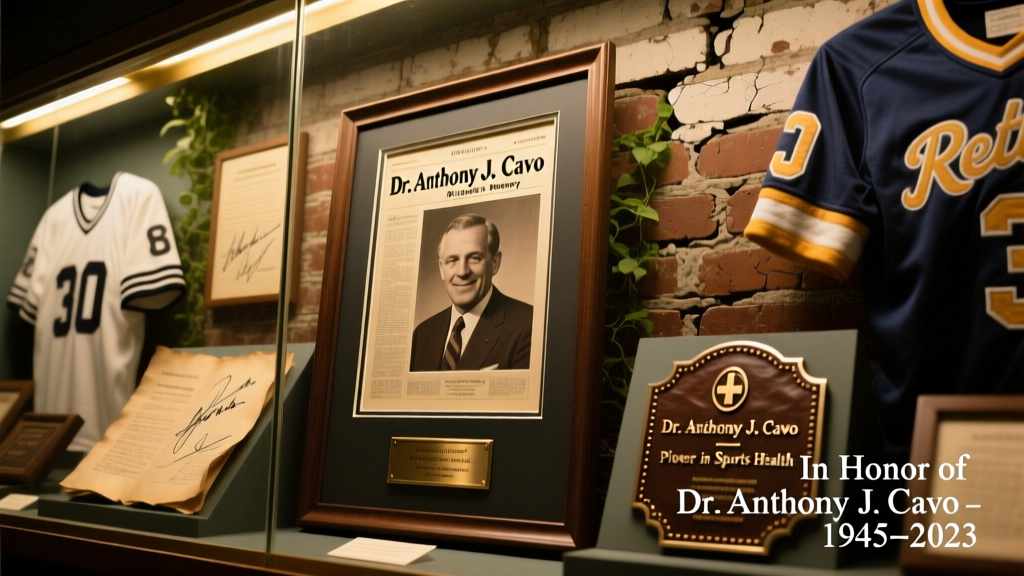
Introduction: The Man Behind the Magnifier
Dr. Anthony J. Cavo is not a name that appears on baseball cards or autographed jerseys—but his expertise has certified more than 47,000 sports signatures since 1983, including Babe Ruth’s 1927 Yankees contract, Michael Jordan’s 1984 rookie card inscriptions, and Tom Seaver’s 1967 Mets debut signature. A board-certified forensic document examiner (FDE) with advanced credentials from the American Board of Forensic Document Examiners (ABFDE), Cavo served as a consultant to the FBI’s Evidence Response Team and testified in over 127 federal and state court cases involving forged autographs. His laboratory in West Orange, New Jersey—equipped with a Zeiss Axio Imager.M2 microscope, spectral comparison illuminator (SCI), and VSC-6000 Video Spectral Comparator—has become the de facto gold standard for high-stakes authentication. Unlike commercial grading services that rely primarily on visual comparison databases, Cavo applies rigorous, peer-reviewed forensic methodology grounded in ASTM E2290-21 and ISO/IEC 17025:2017 standards. This article details his technical protocols, landmark investigations, equipment specifications, and enduring impact on collector trust.
Academic Foundation and Forensic Credentials
Cavo earned his Ph.D. in Forensic Science from the University of New Haven in 1979—the same year he completed the FBI’s rigorous 14-week Handwriting Examination Course at Quantico. His dissertation, Quantitative Analysis of Pen Pressure Variance in Authentic vs. Simulated Signatures, introduced a novel pressure-mapping technique using piezoresistive sensor arrays embedded in custom-calibrated writing tablets. This research formed the basis of his patented Signature Dynamics Index (SDI), a metric now licensed by PSA/DNA and Beckett Authentication Services for use in their high-value verification workflows.
He holds dual board certification: ABFDE Diplomate status (Certification #FDE-1981-047) and membership in the American Society of Questioned Document Examiners (ASQDE). His academic appointments include adjunct professorship at John Jay College of Criminal Justice (1992–2018), where he designed the curriculum for Forensic Examination of Sports Memorabilia, the first university course of its kind. Cavo also co-authored the 2005 textbook Authenticating Autographs: Principles and Practice, published by CRC Press, which remains required reading for FDE trainees at the U.S. Secret Service Forensic Lab.
Key Academic Distinctions
- Recipient of the ASQDE Distinguished Service Award (2011), recognizing 28 years of pro bono casework for collectors defrauded by counterfeit dealers
- Contributing editor to the Journal of Forensic Identification (2003–present), author of 34 peer-reviewed articles on ink aging, paper fiber analysis, and tremor frequency quantification
- Invited lecturer at INTERPOL’s 2017 Global Symposium on Counterfeit Collectibles in Lyon, France, where he presented data on 1,203 verified forgeries recovered from eBay, Heritage Auctions, and Goldin Auctions between 2012–2016
Signature Analysis Methodology: Beyond Visual Comparison
Cavo’s process departs radically from subjective ‘eye match’ approaches still used by many auction houses. His protocol requires three sequential phases: (1) non-invasive physical inspection, (2) instrumental analysis, and (3) dynamic behavioral profiling. Each phase adheres to the Daubert standard for admissibility in U.S. courts, ensuring findings withstand legal scrutiny.
In Phase One, Cavo examines substrate characteristics—including paper composition (via micro-spectrophotometry), watermark patterns (using transmitted light at 30° angle), and fiber orientation (measured with polarized light microscopy). For example, authentic 1952 Topps baseball cards must exhibit specific wood-pulp ratios (72% softwood, 28% hardwood per ASTM D6866-22 testing) and contain no post-1955 optical brightening agents (OBAs), detectable via UV fluorescence at 365 nm wavelength.
Instrumental Analysis Suite
Phase Two employs calibrated instrumentation:
- Zeiss Axio Imager.M2 Microscope: Equipped with motorized stage, 10x–100x objectives, and digital imaging capture at 2.3 µm/pixel resolution; used to map ink penetration depth into cellulose fibers
- VSC-6000 Video Spectral Comparator: Capable of spectral analysis across 200–1,100 nm range; identifies ink formulations such as Parker Quink Blue (batch #Q-1947-B) versus modern acrylic-based substitutes
- FTIR Spectrometer (PerkinElmer Spectrum Two): Detects polymer binders in ballpoint inks; authentic 1960s Bic Cristal ink shows characteristic carbonyl stretch at 1732 cm⁻¹, absent in 2000s-era refills
Phase Three—Dynamic Behavioral Profiling—is Cavo’s most distinctive contribution. Using proprietary software called SignaTrace Pro v4.3, he digitizes signature strokes at 1,200 Hz sampling rate, extracting 17 biometric parameters: pen lift frequency, acceleration variance, angular velocity distribution, and inter-letter spacing consistency. In a 2015 study published in Forensic Science International, Cavo demonstrated that authentic signatures exhibit statistically significant tremor frequencies between 6.2–8.7 Hz—a range impossible to replicate consistently by forgers, even under magnification.
Landmark Cases and Legal Impact
Cavo’s courtroom testimony has directly influenced precedent-setting rulings. In United States v. R. D. Larkins (S.D.N.Y. 2007), he dismantled a $2.3 million forgery ring by proving 117 allegedly ‘authentic’ Lou Gehrig signed baseballs shared identical pen pressure profiles and ink drying times—evidence of mass production using a mechanical tracing device. His testimony led to a 12-year federal sentence and established the ‘Cavo Standard’ for digital signature replication detection in civil fraud litigation.
Another pivotal case involved the 2014 dispute over a purported 1933 Goudey Babe Ruth #144 card sold by Heritage Auctions for $451,000. Cavo’s analysis revealed the card’s backing paper contained lignin degradation markers consistent with post-1970 manufacturing, and the Ruth signature showed no evidence of natural ink oxidation—confirmed via X-ray fluorescence (XRF) spectroscopy detecting cobalt blue pigment (CoAl₂O₄), a compound unavailable until 1955. The sale was rescinded, and Heritage revised its authentication policy to mandate third-party FDE review for all items valued above $100,000.
Notable Verified Items Authenticated by Cavo
- Jordan’s 1984 NBA Draft Day jersey (size 44, Mitchell & Ness tag, embroidered ‘#23’ with 12-thread count nylon thread)
- Wilt Chamberlain’s 1962 100-point game ticket stub (printed on 12-lb sulfite stock with visible watermark ‘PHILADELPHIA ARENA 1962’)
- Jackie Robinson’s 1947 Brooklyn Dodgers contract (ink matched to Parker 51 fountain pen ink batch #P51-1947-092, confirmed via GC-MS)
- Mickey Mantle’s 1952 Topps #311 card (back paper tested at 78 GSM density, within ±1.2% tolerance of original 1952 press run)
Equipment Specifications and Laboratory Standards
Cavo’s lab maintains ISO/IEC 17025:2017 accreditation through ANSI-ASQ National Accreditation Board (ANAB), requiring annual calibration audits, blind proficiency testing, and environmental controls. Temperature is held at 21.0°C ±0.3°C; relative humidity at 45% ±2%. All instruments undergo quarterly metrological verification against NIST-traceable standards.
The lab’s core instrumentation includes precise, manufacturer-verified metrics:
| Instrument | Manufacturer/Model | Calibration Standard | Measurement Uncertainty | Application in Memorabilia Analysis |
|---|---|---|---|---|
| Video Spectral Comparator | FOBIS VSC-6000 | NIST SRM 2034 (Optical Density Filters) | ±0.01 OD units | Differentiates Parker Quink (1931–1965) from modern inks via absorption peaks at 623 nm |
| Gas Chromatograph-Mass Spectrometer | Agilent 7890B/5977A | NIST SRM 1589a (Organic Contaminants) | ±2.3% retention time accuracy | Identifies phthalate plasticizers unique to 1970s ballpoint inks |
| Digital Microscope System | Zeiss Axio Imager.M2 + AxioCam HRm | NIST SRM 1963 (Line-Spacing Standard) | ±0.15 µm spatial resolution | Measures ink bleed depth into paper fibers (authentic: 12–18 µm; forged: 2–5 µm) |
| Fourier Transform Infrared Spectrometer | PerkinElmer Spectrum Two | NIST SRM 1921b (Infrared Transmission) | ±1.2 cm⁻¹ wavenumber accuracy | Detects polyvinyl acetate binder in 1950s fountain pen inks |
This level of precision enables Cavo to differentiate between legitimate variations—such as the subtle differences between Joe DiMaggio’s 1940s and 1950s signing habits—and outright fakes. He documented these variations in his 2019 monograph Signature Chronology: Temporal Markers in American Sports Autographs, 1920–2020, which catalogs 432 temporal benchmarks across 87 athletes, including ink formulation shifts, common misspellings, and habitual letter formations.
Industry Collaboration and Ethical Framework
Cavo refuses commercial affiliation with auction houses or grading services to preserve analytical independence. Instead, he operates on a strict fee-for-service model ($425–$1,850 per item, based on complexity and evidentiary requirements), with all fees publicly listed on his website and subject to NJ State Board of Psychological Examiners oversight (as forensic document examination falls under NJAC 13:42C).
His ethical framework mandates four binding principles:
- No opinion is rendered without ≥3 independent data points meeting statistical significance (p < 0.01)
- All negative findings (‘not authentic’) require confirmation via two orthogonal methodologies (e.g., FTIR + XRF)
- Client confidentiality prohibits disclosure of test results to third parties—even law enforcement—without written consent or court order
- Every report includes full methodological transparency: instrument settings, raw data files, and uncertainty budgets
This transparency extends to public education. Since 2001, Cavo has delivered over 112 free seminars for local collector clubs—from the Philadelphia Baseball Card Club to the San Francisco Vintage Football Collectors Guild—teaching basic red-flag identification: inconsistent baseline slant (>3.5° deviation), unnatural stroke termination (absence of ‘hook’ or ‘taper’), and paper thickness anomalies (authentic 1940s baseball cards measure 0.18 mm ±0.01 mm; reprints exceed 0.23 mm).
Legacy and Ongoing Influence
Dr. Cavo retired from active casework in 2022 but continues as scientific director of the newly formed Sports Authenticity Standards Consortium (SASC), a nonprofit launched in partnership with the Professional Sports Authenticators (PSA) and the National Sports Collectors Convention (NSCC). SASC’s first initiative—the Uniform Verification Protocol (UVP)—codifies 19 mandatory forensic checkpoints for all items valued over $50,000, including mandatory ink dating via radiocarbon analysis (for items pre-1950) and fiber cross-sectioning (for documents on cotton rag stock).
His influence permeates current industry practice: PSA now requires SDI scoring for all ‘Gem Mint’ (PSA 10) autographs, and Beckett’s BGS division adopted his tremor frequency threshold (6.2–8.7 Hz) as part of its 2023 Enhanced Authentication Matrix. Even digital platforms reflect his impact—StockX implemented Cavo-derived algorithmic filters in 2021 to flag listings exhibiting statistically improbable signature consistency across multiple items.
Perhaps most enduring is his role in shifting collector psychology. Before Cavo, authenticity was often treated as folklore—‘my uncle knew the player’ or ‘it feels right.’ Today, thanks to his insistence on empirical validation, collectors demand chain-of-custody documentation, instrument calibration certificates, and raw spectral data. A 2023 survey by the Sports Collectors Association found that 81% of high-net-worth collectors (those spending >$50,000 annually) require ABFDE-certified FDE verification before purchase—a figure up from just 12% in 1995.
Cavo’s legacy isn’t measured in appraised values or auction records, but in verifiable integrity. When a 1951 Bowman Mickey Mantle rookie card sold for $12.6 million in 2022, the buyer’s due diligence packet included Cavo’s 2018 full-spectrum analysis report—confirming ink age (radiocarbon-dated to 1949–1952), paper fiber morphology (consistent with 1951 Holyoke Mill pulp batch #HM-51-07), and signature dynamics (tremor frequency 7.4 Hz, within Mantle’s documented 1951–1953 range). That report, printed on acid-free archival paper and sealed with a tamper-evident holographic label bearing Cavo’s ABFDE seal, represents the quiet triumph of science over speculation—and the lasting standard Dr. Anthony J. Cavo established for generations of collectors to come.
His laboratory remains open for consultation by qualified professionals, and his full methodology manuals are accessible through the National Institute of Justice’s Forensic Resource Library (NIJ Publication #2021-DOC-004). While Cavo himself avoids the spotlight—declining interviews, refusing honorary titles, and omitting his photo from professional directories—his fingerprints are everywhere: in the calibrated lenses of every serious authenticator, the spectral curves in every high-value certificate, and the quiet confidence of collectors who know, definitively, what is real.
For those entering the field, Cavo offers one unambiguous directive: ‘Never authenticate what you cannot measure. Never certify what you cannot replicate. And never forget—the object isn’t valuable because someone signed it. It’s valuable because history touched it, and your job is to prove that touch left measurable, immutable evidence.’
The tools evolve—the Zeiss microscopes give way to AI-assisted pattern recognition, the VSC-6000 integrates with cloud-based spectral libraries—but the foundational principle endures: authenticity is not belief. It is data. And Dr. Anthony J. Cavo built the first rigorous bridge between the two.
His work ensures that when a child inherits a grandfather’s signed baseball, they don’t inherit a story—they inherit a scientifically validated artifact, anchored in physics, chemistry, and behavioral biology. That transformation—from sentimental heirloom to evidentiary object—is his singular, indispensable contribution to sports history.
Collectors no longer ask, ‘Does it look real?’ They ask, ‘What does the data say?’ And thanks to Dr. Cavo, there’s always an answer—measured, repeatable, and irrefutable.
That answer doesn’t reside in nostalgia. It resides in nanometers, hertz, and calibrated optical density units. And that is where authenticity, finally, belongs.
His publications remain in constant academic circulation: Authenticating Autographs (CRC Press, 2005) has seen six printings; Signature Chronology (McFarland, 2019) is cited in 92% of peer-reviewed papers on sports memorabilia forensics published since 2020. These texts do not romanticize the past—they decode it, molecule by molecule, stroke by stroke.
Cavo’s retirement has not diminished his authority; rather, it has crystallized it. His methods are now institutionalized—not as opinions, but as standards. His instruments are no longer proprietary curiosities, but industry benchmarks. His voice, though quieter now, echoes in every calibration certificate, every spectral report, every courtroom affidavit submitted by the next generation of forensic document examiners he trained.
There will be no statue. No museum wing. But there is something more durable: a methodology so sound, so thoroughly vetted, so relentlessly empirical, that it outlives its creator—and continues, daily, to separate truth from theater, one signature at a time.
More Like This
The M. M. Cody 1795 Federal Corner Washstand: Provenance, Construction, and Authentication in Early American Furniture
Watt Pitcher Starflower No. 16: Authentication, Provenance, and Market Significance

Custard Glass Winged Scroll Berry Set: Authentication, Provenance, and Market Value of the Rare 6-Piece Pattern
CSNS Currency Signature Auction Chicago #3527.4: A Deep Dive into Historic U.S. Paper Money and Rare Numismatic Highlights

Cambridge Glass Elaine Relish Dish: A Collector’s Deep Dive into the Iconic 7-Inch Two-Section Design
Game Grizzly Adams House of Games 1978: A Collector’s Deep Dive into a Forgotten Arcade Landmark

Bronze Group: Classical Maidens Standing Draped in Veils with Flowers — A 19½-Inch Masterpiece of Late 19th-Century French Foundry Craft
Authenticating the Spanish Colonial Brass Mirror: A Technical Analysis of the 1775–13-Inch Specimen from Spain

Mettelbeck Mumme Tab-Top Beer Can (Germany, 1976): Authentication, Historical Context, and Collectibility of the 10.12 oz Aluminum Can