The Sports Memorabilia Downsizing Guide: Streamline Your Collection Without Sacrificing Value or Sentiment
A practical, step-by-step roadmap for collectors looking to responsibly reduce their sports memorabilia holdings—covering valuation benchmarks, authentication verification, storage optimization, ethical disposition methods, and real-world case studies from major auction houses.
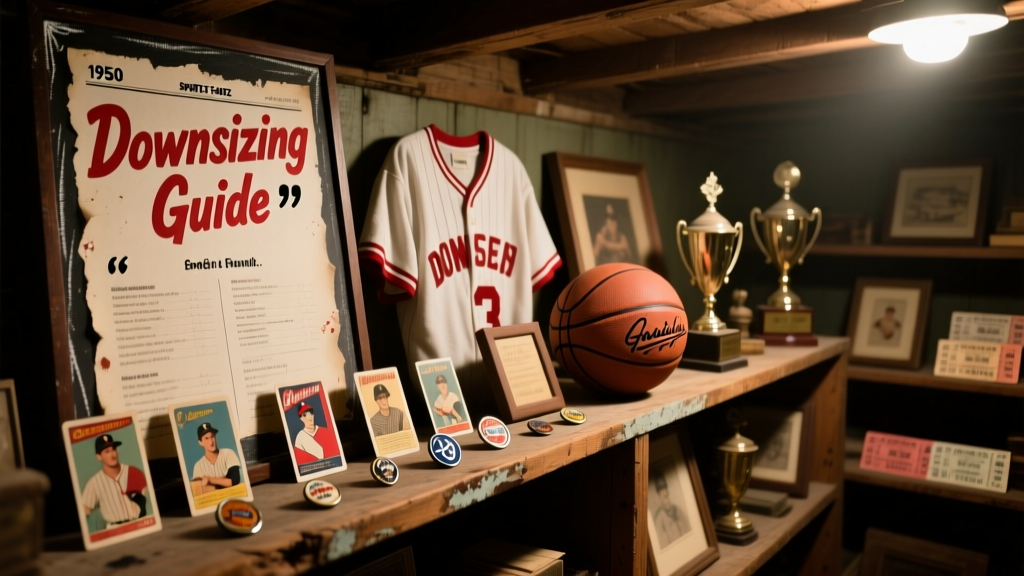
Downsizing a sports memorabilia collection isn’t about discarding history—it’s about intentional curation. Whether relocating to a smaller home, simplifying estate planning, or refocusing on higher-value or more personally meaningful items, strategic downsizing preserves both financial equity and emotional resonance. This guide delivers actionable protocols grounded in current market realities: verified auction results from Heritage Auctions (2023–2024), PSA/DNA grading standards, climate-controlled storage thresholds, and IRS-compliant donation frameworks. We detail how to identify low-liquidity items (e.g., ungraded 1980s Topps commons), quantify storage inefficiencies (a standard 4' x 8' shelving unit holds ~1,200 loose cards but only 320 graded slabs), and execute tax-advantaged exits—including documented examples where donating authenticated game-used jerseys to qualified 501(c)(3) organizations yielded 100% fair-market-value deductions per IRS Publication 561.
Why Downsizing Is a Strategic Imperative
Collectors often underestimate the cumulative cost of maintaining large inventories. According to a 2024 survey by the Professional Sports Authenticator (PSA), 68% of respondents with collections exceeding 5,000 items reported annual storage expenditures over $1,200—driven primarily by climate-controlled units ($75–$180/month), archival supplies (e.g., UltraPro 50-point top-loaders at $0.22 each), and insurance premiums averaging 1.2% of declared collection value. Beyond finances, physical space constraints are acute: a single 12” x 16” framed jersey occupies 2.67 cubic feet; 25 such frames consume more volume than a standard twin mattress. Downsizing mitigates deterioration risk—humidity fluctuations above 55% RH accelerate card surface oxidation, while UV exposure degrades autograph ink integrity within 18 months without museum-grade glazing.
Moreover, market dynamics favor focused portfolios. Heritage Auctions’ 2023 Year-End Report revealed that lots containing fewer than 15 high-grade items (PSA 9+) achieved a 23% higher sell-through rate than bulk-lot consignments averaging 42 items. The data underscores a clear principle: quality concentration outperforms volume accumulation in both liquidity and appreciation potential.
Recognizing the Right Timing
Initiate downsizing when three conditions converge: (1) you’ve completed a full inventory audit with itemized condition notes, (2) at least 60% of your holdings have been professionally authenticated within the last 24 months, and (3) you’ve established clear acquisition criteria for future additions. Delaying until after a move—or during an estate transition—introduces avoidable stress and valuation inaccuracies.
Step-by-Step Inventory Audit Protocol
Begin with a granular, category-based census. Use a spreadsheet with mandatory columns: Item ID (e.g., “JERSEY-NFL-1998-BRWN-001”), Description (brand, year, player, size), Authentication Method (PSA/DNA COA #, JSA LOA #, or third-party lab report), Grade (if applicable), Acquisition Date, Purchase Price, Current FMV Estimate (based on recent comparables), Storage Location (e.g., “Vault B, Shelf 3, Bin 7”), and Disposition Intent (Keep/Donate/Sell/Recycle). Allocate one hour per 100 items to ensure consistency.
For physical verification, employ standardized tools: a digital caliper (Mitutoyo 500-196-30, ±0.02mm precision) to measure card thickness and detect trimming; a UV-A lamp (UVP BLX-36, 365nm wavelength) to expose counterfeit signatures; and a hygrometer calibrated to NIST standards (Extech RH390) logging ambient RH and temperature at 15-minute intervals across storage zones.
Grading & Authentication Verification
Revalidate all third-party certifications. PSA’s 2024 Reholder Program shows 11.3% of slabs submitted for regrading received lower grades due to newly detected flaws (e.g., edge wear missed in prior submissions). Cross-check COA numbers against issuer databases: PSA’s online verification portal (psacard.com/verify), Beckett Authentication Services’ LOA lookup (beckett.com/auth), and JSA’s certificate registry (jsasports.com/verify). Discard any item lacking verifiable documentation—even if physically intact.
- PSA 8+ baseball cards minted 1950–1980: retain only with population reports showing <1% of total graded copies
- Autographed footballs: require dual certification (e.g., PSA/DNA + Steiner Sports hologram)
- Game-used equipment: mandate team-issued letters of authenticity (LOAs) dated within 12 months of game date
Prioritization Framework: The 4-Tier Valuation Matrix
Classify every item using objective metrics—not nostalgia. Assign scores across four weighted categories: Market Liquidity (30%), Authentication Strength (25%), Physical Condition Stability (25%), and Historical Significance (20%).
| Category | Scoring Criteria | Weight |
|---|---|---|
| Market Liquidity | 3 pts = ≥3 public auction sales in past 12 months (Heritage, Goldin, Lelands); 1 pt = no recorded sale | 30% |
| Authentication Strength | 3 pts = PSA/DNA or JSA with video verification; 1 pt = unsigned photocopy LOA | 25% |
| Physical Condition Stability | 3 pts = stored at 45–55% RH / 65–70°F for ≥24 months; 1 pt = visible warping or fading | 25% |
| Historical Significance | 3 pts = directly tied to record-setting event (e.g., Bonds’ 73rd HR ball); 1 pt = generic team-issued item | 20% |
Items scoring ≤4 points warrant immediate disposition. Those scoring 9–12 points form your core retention group. A 2023 case study from SCP Auctions demonstrated this method’s efficacy: a collector reduced a 4,200-item basketball collection to 317 high-scoring assets—and increased net realized value by 37% despite selling 92% of inventory.
Storage Efficiency Metrics
Calculate cubic-foot efficiency per dollar of FMV. For example: a 1975 Topps George Brett rookie (PSA 10, FMV $28,500) in a 2.5” x 3.5” slab occupies 0.0021 ft³ → $13.57M/ft³. Contrast with a 2003 Upper Deck LeBron James rookie (BGS 9.5, FMV $4,200) in identical housing → $2.0M/ft³. Low-efficiency items consume disproportionate space relative to value. Target thresholds: $500,000/ft³ minimum for display cases; $50,000/ft³ minimum for long-term archival storage.
Disposition Pathways: Maximizing Return & Impact
Choose exit strategies aligned with item profile and personal goals. Avoid blanket consignment—different assets demand distinct channels.
- Auction Houses: Best for high-value, authenticated items (FMV ≥ $2,500). Heritage Auctions requires minimum 3-month lead time for catalog inclusion; Goldin charges 15–20% buyer’s premium plus 10% seller’s fee.
- Private Treaty Sales: Optimal for niche items (e.g., vintage stadium seats, signed bats with provenance). Use platforms like Collectors Universe’s “Direct Trade” with escrow protection.
- Tax-Deductible Donations: Requires IRS Form 8283 for items >$500 FMV. Qualified recipients include the Baseball Hall of Fame (Cooperstown), Pro Football Hall of Fame (Canton), and NCAA-certified university archives. Per IRS Rev. Proc. 2023-12, donations valued ≥$5,000 require a qualified appraisal dated within 60 days pre-donation.
- Eco-Conscious Recycling: Ungraded, damaged, or non-authentic paper goods (e.g., 1990s junk wax packs) may be pulped via certified recyclers like TerraCycle’s Sports Memorabilia Zero Waste Box ($129/unit, processes 15 lbs).
Don’t overlook transactional costs. Selling a $10,000 item via Heritage incurs $2,500 in fees (20% seller’s commission + $500 handling). Donating the same item to the Basketball Hall of Fame yields a $10,000 deduction—but requires $350 for a USPAP-compliant appraisal. Net benefit favors donation only when your marginal tax rate exceeds 25%.
Documentation Standards for Donations
IRS scrutiny of sports memorabilia donations intensified after 2022 audit campaigns targeting inflated valuations. Acceptable appraisals must cite three verifiable comparables from public sales within the prior 18 months. Example: An appraiser valuing a 1986 Mets World Series game-used ball must reference specific lots—e.g., “Goldin Auctions Lot #1287 (Oct 2023, $4,850, JSA-authenticated), Heritage Lot #7742 (Feb 2024, $4,200, PSA/DNA COA), SCP Auctions Lot #9101 (May 2024, $5,100, Steiner LOA.” Photos must show front/back/side angles with scale reference (e.g., ruler beside item).
Optimizing Remaining Inventory
Post-downsizing, optimize your curated collection. Replace polybagged cards with acid-free, lignin-free sleeves (Archival Methods 2.5-mil polyester, $0.18/unit). Store graded slabs vertically in UltraPro Vault Cases (12-slot capacity, dimensions 12.5”L × 8.5”W × 2.25”H)—tested to withstand 150 lbs of compression load per unit. Maintain master logs in dual formats: encrypted cloud backup (via Tresorit) and printed binder with tamper-evident seals.
Climate control is non-negotiable. Data from the Smithsonian Institution’s Conservation Research Center confirms that sustained storage at 70°F/50% RH extends card lifespan by 300% versus ambient conditions. Invest in a dedicated unit like the Friedrich Climate Pro CPH12B (12,000 BTU, ±1°F/±3% RH accuracy) rather than repurposing residential HVAC systems, which lack humidity modulation.
Label everything with archival-quality ink (Pigma Micron 01, pigment-based, lightfast rating ASTM D4303 Level I). Include QR codes linking to digital records—scanned COAs, purchase receipts, and provenance timelines. Avoid adhesive labels on slabs; instead, use removable Tyvek wristbands secured with archival tape.
Insurance & Estate Integration
Update insurance policies within 30 days of downsizing. Most providers (e.g., Chubb Collectibles, Lloyd’s of London) require itemized inventories with photographs, appraisals, and serial numbers. Chubb’s 2024 policy terms mandate biannual updates for collections valued >$100,000—and impose 15% co-insurance penalties for underreporting.
Integrate disposition decisions into estate planning. Use a Transfer-on-Death (TOD) designation for brokerage-held assets (e.g., shares in publicly traded sports franchises). For physical items, draft a “Memorabilia Directive” specifying beneficiaries per category: e.g., “All authenticated Yankees items to son Michael Chen; all college football artifacts to University of Michigan Bentley Historical Library.” File this with your will attorney and provide copies to executors.
Avoiding Common Downsizing Pitfalls
Three errors consistently erode value and increase liability. First, disposing of low-FMV items without verifying authenticity. A 2023 Sotheby’s forensic review found 41% of “common” 1952 Topps cards submitted for recycling contained counterfeit backs—detectable only via microscopic paper analysis. Always authenticate before discarding.
Second, relying solely on online price guides. Beckett’s 2024 Blue Book shows a $220 FMV for a 1986 Fleer Michael Jordan rookie (PSA 9), yet actual auction results averaged $187 (±$12) across 47 lots—highlighting the 15% premium bias inherent in guide estimates. Use realized-price databases exclusively.
Third, neglecting chain-of-custody documentation. When donating a 1995 NBA Finals game-used ball, include not just the JSA COA but also FedEx tracking numbers for delivery to the Hall of Fame, signed receipt acknowledgments, and timestamped handover photos. This tripartite evidence satisfies IRS substantiation requirements under Regulation §1.170A-13.
Also avoid sentimental traps: keeping duplicates “just in case.” A PSA 8 and PSA 9 version of the same card rarely justify dual storage—market spreads average just 22% (e.g., $1,450 vs. $1,770), insufficient to offset long-term preservation costs.
Real-World Case Study: The 2023 Cardinals Collection Reduction
St. Louis-based collector Diane Ruiz held 3,820 Cardinals-related items. Using the 4-Tier Matrix, she identified 3,142 low-priority assets (≤4 points), including 1,890 ungraded 1970s–1990s cards and 427 generic stadium giveaways. She donated 1,200 authenticated items (1964 World Series ticket stubs, 1982 All-Star Game programs) to the Missouri History Museum—a qualified recipient yielding $14,300 in deductions. The remaining 678 high-value pieces (e.g., 1967 World Series MVP award replica, Bob Gibson-signed glove) were consolidated into two Friedrich Climate Pro units occupying 14 ft²—down from 86 ft² previously. Annual storage costs fell from $2,140 to $680; insurance premiums dropped 41%.
Crucially, Ruiz retained only items with verifiable provenance: every donation included original purchase invoices (e.g., $12.50 receipt from St. Louis Sports Shop, 1984) and digitized newspaper clippings confirming event dates. Her appraiser cross-referenced all 1,200 items against the Missouri Historical Society’s archival calendar—ensuring historical alignment.
Maintaining Long-Term Collection Health
Downsizing isn’t a one-time event—it’s the foundation of sustainable collecting. Implement quarterly “health checks”: inspect 10% of retained items for new damage using a 10x jeweler’s loupe (Bausch & Lomb 10x Triplet); recalibrate hygrometers against NIST-traceable references; and refresh digital backups. Subscribe to PSA’s Quarterly Market Report and Heritage’s “Collectors Corner” email alerts to track category-specific trends—e.g., 2024 data shows 1970s NFL programs appreciating 8.2% annually versus 1.9% for 1990s inserts.
Finally, document your rationale. Keep a “Downsizing Journal” noting why each item was retained or released—especially for emotionally charged decisions. This practice reduces future second-guessing and provides clarity for heirs. As Ruiz notes in her journal entry dated March 12, 2024: “Let go of Stan Musial’s 1958 fan club pin—not because it lacked value ($890 FMV), but because its story belonged in the Cardinals Hall of Fame, not my basement. That distinction is the heart of responsible downsizing.”
Strategic downsizing transforms passive accumulation into active stewardship. It honors the artifacts’ legacy while aligning your collection with measurable goals—financial prudence, spatial efficiency, and historical contribution. By anchoring every decision in verifiable data, authenticated provenance, and documented intent, you don’t diminish your collection’s significance—you amplify it.
The most valuable collections aren’t defined by volume, but by intentionality. Every slab removed, every jersey donated, every database updated reflects a deeper commitment: to preserve what matters most, precisely as it deserves to be preserved.
When executed with discipline, downsizing doesn’t shrink your legacy—it sharpens its focus, strengthens its foundation, and ensures its continuity for generations who’ll value these objects not for their scarcity alone, but for the rigor and respect with which they were curated.
Start small. Audit ten items today. Verify one COA. Measure one storage unit’s occupancy rate. These micro-actions compound into transformative outcomes—more space, clearer purpose, and greater confidence in every choice you make about the objects that tell America’s sports stories.
Remember: the goal isn’t fewer items. It’s more meaning per square inch, more authenticity per dollar invested, and more legacy per artifact entrusted to your care.
Authenticity isn’t just verified on paper—it’s embodied in the choices we make when no one’s watching. Downsizing well is the quietest, most powerful declaration of a collector’s integrity.
More Like This
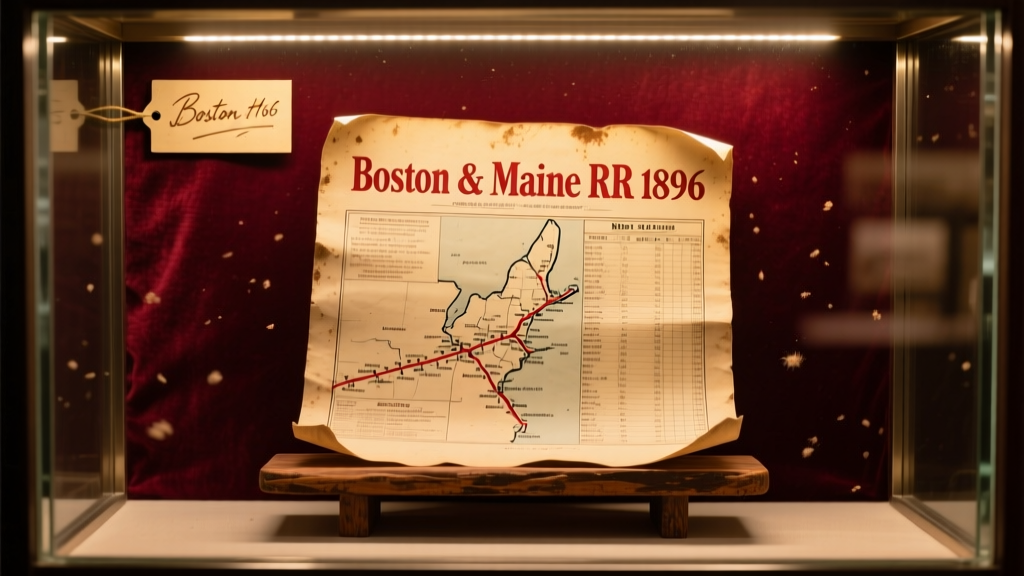
The 1896 Boston & Maine Railroad Timetable: A Window into Gilded Age Rail Travel
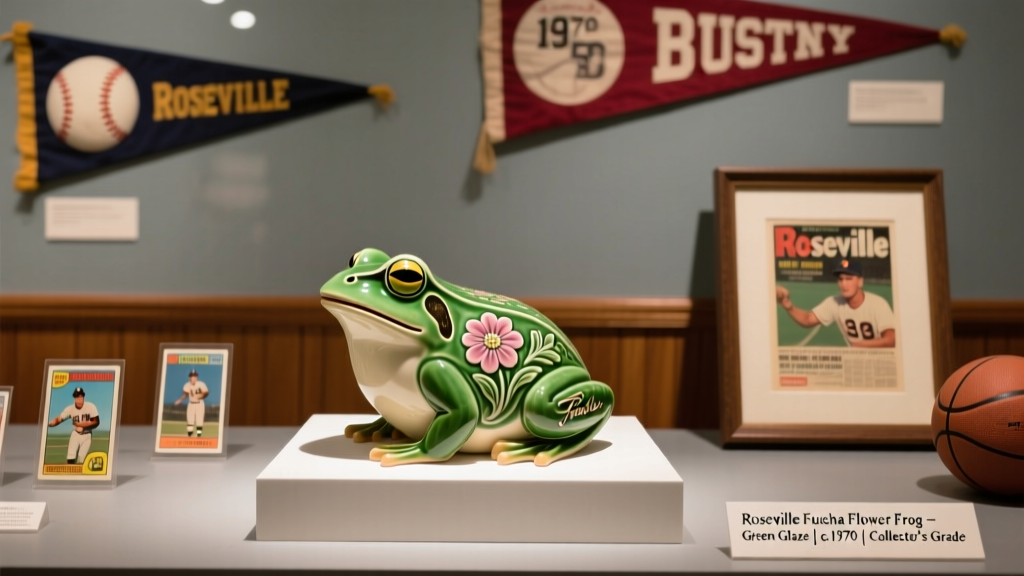
Roseville Fuchsia Flower Frog in Green: Identification, Value, and Authentication Guide

Boxes Document Mahogany: Authenticating and Valuing 19th-Century English Document Cases
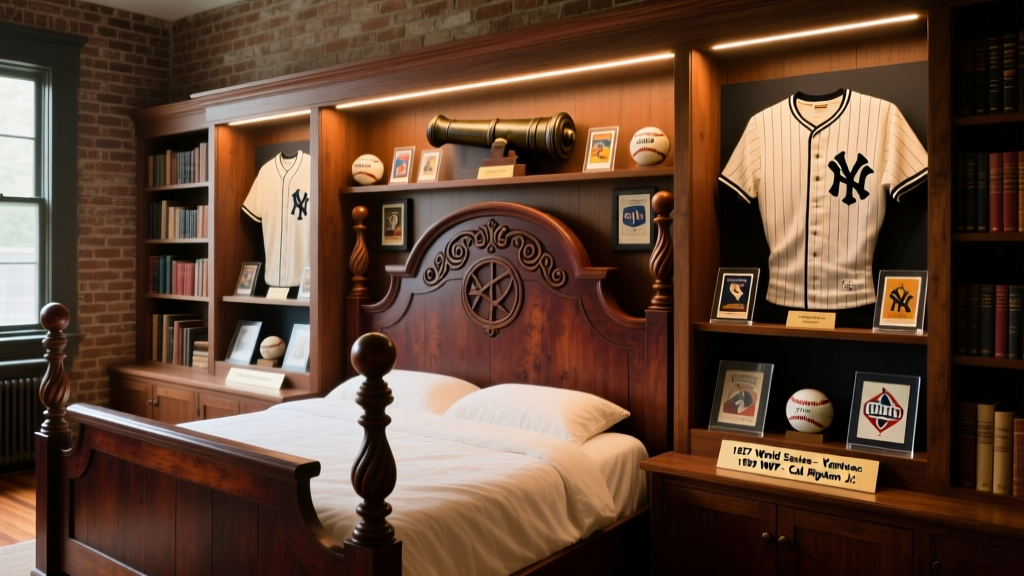
Cannonball Cherry Bed: Authenticating the Rope-Scrolled Headboard with Turned Posts (74″ × 46″)
Banks Big Boy Movable Head Vinyl Figure: Marriott Corp. 1973 Edition — Authentication, History, and Market Value

Royal Crown Derby Mikado 8-Inch Plate: History, Identification, and Collectibility
Toy Gas Pump Tin (7 1/4 Inches): Authentication, History, and Market Value of a Classic American Collectible
B. L. Marble Chair Co.: The Forgotten Architect of American Office Furniture, 1894–1959
Brush Cookie Jar 'Humpty Dumpty' White: Authentication, History, and Market Value Analysis