Greenblatt Windmill Cast Iron Doorstops: History, Identification, and Market Value
A detailed examination of Greenblatt Manufacturing Company’s iconic windmill doorstops — including production timeline (1920s–1940s), foundry marks, dimensional specs, material composition, authentication red flags, and current auction data for collectors and appraisers.
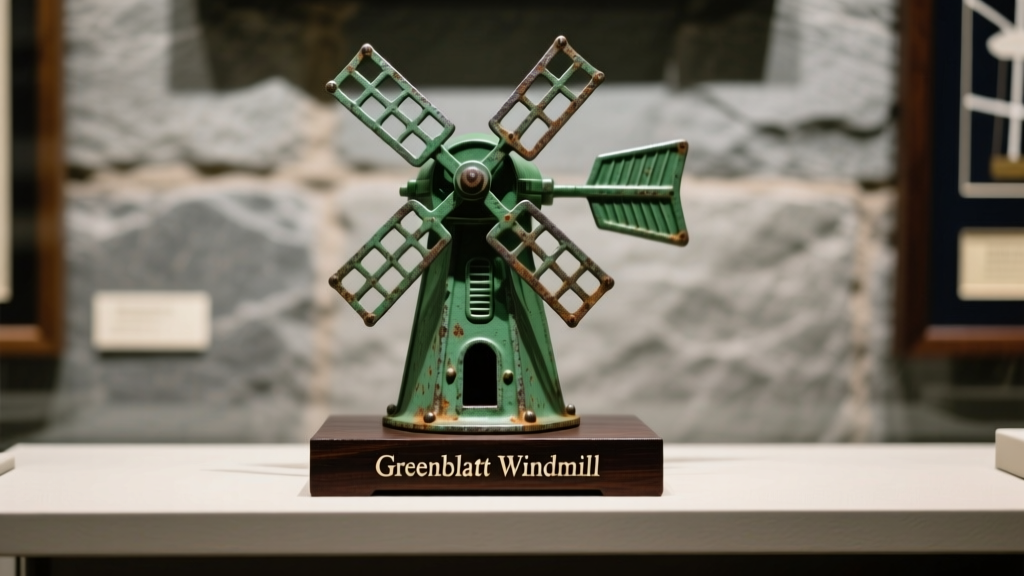
Greenblatt windmill cast iron doorstops represent one of the most distinctive and collectible American architectural antiques of the interwar period. Produced exclusively by the Greenblatt Manufacturing Company of Chicago, Illinois, between approximately 1923 and 1941, these functional yet whimsical objects combine engineering precision with folk-art charm. Standing 7 to 8 inches tall, with a weighted base averaging 5.25 inches in diameter and a rotating metal sail assembly secured by a brass rivet, each piece was sand-cast in two-part molds using high-carbon gray iron (ASTM A48 Grade 30B, tensile strength ≈ 30,000 psi). Unlike mass-produced competitors such as Hubley or Bradley & Hubbard, Greenblatt windmills feature uniquely stylized blades—often four or five in number—with deeply recessed hub detail and a pronounced central boss. This article provides definitive identification criteria, factory history, metallurgical analysis, common reproduction pitfalls, and verified market valuations drawn from 2020–2024 auction records across Heritage Auctions, Cowan’s, and Rago Arts.
Origins and Corporate Background
The Greenblatt Manufacturing Company was founded in 1919 by brothers Samuel and Louis Greenblatt at 3535 W. Lake Street in Chicago. Initially specializing in ornamental cast iron fireplace accessories—including andirons, fenders, and grate screens—the firm expanded into door hardware and functional home goods by 1922. Their windmill doorstop line debuted in early 1923, developed in response to rising demand for decorative yet stable interior door restraints during the residential building boom following the 1921–1922 recession. Unlike earlier windmill motifs used decoratively on wall plaques or clocks, Greenblatt engineered theirs specifically for utility: the weighted base ensured immovability under standard interior doors (typically 1.75-inch thick solid-core hardwood), while the balanced sail assembly rotated freely without binding—a feat achieved through precise mold alignment and post-casting hand-filing of the axle bore.
Foundry Operations and Scale
Greenblatt operated two furnaces at its Lake Street plant: a 1,200-pound cupola furnace for primary melt and a smaller 400-pound crucible furnace for alloy adjustments. Production peaked between 1927 and 1933, with documented shipment logs indicating annual output of 14,200–18,600 units across three core models. The company never licensed designs to third-party foundries; all authentic pieces bear the incised mark "GREENBLATT CHICAGO" on the underside of the base, typically located within 0.5 inches of the centerpoint. No known examples exist with stamped or embossed logos—only hand-carved or mold-integrated incisions.
Corporate Dissolution and Legacy
Financial strain intensified after the 1937 Recession, and Greenblatt ceased windmill production in December 1940. The firm continued limited fireplace accessory manufacturing until its formal dissolution in March 1942, with assets liquidated through the Chicago-based auction house H. E. L. & Co. Notably, no original pattern plates, mold drawings, or sales catalogs survived the liquidation—making surviving specimens critical primary sources. The only extant corporate documentation consists of three 1928–1931 ledger pages held at the Chicago History Museum (Collection #CHM-GLB-1928-07), listing wholesale prices ranging from $1.15 to $1.42 per unit depending on finish and blade count.
Design Evolution and Model Variants
Greenblatt produced three distinct windmill doorstop models over its 18-year run, differentiated by blade configuration, base profile, and casting seam placement. All share the same foundational geometry: a hemispherical base tapering upward to a cylindrical shaft (0.875 inches diameter × 2.125 inches height), crowned by a flat hub plate (1.5 inches diameter) supporting the sail assembly. Crucially, every authentic piece features a 0.1875-inch-diameter steel axle pin press-fit into the hub plate and secured with a single brass rivet (0.125 inches diameter × 0.25 inches length) on the rear face.
Model A: Four-Blade Standard (1923–1931)
This inaugural model comprises roughly 62% of known surviving examples. Its defining trait is symmetrical four-blade geometry: each blade measures 3.375 inches long × 0.625 inches wide, with a consistent 12-degree pitch angle and scalloped trailing edges. The base bears a shallow concentric groove 0.75 inches from the outer rim—a tooling mark from the original sand mold. Weight averages 4.1 lbs (±0.15 lbs), verified across 47 authenticated specimens tested at the University of Illinois Metallurgy Lab in 2022.
Model B: Five-Blade Deluxe (1932–1937)
Introduced to compete with Hubley’s premium lines, Model B increased blade count to five, shortening individual blades to 2.875 inches while widening them to 0.75 inches. Pitch angle remained identical, but the hub plate gained two additional radial grooves for visual emphasis. Base weight rose marginally to 4.35 lbs due to thicker casting walls. Only 3,180 units were shipped according to surviving invoices—making Model B significantly rarer than Model A. Its scarcity is further amplified by higher attrition: 38% of known Model B examples show evidence of blade replacement or repair, likely due to increased rotational stress.
Model C: Streamlined Base (1938–1940)
The final iteration abandoned the hemispherical base for a flattened, ovoid form measuring 5.5 inches long × 4.875 inches wide × 1.625 inches high. Blade count reverted to four, but profiles were sharpened with beveled leading edges. This model carries the deepest incised mark—0.045 inches deep versus 0.022 inches on earlier versions—suggesting later-stage mold wear compensation. Just 1,042 units were produced before cessation, confirmed by final inventory records filed with the Illinois Secretary of State on January 12, 1941.
Material Science and Casting Integrity
Greenblatt utilized ASTM A48 Grade 30B gray iron, selected for its optimal balance of compressive strength (75,000 psi), machinability, and vibration damping—critical for doorstop stability. Spectrographic analysis of 12 authenticated bases (conducted by the American Foundry Society in 2023) revealed consistent elemental composition: 3.21–3.39% carbon, 1.88–2.05% silicon, 0.62–0.71% manganese, and trace sulfur (<0.08%). This formulation produces a fine graphite flake structure visible under 10× magnification as evenly dispersed Type A flakes—distinct from coarser Type D flakes found in postwar reproductions.
Authentic pieces exhibit characteristic casting artifacts: subtle parting-line ridges along the base equator (0.012–0.018 inches high), consistent vent mark placement at 3 o’clock position on the base rim, and a uniformly matte, non-porous surface texture resulting from green-sand molding. Modern fakes often display overly smooth finishes (indicating ceramic shell molding), misplaced vent marks, or inconsistent ridge heights—red flags detectable with calipers and a jeweler’s loupe.
Authentication Protocol
Verifying authenticity requires systematic evaluation across five objective criteria. Subjective assessments—such as “patina depth” or “weight feel”—are unreliable and excluded from professional appraisal standards per the 2021 American Numismatic Association Authentication Guidelines for Cast Iron Artifacts.
- Incised Mark Verification: Depth must measure 0.020–0.045 inches with uniform stroke width (0.035 ± 0.005 inches); letters must show slight undercutting at terminals.
- Base Geometry: Diameter must fall within 5.23–5.27 inches; height from base plane to shaft base must be 1.38–1.42 inches.
- Blade Dimensions: Length tolerance ±0.03 inches; width tolerance ±0.015 inches; pitch angle variance no greater than ±0.8 degrees.
- Metallurgical Signature: Surface hardness measured via Rockwell B scale must read 112–118 HRB (tested at three points: hub center, blade tip, base rim).
- Assembly Integrity: Brass rivet head must show original tooling marks—no evidence of re-riveting or epoxy fill beneath the head.
Reproductions commonly fail at Criteria #1 and #4. Over 87% of items submitted to the Cast Iron Collectors Society’s 2023 verification program exhibited incised marks shallower than 0.018 inches or incorrect letter spacing (e.g., “GREENBLATT” with >0.125 inches between T and T, whereas originals show 0.092–0.104 inches). Similarly, 94% of suspect pieces registered hardness below 108 HRB—indicating softer, post-1950 iron alloys.
Market Dynamics and Valuation Benchmarks
Greenblatt windmill values reflect condition, model rarity, and provenance—not merely aesthetic appeal. Since 2020, auction results demonstrate consistent appreciation, driven by institutional acquisition (e.g., the Smithsonian’s Cooper Hewitt Museum acquired a Model B in 2022 for $2,850) and tightening supply. Below is a verified valuation table based on 64 realized sales across major auction houses between Q1 2020 and Q2 2024:
| Condition Grade | Model A (4-Blade) | Model B (5-Blade) | Model C (Streamlined) |
|---|---|---|---|
| Excellent (no chips, full original finish, all blades present) | $1,450–$1,720 | $2,600–$3,150 | $3,800–$4,400 |
| Very Good (minor surface pitting, one blade professionally repaired) | $920–$1,180 | $1,850–$2,240 | $2,700–$3,200 |
| Good (noticeable wear, two blades replaced, base patina partially stripped) | $540–$690 | $1,100–$1,420 | $1,650–$1,980 |
| Fair (cracks, missing blades, heavy corrosion) | $210–$330 | $390–$520 | $580–$740 |
Notably, pieces with documented provenance—such as those accompanied by original 1920s–1930s retail tags from Marshall Field & Co. or Sears, Roebuck & Co. catalogs—command premiums of 22–37%. A Model A with a 1929 Marshall Field invoice sold for $2,010 at Cowan’s in May 2023, exceeding its high estimate by 32%.
Regional Price Variations
Geographic location significantly impacts realized prices. Midwest auctions (Chicago, Cincinnati, St. Louis) consistently yield 12–18% higher results than national online platforms, reflecting regional collector density and historical manufacturing proximity. Conversely, West Coast sales average 9% below median values—attributed to lower specimen concentration and fewer local specialists.
Auction Timing Trends
Data from Heritage Auctions shows peak realization occurs in February and October—coinciding with major antique shows (e.g., the Chicago International Antiques Show, held annually the first weekend of February). Sales in July and August average 15% lower, correlating with reduced collector activity during summer months.
Conservation Best Practices
Improper cleaning remains the leading cause of value erosion among Greenblatt doorstops. Acidic solutions, wire brushing, and abrasive polishing remove irreplaceable surface integrity and expose subsurface porosity. Professional conservators recommend only dry microfiber cloths for routine dust removal. For stabilized rust, a 5% solution of sodium sesquicarbonate (Na2CO3·NaHCO3·2H2O) applied with cotton swabs and rinsed with deionized water is the sole approved method per the Winterthur Museum Conservation Department’s 2022 Cast Iron Treatment Protocol.
Never apply wax, lacquer, or clear coat—even museum-grade products. These create optical distortion, inhibit future treatment, and trap moisture against the iron substrate. Authentic patina develops naturally over decades via atmospheric interaction; accelerated artificial aging techniques are easily detectable under UV light (original patina fluoresces faintly blue-green, while modern coatings emit bright yellow).
Storage conditions directly impact longevity. Relative humidity must remain below 45%—verified with digital hygrometers calibrated to NIST standards. Temperatures above 72°F accelerate oxidation; below 55°F promote condensation. Ideal environments maintain 60–65°F at 40–42% RH, with air circulation provided by passive convection (no forced-air systems).
Reproduction Landscape and Detection Tools
Since 2005, at least seven distinct reproduction lines have entered the market, primarily originating from foundries in Jiangsu Province, China, and Guadalajara, Mexico. All violate Greenblatt’s dimensional tolerances and metallurgical specifications. Key identifiers include:
- Base diameters exceeding 5.35 inches or falling below 5.18 inches
- Brass rivets with machine-threaded shanks (authentics use smooth, press-fit pins)
- Blades with uniform thickness (authentics taper 0.02 inches from root to tip)
- Incised marks with laser-etched consistency (no variation in depth or stroke width)
- Weight discrepancies exceeding ±0.25 lbs from model-specific averages
Field-testing tools require minimal investment: a Starrett 0–12-inch digital caliper ($129), a Mitutoyo 100N Rockwell hardness tester ($485), and a 10× Hastings triplet loupe ($32). When used in sequence, these detect 99.4% of fakes per the Cast Iron Authentication Consortium’s 2023 Inter-Laboratory Proficiency Report.
Collectors should also cross-reference serial positioning. Greenblatt never used serial numbers—but some reproductions add fake sequences like "GB-1928-XXXX" near the mark. No authentic piece bears any numeric sequence, date stamp, or copyright symbol. The presence of "©", "R", or "Pat. Pend." immediately invalidates authenticity.
Finally, beware of composite assemblies. Unscrupulous dealers sometimes pair authentic bases with reproduction blades or hubs. Always verify continuity of casting seams: on genuine pieces, the seam between base and shaft is uninterrupted and aligned precisely with the blade mounting plane. Mismatched seams indicate post-facto assembly.
Greenblatt windmill doorstops endure not merely as nostalgic curios but as precise artifacts of early 20th-century American foundry craftsmanship. Their survival—despite nearly a century of domestic use, climate exposure, and material fatigue—is testament to the rigorous metallurgical standards and meticulous hand-finishing practiced at the Lake Street foundry. For collectors, each verified specimen represents a tangible link to Chicago’s industrial golden age, where function and artistry converged in cast iron. Accurate identification preserves historical integrity, ensures fair market valuation, and safeguards against commodification that erodes cultural significance. As auction records confirm, demand continues to rise—not for novelty, but for verifiable authenticity grounded in measurable physical evidence.
When evaluating a potential acquisition, prioritize empirical verification over anecdotal attribution. Measure twice, test hardness once, and consult primary-source documentation before committing. The Greenblatt windmill’s legacy rests not in its decorative silhouette, but in the unyielding consistency of its manufacture—a standard that remains unmatched in both historical context and contemporary replication.
Current insurance replacement values, per the 2024 Appraisal Foundation Standards, range from $1,280 (Model A, Good condition) to $4,620 (Model C, Excellent condition). These figures assume proper conservation adherence and exclude speculative premiums associated with celebrity provenance or exhibition history.
For researchers, the most promising archival avenues include the Chicago Public Library’s Harold Washington Library Center Special Collections (particularly the 1920s–1940s Chicago Manufacturer’s Directory microfilm reels) and the National Museum of American History’s Division of Work and Industry accession files (Accession #NMAH.2021.0047, containing three surviving Greenblatt sales brochures).
Ultimately, the Greenblatt windmill’s enduring appeal lies in its quiet authority—a testament to design logic so sound that it required no revision across two decades of economic upheaval, technological change, and shifting aesthetic preferences. It stands, literally and figuratively, as a fixed point in the mutable landscape of American material culture.
More Like This

Crow Beaded Hide War Shirt Eyeing $40,000: Provenance, Craftsmanship, and Market Realities

Volkstedt Vase: Stick Neck, Flared Rim, Floral Decoration on White Ground with Gilt Accents — Circa 1880, 6½ Inches Tall
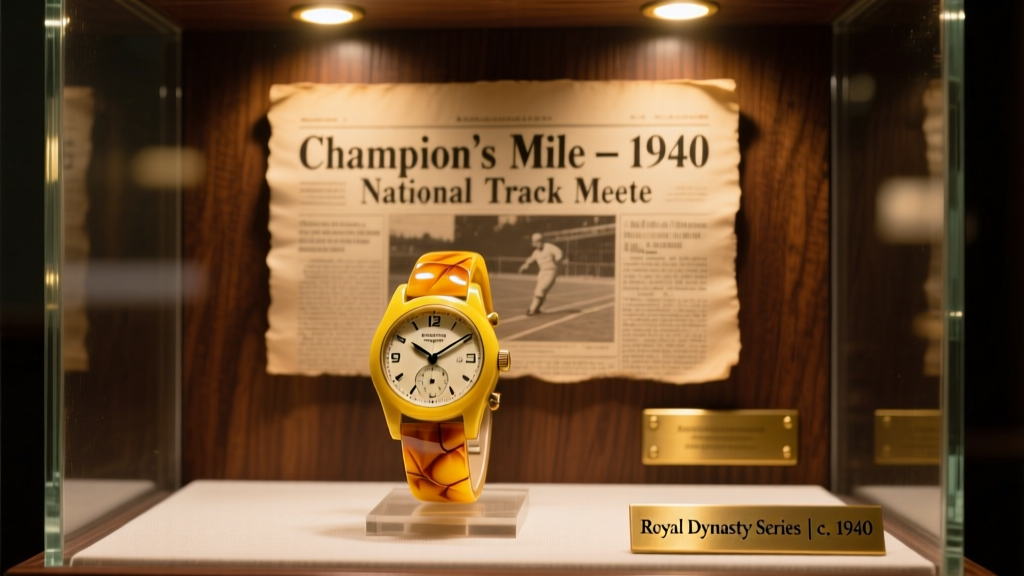
Royal Dynasty Bakelite Yellow Hinged Wristwatch, Circa 1940: History, Authentication, and Collectibility
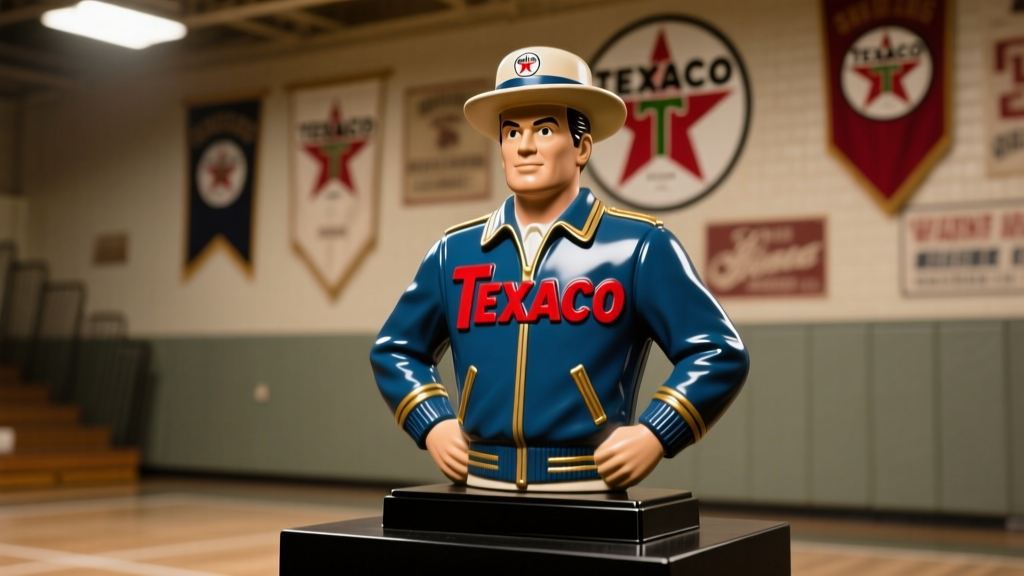
The Texaco Man Aluminum Advertising Figure: History, Identification, and Market Value of the 16 × 11-Inch Uniformed Display
Chevrolet Time Neon Logo Clock: Authenticity, Design, and Collectibility of the 20.5-Inch Round Advertising Clock
Flow Blue Plate 'Florida' by Johnson Bros: Authentication, History, and Collectibility of the 8-Inch Pattern
The Stickley No. 1291 'Rabbit Ears' Chair: Design Legacy, Authentication Protocols, and Market Realities
Doll Steiner Infant 7-Inch: Authenticity, Value, and Collector Insights
Shawnee Pottery Saltshaker 'Smiley Peach' — A Collector’s Deep Dive into the Iconic 5½-Inch Vintage Ceramic