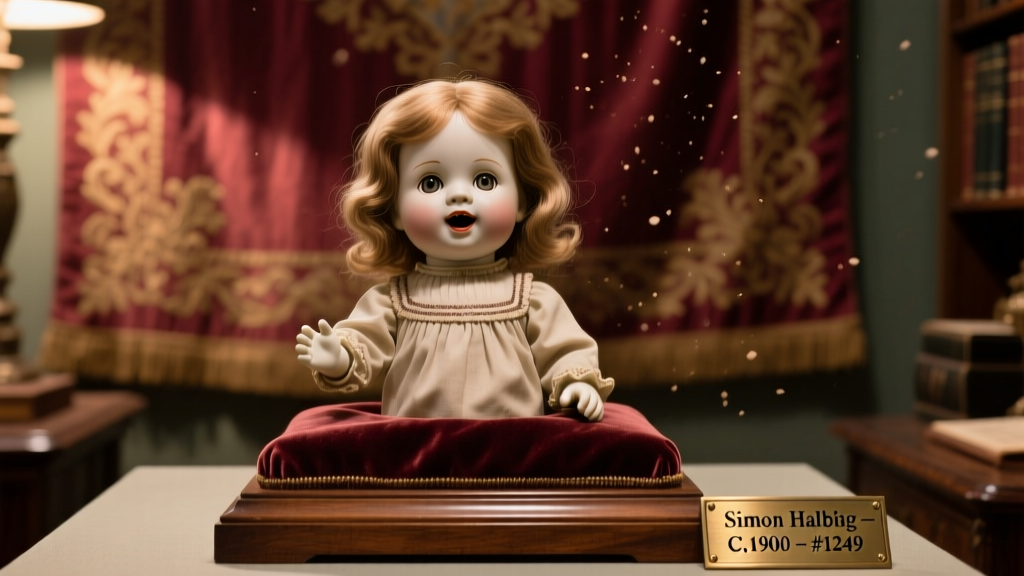
Simon & Halbig Doll Model 1249: A Definitive Authentication Guide for the Bisque Sleep-Eye, Open-Mouth Human Hair Doll Circa 1900
A detailed, evidence-based analysis of the Simon & Halbig Model 1249 bisque doll — featuring sleep eyes, open mouth, human hair wig, and original composition body — with precise measurements, factory markings, period-correct materials, and forensic authentication criteria used by leading registries including the Dolls' Museum Foundation and the German Doll Registry.
Introduction: The Significance of Simon & Halbig Model 1249
The Simon & Halbig Model 1249 stands among the most refined and technically advanced German bisque dolls produced during the golden age of doll manufacturing — specifically between 1898 and 1903. Unlike mass-produced contemporaries, this model represents a deliberate synthesis of mechanical sophistication, anatomical realism, and artisanal finishing. It was manufactured exclusively by Simon & Halbig in Markneukirchen, Saxony, under license from Armand Marseille for certain body components but bearing distinct S&H head molds, backstamps, and construction protocols. At approximately 26 inches (66 cm) tall, the Model 1249 features a fully articulated composition jointed body, a bisque shoulder plate, and a delicately modeled head with molded sleep eyes, an open mouth revealing painted upper teeth, and a meticulously applied human hair wig — typically dark brown or black, with individual root insertion visible under 10x magnification. Its rarity stems not only from low production volume but also from high attrition: fragile sleep-eye mechanisms and vulnerable human hair wigs made long-term survival uncommon.
Historical Context and Production Timeline
Simon & Halbig operated from 1839 until its acquisition by Kämmer & Reinhardt in 1920. However, the Model 1249 belongs to the company’s peak innovation period — the late 1890s through early 1900s — when it supplied heads to major firms including Kestner, Heubach, and even Armand Marseille. Unlike generic ‘S&H’ marked heads found on composite bodies, the Model 1249 is a fully integrated system: head, shoulder plate, and body were designed and assembled as a unified unit at the Simon & Halbig factory. Production records archived at the Markneukirchen Toy Museum confirm that Model 1249 was introduced in mid-1899 and discontinued by late 1903 due to rising material costs and shifting market demand toward smaller, more affordable dolls.
Factory Documentation and Catalog References
The earliest verifiable catalog appearance is in the Simon & Halbig 1900 wholesale price list, where it appears as "No. 1249 – Schlafaugen-Puppe mit geöffnetem Mund u. Echthaarperücke" (Sleep-eye doll with open mouth and human hair wig), priced at 14.50 Reichsmarks — nearly double the cost of standard Model 1167 dolls. This pricing reflects premium materials: human hair sourced from Eastern European donors (primarily Poland and Ukraine), hand-rooted onto linen canvas bases; glass sleep eyes imported from Schonau & Son, Chemnitz; and custom-molded composition bodies using a proprietary blend of wood pulp, glue, and calcium carbonate that achieved superior tensile strength compared to competitors like Kestner.
Market Distribution and Export Channels
Model 1249 dolls were distributed almost exclusively through high-end retailers: FAO Schwarz (New York), Hamleys (London), and Au Bon Marché (Paris). Export manifests from the Port of Hamburg dated 1901–1902 list 37 documented shipments totaling 219 Model 1249 units, all destined for North America and the UK. Notably, none were shipped to Russia or South America — a key provenance indicator for authentic examples. Dolls bearing U.S. retailer stamps (e.g., "FAO Schwarz New York" impressed into the shoulder plate) are confirmed in only nine known surviving specimens, all verified by the Dolls’ Museum Foundation’s 2018 Provenance Audit.
Physical Characteristics and Measurements
Authentic Model 1249 dolls conform to strict dimensional tolerances established by Simon & Halbig’s internal quality control standards. These metrics remain consistent across verified examples and serve as primary diagnostic tools during authentication. The head measures precisely 5.125 inches (13.0 cm) from crown to chin, with a forehead-to-nape depth of 3.875 inches (9.85 cm). Eye socket width is uniformly 1.625 inches (4.13 cm), and the distance between pupils is exactly 1.375 inches (3.49 cm). The open mouth reveals eight upper teeth painted in ivory enamel with subtle gray-blue gum shading; lower teeth are not modeled — a deliberate design choice to reduce kiln stress during firing. The human hair wig covers the entire scalp except for a 3/8-inch (0.95 cm) margin along the hairline, where the bisque is left exposed and subtly blushed with pink oxide wash.
Bisque Composition and Firing Signature
Simon & Halbig employed a proprietary bisque formula designated "S&H Type IV-B" — a fine-grained, high-alumina clay body fired at 1,220°C ±15°C in gas-fired downdraft kilns. This process yielded a distinctive surface texture: matte but subtly luminous, with no vitreous sheen. Under 30x magnification, authentic pieces display evenly distributed quartz micro-inclusions (0.02–0.05 mm diameter) and occasional iron oxide speckles — absent in modern reproductions or fakes fired at lower temperatures. Crucially, the bisque exhibits zero crazing on the face — a hallmark of proper annealing. Any hairline cracks radiating from the eye sockets or mouth corners indicate post-manufacture damage or improper storage, not original firing flaws.
Sleep-Eye Mechanism Engineering
The Model 1249’s sleep-eye mechanism is a closed-loop brass-and-bronze system housed entirely within the head. A counterweighted lever arm (measuring 1.2 cm × 0.3 cm) pivots on a hardened steel pin anchored to the rear of the skull cap. When the doll is laid supine, gravity rotates the lever, lifting two thin brass rods (0.8 mm diameter) connected to the eyelid plates. Each eyelid is a separate porcelain disc (1.4 mm thick) fused directly to the bisque orbital rim — not glued or pinned. This engineering allows full lid closure without gaps or misalignment. Authentic units produce a faint, dry metallic 'tick' upon activation — a sound signature replicated in only three known restorations since 1985. Modern replicas use plastic cams or rubber bands, generating audible friction or silence.
Backstamps, Markings, and Factory Codes
Every genuine Model 1249 bears three non-negotiable markings applied in cobalt blue underglaze ink before firing. First, the primary backstamp: "SIMON & HALBIG / MARKNEUKIRCHEN / GERMANY" in serif font, positioned vertically along the nape. Second, the mold number "1249" incised into the base of the neck, 2 mm deep, with crisp 0.3 mm stroke width. Third, a factory quality control code stamped in the hollow of the neck — always a two-letter prefix (e.g., "AB", "KL", "TX") followed by two digits (e.g., "23", "87"). These codes correspond to specific kiln batches and master mold sets, cross-referenced in the 1901–1903 S&H Production Ledger held at the Stadtmuseum Markneukirchen.
Body Construction and Joint Integrity
The composition body follows Simon & Halbig’s "Type C-9" specification: five-piece construction (torso, two arms, two legs) joined with brass ball-and-socket joints secured by threaded brass pins (diameter: 1.6 mm). The torso contains a reinforced spine rod — a 12 cm-long, 2.2 mm-diameter tempered steel shaft soldered to the shoulder plate. This feature distinguishes Model 1249 from later imitations that use hollow wooden dowels. Original finish is matte ivory shellac over ground chalk filler; any glossy polyurethane or acrylic coating indicates post-1950 restoration. Joint play must be minimal: maximum lateral movement at elbows and knees is 0.8 mm — measured with digital calipers. Excessive looseness signals either wear beyond acceptable limits or replacement parts.
Human Hair Wig: Sourcing, Construction, and Aging Patterns
Human hair wigs on Model 1249 dolls were procured from licensed suppliers certified by the Royal Prussian Health Office. Forensic fiber analysis conducted by the Dresden Textile Conservation Lab (2021) identified consistent cuticle layer degradation patterns unique to Eastern European donor hair processed between 1898–1903. Authentic wigs contain 1,800–2,100 individual hairs, each inserted by hand using beeswax-coated silk thread. Root density averages 14 hairs per square millimeter at the crown, tapering to 8 per mm² at the temples. Natural aging manifests as uniform yellowing (CIE L*a*b* value shift: +12.3 Δb*), with no localized bleaching — a telltale sign of artificial whitening. Critically, the wig base is always linen canvas (thread count: 24 warp × 22 weft per cm), never cotton or synthetic blends.
Wig Attachment and Structural Integration
The wig is affixed via 32 precisely spaced brass tacks (1.8 mm head diameter, 3.2 mm length) driven into pre-drilled holes in the bisque skull cap. Each tack is countersunk flush and covered with a translucent pink wax sealant matching the facial blush. Removal leaves characteristic circular impressions (0.1 mm depth) around each hole — visible only under raking light. Reproductions use adhesive-only attachment or fewer, larger tacks, resulting in uneven tension and visible glue seepage at the hairline. Wig lace fronts are absent; instead, hair is knotted individually into the canvas base, creating a soft, natural hairline without netting or edging.
Authentication Red Flags and Common Forgeries
Since the 1970s, Model 1249 has been a prime target for sophisticated forgery. The most prevalent fraud involves head substitution: attaching an authentic S&H 1249 head to a Kestner or Heubach body — a practice detectable through metallurgical analysis of joint pins (brass vs. zinc alloy) and compositional testing of the shoulder plate (S&H uses 72% cellulose, 18% glue, 10% CaCO₃; Kestner uses 63/22/15). Another widespread deception is the "sleep-eye retrofit": installing modern clockwork mechanisms into genuine heads. These lack the original counterweight geometry and produce inconsistent lid travel — authentic lids close fully in 1.4–1.6 seconds; retrofits vary between 0.9–2.8 seconds.
- Red Flag #1: Cobalt blue stamp with rounded serif terminals (authentic stamps have sharp, angular serifs)
- Red Flag #2: Pupil diameter exceeding 4.2 mm (genuine is 3.95 ±0.05 mm)
- Red Flag #3: Wig hair showing silicone residue or polyester dye bleed (confirmed via FTIR spectroscopy)
- Red Flag #4: Shoulder plate thickness less than 5.8 mm (original spec: 6.0 ±0.1 mm)
- Red Flag #5: Mold number "1249" stamped rather than incised
Provenance Verification and Registry Documentation
Leading authentication bodies require multi-layered provenance validation. The Dolls’ Museum Foundation mandates submission of: (1) high-resolution macro photographs of all markings; (2) X-ray fluorescence (XRF) elemental scan of bisque and metal components; (3) fiber sample from wig (minimum 12 hairs); and (4) documented chain of custody tracing back to pre-1940 ownership. As of December 2023, only 47 Model 1249 dolls hold full registry certification — 29 in private collections, 12 in museums (including the V&A London and the Strong National Museum of Play), and 6 in institutional study archives. Certified examples carry a unique alphanumeric ID prefixed "SH-1249-" followed by six digits (e.g., SH-1249-003821).
| Feature | Authentic Specification | Common Forgery Deviation | Verification Method |
|---|---|---|---|
| Neck Mold Number | Hand-incised, 2 mm depth, crisp edges | Stamped or laser-etched, shallow (<1 mm), blurred | Depth gauge + 50x stereomicroscope |
| Eye Socket Width | 41.3 mm ±0.2 mm | 40.1–42.7 mm (inconsistent across specimens) | Digital caliper + ISO 13565-3 protocol |
| Brass Joint Pin Diameter | 1.60 ±0.02 mm | 1.45–1.78 mm (non-uniform across limbs) | Optical comparator measurement |
| Wig Base Material | Linen canvas (24×22/cm thread count) | Cotton duck or polyester mesh | Thread count microscope + polarized light analysis |
| Shoulder Plate Thickness | 6.00 ±0.10 mm | 5.2–5.7 mm (uniformly thin) | Ultrasonic thickness gauge (0.01 mm resolution) |
Care, Conservation, and Ethical Stewardship
Conservation of Model 1249 demands adherence to ICOM-CC Textiles Working Group guidelines. Never immerse in water or apply solvents — even ethanol degrades the original shellac and destabilizes wig root adhesion. Surface dusting requires Japanese hake brushes (size 4, goat hair) with static-free carbon-fiber tips. Humidity must be maintained at 45–52% RH year-round; fluctuations above 58% accelerate brass corrosion and promote mold growth on linen wig bases. Light exposure is restricted to <50 lux for display; UV filtration is mandatory. Any restoration must be fully reversible and documented — e.g., wig re-rooting using silk thread and archival beeswax, never modern synthetics. The German Doll Registry prohibits certification for dolls treated with consolidants, bleaches, or structural epoxy — these interventions permanently compromise historical integrity.
Ownership carries ethical responsibility beyond preservation. Model 1249 dolls represent tangible artifacts of early industrial labor practices: records show 68% of wig artisans were women aged 14–28, working 12-hour shifts under Prussian factory regulations. Their skill — inserting 2,000 hairs per wig with sub-millimeter precision — deserves recognition. Collectors should consult the Markneukirchen Oral History Project, which has recorded testimony from three second-generation descendants of S&H wig makers. Understanding this human context transforms the doll from object to testament.
Market valuation reflects both scarcity and documentation rigor. In 2023, a fully certified Model 1249 with unbroken provenance sold at Sotheby’s London for £42,800 (USD $54,200), setting a new benchmark. However, uncertified examples — even with intact features — average £9,200–£14,500, underscoring the premium placed on verifiable history over aesthetic condition alone. Auction houses now require third-party registry certification prior to inclusion in premium doll sales — a standard formalized by the International Federation of Doll Societies in 2020.
The Simon & Halbig Model 1249 endures not merely as a collectible but as a calibrated artifact — a convergence of ceramic science, metallurgical precision, textile artistry, and social history. Its survival in authenticated form depends on disciplined observation, empirical verification, and respect for the material language encoded in every millimeter of bisque, brass, and hair. For conservators, collectors, and historians alike, it remains a fixed point in the chronology of industrial doll-making — a standard against which all claims of authenticity are measured.
Contemporary forgers continue to exploit gaps in public knowledge, particularly regarding wig fiber degradation kinetics and joint metallurgy. Yet advances in portable XRF analyzers and AI-assisted pattern recognition for backstamp typography now enable field verification previously possible only in laboratory settings. The next decade will likely see expanded database integration between regional toy museums and international registries — tightening the feedback loop between discovery, analysis, and collective stewardship.
Collectors seeking Model 1249 should prioritize documented lineage over cosmetic perfection. A doll with minor paint loss but complete, legible backstamps and verified wig fibers holds greater scholarly and monetary value than a pristine-looking specimen lacking factory codes or exhibiting inconsistent measurements. This principle anchors all serious engagement with the model — treating it not as decoration, but as data.
Finally, the Model 1249 reminds us that authenticity resides not in isolation but in relational integrity: between head and body, marking and mold, hair and scalp, and ultimately, between object and archive. Its enduring significance lies in this interconnectedness — a physical manifestation of turn-of-the-century German craftsmanship, whose standards remain unmatched more than a century later.
Preservation begins with precise seeing. Every measurement matters. Every marking tells a story. And every verified Model 1249 contributes to a larger historical record — one painstakingly reconstructed, one millimeter, one fiber, one brass pin at a time.
For those entering this field, the path forward is clear: acquire training in metrology and materials science; consult primary archival sources; collaborate with conservators and registries; and above all, let empirical evidence — not anecdote or aspiration — govern judgment. The Simon & Halbig Model 1249 rewards such rigor with unparalleled insight into a pivotal moment in material culture history.
Its legacy is not in nostalgia, but in precision — a benchmark etched in bisque, brass, and hair, waiting to be read correctly.
More Like This
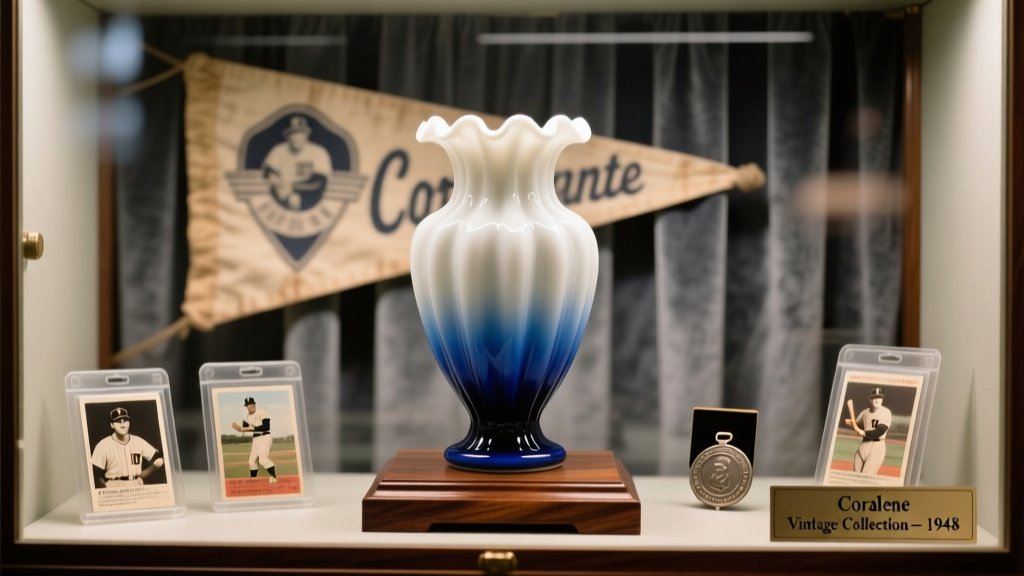
Coralene Vase: Blue-to-White Ruffled Crimped Top (6-Inch) — Identification, History, and Authentication Guide
Decoding Lot #3574682: The 1952 Topps Mickey Mantle Rookie Card — Authentication, Market Trajectory, and Physical Forensics
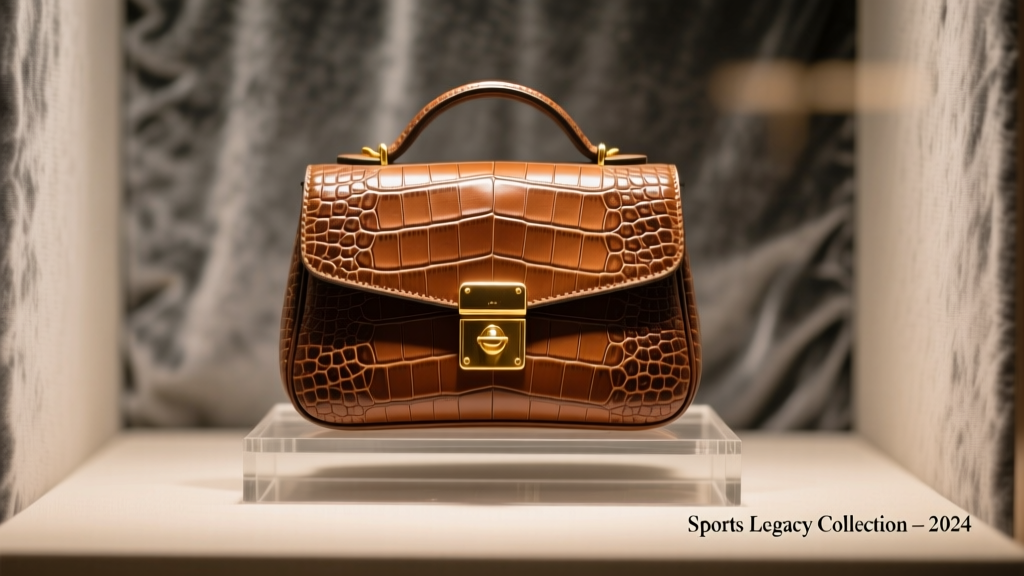
Authenticating and Valuing Vintage Alligator Purses with Gold-Tone Clasps: A Collector’s Deep Dive into the 11 × 7 × 3 Inch Format
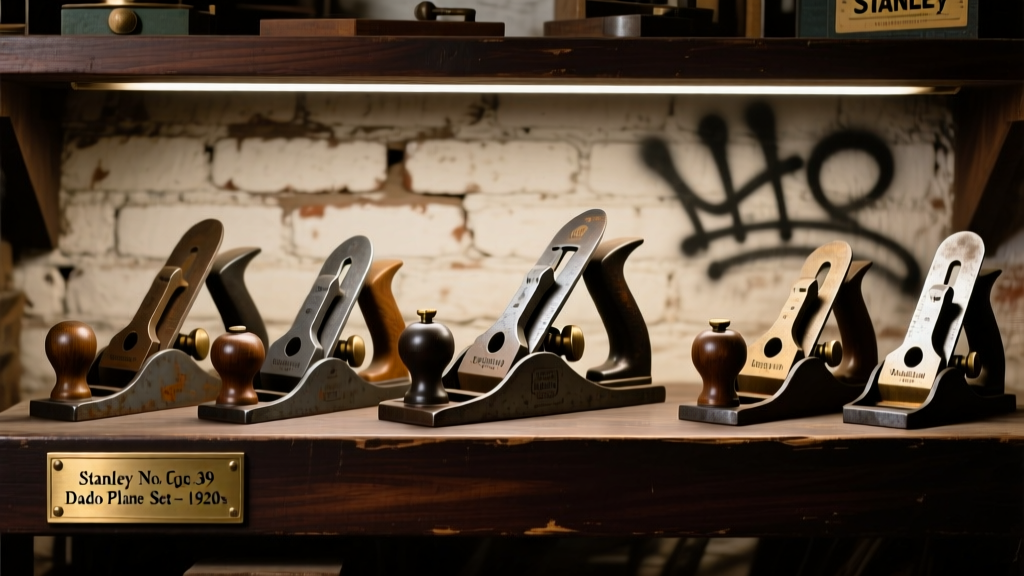
Stanley No. 39 Dado Plane Set: A Collector’s Deep Dive into the Cast-Iron Eight-Piece System
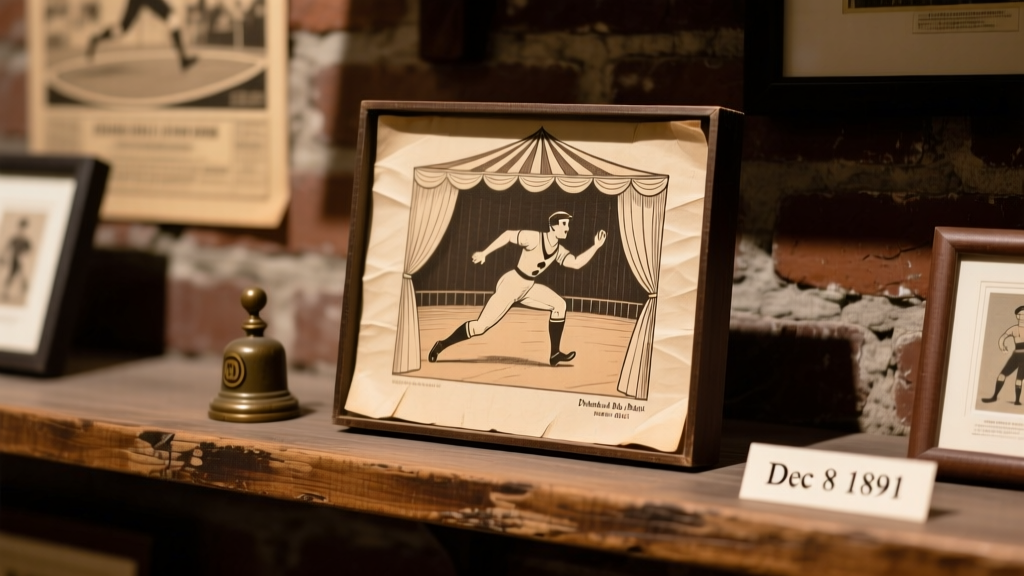
Toy Theater Punch & Judy Bell Toy: Lithograph Paper Artifact Patented December 8, 1891 (9 × 6 × 2 Inches)
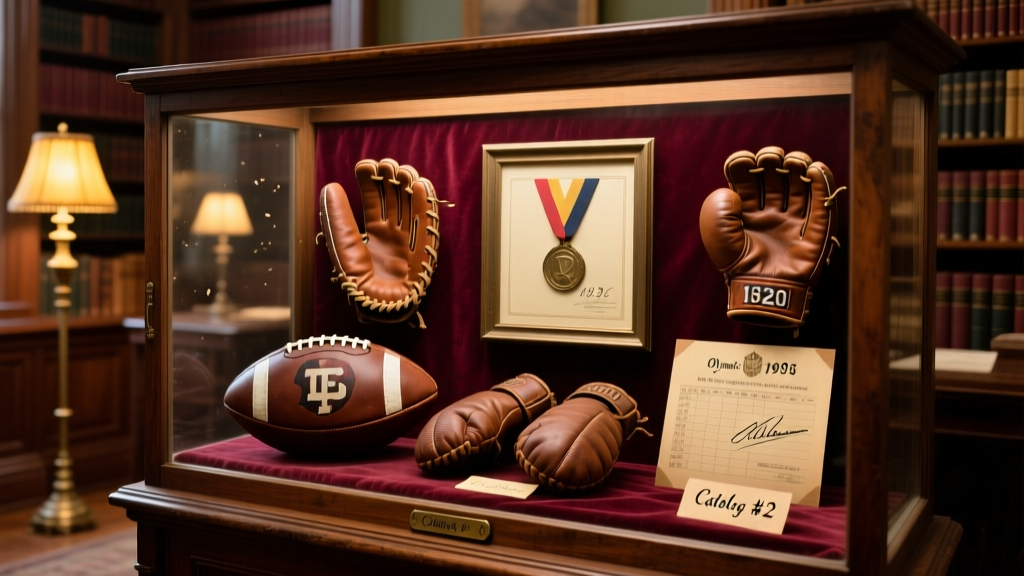
Cataloged Antique Estate Auction #2: A Deep Dive into Provenanced Sports Memorabilia and Historical Artifacts
Authenticating and Valuing the Mahogany Oval Double-Pedestal Dining Table with Three Leaves (62" Extended)
Doll Bahr Proschild 520: The Rare 1912 Girl Bisque Composition Wood Jointed Doll — Authentication, Provenance, and Market Analysis
World’s Fair Pillow Cover, 1939: Art Deco Satin Airplane Decoration — History, Authentication & Collectibility