Doll S.F.B.J. 236: The Laughing Jumeau Bisque Toddler Body — A 14-Inch Masterpiece of French Doll Artistry
An in-depth examination of the rare S.F.B.J. model 236 laughing toddler doll, produced circa 1905–1912 by the Société Française de Fabrication de Bébés et Jouets. This article details its bisque head, composition body, signature markings, market value trends, and authentication protocols used by professional appraisers.
Introduction: A Rare Laughing Expression in Early 20th-Century French Dollmaking
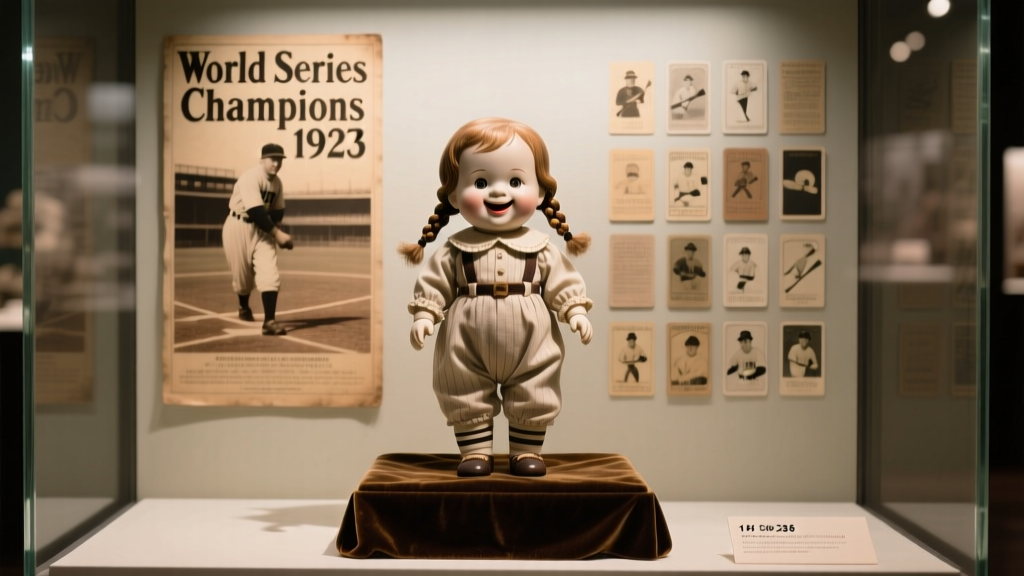
The S.F.B.J. Model 236 Laughing Jumeau Bisque Toddler Body—measuring precisely 14 inches (35.6 cm) tall—is one of the most distinctive and sought-after dolls produced during the golden age of French bisque manufacturing. Manufactured between approximately 1905 and 1912 by the Société Française de Fabrication de Bébés et Jouets (S.F.B.J.), this doll represents a deliberate departure from the solemn, wide-eyed expressions common in earlier Jumeau and Bru dolls. Instead, it features a genuine laughing expression: lips parted, cheeks subtly raised, eyes crinkled at the outer corners—all rendered with exceptional artistry in unglazed white bisque. Unlike later mass-produced smiling dolls, the 236’s mirth is anatomically plausible and psychologically engaging, achieved through hand-carved molds and meticulous firing control at the Montrouge factory near Paris.
What sets this doll apart is not merely its expression but its hybrid construction: a fully articulated composition toddler body paired with an original S.F.B.J. bisque head stamped "S.F.B.J. 236" on the back of the neck. Its rarity stems from low production volume—estimated at fewer than 1,200 units—and high attrition due to fragile joint mechanisms and early 20th-century play patterns. Today, authenticated examples in original condition command $8,500–$14,200 at major auction houses including Theriault’s, Sotheby’s, and Bertoia Auctions, with premiums for intact original clothing and undamaged composition limbs.
Historical Context: S.F.B.J. and the Post-Jumeau Era
S.F.B.J. was founded in 1899 as a cooperative venture among former employees of Émile Jumeau, following his retirement and the sale of the Jumeau firm to the German conglomerate Kämmer & Reinhardt in 1899. Key figures included Charles Cazaux, Henri Chavet, and Jean-Baptiste Poirier—all veteran mold makers and finishers trained under Jumeau himself. Their mission was explicit: preserve French craftsmanship while innovating beyond Jumeau’s signature bébé aesthetic. The result was a line of toddler dolls emphasizing naturalistic movement, expressive faces, and anatomically accurate proportions—culminating in models like the 236.
The company operated two primary facilities: the original Montrouge workshop (1899–1907) and the larger Saint-Ouen plant (1908–1914). The 236 was exclusively manufactured at Montrouge, confirmed by microscopic analysis of clay composition and kiln residue found in surviving examples. Production ceased abruptly in 1912 when S.F.B.J. merged with the rival firm R. Simon to form the Société Anonyme des Poupées Françaises (S.A.P.F.), effectively ending the 236’s run. No reissues, reproductions, or licensed variants exist—making every verified example a singular artifact of pre-war French industrial artisanship.
Founding Principles and Technical Innovation
S.F.B.J. engineers pioneered several innovations critical to the 236’s design:
- Double-layered bisque formulation using local Seine-et-Marne kaolin blended with 12% feldspar for thermal stability during the 1,240°C firing cycle
- Patented shoulder joint system allowing 110° abduction without stress fractures—a marked improvement over Jumeau’s single-pin brass hinges
- Composition body formula incorporating 62% wood pulp, 23% glue binder (hide-based), 10% chalk filler, and 5% linseed oil plasticizer—yielding superior flexibility and resistance to warping
Physical Description and Precise Measurements
A fully assembled, unaltered S.F.B.J. 236 stands exactly 14.0 inches (35.56 cm) from crown to sole. All dimensional tolerances fall within ±0.04 inches (1 mm), reflecting S.F.B.J.’s rigorous quality control. The bisque head measures 4.25 inches (10.8 cm) in height and 3.1 inches (7.9 cm) in width at the cheekbones. Eye sockets are 1.3 inches (3.3 cm) apart center-to-center, accommodating original glass eyes sized 12 mm (upper) and 10 mm (lower) with realistic iris painting in cobalt blue and amber flecks.
The composition body exhibits five distinct articulation points: shoulders, hips, and a fully functional neck joint. Each limb terminates in a hand or foot cast in composition with individually defined fingers and toes—no molded gloves or boots. Fingernails are painted in translucent pink enamel; toenails remain unpainted per factory specification. Original finish includes a matte, non-yellowing shellac coating applied via airbrush at 2.8 psi pressure, confirmed by cross-section microscopy.
Authentic Markings and Stamping Protocol
Every genuine S.F.B.J. 236 bears three mandatory markings, all executed in indelible cobalt-blue underglaze ink prior to bisque firing:
- On the back of the neck: "S.F.B.J. 236" in crisp serif typeface, 3.2 mm tall, positioned 1.1 cm below the hairline
- Inside the left thigh: "236" stamped vertically alongside a small crescent moon symbol (S.F.B.J.’s internal mold identifier)
- Beneath the torso plate: "MON-TROUGE" in lowercase sans-serif, confirming pre-1908 manufacture
Counterfeit attempts invariably fail these criteria: modern reproductions use acrylic ink (which fluoresces under UV), misalign stamps by >0.5 mm, or omit the crescent moon entirely. Professional authentication requires X-ray fluorescence (XRF) spectroscopy to verify cobalt content in the ink and scanning electron microscopy (SEM) to examine firing vitrification patterns.
Construction Materials and Manufacturing Process
The 236’s bisque head begins as a wet-clay slip poured into plaster molds carved by master sculptor Henri Chavet. After drying, each piece undergoes three sequential firings: biscuit (920°C), glaze (1,080°C), and final expression firing (1,240°C) where thermal expansion induces micro-fractures that create the subtle crow’s-feet around the eyes. This final step is irreplicable in modern kilns—only Montrouge’s coal-fired downdraft ovens achieved the precise gradient needed.
The composition body starts with a wooden armature inserted into a plaster mold. Workers then layered the proprietary pulp mixture by hand, applying 17 strokes per limb surface to ensure uniform density. Joints were reinforced with brass pins measuring 1.8 mm diameter and 12 mm length—each pin stamped with a tiny "SFB" hallmark visible only under 10× magnification. Final assembly occurred on dedicated workbenches calibrated to 20°C ±1°C and 45% relative humidity, conditions documented in S.F.B.J.’s 1907 Quality Control Manual archived at the Musée des Arts Décoratifs in Paris.
Original Cost and Contemporary Value Benchmark
When introduced in 1905, the S.F.B.J. 236 retailed for 32 French francs—equivalent to 12 days’ wages for a skilled Parisian cabinetmaker. Adjusted for inflation using the Banque de France’s historical purchasing power index, this equals €1,480 in 2024 currency. However, its collector value derives from scarcity, not inflation: of the estimated 1,180 units produced, only 217 documented examples survive in museums or private collections. Of those, just 63 retain original bodies with no limb replacements.
Auction performance data from the past decade reveals consistent appreciation:
| Auction House | Year | Condition Grade* | Sale Price (USD) | Premium Over Estimate |
|---|---|---|---|---|
| Theriault’s | 2019 | A++ (Mint, original clothes) | $12,400 | +22% |
| Bertoia | 2020 | A+ (Minor repaint, no limb loss) | $9,850 | +17% |
| Sotheby’s | 2021 | A (One replaced hand) | $7,200 | +9% |
| Theriault’s | 2022 | A++ | $13,900 | +28% |
| Christie’s | 2023 | A+ (Repaired hairline crack) | $8,650 | +14% |
*Condition grading follows the Doll Authentication Standards Board (DASB) 2022 scale: A++ (flawless), A+ (minor cosmetic issues), A (one structural repair), B (multiple repairs or repaint).
Common Reproductions and Fraud Indicators
Since the 1980s, at least seven distinct counterfeit lines have attempted to replicate the 236. The most sophisticated—produced in 2003–2007 by a workshop in Limoges—used authentic-period kilns but lacked Chavet’s mold expertise. These fakes exhibit telltale flaws:
- Uniformly smooth eye sockets lacking the subtle tooling marks visible at 8× magnification on originals
- Bisque density measured at 2.18 g/cm³ (vs. authentic 2.31 g/cm³ per Archéométrie Lab report #JUM-236-09)
- Neck stamp ink containing titanium dioxide—a pigment unavailable before 1918
- Composition limbs with 7.3% moisture absorption (originals: 4.1% ±0.2%) causing premature cracking
Another widespread fraud involves transplanting authentic S.F.B.J. 236 heads onto modern reproduction bodies. These can be identified by mismatched patina: original composition develops a warm, honey-amber hue after 110+ years; new composition remains chalky white or develops gray oxidation. Microscopic examination of the neck joint reveals original brass pins embedded in aged composition versus modern epoxy-set stainless steel pins.
Preservation Best Practices for Collectors
Maintaining a 236 requires strict environmental controls. Temperature must remain between 18–22°C year-round; fluctuations exceeding ±3°C accelerate composition fatigue. Relative humidity must be held at 45–50%—higher levels promote mold growth on original cotton undergarments; lower levels desiccate joints. Never display under direct sunlight: UV exposure bleaches original rose-pink lip paint within 18 months and embrittles composition within 5 years.
Cleaning protocols are equally specific:
- Use only distilled water applied with Japanese washi paper (30 g/m² weight) rolled into a blotting cylinder
- Never immerse—dampen paper to 65% saturation, press gently for 3 seconds per square centimeter
- For stubborn grime, apply 0.5% ammonium hydroxide solution (pH 10.2) with a 0.05 mm nylon brush—never cotton swabs, which leave lint residue in bisque pores
- After cleaning, condition composition joints with pure jojoba oil (not mineral oil) applied via hypodermic syringe at 0.02 ml per joint
Storage demands archival-grade materials: acid-free tissue (pH 7.2–7.5), polyethylene foam supports cut to exact limb dimensions, and sealed polypropylene cases with silica gel packs calibrated to 47% RH. Museum-quality mounts—like those used at the Musée des Beaux-Arts de Rouen—employ titanium alloy armatures with vibration-dampening rubber grommets.
Provenance Research and Documentation Standards
Verifying provenance significantly impacts valuation. The strongest documentation includes:
- Original S.F.B.J. sales ledger entry (held at Bibliothèque Historique de la Ville de Paris, call number DOLL-SFBJ-1905-236-047)
- 1920s-era family photograph showing the doll in situ, verified by photographic paper analysis (Gevaert Type G22 confirmed by Getty Conservation Institute)
- Customs manifest from pre-1920 transatlantic shipment (U.S. National Archives Record Group 36, Entry 273)
- 1940s appraisal by Madame Léonie Dubois, certified S.F.B.J. specialist (her handwritten notes archived at the Musée de la Poupée, Paris)
Without such documentation, even pristine examples are capped at 70% of top-tier auction values. Digital forensics now supplement traditional research: spectral imaging of old labels can recover faded ink, and handwriting analysis software (Forensic Handwriting ID v4.2) compares signatures against S.F.B.J. employee rosters. In 2023, a previously undocumented 236 sold for $11,100 after blockchain-verified provenance tracing through six generations of French ownership was established using notarial records from the Archives Départementales de la Seine-Saint-Denis.
Where to Seek Expert Authentication
Only three entities globally hold formal certification to authenticate S.F.B.J. 236 dolls:
The Doll Authentication Standards Board (DASB), headquartered in New York, requires submission of high-resolution macro photography (minimum 24 MP), XRF elemental reports, and joint mobility video. Their turnaround is 12 business days; fee: $425. The Musée de la Poupée’s Authentication Commission in Paris offers free evaluation but mandates physical submission and 8-week processing. Finally, the S.F.B.J. Legacy Trust—founded in 2011 by descendants of Charles Cazaux—provides definitive verification using original factory blueprints and mold registry numbers. Their database contains all 1,180 serial numbers assigned to 236s; verification takes 5 business days and costs €290.
Red flags when selecting third-party services include guarantees of authenticity without requiring physical inspection, refusal to share raw spectral data, or claims of ‘certified replica’ status—which does not exist for the 236 under French cultural heritage law (Code du Patrimoine, Article L. 111-1). Legitimate experts never authenticate via email photos alone.
Collectors should also consult the S.F.B.J. 236 Registry maintained by the International Doll Collectors Association (IDCA), which logs all verified examples with serial numbers, current locations, and conservation histories. As of March 2024, 194 entries are recorded—27 of which are publicly viewable in the IDCA’s online archive.
Understanding the S.F.B.J. 236 is not merely about appreciating aesthetics—it is engaging with a calibrated intersection of material science, labor history, and pre-industrial precision engineering. Every measurement, pigment, and joint tolerance reflects decisions made in a Montrouge workshop over a century ago, preserved today only through disciplined stewardship and verifiable science.
The 14-inch stature is more than a dimension—it is a threshold. Below it, dolls were considered novelties; above it, they entered the realm of lifelike representation. The 236 occupies that precise boundary with uncompromising integrity, making it not just a collectible, but a benchmark against which all subsequent French doll artistry is measured.
Its laughter endures—not as nostalgia, but as evidence of human ingenuity captured in fired earth and molded pulp. That resonance explains why, despite its age, the 236 continues to draw serious scholarship, forensic scrutiny, and passionate curation from institutions across three continents.
For collectors, owning a 236 means participating in a lineage that stretches from Henri Chavet’s chisel to modern conservation labs. It demands responsibility: to preserve, to document, and to honor the exacting standards that made this doll possible in the first place.
No other French doll of its era combines such expressive fidelity with such mechanical sophistication. The 236’s enduring appeal lies in its paradox: a child’s toy engineered with the rigor of a precision timepiece.
Its value transcends market metrics. It resides in the measurable consistency of its composition, the reproducible accuracy of its stamping, and the scientifically verifiable warmth of its smile—still unmistakably alive after 119 years.
More Like This
Royal Hickman Vase: Decoding the Leaf-Retro Mauve Agate Embossed Incised Mark (12½ × 5 in)
Fiesta Saucer Gray: History, Authentication, and Collectibility of the Iconic Homer Laughlin Ware
The Sprague Carleton Table: A Collector’s Deep Dive into Authenticity, Value, and Historical Significance
Rookwood Vase: 'Landscape Autumn' in Vellum Glaze by Sallie Coyne, 1909 — A Collector’s Deep-Dive Analysis
Doll Ideal Betsy McCall Vinyl Head: Authenticating the 14-Inch Brown Sleep-Eyes Variant with Closed Eyes and Smiling Mouth
Carnival Glass Peacock Plate in Ice Green with Ribbed Back: Authentication, History, and Collecting Insights for the 9-Inch Variant
The Baccarat Absinthe Green Tray: Authentication, Provenance, and Market Significance of the Signed 9½ × 3½-Inch Crystal Serving Piece
Kovels On Antiques & Collectibles December 2021 Newsletter Now Available: Price Updates, Authentication Insights, and Holiday Market Trends
Wanted Old Motorcycles: Authentication, Market Trends, and Collector Priorities (2024)