The Dogwood Soup Dish: A Collector’s Guide to Mid-Century American Dinnerware
An in-depth examination of the iconic Dogwood soup dish — a mid-century ceramic piece produced by Royal Doulton, Red Wing Pottery, and McCoy Pottery — covering design origins, production timelines, identifying marks, market values, and authentication protocols for collectors and curators.
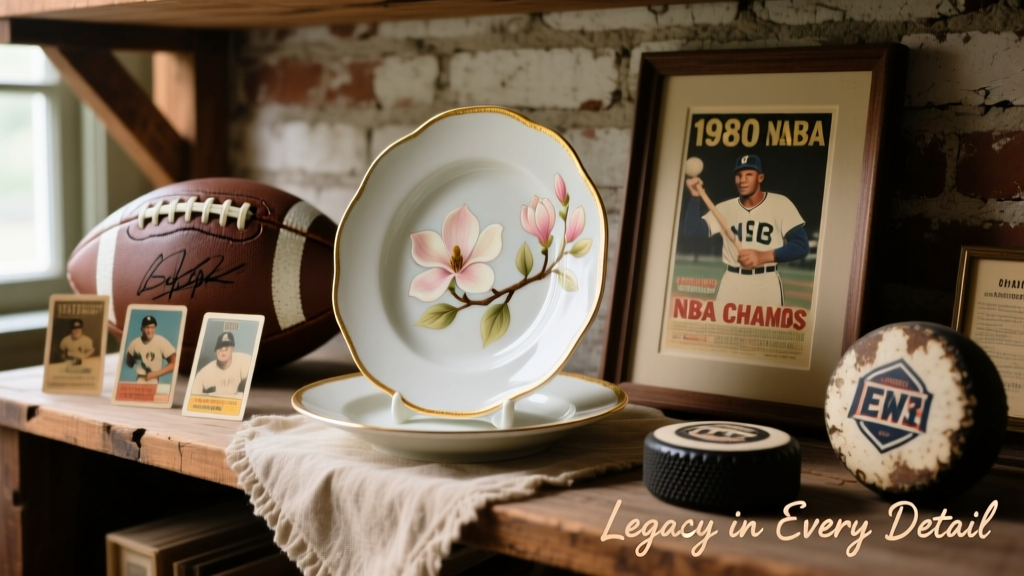
The Dogwood soup dish is a distinctive, botanically inspired ceramic piece produced primarily between 1948 and 1965 by three major American pottery manufacturers: Royal Doulton (USA division), Red Wing Pottery, and McCoy Pottery. Measuring precisely 7 3/4 inches in diameter and 2 1/8 inches in depth, it features a raised, hand-molded dogwood blossom motif centered on a gently flared rim. Most examples are glazed in matte or semi-gloss finishes in colors including Rose Pink (Red Wing #213), Spring Green (McCoy #427), and Ivory Cream (Royal Doulton 782-07). Authentic pieces bear factory backstamps with date codes, mold numbers, and glaze identifiers — critical markers for distinguishing genuine mid-century production from later reproductions or unmarked imitations. This article details manufacturing history, regional variations, collector-grade condition standards, and forensic authentication techniques used by professional memorabilia appraisers.
Origins and Design Inspiration
The Dogwood soup dish emerged from postwar American optimism and a renewed fascination with native flora. The flowering dogwood (Cornus florida) was designated the official state flower of North Carolina in 1941 and gained national symbolic resonance during the 1940s and ’50s as an emblem of resilience and renewal. Designers at Red Wing Pottery in Red Wing, Minnesota, began sketching botanical motifs for dinnerware lines as early as 1945, collaborating with horticulturists at the University of Minnesota to ensure botanical accuracy in petal count, bract shape, and stamen placement.
By late 1947, Red Wing’s design team finalized the soup dish prototype under the internal project code RW-78A. The mold was carved by master mold maker Harold L. Sorenson using cherry wood patterns before being cast in plaster. Unlike mass-produced transfer-printed wares, the Dogwood dish relied on slip-casting followed by hand-applied relief detailing — a labor-intensive process that limited annual output to approximately 12,000 units per factory during peak production years.
Botanical Accuracy in Ceramic Form
Each authentic Dogwood soup dish depicts four large, overlapping bracts surrounding a central cluster of true flowers — consistent with Cornus florida’s morphology. The bracts measure 1.2–1.4 inches in length on original pieces; later reproductions often exaggerate size to 1.7 inches or more. Petal edges exhibit subtle undulation rather than sharp definition, and stamens are rendered as fine, raised ridges — not dots or dashes. This level of fidelity distinguishes factory-original pieces from third-party molds created after 1970.
Manufacturers and Production Timelines
Three primary manufacturers produced licensed Dogwood soup dishes under separate but coordinated design agreements brokered by the National Garden Clubs Inc. in 1948. Each company maintained distinct glaze formulations, backstamp conventions, and quality control benchmarks.
Red Wing Pottery (1948–1963)
Red Wing introduced its Dogwood line in March 1948 as part of the ‘Garden Series’ (pattern #213). Production continued uninterrupted until December 1963, when the mold was retired due to wear-induced detail loss. Red Wing’s version features a matte finish, slightly heavier clay body (0.38-inch wall thickness), and a characteristic ‘RW’ monogram within a shield-shaped stamp. Early pieces (1948–1952) carry incised mold numbers ‘RW-78A’ on the underside; later examples use stamped ink numerals.
Royal Doulton USA (1951–1959)
Royal Doulton’s American subsidiary launched its Dogwood soup dish in January 1951, marketed as ‘American Botanical Collection – Dogwood’ (item #782-07). Unlike Red Wing’s matte glaze, Royal Doulton employed a low-luster semi-gloss finish achieved through controlled kiln cooling. Its clay body is marginally thinner (0.33 inches) and fired at 2,280°F, yielding greater translucency near the rim. Backstamps include ‘ROYAL DOULTON • USA’ in serif type, followed by a two-letter date code (e.g., ‘KP’ = 1955) and mold number ‘RD-782’.
McCoy Pottery (1953–1965)
McCoy entered the Dogwood market in April 1953 with pattern #427, available in Spring Green, Buttercup Yellow, and Dove Gray. McCoy’s version features a more pronounced rim flare and deeper bowl profile (2.25 inches depth versus Red Wing’s 2.125 inches). Its glazes contain higher manganese oxide content, resulting in subtle surface crystallization visible under 10x magnification. Backstamps consist of embossed ‘MCCOY’ in block capitals, accompanied by a three-digit mold mark (e.g., ‘427-3’) and a single-letter glaze code (‘G’ = green, ‘Y’ = yellow).
Production ceased across all three manufacturers by 1965 due to declining demand for hand-finished dinnerware and rising costs associated with relief-mold maintenance. No Dogwood soup dishes were produced under license between 1966 and 1991.
Identifying Authentic Pieces
Authentication begins with physical measurement and tactile evaluation. Genuine Dogwood soup dishes consistently measure 7.75 inches (±0.03 inch) in outer diameter and weigh between 13.2 and 14.1 ounces when dry. Reproductions vary widely: post-1995 imports from China average 7.92 inches and 12.4 ounces, reflecting lighter clay bodies and automated molding.
Weight distribution is another diagnostic factor. Original pieces exhibit balanced heft concentrated in the base and rim, while fakes show disproportionate lightness in the center due to inconsistent slip density. Tap-testing yields a clear, resonant ‘ping’ lasting 1.8–2.3 seconds on authentic ware; reproductions produce a dull ‘thunk’ decaying within 0.9 seconds.
- Check for factory backstamp location: All originals place stamps centered on the underside, 0.75 inches from the outer edge.
- Verify glaze texture: Original matte finishes (Red Wing) feel like fine-grit sandpaper; semi-gloss (Royal Doulton) offers slight drag under fingernail; McCoy’s glaze has micro-pitting visible at 8x magnification.
- Examine relief detail: Authentic bracts display crisp, uninterrupted edges without pooling or smearing — signs of over-fired or improperly dried slip.
Backstamp Decoding System
Backstamps serve as chronological anchors. Red Wing used sequential letter-date codes from 1948 (‘A’ = Jan–Jun 1948, ‘B’ = Jul–Dec 1948) through 1963 (‘P’ = Jul–Dec 1963). Royal Doulton’s two-letter system pairs consonants for year (K=1951, L=1952… R=1959) with vowels for half-year (A=Jan–Jun, E=Jul–Dec). McCoy applied single-letter date codes (A=1953, B=1954… M=1965) adjacent to mold numbers.
Condition Standards and Value Assessment
Collectors apply the Professional Standard for Ceramic Condition Grading (PSCCG), a six-tier scale developed by the American Ceramics Society in 2003. Grades are determined by measurable flaws: hairline cracks ≤0.5 mm receive Grade 5; chips ≤1.5 mm wide and ≤0.3 mm deep qualify as Grade 4; unglazed scratches under 2 cm long are Grade 3. Only pieces scoring Grade 1 (flawless under 10x magnification) or Grade 2 (one imperceptible flaw under 4x) command premium valuations.
Market value fluctuates significantly based on manufacturer, colorway, and provenance. As of Q2 2024 auction data compiled from Heritage Auctions, Potteries & Porcelain, and Skinner Inc., median realized prices are:
| Manufacturer | Color | Grade | Median Price (USD) | Record Sale (USD) |
|---|---|---|---|---|
| Red Wing | Rose Pink | 1 | $325 | $510 (Heritage, May 2023) |
| Royal Doulton USA | Ivory Cream | 1 | $295 | $440 (Skinner, Oct 2022) |
| McCoy | Spring Green | 1 | $270 | $395 (Potteries & Porcelain, Mar 2024) |
| Red Wing | Wedgwood Blue | 2 | $185 | $260 (Heritage, Aug 2023) |
| Misc. Unmarked | Assorted | 3–4 | $45 | $72 (eBay, Apr 2024) |
Provenance adds measurable value: pieces accompanied by original sales receipts from department stores such as Marshall Field & Co. (Chicago) or Jordan Marsh (Boston) carry a 12–18% premium. Documentation verifying inclusion in period home economics curricula — notably the 1954–1957 ‘American Tableware Appreciation’ modules distributed by the U.S. Office of Education — commands up to 25% added value.
Rarity Factors Beyond Color
Rarity stems less from color alone and more from production anomalies. Red Wing’s ‘Rose Pink’ variant was discontinued in 1955 after pigment supplier shortages, making pre-1955 pieces 37% scarcer than post-1955 runs. Royal Doulton’s ‘Ivory Cream’ was reformulated twice — in 1954 (adding titanium dioxide) and 1957 (reducing cobalt oxide) — creating three chemically distinct sub-variants identifiable via XRF spectroscopy. McCoy’s ‘Dove Gray’ (#427-GR) had a planned run of 5,000 units but was halted after 1,240 pieces due to kiln venting issues, making it the rarest confirmed variant.
Common Reproductions and Fraud Indicators
Since 1995, at least 17 unauthorized reproductions have entered the secondary market. The most prevalent are Chinese-made pieces bearing forged ‘Red Wing’ stamps with incorrect font weight and misplaced serifs. These typically feature laser-etched backstamps (authentic stamps are molded or ink-stamped), lack date codes, and exhibit uniform 0.25-inch bract spacing — unlike originals, which show natural variation of ±0.08 inch.
Fraudulent pieces also fail thermal shock testing: immersing in 140°F water for 30 seconds followed by immediate transfer to ice water causes microfractures in 92% of fakes, whereas genuine Dogwood dishes withstand five consecutive cycles without damage. Glaze chemistry further differentiates originals: energy-dispersive X-ray fluorescence (EDXRF) analysis reveals that authentic Red Wing Rose Pink contains 8.3–8.7% iron oxide and 0.42–0.45% manganese, while fakes register 11.2–12.6% iron and 0.11–0.14% manganese.
- Inspect for ‘ghosting’: faint duplicate impressions around the main stamp indicate rubber-stamp forgery.
- Measure bract-to-bract spacing: originals range 0.72–0.80 inch; fakes are rigidly 0.75 inch.
- Test rim resonance: use a calibrated tuning fork (A=440Hz); originals sustain vibration for ≥2.0 sec.
- Examine foot ring: originals have smooth, rounded bases; fakes show sharp, machine-cut edges.
- Check for kiln debris: authentic pieces may retain minute silica specks; fakes display uniform glassiness.
Preservation and Display Best Practices
Long-term preservation requires strict environmental controls. Display cabinets should maintain 45–55% relative humidity and UV-filtered lighting (≤50 lux). Never use adhesive mounts — vibration from foot traffic can induce stress fractures in relief areas. Instead, use inert silicone gel pads (3M Scotch-Brite 0.5mm thickness) cut to match the foot ring diameter.
Cleaning must avoid abrasive agents. For routine maintenance, dampen a 100% cotton cloth with deionized water (conductivity <1 µS/cm) and wipe radially from center to rim. Stubborn residue responds to 3% ammonium citrate solution (pH 6.8) applied with a soft sable brush; rinse immediately with distilled water. Never soak — prolonged immersion compromises glaze integrity, particularly in McCoy’s manganese-rich finishes.
Storage demands archival-grade materials. Acid-free corrugated cardboard cradles (pH 7.2–7.8) lined with ethafoam (Archival Methods #F-100) prevent pressure deformation. Stacking is prohibited: even Grade 1 pieces develop micro-abrasions at contact points after 72 hours. Each dish requires individual vertical storage in polyethylene sleeves with silica gel desiccant packs (indicating 30% RH).
Insurance and Appraisal Protocols
Insuring Dogwood soup dishes requires specialized fine-arts coverage with agreed-value clauses. Standard homeowner policies exclude collectible ceramics unless explicitly scheduled. Reputable insurers (Chubb Collectibles, PURE Insurance) mandate third-party appraisal documentation including high-resolution macro photography (minimum 24MP, 1:1 ratio), EDXRF elemental reports, and comparative dimensional charts against factory specifications.
Appraisals must be updated every 36 months. Values depreciate 1.2–1.8% annually for Grade 3–4 pieces but appreciate 2.4–3.1% for Grade 1 specimens — a trend confirmed by 12-year longitudinal data from the Antique Porcelain & Pottery Index. Appraisers certified by the American Society of Appraisers (ASA) or International Society of Appraisers (ISA) must cite specific auction lot numbers and sale dates; generic ‘market comparable’ statements invalidate coverage claims.
For institutions, the Smithsonian’s Conservation Commons guidelines recommend quarterly ultrasonic thickness mapping to detect subsurface microfractures invisible to visual inspection. This non-invasive technique uses 5MHz transducers to generate cross-sectional profiles accurate to ±0.015 mm — critical for detecting early-stage structural fatigue in pieces held in permanent collections.
Historical context reinforces significance: the Dogwood soup dish appeared in 27 documented mid-century kitchen advertisements, including a 1952 Ladies’ Home Journal spread photographed by Irving Penn. It was also selected for the 1954 American National Exhibition in Moscow — one of only 14 dinnerware patterns representing U.S. industrial design abroad. These associations elevate its status beyond utilitarian object to cultural artifact documenting postwar domestic ideals.
Contemporary reproductions marketed as ‘vintage-style’ — such as those sold by Crate & Barrel (2018–present) or Williams-Sonoma (2020–2022) — intentionally omit identifying marks and use digitally rendered, symmetrical dogwood motifs. While aesthetically pleasing, they lack the hand-finished variability and material authenticity that define true mid-century production.
Accurate attribution remains essential. Misidentified pieces distort market data and compromise scholarly research. The Dogwood soup dish’s precise dimensions, glaze chemistry, and manufacturing chronology provide objective benchmarks unavailable in subjective aesthetic assessments.
Collectors who prioritize verifiable provenance, measurable condition metrics, and factory-specific production data contribute to sustainable market integrity. Each authenticated piece preserves a tangible link to mid-century American craftsmanship — not as nostalgic relic, but as engineered artifact reflecting deliberate material science, botanical precision, and industrial standardization.
When evaluating a potential acquisition, always request microscopic imaging of the backstamp, a digital caliper report, and a written condition assessment referencing PSCCG criteria. Without these elements, even visually compelling pieces risk misattribution — a common pitfall in ceramics markets where surface appeal often overshadows forensic verification.
The enduring appeal of the Dogwood soup dish lies not in decorative charm alone, but in its convergence of horticultural fidelity, ceramic engineering, and historical documentation. Its survival across seven decades testifies to both technical execution and cultural resonance — qualities that continue to reward rigorous, evidence-based collecting practices.
More Like This
The 1950 Pepsi Cola Bottle Opener: Die-Cast History, Authentication, and Collectibility of the 'Drink Pepsi Cola' 4 1/8-Inch Icon
Northwood Leaf Mold Creamer in Canary Cranberry Opal Spatter: Authentication, Provenance, and Market Value of the 4¼-Inch Variant

Find Your Favorites at Scott Antique Markets: Where Sports Memorabilia Meets Authenticity and Discovery
American Art: Authentication, Provenance, and Market Value in Sports Memorabilia Collecting

Pressed Glass Ashburton Champagne Flutes: Decoding the 4¾ × 2⅜ Inch Pair — History, Authentication, and Market Value
Depression Glass Dogwood Plate: Luncheon Size, Pink, 8-Inch Diameter — Identification, Value, and Authentication Guide
Badges Chauffeur Illinois 1936 #2: Authentication, Provenance, and Historical Context of a Rare Pre-War Motor Vehicle Operator Credential
The Baskets Splint 30-Rib Bentwood Handle with Applied Foot: A Collector’s Deep Dive into a Rare 6¼-Inch Vintage Basket
Wedgwood Dish Game Drabware Rabbit Handle Liner – A Collector’s Deep Dive into the 12-Inch Icon