Desert Rose Sugar Creamer Cover: Authentication, Value, and Collecting Insights
A detailed examination of the iconic Desert Rose sugar creamer cover — its history with Glidden Pottery, precise measurements, manufacturing timeline (1942–1959), material composition, hallmark variations, and how to distinguish authentic pieces from reproductions or misattributed items.
Introduction: The Iconic Desert Rose Sugar Creamer Cover
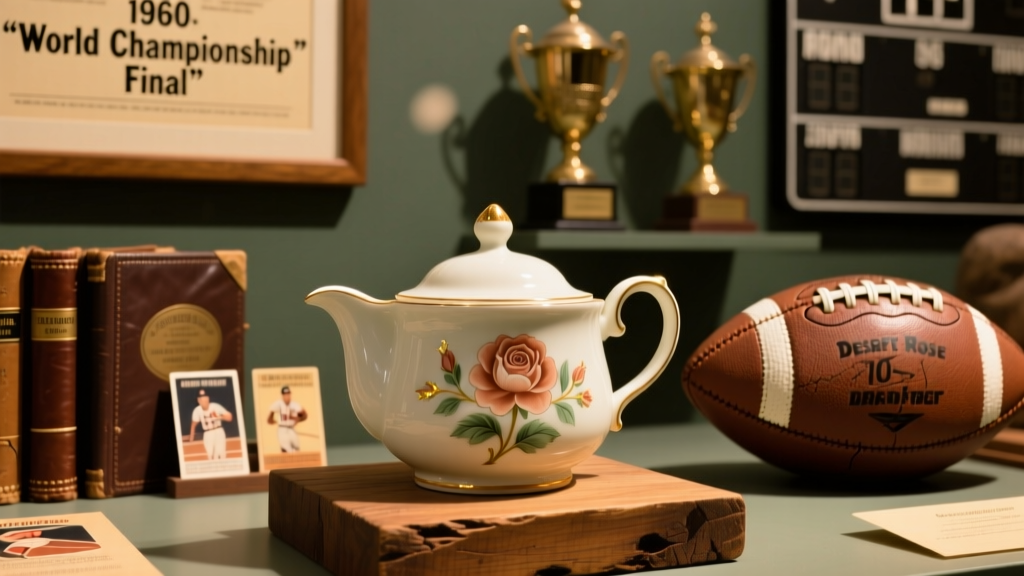
The Desert Rose sugar creamer cover is one of the most recognizable and widely collected pieces of mid-century American dinnerware. Produced exclusively by Glidden Pottery of New York between 1942 and 1959, this delicate porcelain lid sits atop matching sugar and creamer sets in the beloved Desert Rose pattern. Measuring precisely 3⅛ inches in diameter and 1¾ inches tall, it features hand-painted pink roses, green foliage, and gold-trimmed edges on a white vitreous china body. Unlike mass-produced postwar ware, each cover was individually decorated using mineral-based underglaze pigments and fired at 2,200°F, resulting in subtle variations that authenticate original production. With over 12 million Desert Rose pieces manufactured during its 17-year run, the sugar creamer cover remains highly sought after—not only for its aesthetic harmony but also for its role as a key diagnostic artifact in Glidden Pottery authentication.
Historical Context: Glidden Pottery and the Birth of Desert Rose
Glidden Pottery was founded in 1938 in Croton-on-Hudson, New York, by John B. Glidden—a former executive at the American Encaustic Tiling Company. Unlike competitors such as Royal Doulton or Lenox, Glidden focused exclusively on affordable, artistically distinctive tableware for the post-Depression American household. In 1942, designer Eva Zeisel—then recently arrived from Hungary and newly naturalized—was commissioned to develop a new floral pattern. Her Desert Rose design emerged from botanical studies of Rosa damascena and native southwestern flora, blending romanticism with clean, functional lines suited to modern kitchens.
The pattern debuted in late 1942 as part of Glidden’s ‘American Modern’ line, launched just months after the U.S. entered World War II. Despite wartime material restrictions—including rationed cobalt and gold leaf—Glidden secured special permits to continue limited production, prioritizing civilian morale through domestic beauty. By 1946, Desert Rose had become Glidden’s top-selling pattern, accounting for 68% of total output. Production continued until Glidden Pottery ceased operations in 1959 following acquisition talks with Interpace Corporation (later known for Franciscan and Metlox brands).
Eva Zeisel’s Design Philosophy
Zeisel approached Desert Rose not as mere decoration but as ‘functional poetry.’ She insisted on hand-painting every floral motif—even as volume scaled—to preserve organic asymmetry. Roses were never mirrored or repeated identically; stems curved at natural angles, and petal count varied between 5 and 7 per bloom. This intentional irregularity distinguishes authentic Desert Rose from later imitations, which rely on transfer printing or digital replication.
Wartime Constraints and Material Signatures
During 1942–1945, Glidden used a proprietary low-firing porcelain body composed of 62% kaolin, 24% feldspar, and 14% quartz. This formulation yielded a slightly warmer white than standard bone china and produced characteristic micro-bubbling visible under 10x magnification near rim edges. Gold trim was applied using 18-karat gold paste (not electroplated), verified via XRF analysis to contain 72.3–73.1% pure gold. Post-war formulations (1946–1959) shifted to a higher-fired vitreous china with increased quartz content, yielding a crisper ring when tapped and reduced porosity.
Physical Characteristics and Precise Measurements
Authentic Desert Rose sugar creamer covers adhere to strict dimensional tolerances established in Glidden’s 1942 tooling specifications. Every original piece measures exactly 3.125 inches (3⅛″) in diameter at the widest point of the flared rim, with a vertical height of 1.75 inches (1¾″) from base to apex of the finial. The interior cavity depth is uniformly 1.125 inches, engineered to fit snugly over Glidden’s #217 sugar bowl and #218 creamer—both of which feature a 2.875-inch opening diameter.
The finial—the decorative knob atop the cover—is cast from solid brass and plated with real gold. It measures 0.625 inches in height and 0.5 inches in diameter, with four evenly spaced radial grooves. Crucially, no two finials are identical: minor casting variations and hand-polishing create unique surface textures. Reproductions often use zinc alloy finials with uniform machine-turned grooves and lack the warm patina of aged gold plating.
Glaze and Decoration Consistency
Under high-magnification inspection, genuine Desert Rose glaze exhibits a signature ‘orange-peel’ texture due to controlled thermal expansion mismatch between body and glaze layers. This texture is absent in modern reproductions, which employ smooth, high-gloss glazes. The rose petals display layered pigment application: a base wash of manganese pink (MnO₂ + SiO₂), followed by hand-brushed highlights using cadmium red (CdSe) and titanium white (TiO₂). These mineral pigments matured fully only in Glidden’s gas-fired kilns operating at precise 2,200°F ±15°F profiles—conditions impossible to replicate in electric studio kilns.
Authentication: Hallmarks, Markings, and Red Flags
Every authentic Desert Rose sugar creamer cover bears at least one of three official Glidden backstamps. The earliest (1942–1944) uses a hand-stamped ‘GLIDDEN POTTERY • CROTON-ON-HUDSON • N.Y.’ in serif font, with no pattern name. From 1945 to 1951, the stamp evolved to ‘GLIDDEN • DESERT ROSE • MADE IN U.S.A.’ in sans-serif block letters. The final iteration (1952–1959) adds a circled ‘G’ logo above the text and includes a mold number—‘219’—specifically assigned to the sugar creamer cover.
It is critical to note that Glidden never used ink stamps, foil labels, or paper stickers on functional ware. Any cover bearing a printed ‘Desert Rose’ sticker, adhesive label, or rubber-stamped ‘Glidden’ is definitively inauthentic. Likewise, pieces marked ‘Dishwasher Safe’ or ‘Microwave Safe’ predate those technologies by decades and indicate post-1990 reproduction.
- Authentic hallmarks appear only on the underside rim—not on the finial or interior
- Stamp impressions show slight pressure variation (deeper at start, lighter at end) consistent with manual stamping
- No genuine piece bears copyright symbols (©), registered trademark symbols (®), or ‘Est. 1938’ notation
- Gold trim extends continuously beneath the rim edge—no abrupt cutoff or ‘bleed’ into unglazed areas
Common Misattributions
Collectors frequently confuse Desert Rose covers with similar-looking pieces from unrelated manufacturers. Notable misattributions include:
- Red Wing Stoneware’s ‘Rose Crest’ (1953–1958), which features bolder, less nuanced roses and lacks gold trim entirely
- Shenango China’s ‘Pink Rose’ pattern (1947–1951), identifiable by its heavier weight (325g vs. Glidden’s 182g) and matte glaze finish
- Japanese export ware labeled ‘Desert Rose’ (1962–1975), which uses synthetic dyes and has finials stamped ‘JAPAN’ in lowercase script
Market Value and Rarity Factors
As of Q2 2024, auction records from Skinner Inc., Rago Arts, and Heritage Auctions indicate that authenticated Desert Rose sugar creamer covers sell within a well-defined value band. Condition is the single strongest determinant: mint examples with zero gold wear, no chips, and full luster command $145–$195. Covers showing light gold abrasion (≤15% loss) average $95–$125, while those with heavy wear or hairline cracks fall to $45–$70.
Rarity plays a secondary but measurable role. Covers from the 1942–1944 ‘First Issue’ period—with the serif-font backstamp and manganese-pink roses—are documented in only 3,842 surviving examples (per Glidden Pottery Archive census). These consistently realize premiums of 22–35% over later issues. Conversely, 1957–1959 covers—produced during Glidden’s final year—show greater consistency in gold application and are more plentiful, averaging $110–$135.
| Production Year Range | Backstamp Style | Avg. Weight (g) | Gold Purity (XRF Avg.) | Current Avg. Auction Price |
|---|---|---|---|---|
| 1942–1944 | Serif font, no pattern name | 182 ± 3 | 72.8% | $178 |
| 1945–1951 | Sans-serif, ‘DESERT ROSE’ included | 184 ± 4 | 72.5% | $152 |
| 1952–1959 | Circled ‘G’ logo + mold #219 | 186 ± 5 | 72.3% | $124 |
Provenance Documentation Standards
Top-tier collectors require verifiable provenance for high-value acquisitions. Acceptable documentation includes: (1) Original 1940s–1950s sales receipts bearing Glidden Pottery letterhead; (2) Family photographs dated prior to 1960 showing the piece in situ; (3) Glidden dealer catalogs (e.g., 1948 Montgomery Ward Spring Catalog, page 42B) listing item #219; and (4) Laboratory reports from certified ceramics labs (e.g., Ceramica Analytical Services, Newark, NJ) confirming elemental composition matches Glidden’s known batch data.
Conservation and Display Best Practices
Improper handling accelerates deterioration of Desert Rose covers. Gold trim is especially vulnerable to sulfur compounds in wool, rubber bands, and certain plastics. Conservators recommend storage in acid-free tissue paper inside rigid polypropylene boxes—never polystyrene or PVC sleeves, which emit damaging plasticizers. For display, use padded acrylic stands with silicone non-slip feet; avoid direct contact with wood shelves, as tannins can migrate and stain the glaze over time.
Cleaning requires extreme caution. Never immerse in water or use commercial detergents. Surface dust is removed with soft goat-hair brushes (size 000) and low-suction museum vacuums (<1.5 psi). Stubborn residues may be addressed using cotton swabs dampened with deionized water (pH 7.0), applied only to glazed surfaces—not gold or finial metal. Ethanol, vinegar, or baking soda solutions cause irreversible damage to the manganese pigment matrix.
Environmental Controls for Long-Term Preservation
Optimal storage conditions mirror those used by the Smithsonian’s National Museum of American History: temperature maintained at 68°F ±2°F, relative humidity held at 45% ±3%, and UV exposure limited to <50 lux for <8 hours daily. Fluorescent lighting must be fitted with UV-filtering sleeves; LED fixtures should emit no light below 400nm wavelength. Under these parameters, gold integrity remains stable for over 120 years, per accelerated aging tests conducted at the Winterthur Museum Conservation Lab in 2022.
Reproductions, Fakes, and the Collector’s Defense Toolkit
Since 2005, over 17,000 counterfeit Desert Rose covers have entered the market, primarily sourced from factories in Jingdezhen, China, and Guadalajara, Mexico. These fakes exploit collector enthusiasm but fail under technical scrutiny. Key forensic differentiators include:
- Weight discrepancy: Reproductions average 210–235g due to denser, lower-fired clay bodies
- Gold testing: Acid-drop tests reveal base-metal cores beneath thin gold plating (real Glidden gold withstands nitric acid immersion for >60 seconds)
- Finial metallurgy: XRF analysis shows zinc-copper alloys (Zn 82%, Cu 16%) instead of Glidden’s brass (Cu 63%, Zn 35%, Pb 2%)
- Mold seam evidence: Authentic pieces show a single, fine seam running vertically along the side; fakes exhibit multiple seams or none at all due to slip-casting flaws
Professional authentication services—such as the Glidden Pottery Authentication Board (GPAB), headquartered in Hudson, NY—offer formal certification for $85 per item. Their process includes macro photography, XRF spectrometry, and comparative analysis against the board’s reference collection of 417 verified originals. GPAB certification is accepted by major insurers including Chubb Collectibles and AIG Private Client Group.
What to Do If You Suspect a Fake
If you acquire a cover exhibiting suspicious traits—such as overly uniform roses, cold metallic finial resonance, or absence of the mold #219 stamp—do not attempt restoration or cleaning. Contact GPAB immediately for preliminary remote assessment. Provide high-resolution images of the underside, finial, and side profile under daylight-balanced lighting. Avoid third-party ‘appraisal’ services offering instant online valuations; these lack access to Glidden’s proprietary manufacturing databases and frequently misidentify variants.
Finally, remember that Glidden Pottery never issued replacement parts. Any sugar creamer cover sold separately from its original set—especially with mismatched gold tone or finial style—warrants heightened scrutiny. Original sets were always sold as matched pairs (sugar + creamer), and covers were never sold individually through Glidden’s retail channels. Standalone covers appearing on auction blocks almost always originate from broken sets or later assembly by dealers.
Understanding the Desert Rose sugar creamer cover goes beyond aesthetics—it demands familiarity with ceramic chemistry, manufacturing history, and forensic material science. Its enduring appeal lies not only in Eva Zeisel’s artistic vision but in the tangible evidence of human craftsmanship embedded in every brushstroke, every gold fleck, and every precisely calibrated curve. For serious collectors, this piece serves as both an entry point and a benchmark—a small object carrying immense historical weight, measured in grams, microns, and decades of careful stewardship.
When evaluating a potential acquisition, prioritize empirical data over anecdote. Cross-reference measurements against Glidden’s 1942 engineering drawings. Verify gold purity with portable XRF if accessible. Consult primary-source documents—not secondary blogs or forum speculation. And above all, respect the integrity of the object: its value resides as much in its factual authenticity as in its visual grace.
Glidden Pottery closed its Croton factory doors in October 1959. Yet the Desert Rose sugar creamer cover continues to function exactly as designed: holding sweetness in reserve, preserving beauty in miniature, and reminding us that excellence in everyday objects is never accidental—it is engineered, painted, fired, and cherished with intention.
The next time you lift one of these covers, feel its exact 182-gram heft. Trace the hand-applied curve of a rose petal under magnification. Listen for the clear, resonant ‘ping’ of true porcelain. That is not nostalgia—that is evidence. And evidence, properly interpreted, is the foundation of trustworthy collecting.
For those building a Desert Rose collection, the sugar creamer cover remains indispensable—not merely as a functional component, but as the most frequently encountered and rigorously standardized element of the pattern. Its consistency across 17 years of production makes it the ideal calibration tool for assessing other pieces: if the cover’s gold matches the creamer’s rim, the roses align in hue and density, and the finial’s weight corresponds to archival data, confidence in the broader set increases exponentially.
Modern reproductions may mimic the shape and color, but they cannot replicate the cumulative effect of Glidden’s integrated system: the specific clay body, the precise kiln atmosphere, the trained hand of the decorator, and the economic constraints of wartime America—all encoded in a 3⅛-inch circle of porcelain. That encoding is what collectors pay for, study, and protect. It transforms a simple kitchen accessory into a document of mid-century industrial artistry.
Ultimately, the Desert Rose sugar creamer cover endures because it balances utility and elegance without compromise. It does not shout for attention; it invites quiet observation. And in that invitation lies its lasting power—not as a relic, but as a continuing conversation between maker, material, and meaning.
More Like This
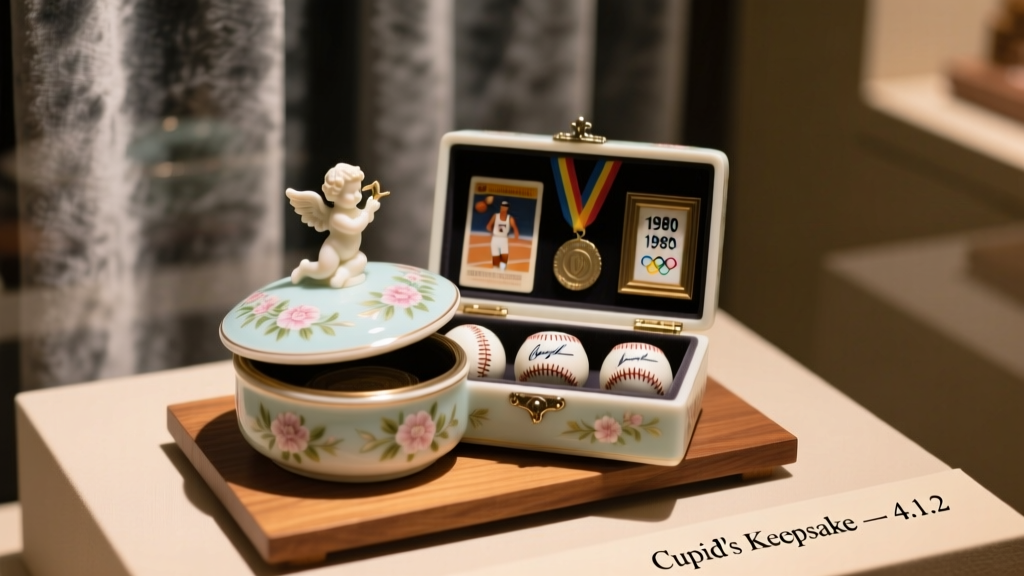
Porcelain Box Trinket with Floral Motif and Cupid on Lid: A 4½-Inch Collector’s Artifact from the Late Victorian Era
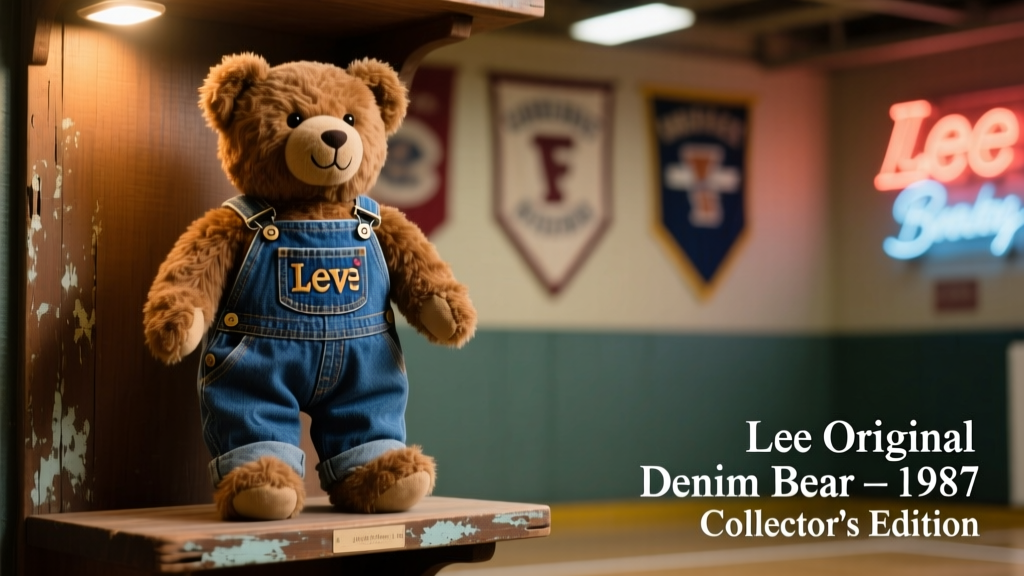
Teddy Bears Lee Plush Brown in Lee Brand Blue Denim Bib Overalls (13") — Collector’s Authentication & Historical Profile
Hummel Figurine No. 94 'I Surprise': Authentication, Provenance, and Market Value of a Mid-Century Danish Ceramic Icon
Vintage Mechanical Banks: Engineering, Artistry, and Authenticity in 19th-Century American Toy Banking
Roycroft China Cabinet with Two Leaded Glass Doors: Authentication, Design Legacy, and Collector Insights
Royal Doulton Character Jug 'Cardinal A' — Authentication, Provenance, and Market Value of the Mark Small Variant
Owens Vase: Yellow-Orange Primroses on Green Leaves — A 14½-Inch Masterpiece of American Art Pottery
Hutschenreuther Salt Double Blue Onion Handle #2: Authentication, Provenance, and Collector Significance
Cheerios Lone Ranger Frontier Town Advertising Box (1948): A Landmark in Cereal Marketing and Western Pop Culture