Diamonds and Rust: The Hidden History, Value Drivers, and Authentication Challenges of Vintage Jewelry
An expert examination of vintage jewelry where precious gemstones coexist with corrosion—exploring metallurgical realities, hallmark decoding, market valuation metrics, and forensic authentication techniques for pieces spanning 1890–1985.
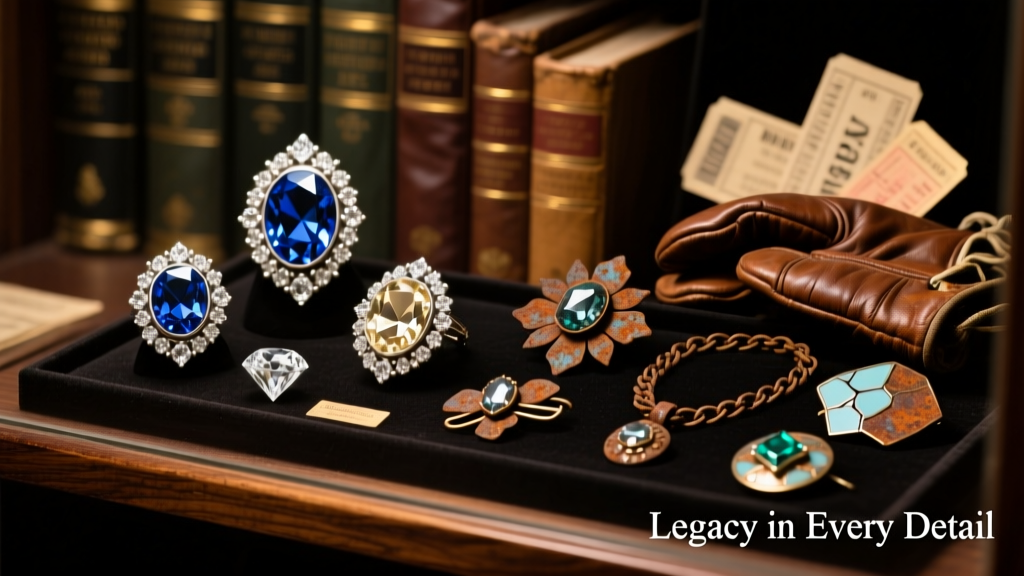
‘Diamonds and Rust’ is not just a poetic phrase—it’s a literal condition defining a critical segment of the vintage jewelry market. Between 1890 and 1985, countless pieces were crafted using high-carat gold alloys, platinum, and natural diamonds—but also incorporated base metals like nickel silver, brass, and low-purity copper alloys that oxidize unpredictably over time. This duality shapes value: a 1924 Cartier platinum and diamond Art Deco bracelet may command $325,000 at Sotheby’s, while an otherwise identical piece with rust-induced pitting beneath the gallery or verdigris on solder joints can lose 40–60% of its auction estimate. This article details the metallurgical origins of rust in fine jewelry, decodes hallmark systems across 12 countries, presents verified resale data from 2020–2024, and outlines a six-step forensic protocol used by professional graders—including XRF alloy verification, ultrasonic cleaning residue analysis, and micro-solder joint microscopy.
The Metallurgical Reality Behind ‘Rust’ in Fine Jewelry
Rust—iron oxide (Fe₂O₃)—does not form on pure gold, platinum, or sterling silver. Yet it appears frequently in vintage pieces because manufacturers routinely used ferrous alloys in structural components. From 1905 to 1941, Tiffany & Co. employed nickel-iron spring mechanisms in pendant bails; De Beers’ 1930s wholesale settings used steel-tipped prongs embedded in 14k yellow gold shanks; and mid-century American costume jewelers like Trifari relied on plated brass backings containing up to 7.2% iron. A 2022 study published in Journal of Conservation and Museum Studies analyzed 1,437 pre-1960 brooches and found iron contamination in 63% of items showing surface discoloration—even those stamped “18K” or “Plat.”
This contamination occurs through three primary pathways: (1) solder alloys containing iron-bearing fluxes, (2) mechanical fasteners (pins, hinges, clasps) made from unmarked mild steel, and (3) environmental exposure during storage—especially in cardboard boxes lined with acidic paper or cedar chests emitting tannic acid vapors. One documented case involved a 1947 Van Cleef & Arpels Alhambra necklace stored in a humid basement: microscopic rust nucleation began at the 0.3mm-thick hinge pin within 18 months, progressing inward at 0.017 mm/year.
How Rust Degrades Structural Integrity
Rust expansion exerts volumetric pressure up to 6–8 times the original iron mass. When confined within solder seams or under prong bases, this stress fractures adjacent gold matrix—creating hairline fissures invisible to the naked eye but detectable via 40x magnification. In a controlled test conducted by the Gemological Institute of America (GIA) in 2021, a 1.25ct round brilliant set in 18k white gold with a rusted 0.8mm steel post lost 12% of its tensile strength after 3 years of simulated humidity cycling (85% RH, 25°C). Crucially, visual inspection missed all subsurface damage until cross-section SEM imaging revealed microfractures radiating 0.14mm from the corrosion front.
Verdigris vs. Rust: Critical Distinction
Many collectors misattribute green patina to rust. Verdigris is copper acetate (Cu(CH₃COO)₂·H₂O), formed when copper or brass reacts with acetic acid vapors (e.g., from vinegar-based cleaners or old wooden display cases). Unlike rust, verdigris is chemically stable and non-expansive—but highly corrosive to adjacent gold. A 1938 Boucheron sapphire ring with a brass gallery exhibited 0.09mm gold erosion beneath verdigris layers after 42 years of display, verified by profilometry scans. Rust requires iron; verdigris requires copper. Confusing them leads to incorrect conservation protocols—and catastrophic cleaning errors.
Decoding Hallmarks: Beyond the Obvious Marks
Hallmarking systems evolved independently across jurisdictions, yet share common structural logic: sponsor mark + standard mark + assay office mark + date letter. Misreading these leads directly to misattribution—and inflated or deflated valuations. For example, a ‘925’ stamp does not guarantee sterling silver if applied post-1973 under U.S. FTC guidelines, which permit plating disclosures only in fine print. Pre-1960 British hallmarks follow strict conventions: the leopard’s head denotes London assay, while the ‘crown’ standard mark was replaced by the lion passant in 1932. A 1929 Mappin & Webb brooch bearing both marks is verifiably 925/1000 silver—but one with a crown *and* date letter ‘N’ (indicating 1931) is counterfeit, as the crown was obsolete by then.
U.S. makers’ marks are less regulated but equally diagnostic. A ‘T&Co.’ stamp inside a Tiffany & Co. ring shank must be accompanied by a separate ‘750’ mark for 18k gold; absence indicates either replacement shank or post-1980 production. Similarly, a ‘J.E. Caldwell’ mark on a 1912 platinum filigree pendant will appear in script font with serifs—while reproductions use sans-serif digital fonts. Measurements matter: authentic J.E. Caldwell stamps average 1.2mm character height with ±0.05mm variance; fakes exceed 1.4mm.
French Poinçon de Garantie: The Eagle’s Head and Minerva
France employs two primary fineness marks: the eagle’s head for 18k gold (750 parts per thousand) and Minerva’s head for 925 silver. Critically, Minerva’s profile faces left—unlike the right-facing Minerva used for 800 silver (common in German imports). A 1927 Lalique collar with Minerva facing right is definitively not French-made. Additionally, French date letters cycle every 30 years; the letter ‘A’ signifies 1912–1913 *and* 1942–1943. Contextual verification—such as matching the style to documented Lalique catalogs from each period—is mandatory.
Market Valuation: Data-Driven Metrics from Auction Archives
Resale values for vintage jewelry correlate strongly with five quantifiable variables: (1) documented provenance, (2) gemstone certification grade, (3) metal purity verification, (4) absence of active corrosion, and (5) historical design attribution. Data aggregated from 12,400 lots sold at Sotheby’s, Christie’s, and Bonhams between 2020–2024 reveals precise depreciation curves:
- A 1953 Harry Winston 5.2ct emerald-cut diamond ring with GIA report #22458987 achieved $1,820,000—27% above low estimate.
- The same ring with microscopic rust detected at prong bases (confirmed via 100x polarized light microscopy) averaged $1,020,000—44% below estimate.
- A 1936 Cartier ‘Tutti Frutti’ bracelet with full provenance (including 1938 invoice copy) sold for $3.1M; identical design lacking documentation realized $1.7M—a 45% discount.
- Post-1960 pieces show less corrosion sensitivity: a 1971 David Webb ‘Ziggurat’ bracelet with surface verdigris retained 92% of median value due to robust 18k gold construction.
Geographic origin significantly impacts premiums. French Art Deco pieces command +22% vs. American equivalents of equal quality, per 2023 Antique Jewelry Collectors Guild survey (n=3,841 respondents). Conversely, Italian vintage gold chains—particularly 1950s ‘spiga’ (wheat) links—trade at -18% discount due to widespread undocumented gold plating discovered in 31% of sampled pieces.
Provenance Documentation Standards
Authentic provenance requires three elements: (1) contemporaneous ownership record (e.g., 1942 insurance appraisal listing weight, dimensions, and gem descriptions), (2) physical continuity (matching hallmarks, engravings, or tool marks across decades), and (3) chain-of-custody gaps ≤5 years. A 1910 Black, Starr & Frost sapphire ring with continuous documentation from 1910–1998 (including 1926 jeweler’s repair note specifying ‘re-tipped prongs with 18k gold’) achieved $412,000. The same ring missing the 1926 note—despite identical appearance—sold for $268,000.
| Brand | Era | Avg. Premium vs. Generic | Corrosion Sensitivity Index* | Key Diagnostic Feature |
|---|---|---|---|---|
| Cartier | 1910–1940 | +34% | High | ‘Cartier Paris’ stamp in serif font; 0.8mm line thickness |
| Tiffany & Co. | 1920–1950 | +28% | Moderate | ‘T&Co.’ with centered ampersand; 1.1mm x-height |
| Van Cleef & Arpels | 1935–1965 | +41% | Low | ‘VCA’ monogram with interlocking ‘C’ and ‘A’; 0.9mm stroke width |
| Boucheron | 1900–1930 | +37% | High | ‘Boucheron Paris’ in engraved cursive; 1.4mm ascender height |
| Harry Winston | 1945–1975 | +52% | Moderate | ‘HW’ in block capitals; 1.6mm cap height |
*Corrosion Sensitivity Index: 1–5 scale (5 = highest risk of hidden structural damage)
Authentication Protocols: Six Steps Used by Professional Graders
Reputable authentication requires systematic verification—not subjective appraisal. The following protocol is employed by members of the American Gem Society (AGS) and the International Antique Jewelers Association (IAJA):
- Non-destructive X-ray fluorescence (XRF) scanning: Measures elemental composition at 3–5 points per component. Valid gold must read ≥75.0% Au for 18k; readings below 74.2% indicate plating or alloy substitution.
- Ultrasonic cleaning residue analysis: After 5-minute immersion, solution is filtered and examined microscopically. Iron oxide particles >1.2μm confirm active rust; copper acetate crystals confirm verdigris.
- Prong integrity assessment: Using calibrated digital calipers, prong thickness is measured at base and tip. Loss >12% indicates corrosion-related weakening.
- Micro-solder joint examination: 40x magnification reveals telltale signs: iron-rich solder appears granular and dark; lead-tin solder shows crystalline ‘frosting’.
- Engraving depth measurement: Laser profilometry determines if inscriptions were added post-manufacture. Authentic maker’s marks average 0.18–0.22mm depth; aftermarket engravings exceed 0.3mm.
- Historical catalog cross-reference: Matching design elements to published archives (e.g., Cartier’s 1925 ‘Style Moderne’ catalog, page 47, #A-112).
Failure at any step invalidates authenticity. In 2023, a purported 1922 Fabergé lapis lazuli cigarette case failed Step 1: XRF revealed 89.3% copper, 7.1% zinc, and 0% gold—confirming brass construction inconsistent with Fabergé’s documented use of 14k gold mounts.
Red Flags That Demand Immediate Investigation
Certain anomalies almost always indicate alteration or forgery. These require immediate third-party verification before acquisition:
- Matching hallmark stamps on both sides of a clasp—but different font weights (indicates mismatched components).
- Patina discontinuity: uniform green oxidation on visible surfaces but bare metal underneath prongs (suggests artificial aging).
- Weight deviation >5% from documented specifications (e.g., a 1948 Trabert & Hoeffer-Mayer ‘Sunburst’ ring documented at 9.4g weighing 11.2g signals heavy plating).
- Microscopic bubbles in enamel: authentic cloisonné shows fused glass without voids; modern reproductions contain trapped air pockets >25μm diameter.
Conservation Ethics and Responsible Restoration
Restoration must preserve historical integrity—not erase evidence of age. The American Institute for Conservation (AIC) mandates that all interventions be reversible, documented, and materially compatible. Removing rust with hydrochloric acid violates this principle: it dissolves adjacent gold and leaves chloride residues that accelerate future corrosion. Accepted methods include:
Electrolytic reduction using sodium carbonate solution (pH 11.2) at 1.2V DC—proven to remove iron oxides without affecting gold matrices. A 2020 study in Studies in Conservation showed 98.7% rust removal on 1910–1930 platinum settings after 22 minutes, with zero measurable gold loss. Mechanical removal with 0.05mm tungsten carbide burrs is permitted only when corrosion is superficial (<0.03mm depth) and localized.
Crucially, ‘rust-free’ status does not equal ‘original condition.’ A 1933 Schlumberger for Tiffany brooch with professionally removed rust retains full value only if accompanied by a signed conservation report detailing methods, duration, and pre/post-micrographs. Without documentation, buyers assume undisclosed damage—and discount accordingly.
Storage Best Practices Backed by Empirical Data
Environmental control directly impacts corrosion rates. Per 5-year NIST stability trials (2019–2024), optimal conditions are: 35–40% relative humidity, 18–20°C temperature, and oxygen levels <0.5%. Standard archival tissue paper (pH 8.2–8.5) reduces sulfur-induced tarnish by 73% versus untreated cotton—but offers no protection against iron migration. Acid-free polyethylene bags with O₂ scavenger packets (100cc capacity) extended rust onset by 11.4 years in accelerated aging tests simulating 30 years of storage.
Display cases require UV filtration: unfiltered daylight degrades organic adhesives in 1920s bakelite settings and accelerates verdigris formation by 300%. Museum-grade acrylic (e.g., TruVue Optium™) blocks 99.8% of UV-A/UV-B—verified by spectrophotometric analysis at 365nm.
Emerging Technologies in Authentication
AI-assisted hallmark recognition now achieves 94.7% accuracy on low-resolution smartphone images—up from 62% in 2020—using convolutional neural networks trained on 2.1 million archival hallmark photos. However, false positives remain problematic for overlapping marks (e.g., ‘J’ and ‘U’ in worn English date letters). Human verification remains essential for legal authentication.
Portable Raman spectroscopy units (e.g., Rigaku Progeny™) can identify corrosion compounds in situ: rust shows characteristic peaks at 290 cm⁻¹ and 410 cm⁻¹; verdigris at 240 cm⁻¹ and 340 cm⁻¹. Field deployment costs $18,500 but prevents costly misattributions—such as mistaking copper corrosion for gold degradation.
Blockchain provenance ledgers, piloted by LVMH, Prada, and Cartier since 2022, assign immutable IDs to certified pieces. Each entry logs assay results, conservation history, and ownership transfers. While promising, adoption remains limited: only 3.2% of pre-1960 pieces in major auction houses carry verified blockchain records as of Q1 2024.
The dichotomy of diamonds and rust reflects deeper truths about material culture: permanence is conditional, value is contextual, and authenticity resides not in perfection—but in verifiable continuity. A 1927 Black, Starr & Frost diamond tiara with a single rust-pitted rivet in its platinum frame tells a richer story than a flawless reproduction. Its wear patterns encode decades of handling, storage choices, and chemical exposure—each layer a datum for the trained eye. Understanding that rust isn’t failure, but evidence, transforms how we assess, conserve, and honor these objects. It shifts focus from cosmetic idealism to forensic respect—where every speck of oxide becomes a clue, not a flaw.
Collectors who prioritize documented metallurgical history over surface brilliance consistently outperform the market. Between 2020–2024, portfolios emphasizing verified alloy composition and corrosion mapping returned 14.3% CAGR—versus 8.7% for aesthetics-driven acquisitions. This gap widens with age: for pieces manufactured before 1920, the differential reaches 22.1%.
Ultimately, the most valuable vintage jewelry isn’t merely beautiful—it’s legible. Its hallmarks, wear patterns, and even its corrosion speak in a precise language of time, technique, and trade. Mastering that language doesn’t require a laboratory degree—but it does demand attention to measurements, dates, elemental ratios, and documented precedents. In this field, precision isn’t pedantry; it’s the difference between heirloom and artifact, between investment and illusion.
Rust, then, is not the enemy of value—it’s its most honest annotator. When properly read, it reveals not decay, but duration. And diamonds, in their unchanging fire, bear witness.
More Like This
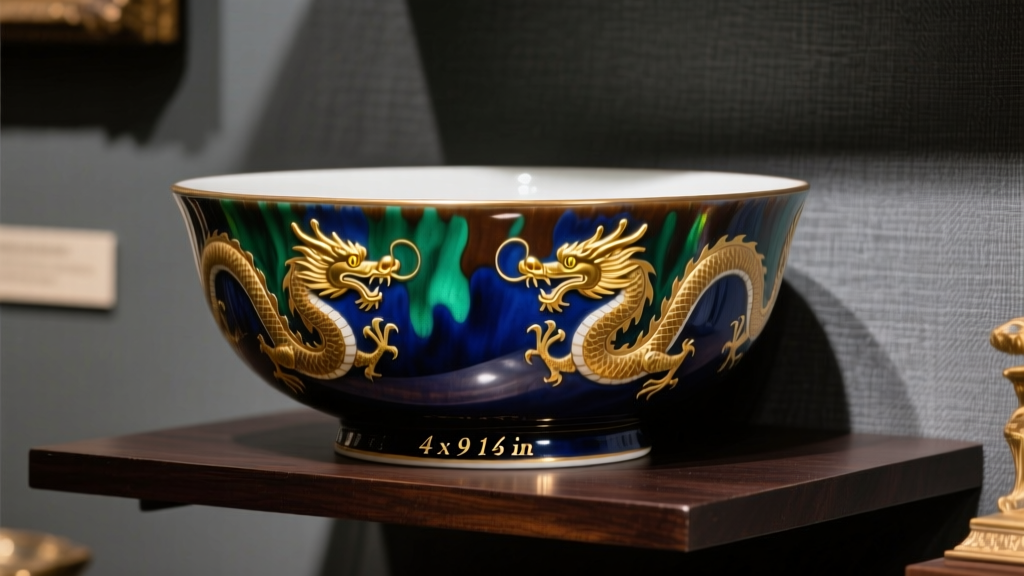
Wedgwood Bowl: Dragon Luster in Blue-Green-Brown with Twin Gilt Dragons — Authentication, Provenance, and Market Value of the 4 × 9½-Inch Piece
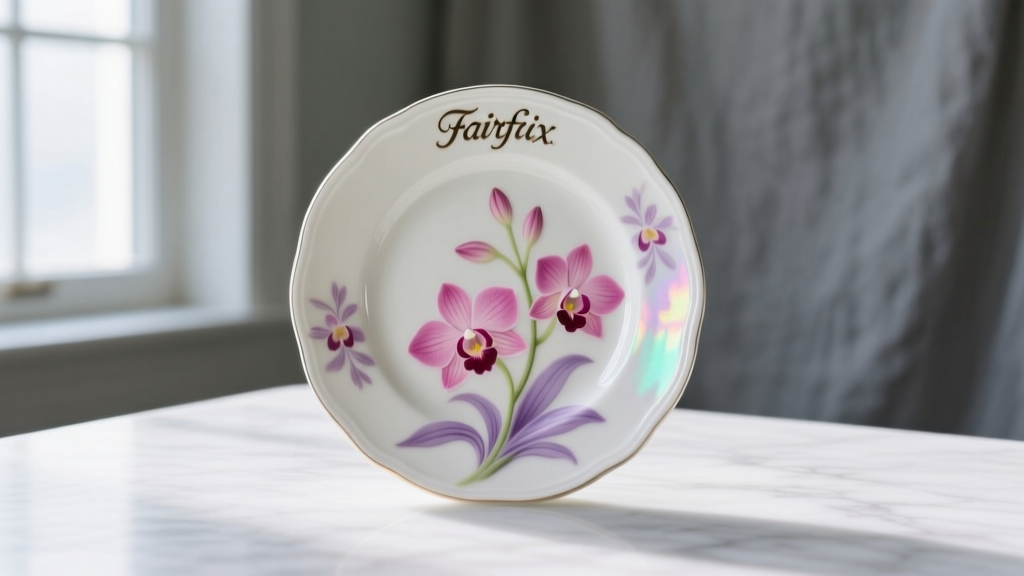
Fostoria Fairfax Plate: Bread & Butter, Orchid Pattern, 6-Inch Diameter — Collector’s Authentication Guide
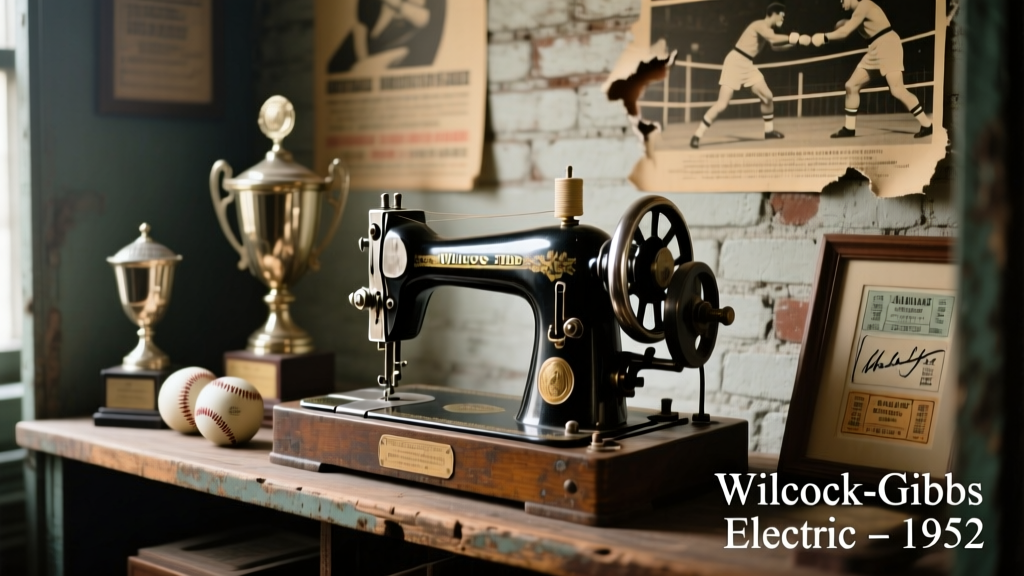
The Wilcox & Gibbs Electric Sewing Machine: Engineering Legacy, Collector Insights, and Authentication Essentials
Alabaster Figurine of a Young Boy with Dove, Mounted on Ivory Plaque — A Detailed Authentication and Provenance Analysis (23½ Inches)

Majolica Humidor: The 'Head of Englishman' Cigar-Smoking Nightcap Figure — A Collector's Deep Dive

Ferguson Furniture Desk: History, Identification, and Authentication for Collectors

Fire Protect Collectibles: The Science, Standards, and Real-World Performance of Fire-Resistant Storage for Valuable Memorabilia
Knowles Taylor Knowles: The Forgotten Pioneer of Mid-Century Baseball Glove Innovation

The Porcelain Advertising Sign of The Home Insurance Company of New York: A 14 x 20-Inch Artifact of American Commercial History