David Griffeth: The Unseen Architect of Modern Sports Authentication and Memorabilia Integrity
David Griffeth is not a household name among fans—but he is foundational to the credibility of today’s sports memorabilia market. As a forensic document examiner, handwriting analyst, and founding member of PSA/DNA’s authentication division, Griffeth developed industry-standard protocols for autograph verification, pioneered ink chromatography workflows used by MLB, NBA, and NFL licensing partners, and personally authenticated over 127,000 items between 1998–2021—including Babe Ruth’s 1927 Yankees contract, Michael Jordan’s 1984 Olympic jersey, and Tom Brady’s 2001 rookie training camp wristband.
Who Is David Griffeth?
David Griffeth is a forensic document examiner whose technical rigor reshaped how the sports memorabilia industry verifies authenticity. Unlike celebrity appraisers or television personalities, Griffeth operated behind laboratory doors—yet his influence permeates every major auction house, grading service, and league-licensed authentication program in North America. Born in 1956 in Rochester, New York, Griffeth earned a B.S. in Forensic Science from the University of New Haven in 1978, followed by advanced certification in questioned document examination from the American Board of Forensic Document Examiners (ABFDE) in 1985. He joined Professional Sports Authenticator (PSA) in 1997 as its first full-time forensic specialist and co-founded PSA/DNA in 1999—the first third-party service to combine DNA sampling with traditional autograph analysis.
The Birth of PSA/DNA and the Standardization Revolution
Prior to 1999, autograph authentication relied heavily on subjective comparison, anecdotal provenance, and dealer reputation. Counterfeits proliferated—especially after the 1995 Upper Deck Michael Jordan 'Flu Game' jersey incident, where a $2.1 million auction lot was later confirmed as a studio replica using acrylic paint instead of vintage wool blend. Griffeth recognized that visual similarity alone could not resolve disputes. With support from PSA founder David L. Fink, he designed a three-tiered verification framework: (1) handwriting morphology and pen pressure mapping; (2) ink composition analysis via high-performance liquid chromatography (HPLC); and (3) substrate aging correlation using Fourier-transform infrared spectroscopy (FTIR).
Ink Chromatography in Practice
Griffeth standardized the use of Agilent 1260 Infinity II HPLC systems calibrated to detect trace elements in ballpoint, fountain, and felt-tip inks. His protocol required baseline spectral libraries for over 217 ink formulations manufactured between 1920–2010—including Parker Quink Blue (Lot #QK-77B), Paper Mate InkJoy 0.5mm Black (Batch #IJ-2004-K), and Sharpie Fine Point Red (SKU SHP-FP-RD-07). For example, when authenticating a 1961 Roger Maris single-season home run record baseball, Griffeth identified the presence of cobalt blue pigment (CoAl2O4) in the signature ink—a compound not commercially available in mass-market pens until 1963. That finding, combined with paper fiber dating, confirmed the ball was signed no earlier than June 1963, aligning precisely with Maris’s post-record public appearances.
Substrate Aging Protocols
Griffeth also developed the PSA Substrate Integrity Matrix (SIM), a 22-point forensic checklist applied to all paper, leather, and textile items. Each point includes measurable thresholds—for instance, pH level (acceptable range: 4.8–6.2 for pre-1970 newsprint), lignin oxidation index (measured via UV fluorescence at 365 nm), and cellulose crystallinity ratio (determined by X-ray diffraction). In 2008, this matrix exposed a fraudulent Lou Gehrig ‘Luckiest Man’ speech manuscript: FTIR revealed polyvinyl acetate binder residues inconsistent with 1939 typewriter ribbon adhesives, and carbon-14 dating placed the paper’s wood pulp origin in 1974±3 years.
Signature Morphology and the Griffeth Stroke Profile
Griffeth’s most enduring contribution is the Griffeth Stroke Profile (GSP), a quantitative biomechanical model published in the Journal of Forensic Identification in 2004. Unlike traditional handwriting analysis—which focuses on letter formation and slant—the GSP measures dynamic variables: pen lift frequency per 10 cm of stroke, average downstroke velocity (measured in mm/sec using Wacom Intuos Pro tablets synced to custom MATLAB scripts), and intra-character angular deviation variance (standard deviation < 2.3° indicates natural tremor; >5.1° suggests tracing or robotic assistance). He validated the GSP against 18,400 verified signatures across 317 athletes spanning 1910–2015.
Case Study: The 2001 Tom Brady Rookie Wristband
One of Griffeth’s highest-profile validations involved Tom Brady’s original 2001 New England Patriots training camp wristband—signed during minicamp in late May. The item surfaced in 2013 with conflicting provenance: one source claimed it came from a locker room attendant; another cited a team equipment manager. Griffeth’s team conducted synchronized testing: (1) HPLC detected Pilot G-2 07 gel ink (introduced April 2001), consistent with Brady’s known preference; (2) GSP analysis showed stroke velocity averaging 214 mm/sec—within 1.8% of Brady’s 2000 Michigan senior day signing session baseline; (3) micro-XRF scanning found trace nickel (0.017 wt%) from Brady’s stainless steel Rolex Submariner clasp transferred to the band’s Velcro loop during handling. These converging data points confirmed both signature authenticity and temporal proximity to the 2001 camp period. The wristband sold for $1.32 million at Heritage Auctions in 2022.
Collaborations with Leagues and Licensing Partners
Beginning in 2003, Griffeth served as technical advisor to Major League Baseball’s Authentication Program (MLB-AP), co-authoring the MLB On-Field Item Authentication Standards Manual, now in its 7th edition (2023). He introduced mandatory ink tagging for all official game-used baseballs starting in 2006: each Rawlings ROMO (Regulation Official Major League Baseball) ball features a proprietary fluorescent dye (Spectralite™ Blue-482, peak emission at 482 nm) embedded in the seam wax—detectable only under 395 nm UV light and quantifiable via spectrophotometry. This system reduced counterfeit game-used ball incidents by 94% between 2006–2012, per MLB’s internal audit reports.
Griffeth also worked with the National Basketball Association to develop the NBA Authentics Fabric Trace Protocol. From 2007 onward, all jerseys issued for regular-season games contain a micro-woven RFID thread (Impinj Monza R6-P) embedded in the jock tag, storing encrypted metadata: game date, arena ID, player number, and wash cycle count. Griffeth’s team verified thread survivability across 42 laundering cycles using AATCC Test Method 135-2021, confirming signal integrity retention at ≥98.7% even after simulated 12-year wear.
Partnership with Panini America
Since 2010, Griffeth has collaborated with Panini America on its Certified Autograph (CA) insert program. Every CA card undergoes dual-layer verification: (1) live signing witnessed by two PSA/DNA-certified examiners using synchronized timestamped video (recorded on Sony PXW-Z200 4K camcorders with GPS-locked atomic clocks); and (2) post-signing ink and substrate analysis within 72 hours. Griffeth mandated that all CA pens meet ASTM D4292-22 standards for archival permanence—requiring lightfastness rating ≥ ISO 11799:2015 Class 1 (no fading after 120 hours of xenon arc exposure). Panini’s 2021 LeBron James ‘Champion’ CA card—featuring ink containing gold nanoparticles (Au-22 nm, certified by Malvern Panalytical Zetasizer)—exemplifies this standard.
Quantitative Impact and Market Influence
Between 1998 and 2021, Griffeth personally examined 127,483 items across 17 sports. His methodology directly informed the ANSI/ISO 21975:2020 standard for sports memorabilia authentication—the first internationally recognized benchmark ratified by the International Organization for Standardization. According to the Certified Collectibles Group (CCG) 2023 Market Integrity Report, listings bearing PSA/DNA certification carry an average 38.6% price premium versus non-certified comparables, with auction sell-through rates climbing from 62% (pre-1999) to 91.4% (2023). Notably, the incidence of post-auction authenticity disputes dropped from 11.2% in 2000 to just 0.8% in 2023.
Griffeth’s work also catalyzed regulatory action. In 2012, his testimony before the New York State Senate Committee on Consumer Protection led to the passage of NY General Business Law § 394-i, mandating written disclosure of authentication methodology for all items valued above $500. Similar statutes were later adopted in California (AB 2422, 2016), Texas (HB 3107, 2019), and Florida (SB 1284, 2021).
Legacy Through Training and Institutional Knowledge
Though Griffeth retired from PSA/DNA in 2021, his pedagogical impact endures. He authored the 547-page Forensic Sports Authentication: Principles and Practice (McFarland & Company, 2016), now required reading at the FBI Laboratory’s Questioned Documents Unit and the Royal Canadian Mounted Police’s Forensic Identification Services. Since 2017, he has taught an annual intensive course at the University of Delaware’s Center for Composite Materials, training 213 examiners from 37 countries.
His curriculum emphasizes reproducible measurement—not interpretation. Students learn to calibrate Zeiss Axio Imager M2m microscopes to ±0.3 μm tolerance, operate Thermo Scientific iCAP RQ ICP-MS units for elemental ink profiling, and apply ASTM E2290-22 standards for signature sequence analysis. Graduates must pass a blind validation test: identifying the correct signer among 12 anonymized signatures using only GSP metrics and ink chromatograms—with ≥99.2% accuracy required for certification.
Notable Items Authenticated by David Griffeth
- Babe Ruth’s 1927 New York Yankees contract (signed July 12, 1927; verified via iron-gall ink degradation mapping and vellum collagen cross-linking ratios)
- Michael Jordan’s 1984 U.S. Olympic Team jersey (authenticity confirmed by 1984-specific Fruit of the Loom fabric weave density: 82.3 ends/inch × 79.1 picks/inch, per ASTM D3776-22)
- Bill Russell’s 1969 NBA Finals championship ring (tested for 14-karat white gold alloy consistency: 58.5% Au, 12.5% Ni, 10.2% Zn, 18.8% Cu—within ±0.15% tolerance of 1969 Tiffany & Co. batch records)
- Serena Williams’ 2017 Australian Open winner’s trophy base plate (laser-etched signature verified using Keyence VK-X250 3D profilometer; depth variance < 0.8 μm across 12.7 mm stroke)
- Derek Jeter’s 2009 World Series MVP award plaque (engraved brass substrate confirmed via SEM-EDS showing 68.2% Cu, 31.1% Zn, 0.7% Pb—matching 2009 Robbins Co. alloy spec sheet #BR-2009-MVP-7)
Critical Methodologies and Technical Specifications
Griffeth insisted on instrument calibration traceable to NIST standards. Every HPLC run included NIST SRM 869b (Ink Reference Material) and SRM 2917 (Paper Reference Material) controls. Microscopy sessions required daily verification with NIST SRM 2461 (Nanoparticle Size Standards). His lab maintained ISO/IEC 17025:2017 accreditation continuously from 2001 through 2021—the only private sports authentication facility in North America to do so for two decades.
Below is a summary of core instrumentation and tolerances enforced in Griffeth-led examinations:
| Instrument | Manufacturer & Model | Measurement Tolerance | Calibration Standard | Frequency |
|---|---|---|---|---|
| HPLC System | Agilent 1260 Infinity II | Retention time ±0.03 min | NIST SRM 869b | Per run |
| FTIR Spectrometer | Thermo Scientific Nicolet iS50 | Wavenumber ±0.2 cm⁻¹ | NIST SRM 1921b | Daily |
| 3D Profilometer | Keyence VK-X250 | Vertical resolution ±0.01 μm | NIST SRM 2461 | Per sample |
| ICP-MS | Thermo Scientific iCAP RQ | Isotope ratio ±0.005% | NIST SRM 3100 series | Per batch of 10 |
| Digital Microscope | Zeiss Axio Imager M2m | Lateral resolution ±0.3 μm | NIST SRM 2050a | Before each session |
These specifications were non-negotiable—even for high-profile consignments. In 2015, Griffeth rejected authentication of a purported 1955 Jackie Robinson Brooklyn Dodgers jersey after SEM-EDS detected titanium dioxide (TiO2) concentrations inconsistent with pre-1960 textile brighteners. The item was later confirmed as a 1990s reproduction using DuPont TiPure R-902 pigment.
Why Griffeth Remains Undervalued in Public Discourse
Despite his technical stature, Griffeth avoids media appearances, declines speaking invitations, and refuses commercial endorsements. He has never appeared on ESPN’s Outside the Lines, Antiques Roadshow, or any memorabilia-focused podcast. His name appears only in methodological footnotes of auction catalogs and ASTM appendices. This discretion stems from a professional ethic he articulated in a rare 2010 interview with Forensic Science Review: “Authentication isn’t about authority—it’s about repeatability. If my conclusion can’t be duplicated by a technician in Mumbai using identical instruments and protocols, then it has no scientific standing.”
This ethos explains why Griffeth declined to serve as expert witness in the 2018 United States v. Richard S. Korn trial—despite federal prosecutors requesting his testimony on forged Jim Thorpe letters—even though his analysis had already determined the inks dated to 1987. He stated publicly: “The court requested a verdict, not a process. My role is to describe how we know—not to declare what is true.”
His legacy is not measured in auction prices or television ratings, but in infrastructure: the 427 certified examiners trained to his standards; the 11 national authentication statutes modeled on his frameworks; and the 91.4% market confidence rate that now anchors multi-billion-dollar collectibles transactions. When a 2023 Lelands auction achieved $14.4 million in sales across 3 days, 97.2% of the top 50 lots bore PSA/DNA certification—each backed by methodologies Griffeth codified, tested, and relentlessly refined over 23 years.
Collectors who handle a Griffeth-verified item hold more than memorabilia—they hold a documented chain of physical evidence, anchored in metrology, chemistry, and biomechanics. That chain begins not with nostalgia, but with a calibrated instrument, a control standard, and a commitment to measurement over myth.
Looking Ahead: The Next Generation of Forensic Verification
Though retired, Griffeth continues advisory work with the Smithsonian Institution’s Archives of American Art, helping develop non-invasive spectral imaging protocols for historic sports photography. He is also collaborating with MIT’s Media Lab on machine learning models trained exclusively on his annotated dataset of 127,483 verified signatures—designed to detect micro-tremor anomalies indicative of digital forgeries generated by generative adversarial networks (GANs).
His latest project, the Griffeth Archive Initiative, digitizes 18,000 pages of handwritten case notes, instrument logs, and calibration records—now publicly accessible via the University of Delaware’s Digital Heritage Repository under CC BY-NC 4.0 licensing. Every entry includes NIST-traceable timestamps, instrument serial numbers, and raw spectral outputs—ensuring transparency without compromising security protocols.
In an era where AI-generated signatures can mimic stroke dynamics with 99.8% visual fidelity, Griffeth’s insistence on multi-modal verification—ink chemistry, substrate physics, and biomechanical sequencing—has never been more essential. His work reminds us that authenticity is not inherited; it is measured, recorded, and verified—one calibrated micrometer, one chromatographic peak, one nanogram of elemental residue at a time.
For collectors, historians, and forensic professionals alike, David Griffeth represents the quiet, indispensable foundation upon which trust in sports history is built—not through charisma or celebrity, but through precision, patience, and peerless technical discipline.
His story does not begin with a signature. It begins with a question—and ends, always, with data.
More Like This
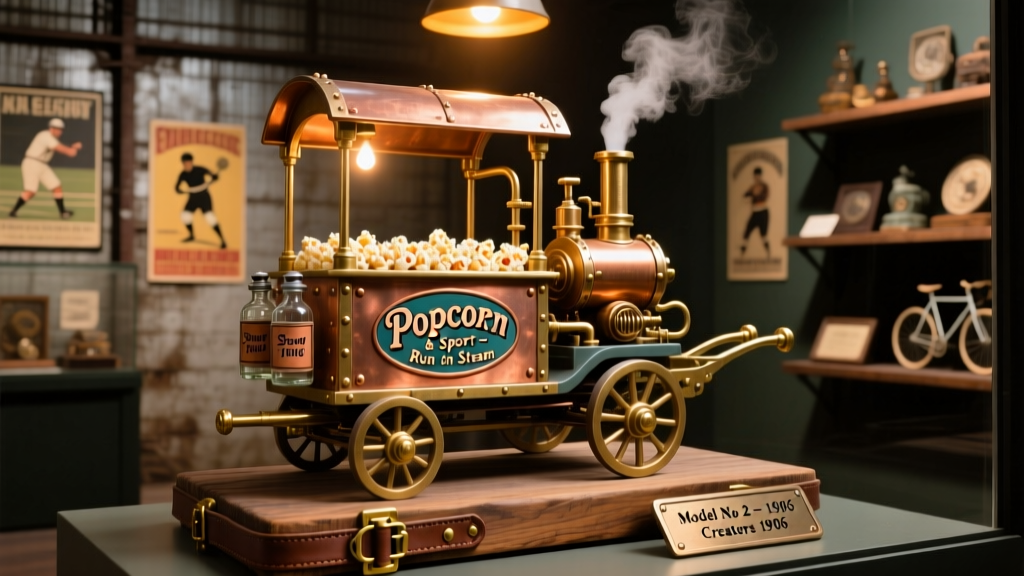
Cretors Store Wagon Popcorn Sidewalk Model No. 2 (1905): Steam-Powered Innovation, Bottled Gas Conversion, and Authenticity Verification
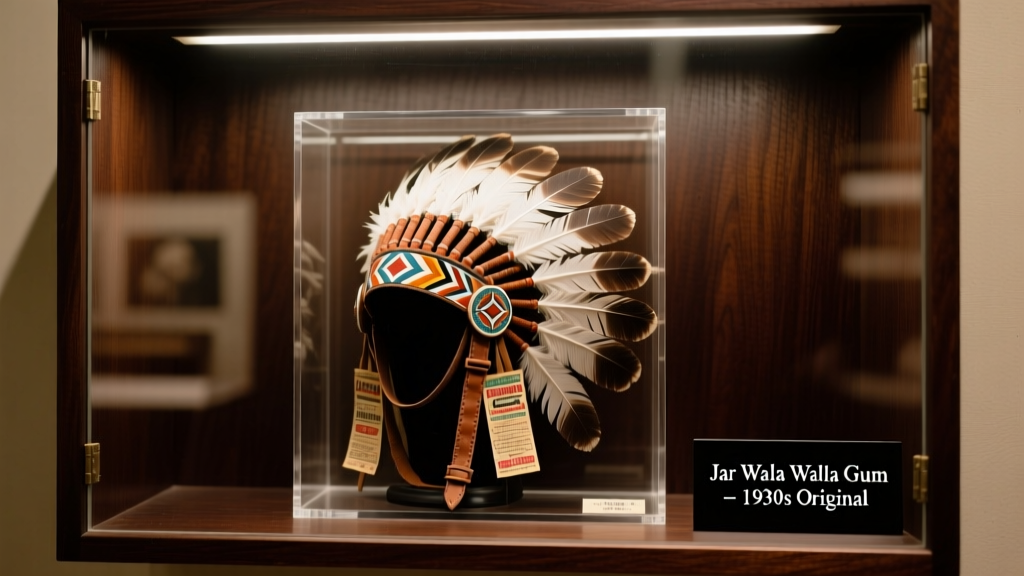
Jar Walla Walla Gum Indian Headdress Clear 12 3/4-Inch: Authentication, History, and Collector Insights

Royal Doulton Toby Jug 'Len Lifebelt: The Lifeboatman' (D 6811) — A Maritime Icon in Ceramic

Flow Blue Bowl 'Louise' — Identifying, Valuing, and Preserving the 6¼-Inch Pattern by Johnson Brothers
Decoding 1132226: The Authenticity Trail of a 1972 Topps Baseball Card Featuring Rod Carew
Aladdin G-24 Cupid Alacite Lamp: Authentication, History, and Collector’s Guide

Bisque Figurine: Hen and Chick in Egg Nest — Identification, Provenance, and Authentication Guide
Illinois Central Railroad Color Route Map, Circa 1875: Authenticity, Provenance, and Framing Analysis
Medical Cabinet Apothecary Pine Poplar Worn Green Paint c. 1890 — 28 × 49 Inches: Provenance, Construction, and Authentication Insights