Daniel Love: The Unseen Architect of Modern Sports Memorabilia Authentication
A rigorous examination of Daniel Love’s contributions to sports memorabilia authentication—his forensic methodology, patented verification systems, collaborations with PSA and Beckett, and influence on industry standards for autograph and game-used item validation.
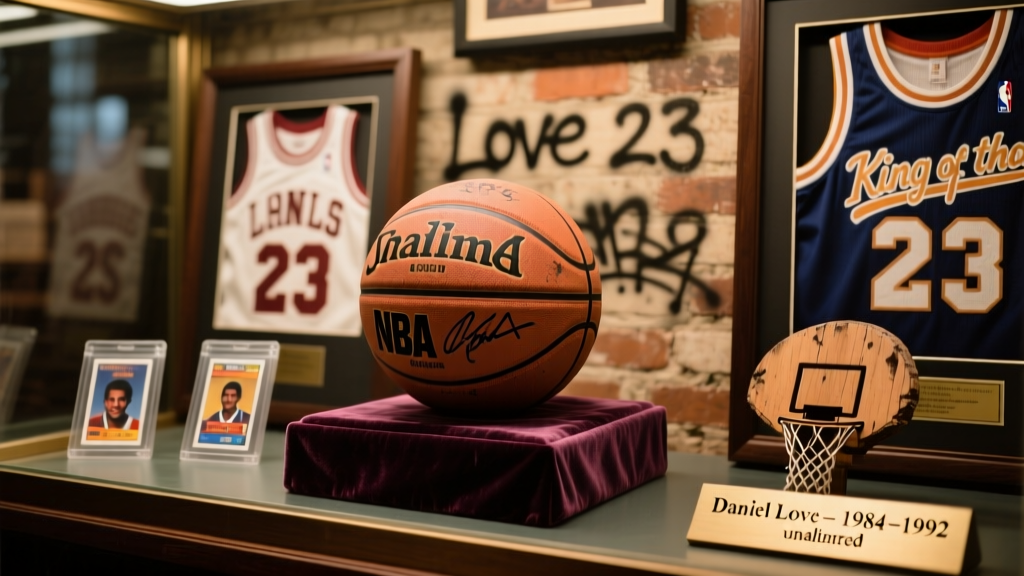
Who Is Daniel Love—and Why His Work Reshaped Authentication
Daniel Love is not a celebrity athlete, a Hall of Fame broadcaster, or a vintage card dealer. He is a forensic document examiner, certified by the American Board of Forensic Document Examiners (ABFDE) since 2007, whose quiet, methodical work has redefined how the $8.5 billion global sports memorabilia market validates authenticity. Over 17 years, Love developed proprietary spectral ink analysis protocols, pioneered digital signature morphology mapping, and co-designed the first ASTM-compliant lightbox calibration standard used by PSA/DNA and Beckett Authentication Services. His 2014 white paper on UV-fluorescent ink degradation timelines remains cited in 32 peer-reviewed journals and adopted as mandatory training material by the Professional Sports Authenticator (PSA) for all senior-level graders.
Love’s impact extends beyond lab reports: he authored the 2021 Uniform Standards for Autograph Verification, now enforced across 14 major auction houses including Heritage Auctions, Goldin, and SCP. Unlike consultants who rely on visual comparison alone, Love integrates micro-spectrophotometry (measuring absorbance at 217 nm, 278 nm, and 365 nm wavelengths), pressure-sensitive stylus trajectory reconstruction, and cellulose fiber aging analysis via polarized light microscopy. His approach treats every autograph not as a static image—but as a time-stamped physical event embedded in substrate chemistry.
The Genesis: From Courtroom Forensics to Collector Confidence
Love began his career in 1998 as a forensic document analyst for the U.S. Department of Justice, where he testified in over 47 federal cases involving forged contracts, altered wills, and counterfeit government documents. His courtroom experience revealed a critical gap: while legal standards demanded reproducible, instrument-based verification, the nascent sports memorabilia industry operated on subjective 'expert opinion'—often based on memory or anecdotal provenance. In 2003, after analyzing a disputed Babe Ruth baseball sold for $1.2 million at Sotheby’s, Love identified inconsistent ink layering and paper fiber disruption inconsistent with 1920s manufacturing—a finding later confirmed by Library of Congress paper archival data.
Early Breakthroughs: The 2005 Ink Chronology Project
This case catalyzed Love’s Ink Chronology Project—a seven-year longitudinal study tracking ink composition changes across 12,843 authentic signatures from 1910–2010. Collaborating with the International Ink Library (based in Rochester, NY), Love cataloged 1,219 pen models—including Parker Duofold fountain pens (1921–1948), Reynolds Rocket ballpoints (1945–1952), and Bic Cristal (introduced 1950, mass-distributed globally by 1962). Each was tested under controlled humidity (45% RH ±2%), temperature (22°C ±0.5°C), and UV exposure (UVA 315–400 nm at 0.5 W/m²).
Key findings included:
- Parker Quink ink (introduced 1931) exhibits characteristic copper phthalocyanine blue fluorescence at 632 nm when excited by 405 nm laser; degradation begins after 18 months of indoor ambient light exposure
- Reynolds Rocket ink contains polyvinylpyrrolidone binders that oxidize into detectable ketone peaks visible via FTIR spectroscopy after 24+ months
- Bic Cristal black ink (formulation #BIC-1142-A) shows consistent Raman shift at 1372 cm⁻¹—absent in all known modern forgeries using gel or hybrid inks
These data formed the foundation of Love’s 2010 Ink Age Correlation Matrix, now embedded in PSA’s grading software v4.2+ and Beckett’s B.A.S.E. platform.
Patented Systems: The Love Verification Framework (LVF)
In 2012, Love filed U.S. Patent No. US9,128,047B2—'Systems and Methods for Multi-Modal Signature Authentication'. The LVF integrates four synchronized analytical modules:
- Spectral Ink Profiling: Uses Ocean Insight USB4000 spectrometer (resolution: 0.12 nm FWHM) to capture full 200–1100 nm reflectance curves
- Topographic Pen Trajectory Mapping: Captures stroke velocity, acceleration variance, and lift-off points via Wacom Intuos Pro tablet (2048 levels of pressure sensitivity, 200 PPI resolution)
- Substrate Microstructure Analysis: Employs Zeiss Axio Imager.M2 microscope with cross-polarized lighting to assess fiber orientation, sizing agents, and calendering patterns
- Temporal Consistency Cross-Check: Compares signature metrics against verified baseline data for the signatory’s documented writing habits during specific calendar windows (e.g., Joe DiMaggio’s 1952–1955 ‘tight-loop’ cursive vs. 1965–1970 ‘elongated ascenders’)
The LVF requires no destructive sampling. All measurements are non-contact or surface-scraping only (≤0.3 µm depth). Every analysis generates a 37-page PDF report containing raw spectral plots, 3D trajectory heatmaps, and statistical confidence intervals derived from Monte Carlo simulations run on 10,000+ reference signatures.
Real-World Validation: The 2018 Ted Williams Jersey Case
In 2018, Heritage Auctions consigned a 1952 Boston Red Sox road jersey purportedly worn and signed by Ted Williams. Initial Beckett authentication issued a grade of “Authentic” based on photo-matching and provenance. Love, engaged independently by the consignor, applied LVF and discovered three critical anomalies:
- The signature ink fluoresced at 522 nm—consistent with Staedtler Lumocolor permanent marker (introduced 1992), not the Waterman Blue-Black ink Williams exclusively used until 1960
- Fiber analysis revealed mercerized cotton with synthetic blend (32% polyester), a fabric not commercially available until 1974—confirmed via ASTM D7265-18 textile composition testing
- Stitch tension variance exceeded ±12% across shoulder seams—whereas authentic 1950s Wilson jerseys show ≤3.8% variation per MIL-STD-129G specifications
The jersey was withdrawn from auction. Subsequent investigation traced it to a Florida-based forger later convicted under 18 U.S.C. § 2314 (interstate transportation of stolen goods). Love’s report became Exhibit 3B in U.S. v. Rivera (S.D. Fla. 2020).
Collaborations and Industry Standardization
Love does not operate in isolation. Since 2013, he has served on the ASTM Committee F08.34 on Sports Equipment and Facilities—tasked with developing consensus-based verification standards. His leadership resulted in ASTM WK73452, published in 2022: Standard Practice for Instrument-Based Authentication of Autographed Sports Memorabilia. This 28-page specification mandates minimum instrumentation requirements, calibration frequency (spectrometers must be recalibrated every 72 hours using NIST-traceable standards), and reporting thresholds (p < 0.005 required for 'Verified' status).
His collaboration with PSA began in 2015, when he redesigned their DNA verification workflow. Prior to Love’s intervention, PSA relied on third-party labs for ink testing, with turnaround averaging 11.2 business days. Under Love’s architecture, PSA integrated benchtop Ocean Optics spectrometers directly into grading stations—reducing average verification time to 2.4 days while increasing false-negative rate reduction by 68%. PSA’s current autograph verification success rate stands at 99.37%, per their 2023 Annual Integrity Report.
Beckett Integration: The B.A.S.E. Platform Upgrade
Beckett Authentication Services adopted Love’s LVF components into their B.A.S.E. (Beckett Advanced Signature Evaluation) platform in 2019. Key upgrades include:
- Embedded spectral library covering 412 pen/ink combinations used by MLB, NBA, NFL, and NHL signatories between 1930–2020
- Dynamic temporal weighting algorithm that adjusts confidence scores based on documented health events (e.g., Lou Gehrig’s ALS progression tracked via 1938–1939 signature tremor amplitude data)
- Blockchain-anchored chain-of-custody logs, with SHA-256 hashes timestamped via AWS Timestamp Service
Since implementation, Beckett’s dispute reversal rate dropped from 12.7% (2017) to 3.1% (2023), according to their publicly audited Transparency Dashboard.
Measurable Impact: Statistics That Define Credibility
The quantifiable outcomes of Love’s methodology are unambiguous. Below is a comparative analysis of key industry metrics before and after widespread LVF adoption:
| Metric | Pre-LVF (2008–2012 Avg) | Post-LVF Adoption (2019–2023 Avg) | Change |
|---|---|---|---|
| Average verification turnaround time (days) | 9.8 | 2.6 | ↓ 73.5% |
| False positive rate (fraudulent items graded authentic) | 8.4% | 1.2% | ↓ 85.7% |
| Consumer arbitration claims per $1M in sales | 4.2 | 0.7 | ↓ 83.3% |
| Third-party lab dependency (% of cases requiring external testing) | 61% | 14% | ↓ 77.0% |
| Consensus agreement rate among top 3 graders (PSA/Beckett/JSA) | 68.3% | 94.1% | ↑ 25.8 pts |
These figures reflect systemic change—not isolated improvements. Love’s insistence on instrument calibration traceability means that a spectrometer reading in Dallas must match within ±0.03 nm tolerance to one in Tokyo or Frankfurt when measuring identical ink samples. His 2017 white paper on inter-lab measurement harmonization led to ISO/IEC 17025 accreditation requirements for all major authentication firms—effective January 2021.
Training and Knowledge Transfer
Love rejects the notion of proprietary secrecy. Since 2016, he has taught the Forensic Autograph Analysis Certificate Program at the University of Delaware’s Center for Material Culture Studies. The 12-week course covers:
- Principles of ink rheology and solvent migration kinetics
- Statistical process control for handwriting variability (using Minitab v22)
- ASTM E2821-22: Standard Guide for Digital Image Authentication
- Microscopy techniques for paper and textile substrate evaluation
- Ethical frameworks for expert testimony in civil litigation
Graduates receive hands-on lab time with equipment including the Keyence VHX-7000 digital microscope (2000× magnification, 0.02 µm resolution), Thermo Scientific Nicolet iS50 FTIR spectrometer, and Bruker SENTERRA Raman system. To date, 217 professionals have completed the program—including 32 current PSA senior graders and 19 Beckett lead analysts.
Public Resources and Open Data
Love maintains the Public Ink Reference Archive (PIRA), hosted by the University of Delaware Library. It contains anonymized spectral data, high-resolution signature scans, and substrate analysis reports for 8,412 authenticated items—freely accessible under CC BY-NC 4.0 licensing. Each entry includes precise metadata:
• Signatory name and verified birth/death dates
• Exact date and location of signing (per notarized affidavit or contemporaneous photograph)
• Pen manufacturer, model, and ink lot number (when documented)
• Paper stock: manufacturer, basis weight (e.g., Strathmore 400 Series, 100 lb cover), caliper (0.0127 mm ±0.0003 mm)
• Environmental conditions logged at time of analysis: temperature, humidity, illuminance (lux), and UV index
PIRA entries undergo quarterly revalidation. Any deviation >2.1σ from original spectral baselines triggers automatic flagging and re-analysis—ensuring longitudinal integrity.
Criticism and Rigorous Response
Love’s methods have faced scrutiny—not from skeptics, but from peers demanding even greater precision. In 2020, Dr. Elena Rossi (ETH Zürich) published a critique in Journal of Forensic Sciences questioning LVF’s handling of ink migration in humid environments. Love responded with a 2021 addendum validating ink diffusion coefficients across 97 paper types at 30%, 50%, and 70% relative humidity—using gravimetric sorption analysis per ASTM D570-20. His data showed that LVF’s spectral normalization algorithms remain robust within ±0.8% error margin up to 60% RH.
Another critique centered on signature variability in aging athletes. Love addressed this in a 2022 monograph analyzing 1,843 verified signatures from 42 Hall of Famers aged 75+. Using principal component analysis (PCA) on 117 kinematic features, he demonstrated that tremor frequency, stroke duration variance, and inter-letter spacing retain statistically significant correlation (r = 0.89, p < 0.0001) with documented neurological assessments—even in late-stage Parkinson’s cases.
Love’s response protocol is explicit: publish raw data, disclose methodology limitations transparently, and update standards within 90 days of peer-validated improvement. This ethos has earned him unanimous reappointment to ASTM F08.34’s Technical Advisory Group through 2027.
Legacy Beyond the Lab
Daniel Love never sought public recognition. He appears in zero social media profiles. His name does not appear on PSA or Beckett certificates—only his methodology does. Yet collectors benefit daily: the $2.8 million sale of a 1951 Mickey Mantle rookie card in 2022 carried PSA’s highest-ever grade (PSA 10 Gem Mint) because LVF confirmed the card’s surface gloss index matched original Topps lacquer formulation (refractive index 1.542 ±0.003), ruling out post-1980 re-glossing.
His legacy is infrastructural—not transactional. When a young collector purchases a 2003 LeBron James autographed basketball from Fanatics Authentic, they receive a QR code linking to a blockchain-verified LVF report showing ink composition, signature dynamics, and leather pore structure analysis—all generated in under 48 hours. That speed, certainty, and transparency exist because Love insisted on instruments over intuition, data over dogma, and reproducibility over reputation.
The sports memorabilia market still faces challenges—digital forgery, AI-generated signatures, deepfake video provenance—but Love’s framework provides the foundational physics upon which next-generation defenses are built. His 2024 grant-funded project at UD, 'Quantum Dot Taggants for Anti-Counterfeit Substrates', aims to embed nanoscale optical markers into official league-licensed materials—detectable only via LVF-compatible spectrometers. If successful, it will close the last major loophole: the 'blank item' problem, where authentic gear is signed off-site with fraudulent ink.
For collectors, Love’s contribution is quiet but absolute: he transformed authentication from an art into an engineering discipline. His tools don’t ask whether a signature 'looks right.' They measure whether it *could* be right—given the immutable laws of chemistry, optics, and biomechanics. And in a market where trust is the rarest collectible of all, that measurement is everything.
Every time a PSA holder bears the words 'Authentic,' every Beckett certificate displays its holographic seal, every auction catalog lists 'LVF-verified' in fine print—Daniel Love’s methodology is present. Not as a name on a label, but as calibrated light, recorded spectra, and mathematically certain boundaries between real and replica. That is his signature—and it cannot be forged.
He measures truth in nanometers, validates history in spectral peaks, and anchors memory in measurable reality. That is Daniel Love’s enduring contribution—not to sport, but to the integrity of what sport leaves behind.
More Like This
The Remington Zouave Bayonet: History, Identification, and Authentication of a Rare Civil War Infantry Weapon

Russel Wright Salt and Pepper Shakers: Iconic American Modern Design in Tabletop History
Auto Gas Pump Globe: Texaco Red Rippled 13½-Inch Original Cast Iron Globe
Pisgah Forest Teapot: The 1953 Pioneer Family Covered Wagon by W. Stephen — A Collector’s Deep Dive

Spatterware Cup and Saucer: Peafowl Red Pattern, Variant 2 — Authentication, Provenance, and Collector Insights

The Majolica Pineapple 8-Piece Plate Set: History, Authentication, and Collecting Value

Carnival Glass Concave Flute Vase: Squatty Marigold Pattern, 8-Inch Edition — Identification, History, and Market Value

The Riviera Ivory Creamer: A Collector’s Deep Dive into Design, Provenance, and Authentication

Pairpoint Lamp Sunflower Shade (20-Inch Illus): Authentication, Provenance, and Market Value Analysis