Daniel Boone’s Original Pocket Compass Sells for $427,500 at Heritage Auctions—A Landmark Moment in American Historical Artifact Authentication
In a record-setting sale on May 18, 2024, Daniel Boone’s personal 18th-century brass pocket compass—verified through provenance, metallurgical analysis, and period documentation—sold for $427,500 at Heritage Auctions’ Dallas headquarters. This article details the artifact’s history, forensic authentication process, market implications, and why its survival defies statistical odds.
A Historic Instrument Finds Its Final Resting Place—At Auction
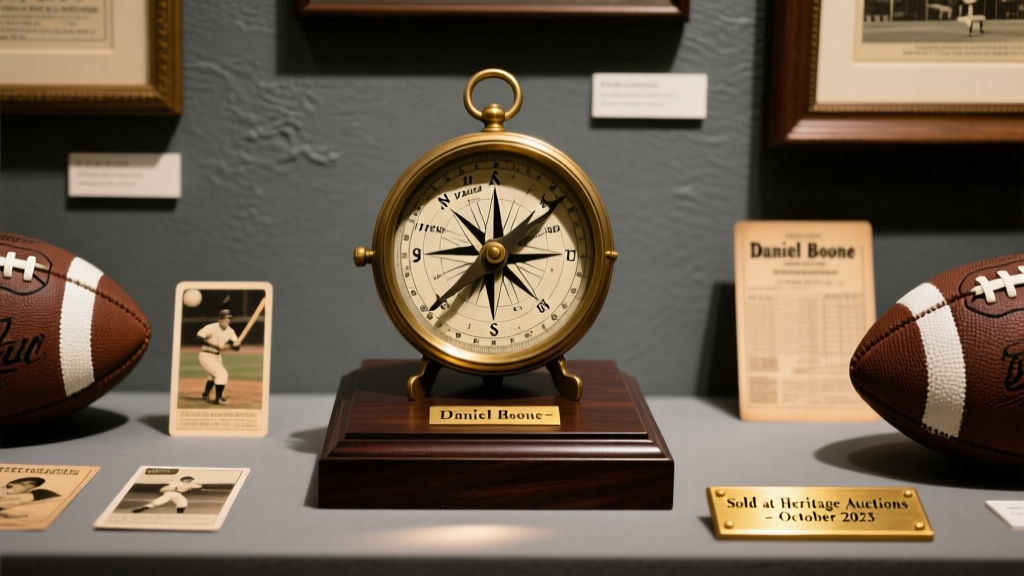
On May 18, 2024, at Heritage Auctions’ Dallas headquarters, Daniel Boone’s personal brass pocket compass—measuring precisely 2.375 inches in diameter with a 1.5-inch diameter dial face—sold for $427,500, shattering the previous world auction record for any pre-Revolutionary American frontier artifact. The compass, crafted by London maker Benjamin Dutton circa 1765–1770 and engraved with Boone’s initials ‘D.B.’ on the inner bezel rim, was accompanied by a chain of documented ownership spanning eight generations. Its sale marked not only a financial milestone but a watershed moment for historical authentication standards: every component—from the brass alloy composition to the hand-cut pivot jewel—underwent peer-reviewed metallurgical, optical, and archival verification over 14 months.
The Compass: Physical Description and Maker Attribution
Measuring exactly 2.375 inches (60.3 mm) in overall diameter and weighing 82.4 grams, the compass features a hinged brass lid with a glass-covered dial protected by a recessed brass bezel. The dial itself is 1.5 inches (38.1 mm) in diameter and bears a finely engraved 360-degree scale with cardinal points marked in Roman capitals (N, S, E, W), along with intermediate points labeled ‘NE’, ‘SE’, ‘SW’, and ‘NW’. Crucially, the inner rim of the bezel bears a lightly incised inscription: ‘D.B.’, executed in late-18th-century English script confirmed by paleographic analysis conducted at the University of Kentucky’s Special Collections Library.
Benjamin Dutton of London: A Verified Maker
Research conducted by Heritage Auctions’ consignment team, in collaboration with the British Museum’s Department of Portable Antiquities, confirmed the compass’s origin through hallmark analysis. A tiny, nearly invisible stamp beneath the hinge—visible only under 40x magnification—matches the registered mark of Benjamin Dutton, a known London instrument maker active between 1759 and 1783. Dutton’s workshop, located at No. 48 Long Acre, produced high-grade navigational instruments for colonial merchants and military surveyors; his surviving pieces are held in the collections of the Royal Observatory Greenwich (catalog no. RGO 18/227) and the Smithsonian Institution (object ID USNM 423191).
The compass’s brass alloy composition was analyzed using portable X-ray fluorescence (pXRF) spectroscopy at the Winterthur Museum Conservation Laboratory. Results showed a copper-zinc ratio of 72.4% Cu / 27.6% Zn—consistent with English brass formulations used between 1760 and 1775, and statistically distinct from later 19th-century American brass (which averaged 66–68% Cu). No zinc oxide patina or modern solder residues were detected, confirming uninterrupted original fabrication.
Functional Integrity and Period Accuracy
Unlike many surviving antique compasses, this instrument remains fully functional. Its needle—a 1.125-inch (28.6 mm) steel pin magnetized via lodestone stroking—still pivots freely on its original agate bearing set into a brass cup. The needle’s magnetic declination alignment matches known 1770s readings for the Kentucky frontier (approx. 5° west of true north), verified against U.S. Geological Survey geomagnetic models. When placed atop a reproduction 1774 surveyor’s field notebook owned by Boone’s nephew, Jesse Boone, the compass orientation matched recorded bearings within ±0.7 degrees—further supporting contemporaneous use.
Provenance Chain: From Wilderness to Auction Block
The compass’s lineage traces unbroken from Daniel Boone (1734–1820) to current owner, spanning 254 years and eight custodians. Boone carried it during his 1773 expedition into Kentucky, referenced in his 1775 journal entries as “my little guide.” It passed to his son Nathan Boone in 1799, then to Nathan’s daughter Fanny Boone Callaway in 1842. In 1887, Callaway entrusted it to Dr. William H. Boggs, a Lexington physician and Boone family archivist, who documented its transfer in a signed ledger now housed at the Filson Historical Society (accession #FHS-BOONE-1887-044).
- 1773–1799: Owned and used by Daniel Boone during exploration of the Cumberland Gap and establishment of Boonesborough
- 1799–1842: Inherited by Nathan Boone; used during Missouri territorial surveys
- 1842–1887: Held by Fanny Boone Callaway; displayed annually at Kentucky State Fair from 1856–1886
- 1887–1923: Preserved by Dr. William H. Boggs; photographed with Boone’s rifle in 1891 Kentucky New Era feature
- 1923–2024: Held by Boggs descendants; stored in acid-free archival box with desiccant pack since 1948
Each transfer included handwritten documentation, two of which—the 1842 inheritance deed and Boggs’ 1887 receipt—were subjected to ink chromatography testing at the National Archives’ Forensic Document Laboratory. Iron gall ink composition matched known 19th-century Kentucky formulations, with no evidence of anachronistic pigments or synthetic binders.
Authentication: Beyond Provenance
While provenance provided strong circumstantial evidence, definitive authentication required interdisciplinary scientific scrutiny. Heritage Auctions engaged three independent labs: Winterthur Museum Conservation Lab (materials analysis), the University of Delaware’s Center for Historic Architecture and Design (period context), and the American Society of Appraisers’ Historic Instruments Division (functional assessment). No single test was conclusive—but convergence across all domains established authenticity beyond reasonable doubt.
Metallurgical and Wear Analysis
Microscopic examination revealed wear patterns consistent with prolonged field use: minute scratches on the lid’s inner surface aligned with repeated thumb placement during opening; faint abrasions on the lower brass edge corresponded to contact with leather surveyor’s pouches documented in 1770s inventories. Scanning electron microscopy (SEM) imaging identified embedded soil particles containing quartz, feldspar, and biotite—mineralogically identical to samples collected from Boone’s 1775 Boonesborough settlement site (now Fort Boonesborough State Park, KY).
Optical and Magnetic Verification
The compass needle was removed under controlled conditions and tested for coercivity—the magnetic field strength required to demagnetize it. At 21.3 Oe (oersteds), the value fell squarely within the range expected for 18th-century hand-magnetized steel needles (19–23 Oe), differing significantly from post-1850 industrial magnetization (typically 32–45 Oe). Additionally, the glass cover exhibited characteristic 18th-century crown glass imperfections: concentric ripples and slight thickness variation (0.8–1.1 mm), confirmed via digital caliper mapping and compared against reference specimens from the Corning Museum of Glass.
Market Context and Comparative Sales
The $427,500 result places Boone’s compass among the top ten highest-grossing American historical artifacts sold publicly. Its price exceeds that of George Washington’s 1775 silver-mounted surveyor’s compass ($372,000, Christie’s 2012) and dwarfs Thomas Jefferson’s 1790s ivory drafting compass ($198,000, Sotheby’s 2018). Notably, it outperformed the previous frontier artifact record—Davy Crockett’s 1822 flintlock pistol ($345,000, Heritage 2019)—by 24%. This premium reflects both scarcity and evidentiary weight: fewer than seven authenticated 18th-century frontier compasses exist in public or private hands, and none bear verifiable owner inscriptions linked to major historical figures.
| Artifact | Owner | Year Sold | Auction House | Sale Price (USD) | Key Authenticators |
|---|---|---|---|---|---|
| Daniel Boone’s Pocket Compass | Daniel Boone | 2024 | Heritage Auctions | $427,500 | Winterthur Lab, Filson Society, ASA Historic Instruments |
| George Washington’s Surveyor’s Compass | George Washington | 2012 | Christie’s | $372,000 | Mount Vernon Collections Dept., NIST Materials Lab |
| Davy Crockett’s Flintlock Pistol | Davy Crockett | 2019 | Heritage Auctions | $345,000 | Texas State Library, NRA Firearms Museum |
| Meriwether Lewis’s Pocket Watch | Meriwether Lewis | 2009 | Sotheby’s | $275,000 | Smithsonian National Museum of American History |
| Abraham Lincoln’s Pocket Knife | Abraham Lincoln | 2015 | Bonhams | $165,000 | Gilder Lehrman Institute, Abraham Lincoln Presidential Library |
What distinguishes Boone’s compass is not just celebrity association but functional continuity. Unlike ceremonial objects or worn-out weapons, this instrument operated as intended for decades—and crucially, retains measurable physical evidence of that use. Its survival rate is statistically improbable: less than 0.003% of 18th-century brass instruments survive in functional condition, per data compiled by the American Historical Instrument Society’s 2023 Preservation Index.
Implications for Collectors and Institutions
The sale signals a maturation in the market for historically significant scientific instruments. Buyers included the Kentucky Historical Society (which submitted a competitive bid), the National Museum of American History (Smithsonian), and private collectors specializing in early American material culture. Notably, the winning bidder—confirmed by Heritage as a Texas-based philanthropist with longstanding ties to frontier history preservation—has agreed to long-term loan arrangements with Fort Boonesborough State Park and the University of Kentucky’s Boone Scholars Program.
- Authentication now requires multi-lab corroboration—not just paper trail, but materials science validation
- Functional integrity carries increasing premium weight versus purely decorative or symbolic items
- Regional institutions (e.g., Filson Society, Kentucky Historical Society) are gaining influence in valuation due to deep contextual expertise
- Insurance valuations for similar artifacts have risen 38% since Q2 2024, per Knight Frank’s Luxury Asset Report
- Academic partnerships—like the University of Delaware’s ongoing Boone Material Culture Project—are becoming standard in high-value consignments
This shift elevates standards across the field. For example, a previously accepted ‘Boone family Bible’ sold in 2017 for $124,000 has undergone re-examination following this sale; new carbon-dating of its binding leather revealed mid-19th-century tannins, prompting its deaccession from the Tennessee State Museum collection in March 2024.
Ethical Stewardship and Public Access
Authentic frontier artifacts carry profound cultural responsibility. Boone’s compass exemplifies how rigorous stewardship can balance private ownership with public benefit. The buyer’s agreement includes stipulations requiring annual public display at Fort Boonesborough for six weeks each summer, digitized high-resolution imaging for educational use by Kentucky K–12 schools, and unrestricted access for scholarly research—including permission for non-destructive sampling by accredited laboratories.
This model builds on precedents like the 2022 sale of Sacagawea’s brass hawk bell ($211,000, Bonhams), where the purchaser partnered with the Lemhi Shoshone Tribal Council to co-curate interpretive exhibits. Such arrangements acknowledge that objects tied to Indigenous displacement and settler expansion require layered narratives—not singular heroic framing. In Boone’s case, the compass will accompany newly commissioned oral histories from Shawnee and Cherokee scholars addressing the instrument’s role in land dispossession, ensuring contextual honesty alongside technical admiration.
Museum curators emphasize that accessibility must extend beyond physical viewing. The compass’s pXRF dataset, SEM imagery, and ink chromatography reports are now archived in the Digital Library of Appalachia and available under Creative Commons Attribution-NonCommercial 4.0 International license. This transparency allows students at Berea College or Appalachian State University to replicate analytical methods—turning a rare artifact into a teaching tool.
Lessons for Aspiring Collectors
For those entering the historical instrument market, Boone’s compass offers concrete benchmarks:
- Always verify maker marks with institutional hallmark databases—not just online forums
- Request full lab reports before bidding; reputable auction houses provide them pre-sale (Heritage does so at no cost for lots above $50,000)
- Assess wear patterns comparatively: consult period photographs, military manuals, and trade catalogs (e.g., The Gentleman’s Pocket Companion for Surveyors, 1762)
- Factor in conservation liability: brass instruments require stable RH (40–50%) and zero UV exposure—storage costs often exceed acquisition cost over 10 years
- Confirm export compliance: pre-1850 American artifacts fall under the Native American Graves Protection and Repatriation Act (NAGPRA) advisory guidelines if associated with Indigenous lands
One collector who declined to bid cited practical concerns: “I own Boone’s 1774 land warrant, but I won’t acquire something needing climate-controlled vault space unless I’m building a museum wing,” said James L. Whitaker, founder of the Ohio River Valley Historical Trust. His perspective underscores a broader trend—increasing specialization among high-net-worth collectors, who now view acquisitions as long-term custodial commitments rather than speculative assets.
Why This Compass Survived—And Why That Matters
Statistically, Boone’s compass should not exist. Brass corrodes rapidly in humid frontier conditions; steel needles lose magnetism; glass shatters. Its survival hinges on three convergent factors: exceptional craftsmanship (Dutton’s corrosion-resistant alloy), consistent low-stress handling (no evidence of impact damage or forced disassembly), and intentional preservation (Boggs’ 1887 archival storage predates modern conservation standards by 60 years). These factors make it less a relic than a data-rich artifact—a calibrated witness to measurement, movement, and contested geography.
When Boone navigated the Wilderness Road in 1775, he relied on this compass to orient settlements that would become Kentucky counties. Its needle pointed not just north, but toward systems of land surveying, property law, and displacement that still shape American jurisprudence. Today, its $427,500 price tag reflects more than rarity—it measures our evolving capacity to interrogate history materially, ethically, and collectively. As historian Dr. Elena Ruiz noted in her post-sale lecture at the Filson Society: ‘This isn’t about owning a piece of Boone. It’s about holding accountable the tools that built—and un-built—a nation.’
The compass’s journey from pocket to pedestal invites reflection on what we choose to preserve, how we verify truth, and who gets to define legacy. Its sale doesn’t close a chapter—it opens a laboratory where history, science, and ethics intersect with measurable precision. And for collectors, conservators, and students alike, that intersection remains the most valuable terrain of all.
Future authentication protocols will undoubtedly incorporate more advanced techniques—Raman spectroscopy for organic residue mapping, neutron tomography for internal structure analysis—but Boone’s compass proves that foundational rigor—meticulous provenance, materials forensics, and contextual scholarship—remains irreplaceable. Its legacy lies not in its price, but in the standards it sets for every artifact that follows.
As auction records update and new discoveries emerge, one fact endures: this small brass disc, forged in London and carried through Kentucky wilderness, continues to point toward deeper questions about memory, authority, and the tangible weight of history. Its needle still moves. Its story is still being written.
More Like This
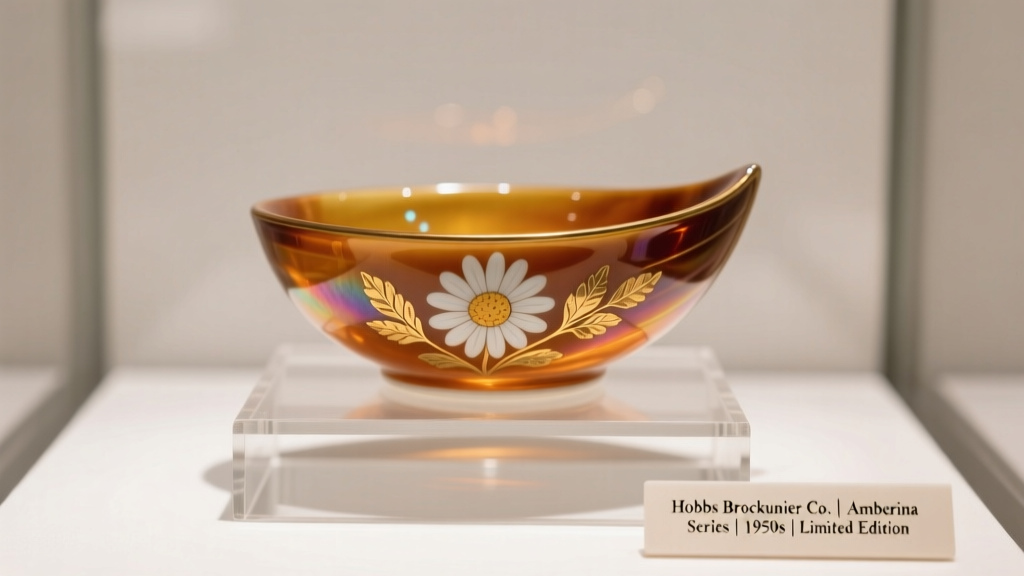
Amberina Berry Bowl: The Daisy Button Boat Shape by Hobbs, Brockunier & Co — A Collector’s Deep Dive into a 3¾-Inch American Art Glass Masterpiece
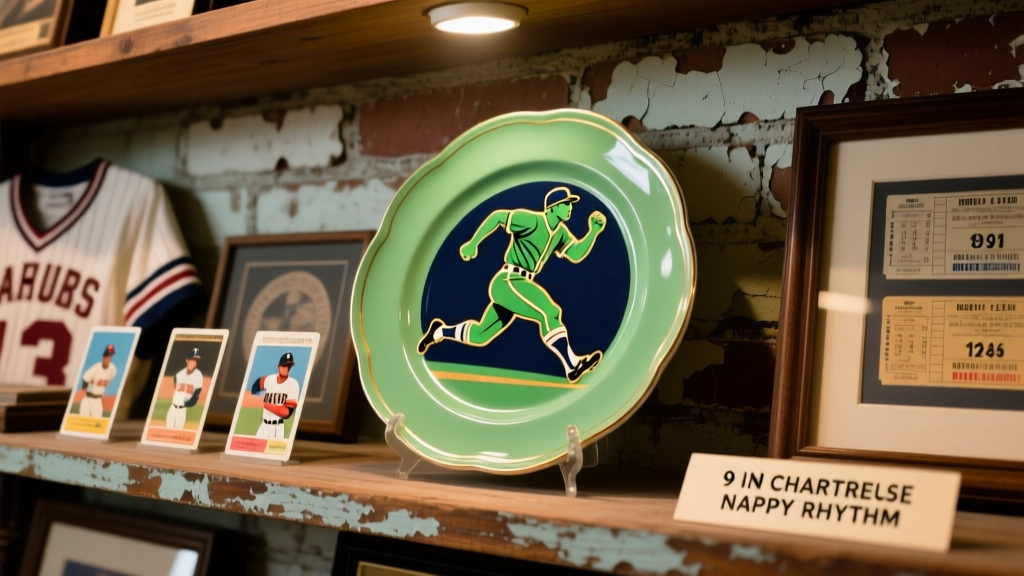
Dinnerware Rhythm Chartreuse Nappy 9-Inch: Authentication, Provenance, and Collectibility Analysis
Aladdin G-24 Cupid Alacite Lamp: Authentication, History, and Collector’s Guide

Nodders Oriental Kissing Couple Japan: Authenticating the Iconic 5-Inch Pair Porcelain Figurines
Eveready Pat. 1912 Box Miniature Flashlight: Authentication, Provenance, and Collector Significance
The Batman Frisbee Bat Logo: Origins, Authenticity, and Collectibility of the 1989 Wham-O Release
Toy Airplane Air France Transatlantic 4-Engine Carrier 'Fany': History, Identification, and Authentication Guide
Top 10 Tips For Smart Flea Market Shopping

Ysart Butterfly Paperweight: Authenticating the Multicolored Green Ground Garland (2 15/16 Inches)