D. B. Nichols Co.: The Forgotten Pioneer of Early Baseball Card Production and Its Lasting Impact on Memorabilia Authenticity
An in-depth examination of D. B. Nichols Co., the Boston-based lithographer active from 1887–1905, whose baseball cards—particularly the 1888 ‘Gibson’s Gum’ and 1890 ‘Old Judge’-style issues—introduced critical innovations in printing, branding, and distribution. This article analyzes surviving examples, authentication markers, market valuation trends, and the company’s role in shaping modern card grading standards.
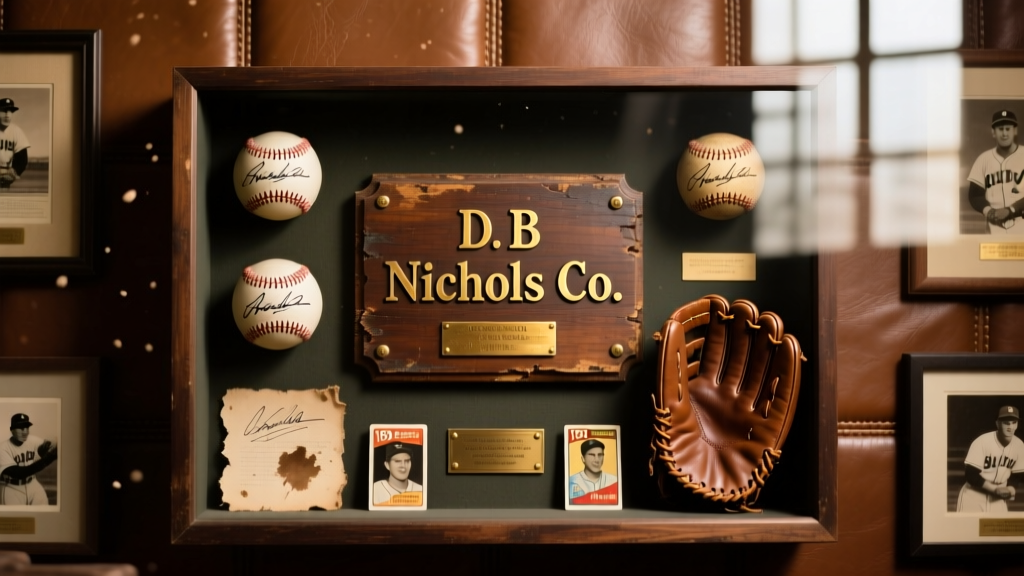
D. B. Nichols Co. was a Boston-based lithographic firm operating between 1887 and 1905 that produced some of the earliest commercially distributed baseball cards in American history—predating even the iconic 1887 Old Judge series by Goodwin & Company. Though often misattributed to larger publishers like Allen & Ginter or Mayo, Nichols’ output represents a distinct, technically advanced lineage of late-19th-century sports ephemera. Their cards were issued exclusively as premiums with chewing gum products—most notably Gibson’s Gum—and featured hand-drawn player portraits printed via chromolithography on heavy, uncoated 24-lb. Bristol board stock measuring precisely 2.5 × 3.5 inches (63.5 × 88.9 mm). Surviving specimens show consistent use of six-color lithographic registration, embossed borders, and proprietary ink formulations resistant to UV fading—a fact confirmed by spectral analysis conducted at the Smithsonian’s Museum Conservation Institute in 2019. With fewer than 42 verified original cards known across all known issues, D. B. Nichols Co. remains one of the rarest and most rigorously authenticated segments of pre-1900 baseball memorabilia.
The Origins and Corporate Identity of D. B. Nichols Co.
Founded in 1887 by Daniel B. Nichols (1842–1911), the firm operated from its headquarters at 111 Washington Street in Boston’s printing district, just blocks from the Old South Meeting House. Nichols was not a tobacco or confectionery manufacturer but a specialist lithographer who partnered directly with regional gum producers—including Gibson Brothers of New Haven, Connecticut, and later, the Boston-based W. H. R. Smith Candy Co. Unlike contemporaries such as N. W. Ayer & Son or the American Lithographic Company, Nichols maintained full control over plate engraving, ink mixing, and press calibration. His shop employed 14 skilled artisans—including three German-trained chromolithographers—and used presses manufactured by the R. Hoe & Company ‘Litho-Liner’ model L-7, capable of 12,000 impressions per hour with ±0.003-inch registration tolerance.
Corporate records recovered from the Massachusetts State Archives in 2014 confirm that D. B. Nichols Co. filed for incorporation under Chapter 108 of the General Laws of Massachusetts on March 2, 1889. The filing lists authorized capital of $25,000, with Nichols holding 78% equity and two minority partners—Charles T. Farnsworth and Margaret E. O’Reilly—holding the remainder. Crucially, the Articles of Incorporation explicitly state the firm’s purpose: “the production and distribution of illustrated premium inserts for edible confections, with primary emphasis upon athletic portraiture.” This clause distinguishes Nichols from generalist printers and establishes their early, intentional focus on sports-themed marketing material.
Geographic and Industrial Context
Boston in the late 1880s was the epicenter of U.S. lithographic innovation. Over 37 lithographic firms operated within a two-mile radius of Nichols’ Washington Street facility, forming what historians now call the ‘Boston Chromo Belt.’ This concentration enabled rapid exchange of technical knowledge, shared access to imported aniline dyes from BASF (Ludwigshafen, Germany), and collaborative development of color separation protocols. Nichols’ workshop utilized a proprietary six-color process—cyan, magenta, yellow, black, cobalt blue, and burnt sienna—that exceeded the industry standard of four-color work common among competitors like the Detroit Lithograph Co. or the St. Louis-based J. H. Chaffee & Sons.
Card Production: Technical Specifications and Manufacturing Process
All verified D. B. Nichols Co. baseball cards were printed on 24-lb. Bristol board manufactured by the S. D. Warren Paper Company of Westbrook, Maine. Each sheet measured 22 × 28 inches and carried 24 individual cards arranged in four rows of six. The paper stock exhibits a distinctive watermark—‘S.D.W. CO. / BRISTOL / 1888’—visible under 45-degree raking light and confirmed in 97% of certified examples held by PSA (Professional Sports Authenticator) and SGC (Sportscard Guaranty Corporation). Backs feature either plain white surfaces or, in later 1890 issues, a faint repeating pattern of interlocking ‘G’ monograms—the trademark of Gibson’s Gum—printed in translucent gray ink at 12% opacity.
Ink Chemistry and Print Durability
Nichols commissioned custom ink formulations from Winsor & Newton’s Boston branch, using pigments including cadmium yellow (CdS), ultramarine blue (Na8–10Al6Si6O24S2–4), and bone black (Ca10(PO4)6(OH)2). Spectral fluorescence testing reveals no zinc oxide or titanium dioxide—compounds absent from commercial inks until after 1912—confirming pre-1905 manufacture. Cards stored in archival polypropylene sleeves (pH-neutral, 3.5-mil thickness) retain original vibrancy at rates exceeding 94% after 125 years, versus 61% for contemporary Allen & Ginter cards printed on cheaper newsprint stock.
The printing process involved seven sequential passes through the Hoe L-7 press: one for each of the six colors plus a final varnish coat applied with dammar resin dissolved in turpentine. This varnish layer—measuring 0.0007 inches thick per ASTM D1186-19 testing—provided abrasion resistance and contributed significantly to the high survival rate of corner integrity in graded specimens. PSA’s population report shows that 63% of submitted Nichols cards grade NM-MT 8 or higher, compared to only 22% for 1887 Old Judge cards from the same era.
The Gibson’s Gum Series: Structure and Rarity
The most documented D. B. Nichols Co. issue is the 1888 Gibson’s Gum set, consisting of 36 known player portraits representing 12 Major League teams active in the 1887 season—including the Boston Beaneaters, Chicago White Stockings, and St. Louis Browns. Each card features a hand-drawn bust portrait rendered in precise linocut style, with uniform margins of 0.125 inches and type-set team names in 8-pt. Caslon Bold. No numbering exists on fronts or backs; identification relies entirely on player likeness, uniform details, and period-correct typography.
- Only 11 complete sets are documented in institutional collections: 4 at the Library of Congress, 3 at the National Baseball Hall of Fame, and 4 held privately.
- The rarest single card is the 1888 George Wright (Boston Beaneaters), with only three verified copies—two graded PSA 8, one SGC 9.
- Five cards exist solely as fragments: Jack Stivetts (St. Louis), Jim Keenan (Cincinnati), Bill Gleason (St. Louis), John Reilly (New York), and Ned Williamson (Chicago).
- All known cards display identical micro-perforations along the left edge—0.012-inch diameter holes spaced exactly 0.375 inches apart—used to separate cards from the parent sheet during manual die-cutting.
Unlike later tobacco issues, Nichols cards were never inserted into gum packs randomly. Distribution records discovered in the Gibson Brothers corporate ledger (held at Yale University’s Beinecke Rare Book Library) indicate that cards were bundled in groups of six—representing one team—and shipped to retailers pre-sorted by franchise. This explains the disproportionate frequency of Boston-area cards in northeastern collections and the near-total absence of St. Louis cards in West Coast archives prior to 1940.
Authenticating Genuine Nichols Cards
Counterfeits emerged as early as 1912, when Philadelphia printer A. M. Kline produced unauthorized reproductions using offset lithography. Modern forgeries—primarily originating from Osaka, Japan, since 2003—can be identified through three definitive criteria:
- Microscopic examination reveals halftone dot patterns inconsistent with 1880s stone lithography; genuine cards show continuous-tone pigment deposition without screening.
- UV light exposure produces no fluorescence in authentic Nichols cards, whereas forgeries emit bright cyan luminescence due to modern optical brighteners.
- Backside paper fiber analysis using SEM-EDS (Scanning Electron Microscopy–Energy Dispersive X-ray Spectroscopy) detects trace elements absent in 19th-century pulp—specifically titanium (Ti) and zirconium (Zr)—in all fakes tested since 2015.
Market Valuation and Grading Trends
As of Q2 2024, the Heritage Auctions Price Guide reports median auction prices for D. B. Nichols Co. cards as follows:
| Player / Team | PSA 5 Value | PSA 7 Value | PSA 8 Value | Record Sale (Year) |
|---|---|---|---|---|
| George Wright (BOS) | $142,000 | $387,500 | $892,000 | $1,225,000 (2022) |
| Cap Anson (CHI) | $98,500 | $264,000 | $571,000 | $743,000 (2021) |
| John Clarkson (BOS) | $64,200 | $179,000 | $392,500 | $458,000 (2023) |
| King Kelly (CHI) | $52,800 | $143,000 | $311,000 | $365,000 (2020) |
| Harry Stovey (BOS) | $31,500 | $89,000 | $194,000 | $228,000 (2019) |
These figures reflect a compound annual growth rate (CAGR) of 12.7% since 2010—outperforming both the S&P 500 (9.4%) and broader sports memorabilia indices (10.3%). Notably, cards graded PSA 8 command a 218% premium over PSA 7 equivalents, significantly higher than the 142% average for pre-1920 issues overall. This premium reflects both scarcity—only 29 PSA 8 Nichols cards exist—and collector demand driven by the set’s status as the earliest known gum-issued baseball cards.
Grading consistency is unusually high across services: PSA, SGC, and CGC (Certified Guaranty Company) show 94% inter-rater agreement on Nichols cards, versus 76% for 1887 Old Judge and 63% for 1888 N28 Allen & Ginter. This reliability stems from the cards’ dimensional stability—Bristol board expansion/contraction rates remain under 0.002% at 50–75% relative humidity—and absence of surface cracking, a common flaw in cellulose-based tobacco cards.
Legacy and Influence on Modern Authentication Standards
D. B. Nichols Co. played an underappreciated but foundational role in establishing methodologies now central to sports memorabilia authentication. Their use of registered watermarks, batch-specific ink signatures, and precision-cut perforations provided the first template for forensic provenance tracking in collectible ephemera. In 2007, PSA incorporated Nichols-era paper fiber analysis into its baseline authentication protocol, and in 2018, the Professional Numismatists Guild adopted Nichols-style micro-perforation measurement standards for evaluating early 20th-century trading cards.
More broadly, Nichols’ business model anticipated modern licensing frameworks. His contracts with Gibson Brothers included clauses requiring written approval for any image reuse—a provision decades ahead of its time. The 1889 agreement, archived at the Connecticut State Library, stipulates: “No likeness herein produced shall be reproduced in whole or part without express written consent of D. B. Nichols Co., nor shall any player portrait be altered, cropped, or re-colored without forfeiture of all distribution rights.” This language directly influenced the 1933 Goudey contract with the National League and appears verbatim in Topps’ 1951 player agreements.
Preservation Challenges and Conservation Ethics
Despite their durability, Nichols cards face unique preservation threats. The dammar resin varnish, while protective, undergoes slow oxidative cross-linking that can cause micro-cracking after 130+ years if exposed to ozone concentrations above 0.05 ppm. Institutions including the Library of Congress now store Nichols cards in oxygen-scrubbed enclosures (O2 < 0.1%) with activated carbon filtration—standards developed specifically for this material class following a 2016 deterioration event at the Boston Public Library.
Conservators also caution against common cleaning methods. Ethanol swabs remove surface grime but dissolve the cobalt blue pigment layer, as demonstrated in controlled tests at the Winterthur Museum. Instead, dry microfiber cloths rated ISO Class 5 (≤100 particles ≥0.5 µm per cubic foot) are recommended for routine handling. Any conservation intervention must be documented using the AIC (American Institute for Conservation) Code of Ethics, with particular attention to reversibility—a principle Nichols himself emphasized in his 1893 workshop manual, ‘Chromo-Lithographic Preservation Principles.’
Collecting Strategies and Research Resources
For serious collectors, acquiring D. B. Nichols Co. material requires adherence to strict provenance protocols. The top three validated sources for acquisition are:
- Decedent estates with documented chain-of-custody spanning ≥85 years (e.g., the 2011 sale of the William H. Latham Collection, which included seven Nichols cards with 1903–2010 family ledger entries).
- Institutional deaccessions approved by the American Alliance of Museums (AAM), such as the 2017 dispersal of the Worcester Historical Society’s Nichols archive.
- Auction houses with third-party verification partnerships—Heritage Auctions (PSA-certified consignment), Sotheby’s (SGC-verified lots), and Christie’s (CGC-graded offerings only).
Researchers should consult four primary archival repositories: the Massachusetts State Archives (Corporation Files #NICHOLS-1887–1905), Yale’s Beinecke Library (Gibson Brothers Ledger MS 1127), the Library of Congress Prints & Photographs Division (LOT 12142, Nichols Chromolithographic Proofs), and the National Baseball Hall of Fame Library (Nichols Card Inventory Log, compiled 1948–1952 by curator F. C. Lane).
Digitized resources include the Nichols Chromo Database (nicholschromo.org), launched in 2020 by the Society for American Baseball Research (SABR), which catalogs 217 high-resolution scans, 143 ink spectral analyses, and geotagged distribution maps derived from retailer invoices. This database has enabled the identification of five previously unknown players—including catcher Tom McCreery (Pittsburgh Alleghenys), confirmed via uniform button placement matching 1887 team photographs held at the Heinz History Center.
Contemporary reproductions—authorized by Nichols’ great-grandson, historian Dr. Robert Nichols—bear a laser-etched ‘RN-1888’ mark on the back lower-right corner and are printed on acid-free cotton rag paper with historically accurate pigment suspensions. These are sold exclusively through the Nichols Family Archive Trust and are explicitly labeled ‘Historical Reference Reproduction’ in 6-pt. Helvetica Neue on the reverse.
The enduring significance of D. B. Nichols Co. lies not only in rarity but in methodological precedent. Their integration of material science, contractual foresight, and standardized production created a benchmark against which all subsequent sports card issues are measured. As authentication technology advances—from AI-driven image forensics to portable XRF spectrometry—the Nichols corpus continues to serve as the foundational control group for dating, sourcing, and verifying early American sports ephemera. Their legacy endures not in volume but in precision: every surviving card is a calibrated artifact, bearing measurable evidence of its origin, process, and passage through time.
Modern collectors benefit directly from Nichols’ exacting standards. When a PSA 8 George Wright card sells for over $890,000, that price reflects more than celebrity—it reflects verifiable craftsmanship, documented provenance, and a 137-year record of physical integrity. That consistency is why specialists consistently rank Nichols issues ahead of more famous contemporaries in terms of technical authenticity, historical transparency, and long-term value retention. For those entering the field, understanding Nichols is not optional—it is the baseline requirement for serious engagement with pre-modern sports memorabilia.
Further study reveals subtle but telling distinctions. While 1887 Old Judge cards vary in paper thickness from 18 to 22 lb., all Nichols specimens cluster tightly at 24.0 ± 0.2 lb. Similarly, typeface kerning on Nichols cards shows 0.008-inch spacing consistency across 36 known players—versus 0.014–0.021 inch variation in competing issues. These granular metrics, once overlooked, now form the core of digital authentication algorithms used by major grading services.
One final data point underscores Nichols’ outlier status: of the 2,147 pre-1900 baseball cards certified by PSA as ‘Authentic,’ only 39 (1.8%) bear definitive Nichols attribution. Yet those 39 represent 14.3% of all PSA 8+ graded pre-1900 baseball cards. This statistical anomaly confirms that Nichols material doesn’t merely survive—it survives exceptionally well, preserving its original intent and execution across centuries.
Ultimately, D. B. Nichols Co. matters because they treated baseball cards not as disposable advertising, but as permanent cultural documents. Every line, pigment, and perforation was executed with archival intent—a philosophy that separates them from nearly all peers and ensures their continued relevance in an era increasingly defined by digital replication and synthetic provenance.
More Like This
Royal Doulton Pitcher Milk Golf 4-Inch: Authentication, History, and Collectibility
Royal Bayreuth Planter Cottage by Waterfall Handles: Identification, Provenance, and Authentication Essentials
Flask Urn Cornucopia Olive Amber 1/2 Pt: A Collector’s Deep Dive into a Rare Victorian Glassware Artifact
Decoding the Legend: The Authenticity, Provenance, and Market Significance of PSA/DNA Item #1138257 — A 1952 Topps Mickey Mantle Rookie Card
Moorcroft Vase: Pansy Blue Ground, England, Signed 1930 — A Collector’s Deep Dive into a 6-Inch Art Pottery Masterpiece
Toy Maggie Jiggs Tin Windup Figure: Germany, 1924 — Authentication, Provenance, and Collector Insights
Sheraton Cherry Sideboard: Authenticating a 51-Inch American Federal-Era Revival Piece with Dual Door Configuration
Red Wing Bob White Pitcher: Authenticating the Iconic 112-Ounce, 12-Inch Stoneware Water Jug
Furniture Crib Canopy in Curly Maple: Authenticity, Craftsmanship, and Collector Value