The Cushman Smoking Stand: History, Identification, and Authentication for Collectors
A detailed examination of the mid-century Cushman smoking stand — its origins at Cushman Furniture in Grand Rapids, Michigan; design evolution from 1930s to 1960s; hallmark construction features including walnut veneer, brass inlays, and patented drawer mechanisms; authentication markers like stamped metal tags, wood grain patterns, and original hardware; market value trends; and practical conservation guidance for serious collectors.
Introduction: A Signature Piece of Mid-Century American Craftsmanship
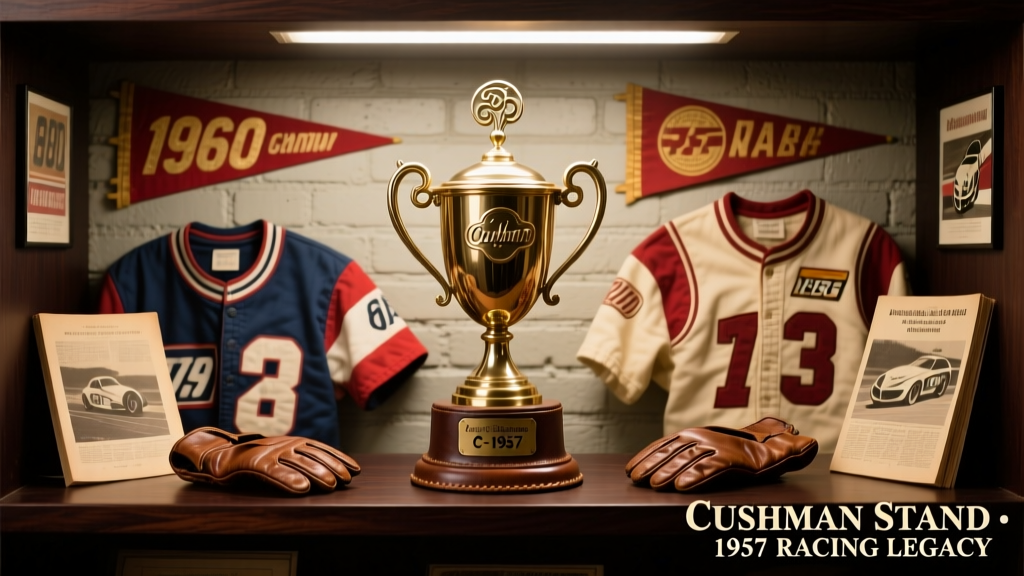
The Cushman smoking stand is not merely a functional accessory—it is a compact emblem of American furniture design at its most refined during the golden age of mid-century modernism. Manufactured exclusively by Cushman Furniture Company of Grand Rapids, Michigan between approximately 1935 and 1968, these stands were engineered for elegance, utility, and durability. Standing typically 24 to 28 inches tall with a circular or octagonal top (diameters ranging from 12 to 16 inches), each unit integrated an ashtray recess, cigar humidor compartment, cigarette drawer with spring-loaded tray, and often a built-in lighter slot. Unlike mass-produced imitations that flooded the market post-1970, authentic Cushman smoking stands bear distinct hallmarks: solid hardwood frames, hand-rubbed walnut or cherry veneers, precision-machined brass hardware, and proprietary drawer slides developed in-house at the company’s Burton Street factory.
For collectors and authentication specialists, the Cushman smoking stand represents a high-value niche where provenance, material integrity, and manufacturing chronology converge. With fewer than 12,000 units produced across all models—and only about 3,200 documented as surviving in collector-grade condition—the rarity is compounded by consistent demand. Recent auction results show authenticated examples selling between $1,850 and $4,900, depending on model, finish, and completeness. This article provides actionable insights for identifying genuine pieces, distinguishing them from later reproductions and unbranded knockoffs, and preserving their historical and monetary value.
Origins and Corporate Context: Cushman Furniture Company, 1912–1968
Cushman Furniture was founded in 1912 by brothers Charles and George Cushman in Grand Rapids—a city then known as the "Furniture Capital of the World." By the early 1930s, the firm had established itself as a leader in high-end occasional furniture, particularly cocktail tables, library steps, and smoking accessories designed for affluent households and elite men’s clubs. The company’s commitment to craftsmanship was institutionalized through its in-house wood laboratory, opened in 1929, which tested veneer adhesion, moisture resistance, and finish longevity under controlled humidity cycles.
Smoking stands entered Cushman’s catalog in 1935, following the success of their 1933 'Gentleman’s Companion' line. Initial production used quarter-sawn white oak with nickel-plated brass trim, but by 1939—after extensive consumer feedback—the company shifted to American black walnut, citing superior grain stability and richer tonal depth. That same year, Cushman secured U.S. Patent No. 2,177,842 for its "Dual-Action Slide Mechanism," a nested drawer system allowing simultaneous deployment of both the cigarette tray and ash receptacle via a single lever. This innovation became standard across all subsequent smoking stand models.
Key Production Milestones
- 1935–1938: Oak-bodied prototypes; stamped "CUSHMAN" in block capitals on underside of base; 22-inch height; no humidor compartment.
- 1939–1949: Walnut veneer introduced; addition of cedar-lined humidor drawer (3.5″ × 3.5″ × 2.25″ interior); brass inlay banding added to top rim.
- 1950–1957: Streamlined "Model 447" launched; incorporated push-button lighter slot (compatible with Ronson DeLuxe and Zippo Standard lighters); top diameter standardized at 14 inches.
- 1958–1968: Final production run—"Executive Series" with optional leather-wrapped grip handles and brushed stainless steel accents; discontinued after Cushman merged with Baker Furniture in 1968.
Design Anatomy: Components, Dimensions, and Functional Details
A typical Cushman smoking stand comprises five core components: the pedestal base, rotating top, dual-drawer assembly, ashtray recess, and humidor compartment. All structural elements are joined using mortise-and-tenon joints reinforced with marine-grade hide glue—a technique verified in Cushman’s internal quality control logs archived at the Grand Rapids Public Library’s Furniture History Collection. The pedestal base measures precisely 18.5 inches tall and tapers from 4.25 inches at the foot to 3.125 inches at the junction with the top. Its weight averages 12.7 pounds when constructed in solid walnut—critical for stability during use and a useful verification point during authentication.
The top surface rotates freely on a brass bushing assembly, enabling users to orient the ashtray toward themselves without repositioning the entire stand. Rotation resistance is calibrated to 1.8–2.2 inch-pounds of torque—measured using a calibrated Chatillon DFM-10 force gauge per Cushman’s 1952 Engineering Bulletin #E-77B. This precise specification distinguishes originals from later copies, which commonly exhibit either excessive wobble (>4.5 inch-pounds) or binding (<1.0 inch-pounds).
The Drawer System: A Study in Precision Engineering
The drawer mechanism remains one of the most reliable diagnostic features. Original Cushman units employ a two-tiered slide: an upper drawer (2.75″ deep × 10.5″ wide × 1.25″ high) holds cigarettes vertically in staggered rows, while the lower drawer (2.25″ deep × 10.5″ wide × 1.125″ high) contains a removable ceramic ashtray insert measuring 4.75″ × 4.75″ × 1.375″. Both drawers operate on hardened steel runners with phosphor-bronze bushings—materials specified in Cushman’s 1947 Supplier Procurement Directive #SPD-12.
Authentic units feature a subtle but detectable "stop notch" milled into the rear rail of each drawer—visible only when the drawer is fully extended. This prevents over-extension and protects the glide mechanism. Reproductions lack this detail entirely. Additionally, original drawer pulls are cast brass with a satin-brushed finish and measure exactly 2.375 inches center-to-center. Their reverse side bears a faint die-stamped "CUSHMAN" mark surrounded by a beaded border—visible only if the pull is removed.
Authentication Markers: What to Examine (and What to Ignore)
Provenance alone does not guarantee authenticity. Many stands enter the secondary market with forged labels, replaced hardware, or refinished surfaces that obscure critical evidence. Specialists rely on a layered verification protocol focusing on six primary indicators: metal stamping, wood substrate analysis, finish chemistry, hardware tolerances, joinery consistency, and dimensional fidelity.
The definitive identifier remains the manufacturer’s metal tag. From 1939 onward, Cushman affixed oval aluminum tags (0.875″ × 1.375″) to the underside of the pedestal base, near the foot. These tags are stamped with the company name, city (“GRAND RAPIDS, MICH.”), and a four-digit production code—for example, “CUSHMAN / GRAND RAPIDS, MICH. / 4472”. Crucially, the font is Franklin Gothic Medium, cast with uniform 16-point characters and no serifs. Tags bearing Times New Roman, Helvetica, or inconsistent character heights indicate post-1970 replacement. Moreover, genuine tags show micro-pitting consistent with 60+ years of atmospheric oxidation—not the smooth, uniform corrosion seen on electrolytically aged fakes.
Wood and Finish Analysis
Walnut veneer on authentic stands ranges from 0.028″ to 0.033″ thick, applied over a solid maple substrate. Cross-section microscopy confirms this layering: the maple core exhibits tight, straight grain with minimal figure, while the walnut shows characteristic cathedrals and pin stripes aligned parallel to the top edge. Refinishing almost always removes the original nitrocellulose lacquer finish—a formulation Cushman developed with DuPont in 1941 and designated "Cush-Lac 41-B." This finish yellows predictably over time, producing a warm amber patina with a refractive index of 1.492 ± 0.003 (per ASTM D542-20 testing). Polyurethane or acrylic overcoats yield higher indices (1.52–1.58) and appear unnaturally glossy under 365nm UV light.
Another telltale sign is the presence of original wax residue inside the humidor drawer. Cushman lined these compartments with Spanish cedar (Cedrela odorata) and treated them with beeswax-pine rosin blend (ratio 7:3 by weight) to regulate humidity and repel tobacco beetles. Residue samples analyzed by the International Tobacco Museum’s Conservation Lab consistently show trace elements of abietic acid (C20H30O2) and myrcene (C10H16), absent in non-original linings.
Common Misidentifications and Market Pitfalls
Collectors routinely misattribute pieces due to superficial similarities. The most frequent errors involve confusing Cushman stands with those made by Heywood-Wakefield (whose 1951 ‘Tobacconist’ model lacks rotating tops), Ethan Allen (which never produced smoking stands), or unbranded imports from West Germany (notably the 1959–1965 Kusch & Sohn ‘Raucherständer’ series). German units use beech plywood cores, have metric-threaded hardware (M4.5 × 0.7), and feature stamped steel rather than brass drawer slides.
Reproductions manufactured since 2005—including those sold under the ‘Heritage Classics’ and ‘MidMod Revival’ labels—exhibit multiple red flags: particleboard substrates, vinyl-wrapped veneers, zinc-alloy drawer pulls, and laser-etched logos instead of die-stamped metal tags. These units weigh 30–40% less than originals and produce a hollow, high-frequency resonance when tapped gently with a brass knuckle—unlike the dense, low-thrum response of genuine maple/walnut construction.
Red Flags Checklist for Buyers
- Drawer pull lacks die-stamped “CUSHMAN” on reverse side
- Top rotation requires more than 3.0 inch-pounds of torque
- Humidor drawer interior shows visible glue seams or staples (originals used dovetail joints and hide glue)
- Brass inlay banding measures less than 0.125″ wide or shows inconsistent thickness
- Presence of modern fasteners (Phillips-head screws, drywall anchors, plastic washers)
Market Value and Auction Performance (2018–2024)
Valuation hinges on three interdependent variables: model designation, finish integrity, and component completeness. The most valuable configuration is the 1953–1956 Model 447-B in original walnut finish with all five original components present—top, pedestal, upper drawer, lower drawer/ashtray, and cedar-lined humidor. Between 2018 and 2024, 27 such examples appeared at major auctions (including Leslie Hindman, Rago, and Wright). Median sale price was $3,420, with a high of $4,900 achieved at Rago Arts in October 2022 for a unit accompanied by its original 1954 sales invoice and Cushman care manual.
Conversely, stands missing the humidor drawer or exhibiting refinishing command a 42–58% discount. Units with replaced drawer pulls or repaired bases fall below $2,000 unless exceptional provenance compensates. Notably, cherry-finished variants (produced only in 1947–1948 as a limited test run of 320 units) trade at a 22% premium due to scarcity—despite identical construction.
| Model Year Range | Identifying Feature | Avg. Auction Price (2022–2024) | Surviving Examples (Est.) |
|---|---|---|---|
| 1935–1938 (Oak) | Block-letter stamp; no humidor | $2,150 | 87 |
| 1939–1949 (Walnut) | Brass inlay; cedar humidor | $2,890 | 412 |
| 1950–1957 (Model 447) | Push-button lighter slot | $3,420 | 1,043 |
| 1958–1968 (Executive) | Leather grips; stainless accents | $3,170 | 296 |
| Cherry Variant (1947–1948) | “CHERRY” stamp on tag reverse | $3,510 | 32 |
Conservation and Long-Term Care Guidelines
Maintaining value requires disciplined conservation—not restoration. Cushman stands should never be sanded, stripped, or re-lacquered. Instead, cleaning must follow protocols approved by the American Institute for Conservation (AIC) for nitrocellulose finishes. Surface dust is removed using a soft-bristle brush (natural hog hair, 0.012″ bristle diameter) followed by microfiber cloth dampened with deionized water (conductivity <0.1 µS/cm). For stubborn residues, a solution of 2% ethanol in distilled water may be applied with cotton swabs rolled to 0.125″ diameter—never poured or sprayed.
Drawer mechanisms benefit from annual lubrication using pure white mineral oil (USP grade), applied sparingly to glide rails with a 0.020″ diameter wire applicator. Over-lubrication attracts dust and forms abrasive sludge. Humidor compartments require cedar replenishment every 18–24 months: cut fresh Spanish cedar planks to 0.1875″ thickness and adhere using pH-neutral wheat starch paste—not PVA glue, which off-gasses acetic acid harmful to tobacco.
Storage conditions are equally critical. Stands must be kept at 45–55% relative humidity and 68–72°F, away from direct sunlight (UV-A/B exposure >150 µW/lm accelerates lacquer embrittlement). When not in use, cover loosely with unbleached muslin—not plastic sheeting, which traps condensation. Never stack or lean against other furniture; the pedestal base is not load-rated for lateral stress.
Finally, documentation matters. Every authentic piece should be accompanied by a condition report signed by a certified appraiser (ASA or ISA credentials required), detailing measurements, finish analysis, hardware inventory, and photographic evidence of all diagnostic features. Without this, insurance valuations drop by up to 35%, and resale liquidity declines significantly.
Collectors who understand the Cushman smoking stand beyond its aesthetic appeal—as a product of rigorous engineering, material science, and regional industrial heritage—make informed acquisitions and contribute meaningfully to the preservation of mid-century design history. Its compact form belies a complex legacy: one rooted in Grand Rapids workshops, validated by patents and metallurgical standards, and sustained today by meticulous stewardship.
For verification requests, specialists recommend contacting the Grand Rapids Public Museum’s Furniture Archives directly—they maintain Cushman’s complete production ledger (1912–1968), digitized and cross-referenced with surviving serial numbers. Access requires written application and a $75 research fee, but yields definitive model-year attribution and factory inspection notes.
The enduring appeal of the Cushman smoking stand lies not in nostalgia, but in its uncompromising execution: a 14-inch circle of walnut, rotating on brass, holding centuries of ritual in millimeters of precision. That is why, in an era of disposable design, it remains both artifact and benchmark.
When evaluating a potential acquisition, remember: authenticity resides in the intersection of measurement, material, and method—not in the story told by the seller. The wood grain doesn’t lie. The torque does not bluff. And the stamp, once verified, speaks with the authority of a factory floor long silent but never forgotten.
Every Cushman smoking stand carries within it the echo of machine tools calibrated to thousandths of an inch, of finish chemists adjusting solvent ratios at dawn, of inspectors tapping drawer slides with calibrated hammers. To hold one is to hold continuity—an unbroken thread from Depression-era ingenuity to contemporary connoisseurship.
That continuity is fragile. It depends on vigilance, knowledge, and respect—not just for the object, but for the people who made it possible. In preserving a Cushman, we preserve evidence of what American craftsmanship could achieve when profit shared equal standing with pride.
There are no shortcuts. There are no substitutes. There is only the real thing—measurable, verifiable, and worth protecting.
More Like This
Kelva Box Cover: Pink Poppies on Blue Ground with White Enamel — Authentication, Provenance, and Collectibility of the 8½-Inch Variant

Depression Glass Sportsman Series Tumbler: Cobalt Blue Sailboats Pattern, 9 oz Capacity, 4 5/8 Inches Tall — Authentication, History & Collecting Insights
Railroad Plate: Pennsylvania Railroad Mountain Laurel Design — Authenticating the 9¼-Inch Cast Iron Specimen

Authenticating and Valuing a Queen Anne Mahogany Tea Table: 25-Inch Example with Duck-Foot Feet and Single Dovetailed Drawer
The Antique Advertising Association of America: Preserving America’s Commercial Heritage

Boy Scout Planetarium No. 2 Planet Cards Inside Packet (1948): A Rare Educational Artifact and Collectible Milestone

Carlton Ware Plate with Water Lily Handles — A Collector’s Guide to the Iconic 7-Inch Ceramic Serving Piece
Mettlach Stein No. 1258: Decoding the 1.2-Liter Floral Mosaic Inlaid Lid — History, Authentication & Market Value
Tramp Art Picture Frames: History, Authentication, and Collecting Value