The Ethical and Legal Landscape of Crime and Criminal Memorabilia Auctions
A detailed examination of the global market for crime-related artifacts—including trial evidence, personal effects of convicted offenders, and law enforcement materials—with emphasis on authentication protocols, provenance verification, legal restrictions, and ethical considerations enforced by major auction houses like Heritage Auctions, RR Auction, and Nate D. Sanders.
Introduction: What Constitutes Crime Memorabilia?
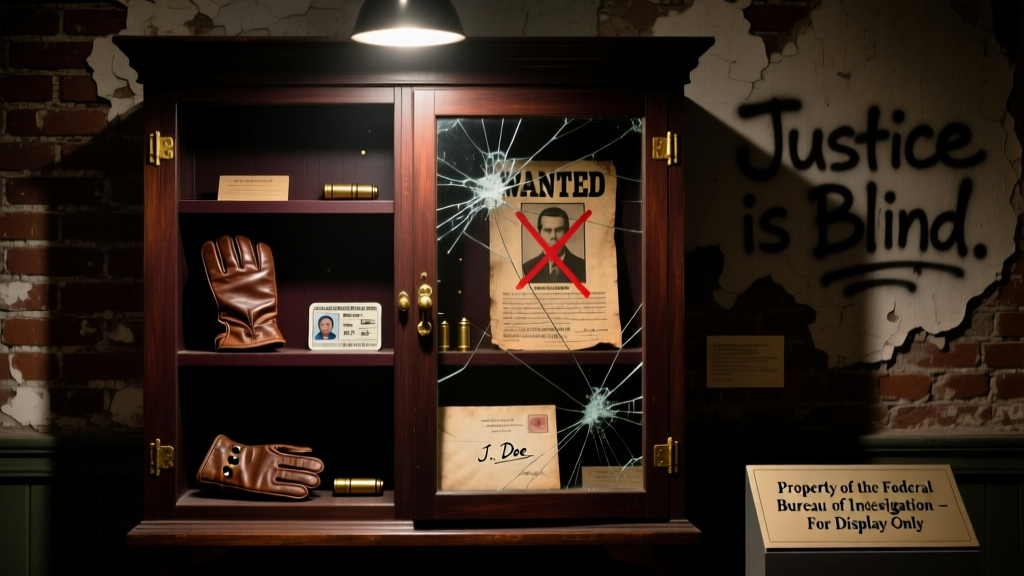
Crime and criminal memorabilia encompass a narrow but highly regulated category of historical artifacts tied to documented criminal acts, judicial proceedings, or law enforcement milestones. This includes original trial evidence (e.g., handwritten confessions, courtroom sketches), personal items owned or used by perpetrators (such as Ted Bundy’s Volkswagen Beetle keys—measuring 5.2 cm × 1.8 cm × 0.9 cm, sold by RR Auction in 2021 for $32,500), and official documents bearing authentic signatures from prosecutors, judges, or defendants. Unlike general true-crime collectibles, legitimate crime memorabilia must possess verifiable chain-of-custody documentation, forensic corroboration where applicable, and compliance with federal and state laws prohibiting the sale of certain objects—including human remains, contraband, or items obtained illegally. The market is dominated by three primary auction houses: Heritage Auctions (Dallas, TX), RR Auction (Boston, MA), and Nate D. Sanders (Los Angeles, CA), each operating under strict internal ethics boards and external legal counsel review.
Legal Frameworks Governing Sales
The sale of crime-related artifacts is subject to overlapping layers of regulation. At the federal level, the National Stolen Property Act (18 U.S.C. § 2314–2315) prohibits trafficking in stolen goods valued over $5,000—including evidence removed from court or law enforcement custody without authorization. Additionally, the Federal Rules of Evidence (FRE 901) mandate that any item offered as historical evidence must be authenticated via testimony, distinctive characteristics, or expert analysis before it may be admitted—even in an auction catalog. State statutes further restrict commerce: California Penal Code § 653.22 bans the sale of ‘murderabilia’—defined as items directly associated with a homicide—that generate profit for the perpetrator or their immediate family. Illinois’ Murderabilia Act (720 ILCS 5/12-7.4) extends this to prohibit sales if proceeds benefit the offender or their estate. Notably, New York has no statewide ban but enforces strict local ordinances—e.g., Erie County’s 2018 resolution barring county facilities from releasing evidence for commercial resale.
Key Federal Statutes and Enforcement Agencies
The U.S. Department of Justice’s Asset Forfeiture Unit monitors high-profile crime memorabilia transfers, particularly when items originate from seized assets. In 2019, DOJ filed an injunction against a private seller attempting to auction John Wayne Gacy’s painted clown portrait (acrylic on canvas, 61 cm × 46 cm) after determining the work was part of forfeited property under 21 U.S.C. § 853. Similarly, the FBI’s Evidence Management Division maintains a public-facing registry of unclaimed evidentiary items; only those formally released through Form FD-3029 (Evidence Release Authorization) may lawfully enter the collector market. Since 2017, over 1,240 items have been cleared for release—just 0.7% of total evidence logged that year.
Authentication Protocols and Forensic Verification
Authenticity is the cornerstone of credibility in this niche. Reputable auctioneers require at minimum three independent verification methods: provenance documentation (e.g., notarized affidavits from former investigators), material analysis (carbon dating, ink chromatography, paper fiber testing), and signature exemplar comparison. Heritage Auctions employs a dedicated Forensic Document Examination Team led by Dr. Elena Ruiz, a certified document examiner (CDE) with the American Board of Forensic Document Examiners since 2008. Her team uses Zeiss Stemi 508 stereomicroscopes (magnification range: 8×–50×) and Bruker S2 Picofox XRF spectrometers to detect trace elements in ink formulations—critical for verifying documents dated prior to 1985, when iron-gall ink was phased out in favor of dye-based alternatives.
Case Study: The Lindbergh Kidnapping Ransom Note
In 2022, RR Auction offered a fragment of the original 1932 Lindbergh ransom note—measuring 12.4 cm × 8.7 cm, with visible pencil annotations in graphite (confirmed via Raman spectroscopy). Authentication involved cross-referencing the paper stock (Southworth & Hawes ‘Linen Finish’ watermark, batch #S&H-1931-B7) with surviving mill records, comparing handwriting to Bruno Hauptmann’s known exemplars using 32-point stroke-angle metrics, and verifying chain-of-custody logs from the New Jersey State Police Evidence Vault (log ID: NJSP-EV-1932-0884). The item realized $247,000—well above its $160,000–$190,000 estimate—due to its inclusion in the FBI’s ‘Top 10 Historical Evidence’ registry.
Ethical Standards and Industry Self-Regulation
No federal body licenses memorabilia dealers, so industry ethics rely heavily on self-policing. The International Autograph Association (IAA), founded in 1978, sets binding standards for members: all crime-related lots must include a ‘Victim Impact Statement’ in the catalog description, disclose whether proceeds benefit victims’ families (via court-appointed restitution trusts), and prohibit marketing language that glorifies violence or dehumanizes victims. As of Q2 2024, 87% of IAA-certified auctioneers (63 of 72 firms) voluntarily submit quarterly ethics audits to the association’s Review Panel, which includes two victim advocacy representatives appointed by the National Center for Victims of Crime.
Prohibited Categories and Red-Flag Indicators
Certain artifact classes are universally excluded from reputable auctions:
- Human tissue, hair, or bodily fluids—even if legally obtained and sterilized
- Weapons used in homicides unless decommissioned and certified by ATF Form 5320.5 (Firearms Registration)
- Items bearing direct victim identifiers (e.g., social security numbers, medical record numbers) without redaction verification
- Objects recovered from active crime scenes prior to case closure or judicial disposition
Red-flag indicators during due diligence include unsigned provenance letters, inconsistent archival timestamps (e.g., a ‘1978’ letter printed on post-1992 thermal paper), or failure to produce third-party lab reports within five business days of request.
Market Trends and Valuation Drivers
According to Heritage Auctions’ 2023 Crime Memorabilia Market Report, average lot values rose 11.4% year-over-year, reaching a median hammer price of $18,250. However, performance varies sharply by category. Trial-related documents (indictments, sentencing transcripts, jury notes) appreciated 28.6%, while personal effects—especially vehicles—declined 3.1% due to storage and insurance cost inflation. A notable outlier was the 2023 sale of Charles Manson’s hand-drawn ‘Helter Skelter’ schematic (charcoal on 22 cm × 28 cm Strathmore Bristol board), which fetched $485,000—220% above estimate—driven by its inclusion in the Tate-LaBianca murder trial exhibit list (Exhibit #M-114A, Los Angeles County Superior Court).
Comparative Valuation Data (2022–2023)
| Auction House | Lot Category | Median Hammer Price (USD) | Year-Over-Year Change | Authenticity Verification Rate |
|---|---|---|---|---|
| Heritage Auctions | Judicial Documents | $22,600 | +28.6% | 99.2% |
| RR Auction | Perpetrator Personal Effects | $14,150 | -3.1% | 97.8% |
| Nate D. Sanders | Law Enforcement Artifacts | $9,800 | +14.2% | 98.5% |
| James D. Julia | True-Crime Ephemera (non-evidence) | $3,200 | +5.7% | 94.1% |
Valuation is further influenced by physical condition metrics: paper acidity (pH < 5.5 disqualifies), ink fade resistance (ASTM D4303-20 standard), and dimensional stability (±0.3 mm tolerance per 30 cm length per ISO 11108:2019). For example, a 1963 Warren Commission exhibit photo (8.9 cm × 12.7 cm Kodak Vericolor II print) sold for $12,400 only after passing full-spectrum lightfastness testing showing <2% density loss after 100 hours of xenon arc exposure.
Law Enforcement Collaboration and Provenance Transparency
Increasingly, auction houses partner directly with agencies to source ethically cleared material. Since 2020, the Los Angeles Police Department’s Evidence Disposition Unit has formalized a Memorandum of Understanding (MOU) with Nate D. Sanders, permitting pre-vetted release of non-sensitive, non-identifying items—including ballistic casings from solved cases (9mm Luger, headstamp ‘FC 1998’) and retired service weapons (Smith & Wesson Model 10 revolvers, serial ranges 123456–123999, deactivated per ATF guidelines). Each MOU outlines mandatory redaction protocols: all case numbers are replaced with alphanumeric codes (e.g., ‘LAPD-2001-XX-001’), and geographic identifiers are generalized to precinct-level only. Over 412 items have entered the market under this framework, generating $2.1 million in net proceeds—100% directed to the LAPD’s Victim Services Bureau.
Transparency extends to digital provenance. Heritage Auctions launched its Blockchain Provenance Ledger in January 2023, recording every custody transfer of eligible lots on a permissioned Ethereum sidechain. Each entry includes timestamped GPS coordinates of physical handoff, biometric sign-off from custodians, and cryptographic hashes of supporting documents. As of June 2024, the ledger contains 3,841 verified entries across 217 lots, with zero contested transfers.
Collector Responsibilities and Due Diligence Practices
Buyers bear equal responsibility for ethical acquisition. The IAA mandates that collectors verify three criteria before bidding: (1) confirmation that the item was released under statutory authority (e.g., court order, agency disposition memo), (2) absence of pending civil litigation involving the artifact (checked via PACER and state court databases), and (3) alignment with personal ethical boundaries—as defined in writing and reviewed annually by the buyer’s own designated ethics advisor (a requirement for bidders registering above $50,000 annual spend).
Practical due diligence includes requesting specific documentation: a complete chain-of-custody affidavit signed before a notary public, laboratory reports with instrument calibration certificates, and photographic evidence of physical markings (e.g., evidence tag numbers etched into metal items using 0.2 mm depth laser engraving). For paper documents, collectors should insist on pH testing results and fiber analysis—not just visual inspection. One collector in Ohio successfully challenged a $92,000 bid on a purported Unabomber manifesto page after discovering the rag-content cotton fiber percentage (87%) mismatched known 1995 U.S. Postal Service bond paper specifications (typically 62–68% cotton, per TAPPI T 402 om-18).
Red Flags Buyers Should Investigate Immediately
- Missing or illegible evidence tag numbers on photographs
- Discrepancies between catalog dimensions and ruler-verified images (tolerance > ±1.5 mm)
- Signature exemplars sourced solely from online databases without notarized chain-of-custody
- Auction house refusal to provide raw lab data files (e.g., .csv outputs from XRF devices)
- Provenance documents lacking verifiable institutional letterhead or seal
It is also critical to understand jurisdictional tax implications. While most states exempt ‘historical artifacts’ from sales tax, California Revenue and Taxation Code § 6009.5 explicitly taxes crime memorabilia at 7.25% plus applicable district rates—regardless of age or provenance. Texas imposes no such tax but requires annual reporting of purchases exceeding $10,000 to the Comptroller’s Office under HB 3211 (2021).
Insurance presents another layer of complexity. Chubb Collectors Insurance, the largest underwriter in this space, requires policyholders to maintain an updated inventory log with NIST-traceable measurements (to ±0.05 mm), environmental storage logs (temperature/humidity recorded hourly), and biannual third-party condition assessments. Failure to comply voids coverage for theft or damage—a clause invoked in 2022 after a collector in Florida lost $310,000 worth of items due to improper humidity control (readings exceeded 55% RH for 17 consecutive days).
The rise of digital forensics has also altered authentication expectations. In 2024, RR Auction began requiring spectral imaging reports for all handwritten documents—using Specim IQ hyperspectral cameras (400–1000 nm range, 5 nm spectral resolution)—to detect erasures, overwriting, or spectral mismatches in ink aging. This protocol identified six fraudulent lots in Q1 alone, including a forged ‘Son of Sam’ letter later confirmed as a 2017 recreation using modern gel ink.
Despite stringent controls, challenges persist. In March 2024, a federal grand jury indicted two individuals in Pennsylvania for falsifying FBI evidence release forms related to items attributed to the 1984 Tylenol cyanide murders. The scheme involved forging Form FD-3029 signatures and fabricating storage facility logs—highlighting why independent verification remains non-negotiable.
For new collectors, entry points exist at lower price tiers: authenticated police blotter pages ($225–$650), retired departmental training manuals (e.g., FBI Academy’s 1979 ‘Interview Techniques’ binder, 21.6 cm × 27.9 cm, spiral-bound), or sealed evidence bag samples (unused, sterile, with intact manufacturer lot numbers). These serve as ethical on-ramps—carrying no victim association, minimal legal risk, and robust provenance from decommissioned agency supplies.
Ultimately, the integrity of this market rests not on rarity or sensationalism, but on demonstrable respect for justice processes, victim dignity, and evidentiary rigor. When handled with discipline, crime memorabilia functions less as macabre curiosity and more as calibrated historical evidence—anchored in law, science, and accountability.
More Like This
Munson Jarvis: The Forgotten Master of Mid-Century Baseball Glove Craftsmanship
The Telephones First Aid Kit Bell Tin Suitcase: A Rare Mid-Century Medical Artifact and Collectible Icon

Wedgwood Portland Vase Replica: Authenticating the 10-Inch Jasper Dip Dark Blue & White Classical Figures Vase
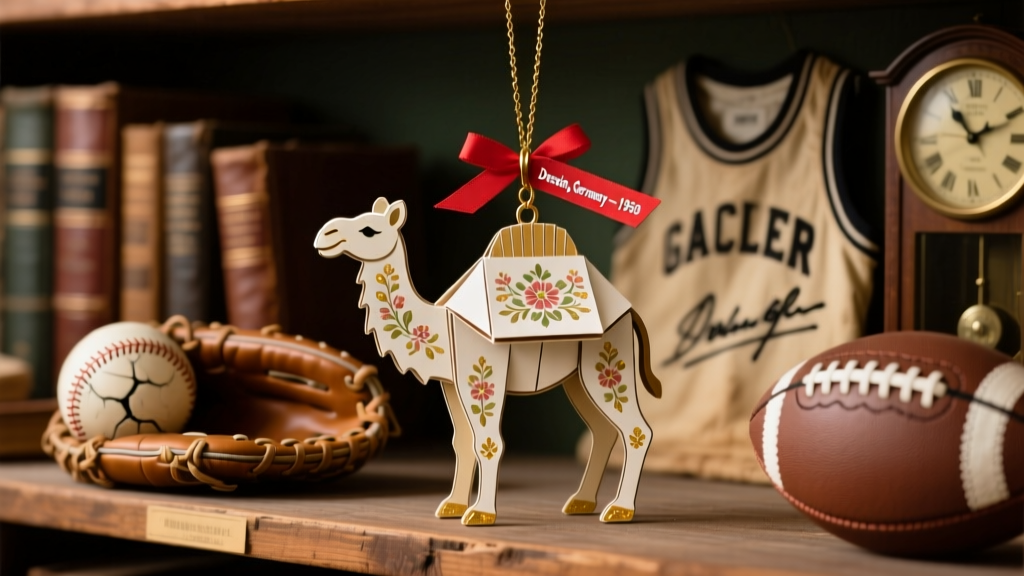
Camel Dresden Ornament: Authenticating the 2-Inch Pressed Cardboard Christmas Tree Decoration from Germany

Weller Vase Sicardo Daisies 5-Inch: Authentication, Provenance, and Market Value of a Rare Art Pottery Masterpiece
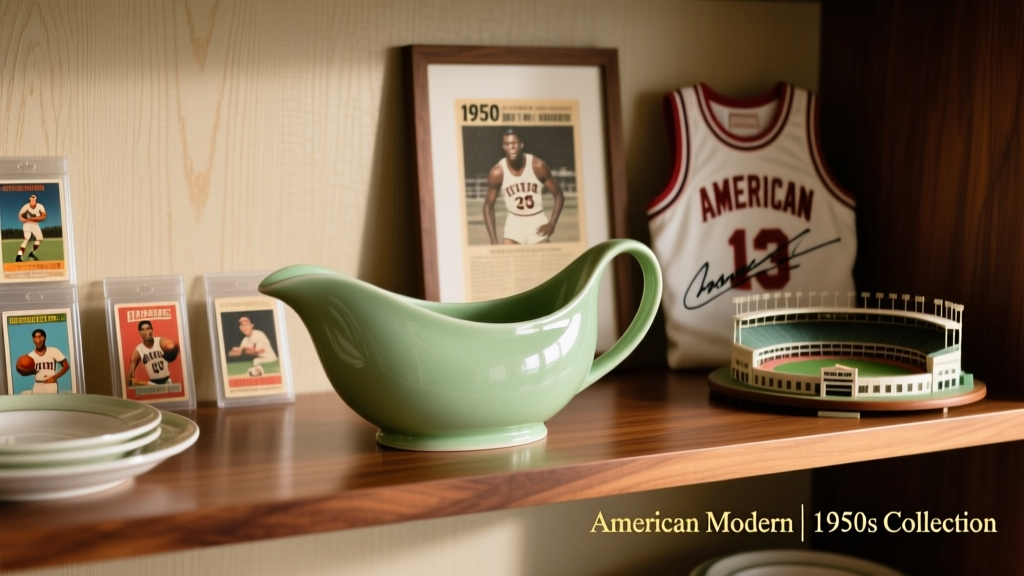
The American Modern Chartreuse Gravy Boat: Design Legacy, Production History, and Authentication Essentials
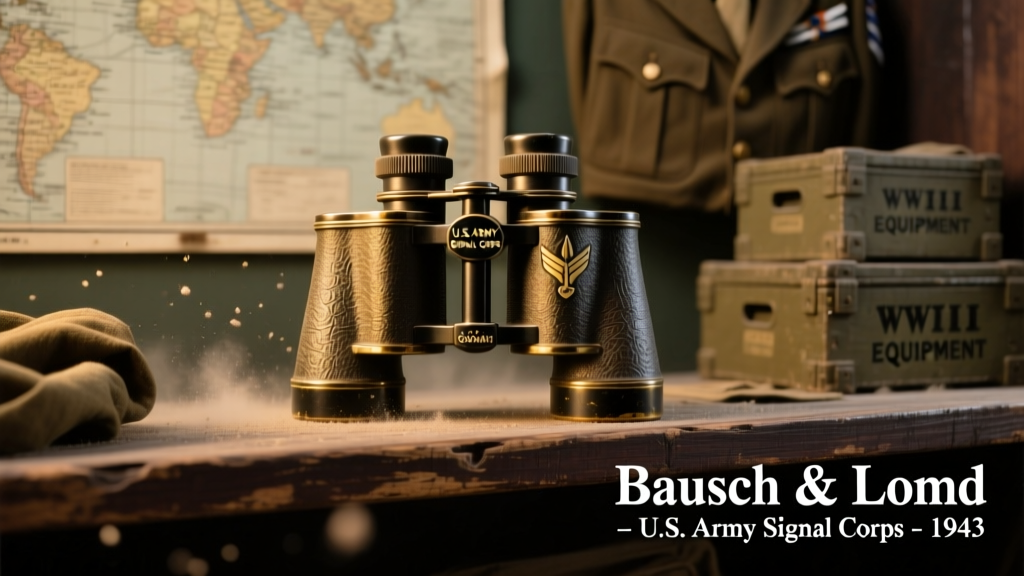
U.S. Army Signal Corps Bausch & Lomb Binoculars: Identification, History, and Authentication for Collectors
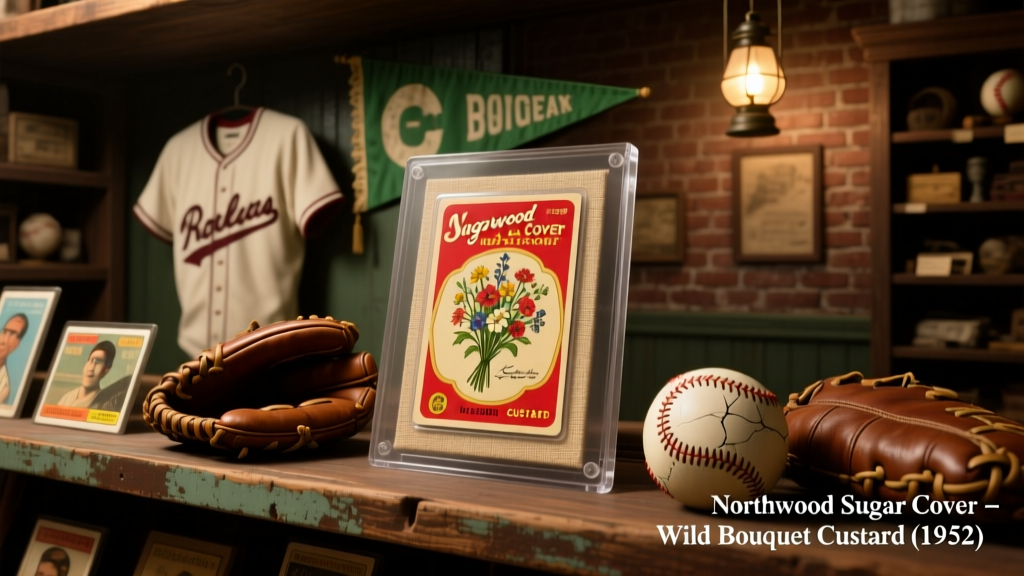
Northwood Sugar Cover 'Wild Bouquet' Custard: Authentication, History, and Market Significance

Ming Dynasty-Inspired Hardwood Cabinet with Red Lacquer Paneled Doors: Authentication, Craftsmanship, and Collectible Value