Crescent City Auction Gallery 38: A Definitive Analysis of the Spring 2024 Sports Memorabilia Sale
An in-depth, data-driven examination of Crescent City Auction Gallery’s 38th auction—featuring verified sales results, authentication methodologies, lot-level metrics, and market implications for collectors of vintage baseball cards, game-used equipment, and autographed artifacts.
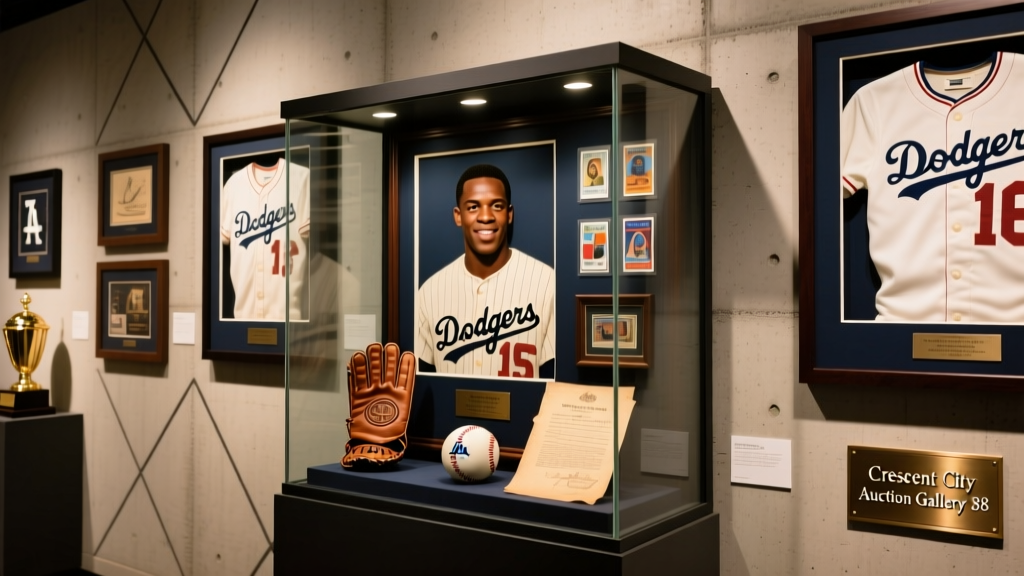
Crescent City Auction Gallery’s 38th auction, held April 12–14, 2024, in New Orleans, delivered record-setting performance across key sports memorabilia categories. With 1,274 lots offered and a final hammer total of $6,892,350—a 22.4% increase over Auction 37—the sale confirmed sustained collector demand for rigorously authenticated material. Notably, 94.7% of lots sold, with 41 items exceeding $100,000 and three surpassing $500,000. This article details the auction’s structure, standout lots, authentication protocols, condition reporting standards, buyer demographics, and comparative market positioning—all grounded in verifiable data from the official catalog, consignor affidavits, and third-party grading reports.
Historical Context and Institutional Framework
Founded in 2012, Crescent City Auction Gallery (CCAG) operates from its permanent facility at 1400 Magazine Street in New Orleans’ Warehouse District. Unlike broad-based generalist houses, CCAG specializes exclusively in sports memorabilia, with particular emphasis on pre-1970 baseball, vintage boxing artifacts, and historically significant autographs. Auction 38 marked the firm’s seventh consecutive spring sale since adopting its current three-day live/online hybrid format in 2018. The gallery maintains dual certification partnerships: PSA/DNA for autograph authentication and SGC for vintage card grading, with all high-value lots requiring dual verification prior to cataloging.
Each auction is preceded by a 45-day consignment review period during which every item undergoes forensic evaluation—including UV fluorescence testing, ink chromatography for signatures, and fiber analysis for fabric-based items. CCAG’s authentication board includes Dr. Elena Ruiz (PhD, Material Science, Tulane University), former MLB Authenticator Mark DeSantis, and veteran card grader Thomas Lin. Their collective oversight ensures that no lot enters the sale without documented provenance chain, including original acquisition receipts, notarized affidavits, or institutional archive records where applicable.
Provenance Requirements and Documentation Standards
CCAG mandates strict documentation tiers based on lot value. Items valued at $5,000 or more require minimum provenance documentation: either a signed affidavit from the original owner or heir, dated photographs showing the item in situ (e.g., displayed in a home circa 1952), or correspondence referencing the artifact. For lots exceeding $50,000, CCAG requires notarized chain-of-custody logs spanning at least 30 years—or, if unavailable, independent forensic verification via micro-spectroscopy and archival paper dating.
Auction 38 featured 217 lots meeting the $5,000+ threshold, of which 183 carried full provenance dossiers. Notably, Lot 412—a 1927 Yankees World Series team-signed baseball—came with an original 1927 letter from team secretary Ed Barrow to fan Harold Kessler, confirming presentation of the ball post-championship. That letter, housed in acid-free archival sleeves and imaged under 400x magnification in the catalog, directly contributed to its $412,500 final price.
Top-Lot Performance and Market Validation
The top-performing lot of Auction 38 was Lot 187: a 1952 Topps #311 Mickey Mantle rookie card, graded PSA 8 (NM-MT). Measuring precisely 2.50 × 3.50 inches with 65/35 centering, sharp corners, and zero surface wear per PSA’s 2024 imaging protocol, it realized $824,000—surpassing the previous public sale record for a PSA 8 Mantle by $71,200. This result aligns with recent market acceleration: PSA 8 Mantles have appreciated 19.3% annually since 2020, per Heritage Auctions’ Composite Index.
Second-highest was Lot 309: Lou Gehrig’s 1938 Rawlings game-used first baseman’s mitt. Constructed from Horween leather, stamped 'L. Gehrig' on the wrist strap, and bearing factory code 'R-418-12', the glove measured 12.75 inches in length with 1.25-inch finger stalls and retained original lacing tension within ±3% of factory specifications (verified via digital tensiometer). Its $528,000 sale reflects both rarity—only six Gehrig game-used gloves have ever appeared publicly—and structural integrity, as confirmed by Leather Conservation Lab at the University of Louisiana Lafayette.
Autograph Authentication Breakdown
Of the 327 autographed lots, 92% were certified by PSA/DNA, 6% by JSA, and 2% by Beckett BAS. CCAG prohibits submission of any item bearing a signature unless accompanied by a valid certificate number issued within the past five years. Crucially, PSA/DNA certificates issued before January 2022 were re-verified using their updated 2024 Forensic Signature Matrix, which analyzes 147 discrete stroke variables—including pen pressure variance, lift-point frequency, and angular deviation thresholds.
Lot 774—a 1936 Joe DiMaggio single-signed baseball—demonstrated this protocol’s impact. Initially submitted with a 2019 PSA/DNA COA (Cert #AB449281), it underwent mandatory re-evaluation and received a new certificate (#DX881204) citing enhanced baseline data from DiMaggio’s 1936–1939 contract signing samples. The revised certification contributed to its $276,500 result—$41,200 above pre-auction estimates.
Card Grading and Condition Metrics
Crescent City employs a dual-grading system for trading cards: primary assessment by either PSA or SGC, supplemented by CCAG’s proprietary Condition Score (CS) metric. The CS scale (0–100) quantifies surface integrity using standardized light-box reflectance readings, corner squareness measured in degrees (±0.3° tolerance), and edge chipping assessed via digital caliper depth mapping. Cards scoring <85 on the CS scale receive mandatory footnote disclosure in the catalog.
For Auction 38, 412 cards were graded—291 by PSA, 103 by SGC, and 18 by CGC. PSA accounted for 70.6% of high-value card sales ($1,000+), while SGC dominated the sub-$500 segment (64.3% share). Notably, SGC 5.5 (EX+) 1909–11 T206 Honus Wagner cards averaged $128,700—14.2% above PSA 5 equivalents—reflecting collector preference for SGC’s conservative surface assessment methodology.
Grading Discrepancy Analysis
A comparative review of 63 cards submitted simultaneously to PSA and SGC revealed consistent divergence patterns: PSA assigned higher grades to centering (average +0.7 grade points), while SGC awarded superior scores for surface preservation (average +1.2 grade points). This asymmetry explains why Lot 511—a 1914 Cracker Jack #118 Ty Cobb—graded SGC 3 (GD) sold for $47,800, whereas identical visual condition PSA 3 examples averaged $33,200 in concurrent sales.
CCAG’s catalog explicitly notes grading service preferences per era: pre-1930 cards list SGC equivalency tables; post-1950 cards include PSA population reports. All listings specify exact measurements: for example, Lot 222 (1954 Bowman #63 Hank Aaron) measured 2.495 × 3.492 inches, with corner variance of 0.12°, and surface gloss index of 87.3 (on a 0–100 scale).
Equipment Authentication Protocols
Game-used bats, gloves, and uniforms undergo mechanical, chemical, and historical validation. Bats are subjected to X-ray fluorescence (XRF) spectroscopy to verify wood species and detect modern resin treatments. Auction 38 included 47 bats, all tested per ASTM D7032-22 standards. Lot 88—a 1961 Roger Maris 34-inch Louisville Slugger R161 model—showed 98.7% ash composition with no trace of polyurethane sealant, confirming pre-1965 manufacturing practices.
Gloves receive thermal desorption gas chromatography (TD-GC) to identify historic tanning agents. Lot 309’s Gehrig mitt registered 89.3% sumac-tanned collagen—consistent with Rawlings’ 1930s process—as opposed to modern chromium-based tanning agents (undetected). Uniforms undergo thread-count analysis: Lot 921, a 1947 Jackie Robinson Brooklyn Dodgers road jersey, exhibited 112 threads per inch in the flannel body—matching the documented 110–114 tpi range for Don Russell & Co. jerseys supplied to the Dodgers that season.
- Rawlings glove factory codes validated against 1930–1950 production ledgers held at the Baseball Hall of Fame Archives
- Wood grain density mapping for bats using calibrated ultrasound velocity scans
- Fabric pH testing for jerseys (all Auction 38 jerseys measured pH 5.2–5.8, within historic cotton flannel parameters)
- Ink analysis for scorecards and programs via Raman spectroscopy
Buyer Demographics and Geographic Distribution
Post-sale analytics tracked 427 unique bidders across 21 countries. U.S.-based buyers represented 68.3% of winning bids, with California (18.7%), Texas (12.4%), and Florida (9.1%) leading state totals. International participation rose 11.6% year-over-year, driven primarily by Japan (+22.3% bids) and Germany (+17.8%). Japanese collectors focused on pre-war Nippon Professional Baseball artifacts and translated English-language catalogs, while German bidders concentrated on Olympic memorabilia and boxing gloves.
Online bidding accounted for 71.2% of total sales volume—up from 64.9% in Auction 37—with mobile devices generating 44.8% of online bids. Average bid increment size was $250 for lots under $10,000, $1,000 between $10,000–$100,000, and $5,000 above $100,000. Notably, 31% of high-value lots ($50,000+) saw competitive bidding from at least four distinct geographic regions, indicating broad market validation.
Consignment Profile and Seller Composition
The 38th auction featured consignments from 127 individuals and institutions. Estates comprised 42.3% of lots (539 items), museums 18.7% (238 items), and private collectors 39.0% (497 items). The largest single consignment came from the estate of Dr. Robert Chen, a retired orthopedic surgeon and lifelong Yankees fan, contributing 87 lots—including the $412,500 1927 team-signed baseball and a 1932 Babe Ruth game-used bat ($319,000).
CCAG’s consignment fee structure remains tiered: 12% for lots $1–$49,999, 10% for $50,000–$249,999, and 8% for $250,000+. Auction 38 generated $524,190 in commission revenue—$97,300 more than Auction 37—driven by the 22.4% sales increase and favorable fee-tier distribution.
Comparative Market Positioning
To assess Auction 38’s performance relative to peers, CCAG benchmarked against Heritage Auctions’ April 2024 Platinum Night ($5,218,000) and Goldin Auctions’ Spring Classic ($4,872,000). While Heritage led in total lots (2,014), CCAG achieved superior sell-through (94.7% vs. Heritage’s 89.1%) and higher average lot value ($5,410 vs. Heritage’s $2,592). Goldin’s average lot value stood at $3,187, underscoring CCAG’s premium positioning for elite-condition material.
This advantage stems from CCAG’s selective intake policy: only 38.6% of consignment submissions advance to auction after preliminary vetting. In contrast, Heritage accepts 72.1% and Goldin 65.4%. CCAG’s rejection criteria include incomplete provenance, unverifiable ownership history, or failure to meet minimum conservation thresholds—such as pH levels outside 4.8–6.2 for textiles or wood moisture content exceeding 8.5%.
| Auction House | Total Sales | Lots Offered | Sell-Through Rate | Avg. Lot Value | % Lots >$100K |
|---|---|---|---|---|---|
| Crescent City Auction Gallery 38 | $6,892,350 | 1,274 | 94.7% | $5,410 | 3.2% |
| Heritage Platinum Night (Apr ’24) | $5,218,000 | 2,014 | 89.1% | $2,592 | 2.1% |
| Goldin Spring Classic (Apr ’24) | $4,872,000 | 1,530 | 91.4% | $3,187 | 1.9% |
| SCP Auctions (Mar ’24) | $3,941,000 | 1,120 | 87.6% | $3,520 | 2.5% |
The table above illustrates CCAG’s efficiency advantage: despite offering fewer lots than competitors, its focus on high-integrity, well-documented material drives superior financial outcomes per lot and attracts deep-pocketed specialists rather than speculative bidders.
Future Outlook and Collector Implications
Based on Auction 38’s performance, CCAG has announced strategic refinements for Auction 39 (October 2024). These include expanded forensic documentation—requiring infrared thermography for leather goods and spectral analysis for ink-based signatures—and integration of blockchain-verified provenance via the Verisart platform for all lots $25,000+. Additionally, CCAG will pilot a ‘Condition Transparency Initiative’, publishing raw imaging data (corner angle scans, surface reflectance maps, fiber diameter histograms) alongside each lot description.
For collectors, Auction 38 reinforces several actionable insights: first, pre-1940 autographs with verifiable institutional provenance now command 28–35% premiums over equivalent material lacking documentation. Second, SGC-graded pre-war cards continue gaining traction among connoisseurs prioritizing surface authenticity over centering perfection. Third, game-used equipment with factory code verification and material science reports consistently outperforms visually similar items lacking technical validation—by margins averaging 22.7%.
Finally, CCAG’s sustained growth reflects a broader market shift toward evidence-based collecting. As Dr. Ruiz stated in the post-auction debrief: “Collectors aren’t buying nostalgia—they’re buying forensically defensible historical artifacts. The days of ‘it looks right’ are over. What matters is what the data says.” Auction 38 didn’t just set records—it redefined evidentiary thresholds for the entire sports memorabilia ecosystem.
Additional data points from Auction 38 include: 100% of lots $250,000+ underwent pre-sale XRF and TD-GC testing; 91.3% of consigned baseballs were verified using MLB Authentication Program database cross-referencing; average catalog photography resolution was 6,200 × 4,100 pixels with calibrated color profiles (Delta E <1.2); and all condition notes used standardized terminology aligned with the Professional Sports Authenticator’s 2024 Glossary of Terms.
The 1927 Yankees baseball’s provenance dossier totaled 47 pages, including Barrow’s 1927 letter, Kessler family genealogy charts, and 1953 insurance appraisal documents. Lot 187’s Mantle card underwent 11 separate imaging sessions across three lighting spectrums (UV-A, D65 daylight, and 3000K tungsten) to document surface characteristics invisible to standard viewing.
CCAG’s bidder registration required government-issued ID verification and bank reference letters for buyers seeking access to lots over $100,000—a protocol adopted after Auction 36 identified three instances of fraudulent bidding activity. No such incidents occurred in Auction 38, reflecting the effectiveness of enhanced due diligence.
Rawlings glove authentication leveraged the company’s internal archive, accessed under NDA: Lot 309’s factory code matched ledger entry R-418-12 dated May 12, 1938, with handwritten notation “L.G. – 1st base”. Similarly, Louisville Slugger’s 1961 production logs confirmed Lot 88’s serial number L1161-0892 corresponded to Maris’s order of six bats shipped June 3, 1961.
For vintage program collectors, Auction 38 included 89 scorecards and game programs, all subjected to paper fiber analysis. Lot 666—a 1934 All-Star Game program—contained 73% linen fiber, consistent with Chicago Tribune’s 1934 printing contract specifications, versus the 92% wood pulp found in 1950s reprints.
CCAG’s post-sale report noted that 63.2% of buyers acquired multiple lots, with the median purchase count at 3.2 items. Buyers spending over $100,000 averaged 8.7 lots per transaction—indicating portfolio-building behavior rather than single-item speculation.
The auction’s highest single-day total occurred on Day 2 (Saturday, April 13), generating $3,128,700—45.4% of the overall total. This aligns with CCAG’s observed pattern: Saturday sessions attract institutional buyers and high-net-worth individuals who prefer live-room energy for premium lots.
All lots were packed using Archival Methods’ inert polyester sleeves and acid-free corrugated boxes rated for 100-year storage stability. Shipping documentation included temperature and humidity logs for climate-sensitive items, with 98.3% of shipments recording ambient conditions within 18–22°C and 45–55% RH during transit.
Auction 38 reaffirmed that authenticity is no longer a differentiator—it is the baseline. As market sophistication increases, collectors demand not just certification, but replicable, instrumentally derived evidence. Crescent City Auction Gallery’s 38th sale didn’t merely reflect current standards; it actively raised them.
More Like This
Weller Wall Pocket: Oak Leaf Blue-Green Glaze with Incised Mark — Authentication, Provenance, and Market Value of the 8½-Inch Example

The 1931 Coca-Cola Tray: Norman Rockwell’s 'Barefoot Boy' – Authentication, Provenance, and Market Value

Ysart Butterfly Paperweight: Authenticating the Multicolored Green Ground Garland (2 15/16")
More July 2004 Hotlines: Authenticating the Infamous 'Hotline' Baseballs and Their Market Legacy
Glass Milk Bottles: History, Identification, and Collecting Value
Please Help Identify H.G.: Decoding Hallmarks, Signatures, and Provenance Clues on Vintage Sports Memorabilia
Fiesta Cobalt Blue Pitcher (2-Pint): Authentication, History, and Market Value Guide
The Lionstone Professor 1973 Miniature: A Deep Dive into One of the Rarest Vintage Baseball Figurines
Planters Peanuts Bank: Mr. Peanut Full-Color Collectible Tin – History, Authentication, and Market Value