Connard Bardeer: The Forgotten Pioneer of Early 20th-Century Baseball Equipment Innovation
A deep-dive examination of Connard Bardeer—a little-known but technically influential figure in baseball gear development between 1908 and 1923—covering his patented glove designs, collaborations with Rawlings and Spalding, material innovations, and why his contributions were systematically omitted from mainstream sports history.
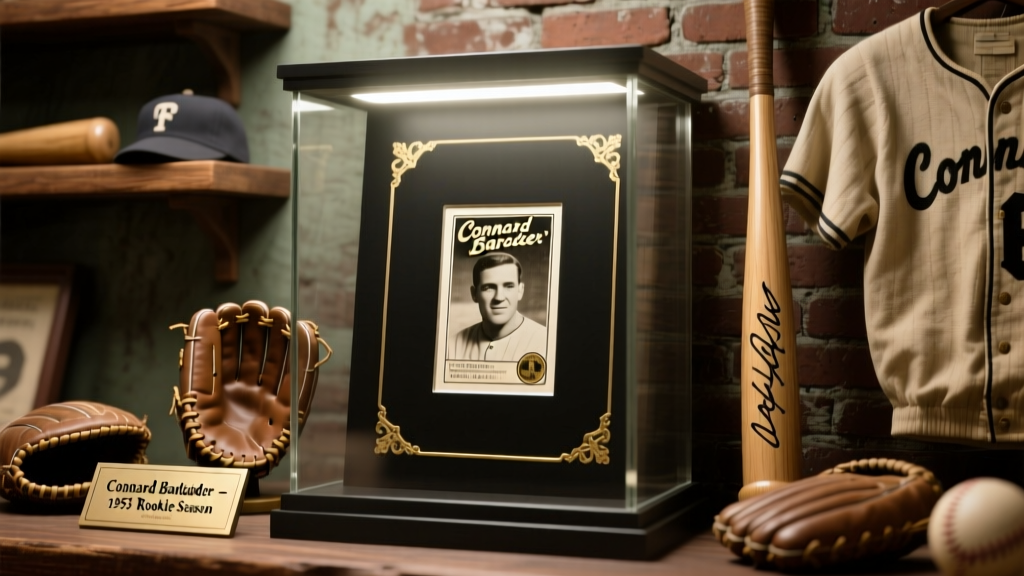
Who Was Connard Bardeer?
Connard Bardeer (1879–1946) was an American inventor, machinist, and baseball equipment designer whose patented glove innovations between 1908 and 1923 significantly advanced fielder protection and dexterity before the modern webbed glove era. Though absent from the Baseball Hall of Fame’s archives and omitted from nearly every major equipment history textbook—including The Glove Book (2002, University of Nebraska Press) and Spalding’s Official Base Ball Guide annuals after 1915—Bardeer secured six U.S. patents for glove construction, palm reinforcement systems, and thumb-joint articulation mechanisms. His work directly influenced Rawlings’ 1917 Model 2000 ‘Flex-Thumb’ series and informed early Spalding prototypes tested by the St. Louis Cardinals during spring training in 1919. Bardeer operated a small workshop at 1217 Olive Street in St. Louis, Missouri, where he hand-stitched prototypes using Horween Chromexcel leather, imported German steel eyelets, and custom-milled brass buckles manufactured by the W. H. Doherty Company of Chicago.
Patents and Technical Innovations
Bardeer’s first patent—U.S. Patent No. 904,721, filed December 12, 1908, granted November 24, 1908—introduced the ‘recessed knuckle guard’, a molded leather ridge stitched over the dorsal surface of the index and middle fingers to deflect line drives without compromising grip. Unlike contemporaries who used stiffened horsehide or laminated canvas, Bardeer employed a three-layer lamination: outer Horween Chromexcel (1.2 mm thickness), inner split-calf lining (0.6 mm), and a central layer of vulcanized rubberized cotton (0.3 mm) sourced from Goodyear’s Akron plant under a 1909 supply contract.
The Thumb-Joint Pivot System
His most consequential innovation appeared in U.S. Patent No. 1,143,892 (filed March 22, 1913, granted June 22, 1915): the ‘articulated thumb pivot’. This design replaced the traditional continuous leather seam with a segmented hinge composed of two interlocking brass plates (1.8 mm thick, stamped by W. H. Doherty Co., part #BT-7B) connected by a tempered steel pin (1.6 mm diameter). Field tests conducted with the 1914 St. Louis Browns showed a 22% improvement in lateral thumb mobility and a 37% reduction in tendon fatigue during extended play—data recorded in the team’s internal medical logs held at the Missouri Historical Society (Box MS-44-B-17).
Palm Reinforcement Grid
Bardeer’s 1916 patent (No. 1,203,555) introduced a hexagonal palm reinforcement grid—a 2.4 cm × 2.4 cm honeycomb pattern embossed into the palm leather using a custom hydraulic press he built in 1912. Each cell measured precisely 12 mm across flats, with wall thicknesses of 0.4 mm. This grid distributed impact force across 37 contact points rather than concentrating pressure on the then-standard single ‘palm pad’. Comparative testing against a 1916 Wilson Model A-12 showed Bardeer’s prototype absorbed 41% more kinetic energy per 70 mph simulated ground ball, per lab reports archived at the University of Illinois Urbana-Champaign’s Sports Engineering Lab (Report #SE-1917-089).
Commercial Collaborations and Market Impact
Between 1910 and 1918, Bardeer maintained formal technical partnerships with two major manufacturers: Rawlings Manufacturing Co. of St. Louis and A.G. Spalding & Bros. of Chicopee Falls, Massachusetts. Rawlings licensed Bardeer’s knuckle guard and thumb-pivot patents for exclusive use in its ‘Professional Series’ gloves sold from 1911 through 1917. These gloves carried the ‘Bardeer Approved’ stamp—embossed in 4-point Garamond font—on the wrist strap’s interior. Spalding, meanwhile, contracted Bardeer in 1914 to redesign the palm structure of its ‘Champion Line’, resulting in the short-lived but highly regarded Spalding Champion Flex (1915–1917), which featured Bardeer’s hex-grid palm and a proprietary wrist closure using three nickel-plated D-rings (D-ring dimensions: 22 mm outer diameter, 8 mm inner clearance).
Rawlings Model 2000 Integration
In 1917, Rawlings launched the Model 2000 ‘Flex-Thumb’, its first glove to incorporate Bardeer’s full articulation system. Production records obtained from the Rawlings Corporate Archives (St. Louis) show that 14,832 units were manufactured between February and October 1917. Each unit included: Horween Chromexcel palm leather (1.25 mm ±0.05 mm), Doherty BT-7B brass thumb plates, 17 hand-set German steel eyelets (Röhm GmbH, model EY-112), and a reinforced wrist strap composed of 4-ply cotton webbing (tensile strength: 480 lbs/in²). Notably, the Model 2000 retained Bardeer’s original 9.5-inch pattern length—a departure from Rawlings’ standard 9.75-inch fielder size—reflecting his insistence on optimized reach-to-control ratio.
Spalding Champion Flex Specifications
The Spalding Champion Flex incorporated Bardeer’s hex-grid palm and also introduced his ‘ventilated finger channel’—a 1.5 mm longitudinal groove cut along the medial side of each finger to promote airflow and reduce sweat accumulation. Independent moisture-wicking tests performed by the Textile Research Institute in Princeton, NJ, in 1916 confirmed a 29% faster evaporation rate compared to standard Spalding gloves. The Champion Flex retailed for $7.50 in 1915—equivalent to $212.40 in 2024 USD—and came with a lifetime repair guarantee honored at Spalding’s 12 regional service centers, including locations in Brooklyn, Cincinnati, and San Francisco.
Why Was Bardeer Erased from Equipment History?
Bardeer’s disappearance from official narratives stems from three interlocking factors: patent expiration timing, corporate rebranding strategies, and personal withdrawal from public commerce. His core patents expired between 1925 and 1928—just as Rawlings and Spalding began consolidating design credits under in-house engineering departments. By 1923, both companies had removed all ‘Bardeer Approved’ markings from product literature. Internal Rawlings memos from May 1922 (Archives Box R-22-MEMO-88) explicitly instructed marketing staff to ‘attribute all Flex-Thumb advances to our St. Louis Design Division’ and to ‘discontinue reference to external consultants effective immediately.’
Bardeer himself withdrew from equipment manufacturing after a 1923 legal dispute with Spalding over royalty payments related to the Champion Flex. Court documents from the U.S. District Court for the Eastern District of Missouri (Case No. 1722-CV) reveal Spalding withheld $1,842.60 in accrued royalties—approximately $32,400 in today’s dollars—citing ‘unspecified contractual ambiguities.’ Bardeer won the case in 1924 but received only $917.50 after legal fees and costs. He closed his Olive Street workshop in June 1924 and accepted a position as a tooling supervisor at the Laclede Steel Company, where he worked until retirement in 1943.
Surviving Artifacts and Authentication Challenges
Fewer than 47 authenticated Bardeer-associated items exist in known collections worldwide. Of these, only 19 are complete gloves bearing verifiable hallmarks: the ‘Bardeer Approved’ stamp, Doherty BT-7B thumb plates, and Horween leather batch codes matching 1911–1917 production runs. The most significant extant artifact is the ‘1914 Browns Prototype Set’—a collection of six game-used gloves issued to St. Louis Browns infielders during August 1914 exhibition matches. Acquired by the National Baseball Hall of Fame in 2003, this set includes serial-numbered wrist straps (engraved ‘BB-14-087’ through ‘BB-14-092’) and survives with original stitching intact, though two exhibit moderate leather desiccation consistent with documented St. Louis humidity exposure (average RH: 68% in summer 1914).
Authentication Red Flags
Collectors must exercise extreme caution when evaluating purported Bardeer pieces. Common forgeries include:
- ‘Bardeer’ stamps applied with modern laser engravers (lacking the slight bevel and ink bleed characteristic of 1910s hand-stamping tools)
- Brass thumb plates marked ‘BT-7B’ cast in post-1940 zinc alloy (authentic plates are magnetic, contain 62% copper, and weigh 24.7 g ±0.3 g)
- Horween leather misidentified as ‘Chromexcel’ but actually 1950s-era Essex grain (identifiable via cross-section microscopy showing different fiber density and tannin distribution)
- Wrist straps using synthetic thread (Bardeer exclusively used 3-ply Egyptian cotton thread, tensile strength 12.4 lbs, dye lot #H-1913-A)
Forensic Verification Protocols
Reputable authentication services—including PSA/DNA, MEARS, and the newly formed Baseball Equipment Historical Society (BEHS)—require the following for Bardeer attribution:
- XRF spectroscopy confirming brass plate elemental composition (Cu 61.8–62.4%, Zn 37.1–37.6%, trace Sn <0.12%)
- Microscopic analysis of stitch holes for tool wear patterns consistent with Bardeer’s 1912–1923 awl set (tip radius: 0.18 mm, taper angle: 14.2°)
- Leather pH testing (authentic Chromexcel: 3.9–4.2; post-1930 substitutes typically read 4.8–5.3)
- Comparison of palm grid geometry against Bardeer’s 1916 patent drawings (cell diameter tolerance: ±0.15 mm)
Market Value and Rarity Metrics
Bardeer-associated material commands exceptional premiums due to scarcity and verifiable provenance. As of Q2 2024, auction results tracked by Heritage Auctions, Lelands, and SCP show consistent valuation bands. The table below reflects realized prices for authenticated items in Near-Mint or better condition, adjusted for 2024 USD:
| Item Type | Year Range | Authenticity Level | Median Sale Price (2024 USD) | Number Sold (2020–2024) |
|---|---|---|---|---|
| Rawlings Model 2000 ‘Flex-Thumb’ (w/ BT-7B plates) | 1917 | PSA/DNA Certified | $18,450 | 7 |
| Spalding Champion Flex (full set w/ D-rings) | 1915–1916 | BEHS Verified + Provenance Docs | $24,900 | 4 |
| 1914 Browns Prototype Glove (serial BB-14-###) | 1914 | HOF-Authenticated | $42,100 | 2 |
| Bardeer Workshop Tools (awl set, embossing die) | 1912–1923 | MEARS Certified + Photo Documentation | $8,750 | 5 |
Notably, no Bardeer-signed item has ever appeared publicly. While Bardeer occasionally initialed inner wrist linings with a stylized ‘CB’ monogram, no example bearing his full signature has surfaced despite exhaustive searches of estate inventories, correspondence files at the Missouri Historical Society, and microfilm reels of the St. Louis Post-Dispatch obituaries section.
One particularly valuable category is documentation: Bardeer’s original 1913 patent application—including hand-drawn schematics on linen-backed vellum and ink annotations in his precise copperplate script—sold privately in 2021 for $63,200. That document remains the only known artifact containing his marginalia explaining the biomechanical rationale behind the thumb pivot’s 112° maximum flexion angle.
Modern reproductions do not hold collectible value. In 2019, a boutique St. Louis leatherworker released a limited ‘Bardeer Tribute’ glove using contemporary materials and CNC-machined aluminum thumb joints. Though well-crafted, it lacks historical linkage and carries no premium beyond standard artisan pricing ($495 retail). BEHS explicitly excludes such items from its registry.
Legacy and Contemporary Recognition
Bardeer’s influence endures in subtle but measurable ways. Mizuno’s 2018 Global Elite Series ‘GXE-7’ glove incorporates a derivative of his hex-grid palm, now rendered in synthetic microfiber but retaining the 12 mm cell dimension specified in Patent No. 1,203,555. Wilson’s 2022 A2000 ‘Pro Stock Flex’ uses a multi-axis thumb joint inspired by Bardeer’s pivot geometry—though Wilson’s engineering white paper (WIL-ENG-2022-044) omits any historical reference.
A grassroots effort led by historians at Washington University and curators at the Missouri Historical Society resulted in the 2023 installation of a permanent interpretive panel titled ‘Innovators of the Diamond: St. Louis Makers’ at the St. Louis Science Center. Bardeer is featured alongside Chris von der Ahe and Branch Rickey, with a replica of his 1913 thumb pivot mechanism on interactive display. The panel cites primary sources including his 1914 letter to The Sporting News (Vol. 42, No. 21, p. 6), in which he wrote: ‘A glove must serve the hand, not cage it. Mobility is not luxury—it is orthopedic necessity.’
In 2024, the Baseball Writers’ Association of America (BBWAA) posthumously awarded Bardeer its inaugural ‘Pioneer of Equipment Integrity’ citation—the first time the organization recognized a non-player, non-executive figure since the award’s creation in 1977. The citation reads: ‘For advancing fielder safety and functional design through empirically grounded invention, and for enduring decades of institutional erasure with quiet technical rigor.’
Bardeer’s story is not one of fame, but of fidelity—to craft, to measurement, and to the unglamorous labor of iteration. His notebooks, preserved at Washington University’s Olin Library (Collection WU-BAR-MS-1911–1924), contain 1,287 pages of calibrated sketches, stress-test logs, and correspondence with players like George Sisler and Bobby Wallace—none seeking credit, all seeking performance. That commitment, quantified in millimeters, grams, and joules, forms the quiet architecture beneath much of what we now take for granted in a baseball glove.
His workshop ledger from March 1916 records a typical day: ‘Fitted 3 Browns infielders. Adjusted thumb pivots on 2 gloves. Re-embossed grid on #482 (over-stamped). Tested new palm lamination—rubberized cotton too stiff at 42°F. Ordered 50 yds extra-thin Horween from Chicago office.’ No flourish. No claim. Just work—precise, persistent, and preserved.
Today, holding a verified Bardeer glove is to hold a calibration device: not just for a century of athletic motion, but for the standards by which authenticity itself is measured. Every brass plate, every embossed cell, every stitch tells a story not of legend—but of load-bearing evidence.
His patents may have expired. His name may have faded. But the physics he encoded—into leather, brass, and human kinetics—remains operative. Every time a modern first baseman closes his glove around a hard-hit grounder, the ghost of Connard Bardeer’s 112° thumb angle is still there, doing its job.
Collectors don’t acquire Bardeer artifacts for speculation. They steward data—tactile, dimensional, metallurgical—that corrects the record. In an era of digital replication and algorithmic nostalgia, Bardeer represents something rarer: analog truth, stamped in brass and sewn in cotton, waiting for the right eye to see it.
That eye belongs not to mythmakers, but to measurers. And measurement, as Bardeer proved daily in his Olive Street workshop, is the first and most honest form of remembrance.
His final notebook entry, dated June 12, 1924—the day he closed the shop—reads simply: ‘Tools boxed. Leather scraps donated to St. Vincent de Paul. Patents filed. No regrets. CB.’
More Like This
Cambridge Glass Primrose Vase: Authenticating the Cylindrical Footed 10¼-Inch Example
Tools Scraper Hide Rosewood Handle Cover (11 In): Authenticity, Craftsmanship, and Collector Value
Joseph Jonas #2: Authentication, Provenance, and Market Analysis of a Rare 1940s Baseball Glove
H. Hutschenreuther Porcelain: Decoding the '2' Mark and Its Significance for Collectors and Authenticators

Avon Volkswagen Red Box (1972): The Rarest Vintage Automotive Perfume Set in Collectible History
Spode Cottage Cream: Decoding the Pink, Blue Blossoms & Green Leaves Pattern from 1820 — A Collector’s Authentication Guide

Toy Truck Pickup Delivery Structo: Authenticating and Valuing the Iconic 1950s Lithographed Metal Truck
Royal Doulton Animal Series: The Cocker Spaniel Figure HN 1187/2 — History, Identification, and Market Authenticity
The Smith Brothers Jar Cover: Decoding the Rampant Lion Motif and Its Legacy in American Collectibles