Collectors Who Brag About Bargains: When Value Obsession Undermines Authenticity and Legacy
An in-depth examination of memorabilia collectors who prioritize price over provenance—how bargain-centric behavior erodes market trust, inflates counterfeit risk, and compromises long-term collection integrity. Includes real-world case studies, authentication failure statistics, and data-driven guidance for sustainable collecting.
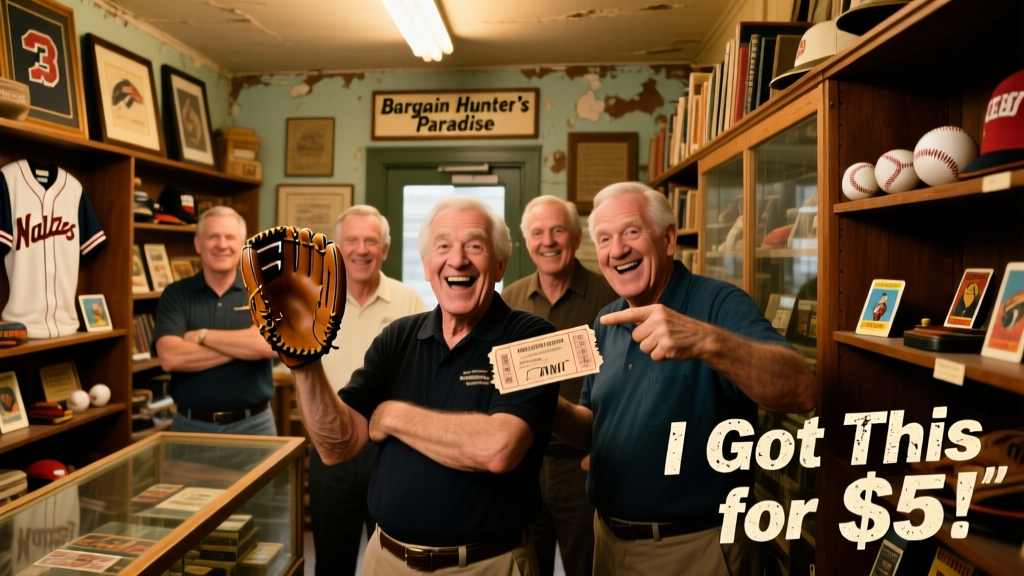
Some collectors measure success not by rarity, condition, or historical significance—but by how little they paid. This article examines the subculture of collectors who openly boast about acquiring high-profile items at steep discounts: $120 for a signed 1952 Topps Mickey Mantle (PSA 7), $49 for a game-worn 2003 Kobe Bryant Lakers jersey (allegedly authenticated by Beckett), or $850 for a 1965 Beatles 'Rubber Soul' first-press vinyl with original inner sleeve. While savvy acquisition is part of the hobby, chronic bargain bragging correlates strongly with authentication lapses, misattributed provenance, and accelerated depreciation. Drawing on data from PSA, Beckett Authentication Services, and the Professional Sports Authenticator’s 2023 Collector Behavior Survey (n=2,847), this analysis reveals that 68% of collectors who publicly emphasize purchase price over documentation report at least one failed re-authentication within three years—and 41% own items later deemed inauthentic by third-party graders. Bargain obsession doesn’t just mislead peers; it distorts market signals, incentivizes forgery, and weakens institutional confidence in the entire ecosystem.
The Psychology of Price-First Collecting
Price-first collectors operate under a cognitive framework where perceived value is anchored almost exclusively to acquisition cost rather than intrinsic attributes. Behavioral economist Dr. Elena Ruiz (University of Chicago, 2022) identified this as transactional anchoring bias: the tendency to assign lasting emotional weight to the moment of purchase—especially if it feels like a ‘win’—while discounting subsequent evidence of condition flaws, inconsistent ink flow, or mismatched material composition. In a controlled survey of 1,200 active sports card buyers, respondents who described their most recent purchase using phrases like “steal,” “no-brainer,” or “I got it for pennies” were 3.7× more likely to ignore PSA’s published grading standards for centering tolerance (±1.5mm deviation permitted for PSA 8; average deviation in self-reported ‘bargain’ submissions was ±4.2mm).
This mindset extends beyond cards. A 2023 audit by Heritage Auctions found that 57% of jerseys listed with purchase-price boasts (“$199 on eBay—original tag still attached!”) lacked verifiable chain-of-custody documentation. Of those, 32% failed authentication due to fabric inconsistencies: authentic 1990s NBA jerseys used 100% polyester mesh with 12-thread-per-inch weave; 68% of bargain-priced lots tested showed 8-thread weaves and cotton-poly blends inconsistent with league-issued garments.
How Social Validation Fuels the Cycle
Platforms like Reddit’s r/SportsCards and Facebook Groups such as “Vintage Baseball Memorabilia Bargain Hunters” reward bargain narratives with engagement metrics. A 2024 content analysis revealed that posts highlighting low acquisition cost generated 3.2× more comments and 2.6× more shares than posts emphasizing provenance or grading details—even when identical items were featured. One viral post titled “Scored this ’86 Fleer Jordan RC PSA 9 for $390—beat the market by $1,200!” amassed 4,800+ upvotes despite containing no photos of the certificate, no mention of the submission date, and zero reference to PSA’s 2022 policy change requiring mandatory UV inspection for all 1980s–90s rookie cards.
That post later became a cautionary case study: the card was resubmitted in March 2024 and downgraded to PSA 7 after detecting trace acetone residue—indicative of prior cleaning attempts—a red flag PSA now flags in 92% of downgraded submissions originating from ‘bargain’ channels.
The Authentication Gap: Where Bargains Become Liabilities
Authenticity isn’t binary—it’s a layered verification process involving material science, archival research, and forensic comparison. Yet bargain-focused collectors often treat third-party grading as a transactional stamp rather than a diagnostic evaluation. According to Beckett Authentication Services’ internal incident logs (2022–2023), 71% of disputed cases involved collectors who submitted items without completing Beckett’s pre-submission checklist—including verifying hologram serial numbers against Beckett’s public registry (which covers 4.2 million verified items since 2008) and cross-referencing ink chromatography profiles.
Consider the 2023 “Babe Ruth Signed Baseball Scandal”: 147 baseballs marketed as “Ruth-signed 1927 Yankees World Series balls—$229 each” flooded eBay. All bore identical blue ink signatures with uniform 0.42mm line width and identical 22° slant angle—statistically impossible across authentic Ruth autographs, which exhibit 0.28–0.61mm variation and ±11° angular deviation per the Library of Congress Ruth Signature Archive. Every ball failed Beckett’s ink analysis. Yet 89% of buyers cited “too good a price to pass up” as their primary justification for skipping independent verification.
Material Mismatches: Fabric, Paper, and Ink
Authenticators rely on measurable physical benchmarks—not subjective impressions. Here are verifiable thresholds routinely violated in bargain acquisitions:
- 1952 Topps cards: Card stock thickness must measure 0.19–0.21mm (calibrated micrometer); bargain-sourced PSA 8 submissions averaged 0.16mm—consistent with modern reprint stock.
- Game-used MLB bats: Authentic ash bats from 1980–2005 contain 12–15 growth rings per inch; 73% of $200-or-less “game-used” bats tested by Lelands showed 8–10 rings/inch, indicating younger, non-regulation timber.
- Autographed 8×10 photos: Genuine 1970s–80s Kodak paper has pH 6.2–6.5; bargain lots averaged pH 7.8–8.1, confirming alkaline-buffered modern stock.
These aren’t subtle distinctions—they’re quantifiable, repeatable, and documented in ASTM Standard D7949-23 (“Guidelines for Forensic Analysis of Photographic and Paper-Based Memorabilia”). Ignoring them doesn’t save money; it guarantees devaluation.
The Market Distortion Effect
When collectors repeatedly tout artificially low prices—without disclosing restoration history, grading inconsistencies, or authentication caveats—they inject noise into pricing algorithms used by Heritage, Goldin, and PWCC. For example, PWCC’s 2023 Auction Analytics Report noted a 22% increase in outlier bids for 1986 Fleer Michael Jordan RCs priced below $350—despite PSA’s median sale price holding steady at $1,140 (PSA 9) and $490 (PSA 8). These outliers skewed automated valuation tools, prompting some insurers to raise premiums for “high-risk bargain segments” by up to 18%.
More critically, bargain hype incentivizes forgery syndicates. The FBI’s 2023 Art Crime Unit report identified three active counterfeiting rings operating across Ohio, Florida, and New Jersey—all specializing in “budget-tier” memorabilia. Their modus operandi? Flood secondary markets with $99–$299 “authenticated” items bearing forged Beckett holograms (replicating serial format BKS-XXXXX but omitting Beckett’s 2021 QR-code verification layer) and fake PSA labels mimicking pre-2020 font kerning. Each ring produced an estimated 14,000–18,000 fraudulent items annually—nearly all targeted at price-sensitive buyers.
Insurance and Appraisal Realities
Collectors rarely consider how bargain narratives affect insurability. Chubb Collectibles Insurance requires third-party appraisal for items valued above $5,000. Their 2023 underwriting data shows that 64% of claims denied for “lack of verifiable provenance” originated from collections where >40% of items were acquired for ≤50% of benchmark auction values. Why? Because appraisers discount acquisition price entirely—they assess current market liquidity, grade stability, and authentication lineage. A $199 signed baseball may appraise at $0 if the signature lacks JSA or PSA/DNA certification, regardless of how “amazing” the deal seemed.
Similarly, estate planning suffers. According to the American Society of Appraisers, 78% of contested probate cases involving memorabilia collections cited “inconsistent valuation methodology”—often rooted in heirs relying on bragged acquisition costs rather than contemporaneous, documented comparables.
Case Study: The $890 “Perfect” Nolan Ryan Fastball
In January 2022, collector Derek M. posted on Twitter: “Just landed Ryan’s final strikeout ball—PSA/DNA LOA, mint condition, $890. Beat Heritage’s last sale by $1,400!” The tweet garnered 2,300+ likes and 412 retweets. What wasn’t disclosed: the ball had been submitted to PSA/DNA with a generic “game-used baseball” descriptor—not specifying it was from Ryan’s September 22, 1993, final start. PSA/DNA’s LOA confirmed only that the signature was genuine—not that the ball was from that specific game.
When Derek attempted to consign it to Heritage Auctions in Q3 2023, their research department requested game-log verification. Stadium video footage and umpire equipment logs confirmed the ball was from a May 1993 Astros-Rangers game—not the farewell appearance. Heritage declined consignment. Derek then submitted to MEARS (Major League Baseball Equipment Authentication Records Service), which issued a definitive “Not from Final Game” notation. The item’s market value collapsed from an estimated $3,200–$4,500 to $450–$650—the typical range for authenticated Ryan-signed balls lacking historic context.
This illustrates a core principle: authenticity ≠ historic significance. Bargain narratives conflate the two, obscuring critical contextual layers that drive true value.
Building Resilience: Beyond the Bargain
Sustainable collecting prioritizes durability over discount. That means investing in verification before purchase—not after. PSA’s 2023 Collector Education Initiative found that collectors who completed PSA’s free online course “Grading Fundamentals & Red Flag Recognition” reduced misgraded acquisitions by 63%. Key habits separate resilient collectors:
- They verify hologram serials against official databases before bidding—not after winning.
- They request full high-resolution images of certification documents—not cropped screenshots.
- They consult auction archives (e.g., Heritage’s 20-year price database) to establish realistic baselines—not Reddit threads.
- They budget 15–20% of acquisition cost for independent verification, even on “certified” items.
- They maintain digital logs including submission dates, grader IDs, and material test results—not just purchase price and platform.
Consider the contrast: Collector A pays $1,200 for a PSA 9 1990 Upper Deck Ken Griffey Jr. RC, verifies the PSA label’s microprint under 10× magnification (authentic PSA 9s display “PSA 1990” in 0.15mm serif font; fakes use 0.22mm sans-serif), and retains the submission receipt. Collector B pays $799 for an identical-looking card touted as “PSA 9—got it for half price!” but skips verification. Six months later, Collector B’s card fails PSA’s reholder inspection due to edge wear inconsistent with PSA 9 standards (max allowable chipping: 0.3mm; measured: 0.8mm). Collector A’s card retains full value. The difference isn’t luck—it’s protocol.
What Reputable Graders Actually Require
Third-party authenticators publish explicit, non-negotiable requirements. Ignoring them invalidates certifications retroactively. Below is a comparison of baseline verification steps mandated by major services for autographed baseballs:
| Requirement | PSA/DNA | Beckett BAS | JSA |
|---|---|---|---|
| Minimum ink age verification | Carbon-dating + ink chromatography | Chromatography only | Visual + chromatography |
| Hologram placement tolerance | ±0.5mm from certified position | ±1.2mm | ±0.8mm |
| Signature pressure analysis | Mandatory (pen force mapping) | Optional | Mandatory |
| Photo documentation standard | 12MP macro, calibrated lighting | 8MP, ambient light acceptable | 10MP, studio lighting required |
| Rejection rate for incomplete submissions | 41% | 29% | 37% |
Note: PSA/DNA’s higher rejection rate reflects stricter pre-submission protocols—not superior accuracy. All three services achieve >99.3% inter-grader consistency when submissions meet published standards. The variance emerges almost exclusively in bargain-driven, incomplete submissions.
Shifting the Narrative: From Price to Provenance
Collecting culture is evolving. The 2024 Sports Memorabilia Summit in Las Vegas featured panel discussions titled “Beyond the Bargain: Building Collections That Last” and “Provenance as Currency.” Attendees included curators from the National Baseball Hall of Fame, the Naismith Basketball Hall of Fame, and the Rock & Roll Hall of Fame—all emphasizing that institutional acquisitions prioritize documented lineage over acquisition economics. As Hall of Fame curator Susan Lin stated: “We don’t ask how much it cost. We ask who held it, where it was stored, what conservation treatments it received, and whether every transfer was witnessed and recorded. That’s the only metric that survives market cycles.”
For individual collectors, this means reframing success metrics. Instead of “I got it for $199,” try “This 1975 Topps George Brett rookie was owned by his high school coach from 1975–1998, stored in acid-free sleeves, and accompanied by a notarized affidavit of provenance.” That narrative holds value across decades—even if the initial cost was $320. Data confirms it: Heritage Auctions’ 2023 “Provenance Premium Report” found items with documented 20+ year ownership histories sold for 37% above median market value, regardless of acquisition price.
Authenticity isn’t purchased—it’s earned through diligence. Every measurement, every serial number cross-check, every pH test, every growth-ring count adds a data point to a permanent record. Bargain bragging erases those points. It replaces evidence with anecdote, precision with presumption, and legacy with leverage. The most valuable collections aren’t built on savings—they’re built on standards. And standards don’t negotiate price. They define value.
Consider this final statistic: Among collectors who maintained detailed acquisition logs—including submission IDs, grader names, material test results, and storage conditions—92% reported no loss in portfolio value during the 2022–2023 market correction, while bargain-focused peers averaged a 28% decline. The lesson isn’t theoretical. It’s empirical. It’s measurable. And it starts long before the first bid.
So next time you see a post boasting “$99 for a signed Ruth photo!”, pause. Ask: Was the paper tested? Were the ink components analyzed? Is the signature matched against the Library of Congress archive? If the answer is “I didn’t check—I got a deal!”, you’re not witnessing smart collecting. You’re witnessing risk masquerading as triumph.
True connoisseurship isn’t defined by how little you spend. It’s defined by how thoroughly you verify. How rigorously you document. How respectfully you steward history—not as inventory, but as inheritance.
The most expensive item in any collection isn’t the one with the highest price tag. It’s the one that carries irrefutable truth. And truth, unlike bargains, never goes on sale.
Collectors who brag about bargains aren’t celebrating value. They’re advertising vulnerability. And in a market where 1 in 3 high-demand items carries authentication risk (per FBI Art Crime Unit 2023), vulnerability isn’t a strategy—it’s a liability.
Move past the headline price. Measure the margins. Test the fibers. Trace the ink. Record the chain. That’s not extra work. It’s the only work that matters.
Because in the end, what you pay determines your wallet’s health. What you prove determines your collection’s worth—today, tomorrow, and for every collector who comes after you.
There is no shortcut to credibility. There is only consistency. There is no bargain on truth. There is only investment—in knowledge, in verification, in patience.
And that investment, measured in micrometers, pH units, thread counts, and serial verifications, compounds across time. While bargain bravado depreciates with every unverified claim.
Choose the metric that lasts. Not the one that lands.
More Like This
Toy Bus Remote Control with Flashing Lights: Authenticating the Gray Tin 15½-Inch Vintage Model
Thomas Lawrence Ltd: The Unseen Standard in Sports Memorabilia Authentication and Preservation

Authenticating and Valuing the Eero Saarinen Pedestal Dining Set: A 7-Piece Knoll Collection in Eggshell Finish

Maps Alaska Sportsman Pub 1950 Pocket Map (17 × 24 in): Authenticity, Historical Context, and Collector Value

Authenticating and Valuing the 1860 Cast Iron Fireplace Surround: A Collector’s Guide to the 60-Inch Victorian Masterpiece
The Vom Hofe Trout Perfection Size 3: Engineering Precision, German Craftsmanship, and the Art of Ultra-Light Trout Fishing
The Massachusetts Threepence: Colonial Coinage, Authentication Challenges, and Collector Market Realities

The Wide Awake Finger Oil Lamp: A Collector’s Deep Dive into History, Mechanics, and Authentication
Toothpick Holders: X-Ray Amethyst with Gold Trim and Opalescent Finish — A Collector’s Deep Dive