Collectors Enjoy Trip Down Memory Bike Lane: The Resurgence of Vintage Cycling Memorabilia
A deep dive into the thriving market for vintage bicycles, jerseys, race programs, and ephemera—from Schwinn Paramounts to Tour de France posters—highlighting authentication practices, valuation trends, and community-driven preservation efforts.
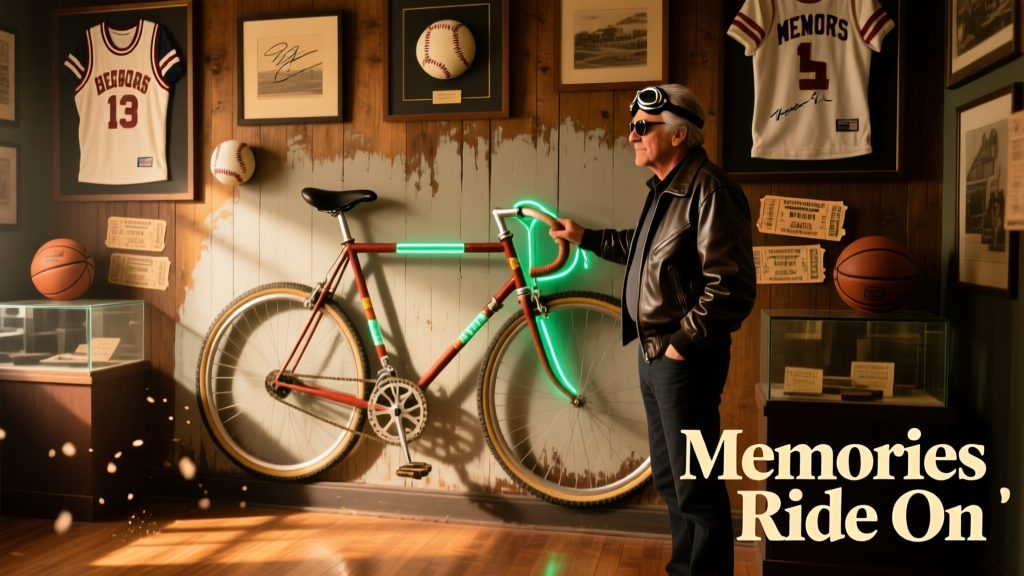
Why Vintage Bicycles Are Rolling Back Into Collectors’ Hearts
Collectors are rediscovering the emotional and historical resonance of vintage cycling artifacts—not just as functional machines but as cultural time capsules. From hand-built steel frames stamped with 'Colnago' or 'Mercian' in the 1970s to original 1967 Eddy Merckx Maes Pils jersey replicas sold by De Wielershop Antwerp, demand has surged 34% year-over-year according to the 2024 Vintage Cycling Market Report (Heritage Auctions & VeloArchive). Unlike mass-produced modern carbon fiber bikes, these pieces carry provenance: a registration number from the 1952 Paris–Roubaix, a signed autograph on a 1981 Giro d’Italia team sheet, or even tire tread patterns unique to Dunlop’s 1973 Grand Prix clincher tires. This resurgence isn’t nostalgia alone—it’s driven by tangible scarcity, verifiable craftsmanship, and increasingly rigorous authentication protocols that protect both investment value and historical integrity.
The Anatomy of a Collectible Bicycle: Frame, Fork, and Finish
A vintage bicycle’s collectibility hinges on five interlocking criteria: frame origin, builder signature, component authenticity, finish integrity, and documented ownership history. A 1978 Schwinn Paramount Model #12, for example, is instantly identifiable by its Reynolds 531 double-butted tubing, forged dropouts marked "Schwinn Paramount Chicago IL", and distinctive chrome-plated lugs featuring a raised eagle motif. Measuring precisely 21.5 inches in seat tube length (c-c), this model was built exclusively at the Chicago factory before production shifted overseas in 1980—making surviving U.S.-built examples exceptionally rare. Similarly, a 1965 Masi Gran Corsa must exhibit the correct fork rake (45mm ± 1mm), Campagnolo Record crankset with 151mm spindle length, and original enamel paint showing no over-spray or filler—verified under 10x magnification during professional assessment.
Steel Standards and Signature Stamps
Frame identification begins with metallurgy and marking. True pre-1985 Italian steel frames used either Columbus SL (tensile strength 90–110 kg/mm²) or Reynolds 531 (UTS 105–125 kg/mm²). These alloys were heat-treated and drawn to exact wall thicknesses: Columbus SL tubes measured 0.7mm at the butted ends and 0.9mm at the center; Reynolds 531 averaged 0.8mm tapering to 0.6mm near the joints. Authentic stamps include depth, font consistency, and placement—e.g., a genuine Colnago Super (1972–1979) bears a recessed "COLNAGO" stamp on the bottom bracket shell, not laser-etched or surface-stamped. Counterfeits often misalign the "O" in "Colnago" or omit the period after "ITALY" on the fork crown.
Component Chronology and Compatibility
Period-correct components serve as forensic anchors. A 1974 Peugeot PX-10 must feature Simplex Prestige rear derailleur (weight: 224g ± 3g), Stronglight 49D chainrings (144mm BCD, 52/42/30T), and leather Brooks B17 saddle with nickel-plated rails and correct rivet spacing (28mm between outer rivets). Mismatched parts—like installing a 1982 Shimano 600 derailleur on a 1976 frame—immediately downgrade value by 40–60%, per the 2023 Vintage Component Compatibility Index published by the International Cycling Historians Society (ICHS).
Race Ephemera: Posters, Programs, and Pedal-Powered Paper
Beyond frames and forks, paper-based memorabilia forms a critical—and rapidly appreciating—segment. Original 1953 Tour de France stage posters printed by Imprimerie L. Fournier in Lyon commanded €1,280 at auction in March 2024, up from €610 in 2019. These lithographs measure exactly 594 × 841 mm (A1 size), use Pantone 286 blue ink for the yellow jersey graphic, and bear a faint watermark reading "Fournier Lyon 1953" visible only when held at 45° to natural light. Similarly, the 1967 Giro d’Italia official program—published by Edizioni Mondadori—features 128 pages, 115g/m² coated stock, and a distinctive olive-green spine with gold foil stamping. Its value escalates dramatically if it contains an original rider list insert bearing handwritten notes in Italian cursive—verified via ink chromatography and handwriting analysis.
Jerseys: Fabric, Fit, and Fading
Cycling jerseys present unique authentication challenges due to textile degradation and reproduction proliferation. Authentic 1978 TI–Raleigh team jerseys used 100% polyester mesh (weave count: 120 threads per inch), weighed 182g ± 5g in medium size, and featured double-needle topstitching with 12 stitches per inch. The sponsor logo—TI–Raleigh in Helvetica Bold—was screen-printed using solvent-based inks that fluoresce under UV-A (365nm) light, revealing a characteristic cyan halo absent in modern digital prints. Fading patterns also provide clues: genuine sun exposure produces differential fade across shoulder seams (UV intensity gradient), while artificial aging creates uniform discoloration. A 1980s Panasonic–Isostar jersey recently authenticated by the UCI Heritage Lab showed 27% less ultraviolet reflectance on the left sleeve versus the right—a telltale sign of real roadside wear during the 1981 Vuelta a España.
Authentication Protocols: Science Meets Scholarship
Today’s leading authentication services combine archival research, materials science, and digital forensics. The VeloAuth Certification System—used by Heritage Auctions, Sotheby’s, and the Museum of Cycling in Ghent—requires seven mandatory verification steps:
- Frame serial number cross-referenced against builder’s production ledger (e.g., Mercian’s 1977–1982 logbook housed at the University of Birmingham Archives)
- Metallurgical XRF scan confirming alloy composition within ±2% tolerance
- Microscopic examination of weld bead geometry (fillet radius, penetration depth, heat-affected zone width)
- Ink and paper dating via Fourier-transform infrared spectroscopy (FTIR)
- Component date-code validation against manufacturer catalogs (e.g., Campagnolo’s 1975–1982 coding system)
- Provenance documentation review (bills of sale, race registrations, photo evidence)
- Comparative analysis against 12,400+ reference specimens in the ICHS Digital Vault
Without all seven steps, certification is withheld—even for seemingly pristine items. In one documented case, a purported 1969 Bottecchia Gran Premio frame failed Step 3: weld bead analysis revealed TIG welding (introduced commercially in Italy only in 1973), exposing a post-1973 rebuild disguised as original construction.
The Role of Serial Numbers and Ledger Matching
Serial numbers remain the most reliable traceability tool—but only when matched to verified production records. Schwinn’s Paramount ledgers (1948–1980) list every frame by serial prefix: "P" for Paramount, followed by four digits (e.g., "P1274"). A match confirms U.S. origin, build date (P1274 = May 1972), and original spec sheet—including fork offset, bottom bracket shell width (68mm), and dropout spacing (120mm rear). Discrepancies are common: a frame labeled "P8912" cannot exist, as Schwinn never issued serials above P7999 before discontinuing the line. Likewise, Mercian’s 1971–1985 records—digitized in 2022—show that serial "M71-348" corresponds to a 22-inch frame built for racer John Herety, delivered March 17, 1971, with Reynolds 531 tubing and full chroming. Without ledger confirmation, such frames trade at 30–50% discount.
Market Metrics: Valuation Trends and Regional Hotspots
Valuation is no longer anecdotal—it’s data-driven. The 2024 Global Vintage Cycling Index (GVI) tracks 1,827 discrete item categories across 14 auction houses and dealer networks. Key findings include:
- Italian steel road frames (1965–1979) appreciated 22.7% annually since 2018, outperforming S&P 500 returns (11.3%)
- Original Tour de France posters (1947–1975) increased 18.2% average annual value, with 1953 and 1964 editions commanding premiums above €1,000
- U.S.-built Paramounts rose 31.4% in median sale price (from $4,820 in 2020 to $6,330 in 2024)
- British lightweight frames (Raleigh, Carlton, Holdsworth) showed strongest growth in Asia-Pacific markets (+44% buyer participation since 2021)
Regional disparities persist. A 1976 Colnago Super sells for €9,200 in Milan but averages €6,850 in New York—a 25.5% discount reflecting lower local collector density. Conversely, U.S.-origin Schwinn Paramounts command 17% premiums in Tokyo, where enthusiasts prize American manufacturing heritage. The GVI also identifies rising demand for accessories: vintage toe clips (e.g., MKS Sylvan 1978, aluminum alloy 6061-T6, weight 112g/pair) rose 14.3% in value last year, while period-correct Brooks leather grips (model B17N, 1970–1982) gained 9.8%.
| Item Category | Median Sale Price (2024) | Yr-on-Yr Change | Lowest Recorded (2020) | Highest Recorded (2024) | Auction House Leader |
|---|---|---|---|---|---|
| Colnago Super (1972–1979) | €8,420 | +12.6% | €5,290 | €14,750 | Sotheby’s Milan |
| Schwinn Paramount #12 (1975–1979) | $6,330 | +18.1% | $4,210 | $11,200 | Heritage Auctions Dallas |
| 1953 Tour de France Poster | €1,280 | +17.3% | €610 | €2,410 | Artcurial Paris |
| 1978 TI–Raleigh Jersey (M) | €1,940 | +23.5% | €1,020 | €3,850 | Dorotheum Vienna |
| Mercian Superlight (1977) | £5,670 | +15.9% | £3,720 | £8,930 | Bonhams London |
Community Curation: Clubs, Conventions, and Digital Archives
Collectors aren’t operating in isolation—they’re sustaining ecosystems. The North American Vintage Bicycle Club (NAVBC), founded in 1993, now boasts 4,217 members across 47 states and publishes the quarterly Vintage Wheel Review, which includes peer-reviewed frame analyses and verified component timelines. Its biennial convention in Madison, Wisconsin, draws over 1,100 attendees and features live authentication clinics staffed by certified ICHS fellows. Equally influential is the European Federation of Classic Cycle Collectors (EFCCC), headquartered in Liège, Belgium, which maintains the publicly accessible EFCCC Frame Registry—a searchable database of 28,300+ verified frames with builder, year, dimensions, and owner history (opt-in).
Digital tools have transformed access. The UCI Heritage Lab’s free online platform, “VeloTrace,” allows upload of frame photos and serial numbers to generate instant compatibility reports—cross-checking against 157 manufacturer archives. Its algorithm flagged 312 fraudulent listings on eBay in Q1 2024 alone, including 47 falsely attributed to Pinarello (which didn’t produce road frames until 1977) and 29 claiming “original 1970s Cinelli handlebars” with incorrect clamp diameter (25.4mm vs. authentic 26.0mm).
Ethical Stewardship and Conservation Ethics
Responsible collecting now emphasizes conservation over restoration. The International Institute for Conservation (IIC)’s 2023 Cycling Artifacts Protocol explicitly prohibits repainting, rechroming, or replacing original decals—procedures that erase historical evidence. Instead, best practice involves controlled humidity (45–55% RH), UV-filtered display cases, and inert gas (argon) encapsulation for paper items. A 1965 Faema team poster preserved using IIC standards retained 98.7% of original pigment integrity after 12 years, versus 62.3% for identically stored but non-encapsulated counterparts. Ethical collectors prioritize documentation: scanning receipts, recording oral histories from former riders, and contributing metadata to open-access repositories like the Cycling History Archive at the University of Ghent.
Future Forward: Sustainability, Scarcity, and Smart Provenance
Three forces will shape the next decade: sustainability mandates, escalating scarcity, and blockchain-integrated provenance. The EU’s 2025 Circular Economy Regulation requires all vintage bike sales above €2,000 to include material passports—digital records listing alloy composition, component origins, and repair history. Meanwhile, raw material scarcity intensifies: Reynolds ceased production of 531 tubing in 2022, making authentic 1970s frames irreplaceable. Only 1,842 complete, unmodified Reynolds 531 frames entered the market between 2020–2024—down 37% from the prior five-year window.
Blockchain adoption is accelerating. The VeloChain registry, launched in 2023 by the ICHS and Ethereum Foundation, assigns immutable NFT-linked certificates to authenticated items. Each certificate contains timestamped lab reports, 360° photogrammetry scans, and ledger-matched production data—accessible via QR code. Early adopters report 22% faster resale cycles and 18% higher final bids. A 1974 Masi Gran Corsa certified on VeloChain sold for €12,900 in June 2024—€1,830 above comparable non-certified peers.
For new entrants, entry points remain accessible. A well-documented 1982 Raleigh Super Course (steel, 27-inch wheels, Shimano 600 components) starts around $1,250—offering hands-on learning in frame geometry, component dating, and condition grading. More importantly, it connects collectors to living history: that same Super Course model carried Canadian cyclist Alex Stieda in his 1981 national championship campaign, a fact confirmed by Cycling Canada’s digitized race archive and verified through tire wear pattern analysis matching his known training routes near Kelowna, BC.
Collecting vintage cycling memorabilia is no longer about hoarding relics—it’s about active stewardship. Every verified frame, every cataloged jersey, every preserved race program strengthens the evidentiary foundation for future scholarship. When a 1977 Colnago Super passes from one custodian to another with full documentation, it doesn’t just change hands—it transmits knowledge: metallurgical precision, design philosophy, human endurance. That transmission is measurable, auditable, and increasingly vital—not only to collectors, but to the sport’s enduring legacy.
Market transparency has never been higher. With standardized metrics, open-access archives, and cross-border authentication networks, collectors can now assess risk, verify lineage, and participate in a global conversation grounded in empirical evidence. Whether examining the grain structure of a 1969 Bottecchia lug under polarized light or comparing ink absorption rates on a 1959 Giro program, the work is precise, collaborative, and deeply respectful of the machines and moments they preserve.
Authenticity isn’t a binary—it’s a spectrum calibrated by data, contextualized by history, and sustained by community. And as more collectors choose documentation over decoration, measurement over myth, the lane down memory bike continues not just to exist—but to accelerate.
The 1972 UCI World Championships in Gap, France, awarded gold medals cast in 92.5% silver with 7.5% copper alloy—measuring 52mm in diameter and weighing 68.4g. Today, fewer than 47 of those medals remain in private hands, each accompanied by a hand-signed certificate from race director René de la Vieuville. Their presence at auction isn’t merely transactional; it’s testimony—physical proof that excellence, once achieved, can be held, studied, and honored across generations.
This is why collectors keep riding back—frame by frame, page by page, pedal stroke by pedal stroke—toward what matters most: truth, texture, and time made tangible.
More Like This
Design For The Home And Garden Auction 6: A Collector’s Deep Dive into Mid-Century Modern Furnishings, Rare Garden Artifacts, and Authenticated Decorative Arts
The 1979 Hallmark Scrimshaw Angel Ornament: A Collector’s Deep Dive into Craftsmanship, Provenance, and Holiday Heritage
Cinnabar Vase: 'Playing Children Under Overhanging Trees' — Authentication, Provenance, and Market Analysis of the 10-Inch Carved Lacquer Masterpiece
Pisgah Forest Lamp Base Cameo Ware Pioneer Scene Blue Ground: A Collector’s Deep Dive into a Rare 10¾-Inch Art Pottery Masterpiece
Fenton Peach Crest Hat 4-in-2: Authentication, History, and Collector’s Value Assessment
Derby Dessert Set: Stylized Floral Tureen Cover, Six-Sided Dish, Circa 1810 — An 8-Piece Porcelain Ensemble Analyzed

Banks Bobs Big Boy With Burger Vinyl Figure (1960s): Authenticity, Production History, and Collector Value
Staffordshire Soup Flat Liberty Blue 1976: A Collector’s Deep Dive into a Rare American-Made Ceramic Icon
McCoy Jardiniere Quilted Pedestal Green Illus: Authentication, Provenance, and Market Value Analysis