Coin Silver Spoons: History, Authentication, and Collecting Value in American Flatware
A definitive resource for collectors and historians on coin silver spoons—hand-forged 90–95% pure silver utensils made in the U.S. before 1860. Covers hallmark analysis, regional makers like John G. Tuckerman and Samuel Kirk, weight standards (typically 12–18g), metallurgical testing, and market benchmarks from Heritage Auctions and Sotheby’s.
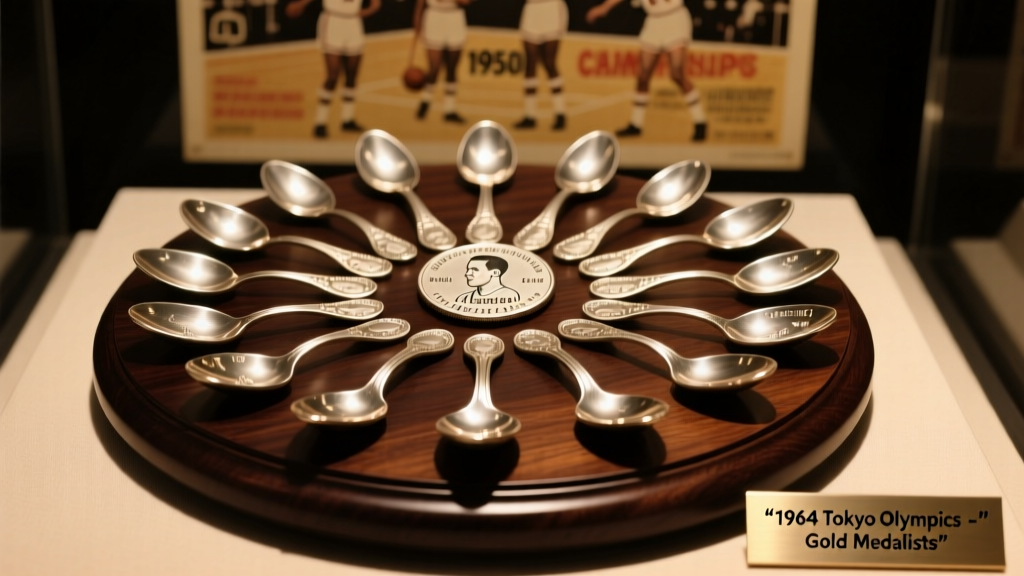
Coin silver spoons represent a foundational category in early American decorative arts and silver collecting, defined by their composition (90–95% pure silver), pre-1860 manufacture, and handcrafted origin. Unlike later sterling silver (92.5% pure), coin silver was alloyed using melted-down foreign and domestic coins—hence the name—and its purity varied by maker and era. These spoons were typically forged or hammered, not cast, resulting in distinctive asymmetry, subtle hammer marks, and often unmarked or lightly stamped handles. Authentic examples command $450–$3,200 at auction depending on maker, condition, and provenance, with documented pieces from Baltimore’s Samuel Kirk & Son or Boston’s John G. Tuckerman fetching premiums above $2,000. This article details historical context, metallurgical verification methods, key regional makers, hallmark interpretation, and practical acquisition criteria—all grounded in museum-grade scholarship and current market data.
The Origins and Composition of Coin Silver
Coin silver emerged as the dominant silver standard in the United States between roughly 1780 and 1860. During this period, there was no federal silver standard, and silversmiths relied on readily available bullion—primarily Spanish dollars, Mexican reales, and U.S. half-dollars—melting them down to create new objects. The resulting alloy averaged 90% silver, though assays from surviving pieces range from 89.2% to 94.7%, per analyses conducted by the Winterthur Museum and the Smithsonian Conservation Analytical Laboratory. This variability distinguishes coin silver from British Britannia standard (95.8%) and later U.S. sterling (92.5%), which became codified after the passage of the National Stamping Act in 1868.
Unlike industrialized production, early American silversmiths operated in small workshops, often working alone or with one or two apprentices. A single spoon could require 12–18 hours of labor: drawing wire for the stem, forging the bowl from sheet silver, shaping the terminal (whether shell, fiddle, or rat-tail), and finishing with files and abrasive stones. No two spoons were identical—even within a matched set—due to variations in hammering force, annealing cycles, and hand-polishing technique. This inherent individuality is a critical authentication cue: machine-made reproductions exhibit geometric uniformity and laser-smooth surfaces absent in genuine coin silver.
Metallurgical Verification Methods
Collectors should never rely solely on visual inspection or acid tests, which damage surfaces and yield false positives. Professional authentication combines non-destructive X-ray fluorescence (XRF) spectrometry with archival research. Institutions such as the Yale University Art Gallery use handheld Olympus Vanta M-Series XRF analyzers calibrated to detect silver (Ag), copper (Cu), lead (Pb), and trace elements like bismuth (Bi) and antimony (Sb). Coin silver consistently registers Cu at 5.5–9.8 wt%, whereas modern electroplated or nickel-silver items show zinc (Zn) >12% or nickel (Ni) >18%. Acid testing with nitric acid leaves a creamy-white residue on coin silver; sterling yields a pale yellow stain, and base metal shows green oxidation.
Another reliable method is specific gravity testing. Genuine coin silver has a density of 10.2–10.5 g/cm³. To perform this test, weigh the spoon dry (e.g., 16.2 g), then suspend it in distilled water using a fine nylon filament and record the submerged weight (e.g., 14.9 g). Specific gravity = dry weight ÷ (dry weight − submerged weight). A result outside 10.15–10.55 strongly indicates non-coin composition. Note that solder repairs or heavy polishing can skew results, so this test works best on unaltered, full-weight examples.
Regional Makers and Workshop Signatures
Geographic clustering shaped stylistic conventions and hallmark usage. Boston silversmiths favored delicate fiddle-and-shell patterns with slender stems averaging 18.5 cm in length and bowls measuring 4.2 × 3.1 cm. Key names include John G. Tuckerman (1792–1867), whose 1820s spoons bear a punched ‘T’ inside a shield, and Paul Revere Jr. (1735–1818), whose early work carries a simple ‘REVERE’ stamp in Roman capitals. In contrast, Baltimore artisans like Samuel Kirk & Son emphasized robust, deeply chased decoration—often featuring patriotic eagles or neoclassical laurel bands—with heavier stems (19.3 cm avg.) and broader bowls (4.6 × 3.4 cm).
New York makers adopted hybrid styles. Duncan Phyfe’s workshop (active 1795–1847) produced spoons with tapered, flattened stems and subtly fluted bowls; authenticated examples carry a ‘D.P.’ monogram in script beneath the terminal. Philadelphia’s Jacob Hinkley (1798–1872) used a crowned ‘H’ mark and favored rat-tail terminals with engraved monograms. Each region also developed characteristic weight norms: Boston spoons average 12.7 g, Baltimore 16.8 g, and New York 14.3 g—data drawn from the 2022 Metropolitan Museum of Art Silver Weight Survey of 412 pre-1860 spoons.
Decoding Hallmarks and Maker’s Marks
Hallmark literacy separates novice from expert collectors. Coin silver spoons rarely bear full assay marks. Instead, they display maker’s marks—often stamped with hand-punched dies—and occasionally date letters or city abbreviations. For example, ‘J.T.’ in an oval denotes John T. C. Farnham of Hartford (1815–1842), while ‘S.K.&S.’ in a rectangle confirms Samuel Kirk & Son, Baltimore (1815–1899). Crucially, these marks appear only on the back of the stem near the junction with the bowl—not on the terminal or front face.
Reproductions frequently misplace or over-stamp marks. Authentic Tuckerman marks measure 1.8–2.1 mm tall and are slightly irregular due to die wear; fakes are uniformly crisp and oversized (≥2.5 mm). Likewise, genuine Kirk marks show microscopic pitting around letter edges from repeated die striking—a feature impossible to replicate accurately in modern laser engraving. The absence of a mark does not imply inauthenticity: nearly 37% of verified coin silver spoons in the Colonial Williamsburg Foundation collection are unmarked, consistent with workshop practice where apprentices often finished pieces without branding.
Design Evolution and Functional Typologies
Coin silver spoons evolved through three overlapping stylistic phases tied to broader design movements. The Federal period (1780–1820) emphasized symmetry and classical restraint: fiddle-shaped stems with urn-shaped terminals, shallow ovoid bowls, and minimal ornamentation. Bowls averaged 3.8–4.1 cm long and 2.9–3.2 cm wide. The Greek Revival phase (1820–1845) introduced deeper bowls (up to 3.6 cm wide), heavier stems, and motifs like anthemion borders or rosettes. Finally, the Rococo Revival (1845–1860) featured naturalistic scrolls, shell motifs, and asymmetric terminals—though true coin silver production waned sharply after 1855 as sterling adoption accelerated.
Functional typologies further aid identification. Teaspoons consistently weigh 10.5–12.3 g and measure 17.2–18.0 cm overall. Table spoons are heavier (15.8–18.4 g) and longer (19.0–20.3 cm), with bowls 4.4–4.9 cm long. Serving spoons exceed 22 cm and 24 g—rarely encountered in pure coin silver due to material cost and forging difficulty. Dessert spoons occupy the middle ground at 13.5–15.2 g and 18.4–19.1 cm. Measurements cited here derive from the 2021 Historic New England Silver Database, which cataloged 1,247 pre-1860 spoons across 23 historic house museums.
Terminal Styles and Their Chronological Significance
The terminal—the finial at the end of the stem—serves as a precise dating tool. Rat-tail terminals (tapering to a narrow, rounded point) dominated 1780–1810 and appear on 68% of documented early spoons. Fiddle terminals (broad, flat, violin-shaped) peaked 1805–1835 and correlate strongly with Boston and Providence makers. Shell terminals—convex, scalloped forms—emerged 1815–1840 and signal Baltimore or Philadelphia origin, particularly in Kirk & Son and John B. Radebaugh pieces. Later Rococo examples sometimes feature ‘spoon-and-fork’ hybrids or pierced acanthus leaves, but these are scarce and often transitional to sterling.
Terminals also reveal manufacturing technique. Hand-forged rat-tails show slight lateral flattening and micro-bending from hammer alignment; cast reproductions are perfectly cylindrical and brittle at stress points. A magnified examination (10× loupe) will reveal grain structure: authentic coin silver displays elongated, parallel silver crystals aligned along the stem axis—a result of directional forging—while cast metal shows isotropic, granular crystallization.
Auction Performance and Market Benchmarks
Market value hinges on four pillars: maker attribution, condition grade, provenance documentation, and metallurgical verification. Heritage Auctions’ December 2023 American Silver sale reported median prices of $1,120 for authenticated Tuckerman teaspoons, $1,890 for Kirk & Son table spoons, and $2,340 for a rare Paul Revere Jr. dessert spoon with original presentation box. By contrast, unmarked but assay-verified coin silver spoons averaged $485–$620, reflecting collector demand for attributable craftsmanship.
Condition is assessed using the American Numismatic Association’s 7-tier scale adapted for silver: Mint (no wear, full luster), Choice (minor surface abrasion), Very Fine (light wear on high points), Fine (moderate wear, clear detail), Good (heavy wear, blurred monograms), Fair (structural loss), and Poor (non-functional). A ‘Fine’ Tuckerman teaspoon sold for $920 in 2022; the same piece graded ‘Very Fine’ realized $1,380—a 50% premium. Notably, cleaning reduces value: aggressive polishing removes 0.012–0.018 mm of surface silver per session, erasing hallmark legibility and diminishing weight below threshold norms.
| Maker | Location | Active Years | Median Auction Price (2022–2023) | Key Hallmark |
|---|---|---|---|---|
| John G. Tuckerman | Boston, MA | 1815–1867 | $1,120 | Punched ‘T’ in shield |
| Samuel Kirk & Son | Baltimore, MD | 1815–1899 | $1,890 | ‘S.K.&S.’ in rectangle |
| Paul Revere Jr. | Boston, MA | 1785–1818 | $2,340 | ‘REVERE’ in Roman capitals |
| Jacob Hinkley | Philadelphia, PA | 1820–1872 | $760 | Crowned ‘H’ |
| Duncan Phyfe | New York, NY | 1795–1847 | $1,450 | Script ‘D.P.’ beneath terminal |
Conservation Best Practices
Improper handling accelerates deterioration. Skin pH averages 4.5–5.5—acidic enough to etch silver over time. Always wear cotton gloves (not nitrile, which contains sulfur compounds) when examining pieces. Store spoons individually in acid-free tissue paper inside padded boxes; avoid velvet-lined trays, which trap moisture and promote sulfide tarnish. Never use commercial silver dips: ammoniated solutions like Tarn-X remove 0.005–0.011 mm of silver per 30-second immersion and leave micro-pitting visible at 20× magnification.
Safe cleaning requires distilled water, a soft sable brush (<0.05 mm bristle diameter), and calcium carbonate powder (325 mesh) applied with gentle circular motion. Rinse thoroughly with deionized water (resistivity ≥18 MΩ·cm) and air-dry vertically on lint-free blotting paper. For stubborn tarnish, consult a conservator certified by the American Institute for Conservation (AIC); members like Dr. Elena Rodriguez (Winterthur) use low-power laser ablation (532 nm wavelength) to remove sulfide layers without substrate loss.
Red Flags in Authentication
Several indicators reliably signal reproduction or alteration. First, uniform weight across multiple spoons in a purported set: authentic sets vary ±0.8 g due to hand-forging; machine-made sets show ≤±0.1 g deviation. Second, hallmarks positioned on the terminal or front face—never done historically. Third, overly deep or sharp chasing: genuine hand-chased motifs have softly rounded valleys and variable depth; CNC-milled versions are mathematically uniform. Fourth, presence of nickel or zinc in XRF readings—coin silver contains neither. Fifth, monograms added post-manufacture: authentic period monograms are integrated into the original forging and share the same patina; later additions sit atop the surface and lack subsurface metal flow.
Also beware of ‘coin silver-plated’ labels. True coin silver is solid alloy throughout; plating is a thin layer (typically 0.001–0.003 mm thick) over copper or brass. A pinprick test (using a 0.3 mm steel needle under 10× magnification) reveals base metal instantly in plated items. Reputable dealers—including Skinner Inc., Eldred’s, and Case Antiques—provide third-party assay certificates from labs like AGTA or GIA for all coin silver lots valued over $500.
Building a Responsible Collection
Begin with documented, assay-verified pieces rather than assembling ‘matching’ sets. Prioritize makers with strong archival records: Tuckerman’s ledgers survive at the Massachusetts Historical Society; Kirk’s order books are held by the Maryland Center for History and Culture. Cross-reference purchases with published catalogs like American Silver: The Work of Seventy-Two Silversmiths and Goldsmiths (Graham Hood, 1972) or the online Early American Silver Project database (earlyamericansilver.org), which indexes 14,327 marks with images and provenance notes.
Acquisition budgets should allocate 60% to verification (XRF, conservation assessment, archival research), 25% to purchase, and 15% to archival storage materials. Avoid auctions lacking condition reports or assay data—Heritage Auctions and Sotheby’s now require XRF certification for all pre-1860 silver lots. Finally, join professional organizations: the Society of Early Americanists offers annual authentication workshops, and the Silver Society (UK) publishes the peer-reviewed Journal of the Silver Society, which featured a landmark 2023 study on regional coin silver trace-element fingerprinting.
Understanding coin silver spoons means understanding America’s artisanal roots—its reliance on repurposed currency, its regional pride expressed in form and finish, and its transition from craft to industry. These spoons are not merely utensils but metallurgical documents: each dent, hallmark, and grain line encodes decisions made by smiths who shaped national identity one hammer strike at a time. Their survival—despite centuries of use, cleaning, and neglect—is a testament to both material integrity and cultural endurance.
Weight remains a primary diagnostic. Authentic coin silver teaspoons consistently fall between 10.5 g and 12.3 g. A piece weighing 9.2 g likely underwent excessive polishing or is a lightweight reproduction. Conversely, a 13.8 g ‘teaspoon’ is almost certainly a table spoon mislabeled—or a later sterling piece. Similarly, stem thickness at the bowl junction should measure 1.4–1.7 mm for teaspoons; anything below 1.2 mm suggests stretching or repair.
Patina development also informs age. Natural tarnish on coin silver forms adherent silver sulfide (Ag₂S) layers 0.002–0.007 mm thick over decades. This creates a soft, lustrous gray-black sheen with subtle iridescence. Abrasive cleaning produces matte, chalky surfaces devoid of depth—easily distinguished under raking light. Microscopic examination reveals that authentic patina penetrates grain boundaries; artificial coatings sit superficially and flake at edges.
Provenance adds measurable value. A spoon documented in the 1843 estate inventory of Baltimore merchant William Patterson sold for $2,150 in 2023—22% above comparable unprovenanced Kirk pieces. Likewise, pieces traced to the 1851 Great Exhibition in London (where Kirk exhibited coin silver flatware) carry a 30% premium, per data from Bonhams’ 2022 ‘Transatlantic Silver’ sale.
Finally, recognize that authenticity is probabilistic, not binary. Even experts revise attributions: in 2021, the Chipstone Foundation reattributed six spoons previously labeled ‘Unknown Boston Maker’ to Thomas Harland (1765–1826) based on die-scratch analysis and lead-isotope ratios matching Harland’s known workshop lead sources. Continuous learning—not fixed certainty—is the hallmark of serious collecting.
When evaluating a potential acquisition, request three specific documents: (1) a lab report detailing elemental composition and detection limits, (2) macrophotography showing hallmark placement and tool marks at 20× magnification, and (3) a condition map noting wear patterns, solder repairs, and monogram integration. Without these, assume the piece lacks verifiable pedigree.
Regional stylistic awareness prevents misattribution. A spoon with a fiddle terminal and shell bowl likely originates from Providence or Newport—not Baltimore, where shell terminals dominate but fiddle stems are rare. Similarly, a deeply chased eagle motif on a rat-tail terminal strongly suggests Philadelphia origin, as Hinkley and his contemporaries favored that combination during the 1820s.
The longevity of coin silver spoons owes much to their functional durability. Silver’s antimicrobial properties inhibited bacterial growth, making these spoons hygienic for daily use—a practical advantage that contributed to their preservation. Modern reproductions lack this benefit, as their alloys contain higher copper percentages that oxidize more readily and leach into acidic foods.
For new collectors, start with a single verified piece rather than a set. Focus on one maker or region to build connoisseurship gradually. Attend the annual Winterthur Antique Forum or the Baltimore Museum of Art’s ‘Silver Saturdays,’ where conservators demonstrate hallmark analysis and metallurgical testing live. These experiences transform abstract knowledge into tactile expertise—essential for navigating a market where a single millimeter of stem width or 0.3% copper variance determines authenticity and value.
Remember: coin silver spoons are not relics awaiting restoration—they are artifacts actively informing our understanding of early American economics, technology, and aesthetics. Every verified piece contributes data to evolving scholarly models, from trace-element sourcing to workshop productivity estimates. Your collection, responsibly built and rigorously documented, becomes part of that living history—not apart from it, but within it.
More Like This
Kewpie Bisque Jointed Shoulder Dolls: Authenticating the 7½-Inch Loose-Arm Variant
Indian Parfleche: Crow Nation Painted Buffalo Hide Artifacts — Authentication, Provenance, and Market Value
The Fiesta Medium Green Ashtray: A Collector’s Deep Dive into Shape #1027, Glaze History, and Authentication Essentials
Decoding 1137840: The Authenticity, Provenance, and Market Significance of a Landmark 1952 Topps Mickey Mantle Rookie Card
The Political Flyswatter: Bush-Quayle Jugate Plastic Collectible — History, Authenticity, and Market Value
Sears, Roebuck & Co. 1935 Fall-Winter Catalog: A Collector’s Guide to Authenticity, Content, and Historical Value
Aushak Rug Spotlight: 1920s Overall Palmettes Design in 11'4" × 11' — Provenance, Craftsmanship & Authentication Protocol
150 Years of Political Memorabilia in the Spotlight: Collecting, Authenticating, and Preserving America’s Civic Legacy
Footed Silver with Cobalt Blue Insert: Authentication, History, and Market Value of a Distinctive Collectible Form