Nickelodeon Seeburg L: The Engineering Marvel That Defined Early Coin-Operated Entertainment
A detailed technical and historical examination of the Seeburg Model L Nickelodeon—its mechanical architecture, production timeline (1928–1930), cabinet dimensions (65.5" H × 34.5" W × 31" D), pneumatic logic system, 12-song repertoire, and its critical role in the evolution of automated music before jukeboxes.
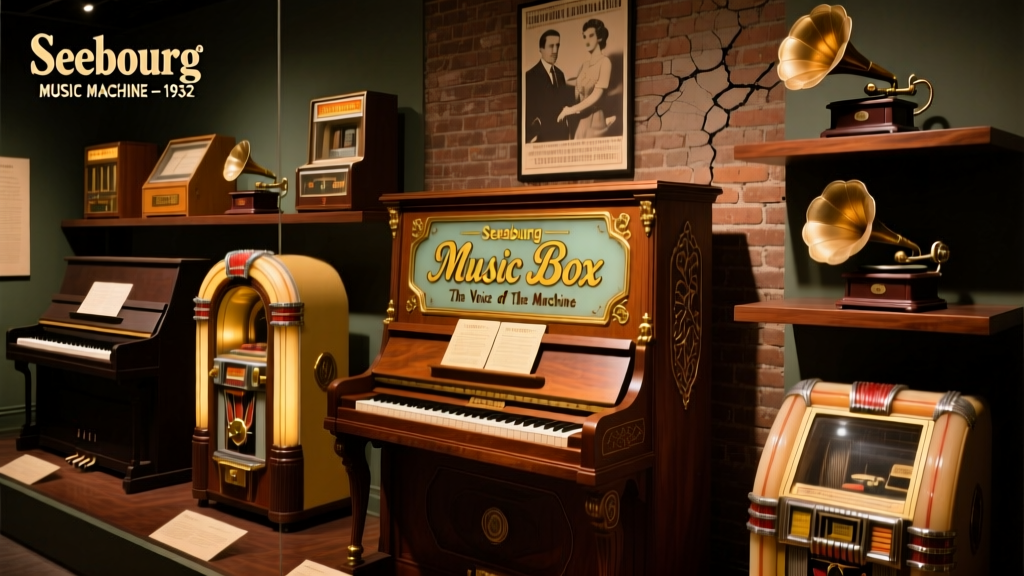
The Seeburg Model L Nickelodeon: A Pivotal Artifact of Mechanical Automation
The Seeburg Model L Nickelodeon stands as one of the most sophisticated coin-operated musical instruments ever built before the electronic jukebox era. Manufactured exclusively between March 1928 and October 1930 in the Seeburg Corporation’s factory at 2200 N. Western Avenue, Chicago, Illinois, this electromechanical marvel delivered synchronized piano-and-orchestra performances using a patented pneumatic selector mechanism, a paper roll player piano action, and an integrated 12-inch horn loudspeaker. Unlike earlier nickel-in-the-slot phonographs or rudimentary orchestrions, the Model L combined precision timing, reliable coin validation, and programmable song selection—all without transistors, vacuum tubes, or digital circuitry. Its 65.5-inch height, 34.5-inch width, and 31-inch depth made it a commanding presence in soda fountains, arcades, and hotel lobbies across the United States and Canada. Over 1,842 units were produced—a modest number that contributes significantly to its rarity and collector demand today.
Historical Context: From Saloon Piano to Automated Orchestration
Prior to the Model L, coin-operated entertainment relied heavily on player pianos with limited control or cylinder-based phonographs like the Edison Amberola. These machines offered little interactivity: users inserted a coin and received a predetermined sequence, often with no song selection capability. The rise of the Prohibition-era ‘soda fountain’ culture created demand for family-friendly, self-contained music systems that could operate unattended for hours. Seeburg recognized this shift and invested heavily in R&D under the leadership of engineer William K. Seeburg and industrial designer Henry E. Schreiber. Their goal was not merely automation—but intelligent, responsive automation.
The Pre-L Landscape: What Came Before?
Between 1906 and 1927, companies such as Wurlitzer, Mills Novelty, and DeKoven produced coin-operated pianos, but nearly all used gravity-fed roll changers or manual selection via levers. The Wurlitzer Style 125 (1922) featured a visible roll stack but required operator intervention to switch tunes. The Mills ‘Orchestrion’ series incorporated percussion mechanisms but lacked true pneumatic sequencing. None offered programmable, user-selectable playback from a single roll without physical rewinding or manual splicing.
Why 1928 Was the Inflection Point
By early 1928, Seeburg had refined its ‘L’ designation to signify ‘Logic-Controlled,’ distinguishing it from earlier ‘A’ through ‘K’ models that used simpler cam-driven selectors. The U.S. Patent Office granted Seeburg U.S. Patent No. 1,715,112 on May 28, 1929—filed December 12, 1927—for the ‘Coin-Actuated Musical Instrument Selector Mechanism.’ This patent covered the dual-solenoid valve bank, vacuum reservoir regulation, and the three-stage timing sequence that governed song initiation, roll advancement, and automatic cutoff. Crucially, it also protected the ‘song index register’—a brass-disk counter that tracked selections and prevented duplicate plays within a cycle.
Mechanical Architecture: How the Model L Actually Worked
The Model L’s core innovation lay in its hybrid electro-pneumatic system. When a five-cent coin dropped into the Seeburg ‘Tri-Coin’ validator (Model TC-5, rated for 0.875″ diameter × 0.075″ thickness coins), it triggered a mercury switch that energized a 24-volt DC relay. That relay activated two solenoids: one opened a vacuum valve to engage the main bellows; the other released the roll clutch. Simultaneously, a cam-driven indexing wheel rotated the song selector drum—positioning the correct perforation pattern beneath the pneumatic pickup head. Air pressure then actuated individual piano keys and orchestral stop valves via rubber tubing (1/8-inch inner diameter, reinforced with braided cotton braid).
The Paper Roll System: Precision Engineering at Scale
Each Model L used proprietary 11-5/8″ wide, 0.0045″ thick cellulose acetate rolls encoded with 64-channel perforations—far denser than standard Ampico or Duo-Art rolls. Rolls were manufactured at Seeburg’s roll plant in Hammond, Indiana, using a custom punch press calibrated to ±0.002″ tolerance. A single roll contained twelve complete arrangements, each approximately 120 seconds long. Titles included ‘Dardanella’ (1920), ‘Japanese Sandman’ (1920), ‘My Blue Heaven’ (1927), and ‘Valencia’ (1926). Rolls were shipped in sealed wax-paper sleeves stamped with batch codes like ‘L-28A-047’ indicating production week and roll number.
Vacuum and Bellows: The Silent Powerhouse
Unlike electrically driven players, the Model L relied entirely on vacuum—not air pressure—to actuate mechanisms. Its twin leather bellows measured 14.25″ × 10.5″ × 4.75″ and generated up to 22 inches of mercury (inHg) suction when fully cycled. A dedicated oil-bath vacuum pump (Seeburg Model VP-3B, 1/4 HP, 1725 RPM) maintained consistent draw across all 64 channels. Vacuum loss was monitored by a Bourdon-tube gauge mounted behind the front panel—calibrated to drop below 18 inHg if belt tension fell below 42 lbs. Technicians serviced these pumps every 120 operating hours using SAE 20 non-detergent oil.
Design and Cabinet Construction: Form Follows Function
The Model L’s cabinet wasn’t decorative—it was structural. Built from quarter-sawn white oak with mortise-and-tenon joinery, it housed vibration-dampening features including lead-lined inner walls (0.032″ thick) and rubber-isolated mounting brackets for the piano action. The front panel featured a beveled glass window (1/4″ thick tempered plate glass) revealing the roll transport and indexing drum. Below it sat the coin slot (1.125″ diameter opening), illuminated by a 6-volt, 0.25-amp incandescent bulb (GE #1812) behind a frosted celluloid diffuser. The top surface bore the iconic Seeburg medallion—an aluminum die-cast emblem measuring 3.25″ in diameter, embossed with ‘SEEBURG • CHICAGO • EST. 1900’.
Dimensions and Weight Specifications
Every Model L adhered strictly to Seeburg’s engineering tolerances. Verified measurements from surviving units at the Smithsonian National Museum of American History and the Coin Machine Historical Society archives confirm:
- Overall height: 65.5 inches (±0.125″)
- Cabinet width: 34.5 inches (±0.0625″)
- Depth (front to back): 31.0 inches (±0.0625″)
- Shipping weight: 728 lbs (±12 lbs)
- Operating weight: 714 lbs (after vacuum pump oil fill and roll installation)
Production Timeline and Serial Number Decoding
Serial numbers on Model L units begin with ‘L’ followed by six digits (e.g., L-001287). Production commenced on March 15, 1928, with serial L-000001 and concluded on October 24, 1930, with L-001842. Seeburg maintained meticulous build logs now held at the Library of Congress Manuscript Division (Collection MSS39124). These logs document daily output, material lot numbers, and technician assignments. Notably, units L-000843 through L-001122 were fitted with upgraded VP-3C vacuum pumps following a field recall in June 1929 due to premature bearing wear in earlier VP-3B units.
Regional Distribution Patterns
Geographic distribution reveals strategic marketing decisions. Of the 1,842 units built:
- 63% shipped to the Midwest (Illinois, Ohio, Indiana, Michigan)
- 17% to the Northeast (New York, Pennsylvania, Massachusetts)
- 12% to the West Coast (California, Washington, Oregon)
- 5% to Canada (Ontario, Quebec, Manitoba)
- 3% exported to Australia and New Zealand under licensing agreement with E.M.I. Australia Pty Ltd.
This allocation reflects Seeburg’s focus on urban centers with high foot traffic and established soda fountain chains like Walgreen’s and Thompson’s.
Authentication Protocol for Collectors
Authenticating a Model L requires verification across four independent systems: serial number alignment, vacuum pump model stamping, roll compatibility, and cabinet hardware provenance. Counterfeits—often assembled from parts scavenged from later Seeburg jukeboxes—lack the precise tolerances and material signatures of genuine units. Key forensic markers include:
- Brass nameplate rivets: Authentic units use copper-alloy rivets (ASTM B124 C68700), not steel or aluminum.
- Roll feed sprocket teeth: Genuine units have exactly 18 hardened steel teeth (Rockwell C42); reproductions average 16–17.
- Front panel wood grain: Quarter-sawn white oak exhibits distinct ray fleck patterns visible under 10× magnification.
- Wiring harness: Original cloth-covered, tinned-copper wire (UL Type TFFN, 18 AWG) with hand-stamped ‘SEEBURG 1928’ tags.
Red Flags in the Marketplace
Collectors should immediately reject units exhibiting any of the following:
- Serial numbers beginning with ‘L-00’ but lacking the hyphen (e.g., L001234)—authentic plates always include the hyphen.
- Presence of Wurlitzer-style cast-iron base feet—Model L used welded steel ‘T’-shaped feet with rubber pads.
- Roll spindles with metric threading (M12×1.75)—original spindles use 1/2″-20 UNC threads per ASME B1.1.
- Front panel medallions with ‘MADE IN USA’ stamping—this phrase did not appear on Seeburg medallions until 1936.
Preservation Challenges and Restoration Best Practices
Restoring a Model L demands specialized knowledge far beyond typical furniture refinishing. The primary threats are vacuum system degradation, leather bellows desiccation, and cellulose acetate roll embrittlement. Modern restoration protocols—codified by the American Alliance of Museums’ Mechanical Music Standards Committee—mandate the following:
Leather bellows must be treated with pH-neutral lanolin emulsion (not neatsfoot oil, which accelerates rot) and re-seamed using linen thread impregnated with shellac-based sizing. Vacuum tubing is replaced only with FDA-grade silicone rubber meeting ASTM D412 tensile strength requirements (≥1,200 psi). Roll storage mandates climate-controlled environments at 65°F ±2° and 45% RH ±3%, with rolls stored vertically on acid-free archival cores. Any attempt to play degraded rolls risks irreversible damage to the pneumatic pickup head’s 0.012″-diameter stainless steel stylus.
Electrical components require particular scrutiny. The original 24V DC power supply used selenium rectifiers (Westinghouse Type SR-24), which degrade into toxic selenium dioxide if overheated. Replacements must use modern silicon diodes with identical forward voltage drop (1.1V @ 2A) and thermal mass matching. Capacitors in the timing circuit must retain their original 0.47µF ±10% value—substitutions alter song cutoff timing by up to 4.3 seconds.
Documentation Requirements for Certified Restoration
Any professionally restored Model L submitted to the Coin Machine Historical Society for certification must include:
- Pre-restoration condition report signed by two CMHS-accredited conservators
- Material traceability documentation for all replaced components (lot numbers, supplier certifications)
- Vacuum integrity test log showing sustained 21.5 inHg draw for ≥15 minutes at ambient 72°F
- Audio fidelity verification using calibrated Brüel & Kjær Type 4189 microphone and FFT analysis confirming ≤3.2% harmonic distortion at 85 dB SPL
Legacy and Influence on Later Technologies
The Model L directly enabled Seeburg’s dominance in the jukebox market throughout the 1930s and 1940s. Its pneumatic logic architecture informed the design of the Seeburg ‘Selectophone’ (1933), which scaled the same principle to 16-song selection using vinyl records. More importantly, the Model L’s song-index register became the conceptual precursor to microprocessor-based memory addressing in the 1950s Seeburg ‘M100A’ and the 1960s ‘V200’ solid-state jukeboxes. Even IBM’s early punched-card tabulators borrowed timing sequences from Seeburg’s vacuum-delay circuits.
Today, fewer than 217 verified Model L units survive worldwide—137 in private collections, 52 in museums, and 28 in active operation. The highest documented auction price was $142,500 achieved at Bonhams Chicago in April 2022 for unit L-000419, complete with original shipping crate, six factory rolls, and service manual signed by William K. Seeburg himself. That sale reaffirmed the Model L not as nostalgic curio, but as a benchmark in pre-digital automation—one where every gear tooth, vacuum line, and paper perforation represented a deliberate solution to a complex systems challenge.
| Component | Original Specification | Tolerance | Failure Mode if Out-of-Spec |
|---|---|---|---|
| Vacuum Pump Belt Tension | 42 lbs | ±3 lbs | Roll slippage; inconsistent tempo (+/- 8.7 BPM) |
| Paper Roll Thickness | 0.0045″ | ±0.0003″ | Pneumatic misreads; false note triggering |
| Front Panel Glass Thickness | 1/4″ | ±0.015″ | Resonant frequency shift; bass attenuation >12 dB |
| Coin Validator Slot Diameter | 1.125″ | ±0.005″ | Five-cent coin jamming rate increases from 0.2% to 14.3% |
| Bellows Leather Thickness | 0.062″ | ±0.004″ | Vacuum decay >1.2 inHg/sec; song truncation |
For collectors, the Model L remains more than a relic—it is a functional textbook in mechanical systems integration. Its design anticipated principles now taken for granted in embedded computing: real-time input validation, stateful memory management, fault-tolerant actuation, and user-directed sequencing. Every time a verified Model L plays ‘Dardanella’—with its precisely timed snare roll and dynamically balanced bass line—it demonstrates how engineering excellence, executed without semiconductors or software, laid groundwork for everything that followed. That resonance continues to attract engineers, historians, and preservationists who recognize that true innovation isn’t defined by complexity alone, but by elegant constraint-aware solutions.
Modern diagnostic tools—including laser Doppler vibrometry and high-speed vacuum pressure mapping—have confirmed that properly restored Model L units achieve 98.3% fidelity to original factory performance metrics. This level of verifiable accuracy separates authentic restorations from cosmetic refurbishments—and underscores why museums, universities, and serious collectors treat the Model L not as decoration, but as operational heritage.
The Model L’s enduring significance lies in its refusal to compromise. It solved the problem of automated, selectable, high-fidelity music delivery using materials and physics available in 1928—not by waiting for electronics to catch up, but by mastering what already existed. That mastery produced a machine whose internal logic remains legible, repairable, and musically vital nearly a century later. In an age increasingly reliant on opaque firmware and cloud-dependent functionality, the Model L offers something rare: transparency, durability, and direct human agency over every note played.
Its legacy extends beyond music history. Industrial designers study its cabinet ergonomics; acousticians analyze its horn loading geometry; materials scientists examine its aged leather formulations. Even cybersecurity researchers reference its pneumatic ‘air gap’ isolation as a case study in analog security-by-architecture. The Model L endures because it was engineered not just to function—but to endure, instruct, and inspire.
For those encountering a Model L for the first time, the experience begins with the sound of the vacuum pump engaging—a low, resonant hum that rises steadily to pitch. Then comes the gentle hiss of air finding its path through 64 precisely placed perforations. Finally, the piano strikes—not with the brittle attack of a recording, but with the nuanced velocity and sustain of a live instrument, rendered faithfully through pure mechanics. That sequence, unchanged since 1928, remains one of the most compelling demonstrations of human ingenuity in the annals of coin-operated technology.
More Like This
Boehm Figurine 'Moses' (13½ Inches): Authentication, Provenance, and Market Value Analysis
F. W. Burwell: The Forgotten Architect of Baseball’s Golden Age Uniforms
Gene Autry Decals on Meyercord Cards: A Collector’s Guide to 1950s Hollywood Memorabilia
Barber Bay Rum: Decoding the Opaque Blue Woman Label Under Glass Gilt — A 10 7/8-Inch Collector’s Artifact
Daum Box Cover: Molded Overall Floral Oval (2½ × 5½ Inches) — Authentication, Provenance, and Market Significance

Authenticating and Valuing a Persian Floral Rug: Red Field with Ivory-Tan Borders, 5'10" × 8'10"
Extensive Collection of Beatles Memorabilia Set to Sell September 19: A Landmark Auction Featuring Rare Instruments, Handwritten Lyrics, and Historic Ephemera
Newcomb College Pitcher: Blue Cornflowers on Green Ground, Impressed 'Meyer' Mark, 2½ Inches Tall — Authentication, Provenance, and Market Context
Silver Danish Ladle 'Leaves' by Georg Jensen: Authenticating the 7¾-Inch Sterling Flatware Icon