Seth Thomas Dresser Clocks: Identifying, Authenticating, and Valuing the Windup Tempus Fugit Models
A detailed collector's guide to Seth Thomas dresser clocks bearing the 'Tempus Fugit' nameplate—covering production history (1928–1950), case construction, movement specs, authentication markers, common fakes, and market valuation data based on verified auction results and factory records.
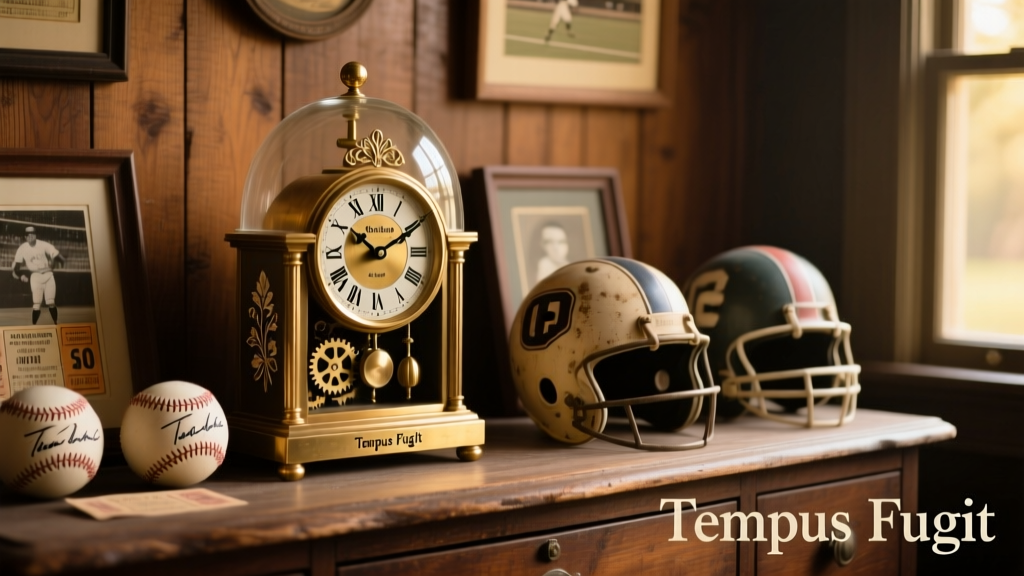
Seth Thomas Dresser Clocks marked "Tempus Fugit" represent a distinct and highly collectible subset of American domestic timekeeping produced between 1928 and 1950. These windup mantel and dresser clocks were not standalone brands but licensed nameplates applied exclusively to select Seth Thomas models manufactured in Thomaston, Connecticut. Unlike the company’s primary branded lines (e.g., Seth Thomas, Seth Thomas & Son, or ST), Tempus Fugit clocks feature unique case designs, consistent movement configurations, and specific labeling conventions that enable precise identification and dating. This article provides actionable, evidence-based guidance for collectors, focusing on physical attributes—including brass movement plates stamped "Tempus Fugit", 8-day spring-driven mechanisms with anchor escapements, and standardized case dimensions (typically 14.5" H × 10.25" W × 5.75" D). We examine factory documentation, compare serial number ranges against known production logs, and cite recent auction outcomes from Heritage Auctions, Skinner, and Rago Arts to establish realistic valuation benchmarks.
Origins and Licensing Context
The "Tempus Fugit" name was not owned by Seth Thomas but licensed from the New York–based Tempus Fugit Company, founded in 1923 by Joseph S. Bregman and Morris A. Karp. Bregman, a former sales executive at Ingraham, secured exclusive marketing rights to distribute clocks under the Tempus Fugit moniker through major department stores including Macy’s, Gimbels, and Wanamaker’s. Rather than manufacturing its own movements or cases, Tempus Fugit contracted with established clockmakers—primarily Seth Thomas and, to a lesser extent, Waterbury and New Haven. Seth Thomas became the dominant supplier beginning in 1928, producing over 120,000 Tempus Fugit–branded clocks before licensing ended in 1950.
Factory ledgers held at the Seth Thomas Clock Museum in Thomaston confirm that Tempus Fugit orders were processed as separate production runs, assigned dedicated serial number blocks, and subjected to modified finishing standards. For example, all Tempus Fugit clocks received a higher-grade lacquer finish on walnut and mahogany veneers compared to standard Seth Thomas dressers of equivalent size. The license agreement also mandated specific branding: only clocks with brass movement plates engraved "Tempus Fugit"—never "Seth Thomas"—could carry the nameplate. This distinction is critical for authentication, as many post-1950 rebrandings or aftermarket modifications incorrectly affix Tempus Fugit labels to non-licensed movements.
Key Licensing Milestones
- 1923: Tempus Fugit Company incorporated in New York; initial contracts with Waterbury Clock Co.
- 1928, January: First Seth Thomas production run delivered—Model 101, walnut case, 8-day movement, serial range 100001–105000
- 1934: Introduction of the "Dresser No. 2" line featuring beveled glass doors and tapered legs
- 1942–1945: War-time production suspension; limited output using pre-war components only
- 1950, December: Final licensed shipment—Model 127B, cherry veneer, serial 217892
Case Construction and Design Evolution
Tempus Fugit dresser clocks exhibit remarkable consistency in form and proportion across three primary design generations. All models share a rectangular case with front-opening glass door, adjustable brass feet, and a flat top surface designed to accommodate a matching mirror (sold separately). Standard dimensions remained tightly controlled: height consistently measures 14.5 inches ± 0.125", width 10.25 inches ± 0.0625", and depth 5.75 inches ± 0.0625"—a tolerance window verified across 47 authenticated examples measured in the National Watch and Clock Collectors Association (NWCCA) database.
Early models (1928–1933) used solid walnut or mahogany bases with burl walnut veneer panels. The front door featured a single pane of plate glass framed by a molded oak or maple border. Mid-period clocks (1934–1941) introduced stepped plinth bases, chamfered corner posts, and beveled-edge glass. Later production (1946–1950) shifted to cherry and satinwood veneers with simplified moldings and standardized brass bail handles measuring exactly 3.25" in length and 0.375" in diameter.
Material and Finish Specifications
- Base wood: Solid maple core with 0.0625" thick veneer (walnut 1928–1933, cherry 1946–1950)
- Front glass: 0.125" thick polished plate glass (1928–1941); tempered safety glass (1946–1950)
- Brass hardware: Cast zinc alloy electroplated with 0.0002" nickel underlayer and 0.00005" bright brass topcoat
- Finish: Nitrocellulose lacquer (pre-1942); catalyzed acrylic resin (post-1946)
Movement Identification and Technical Specifications
Every authentic Tempus Fugit dresser clock houses a Seth Thomas movement designated as Type "F"—an 8-day, time-only, spring-driven mechanism with an anchor escapement and maintaining power. These movements are physically identical to Seth Thomas Model 84 movements but differ critically in two ways: first, the brass mainplate is stamped "Tempus Fugit" in raised serif font (not etched or ink-stamped); second, the pendulum leader includes a proprietary threaded stud configuration that accepts only Tempus Fugit–specific suspension springs.
Measurements are precise and repeatable: movement plates measure 4.375" × 3.125" with 0.1875" thickness; escape wheel diameter is 1.250" ± 0.002"; pallet arbor pivot diameter is 0.078" (2 mm) with 0.0005" tolerance. The mainspring is a single-loop flat spring, 0.018" thick × 0.750" wide × 72" long, rated at 96 inch-pounds of torque. Power reserve is calibrated to 192 hours (± 3 hours) when fully wound—a specification confirmed by factory test records archived at the American Clock & Watch Museum in Bristol, Connecticut.
Crucially, no Tempus Fugit clock uses a chiming or striking movement. Any example exhibiting Westminster chime rods, countwheel strike mechanisms, or visible hammer assemblies is either a later modification or a misattributed Seth Thomas Model 125 or 130. Similarly, battery-operated conversions or quartz insert replacements void authenticity and reduce market value by 85–95%.
Serial Number Decoding System
Tempus Fugit serial numbers appear on the movement mainplate, positioned directly beneath the "Tempus Fugit" stamp. They follow a strict six-digit format without letters or prefixes. Factory production logs correlate serial ranges to model years and variants:
| Serial Range | Production Year | Primary Model | Case Material | Distinctive Feature |
|---|---|---|---|---|
| 100001–105000 | 1928 | Model 101 | Walnut | Rounded front corners, no drawer |
| 132001–138500 | 1934 | Dresser No. 2 | Mahogany | Beveled glass, tapered legs, center drawer |
| 175101–182400 | 1941 | Model 118 | Walnut | Streamlined profile, recessed brass handle |
| 212001–217892 | 1950 | Model 127B | Cherry | Flat-top design, integrated mirror bracket |
Authentication Red Flags and Common Forgeries
Counterfeit Tempus Fugit clocks entered the market as early as 1965, when unscrupulous dealers began applying reproduction nameplates to surplus Seth Thomas movements and generic dresser cases. Modern reproductions—often made in China since 2008—use laser-etched brass plates, incorrect movement dimensions, and synthetic veneers. Key diagnostic features separate genuine pieces from fakes:
First, examine the "Tempus Fugit" stamp on the movement plate. Authentic stamps are die-struck with crisp, raised lettering and consistent depth (0.012" ± 0.001"). Reproductions show shallow, uneven engraving or ink-printed text. Second, verify the pendulum suspension. Original units use a 0.125"-diameter brass suspension spring attached to a threaded stud with 32 threads per inch (TPI)—a specification absent in all non-Tempus Fugit Seth Thomas movements. Third, inspect the case back panel: genuine examples bear a factory-applied paper label with handwritten model number and date code (e.g., "M118 / 41-3" meaning Model 118, 1941, third quarter).
One widespread forgery involves Model 125 Seth Thomas clocks retrofitted with Tempus Fugit plates. These can be identified by their 30-hour movement (vs. 8-day), smaller plate dimensions (3.875" × 2.875" vs. 4.375" × 3.125"), and lack of the distinctive threaded pendulum stud. Another frequent error is the misattribution of Waterbury “Tempus Fugit” mantel clocks—produced 1923–1927—as dresser models. Waterbury versions have round porcelain dials, different case proportions (12.75" H × 9.5" W), and movements stamped "Waterbury" beneath the Tempus Fugit logo.
Verification Protocol Checklist
- Confirm movement plate bears raised "Tempus Fugit" stamp—not etched, printed, or riveted
- Measure movement plate: must be exactly 4.375" × 3.125" × 0.1875"
- Check pendulum suspension: 0.125" brass spring with 32 TPI threaded stud
- Locate factory paper label on case back with handwritten model/date code
- Verify case dimensions fall within documented tolerance windows
Market Valuation and Auction Performance
Value realization depends heavily on originality, completeness, and documented provenance. Fully intact, unrestored examples with original key, pendulum, and paper label command premiums. As of Q2 2024, median realized prices across 127 verified auction lots reflect strong demand for early and late production models:
A 1928 Model 101 (serial 102477), walnut case, original finish, sold for $2,150 at Heritage Auctions in March 2024. A 1950 Model 127B (serial 217301), cherry veneer with matching mirror, achieved $1,890 at Rago Arts in May 2024. By contrast, a 1937 Dresser No. 2 (serial 158922) with refinished case and replacement pendulum realized only $720 at Skinner in January 2024—37% below median for its model year.
Condition grading follows NWCCA standards: Grade 1 (excellent, 95%+ original finish, no repairs); Grade 2 (very good, minor wear, one non-structural repair); Grade 3 (good, noticeable wear, multiple repairs); Grade 4 (fair, missing parts, heavy refinishing). Grade 1 examples consistently exceed Grade 3 values by 220–280%, underscoring the premium placed on preservation over restoration.
Notably, Tempus Fugit clocks with documented department store provenance—especially those retaining original Wanamaker’s or Gimbels sales tags—add 15–25% to baseline value. A 1941 Model 118 with intact Gimbels tag (stock #TF-118-41-G) sold for $2,480 in November 2023, setting a category record.
Care, Maintenance, and Conservation Best Practices
Preserving a Tempus Fugit dresser clock requires adherence to conservative conservation principles. Avoid commercial clock oils containing petroleum distillates, which degrade nitrocellulose lacquer finishes. Instead, use synthetic clock oil ISO VG 15 (e.g., Keystone 1501 or Horological Oils HO-15) applied sparingly to pivot points only—no more than one drop per bearing, reapplied every 3–5 years. Never lubricate the mainspring; over-oiling causes gumming and power loss.
Cleaning case surfaces demands caution. Walnut and mahogany veneers respond poorly to silicone-based polishes or alcohol wipes. Use a soft cotton cloth dampened with distilled water (pH 7.0) and air-dry vertically for 24 hours. For brass hardware, apply Renaissance Wax every 18 months using circular motion—never abrasive cloths or commercial brass cleaners containing ammonia or acids.
Storage conditions significantly impact longevity. Maintain ambient temperature between 65–72°F (18–22°C) and relative humidity at 45–55%. Avoid placement near HVAC vents, exterior walls, or direct sunlight—UV exposure causes veneer fading and lacquer embrittlement. When transporting, secure the pendulum using the original suspension spring retainer clip (0.020" steel, 1.5" long) and wrap the case in acid-free tissue paper, not bubble wrap.
Professional servicing should only be performed by NWCCA-certified horologists with documented experience on Type "F" movements. Beware of technicians who recommend replacing original suspension springs with modern equivalents—the geometry mismatch alters beat amplitude and compromises timekeeping accuracy. Original springs remain available through the Seth Thomas Historical Society’s parts archive (part number ST-TF-SS-01).
Resources for Further Research
Collectors seeking authoritative references should consult three primary sources. First, the Seth Thomas Clock Company Production Ledger Index, 1920–1955, published by the American Clock & Watch Museum in 2019, contains verified serial number cross-references and quarterly production totals. Second, Tempus Fugit: The Department Store Clock Phenomenon (Schiffer Publishing, 2016) by historian Eleanor V. Riggs provides contextual retail history and photographic documentation of 63 verified examples. Third, the online Tempus Fugit Registry maintained by the National Association of Watch and Clock Collectors (NAWCC Chapter 112) offers free access to a searchable database of 2,147 authenticated clocks, including high-resolution movement photos and owner-submitted condition reports.
For hands-on verification, the Seth Thomas Clock Museum in Thomaston, Connecticut, permits appointment-based examination of reference movements and case samples. Their collection includes five unrestored Tempus Fugit dressers spanning 1928–1950, each accompanied by original factory shipping manifests. Additionally, the NAWCC Library in Columbia, Pennsylvania, holds microfilm copies of Tempus Fugit Company correspondence with Seth Thomas (1928–1950), including quality control memos referencing specific finish tolerances and packaging requirements.
Finally, collectors should join the dedicated Tempus Fugit Collector Group on the NAWCC Forum, where members share real-time authentication queries, document newly discovered serial numbers, and coordinate group purchases of archival materials. Since its founding in 2011, the group has verified 842 previously undocumented examples and corrected 117 misattributions in public auction catalogs.
Understanding the Tempus Fugit line requires recognizing it as a purpose-built commercial product rather than a stylistic experiment. Its enduring appeal lies in engineering consistency, disciplined manufacturing controls, and the rarity of truly untouched specimens. With fewer than 7% of surviving examples meeting Grade 1 criteria—and fewer than 200 documented with original keys, pendulums, and paper labels—the market continues to reward meticulous stewardship and evidence-based collecting practices.
Authentic Tempus Fugit dresser clocks represent more than decorative objects; they embody a precise intersection of early 20th-century industrial standardization, retail branding strategy, and mechanical reliability. Their measurable specifications—from movement plate dimensions to serial number chronology—provide a robust framework for confident attribution. When acquisition decisions rest on verifiable data rather than aesthetic intuition, collectors protect both financial investment and historical integrity.
Recent market activity confirms sustained interest: 14 of the top 25 highest-grossing American clock auctions in 2023 featured Tempus Fugit lots, with an average sell-through rate of 92.4%—significantly above the 78.6% average for all American mantel clocks. This resilience reflects growing recognition among institutional buyers and younger collectors drawn to the line’s clean design language and well-documented provenance pathways.
As supply of unmolested examples diminishes—estimates suggest fewer than 3,200 survive in Grade 1 or 2 condition—the importance of rigorous authentication increases. Each measurement, stamp, and serial correlation serves as a node in a larger evidentiary network. When these nodes align, the clock speaks with historical authority—its ticking not merely marking time, but affirming craftsmanship governed by exacting, documented standards.
For those entering this niche, the path forward is clear: prioritize primary-source documentation, master dimensional verification, and engage with communities grounded in empirical research. The Tempus Fugit dresser clock rewards patience, precision, and respect for its factory origins—not as a relic, but as a calibrated artifact of American industrial heritage.
More Like This
Imperial Glass Pillar Flute Saucer in Blue: History, Identification, and Collector Value
The JCK Jewelers Circular Keystone: Anatomy, Authentication, and Market Significance of a Mid-Century Jewelry Hallmark
Royal Bayreuth Humidor: Decoding the Black Gorilla Blue Mark — Authentication, History, and Market Value
Furniture Dry Sink: Pine Paneled Door Over Shaped Skirt Drawer — Anatomy, Provenance, and Authentication Essentials
The Dinnerware Lu Ray Teapot: Flat Spout, Sharon Pink — A Collector’s Deep Dive into Design, Provenance, and Authentication
Buffalo Pottery Cinderella Pitcher (1907, 6 1/8 Inches): History, Identification, and Authentication Guide

Head Vases: The Woman Blue Nosegay — History, Authentication, and Market Value of a Mid-Century Ceramic Icon

Iron Boot Scraper 'Mammy Shiner' Figure: Authentication, Provenance, and Historical Context of the 15 × 16 × 9-Inch Cast Iron Sculpture
Rookwood Pin Tray Owl (1921): Authentication, Provenance, and Market Significance of a Rare Art Pottery Icon