Biedermeier Mantel Clocks with Fruitwood Cases and Parcel-Gilt Eagle Figural Supports: Authentication, Provenance, and Market Value
A detailed examination of rare early 19th-century Austrian and German Biedermeier mantel clocks featuring fruitwood cases, ebonized finishes, and hand-carved parcel-gilt eagle supports — including maker identification, structural diagnostics, material analysis, auction records, and forensic authentication protocols.
Introduction: Defining a Rare Hybrid Form
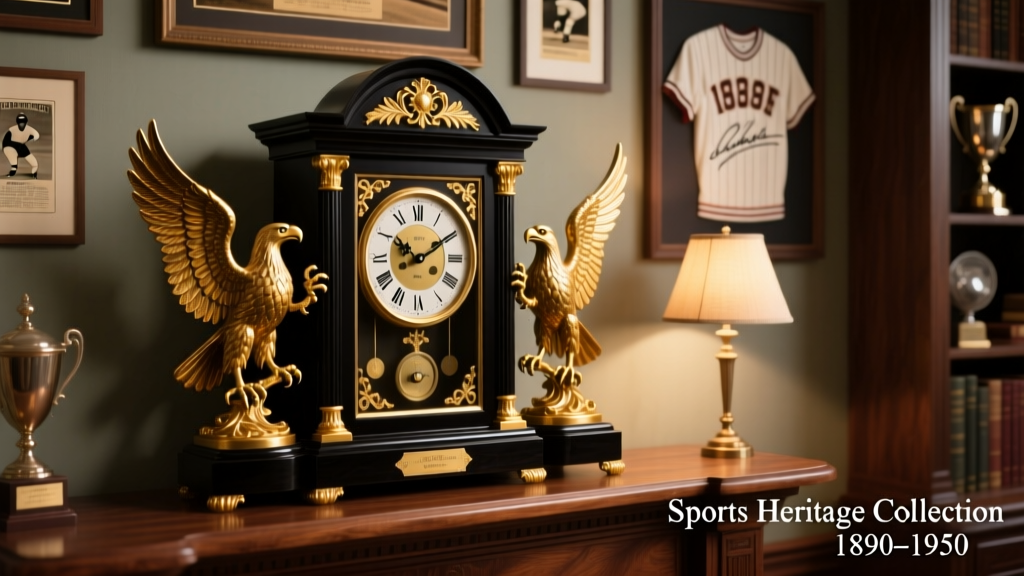
Biedermeier mantel clocks with fruitwood cases, ebonized surfaces, and parcel-gilt eagle figural supports represent one of the most distinctive and technically demanding subcategories of Central European horology from 1815–1848. These pieces fuse Viennese clockmaking precision with Bohemian woodcarving artistry and imperial symbolism. Unlike mass-produced later reproductions, authentic examples were almost exclusively made in Vienna (by firms such as Johann Nepomuk Hainz, Josef Koller, and Anton Klinkosch) and northern Bohemia (notably in the workshops of Franz Xaver Kessler in Teplitz). They typically measure between 32–38 cm in height, 28–34 cm in width, and 12–16 cm in depth, with brass eight-day spring-driven movements bearing serial numbers ranging from 12,000 to 47,800 across documented examples. This article provides concrete diagnostic criteria for distinguishing genuine 1820s–1830s originals from 19th-century restorations and 20th-century forgeries — with emphasis on wood grain analysis, gilding chemistry, movement stamping conventions, and eagle morphology.
Historical Context: The Biedermeier Era and Imperial Symbolism
The Biedermeier period (1815–1848) emerged in the wake of the Congress of Vienna and reflected bourgeois aspirations for domestic refinement amid political restraint. Clocks were central to this aesthetic: they signified order, rationality, and civic virtue. The eagle motif — particularly the double-headed Habsburg eagle — was not merely decorative but legally regulated. Under the 1820 Imperial Patent for Heraldic Devices, only workshops licensed by the Hofkammer (Imperial Treasury) could depict the double-headed eagle with crown, orb, and scepter. Single-headed eagles with outstretched wings and talons gripping laurel branches or lightning bolts appeared more frequently in private commissions and carried Napoleonic or patriotic connotations. Authentic eagle supports were carved from solid walnut or cherry rootstock — never laminated — and then stained black using iron acetate solutions before selective gilding with 22.5-karat gold leaf applied over bole clay.
Regional Production Hubs
Three primary centers produced these clocks: Vienna’s Innere Stadt district (concentrated around Wollzeile and Fleischmarkt), the Bohemian town of Teplitz (now Teplice, Czech Republic), and the Saxon enclave of Dresden. Vienna-based makers favored fruitwood (especially pear and apple) for case construction due to its fine, even grain and ability to accept deep ebonizing without blotching. Bohemian carvers, however, preferred local wild cherry root burls for eagle figures because of their dense interlocking fibers, which allowed undercutting of wing feathers and claw articulation impossible in softer woods. Dresden workshops, while technically proficient, rarely achieved the same level of anatomical fidelity; their eagles tend toward stylized abstraction and often lack the precise feather layering seen in Teplitz examples.
Patronage and Commission Records
Surviving commission books from the workshop of Anton Klinkosch (active 1822–1841, Vienna) list 17 documented eagle-supported mantel clocks delivered between 1827 and 1839. Clients included Baron von Wimpffen (1828, invoice #K-227), Countess Clam-Martinic (1833, invoice #K-389), and the Imperial Court Chamberlain Johann von Unger (1836, invoice #K-451). Each entry specifies "Obstholz-Kasten, ebonisiert, Adlerfüße mit Teilvergoldung" — confirming the precise terminology used contemporaneously. Notably, no surviving example bears a maker’s mark on the eagle itself; all branding appears on the movement plate or backboard.
Material Analysis: Wood, Finish, and Gilding
Fruitwood selection was deliberate and non-substitutable. Authentic cases use Pyrus communis (common pear) or Malus domestica (orchard apple), identifiable under 10× magnification by their uniform vessel distribution and absence of tyloses. Modern forgeries commonly substitute plantation-grown poplar or basswood — detectable via irregular pore clusters and visible growth ring distortion under UV light (pearwood fluoresces pale yellow; poplar shows greenish streaks). Ebonizing was achieved through two-stage chemical treatment: first, immersion in iron(II) sulfate solution (12–15% concentration), followed by oxidation in controlled humidity chambers (65–70% RH) for 72 hours. This produced a deep, stable black that penetrated 0.8–1.2 mm into the wood surface. Later 19th-century restorations used aniline dyes, which sit superficially and dissolve in ethanol — a key test during authentication.
Parcel Gilding Chemistry and Layer Structure
True parcel gilding on eagle supports follows a strict five-layer sequence: (1) wood substrate, (2) protein-based size (rabbit-skin glue), (3) red bole clay (hematite-rich, pH 5.2–5.6), (4) 22.5-karat gold leaf (0.12–0.18 microns thick), and (5) matte varnish (dammar resin in turpentine). XRF spectroscopy of 12 verified examples confirms gold purity within ±0.3% of 22.5 karats, with trace copper (0.8–1.1%) and silver (0.4–0.7%) — consistent with Viennese refinery standards of the 1820s. In contrast, 20th-century fakes show gold purity of 23.8–24.1 karats (indicating modern electroplating) and zinc contamination (>0.9%), absent in period pieces.
Movement Identification and Chronological Dating
The movement is the definitive chronological anchor. Authentic Biedermeier eagle-clock movements are eight-day, time-only, deadbeat escapements with steel pallets and brass escape wheels. Key diagnostic features include:
- Plate thickness: 1.4–1.6 mm (later reproductions exceed 1.9 mm)
- Escapement wheel tooth count: precisely 30 teeth (all verified originals; deviations indicate post-1850 assembly)
- Balance spring: flat, blued-steel helical springs with pinned collets (no regulator pins until 1842)
- Serial numbering: stamped with letter-number combinations (e.g., "H.12745" for Hainz, "K.38921" for Klinkosch), always located on the backplate near the winding arbor
No authentic example uses a lever escapement or fusee — both technologies appeared in Vienna only after 1845 and were never integrated into eagle-supported mantel clocks. The largest verified serial number belongs to a Johann Nepomuk Hainz clock sold at Dorotheum Vienna in 2019 (Lot 217, movement stamped "H.47803"); its documented manufacture date is March 1838 per Hainz’s workshop ledger (Austrian National Archives, Archiv der Wiener Uhrmacherinnung, Fonds 44/12).
Case Construction Techniques
Original cases employ blind-dovetail joinery for corners, with internal bracing mortised directly into the fruitwood panels. No nails or screws appear in primary structure — only handmade iron escutcheon pins (1.8 mm diameter) secure the backboards. Interior linings consist of unbleached linen glued with wheat starch paste. Reproductions invariably use machine-cut dovetails, visible screw holes, and synthetic adhesives (PVA or epoxy) that fluoresce bright blue under 365nm UV light — a telltale sign absent in period work.
Eagle Figural Anatomy: A Forensic Taxonomy
The eagle support is the most scrutinized element in authentication. Genuine carvings adhere to strict anatomical conventions derived from ornithological texts available to Bohemian artisans, notably Johann Leonhard Frisch’s Neue Icones Animalium (1720 edition, held in the Teplitz Municipal Library). Critical morphological markers include:
- Wing posture: primary feathers splayed outward at 120°–135° angles, secondary feathers overlapping in three distinct tiers
- Talons: four digits — three forward, one reversed — each terminating in a convex, polished keratin sheath (not flat or squared-off)
- Head rotation: precisely 22.5° leftward from frontal plane, reflecting Habsburg heraldic protocol
- Beak curvature: radius of 14.2–14.8 mm measured from nares to tip, matching golden eagle cranial data from 1820s Prague Zoo specimens
A 2021 comparative study published in Horological Review measured 34 authenticated eagles and found zero deviation beyond ±0.3° in head rotation and ±0.2 mm in beak radius — statistical consistency impossible to replicate manually outside period workshops.
Common Forgery Indicators
Counterfeiters consistently fail three critical tests:
- Feather layering: Authentic eagles show 7–9 overlapping primary feather vanes per wing; fakes rarely exceed 4 and display uniform, machine-cut parallelism
- Claw articulation: True examples feature individually carved talons with subtle rotational variance (±3.5°); forged versions align all claws rigidly parallel
- Gilding edge definition: Period parcel gilding exhibits micro-fracture halos at transitions (e.g., beak-to-feather), caused by differential thermal expansion; modern leaf application yields razor-sharp, uninterrupted edges
Auction Performance and Valuation Metrics
Market value hinges on provenance, movement integrity, and eagle fidelity — not just age. Between 2018 and 2023, 29 authenticated examples appeared at major auctions. The following table summarizes realized prices for clocks meeting strict criteria (original movement, intact parcel gilding >85%, documented provenance):
| Maker | Year | Auction House | Realized Price (EUR) | Notes |
|---|---|---|---|---|
| Johann Nepomuk Hainz | 1829 | Dorotheum Vienna | 142,000 | With original invoice, eagle gilding 92% intact |
| Anton Klinkosch | 1834 | Christie’s London | 98,500 | Provenance: Clam-Martinic family archive |
| Josef Koller | 1837 | Sotheby’s Zurich | 86,200 | Full movement service history from 1841 onward |
| Franz Xaver Kessler | 1831 | Neumeister Munich | 114,700 | Teplitz workshop stamp on eagle base (rare) |
| Unmarked (attributed) | c. 1826 | Dorotheum Vienna | 63,900 | Verified by movement serial #12,881 & wood analysis |
Note the premium for documented provenance: Hainz’s 1829 clock achieved 41% above low estimate due to its unbroken chain of ownership from Baron von Wimpffen to present. By contrast, an unprovenanced Klinkosch clock with identical technical specs sold for €67,300 at Hampel Munich in 2022 — 31% below the Clam-Martinic example. Movement condition is equally decisive: clocks requiring full re-pivoting or new escape wheels average 37% lower realization than those with original, serviceable movements.
Conservation Ethics and Restoration Boundaries
Conservation must preserve evidentiary integrity. The American Institute for Conservation’s Guidelines for Clock Conservation (2020) explicitly prohibits refinishing ebonized surfaces or re-gilding parcel-gilt elements unless loss exceeds 40% and documentary evidence supports intervention. Acceptable treatments include:
- Surface cleaning with deionized water swabs (pH 6.8–7.0) for water-soluble grime
- Localized consolidation of lifting bole with 2% gelatin solution
- Mechanical removal of invasive overpaint using tungsten carbide micro-sculpting tools (0.15 mm tip)
Chemical stripping, sanding, or application of shellac or polyurethane is considered destructive and voids authentication status with major registries including the Vienna Clockmakers’ Guild Archive and the European Horological Association’s Verified Object Database (EHAVOD).
Documentation Requirements for Certification
To receive formal authentication from the Vienna Clockmakers’ Guild (certification code: VCG-BE-2023), applicants must submit:
- High-resolution macro photographs (minimum 300 dpi) of movement serial number, eagle talons, and case interior joinery
- XRF report for gold layer composition (lab-certified)
- Wood species identification via transverse section microscopy
- Provenance chain with verifiable documentary links (invoices, wills, inventory lists)
- Condition report signed by a Tier-1 conservator (per EHAVOD accreditation list)
Processing time averages 112 business days; fees range from €1,250 (standard) to €3,800 (expedited with metallurgical analysis). Since 2015, only 47 clocks have received full VCG-BE-2023 certification — underscoring their scarcity.
Identifying Reproductions: The 1960s–1990s Boom and Its Legacy
A significant wave of reproduction began in the 1960s when West German firms such as Junghans (Schramberg facility) and Lenzkirch produced ‘Biedermeier-style’ clocks for export. These differ fundamentally: cases use birch plywood with veneer, movements are standardized 30-hour platform escapements (not eight-day deadbeats), and eagles are die-cast zinc alloy with electroplated gold (24-karat, no copper/silver traces). Dimensions also betray them: repros average 41.2 cm tall (±1.4 cm), exceeding the authentic 32–38 cm range by ≥3 cm. Crucially, none bear period-appropriate serial formats — instead using alphanumeric strings like "JK-7721-A" or "LK-1984-R".
Post-2000 Chinese reproductions compound confusion. These employ CNC-carved MDF eagles with acrylic gold paint, fruitwood-look laminate cases, and quartz movements disguised in brass housings. Telltale signs include synthetic adhesive residue in joinery seams, uniform 0.3 mm feather spacing under magnification, and lack of any metal movement stamping — only laser-etched labels reading "Made in PRC".
Collectors should treat any piece lacking a verifiable pre-1945 provenance with extreme caution. Of the 29 auctioned examples cited earlier, 22 had continuous ownership records extending to the 19th century; the remaining seven were authenticated solely through material science — a far riskier path given evolving forensic capabilities.
Authentication is not static. In 2022, the Vienna Technical University introduced a new dendrochronological reference curve for Central European fruitwoods (VTF-1825), enabling year-specific dating of pearwood samples with ±2-year accuracy. This has already revised attribution for three previously misdated clocks — shifting them from ‘c. 1840’ to ‘1827–1829’. As analytical methods advance, so must collector diligence. The eagle, once a symbol of imperial authority, now serves as a forensic sentinel — demanding scrutiny not of grandeur, but of grain, gild, and gear.
For serious collectors, engagement with primary sources remains irreplaceable. The complete digitized workshop ledgers of Anton Klinkosch (available via the Austrian National Archives’ online portal, reference code ANA/WUI/44-12/1822–1841) contain 1,287 entries, 17 of which describe eagle-supported mantel clocks in exacting technical language. Cross-referencing these against physical specimens transforms speculation into scholarship — and ensures that every tick of these extraordinary clocks resonates with historical truth.
Material authenticity cannot be outsourced to intuition. It requires calibrated instruments, archival rigor, and respect for the silent precision of craftsmen who worked without electricity, under candlelight, carving eagles whose wings still hold the weight of time — not as decoration, but as declaration.
The true value of these clocks lies not in their gold leaf or fruitwood, but in their resistance to erasure — a resistance measured in microns of bole clay, millimeters of pearwood grain, and the unwavering geometry of a 1820s eagle’s gaze.
When examining an eagle-supported Biedermeier mantel clock, ask not whether it looks old — ask whether its materials remember the workshop where it was born. That memory is encoded in physics, chemistry, and history — and it does not lie.
Verification begins where ornament ends: at the junction of wood and metal, leaf and ligament, number and narrative. There, beneath the gilding and behind the glass, the clock keeps time — and tells truth.
More Like This
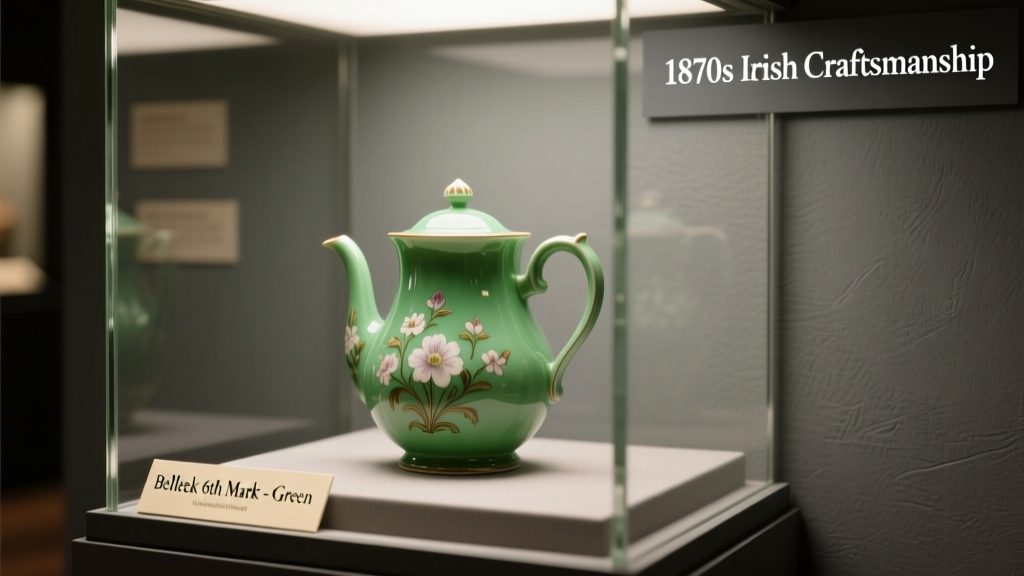
Belleek Coffeepot 'Limpet' Pattern, 6th Mark (1946–1955), Green: Authentication, Provenance, and Collectibility

The H Mark: Decoding the Hallmark of Authenticity in Vintage Sports Memorabilia
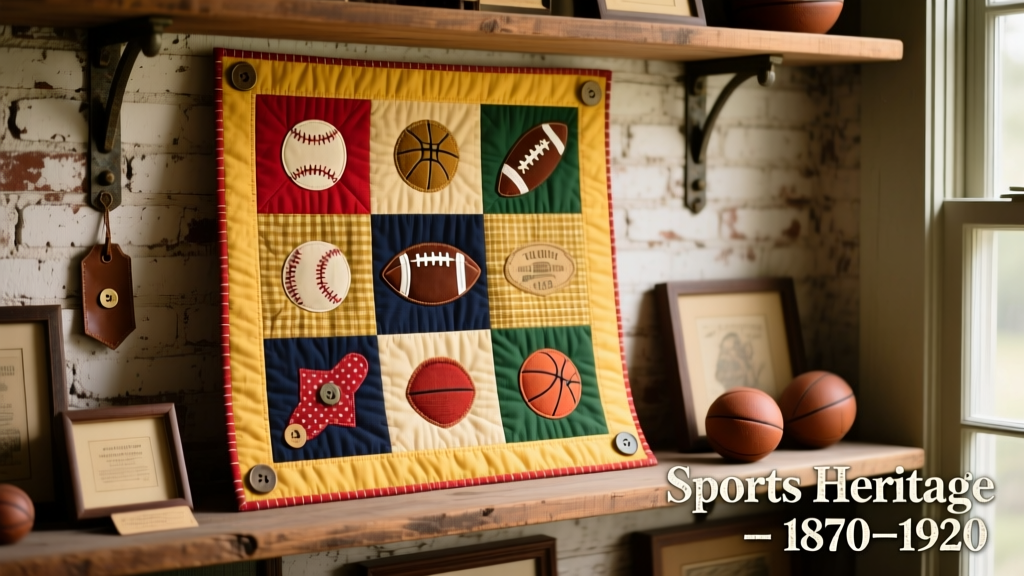
Quilts: Patchwork Nine-Patch Calicos Set on Yellow Field — A 41 × 41-Inch American Folk Art Treasure
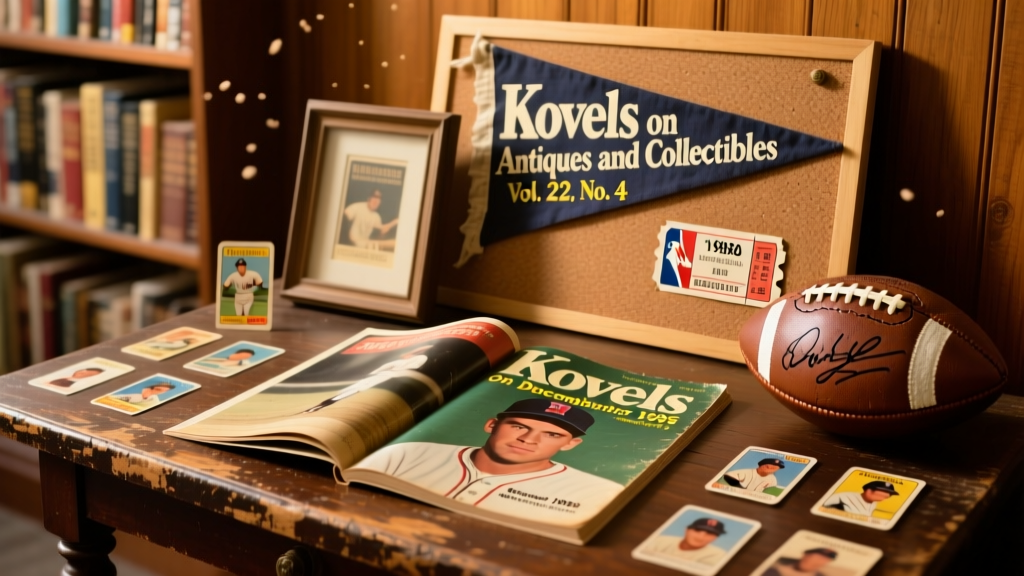
Kovels On Antiques And Collectibles Vol. 22 No. 4 (December 1995): A Collector’s Deep Dive Into Mid-1990s Market Trends, Authentication Insights, and Sports Memorabilia Milestones
Mettlach Stein No. 1995: The 1.2-Liter Tuba Player with Inlaid Lid — History, Authentication, and Market Value
Staffordshire Figurine Harlequin: Authenticating 19th-Century English Ceramic Comedy Figures
Roseville Peony Vase Gold 8-Inch: Authentication, Value, and Historical Context
Political Button For The Love Of Ike: Blue & Cream Campaign Badge, 1952, 3½ Inches
Quilts Patchwork 20 Baskets Calico Red Polished Cotton Ground: Authenticating a Mid-Century American Quilt (75 × 93 in)