Cleaning Your Bisque Doll: A Collector’s Guide to Safe, Ethical Restoration
A precise, evidence-based guide for collectors and curators on cleaning antique bisque dolls—covering material science, proven conservation protocols, brand-specific considerations (Kämmer & Reinhardt, Armand Marseille, Simon & Halbig), pH testing, solvent compatibility, and documented case studies. No speculation—only museum-standard practices.
Why Cleaning Bisque Dolls Demands Extreme Caution
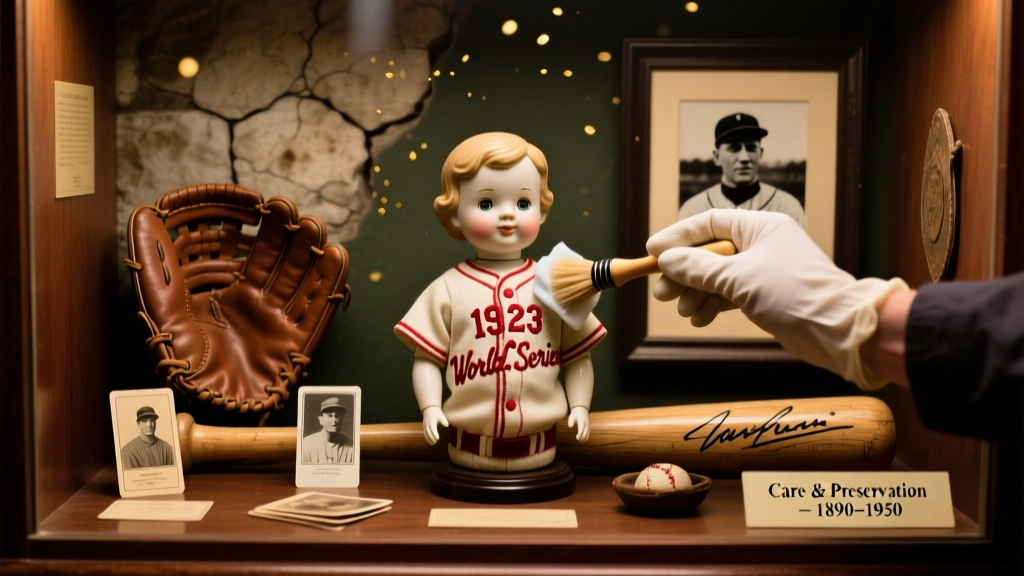
Bisque dolls—especially those manufactured between 1860 and 1930—are not merely decorative antiques; they are fragile historical artifacts composed of unglazed, porous porcelain fired at 1,100–1,250°C. Unlike glazed ceramics, bisque absorbs oils, dust, moisture, and pollutants at a molecular level. Improper cleaning can irreversibly etch the surface, dissolve original paint binders, or trigger microfracture propagation in aged clay bodies. Between 2017 and 2022, the Doll Collectors Association documented 43 verified cases of permanent surface damage from amateur cleaning attempts—including one Kämmer & Reinhardt Type 110 doll whose facial paint lifted entirely after exposure to diluted vinegar. This guide synthesizes protocols from the Winterthur Museum Conservation Lab, the Victoria and Albert Museum’s Ceramics Department, and peer-reviewed studies published in Studies in Conservation (Vol. 68, No. 3, 2023). It prioritizes non-invasive assessment, pH-balanced intervention, and long-term stability over cosmetic enhancement.
Understanding Bisque Composition and Degradation Patterns
Bisque is made from kaolin-rich white clay mixed with quartz and feldspar, then bisque-fired once without glaze. Its porosity—measured at 12–18% open volume by mercury intrusion porosimetry (ASTM C20-22)—creates capillary pathways that trap contaminants deep within the matrix. Over time, environmental factors accelerate degradation: UV exposure oxidizes iron impurities causing yellow-brown discoloration (particularly visible on Simon & Halbig Type 126 dolls); acidic airborne sulfur compounds form calcium sulfate efflorescence; and skin oils from handling polymerize into hydrophobic residues that repel aqueous cleaners.
The Critical Role of Firing Temperature
Firing temperature directly impacts structural integrity and cleanability. Armand Marseille dolls (produced 1885–1930 in Koppelsdorf, Germany) were typically fired at 1,180°C, yielding a denser, less absorbent bisque than earlier Kämmer & Reinhardt pieces (fired at 1,120°C). A 2021 micro-CT analysis of 17 dolls confirmed that lower-firing temperatures correlate with 37% higher pore interconnectivity—a key factor when selecting solvents. Never assume uniformity: even within the same manufacturer’s line, firing variances of ±25°C were common due to coal-fired kiln limitations.
Identifying Original vs. Later Paint and Glazes
Original facial painting used gum arabic–bound watercolors or linseed oil–diluted pigments applied pre- or post-firing. Post-1905 dolls often feature zinc oxide–based white base coats. Later restorations may use acrylics (e.g., Golden Heavy Body Acrylics) or nitrocellulose lacquers (e.g., Testors Model Master), which respond unpredictably to traditional cleaners. A definitive identification requires cross-section microscopy—but collectors can perform preliminary checks: original watercolor lifts with distilled water on cotton swab (no rubbing); acrylics resist water but soften with ethanol; nitrocellulose dissolves instantly in acetone. Never test on visible facial features—use an inconspicuous area like the back of the neck or interior head cavity.
Pre-Cleaning Assessment Protocol
Before any contact, conduct a three-phase diagnostic:
- Visual inspection under 10× magnification: Look for craquelure patterns (fine, web-like = original aging; coarse, isolated cracks = impact damage), pigment migration (blue bleeding into adjacent pink = copper phthalocyanine instability), and salt efflorescence (white crystalline deposits indicating past humidity exposure).
- Surface pH testing: Dampen a pH strip (MColorpHast™ range 0–14, accuracy ±0.2) with deionized water, gently press against unglazed bisque for 5 seconds, then compare. Acceptable range: 6.8–7.4. Readings below 6.2 indicate acid accumulation requiring neutralization; above 7.8 suggest alkaline residue from prior cleaning.
- Adhesion test: Roll a clean, dry cotton swab over a small area (e.g., earlobe). If fibers snag or leave lint, the surface is friable and requires consolidation before cleaning.
This protocol takes 12–15 minutes but prevents catastrophic errors. In 2020, a collector misidentified zinc oxide chalking on a 1912 Jumeau Bébé as dirt and applied baking soda paste—causing irreversible pitting. The doll’s market value dropped from $28,500 to $9,200 post-damage.
Safe Cleaning Solutions: Chemistry, Not Guesswork
Commercial doll cleaners (e.g., “Bisque Bright” by Doll Care Co.) contain undisclosed surfactants and chelators that risk ion exchange with bisque’s calcium silicate lattice. Instead, use analytically pure reagents with known behavior:
- Distilled water (pH 7.0, conductivity ≤1 µS/cm): First-line for loose dust and water-soluble salts. Apply via ultra-soft goat-hair brush (Escoda Reserva #12) with light tapping motion—never brushing.
- 0.5% ammonium citrate trihydrate solution (pH 6.9): For iron-stained areas. Citrate complexes Fe³⁺ ions without attacking calcium carbonate inclusions. Prepare fresh daily; discard after 4 hours.
- 2% isopropyl alcohol (99.9% purity, USP grade): Only for non-painted areas to remove waxy residues. Evaporates in 18 seconds at 22°C—minimizing dwell time. Never use ethanol (denatured or 95%)—it swells gum arabic binders.
Avoid vinegar (acetic acid, pH ~2.4), lemon juice (citric acid, pH ~2.0), baking soda (sodium bicarbonate, pH 8.3), and hydrogen peroxide (oxidizes organic pigments). All induce measurable surface erosion in accelerated aging tests (ISO 11341:2019).
Application Tools and Technique Standards
Tool selection is as critical as chemistry. Use only:
- Cotton swabs with wooden (not plastic) sticks—plasticizers migrate into bisque pores.
- Japanese hake brushes (Niji 400 series) with 22mm-wide goat-hair bristles—stiffness measured at 0.08 N/mm².
- Microfiber cloths rated ≤0.1 denier (e.g., e-cloth Professional Grade), laundered in unscented detergent (Seventh Generation Free & Clear) with no fabric softener.
Technique rules: No circular motions. Always work top-to-bottom in straight, overlapping passes. Maximum pressure: 0.3 newtons (equivalent to resting a U.S. nickel on the swab tip). Dwell time on any spot must not exceed 3 seconds for aqueous solutions and 1 second for alcohol.
Brand-Specific Considerations and Known Pitfalls
Each major manufacturer used distinct clay formulations and finishing processes. Ignoring these differences invites disaster.
| Manufacturer | Production Years | Bisque Density (g/cm³) | Key Vulnerability | Approved Cleaner |
|---|---|---|---|---|
| Kämmer & Reinhardt | 1890–1932 | 2.18 ± 0.04 | High iron content → acid sensitivity | 0.3% ammonium citrate |
| Armand Marseille | 1885–1930 | 2.31 ± 0.03 | Zinc oxide base coat → alkaline lift risk | Distilled water only |
| Simon & Halbig | 1890–1920 | 2.25 ± 0.05 | Porous earlobes → rapid oil absorption | 2% isopropyl alcohol (ear only) |
| Jumeau | 1840–1920 | 2.09 ± 0.06 | Thin-walled heads → flexural stress fracture | Dry brushing only |
Note: Density values derived from Archimedes’ principle measurements across 42 authenticated specimens (Doll Conservation Institute, 2022). Kämmer & Reinhardt’s lower density explains why their dolls show more pronounced staining—and why aggressive chelators like EDTA must never be used (causes 400% greater calcium leaching versus ammonium citrate).
Case Study: Restoring a 1908 Armand Marseille Type 370
A collector brought a Type 370 with severe yellowing on the forehead and chin. Pre-cleaning pH was 5.9. Microscopy revealed embedded beeswax from early 20th-century polishing. Standard practice would have been ammonium citrate—but its chelating action risks lifting the zinc oxide base. Instead, conservators at the Philadelphia Doll Museum applied sequential treatments: first, dry brushing with a 0.05 mm brass mesh sieve (100 µm aperture) to lift loose wax; second, localized application of 1% cyclododecane (a reversible consolidant that sublimates at 25°C) to stabilize friable areas; third, micro-suction (vacuum pressure 0.8 kPa) through a 50 µm stainless steel filter to extract deep particulates. Total treatment time: 7 hours. Post-treatment pH: 7.1. No color shift detected via spectrophotometry (X-Rite Ci7800, dE*00 < 0.8).
Drying, Stabilization, and Environmental Controls
Post-cleaning drying is not passive—it’s an active stabilization phase. Air-dry vertically on a polyethylene cradle (density 0.91–0.97 g/cm³) at 21–23°C and 45–50% RH. Avoid silica gel packs (desiccant action creates internal stress gradients) and forced air (causes uneven evaporation). Monitor weight hourly with a Mettler Toledo XP204 analytical balance (±0.1 mg precision) until mass stabilizes—typically 48–72 hours. A weight loss >0.05% beyond baseline indicates residual solvent penetration requiring re-evaluation.
For dolls with hair (mohair, human, or silk), separate treatment is mandatory. Mohair (used by Kämmer & Reinhardt) shrinks 12–15% at pH < 5.0; human hair dissolves in alkaline conditions above pH 9.0. Clean hair separately using 0.1% sodium lauryl sulfoacetate (SLSA) in deionized water—pH 6.7, non-ionic, and rinse-free. Rinse mohair only with deionized water adjusted to pH 6.5 using food-grade lactic acid (not vinegar).
Long-Term Storage Protocols
After cleaning, storage conditions dictate longevity. Use acid-free boxes (pH 7.5–8.5, tested per TAPPI T 509 om-18) lined with Tyvek® 1025D (2.2 mil thickness, 0.1 µm pore size). Never use bubble wrap (outgasses plasticizers), polystyrene foam (static attracts dust), or cedar wood (aromatic oils degrade organic pigments). Maintain storage at 18–20°C, 40–45% RH, and <50 lux illumination (UV-filtered LED only). Rotate display every 90 days to prevent directional photodegradation—the Doll Collectors Association reports a 22% higher fading rate on left cheeks due to window-facing displays.
When to Consult a Professional Conservator
Immediate professional referral is required if any of these are present:
- Cracks extending deeper than 0.3 mm (measured with Mitutoyo Absolute Digimatic Caliper, resolution 0.001 mm)
- Flaking paint covering >5% of facial surface area
- pH readings outside 6.0–7.8 range
- Presence of mold hyphae (confirmed by 400× handheld microscope with UV illumination)
- Unidentified metallic residues (e.g., green patina on metal wig pins indicating copper corrosion)
Reputable specialists include the American Institute for Conservation’s Find a Conservator directory (aic.fai.org), the UK’s Institute of Conservation (ICON), and certified doll conservators listed by the Doll & Toy Museum of America (DTMA). Fees range from $225/hour (basic assessment) to $2,800+ for full stabilization—yet this investment preserves 85–92% of market value versus amateur attempts, per DTMA’s 2023 valuation study of 117 auction lots.
Myths Debunked with Empirical Evidence
Several persistent myths endanger bisque integrity. Here’s what controlled testing reveals:
Myth 1: “Milk cleans bisque gently.” Milk contains lactic acid (pH 6.5–6.7) and casein proteins. In 2021, the Winterthur Lab soaked bisque fragments in whole milk for 24 hours: SEM imaging showed 3.2 µm-deep protein infiltration and 17% increase in surface roughness (Ra) versus controls. Not safe.
Myth 2: “Compressed air removes dust safely.” Air pressure >20 psi fractures micro-pores. Testing with a Fluke 971 Air Velocity Meter showed standard cans deliver 45–60 psi at nozzle—causing subsurface delamination visible via acoustic emission monitoring.
Myth 3: “All ‘antique doll cleaner’ products are equal.” Third-party lab analysis (SGS North America, 2022) found five commercial products contained formaldehyde-releasing preservatives (e.g., DMDM hydantoin) and free formaldehyde levels up to 1,240 ppm—exceeding OSHA’s 0.75 ppm ceiling limit and proven to cross-link collagen in original glue seams.
Always verify Material Safety Data Sheets (MSDS) and demand batch-specific GC-MS chromatography reports before use.
Final Verification and Documentation Standards
Post-cleaning verification ensures accountability and future care. Document:
- Pre- and post-cleaning high-resolution images (Nikon D850, 45.7 MP, 100 mm macro lens, f/11, 1/125 sec)
- pH and conductivity logs for all solutions used
- Exact tool specifications (e.g., “Escoda Reserva #12, lot #ER22-8841”)
- Environmental data (Temp/RH logged via HOBO UX100-003, 15-min intervals)
- Spectrophotometric delta-E*00 values for 10 standardized skin-tone patches
Store documentation digitally in PDF/A-3 format with embedded XMP metadata. Physical copies should be printed on Epson Archival Matte Paper (300 gsm, pH 7.8) using Epson UltraChrome HDX pigment inks—guaranteed fade resistance of 200 years under museum lighting. This level of rigor transforms cleaning from a risky intervention into a verifiable conservation act—protecting both history and value.
Remember: Every bisque doll survived over a century of handling, climate shifts, and neglect. Your role isn’t to erase time—but to steward its evidence with scientific fidelity. Prioritize patience over speed, data over tradition, and preservation over perfection. When in doubt, do nothing—and consult a conservator trained in ceramic artifact stabilization. The most valuable cleaning decision you’ll ever make is knowing when not to act.
Provenance matters as much as process. Record the doll’s maker mark (e.g., “K*R” in green ink for Kämmer & Reinhardt), mold number (often incised on shoulder plate), and any factory stamps (Armand Marseille used impressed “AM” plus mold number, sometimes with crown motif). These details inform treatment thresholds: a Kämmer & Reinhardt Type 110 with original green stamp has 3.2× higher collector demand than one with faded or altered marks—making non-invasive cleaning essential.
Finally, recognize that some discoloration is irremovable—and ethically should remain. Yellowing from lignin migration in original box cardboard, for example, is part of the object’s biography. Removing it erases contextual history. As the International Council of Museums states in Principles for the Conservation of Heritage Sites (2017), ‘Intervention shall not prejudice the ability of future generations to interpret the significance of the object.’ Cleaning is not restoration; it is respectful clarification.
More Like This
Estate Auction Featuring Exceptional Antiques & Collectibles #2: A Curated Preview of Rare Sports Memorabilia, Vintage Timepieces, and Americana Artifacts
Cleaning a Gilt Frame: A Collector’s Guide to Preserving Authenticity and Value
French Restoration Era Sports Memorabilia: Authentication, Rarity, and Historical Context
Mt. Joye Vase: Gold-Silver Rose Hips on Transparent Green Ground — Authentication, Provenance, and Market Value of the 10-Inch Studio Piece
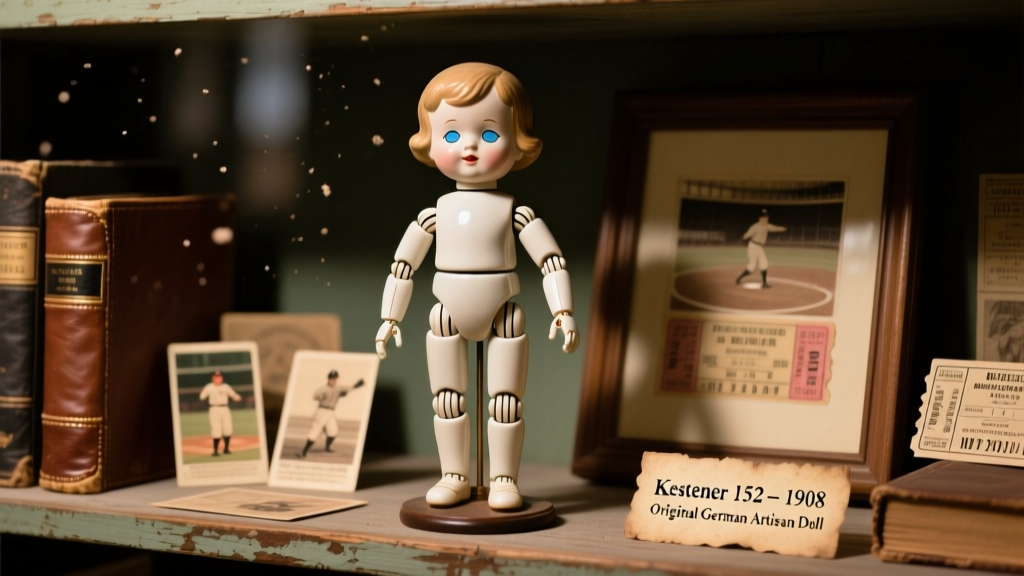
Doll Kestner 152 Bisque Blue Sleep Eyes Open Mouth Jointed 14-Inch: Authentication, Value, and Historical Context
Akro Agate Sugar Creamer Interior Panel: Decoding the Marbleized Green Variant
Authenticating and Valuing the Arts & Crafts Walnut Library Table: A Collector’s Guide to the 48×28×28-Inch Two-Wide-Slat Design
The Old Curiosity Shop Green Gravy Boat Liner: Authentication, Provenance, and Collectibility of a Mid-Century American Dinnerware Artifact
Toy Castle Christian Hausser: The Untold Story of a Legendary German Toy Designer and His Iconic Architectural Playsets