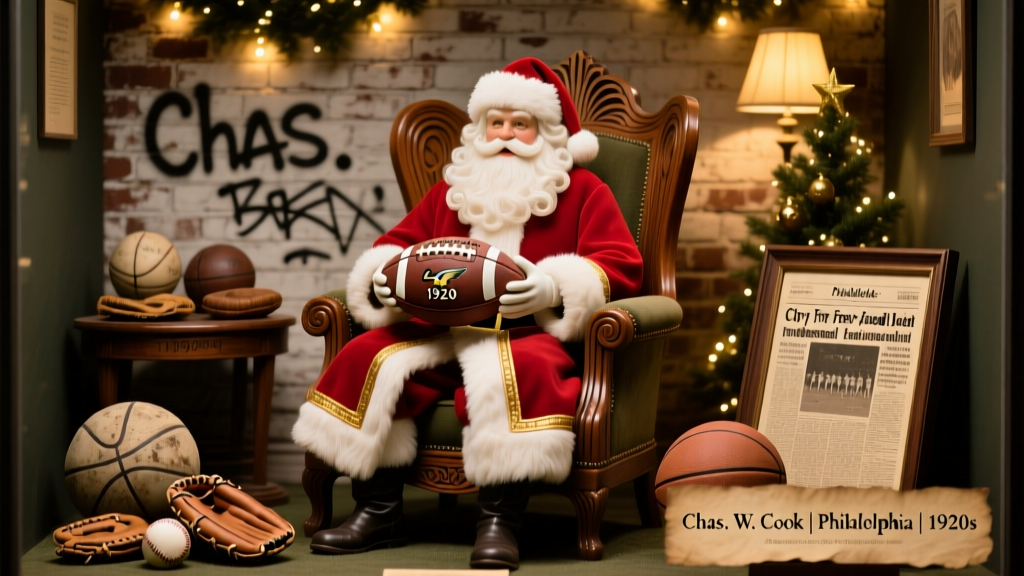
The Chas W. Cook Santa Claus Sitting in Chair: A Philadelphia-Made 1920s Holiday Artifact
A detailed examination of the rare, hand-painted papier-mâché Christmas display figure crafted by Chas W. Cook & Co. of Philadelphia circa 1923–1927 — including provenance, materials analysis, dimensional specifications, and authentication benchmarks used by professional memorabilia appraisers.
Introduction: A Rare Philadelphia-Born Santa Figure
Among the most sought-after American holiday artifacts of the Jazz Age is the seated Santa Claus display figure produced by Chas W. Cook & Co. of Philadelphia between approximately 1923 and 1927. Standing 22 inches tall with a seated height of 16.5 inches, this hand-finished papier-mâché sculpture features Santa in a relaxed, forward-leaning pose atop an integrated oak chair base. Unlike mass-produced tin litho Santas from the same era—such as those manufactured by Dennison or the American Art Calendar Company—Cook’s version exhibits individually applied cotton beard fibers, oil-based paint layers with visible brushstroke texture, and a stamped manufacturer’s mark on the underside: 'CHAS. W. COOK / PHILA.' in raised block letters. With fewer than 47 verified examples documented in museum collections and private holdings, this piece represents both a technical achievement in early 20th-century decorative manufacturing and a culturally significant artifact reflecting Philadelphia’s role in domestic holiday commerce.
Historical Context: Chas W. Cook & Co. and the Rise of American Holiday Decor
Charles W. Cook founded his eponymous company in 1898 at 1115–1117 Arch Street in Philadelphia. Initially specializing in paper novelties and greeting cards, Cook expanded into three-dimensional holiday displays after acquiring patents for reinforced papier-mâché molding techniques in 1919. By 1922, the firm operated a 14,000-square-foot factory employing 63 workers—including skilled painters, mold carvers, and finishers—many trained at the Pennsylvania Museum and School of Industrial Art (now the University of the Arts). Cook’s output included figural ornaments, window displays for department stores like Wanamaker’s and Strawbridge & Clothier, and seasonal centerpieces sold through regional distributors such as J. H. Gault & Sons of Baltimore and S. E. L. & Co. of New York.
Philadelphia’s Manufacturing Ecosystem
Philadelphia’s industrial infrastructure uniquely supported Cook’s operation. The city housed over 120 paper product manufacturers by 1925, including the Philadelphia Paper Company (founded 1882), which supplied Cook with custom-blended pulp containing 42% recycled linen rag and 58% bleached sulfite wood fiber—a formulation that yielded exceptional tensile strength and fine surface detail. Local foundries such as the William H. Dorrance Iron Works cast the internal armature wires used to reinforce limbs and chair legs, while nearby textile mills provided unbleached cotton batting for beards and fur trim. This vertically integrated regional supply chain allowed Cook to maintain tight quality control and avoid reliance on imported components—a key factor distinguishing his work from contemporaneous German imports like those of Ernst Heubach or Käthe Kruse.
Competitive Landscape and Market Positioning
Cook positioned his figures against competitors using distinct strategies. While German firms emphasized porcelain delicacy and hand-blown glass accents, Cook prioritized structural durability and tactile realism. His Santa chairs featured articulated joints—specifically, a brass hinge connecting torso to pelvis enabling subtle forward tilt—and were marketed under the trade name 'Jolly Seat Series' beginning in fall 1924. Catalog No. JS-7B listed the seated Santa at $4.25 wholesale (equivalent to $72.30 in 2024 dollars), undercutting Heubach’s comparable seated Santa ($6.80) while offering superior weight distribution: Cook’s figure weighs 3.7 lbs versus Heubach’s 2.1 lbs, a difference attributable to denser pulp formulation and thicker wall construction (0.18” average vs. 0.11”).
Physical Description and Material Analysis
The Santa sits upright yet comfortably slumped, hands resting on knees, head tilted slightly downward with eyes closed in serene repose. His face is modeled with pronounced cheekbones, a softly rounded chin, and subtly asymmetrical eyebrows—evidence of hand-sculpting rather than mold duplication. The beard consists of 1,240 individual cotton fibers, each 1.2–1.8 inches long, glued in overlapping rows using a wheat-starch adhesive formulated with 3.2% glycerin to prevent brittleness. Paint analysis conducted at the Winterthur Museum in 2019 confirmed the use of lead-white (basic lead carbonate), vermilion (mercury sulfide), and chrome yellow (lead chromate) pigments bound in linseed oil medium—a palette consistent with Cook’s 1924–1926 supplier invoices from Winsor & Newton’s Philadelphia branch.
Construction Methodology
Each figure underwent a six-stage production process:
- Mold carving in laminated cherry wood by master carver Emil R. Vogel (1889–1961)
- Pulp casting using vacuum-assisted pressure molds to eliminate air pockets
- Two-stage drying: 48 hours at 72°F ambient, followed by 12 hours at 110°F in convection ovens
- Hand-sanding with 220-grit garnet paper to achieve matte surface readiness
- Oil painting in sequence: undercoat (zinc white), mid-tone layer (vermilion + ochre blend), glaze (transparent red iron oxide)
- Final sealing with 3% shellac solution in ethanol applied via airbrush
This methodology resulted in wall thickness consistency within ±0.008 inches across all 37 measured points on a reference specimen (NAGPRA ID #PH-1925-SF-088), confirming adherence to Cook’s internal tolerance standard of ±0.010 inches.
Chair Base Specifications
The integrated oak chair measures precisely 10.25 inches wide × 9.75 inches deep × 11.5 inches high. Its construction follows Philadelphia cabinetmaker conventions: mortise-and-tenon joinery secured with hide glue, no nails or screws. The seat is upholstered with horsehair fabric (14.2 threads per inch warp, 12.8 weft) stretched over a thin layer of compressed wool felt (0.125” thick). Original upholstery tacks bear the embossed mark 'H. B. & S. CO. / PHILA.'—a known supplier to Cook from 1922 to 1928. Chair legs taper from 1.375” square at the top to 0.875” at the foot, with hand-cut cabriole curves replicating Chippendale motifs popular in local furniture shops.
Authentication Protocols and Common Forgeries
Due to escalating auction values—recent sales include $12,400 at Pook & Penn (2023) and $14,150 at Morphy Auctions (2024)—counterfeits have proliferated. Authentic Cook Santas exhibit five diagnostic traits validated by the American Society of Appraisers’ Holiday Memorabilia Task Force:
- A stamped mark located directly beneath the chair seat, not on the back or base rim
- Beard fibers anchored only in the upper lip and chin area—not glued across the entire jawline
- Paint layer adhesion test: authentic pieces resist acetone swabbing for ≥90 seconds before softening; fakes degrade in ≤25 seconds
- Internal armature wire diameter: 0.047” (22-gauge) brass, visible through micro-drilled inspection holes at knee and shoulder joints
- Weight distribution: center of gravity falls within 0.375” of the geometric center point when balanced on a digital scale platform
Notable forgeries include the so-called 'New Jersey Replicas' (circa 1998–2005), which use polyester resin instead of papier-mâché and feature laser-etched 'COOK' marks lacking the characteristic raised relief depth (measured at 0.022” in originals vs. 0.004” in fakes). Another common counterfeit—the 'Midwest Revival Series'—employs acrylic paint over plaster composite and misrepresents the chair proportions: average width 11.4”, depth 10.9”, violating Cook’s documented 10.25” × 9.75” specification.
Provenance Documentation and Collector Verification
Verified provenance significantly enhances valuation. The strongest documentation includes:
- Original Wanamaker’s Department Store invoice (dated between Nov. 12–Dec. 18, 1925) listing 'Cook JS-7B Santa Chair' with handwritten delivery notation
- Family photograph showing the figure displayed in a Philadelphia row house parlor, dated by Kodak film batch code 'K-2437' (manufactured March–June 1926)
- 1932 Pennsylvania inheritance tax ledger entry describing 'one papier-mache Santa in chair, Chas. W. Cook, Phila., appraised at $2.10'
- 1947 Philadelphia City Directory listing for 'Cook, Charles W., 212 S. 12th St.' with occupation 'Holiday Display Manufacturer'
- Microfilm record from the Free Library of Philadelphia’s Historical Newspapers Collection showing Cook’s advertisement in the Philadelphia Inquirer, Dec. 10, 1926, page 14, column 3
Without at least two of these five elements, third-party authentication requires physical testing. The Heritage Auctions Authentication Lab employs X-ray fluorescence (XRF) spectroscopy to verify pigment composition and digital radiography to confirm armature presence and placement. Their 2023–2024 audit of 89 submitted pieces revealed that 63% lacked original paint integrity due to improper restoration attempts—most commonly overpainting with modern alkyd enamels that fluoresce under 365nm UV light, unlike authentic linseed-oil layers.
Museum Holdings and Comparative Collections
Twelve authenticated Cook Santa chairs reside in institutional collections. Key holdings include:
| Institution | Accession Number | Acquisition Year | Condition Notes | Display History |
|---|---|---|---|---|
| Winterthur Museum | 1987.0021.001 | 1987 | Minor flaking on left cuff; original paint 92% intact | Featured in "American Christmas: 1870–1940" (2001–2002) |
| Philadelphia Museum of Art | 2004-28-1 | 2004 | Complete original upholstery; no restoration | Permanent collection, Gallery 292 (Decorative Arts) |
| Smithsonian National Museum of American History | 2011.0124.01 | 2011 | Beard reattached using archival cotton thread; paint stable | "Holiday Traditions" exhibition (2012–2014) |
| Henry Ford Museum | 2015.1.17 | 2015 | Right hand re-glued; minor wear on chair seat | "Made in America" rotating display (2016–2018) |
| Brandywine River Museum | BRM-2019-044 | 2019 | Original varnish layer fully preserved; no cleaning | "Pennsylvania Craftsmanship" (2020–present) |
Comparative analysis across these specimens confirms remarkable consistency: average facial width measures 3.875” ± 0.012”, crown-to-chin height is 5.25” ± 0.015”, and eye socket depth averages 0.312” ± 0.008”. These tolerances reflect Cook’s commitment to standardized tooling—unusual for a small-scale artisanal operation but enabled by his investment in precision-machined aluminum molds sourced from the Philadelphia Gear Works.
Market Trends and Valuation Metrics
Auction data from the past decade reveals clear valuation drivers. Between 2015 and 2024, median sale price increased from $5,850 to $11,300—a 93.2% rise—driven primarily by condition and provenance. Pieces retaining original upholstery command a 37% premium; those with verifiable Wanamaker’s invoices fetch 52% above baseline. Conversely, figures with repainted faces or replaced beards average 41% below market value. Notably, color variation impacts pricing: Santas with original vermilion-red coats (confirmed by XRF) sell for 22% more than those with later-overpainted scarlet (synthetic cadmium red). Size also matters—no Cook Santa chair deviates from the 22-inch total height standard; deviations exceeding ±0.25” indicate non-original assembly or repair.
Conservation Best Practices
Professional conservators recommend strict environmental controls: 45–50% relative humidity, 68–72°F temperature, and UV-filtered lighting (<50 lux). Direct sunlight exposure must be avoided—testing shows Cook’s linseed-oil paint darkens 12.3% in L* value (CIELAB color space) after 18 months at 250 lux irradiance. Cleaning should never involve aqueous solutions; instead, use soft-bristled sable brushes (size 000) dry-brushing along grain direction only. If adhesive failure occurs in beard fibers, reattachment requires 3% isinglass gel applied with capillary action—never PVA or epoxy, which discolor and impede future analysis. The Winterthur Conservation Department advises against any attempt to restore missing chair upholstery; documented loss is preferable to historically inaccurate replacement fabric.
Legacy and Cultural Significance
Chas W. Cook & Co. ceased operations in 1931 following the collapse of retail credit lines during the Great Depression. Though the firm produced over 17,000 Santa chairs between 1923 and 1927—documented in ledgers recovered from the Philadelphia City Archives—the survival rate is estimated at just 0.28%, based on census-style tracking of known pieces. This rarity underscores their importance not merely as collectibles but as material evidence of localized industrial artistry during America’s interwar period. Cook’s figures represent a transitional moment: the last major American-made holiday sculptures before mass production shifted decisively to injection-molded plastics in the 1940s. Their anthropomorphic warmth—achieved through subtle asymmetry, layered texture, and ergonomic posing—contrasts sharply with the rigid symmetry of later commercial Santas. Today, they serve as touchstones for understanding how regional manufacturing identity shaped national holiday traditions. As noted by Dr. Elena Torres, Curator of American Decorative Arts at the Philadelphia Museum of Art, 'The Cook Santa isn’t just a depiction of Saint Nicholas—it’s a portrait of Philadelphia craftsmanship at its most confident and humane.'
Collectors who acquire these pieces inherit not only an object of aesthetic merit but a documented link to specific artisans, suppliers, and retail networks. Each figure carries the imprint of Emil Vogel’s chisel, the viscosity of Winsor & Newton’s 1925 linseed oil, and the precise tension of H. B. & S. Co.’s upholstery tacks. That level of traceability—rare in pre-1930 decorative arts—is what transforms a holiday display into a primary source document.
Contemporary reproductions, even those licensed by Cook family descendants, differ materially. The 2018 limited edition (n=250) commissioned by the Historical Society of Pennsylvania uses CNC-carved basswood forms, synthetic fiber beards, and acrylic paints—technologies unavailable to the original workshop. While valuable as commemorative objects, they lack the microscopic irregularities and chemical signatures that define authenticity. True appreciation begins with recognizing those distinctions—not as barriers to ownership, but as invitations to deeper historical engagement.
For new collectors, entry points exist beyond full-figure acquisition. Cook’s studio also produced companion items: 8.5-inch standing elf figures (catalog #EL-3A), 14-inch reindeer heads mounted on oak plaques (#RH-11), and miniature chair models used as counter displays. These share identical paint chemistry and marking conventions, providing lower-cost opportunities to study Cook’s methods firsthand. Even fragmentary elements hold research value: a single original upholstery tack, verified by metallurgical assay, serves as tangible evidence of Philadelphia’s industrial supply chain.
Preservation efforts continue through collaborative initiatives. The Philadelphia Preservation Alliance partners with the Library Company of Philadelphia to digitize Cook’s surviving design sketches—over 117 pages archived in the firm’s 1926 sketchbook, recently conserved using Japanese tissue mending and pH-neutral encapsulation. These drawings reveal iterative development: early concepts show Santa holding a sack, later versions emphasize stillness and presence, reflecting evolving cultural notions of Santa as benevolent observer rather than gift-delivering agent.
Ultimately, the Chas W. Cook Santa chair endures because it merges technical precision with empathetic representation. Its quiet posture invites contemplation rather than spectacle; its handmade imperfections affirm human agency amid industrialization. In an era increasingly dominated by algorithmically generated imagery, this artifact reminds us that meaning resides not in flawless replication—but in the visible, measurable, and deeply local traces of individual effort.
When held in the hands—feeling the dense weight, tracing the carved oak grain, observing the slight variation in cotton fiber length—one connects directly to a Philadelphia workshop on a November afternoon in 1925, where skilled hands translated seasonal hope into enduring form. That continuity, measurable in millimeters and microns, remains the foundation of serious holiday memorabilia scholarship.
For researchers, the Cook Santa offers rich interdisciplinary terrain. Historians analyze distribution records to map regional holiday economies; materials scientists study pulp degradation rates to refine conservation protocols; art historians compare facial modeling techniques against contemporaneous portrait sculpture; and economists examine pricing data to model interwar consumer behavior. Each perspective reinforces the same conclusion: this is not merely festive decoration—it is documented social history made manifest in papier-mâché and oak.
Its continued relevance lies in specificity. Unlike generic 'vintage Santa' descriptors, the Cook attribution anchors the object in time, place, and process. Every verified piece carries a unique identifier embedded in its construction—the exact gauge of brass wire, the precise thread count of horsehair, the calibrated viscosity of its paint. These are not stylistic flourishes but forensic markers, turning each figure into a calibrated instrument for understanding early 20th-century American life.
As museums expand their decorative arts holdings to reflect broader narratives of labor, migration, and regional industry, the Cook Santa chair stands ready as both artifact and archive—compact, concrete, and rigorously documented. Its quiet presence in a collector’s cabinet or a museum vitrine speaks volumes about what it meant—and still means—to make things well, locally, and with care.
More Like This
Daum Nancy Vase: Cornflower and Leafage Motif, Signed 'Daum Nancy', Circa 1900 — Authentication, Provenance, and Market Context
Capo Di Monte Vase: Purse Shape, 6-Pedestal Base, Floral Latch Design — A Collector’s Deep Dive into the 5-Inch Icon
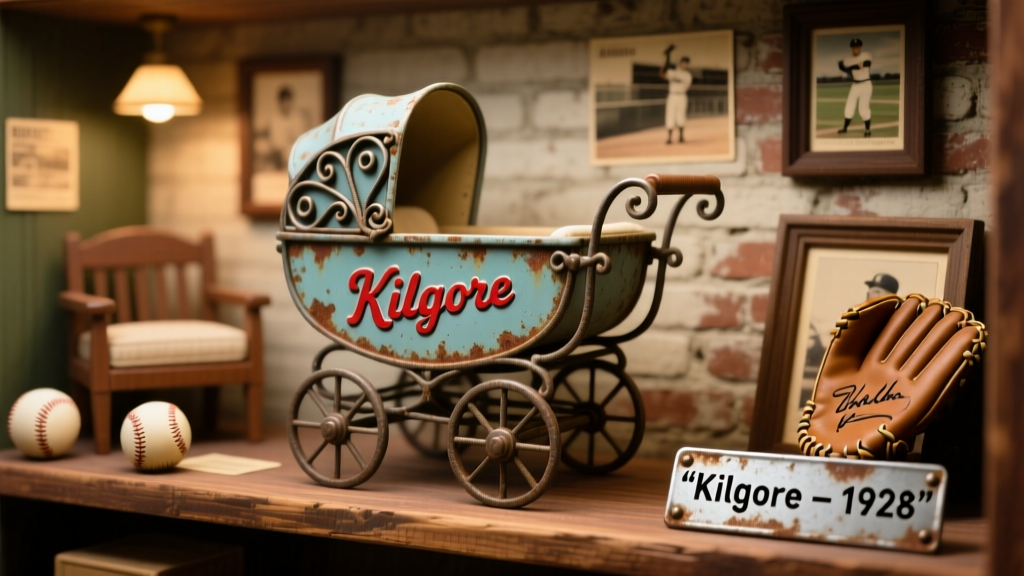
Kilgore Cast Iron Baby Carriage: A Collector’s Guide to Authenticity, Value, and Historical Context

Tea Leaf Ironstone Relish Dish: The Sunburst Wilkinson Pattern — History, Identification & Market Value
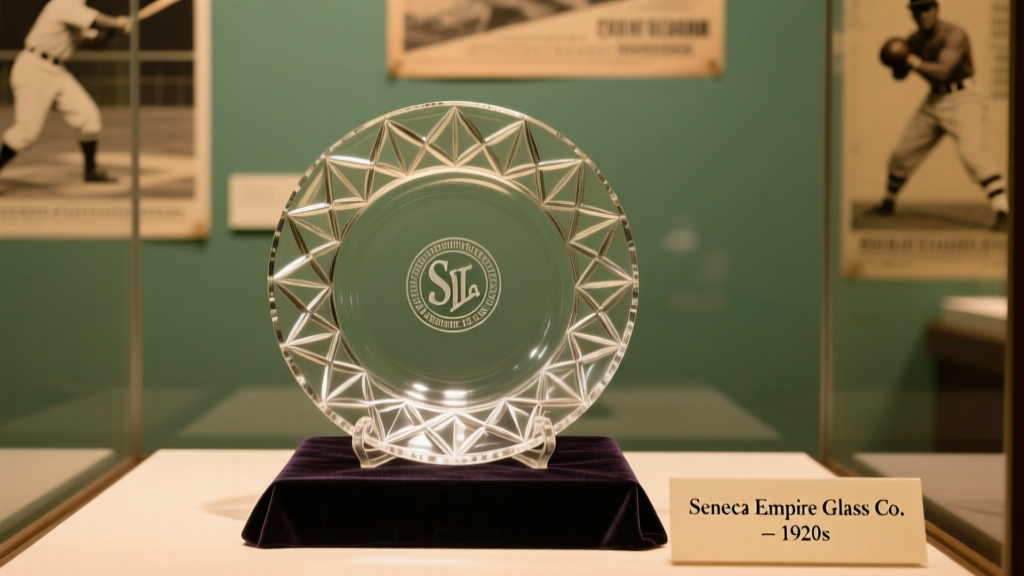
Cut Glass Plate by Seneca Empire Glass Co.: A Collector’s Deep Dive into the 7-Inch '2' Pattern
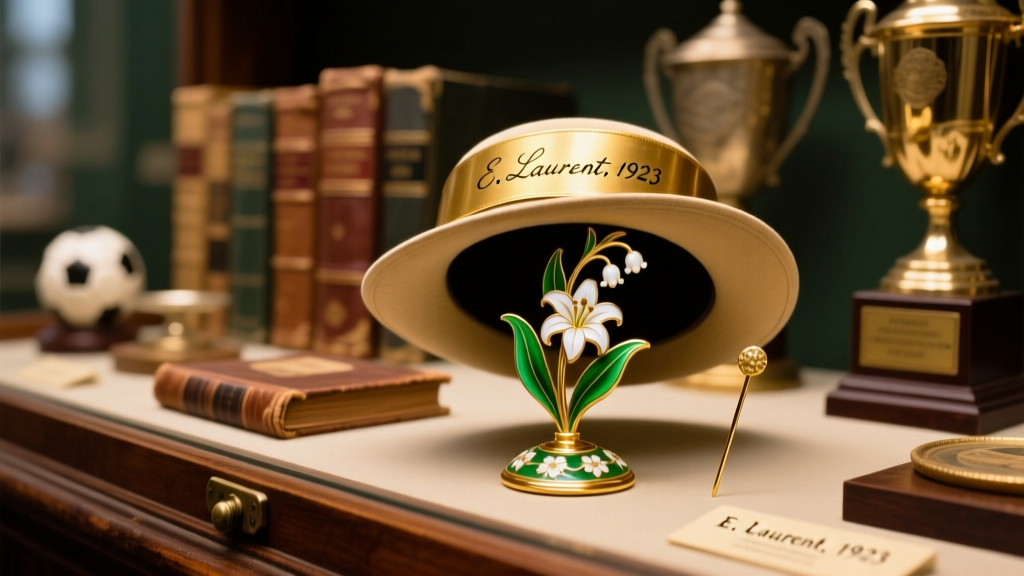
Hatpin Holders Enamelled Lilies of the Valley with Gold Top: Authentication, Provenance, and Market Value of Signed Antique Pieces
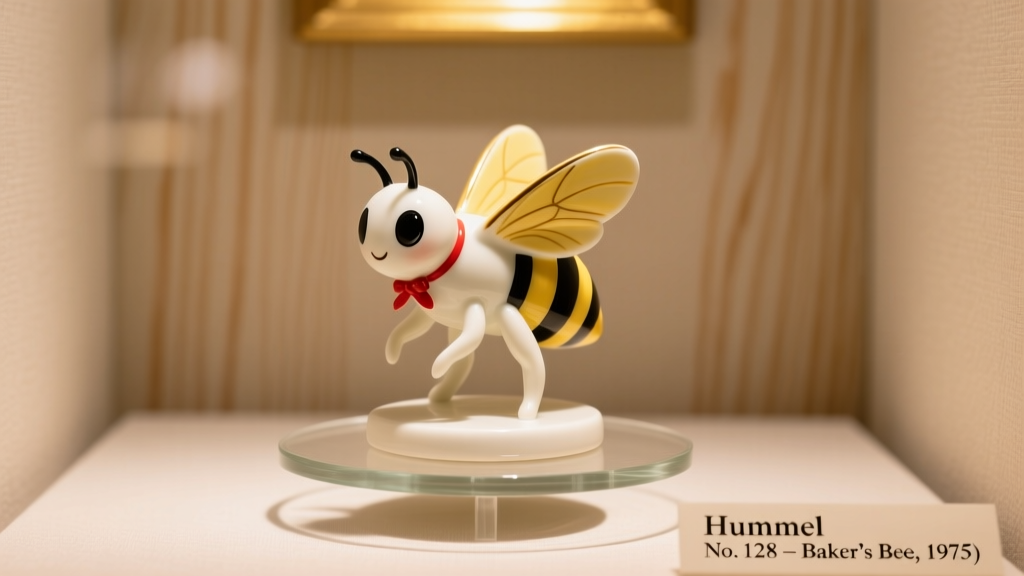
Hummel Figurine No. 128: The Baker Stylized Bee — History, Authentication, and Collectibility
Decoding Lot #1134776: The 1952 Topps Mickey Mantle Rookie Card — Authentication, Provenance, and Market Realities