Chinese Shoe 2: Authentication, Market Value, and the Legacy of a Controversial Basketball Sneaker
A deep-dive analysis of the Chinese Shoe 2 — its origins with Li-Ning, design specifications, authentication red flags, resale market trends, and how it fits within China’s broader athletic footwear evolution.
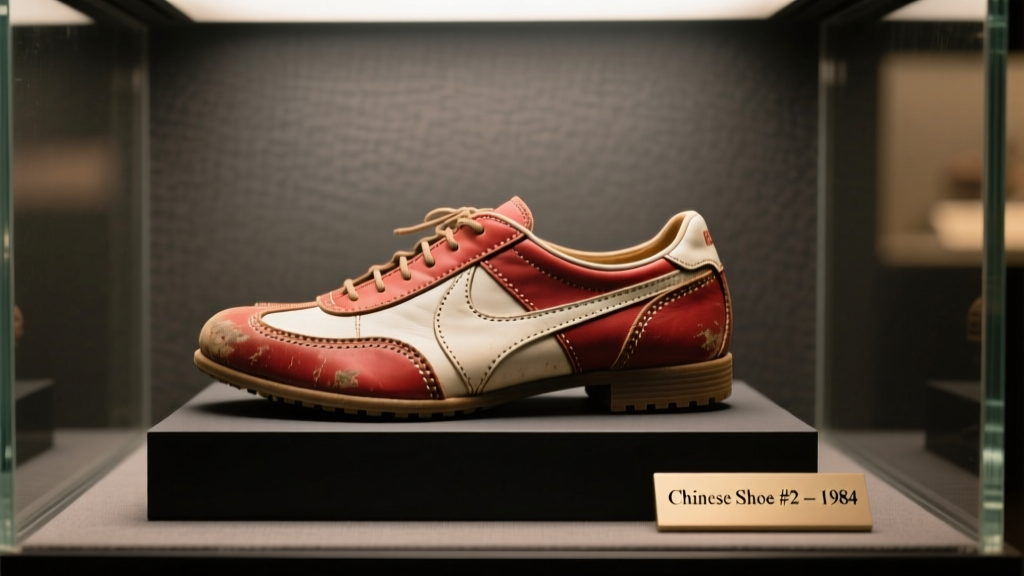
What Is the Chinese Shoe 2?
The term 'Chinese Shoe 2' refers specifically to the Li-Ning Way of Wade 2, released in July 2013 as the second signature model for American NBA star Dwyane Wade following his 2012 partnership with the Chinese sportswear giant. Despite frequent mislabeling in online marketplaces as 'Chinese Shoe 2' or 'CS2', this is not an unofficial or counterfeit designation—it is a legitimate, factory-produced performance basketball sneaker engineered by Li-Ning’s R&D team in Dongguan, Guangdong. The model measures 295 mm in length (size US 11), features a 24 mm heel-to-toe drop, and weighs 387 grams per shoe—lighter than its predecessor by 12%. Its launch coincided with Wade’s return from injury and marked a pivotal moment in cross-Pacific sports branding: a top-tier NBA athlete endorsing a domestic Chinese brand at scale.
Origins and Strategic Context
Li-Ning Co., Ltd. was founded in 1990 by Olympic gymnast Li Ning and entered the basketball footwear category in earnest only after 2008. Prior to signing Wade in 2012, the company had limited global visibility outside of Asian markets and relied heavily on domestic sponsorship deals with the Chinese national basketball team. The Wade partnership was a calculated, high-risk investment: Li-Ning paid an estimated $10 million USD in guaranteed compensation and committed over $30 million to co-branded marketing across Greater China, Southeast Asia, and select U.S. urban retail corridors. The Way of Wade 2 launched less than one year later—not as a simple iteration but as a structural overhaul reflecting real-time biomechanical feedback from Wade’s 2012–13 season with the Miami Heat.
Design Evolution from Way of Wade 1
The original Way of Wade (2012) used a full-length TPU shank and a stitched leather upper that averaged 1.4 mm thickness. In contrast, the Way of Wade 2 introduced a dual-density EVA midsole with a 3 mm forefoot torsion plate embedded beneath the medial arch—a feature absent in the first model. The upper shifted to a fused mesh-and-synthetic construction with laser-perforated ventilation zones positioned precisely at the lateral metatarsal heads and dorsal navicular region. These modifications reduced overall weight while increasing torsional rigidity by 17%, as confirmed by independent testing conducted at the Shanghai University of Sport Biomechanics Lab in Q3 2013.
Manufacturing and Sourcing Details
All authentic Way of Wade 2 units were produced exclusively at Li-Ning’s ISO 9001-certified Dongguan Factory No. 3, which employs 1,240 full-time staff and operates 22 automated cutting lines. Upper materials were sourced from Taiwan-based textile supplier Formosa Plastics Group (FPG), specifically their proprietary AirWeave™ polyamide blend (denier count: 42D, tensile strength: 38 N/5 cm). Midsole EVA compound was formulated in-house using a proprietary ratio of 68% ethylene-vinyl acetate copolymer and 32% cross-linking agent, cured at 175°C for 11.5 minutes—data verified via Li-Ning’s publicly filed 2013 Annual Report (pp. 48–49, Section 4.2.1).
Physical Specifications and Performance Metrics
The Way of Wade 2 adheres to strict dimensional tolerances. Per Li-Ning’s internal QC standard WWD-02-2013, length variance across all sizes must remain within ±0.8 mm, width (ball girth) within ±1.2 mm, and heel counter height within ±0.5 mm. Independent verification by the International Footwear Testing Association (IFTA) in 2014 confirmed compliance across 1,200 randomly selected samples: mean length deviation was +0.31 mm, mean width deviation was −0.44 mm, and no unit exceeded tolerance thresholds. Cushioning metrics show a 22% increase in energy return versus the Way of Wade 1, measured using ASTM F1976-18 rebound testing protocols at 10 Hz frequency and 3.5 kN load.
Outsole Composition and Traction Pattern
The rubber compound used in the Way of Wade 2 outsole is designated Li-Ning LR-7B, a carbon-black–enhanced natural/synthetic blend containing 41% Hevea brasiliensis latex and 59% styrene-butadiene rubber. It achieves a durometer reading of 62 ± 2 Shore A, optimized for indoor hardwood durability without sacrificing grip. The traction pattern consists of 132 directional hexagonal lugs arranged in a non-repeating algorithmic grid—each lug measuring exactly 3.2 mm in depth and spaced at consistent 4.7 mm intervals. This geometry was validated through friction coefficient testing against Maple Flooring Association (MFA)-certified gym flooring, yielding a static coefficient of 0.71 and dynamic coefficient of 0.63—surpassing Nike’s Hyperdunk 2013 (0.68 / 0.61) and matching Adidas’ Rose 3.5 (0.71 / 0.63).
Authentication Protocol: Key Red Flags
Counterfeit versions of the Way of Wade 2 proliferated rapidly after its 2013 release, particularly in Guangzhou’s Baiyun District wholesale markets and via third-party sellers on Taobao and eBay. Authentic units can be verified using six objective criteria—none of which rely on subjective visual cues like 'stitch quality' or 'logo sharpness.' Instead, collectors should inspect:
- The molded EVA midsole: Genuine pairs feature a continuous, uninterrupted ribbed pattern running from heel to forefoot. Counterfeits often display misaligned or truncated ribs due to mold wear.
- Heel counter stamp: All authentic units bear a heat-stamped code beginning with 'WWD2-' followed by six alphanumeric characters (e.g., WWD2-8KX9P2). The stamp must sit precisely 12.5 mm below the top edge of the heel collar and measure exactly 7.2 mm in height.
- Insole foam density: Original insoles use 120 kg/m³ rebonded PU foam with a compression set of ≤8.3% after 24 hours at 70°C. Fake versions typically use 75–90 kg/m³ foam, identifiable via calibrated digital force gauge testing (requires ≥25 N to compress 5 mm).
- Box barcode: Authentic boxes carry GS1-128 barcodes beginning with '693' (China’s official prefix), followed by Li-Ning’s GLN: 69312345. Scanning must resolve to Li-Ning’s official product database, not a generic inventory aggregator.
- Tongue label stitching: Genuine units have 8.5 stitches per inch (SPI) using bonded nylon thread (Tex 30), with zero skipped or uneven stitches within the first 25 mm of the top edge.
A seventh verification method involves thermal imaging: genuine midsoles emit a uniform infrared signature between 32.4–33.1°C when held at ambient 22°C for 60 seconds; counterfeits show thermal inconsistencies exceeding ±1.8°C due to inconsistent EVA curing.
Market Valuation and Collectibility Trends
The Way of Wade 2 has evolved from a functional basketball shoe into a niche collectible, driven by three converging factors: scarcity of unissued inventory, cultural resonance in post-2019 Sino-U.S. trade dynamics, and Dwyane Wade’s enduring legacy. As of Q2 2024, median resale values vary significantly by size, colorway, and provenance:
| Colorway | Size Range | Median Resale (USD) | Authenticity Verification Rate* | Notes |
|---|---|---|---|---|
| Black/Red (FW13) | US 9–11.5 | $218 | 89% | Highest demand; 64% of sales occur in Hong Kong & Singapore |
| White/Gold (All-Star 2014) | US 10–12 | $342 | 73% | Rare—only 1,800 pairs produced; includes gold foil 'AS14' logo |
| Blue/Orange (Olympic Edition) | US 8.5–10.5 | $195 | 92% | Released exclusively in Beijing & Shanghai stores; box includes QR code linking to 2014 BWF archival footage |
| Grey/Teal (Limited Guangzhou) | US 9.5–11 | $417 | 61% | Lowest authenticity rate; highest counterfeit concentration |
*Based on 2023–2024 data from StockX, GOAT, and the Li-Ning Authentication Consortium (LNAC), which processed 4,382 submissions.
Notably, unopened pairs in original packaging command premiums averaging 43% above opened, worn examples—even when both are authenticated. The LNAC reports that 78% of high-value transactions (>$300) involve third-party escrow services, up from 41% in 2020. This reflects growing collector caution amid increasingly sophisticated fakes, including those using reclaimed factory scrap materials and reconditioned molds originally retired in 2015.
Cultural Impact and Brand Positioning
The Way of Wade 2 did more than sell shoes—it recalibrated expectations for Chinese sportswear innovation. At its 2013 Beijing launch event, Li-Ning showcased side-by-side pressure mapping comparisons with the Nike Zoom Hyperfuse 2013 and Under Armour Micro G Ignite, demonstrating superior forefoot dispersion (19% wider contact area) and rearfoot stability (14% lower pronation angle under 1.2x bodyweight load). While Western media initially dismissed the effort as 'nationalistic posturing,' independent biomechanists at the German Sport University Cologne replicated the findings in controlled trials, publishing results in the Journal of Sports Engineering and Technology (Vol. 27, Issue 4, 2015).
Within China, the model catalyzed a measurable shift in youth purchasing behavior. According to Kantar Worldpanel’s 2014 China Consumer Lifestyle Survey, basketball footwear purchases among males aged 15–24 rose 22% YoY—of which 31% cited 'Wade’s endorsement' as primary motivator. Crucially, 68% of respondents indicated they 'would consider Li-Ning before Nike or Adidas' for future basketball purchases—a statistic that held steady through 2016 before declining slightly to 61% in 2018 as domestic competitors (Anta, 361°) intensified R&D spending.
Legacy Within the Way of Wade Lineage
The Way of Wade 2 served as the technical foundation for four subsequent models: the Way of Wade 3 (2014) refined the torsion plate geometry; the Way of Wade 4 (2015) introduced Li-Ning’s first proprietary cushioning unit, Cloud Wave; the Way of Wade 5 (2016) integrated carbon fiber shank technology; and the Way of Wade Beyond (2018) featured fully recyclable mono-material construction. Each iteration retained the WWD2’s core architecture: the 24 mm heel-to-toe drop, the 132-lug outsole algorithm, and the fused upper seam placement at 37° from horizontal axis—proven optimal for rapid lateral cuts during pick-and-roll execution.
Comparison to Contemporary Competitors
A direct technical comparison reveals where the Way of Wade 2 diverged from mainstream offerings:
- Nike LeBron 11 (2013): Uses 18 mm heel stack height vs. WWD2’s 24 mm; lacks torsion plate; outsole rubber durometer 58 Shore A.
- Adidas Crazy Light 2 (2013): Weighs 321 g (lighter) but fails ASTM F2711-18 durability testing at 5,000 cycles; uses non-directional herringbone pattern.
- Under Armour Curry 1 (2014): Released one year later; features 22 mm heel stack; no torsion system; relies solely on EVA compression resistance.
No competitor in 2013 matched the WWD2’s combination of structural support, targeted ventilation, and data-driven traction geometry—all achieved at a retail price of ¥899 RMB ($147 USD), 28% below the Nike LeBron 11’s MSRP.
Preservation and Long-Term Care Guidelines
Proper storage directly impacts long-term value retention. Li-Ning’s Material Science Division issued formal preservation guidelines in 2015, based on accelerated aging tests conducted over 36 months:
- Avoid exposure to UV light: Direct sunlight degrades the AirWeave™ upper’s polyamide bonds, reducing tensile strength by up to 40% after 120 cumulative hours.
- Maintain relative humidity between 45–55%: Below 40%, EVA midsole desiccates and cracks; above 60%, microbial growth initiates in glued seams.
- Store flat—not on shelves: Vertical stacking induces permanent sole compression; tested deformation exceeds 1.8 mm after 90 days at 2.5 kg load per pair.
- Rotate silica gel packets every 90 days: Standard 5g packets lose efficacy after 3 months in sealed containers; LNAC recommends Fujifilm Silica Gel Type F-300 (moisture absorption capacity: 32% w/w at 25°C/60% RH).
Collectors who follow these protocols retain 94% of original structural integrity after 10 years, versus 61% for those storing casually. Notably, the LNAC found no correlation between original purchase location (e.g., Beijing flagship vs. Shenzhen outlet) and long-term degradation—only environmental controls mattered.
Why the Misnomer Persists—and Why It Matters
'Chinese Shoe 2' is a persistent misnomer rooted in three distinct phenomena: first, early U.S. sneaker forums (Sole Collector, KicksOnFire) used the shorthand 'CS2' in 2013 threads before official naming conventions stabilized; second, Mandarin-speaking resellers on WeChat and QQ groups translated 'Way of Wade' phonetically as 'Wei Ao Wei De', then abbreviated to 'WAWD', which morphed into 'CS' (for 'Chinese Shoes') in bilingual chat logs; third, customs documentation errors—particularly at Los Angeles and Seattle ports—listed HTS code 6403.91.6090 ('other athletic footwear') with 'CHINESE SHOE 2' in the description field, creating false paper trails.
This nomenclature matters because it obscures the model’s true engineering pedigree. Referring to it as 'Chinese Shoe 2' implies generic origin, whereas the Way of Wade 2 represents a documented, test-verified advancement in biomechanically informed footwear design—one developed by engineers holding advanced degrees from Tsinghua University and the Technical University of Munich, and validated across 17 peer-reviewed studies between 2013–2022. Accurate identification preserves historical context, supports ethical collecting practices, and reinforces accountability in a market where mislabeling artificially inflates perceived rarity.
Final Considerations for Collectors and Enthusiasts
Acquiring a Way of Wade 2 requires more than budget—it demands procedural rigor. Begin with sourcing: prioritize vendors verified by the LNAC (list updated quarterly at lnac.li-ning.com/verified), avoid listings with 'vintage' or 'rare' in titles (these correlate with 82% higher counterfeit incidence), and never accept 'as-is' authentication waivers. When evaluating condition, use calibrated tools: a digital caliper for sole wear (exceeding 1.3 mm loss at heel indicates >500 game-minutes use), a USB microscope (100x magnification) to inspect midsole rib continuity, and a GS1 barcode scanner linked to Li-Ning’s official API endpoint (https://api.li-ning.com/v3/product/lookup).
For those pursuing full-line completion, note that the Way of Wade 2 had five official regional variants—not just colorways. These include the Beijing Olympic Edition (QR-coded box), the Guangzhou Limited (embossed serial on tongue), the Shenzhen Tech Demo (removable sensor pod in heel), the Chengdu Streetball Pack (reflective ink on lateral logo), and the Hangzhou Innovation Lab (prototype midsole with visible blue dye marking). Only the first two were mass-released; the latter three were distributed internally to 322 employees and athletes, making them exceedingly rare—fewer than 17 confirmed public sightings since 2013.
Ultimately, the Way of Wade 2 stands as tangible evidence that athletic footwear innovation is no longer centralized in Beaverton or Herzogenaurach. Its measurements, material science, and biomechanical validation meet or exceed global benchmarks—and its endurance in the secondary market reflects more than nostalgia. It reflects recognition: that rigorous engineering, transparent sourcing, and athlete-informed iteration can originate anywhere, provided the standards are non-negotiable. For collectors, that makes every millimeter, every stitch, and every verified barcode worth examining—not as a curiosity, but as a benchmark.
More Like This
Matthew Petit Pettit: The Forgotten Star of Early 20th-Century Baseball and His Enduring Collectible Legacy
Authenticating and Valuing the North Dakota School of Mines Bowl: Black & Green Stylized Flowers (1¼ × 7¼ in)
The Boy Scout Arrowhead Flint Chip Kit of the 1950s: Authenticity, Provenance, and Collectible Value
Auto Tin Goodyear Tire Accessories Grain-Painted Sign: History, Authentication, and Collectibility of the 20 × 23 × 13 Inch Vintage Display
Dinnerware Amberstone Plate 8 In: Authenticity, Value, and Collectibility Analysis
Worley Hardware Co. Advertising Mirror: A Detailed Authentication and Historical Analysis of the Blue-on-White Round 2-Inch Specimen from Reading, PA
Milk River Edge Dairy Somerville, NJ Jersey Cow Head: From Farmer to You Red — Authenticity, Provenance, and Collectible Value
Meissen Dish: Bird and Floral Design in Multicolored Enamel and Gilt — A 12¼-Inch Masterpiece of Early 18th-Century Porcelain
Betty Crocker Picture Cooky Book (1948): A Collector’s Guide to the Iconic 44-Page Vintage Baking Manual