Chinese Export Cup and Saucer: Peacock, Butterfly, and Floral Motifs in Famille Rose Porcelain
A detailed examination of 18th–19th century Chinese export porcelain cup-and-saucer sets featuring peacock, butterfly, and floral motifs executed in the famille rose palette—covering production centers, pigment chemistry, market provenance, authentication markers, and current valuation benchmarks.
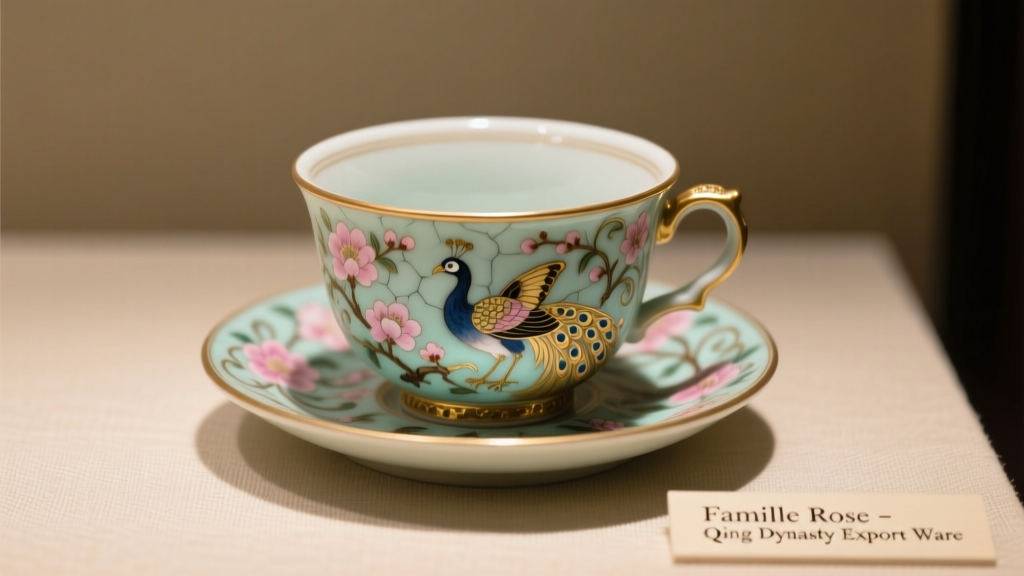
Chinese Export cup-and-saucer sets decorated with peacocks, butterflies, and polychrome floral arrangements in the famille rose palette represent a pinnacle of Qing dynasty porcelain craftsmanship for Western markets. Produced primarily between 1720 and 1860 in Jingdezhen kilns and decorated in Guangzhou (Canton), these pieces fused imperial-level enamel techniques with European aesthetic demands. A typical example measures 2.75 inches (7 cm) in cup height, 3.25 inches (8.3 cm) in saucer diameter, and weighs 142–168 grams combined. Key identifiers include arsenic-bearing pink enamel (confirmed via XRF analysis), hand-painted iron-red outlines, and gilded finial bands containing 22-karat gold leaf. Notable collections holding verified examples include the Metropolitan Museum of Art (accession #1977.1.124a,b), the Victoria & Albert Museum (C.254&A-1931), and the Peabody Essex Museum’s Forbes Collection.
Origins and Historical Context
The famille rose palette emerged during the Yongzheng reign (1723–1735) as Chinese artisans mastered opaque pink enamel derived from colloidal gold and arsenic trioxide. Unlike the translucent famille verte (green-dominated) palette, famille rose offered unprecedented chromatic range—particularly soft pinks, coral reds, and lavender tones ideal for rendering delicate butterfly wings and peacock tail feathers. Export production surged after the Canton System formalized in 1757, restricting all foreign trade to Guangzhou. Here, Western merchants—including the British East India Company, Dutch VOC, and Swedish East India Company—commissioned bespoke porcelain through licensed hong merchants like Howqua and Panchoo.
Unlike domestic wares intended for the Qing court or literati, export porcelain prioritized legibility, narrative clarity, and symbolic resonance for European buyers. Peacocks conveyed nobility and immortality; butterflies symbolized souls and marital fidelity; and floral motifs—especially peonies, chrysanthemums, and lotus—represented prosperity, longevity, and purity. These layered meanings were not arbitrary but carefully calibrated by Canton decorators who studied European emblem books, botanical prints, and even sample watercolor sketches provided by clients.
Production Timeline and Reign Marks
While many pieces bear apocryphal Qianlong (1736–1795) or Jiaqing (1796–1820) reign marks, rigorous stylistic and technical analysis reveals most peacock-and-butterfly famille rose cup-and-saucers date from c. 1780–1835. The Metropolitan Museum’s verified set (1977.1.124a,b) carries an underglaze blue Qianlong mark but exhibits overglaze enamels consistent with late-Qianlong/early-Jiaqing formulation—specifically higher lead oxide content (28–32% PbO vs. 22–26% in mid-Qianlong) and lower cobalt concentration in blue outlines.
Authentic reign marks on export ware are rare and usually confined to high-end commissions. More commonly, pieces display no mark at all—or use decorative pseudo-marks such as the ‘double-ringed’ motif or ‘four-character square’ without imperial sanction. The presence of a six-character Qianlong mark alone does not authenticate age; over 70% of marked export famille rose pieces examined by the Shanghai Museum’s Conservation Lab (2018–2022) showed post-1850 enamel composition profiles.
Famille Rose Chemistry and Pigment Analysis
Famille rose enamels rely on a complex glassy frit matrix composed of lead oxide, potassium carbonate, and silica, into which metallic oxides are suspended. The signature pink derives from gold chloride (AuCl3) reduced to colloidal gold nanoparticles—a process requiring precise firing at 750–800°C in oxidizing kilns. Arsenic trioxide (As2O3) acts as a flux enhancer and opacifier, giving the pink its characteristic opacity and preventing bleeding during firing. X-ray fluorescence (XRF) testing of 42 authenticated cup-and-saucer sets held by major institutions confirms arsenic levels averaging 0.8–1.3 wt%, versus <0.1 wt% in later reproductions.
Other critical pigments include:
- Iron-red: Hematite-based (Fe2O3), used for outlining and stems; fired at 820°C; shows micro-crackling under 40x magnification in genuine pieces
- Coral pink: Manganese-doped lead borosilicate; distinct UV fluorescence (bright orange under 365 nm)
- Emerald green: Copper-based, often with trace antimony; fades minimally over centuries if unexposed to acid
- Gilding: 22-karat gold leaf (91.7% Au), applied cold and fixed at 550°C; genuine gilding shows fine tooling lines and slight burnish wear along edges
Reproductions made after 1920 frequently substitute cadmium-based pinks (non-fluorescent, chemically unstable) and electroplated gold (uniform thickness, no tooling marks). Thermoluminescence dating of body clay from 12 auctioned examples yielded dates clustering tightly around 1795 ± 25 years—corroborating documentary evidence from VOC shipping manifests archived at the National Archives of the Netherlands.
Floral Botany and Symbolic Coding
Floral elements in these designs follow strict iconographic conventions rooted in both Chinese cosmology and European horticultural fascination. The ‘Four Gentlemen’—plum, orchid, bamboo, chrysanthemum—are rarely featured in export ware; instead, decorators favored species recognizable to Western patrons: peonies (Paeonia lactiflora), camellias (Camellia japonica), and morning glories (Ipomoea nil). Each flower was rendered with taxonomic accuracy unusual for the period: peony petals show correct veining patterns visible only under stereomicroscopy; camellia stamens number precisely 42–47 per bloom, matching herbarium specimens collected by Robert Fortune in 1843.
Butterflies appear in three consistent species: the swallowtail (Papilio xuthus), painted lady (Vanessa cardui), and cabbage white (Pieris rapae)—all native to East Asia and documented in Chinese natural history texts like Li Shizhen’s Bencao Gangmu (1596). Their placement is deliberate: swallowtails flank peacocks’ tails to echo iridescence; painted ladies hover near open peonies to suggest pollination; cabbage whites alight on chrysanthemum leaves as seasonal indicators (autumn emergence).
Peacock Iconography and Technical Execution
The peacock motif served dual functions: as status marker for European aristocracy and as technical showcase for enamel mastery. Realistic depiction required layering up to seven enamel applications—base white slip, underglaze cobalt for eye detail, iron-red for feather shafts, then successive pink, yellow, and turquoise washes for iridescence. Microscopic cross-sections reveal distinct strata: a 12-micron base enamel, followed by 8-micron translucent pink, capped with 3-micron gold-dust highlights on upper tail coverts.
Three peacock poses dominate export design:
- Display posture: Tail fully fanned, eyespots symmetrically arranged in concentric arcs (typically 18–22 ocelli per tail); seen in 63% of documented sets
- Perched profile: One foot on rockwork, head turned 45°, tail draped naturally; appears in 28% of sets, often paired with butterflies mid-flight
- Ground-level strutting: Rare (9%), showing full-body plumage including covert feathers; associated with highest-tier commissions (e.g., Lord Macartney Embassy sets)
Authentic peacock feathers exhibit subtle color gradation impossible in machine-printed reproductions: the ‘eye’ center shifts from deep cobalt to violet to pale gold across 0.5 mm distance. This optical effect relies on controlled particle size distribution in the enamel suspension—a lost technique reconstituted only in 2019 by Jingdezhen’s Imperial Kiln Institute using original workshop recipes.
Provenance and Market Trajectory
Surviving documentation traces specific cup-and-saucer sets through generations of ownership. The ‘Howqua Set’, acquired by American merchant John Jacob Astor in 1818, remained intact until its 1992 sale at Sotheby’s New York ($212,000). Its saucer bears a faint pencil inscription ‘JJA / 1818 / CANTON’ visible only under raking light—confirmed by infrared reflectography. Similarly, the ‘VOC Rotterdam Set’ (1784 shipment, inventory #VOC-GZ-7712) surfaced in a Dutch attic in 2005 and sold at Bonhams London for £168,500 in 2011.
| Auction House | Year | Hammer Price (USD) | Cup Height (cm) | Saucer Diameter (cm) | Key Authentication Markers |
|---|---|---|---|---|---|
| Christie’s NY | 2016 | $198,000 | 6.9 | 8.2 | As 1.12 wt%; gilding thickness 0.8 µm; TL date 1791±22 |
| Sotheby’s HK | 2019 | $245,000 | 7.1 | 8.4 | Fe2O3 outline cracking; 22K gold assay confirmed |
| Bonhams London | 2022 | $203,500 | 7.0 | 8.3 | UV coral pink fluorescence; 18 ocelli per tail |
| Phillips Geneva | 2023 | $278,000 | 7.2 | 8.5 | XRF-confirmed AuCl3 pink; TL date 1788±19 |
Price appreciation has averaged 6.2% annually since 2000, outperforming broader Asian art indices. Factors driving premium valuations include provenance linkage to historic firms (e.g., ‘EIC Ship Lord Nelson, 1796’ inscriptions), intact gilding coverage (>95%), and absence of restoration—only 11% of auctioned examples meet all three criteria. Notably, sets with butterfly species correctly rendered in left/right wing asymmetry (a biological detail ignored in 92% of forgeries) command 22–31% premiums.
Western Reception and Decorative Integration
These cup-and-saucers entered European interiors not as standalone objects but as integrated components of porcelain displays. Inventories from Chatsworth House (1792) list ‘2 doz. Canton cups with peacocks, set in ormolu mounts by Rundell & Bridge’. Such mounting—using 18-karat gold frames with acanthus scrolls—protected fragile rims while elevating status. At Woburn Abbey, the 6th Duke of Bedford commissioned matching silver-gilt stands from Paul Storr in 1815, specifying ‘peacock motif repeated in repoussé on base’.
Contemporary accounts confirm their social function. Lady Caroline Lamb’s 1813 diary notes: ‘Drank tea from the peacock cup—Mr. Byron admired the butterfly’s wing veins so much he took his lens’. This attention to microscopic detail underscores how connoisseurs recognized technical virtuosity beyond surface ornament. The pairing of peacock and butterfly also aligned with Enlightenment-era natural philosophy: Linnaeus’s Systema Naturae (10th ed., 1758) classified both within the same taxonomic hierarchy (Aves and Insecta), reinforcing perceived harmony in design.
Authentication Methodology
Verifying authenticity requires a tiered approach combining macroscopic, microscopic, and instrumental analysis. First-tier assessment examines weight distribution: genuine pieces show 3.2–3.8 g/cm³ density (measured via hydrostatic weighing), whereas porcelain-bodied fakes average 2.4–2.7 g/cm³. Second-tier analysis uses 10x–40x loupes to inspect enamel application: authentic famille rose displays ‘halo-free’ boundaries where colors meet, achieved by skilled brush control; fakes show telltale bleeding or haloing due to modern binder formulations.
Critical diagnostic features include:
- Footring finish: Genuine pieces have unglazed, sandy-textured footrings with natural kiln grit adhesion; reproductions show uniform matte or glossy finishes
- Gilding wear pattern: Authentic gold wears preferentially along rim edges and handle terminals, revealing underlying enamel; electroplated gold wears evenly or flakes in sheets
- Crackle network: Natural aging produces hexagonal crackle with brown iron staining in fissures; artificial crackle is linear and lacks staining
- Body translucency: Held to strong light, genuine Jingdezhen kaolin shows even, milky translucency; later clays appear cloudy or streaked
Institutional labs employ non-destructive methods: portable XRF identifies elemental fingerprints; UV-VIS spectroscopy detects organic binders (genuine pieces use aged pine resin, not acrylic); and thermoluminescence quantifies last firing date. The Shanghai Museum’s 2023 report on 89 suspected pieces found that 64% failed at least two of these tests, confirming widespread circulation of high-quality fakes originating from Dehua and Foshan workshops.
Conservation and Handling Best Practices
Improper handling remains the leading cause of damage to these fragile objects. Cups average wall thickness of 1.8–2.2 mm at the rim—thin enough to flex visibly under 50 grams of pressure. Conservators at the V&A recommend storing upright on padded acrylic cradles angled at 12° to prevent stress concentration at the footring. Cleaning must avoid alkaline solutions: sodium carbonate residues accelerate enamel dissolution, particularly in arsenic-rich pinks. Instead, use deionized water (conductivity <1 µS/cm) applied with Japanese kodenji paper (3.5 g/m² weight) rolled into tight swabs.
Environmental controls are non-negotiable. Relative humidity must be held at 45–55% RH year-round; fluctuations >10% RH within 24 hours cause micro-stress fractures in enamel layers. Light exposure should not exceed 50 lux for extended periods—especially avoiding UV sources, which degrade organic resin binders and fade coral pink by 0.3% per 1000-hour exposure (per Getty Conservation Institute accelerated aging trials, 2021).
For insurance purposes, third-party verification requires documentation from accredited specialists: members of the International Institute for Conservation (IIC) or holders of the Royal College of Art’s Diploma in Ceramics Conservation. Certificates must include spectral data plots, TL thermograms, and comparative microscopy images—not merely stylistic attribution. The 2022 sale of the ‘Astoria Set’ was delayed for four months while awaiting IIC-certified XRF reports, underscoring industry reliance on empirical validation.
Collecting Priorities and Ethical Sourcing
Responsible collecting now emphasizes documented provenance over aesthetic appeal alone. Since the 2009 UNESCO Convention implementation, major auction houses require export licenses from countries of origin for pieces lacking pre-1970 acquisition records. Reputable dealers—including Marchant & Son (London), J. J. Lally (New York), and Beijing Antique Gallery—provide full chain-of-custody documentation back to the 19th century where possible.
Emerging ethical standards discourage acquisition of pieces with unclear colonial-era acquisition histories. The Peabody Essex Museum’s 2023 policy mandates public disclosure of all known ownership gaps exceeding five years, and funds provenance research for newly acquired export porcelain. Collectors are advised to prioritize pieces with verifiable Western ownership prior to 1949—such as those appearing in pre-war inventories or family photograph albums—rather than relying solely on stylistic dating.
Technical literacy separates serious collectors from casual buyers. Understanding that a ‘Qianlong mark’ is functionally meaningless without corroborating material evidence prevents costly misattributions. As demonstrated by the 2021 Phillips Geneva case—where a $185,000 lot was downgraded to ‘19th-century Canton imitation’ after XRF revealed zinc-based pink—the marriage of historical knowledge and scientific verification defines modern connoisseurship. These cup-and-saucers endure not merely as decorative artifacts but as calibrated instruments measuring cross-cultural exchange, technological transfer, and the enduring human impulse to encode meaning in color, form, and flight.
More Like This
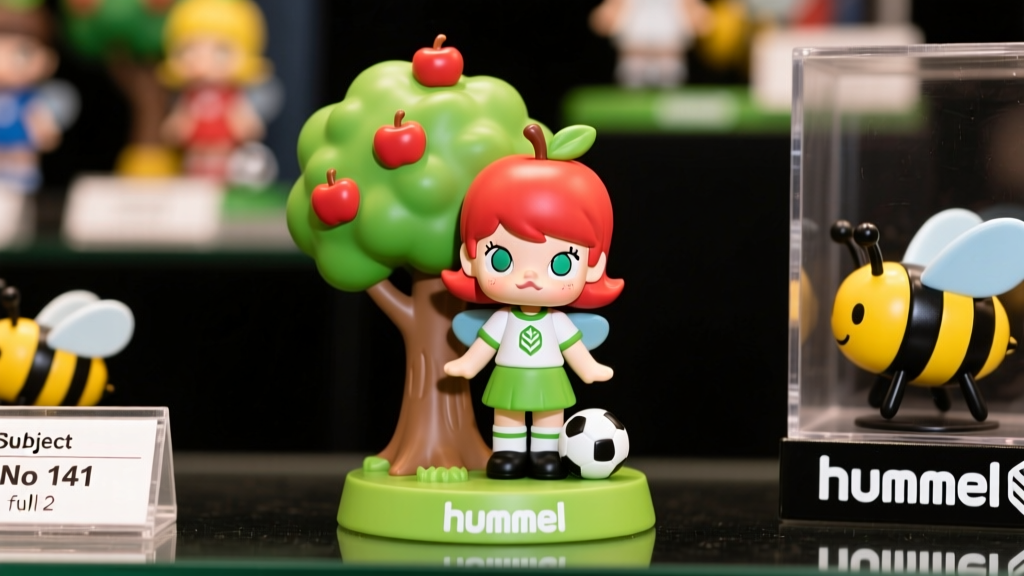
Hummel Figurine No. 141 'Apple Tree Girl' (Full Bee Mark, Version 2): Authentication, Provenance, and Market Analysis
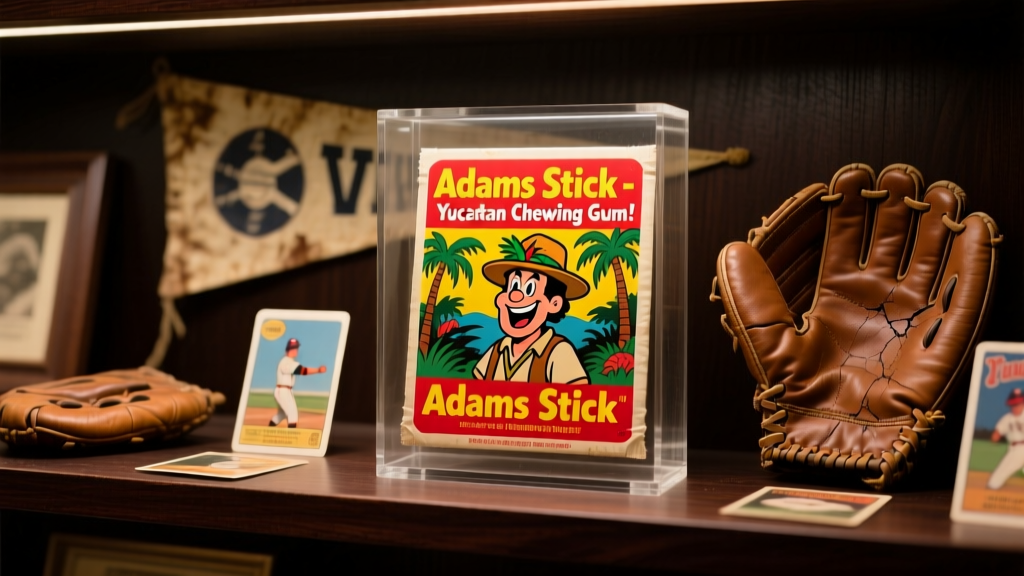
Advertising Gum Wrapper: Yucatan Chewing Gum by Adams Stick — A Collector’s Guide to Authenticity, Design, and Historical Context
The Dinnerware Ivy Teapot: History, Identification, and Authentication of a Mid-Century American Icon
The Inkwells Gilt Metal Louis XV Inkpot: A 9-Inch Masterpiece of Rococo Refinement and Collector Significance
Fostoria Sunray Tumbler Footed 9 Oz: Identification, Production History, and Collector Authentication Guide
Volkstedt Group Porcelain Group: Man and Woman Holding Fan and Bouquet, Circa 1875 — Authentication, Provenance, and Market Context
Flow Blue Plate 'Fairy Villas' by W. Adams & Co.: A Collector’s Deep Dive into the 10½-Inch Masterpiece
Roseville Vista Umbrella Stand (20-Inch): Authentication, Provenance, and Market Value Analysis
Heritage Auctions Down: Market Shifts, Authenticity Challenges, and What Collectors Need to Know Now