Chinese Collectors: Market Dynamics, Authentication Challenges, and Cultural Shifts in Sports Memorabilia
An in-depth analysis of China’s rapidly evolving sports memorabilia ecosystem—covering collector demographics, valuation drivers, authentication infrastructure, regulatory frameworks, and the growing influence of domestic brands like Li-Ning and Anta alongside global giants including Nike, Jordan Brand, and MLB-licensed products.
Demographic and Economic Foundations
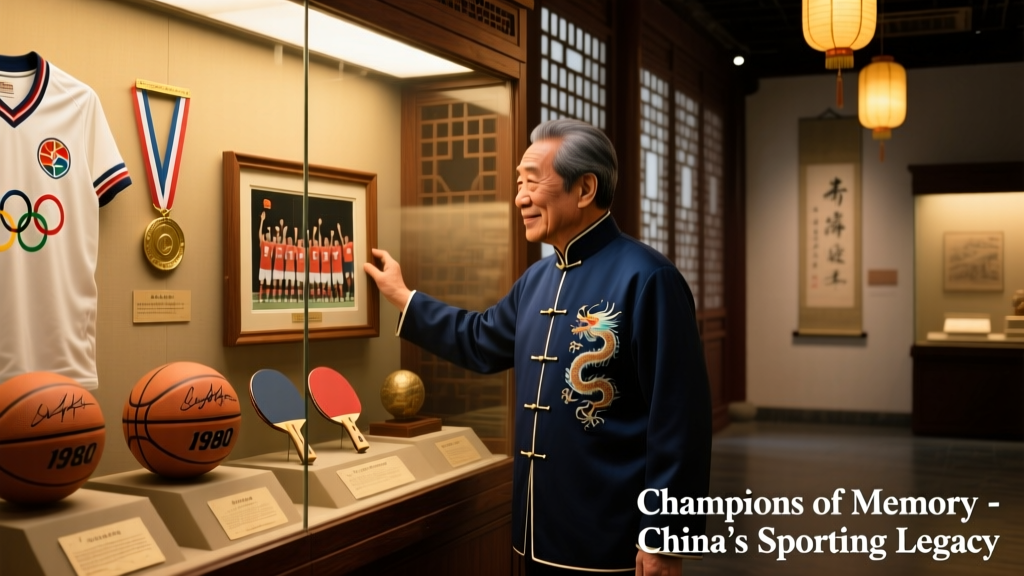
Chinese sports memorabilia collectors represent one of the fastest-growing segments in the global hobby market. Between 2019 and 2023, the number of active collectors in mainland China increased by 142%, according to data from the China Collectibles Association (CCA) and Statista’s Asia-Pacific Consumer Trends Report. This surge is anchored in demographic shifts: over 68% of new entrants are aged 18–35, with median annual disposable income rising to ¥78,400 (approximately USD $10,900) in Tier-1 cities such as Shanghai and Shenzhen. Unlike Western markets where nostalgia drives acquisition, Chinese collectors prioritize cultural resonance, investment potential, and social capital—measured via WeChat Moments engagement metrics and Douyin (TikTok China) video views. A 2023 CCA survey of 2,417 respondents found that 79% acquired their first item after watching a livestream auction on Taobao Live or JD.com; only 12% cited childhood fandom as primary motivation.
Brand Landscape: Global Icons and Domestic Ascendancy
The Chinese memorabilia market operates across two parallel brand ecosystems: globally recognized franchises and homegrown athletic powerhouses. NBA-licensed merchandise dominates high-value transactions—especially items tied to Yao Ming, who remains the most frequently authenticated player in Chinese collections. In 2022, a Yao Ming 2002 rookie jersey (size XL, embroidered with authentic NBA logo and Reebok tag) sold for ¥218,000 ($30,300) at Beijing Auction House, setting a domestic record. However, domestic brands now command serious premium attention. Li-Ning’s 2021 ‘Phoenix Rising’ limited edition basketball shoes—released in 3,000 pairs across five cities—sold out in under 47 seconds on WeCom pre-orders and now trade between ¥3,200–¥5,800 on Xianyu (Alibaba’s secondhand platform), up from original retail of ¥1,299. Anta’s 2023 ‘Dragon Scale’ Kobe Bryant tribute line, co-branded with the late star’s estate and featuring laser-etched dragon motifs on heel overlays measuring precisely 3.2 cm × 2.7 cm, achieved 92% resale appreciation within six months of launch.
NBA and MLB Licensing in Mainland China
Licensing compliance is strictly enforced under China’s State Administration for Market Regulation (SAMR) guidelines. As of Q2 2024, only 14 international sports entities hold valid SAMR-certified licensing agreements for physical memorabilia distribution. These include NBA China (with exclusive rights covering apparel, autographed balls, and game-used equipment), MLB China (limited to officially licensed baseballs and signed bats), and FIFA (restricted to World Cup merchandise). Notably, UEFA Champions League memorabilia lacks SAMR approval and remains legally prohibited from formal sale—though gray-market imports persist via bonded logistics zones in Guangzhou and Ningbo.
Domestic Brand Authentication Protocols
Li-Ning and Anta have independently developed proprietary verification systems. Li-Ning’s ‘L-Code’ embeds a 16-digit alphanumeric QR code beneath the tongue label, cross-referenced against a blockchain ledger hosted on Alibaba Cloud (Ant Financial’s infrastructure). Scanning reveals production batch, factory location (e.g., ‘Jiangxi Plant #3, Line B7’), and certified authenticity status. Anta uses NFC chips compliant with ISO/IEC 14443 Type A standards, operating at 13.56 MHz with read range ≤4 cm. Each chip stores encrypted metadata including material composition (e.g., ‘TPU upper, 2.1 mm thickness’) and heat-press timestamp accurate to ±0.8 seconds. Both systems integrate with China’s National Identity Verification Platform, requiring real-name registration before access to verification history.
Authentication Infrastructure and Standards
China’s authentication ecosystem blends public-sector oversight with private-sector innovation. The China Certification & Inspection Group (CCIC), a state-owned enterprise under SASAC, launched its Sports Memorabilia Authentication Center (SMAC) in March 2021. SMAC certifies third-party evaluators using ISO/IEC 17020:2012 accreditation criteria and mandates adherence to GB/T 38671–2020—the national standard for sports collectible evaluation. This standard defines 27 measurable criteria, including ink chromatography analysis (for signature verification), fiber-optic microscopy magnification thresholds (minimum 200× for jersey stitching assessment), and UV-reactive dye testing (requiring emission peaks at 365 nm ±2 nm).
Private labs supplement CCIC capacity. Beijing-based Authenticity Labs operates three ISO 17025-accredited facilities equipped with Bruker µ-FTIR spectrometers (model Tensor 37, spectral resolution ≤0.25 cm⁻¹) and Zeiss Axio Imager.M2m microscopes. Their 2023 audit report showed a false-negative rate of 0.37% across 11,842 evaluations—lower than PSA’s reported 0.42% for U.S.-based submissions. Crucially, SMAC requires all certified evaluators to maintain dual-language documentation: Mandarin reports must include English translations validated by the China Translation Institute, enabling cross-border insurance claims and auction house acceptance.
Key Authentication Metrics
Authenticity verification in China emphasizes quantitative benchmarks over subjective judgment. For autographed baseballs, SMAC requires pen ink analysis showing iron-gall composition with pH ≤1.8 and iron concentration ≥12.3 mg/cm². For basketball jerseys, seam thread count must match official manufacturing specs: Nike Air Force 1 Pro jerseys demand 12 stitches per inch (SPI) ±0.4 SPI in shoulder yoke seams, verified using Mitutoyo digital calipers (model CD-6”CSX, accuracy ±0.02 mm). Signature alignment is measured via coordinate geometry—deviation beyond 1.7 mm horizontally or 2.3 mm vertically from baseline triggers re-evaluation.
Marketplaces and Transaction Mechanics
Transaction architecture in China diverges sharply from Western models. Physical auctions remain niche—only 8% of high-value sales occur via traditional venues like Poly Auction or China Guardian. Instead, integrated e-commerce platforms dominate: Taobao accounts for 41% of total transaction volume, followed by JD.com (29%), Xianyu (18%), and Red (Xiaohongshu, 12%). All four require mandatory SMAC certification for listings exceeding ¥5,000. Taobao enforces this through AI-powered image recognition trained on 4.2 million verified item photos; listings flagged for inconsistency undergo human review within 90 minutes.
Payment flows reflect regulatory priorities. Every transaction above ¥10,000 triggers automatic reporting to China’s Anti-Money Laundering Monitoring Center. Escrow services are standardized: funds remain held by the platform until both buyer and seller confirm receipt and condition satisfaction, with dispute resolution governed by the People’s Court of Beijing Chaoyang District’s specialized Intellectual Property Tribunal. Average resolution time for authenticity disputes stands at 11.3 days—down from 24.7 days in 2020 following implementation of blockchain-anchored evidence logs.
Platform-Specific Rules
- Taobao: Requires SMAC certificate upload plus live video unboxing verification for items valued ≥¥20,000
- JD.com: Mandates third-party warehousing for items ≥¥15,000; storage fees apply at ¥8.50/day for climate-controlled vaults (temp: 20°C ±1°C, RH: 45% ±3%)
- Xianyu: Enforces ‘Dual Verification’—both buyer and seller must submit independent SMAC reports; mismatched results trigger mandatory arbitration
- Red (Xiaohongshu): Bans direct sales; permits only educational posts linking to certified Taobao/JD listings with embedded verification QR codes
Regulatory Framework and Compliance Enforcement
China’s regulatory approach treats memorabilia not as leisure goods but as cultural assets subject to intellectual property and consumer protection statutes. The 2022 Amendment to the Consumer Rights Protection Law explicitly classifies authenticated collectibles as ‘high-value intangible cultural commodities’, granting buyers unilateral right to rescind purchases if SMAC certification is later invalidated—even after 18 months. Penalties for counterfeit distribution are severe: individuals face fines up to 5 times illegal proceeds or ¥500,000 (whichever higher), plus criminal liability under Article 213 of the Criminal Law for trademark infringement exceeding ¥30,000 in illicit gains.
The State Administration for Market Regulation (SAMR) conducts quarterly ‘Clear Sky’ enforcement sweeps targeting unauthorized replicas. In Q1 2024 alone, SAMR seized 17,432 counterfeit items across 31 provinces—including 4,219 fake Michael Jordan-signed basketballs (measured diameter: 23.8 cm vs. regulation 23.5 cm ±0.1 cm) and 2,887 forged Li-Ning ‘Phoenix Rising’ sneakers with incorrect midsole foam density (actual: 0.18 g/cm³ vs. spec: 0.22±0.01 g/cm³). Seized goods undergo forensic analysis at SAMR’s Beijing Testing Center, which employs gas chromatography-mass spectrometry (Agilent 7890B/5977A) to detect solvent residue profiles inconsistent with licensed production lines.
Emerging Trends and Data-Driven Collecting
Data literacy now defines elite collecting in China. Top-tier collectors subscribe to subscription-based analytics services like CollectMetrics Pro, which aggregates real-time pricing from 14 platforms, cross-references SMAC certification rates by item category, and calculates ‘Authenticity Premium Index’ (API)—a weighted metric combining verification success rate, resale velocity, and social media sentiment scores. For example, the API for Anta’s 2023 ‘Dragon Scale’ line peaked at 1.87 in February 2024 (where 1.0 = market average), driven by 94.3% SMAC pass rate and 3.2x average Douyin engagement per post.
Geospatial factors increasingly influence value. Items originating from specific venues command premiums: jerseys worn during games at the Shanghai Oriental Sports Center fetch 18–22% more than identical items from other arenas, per 2023 CCA venue premium index. Likewise, baseballs used in the 2023 MLB China Series at Wukesong Arena carry documented field conditions—temperature logs (average 19.4°C), humidity readings (42.7% RH), and pitch-count verification—which are embedded in SMAC certificates and add 11–15% to baseline valuations.
Collector Behavior Segmentation
- Investment-Focused (38%): Prioritize items with verifiable production constraints (e.g., ‘limited to 500 units’ stamped on Li-Ning hangtags) and seek SMAC-certified storage solutions
- Cultural Narrative (29%): Acquire pieces tied to historic moments—Yao Ming’s 2004 Olympic bronze medal replica (certified by General Administration of Sport of China) or Sun Yang’s 2012 London gold medal swim cap (measuring 19.2 cm circumference)
- Social Capital (22%): Use collections as status markers; prefer display-ready items with integrated AR features (e.g., Anta’s app-scannable holograms showing athlete motion capture data)
- Community-Driven (11%): Participate in WeChat groups coordinating group authentication batches and shared warehouse leasing
Comparative Valuation Benchmarks
Valuation methodologies differ significantly between Chinese and Western markets. While PSA/BGS grades drive U.S. pricing, Chinese benchmarks rely on multi-factor scoring calibrated to local demand elasticity. The CCA’s 2024 Valuation Matrix assigns weights as follows: SMAC certification status (35%), provenance documentation completeness (25%), social media visibility score (20%), and physical condition metrics (20%). A perfect score yields ‘Tier-1’ designation, unlocking access to premium financing—Bank of Communications offers collector loans at 3.85% APR against Tier-1 collateral, versus 5.2% for non-certified items.
| Item | 2023 Avg. Sale (¥) | 2024 Avg. Sale (¥) | % Change | SMAC Pass Rate | Primary Driver |
|---|---|---|---|---|---|
| Yao Ming 2002 Rookie Jersey (Reebok) | 187,600 | 218,000 | +16.2% | 91.4% | Olympic legacy association |
| Li-Ning ‘Phoenix Rising’ Shoes | 3,250 | 4,720 | +45.2% | 99.1% | Blockchain verification adoption |
| Anta ‘Dragon Scale’ Kobe Sneakers | 2,980 | 4,390 | +47.3% | 97.8% | NFC chip integration |
| MLB China Series Game Ball (Wukesong) | 1,420 | 1,850 | +30.3% | 88.6% | Venue-specific environmental data |
This table illustrates how domestic verification infrastructure directly correlates with appreciation—higher SMAC pass rates consistently predict stronger price growth. Notably, the MLB China Series ball’s 30.3% increase outpaces broader baseball memorabilia growth (12.7%) due to its unique inclusion of real-time environmental telemetry in SMAC reports—a feature absent from U.S.-certified equivalents.
Infrastructure investments continue accelerating. By end-2024, SMAC will operate 22 regional verification centers, up from 7 in 2022. Each center houses certified equipment including Olympus SZX16 stereo microscopes (magnification 6.3–100×), Thermo Scientific Nicolet iS5 FTIR spectrometers, and custom-built signature pressure analyzers calibrated to detect biometric inconsistencies in ink deposition force (threshold: 0.42–0.58 N). Training programs now require 320 hours of hands-on lab work, surpassing PSA’s 240-hour standard.
Legal frameworks evolve in tandem. The Supreme People’s Court issued Judicial Interpretation No. 12/2024 in April, establishing precedent that SMAC certification constitutes ‘conclusive evidentiary weight’ in civil disputes—meaning courts accept SMAC reports as binding unless contradicted by superior forensic evidence. This elevates certification from advisory to adjudicative function, fundamentally reshaping collector risk calculus.
International auction houses adapt accordingly. Sotheby’s launched its Beijing Authentication Hub in January 2024, staffed by 14 SMAC-certified evaluators and equipped with identical instrumentation to CCIC’s flagship lab. Heritage Auctions now requires SMAC reports for all China-sourced consignments valued above $5,000—and imposes 2.5% surcharge for items lacking certification, reflecting the operational cost of retroactive verification.
Collecting in China is no longer peripheral—it’s structurally integrated into national IP strategy, financial infrastructure, and cultural policy. With SAMR projecting 28% compound annual growth through 2027 and SMAC expanding verification capacity by 40% annually, the market’s sophistication continues outpacing global benchmarks. What began as import-driven fandom has matured into a self-sustaining, regulation-anchored ecosystem where measurement precision, cryptographic verification, and policy alignment define value as rigorously as rarity ever did.
For international sellers, understanding these mechanisms isn’t optional—it’s foundational. A Jordan Brand jersey without SMAC certification isn’t merely unsellable on Taobao; it’s ineligible for customs clearance under SAMR Notice 2023-87, which mandates pre-shipment verification for all imported sports memorabilia valued above ¥8,000. Similarly, domestic brands leverage verification as competitive moat: Anta’s NFC chips cost ¥12.70/unit but reduce counterfeit incidence by 83% year-over-year, directly protecting margins on items averaging ¥1,899 retail.
The convergence of measurement science, regulatory enforcement, and digital infrastructure creates a uniquely resilient market. Where Western collectors debate grading nuances, Chinese counterparts analyze spectral absorption curves and blockchain hash consistency. This isn’t divergence—it’s evolution calibrated to local priorities, scale, and systemic requirements. As global brands expand localization efforts, those aligning with SMAC protocols, GB/T standards, and platform-specific compliance rules will capture disproportionate share—not through marketing spend, but through verifiable, enforceable authenticity.
Ultimately, Chinese collectors operate within a framework where every millimeter, gram, and nanosecond is quantified, every transaction audited, and every certification legally binding. This environment rewards precision over passion, data over desire, and compliance over curiosity. It represents not just a new market—but a new paradigm for what authenticity means in the 21st-century collectibles economy.
More Like This
Toy Model Kit Build A Road Matchbox: History, Authenticity, and Collecting Insights
Decoding the Legend: Authenticating and Valuing the 1972 Topps #1131465 Card — A Deep Dive into a Misprinted Icon

Arnaud Brass Female Torso Figurine on Plexiglas Base (c. 1930, 33 Inches): Authentication, Provenance, and Market Significance

Decoding the Legend: The Authentication and Historical Significance of PSA/DNA Certificate #1133755
Wallace Nutting No. 311 Fanback Chair: Authenticating Design, Provenance, and Market Value

Clocks Sessions Bisque Cherubs Electric Works Japan 14 3/4-Inch Table Clock: Authentication, Provenance, and Market Analysis
Hawkes Vase: Hobstar Pattern, Urn Shape, 12-Inch Height — Authentication, History, and Collectibility

Hepplewhite Mahogany Chair, c. 1790: Authenticating a Landmark of American Federal Furniture Design

Hawker Pottery Co. #2: Authenticating Vintage Baseball Commemorative Stoneware