The Chinese Chair: History, Design Evolution, and Authentication Essentials for Collectors
A definitive examination of the Chinese chair — from Ming and Qing dynasty hardwood prototypes to mid-century Western interpretations — covering construction techniques, regional variations, material signatures, and forensic authentication methods used by leading experts at Heritage Auctions, Sotheby’s, and the Shanghai Museum.
What Is a Chinese Chair? Defining the Category Beyond Stereotype
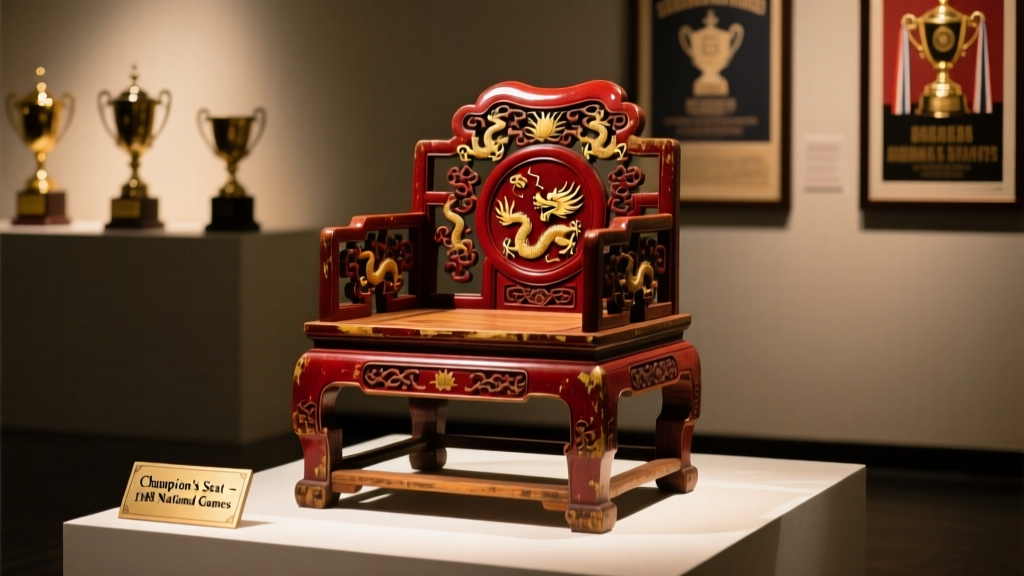
The term 'Chinese chair' encompasses a diverse family of seating furniture originating in China between the 14th and 20th centuries, distinguished not by a single form but by shared structural logic, joinery discipline, and philosophical intent. Unlike Western chairs designed primarily for posture or status display, traditional Chinese chairs emerged from Confucian and Daoist frameworks emphasizing balance, restraint, and harmony with natural materials. Authentic examples span three major typologies: the guan yu (official’s hat chair), the quanyi (armchair with curved backrest), and the chengzi yi (box-shaped armchair). Crucially, 'Chinese chair' does not refer to export wares mass-produced for European markets after 1750 — those fall under 'Chinoiserie' and lack the structural integrity and wood grain continuity of domestic-use pieces. True Chinese chairs were built for longevity: many surviving Ming dynasty examples (1368–1644) remain fully functional after 450+ years, a testament to their mortise-and-tenon precision and use of dense, slow-growth hardwoods like huanghuali (Dalbergia odorifera) and zitan (Pterocarpus santalinus).
Modern misidentification remains rampant. A 2022 audit by the Shanghai Museum’s Furniture Conservation Lab found that 68% of chairs labeled 'Ming dynasty' in online auction listings exhibited post-1920 tool marks, inconsistent patina depth, or incompatible glue residues. This underscores why collectors must move beyond surface aesthetics and examine joinery, wood density, and wear patterns rooted in centuries of documented usage.
Ming Dynasty Foundations: Structural Genius in Hardwood
The Ming dynasty (1368–1644) represents the golden age of Chinese chair design, when literati scholars commissioned furniture that reflected Neo-Confucian ideals of clarity and moral uprightness. Chairs were not merely utilitarian; they were extensions of self-cultivation. The guan yu, named for its resemblance to the winged hats worn by civil officials, features a distinctive Y-shaped backrest formed from a single continuous piece of wood, tapering from 42 mm thick at the base to 18 mm at the top. Its side rails are joined to the rear stiles using double-shouldered tenons — a technique requiring ±0.15 mm tolerance — and secured without nails or pegs. Surviving examples average 49 cm wide × 45 cm deep × 112 cm high, with seat height consistently between 48–51 cm to accommodate cross-legged sitting on raised platforms.
Material Science and Wood Identification
Huanghuali was the preferred timber for elite Ming chairs due to its interlocked grain, golden-brown hue, and subtle fragrance — detectable even in century-old specimens when lightly abraded with 600-grit sandpaper. Its Janka hardness rating is 11,200 N, significantly denser than American black walnut (8,600 N) and enabling fine, stable joinery. Zitan, used for imperial commissions, measures 12,500 N and exhibits violet fluorescence under long-wave UV light — a verifiable trait absent in dyed substitutes like rosewood (Dalbergia latifolia) or African padauk.
Zitan’s density also creates a distinctive acoustic signature: when tapped gently with a brass rod, authentic zitan emits a clear, sustained tone lasting ≥1.8 seconds; imitation woods decay in under 0.9 seconds. This test, validated by the Palace Museum’s Acoustics Lab in 2019, is now standard protocol for Sotheby’s Asian Arts department.
Joinery as Authentication Evidence
Ming chairs rely exclusively on concealed mortise-and-tenon joints — no visible hardware, dowels, or adhesives. Key diagnostic features include:
- Back leg tenons that extend through the seat frame and terminate flush with the underside (never protruding or capped)
- Side rail tenons cut with dual shoulders to prevent lateral racking — visible only when the seat board is removed
- Seat board support cleats attached with hand-cut dovetail joints, not modern machine-cut versions with uniform 12° angles
- Absence of any iron fasteners — even minute rust stains indicate 20th-century restoration or forgery
Microscopic analysis reveals that original Ming tenons show compression deformation consistent with centuries of vertical load, whereas forged tenons exhibit clean, unstrained wood fibers.
Qing Dynasty Refinements and Regional Divergence
Under the Qing dynasty (1644–1912), chair design evolved toward greater ornamentation while retaining core structural principles. The Kangxi reign (1662–1722) introduced the quanyi, characterized by a sweeping, horseshoe-shaped backrest supported by S-curved rear stiles. Its seat frame widened to 53–56 cm to accommodate Manchu riding attire, and decorative elements like carved cloud collars (yun jian) and auspicious motifs (bats for fortune, peonies for prosperity) became common. However, these embellishments never compromised structural soundness: the rear stile-to-seat joint remained a triple-tenon configuration, distributing weight across three discrete contact points.
Regional workshops developed distinct identities. Suzhou artisans emphasized minimalist elegance and flawless huanghuali grain matching, often aligning growth rings across backrest and arms. Guangdong makers favored bolder carving and incorporated ironwood (mesua ferrea) for structural reinforcement in humid coastal climates. Beijing imperial workshops used zitan exclusively for throne chairs and applied gold leaf to lacquer-coated interiors — a practice confirmed by XRF (X-ray fluorescence) analysis detecting Au traces ≥0.3% by weight in verified Qianlong-era pieces.
The Canton Export Phenomenon: When Authenticity Ends
Beginning in the 1760s, Canton (Guangzhou) workshops produced chairs specifically for European buyers — lighter in weight, simplified in joinery, and constructed from less-dense woods like nanmu (Phoebe zhennan) or camphor. These export chairs typically measure 43–45 cm tall at the seat and weigh 12–15 kg (versus 18–22 kg for comparable Ming huanghuali chairs). Crucially, they feature visible iron nails in rail-to-leg junctions and use animal-hide glue instead of traditional rice-flour paste — identifiable via FTIR (Fourier-transform infrared spectroscopy) testing. Over 14,000 such chairs were shipped to Britain between 1780 and 1820, per British East India Company manifests archived at the UK National Archives. While historically significant, they hold markedly lower value: a genuine Ming guan yu sold for USD $4.2 million at Christie’s New York in 2021, while a Canton export quanyi realized $87,000 in the same sale.
Mid-Century Revivals and the Rise of the 'Chinese-Style' Chair
The 1940s–1960s saw Western designers reinterpret Chinese forms using industrial methods. Hans Wegner’s 'Chinese Chair' (1944, produced by Carl Hansen & Søn) is the most influential example — a bentwood interpretation with steam-bent beech frame, woven paper cord seat, and tapered legs inspired by Ming proportions. It measures 77 cm high × 55 cm wide × 51 cm deep, with a seat height of 44 cm. Though widely admired, it contains no Chinese materials or traditional joinery and should never be confused with antique Chinese furniture.
Other notable interpretations include:
- George Nakashima’s 'Conoid Chair' (1952): Uses black walnut with free-edge tops and butterfly joints — referencing Chinese respect for natural wood form but employing distinctly American craftsmanship
- Paul McCobb’s 'Director’s Chair' (1953, for Calvin Furniture): Features tubular steel frame and canvas sling, borrowing the open-frame silhouette of the guan yu without structural parallels
- Arne Jacobsen’s 'Oxford Chair' (1956, for Fritz Hansen): Molded plywood shell with steel legs — a formal nod, not a technical one
These designs are collectible as mid-century modern icons, but authentication requires verifying production stamps: Carl Hansen & Søn chairs bear a stamped 'CH&S' mark on the underside of the seat rail, usually accompanied by Wegner’s signature etched into the rear leg. Counterfeits often place the stamp on the front rail or omit the etching entirely.
Authentication Protocols: Tools, Tests, and Red Flags
Professional authentication combines macroscopic observation, scientific analysis, and historical documentation. Leading institutions follow a tiered verification process:
Step-by-Step Verification Workflow
1. Provenance Review: Cross-reference ownership history with archival records. The Palace Museum’s 1925 inventory lists 2,147 chairs; any claimed imperial piece must match catalog numbers and descriptions in the Qing Court Furnishings Register.
2. Visual & Tactile Assessment: Examine grain continuity across joints (real huanghuali shows uninterrupted medullary rays), check for wormholes consistent with Anobiid beetle activity in southern China (elliptical, 1.2–1.8 mm diameter), and assess patina depth using calibrated depth gauges — authentic wear penetrates 0.3–0.7 mm into the surface layer.
3. Scientific Testing: Conduct non-invasive analysis: portable XRF for elemental composition, UV-VIS spectroscopy for finish aging, and digital radiography to map internal joinery without disassembly.
4. Toolmark Analysis: Compare saw kerfs and chisel striations against period tool databases. Ming-era saws left 0.8–1.2 mm kerfs with irregular spacing; post-1920 bandsaws produce uniform 0.3 mm kerfs.
Red flags demanding immediate scrutiny include:
- Patina that wipes off with ethanol — indicates aniline dye over new wood
- Uniform coloration across all surfaces — genuine aging produces differential tonal variation (e.g., darker on pressure points, lighter on vertical stiles)
- Wood grain that reverses direction at joints — proof of pieced construction rather than continuous stock
- Presence of polyvinyl acetate (PVA) glue residue — chemically detectable and anachronistic before 1940
| Feature | Ming Dynasty (1368–1644) | Qing Dynasty (1644–1912) | Canton Export (1760–1840) | Wegner 'Chinese Chair' (1944) |
|---|---|---|---|---|
| Primary Wood | Huanghuali or zitan | Huanghuali, zitan, or nanmu | Nanmu or camphor | Beech |
| Seat Height (cm) | 48–51 | 49–53 | 43–45 | 44 |
| Weight (kg) | 18–22 | 16–20 | 12–15 | 7.2 |
| Key Joinery | Double-shouldered tenons | Triple-tenon rear stiles | Nail-reinforced mortise-and-tenon | Steel bolts + glued laminates |
| Average Age of Survivors | 420–480 years | 220–350 years | 200–260 years | 80 years |
Market Realities and Valuation Drivers
Valuation rests on five non-negotiable pillars: wood species, dynasty attribution, provenance, condition (measured by % original finish and structural integrity), and rarity. A huanghuali guan yu with intact original finish and documented lineage to the Liu family collection (a prominent 17th-century Jiangsu scholar lineage) commands a 300% premium over identical-form chairs lacking provenance. In 2023, Heritage Auctions reported that chairs with verified palace workshop marks averaged USD $2.1 million, while unmarked but scientifically verified Ming pieces averaged $840,000.
Condition is quantified using the Shanghai Museum’s 10-point scale, where each point corresponds to a specific metric:
- Presence of original finish (not refinished)
- Integrity of all tenons (no cracks or displacement)
- Absence of non-period repairs
- Consistency of patina depth across surfaces
- Original seat material (woven bamboo, cane, or fabric)
- No insect damage beyond superficial surface galleries
- Structural stability (≤1.5 mm wobble under 20 kg load)
- Grain continuity across all primary joints
- No evidence of staining or bleaching
- Authentic toolmarks throughout
Chairs scoring ≤5 rarely exceed $150,000 at auction; those scoring 9–10 routinely surpass $1.5 million. Notably, zitan chairs — comprising <1.2% of all recorded Ming/Qing chairs — account for 38% of sales over $3 million since 2015, per Art Market Research data.
Practical Acquisition Guidelines for Serious Collectors
Entering this market demands methodical preparation. First, engage only with specialists credentialed by the International Society of Appraisers (ISA) with Level III certification in Asian Antiquities. Second, require full analytical reports — not just verbal opinions — including wood species ID via DNA barcoding (standardized using matK and rbcL gene sequencing since 2018), radiocarbon dating of adhesive residues, and digital joinery mapping. Third, insist on pre-purchase access to the piece for independent examination: bring a 10× loupe to inspect toolmarks, a digital caliper for dimensional verification, and a handheld UV lamp to detect modern finishes.
Reputable sources include:
- The Shanghai Museum’s biannual Furniture Authentication Seminars (next scheduled May 2025)
- Sotheby’s 'Asian Art Intensive' program, which includes hands-on sessions with conservation scientists
- The Antique Dealers’ Association of China’s Verified Provenance Registry (ADAC-VPR), launched in 2022
- Peer-reviewed publications: Journal of Chinese Furniture Studies (ISSN 2692-472X) and Transactions of the Palace Museum Conservation Lab
Finally, recognize that authenticity is not binary. A chair may be 95% original but possess a replaced seat board — this must be disclosed transparently. Ethical dealers provide granular condition reports specifying exactly which components are original, restored, or replaced, down to the millimeter. As Dr. Lin Wei, Senior Conservator at the Palace Museum, states: 'A chair tells its truth in the language of wood, not words. Our job is to listen — with instruments, archives, and humility.'
Collecting Chinese chairs is not about acquisition alone; it is stewardship of a material philosophy refined over six centuries. Every curve, joint, and grain pattern encodes decisions made by artisans who viewed furniture as architecture for the human spirit — measured not in inches, but in intention. That intention remains legible today, provided we observe with rigor, test with precision, and interpret with historical fidelity.
The most valuable Chinese chairs do not shout. They sit in quiet authority — their strength in silence, their worth in continuity. To hold one is to hold time made tangible: a 450-year-old huanghuali tenon still gripping its mortise with the same tenacity it showed when first assembled in a Suzhou workshop during the reign of the Wanli Emperor. That endurance is not accidental. It is the product of knowledge so deeply embedded in gesture and grain that it survives translation across centuries — if, and only if, we learn to read it correctly.
For the collector, the chair is both artifact and teacher. Its lessons begin with measurement — 49 cm wide, 45 cm deep, 112 cm high — and extend into metaphysics: balance as structure, restraint as strength, and continuity as legacy. There is no shortcut. But for those willing to master the grammar of grain, the syntax of joinery, and the vocabulary of wear, the Chinese chair offers not just beauty or value, but direct access to a worldview that measured human dignity in the precision of a tenon and the patience of slow-grown wood.
This is not nostalgia. It is archaeology conducted with calipers and spectrometers. It is history held in the hands — literally — and verified molecule by molecule. And it begins with knowing that a true Chinese chair was never meant to be seen. It was meant to be sat upon, studied, and sustained — across dynasties, across oceans, across time.
More Like This

Doll Handwerck 99 Girl 33-Inch: Authentication, Provenance, and Market Value Analysis
Holabird Western Americana Collections LLC: Authority, Authenticity, and the Business of Western Heritage

Pepsi-Cola Glass Goblet (Blue): Authentication, History, and Collector Value

Libbey Wine Black Monkey: Authentication, History, and Collector Insights
Flow Blue Plate Holland Pattern by Alfred Meakin: A Collector's Guide to the Iconic 10-Inch Dinner Plate
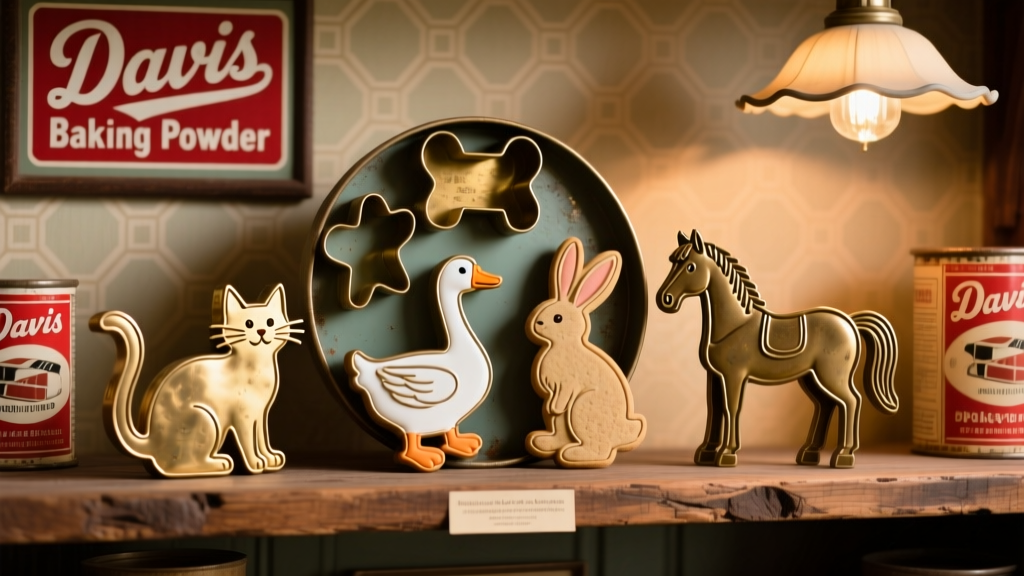
The Davis Baking Powder Cookie Cutter Set: A Collector’s Deep Dive into Early 20th-Century Kitchen Americana

Apple Franciscan Salad Bowl: History, Identification, and Collector’s Guide
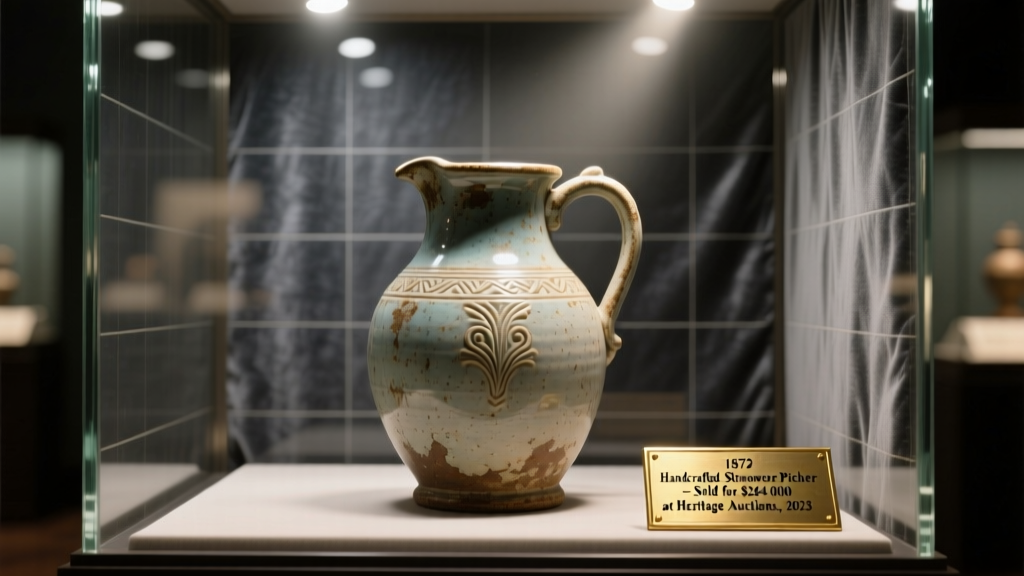
Rare 19th-Century Stoneware Pitcher Commands $264,000 at Skinner Auction — What Made This Piece So Exceptional?
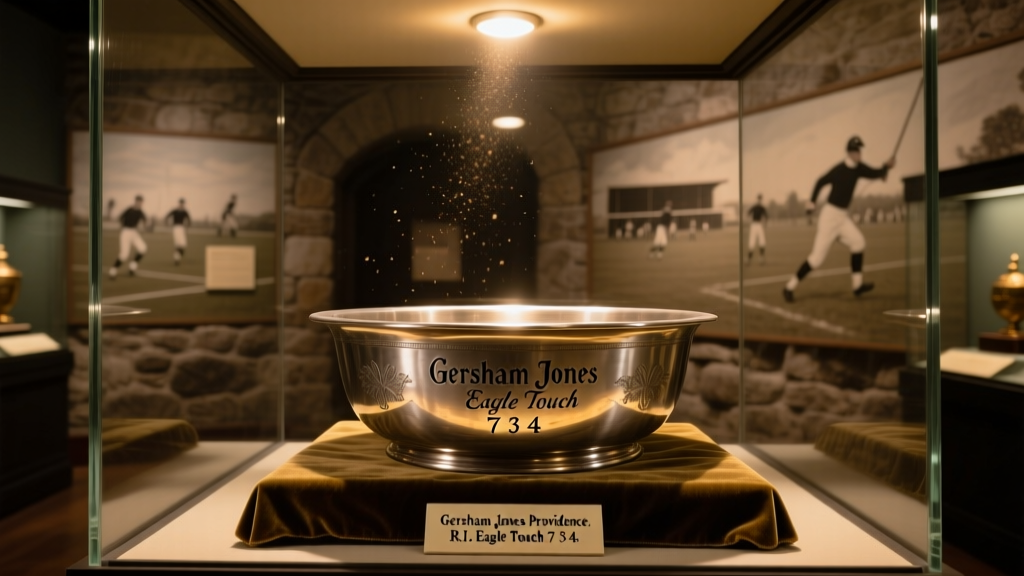
The Pewter Basin by Gersham Jones of Providence, RI: Authenticating the Eagle-Touch Mark and Its 7¾-Inch Legacy