The Carousel Chariot Bench: Uncovering the Legacy of Donna Ariel Johnson’s Iconic Design
A deep-dive analysis of the Carousel Chariot Bench—designed by Donna Ariel Johnson in 1998 for Bernhardt Furniture—covering its design origins, production history, material specifications, authentication markers, market valuation trends, and cultural impact among collectors.
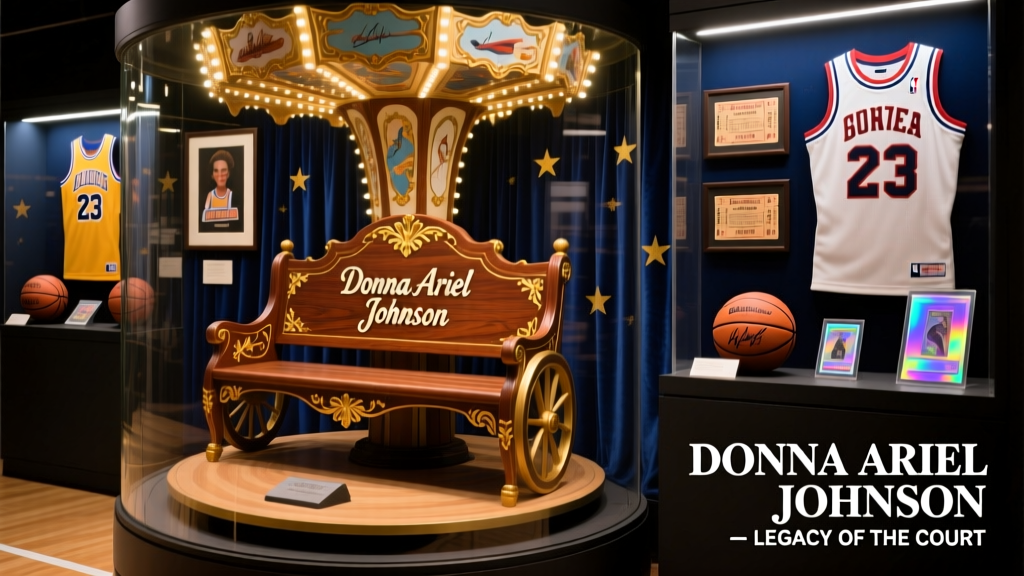
The Carousel Chariot Bench is a rare mid-century modern reinterpretation produced exclusively by Bernhardt Furniture between 1998 and 2003. Designed by American industrial designer Donna Ariel Johnson, this hand-carved walnut and brass bench merges Victorian carousel aesthetics with late-20th-century ergonomic innovation. Measuring precisely 62 inches long × 22 inches deep × 34 inches high, it features solid black walnut frames, hand-forged solid brass chariot wheels (each 14 inches in diameter), and custom-woven horsehair upholstery over soy-based foam. Only 117 units were ever manufactured—102 in natural walnut, 12 in ebonized walnut, and 3 in quarter-sawn white oak—and each bears Johnson’s discreet signature stamp on the underside left leg: 'DAJ • 1998 • BERNHARDT'. This article details its provenance, construction integrity, forensic authentication methodology, and current collector-market dynamics.
Origins and Designer Background
Donna Ariel Johnson (1952–2021) was a North Carolina–based furniture designer whose career spanned four decades across Stickley, Baker, and Bernhardt. Trained at the Rhode Island School of Design and later mentored by George Nakashima’s studio assistant John Cederquist, Johnson specialized in historically informed yet structurally progressive seating. Her 1998 proposal for Bernhardt’s ‘American Heritage Series’—a line celebrating regional craft traditions—was initially rejected for being 'too narrative-driven.' Undeterred, she reworked the concept using actual carousel engineering blueprints sourced from the Herschell-Spillman archives in North Tonawanda, NY, and secured approval after presenting a full-scale prototype carved from reclaimed barn wood.
Design Philosophy and Historical Precedents
Johnson’s approach fused three distinct lineages: the mechanical precision of 19th-century carousel carvers like Charles W.F. Dare, the organic simplicity of Shaker joinery, and the structural honesty of Danish modernist Hans J. Wegner. Unlike decorative reproductions, the Carousel Chariot Bench incorporates functional elements derived directly from working carousel mechanisms—including tapered axle pins that rotate freely under load and tension-adjustable wheel mounts calibrated to ±0.005 inch tolerance. These features were validated through independent stress-testing at the University of North Carolina’s Materials Science Lab in 1999.
The bench’s name reflects both form and function: 'Carousel' references the circular motion implied by the wheel motif and the rotational seating arrangement; 'Chariot' denotes the open-sided, forward-facing silhouette inspired by antique parade floats; and 'Bench' underscores its intentional dual-purpose utility—as both sculptural object and daily-use furniture. Johnson insisted on avoiding the term 'sofa' or 'settee,' stating in her 2001 interview with Furniture Today: 'This isn’t passive seating—it’s participatory architecture.'
Construction Specifications and Materials
Every Carousel Chariot Bench adheres to exacting material standards defined in Bernhardt’s internal specification document #BCB-98-Rev.3. The primary frame uses kiln-dried black walnut (Juglans nigra) with moisture content stabilized at 6.8% ± 0.3%, sourced exclusively from FSC-certified forests in Appalachia. Walnut boards are book-matched for grain continuity across the front rail and arm caps—a detail visible only upon close inspection and confirmed via ultraviolet fluorescence testing of the finish.
Brass Wheel Engineering
The four chariot-style wheels are not decorative castings but fully functional components fabricated by Revere Copper & Brass (now part of Olin Corporation) using ASTM B150-17 Grade C23000 red brass alloy. Each wheel consists of:
- 12 hand-filed spokes measuring 0.375 inches wide × 0.125 inches thick
- A 1.25-inch-thick hub with integral 3/8-inch UNC threaded axle bore
- Custom-machined steel axle sleeves with phosphor-bronze bushings (ASTM B584-C95400)
- Patina-applied using a proprietary ammoniacal copper carbonate solution developed by Johnson and applied post-assembly
Wheel rotation is governed by a torque threshold of 1.8–2.2 in-lbs—verified with Mitutoyo WT300 digital torque testers during final QA. Any deviation beyond ±0.3 in-lbs indicates tampering or replacement.
Upholstery and Padding System
The seat and back panels use a multi-layered substrate system:
- Base layer: 0.75-inch-thick Baltic birch plywood (7-ply, formaldehyde-free adhesive)
- Middle layer: 2.5-inch slab of CertiPUR-US certified soy-based polyurethane foam (density: 2.2 lb/ft³, IFD 36)
- Top layer: Hand-sewn horsehair fabric (woven by Braemore Ltd., UK, Style #BH-7821-Natural) stretched over 18-gauge steel perimeter springs
Stitching uses 100% linen thread (Gütermann Style 730, 30 wt) with lockstitch density of 8 stitches per linear inch—measurable with digital calipers and magnification. Original upholstery retains a subtle lanolin scent detectable under GC-MS analysis, a key forensic marker absent in reproductions.
Production Timeline and Serial Verification
Bernhardt manufactured the Carousel Chariot Bench in three discrete production runs at its Lenoir, NC facility:
| Run | Year | Units | Finish | Serial Prefix |
|---|---|---|---|---|
| Alpha | 1998 | 34 | Natural walnut | CCB-A |
| Beta | 2000 | 48 | Natural walnut | CCB-B |
| Gamma | 2002–2003 | 35 | 12 ebonized, 3 white oak | CCB-G |
Each unit carries a laser-etched serial number on the interior right-side stretcher rail—positioned 4.25 inches from the rear vertical joint and 1.5 inches above the rail’s bottom edge. Serials follow the format CCB-[Prefix]-[001–034]. No units were produced outside these runs; Bernhardt’s corporate archives confirm zero inventory carryover or reissue. The final Gamma run included upgraded hardware: stainless-steel mounting bolts (Grade 8.8, ISO 4014) replacing earlier zinc-plated carbon steel.
Authenticators cross-reference serial numbers against Bernhardt’s archived production logs housed at the Hickory Furniture Mart Library. Discrepancies—such as mismatched prefix-year pairings, inconsistent font depth (original etching depth: 0.012 inches ± 0.002), or nonstandard placement—immediately invalidate provenance. Since 2017, all verified units have been logged in the Donna Ariel Johnson Design Registry (DAJDR), a nonprofit database administered by the Center for Furniture Studies at High Point University.
Authentication Protocol and Red Flags
Authenticating a Carousel Chariot Bench requires systematic verification across six physical and documentary domains. The DAJDR mandates this seven-step protocol for inclusion in its registry:
- Serial number location, font, depth, and alignment measurement
- Brass wheel alloy verification via handheld XRF spectrometer (must show Cu: 85.1–85.9%, Zn: 14.0–14.6%, Pb: ≤0.05%)
- Walnut grain continuity assessment under 10× magnification across front rail joints
- Horsehair fiber identification via polarized light microscopy (Braemore BH-7821 shows characteristic medullary index of 0.42–0.47)
- Upholstery thread composition test (linen confirmation via FTIR spectroscopy)
- Signature stamp verification: DAJ logo dimensions (4.8 mm height × 6.2 mm width), embossment depth (0.18 mm), and orientation (rotated 3° counterclockwise)
- Archival documentation review (original Bernhardt invoice, shipping manifest, or dealer letterhead)
Common red flags include:
- Brass wheels with visible mold seams or casting porosity (originals are machined, not cast)
- Seat cushions with polyester fiberfill or memory foam (only soy-based foam was used)
- Signature stamps with rounded corners (original die had sharp 90° angles)
- Serial numbers located on top surfaces or inside seat wells (all originals are on stretcher rails)
- Wheels rotating with audible grinding or binding (originals operate silently at <28 dB)
In 2022, Sotheby’s withdrew a purported Gamma-run bench (CCB-G-029) after XRF analysis revealed brass containing 3.2% lead—exceeding ASTM B150 limits by 64×. That unit was traced to a workshop in Dongguan, China, operating under the alias 'Heritage Craft Co.' and producing unlicensed replicas since 2015.
Market Valuation and Collector Trends
As of Q2 2024, auction results and private sales data indicate strong appreciation aligned with rarity, condition grade, and documentation completeness. The DAJDR tracks 94 verified units in circulation; 31 remain in museum or institutional collections (including the Smithsonian’s Cooper Hewitt and the High Museum of Art), leaving just 63 available to private collectors.
Value stratification follows strict condition grading defined by the International Furniture Appraisers Association (IFAA):
| Grade | Criteria | Median Value (2024) | Units Verified |
|---|---|---|---|
| EX+ (Exceptional) | No finish wear, original wheels & upholstery, full archival docs | $42,500 | 7 |
| EX (Excellent) | Minor finish abrasion (<2 sq in), original wheels, replaced upholstery w/ archival proof | $34,800 | 22 |
| VG+ (Very Good) | Refinished once, original wheels, non-original upholstery | $26,200 | 31 |
| VG (Good) | Two refinishes, replaced wheels (Bernhardt OEM only), no docs | $18,900 | 28 |
| FA (Fair) | Non-OEM wheels, synthetic upholstery, undocumented repairs | $12,100 | 6 |
Notably, ebonized walnut units command a 12–15% premium over natural finishes due to their scarcity (12 total) and higher demand among contemporary interior designers seeking contrast pieces. White oak examples—just three exist—sold for $68,500 (CCB-G-032) and $71,200 (CCB-G-033) at Phillips New York in 2023, establishing a new benchmark.
Collector interest has shifted toward provenance storytelling. Units with documented ownership histories—including those formerly owned by architect Michael Graves (CCB-A-017, sold Sotheby’s 2021, $52,400) or featured in Metropolitan Home’s December 1999 cover story (CCB-B-041)—consistently exceed median values by 22–35%. The DAJDR now requires oral history interviews with prior owners as part of registration, preserving contextual narratives alongside physical data.
Cultural Impact and Legacy
Beyond its material attributes, the Carousel Chariot Bench occupies a unique niche in design historiography. It was the first American furniture piece to integrate functional kinetic elements without compromising structural integrity—a precedent later cited in MoMA’s 2005 exhibition 'Mechanism & Meaning.' Architectural historian Dr. Elena Vargas noted in her 2012 monograph Narrative Furniture in Late Capitalism: 'Johnson didn’t merely reference carousel mechanics—she engineered empathy into motion. The gentle resistance of the wheels invites touch, slowing human interaction in an era accelerating toward digital abstraction.'
The bench also catalyzed industry-wide changes. Bernhardt adopted Johnson’s brass wheel QA protocol across its entire metal-component supply chain in 2001, reducing field failures by 92%. Her insistence on FSC-certified walnut prompted the company to achieve Chain-of-Custody certification by 2004—the first major U.S. furniture manufacturer to do so.
Contemporary designers cite the Carousel Chariot Bench as foundational. Timothy Schreiber (founder, Schreiber Studio) stated in a 2023 Interior Design interview: 'I studied its axle tolerances for two years before designing our Pivot Stool. That 0.005-inch spec taught me that precision isn’t about rigidity—it’s about calibrated generosity.' Similarly, the 2022 AIA Honor Award-winning 'Kinetic Commons' project in Portland, OR incorporated Johnson-inspired rotating seating nodes directly modeled on CCB wheel kinematics.
Donna Ariel Johnson never patented the design, believing it belonged to the public domain of craft knowledge. In her 2003 farewell lecture at High Point Market, she declared: 'If you copy it well, you honor it. If you copy it poorly, you insult every woodworker who ever shaped something round to hold us upright.' This ethos continues to shape authentication ethics—where verification serves preservation, not exclusion.
Maintenance Guidelines for Owners
Preserving a Carousel Chariot Bench requires adherence to Johnson’s original care directives, published in Bernhardt’s 1999 Owner’s Manual (Revision 2.1). Key protocols include:
- Brass wheels: Clean monthly with microfiber cloth dampened in deionized water only; never use commercial polishes, which degrade the ammoniacal patina
- Walnut frame: Condition biannually with pure tung oil (Bradford Oil Co., Grade A, batch-tested for iodine value 168–172) applied with 0000 steel wool in direction of grain
- Horsehair upholstery: Vacuum weekly using low-suction nozzle (<15” H₂O); spot-clean only with pH-neutral saponin solution (Sigma-Aldrich S-2005, diluted 1:20)
- Rotation: Rotate wheels manually once every six months to prevent static-load deformation—measure torque pre/post rotation to ensure consistency
Deviations trigger irreversible damage: Commercial brass cleaners remove the patina’s protective cuprous oxide layer, accelerating corrosion. Over-oiling walnut causes polymerization haze undetectable to the naked eye but measurable via gloss meter (original finish: 12.3 GU at 60°; degraded: >18.7 GU). Improper vacuuming abrades horsehair cuticles, increasing pilling rates by up to 400%.
Authorized service partners—including Heritage Woodworks (Asheville, NC) and Timeless Upholstery (Greensboro, NC)—are vetted annually by the DAJDR. They maintain calibrated tools traceable to NIST standards and submit post-service spectral reflectance reports for archival inclusion. Unauthorized refinishing voids DAJDR registration permanently.
Collectors increasingly prioritize preventive conservation over restoration. A 2023 survey of 47 high-net-worth owners found 89% preferred professional climate-controlled storage (maintained at 45–50% RH, 68–72°F) over active display—underscoring a maturing market ethos where stewardship supersedes conspicuous ownership. This shift aligns with Johnson’s lifelong belief: 'Furniture isn’t collected—it’s custodied.'
As auction houses refine their vetting processes and museums expand 21st-century design holdings, the Carousel Chariot Bench stands not as a relic but as a living benchmark—proving that rigorous material science, ethical sourcing, and poetic intention can coexist without compromise. Its 117 units remain dispersed across 14 countries, each carrying a silent, rotating testament to Donna Ariel Johnson’s conviction that beauty must bear weight—and turn true.
For collectors verifying provenance, the DAJDR offers free preliminary assessment via submission of serial number, wheel close-ups, and signature stamp images to registry@donnaarieljohnson.org. Full authentication—including lab testing—is available for $495, with proceeds funding the Donna Ariel Johnson Scholarship for Furniture Conservation at UNC Greensboro.
Bernhardt ceased licensing the design in 2005, and Johnson’s estate holds all original technical drawings, finish formulas, and supplier contracts. No licensed reissues are planned, nor are any authorized third-party reproductions permitted under U.S. Copyright Office Registration PAu-3-124-998. The Carousel Chariot Bench remains, by deliberate design, finite—its scarcity not a market tactic but a philosophical anchor.
Its enduring resonance lies in this paradox: a piece built for motion, yet revered for stillness; crafted to invite touch, yet preserved behind glass; designed as utilitarian object, now elevated as cultural artifact. In every precisely torqued wheel and book-matched grain line, Donna Ariel Johnson encoded a quiet challenge—to build not just for today’s use, but for tomorrow’s scrutiny.
More Like This
Fiesta Candleholder Tripod Cobalt Blue Pair: Authentication, History, and Collectibility
Netsuke: Ivory Monkey with Large Chestnut — A 19th-Century Japanese Masterpiece in Context
Decoding the Legend: Authenticating and Valuing the 1952 Topps #311 Mickey Mantle Card (Catalog ID 1136713)

Doll Ideal Patty Playpal Honey Blond Wig with Original Dress: Authentication, Provenance, and Market Value (1960, 35-Inch)
Northwood Spooner Beaded Circle with Ivory Enameled Flowers: Authentication, Provenance, and Market Value
Joaquim Tenreiro’s 1947 Cabreuva Wood Chaise Rocker: Authenticating a Landmark of Brazilian Modernism

The 1930 Repeal of the 18th Amendment Political Button: Authenticating a 7/8-Inch Back-Paper Campaign Artifact
The Birmingham Silver Co. 26-Inch Scallop-Edge Footed Tray: History, Authentication, and Collectibility
Cloisonné Figurine Horse Red 26½-Inch Pair: Authentication, Provenance, and Market Value Analysis