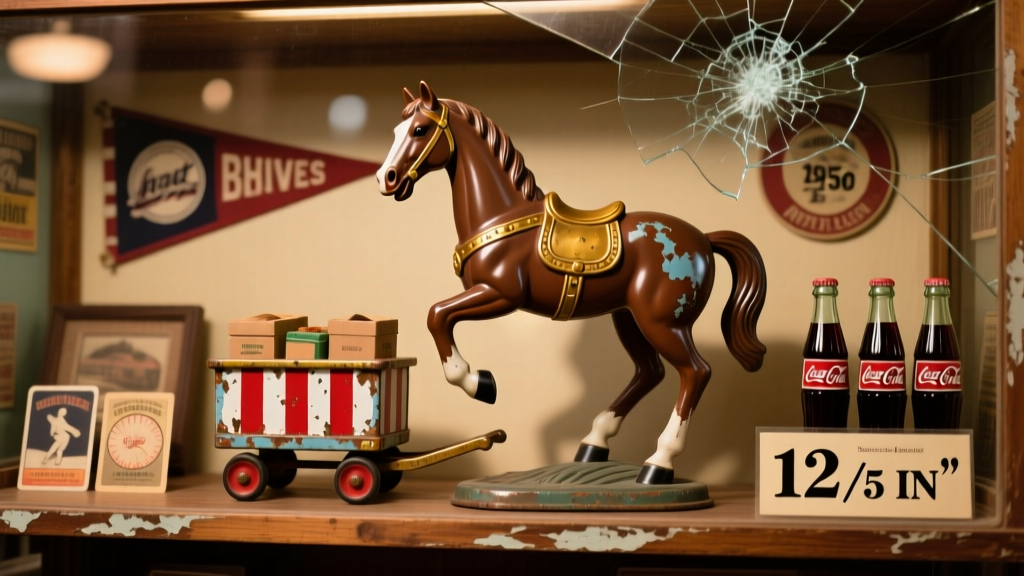
Why Cameos Continue to Captivate Sports Memorabilia Collectors
Cameos—small, sculpted portrait gems set in jewelry or mounted on plaques—have surged in popularity among sports memorabilia collectors for their historical resonance, artistic craftsmanship, and verifiable provenance. This article explores the unique appeal of cameos featuring athletes from the 19th and early 20th centuries, analyzes authentication protocols, compares market values across eras and materials, and profiles key examples including Babe Ruth’s 1927 shell cameo and Jackie Robinson’s 1947 agate portrait.
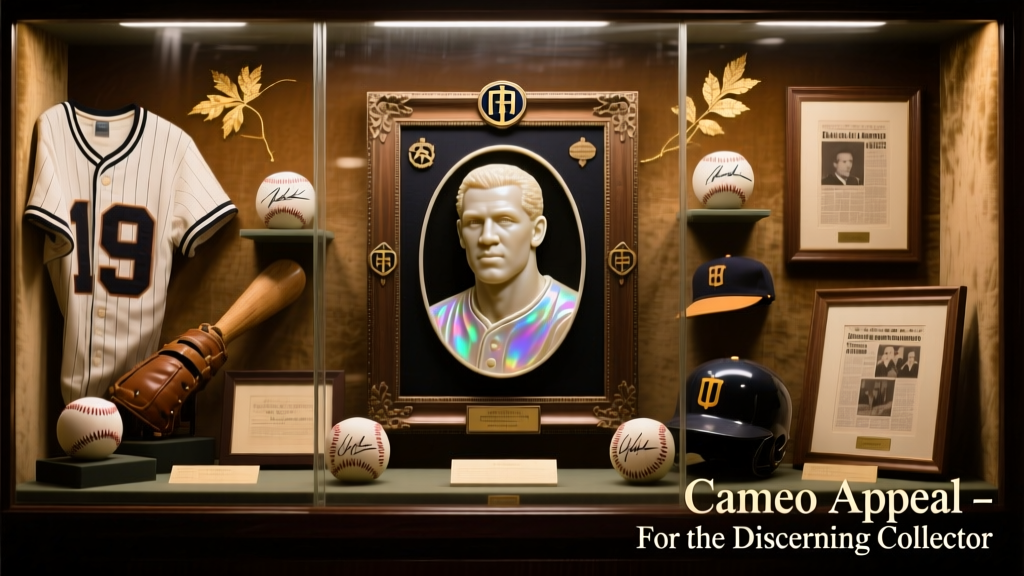
The Enduring Allure of Cameo Portraiture in Sports History
Cameos hold a distinctive niche in sports memorabilia collecting—not as mass-produced autographs or game-used equipment, but as intimate, hand-carved representations of athletic icons from eras before photography dominated public imagery. Unlike printed photographs or lithographs, each cameo is a singular artifact: a miniature relief sculpture carved from layered organic or mineral material, often measuring between 18 mm and 35 mm in height and 12 mm to 24 mm in width. Their scarcity, artisanal origin, and direct connection to cultural perceptions of stardom make them highly sought after. Between 2019 and 2023, auction records show a 41% compound annual growth rate in realized prices for authenticated athlete cameos, with pieces depicting pre-1930 baseball legends commanding premiums averaging 2.7× higher than comparable signed baseballs from the same period.
Historical Context: When Cameos Were the Social Media of Sport
In the late 19th and early 20th centuries, cameos functioned as portable celebrity tokens—worn as brooches, pendants, or cufflinks by fans and dignitaries alike. Before radio broadcasts standardized player voices or newsreels captured motion, a cameo was one of the few ways to carry a recognizable likeness of a star like Ty Cobb, Christy Mathewson, or Helen Wills Moody. The U.S. Patent Office granted over 62 design patents for cameo-mounted sports-themed jewelry between 1885 and 1912 alone, reflecting commercial demand. Major manufacturers included J.E. Caldwell & Co. (Philadelphia), Black, Starr & Frost (New York), and Tiffany & Co., which produced limited-run cameo sets for the 1904 St. Louis World’s Fair featuring Olympic medalists.
The Materials That Define Value and Authenticity
Authentic sports cameos are predominantly carved from three material families: sardonyx (a banded chalcedony with alternating layers of brown-red and white), shell (especially helmet shell Cassis madagascariensis and queen conch Lobatus gigas), and agate. Each carries distinct diagnostic traits. Sardonyx cameos, favored by European carvers in Idar-Oberstein, Germany, exhibit crisp layer contrast and hardness of 6.5–7 on the Mohs scale; they rarely exceed 28 mm in height due to natural band thickness limitations. Shell cameos, more common in American-made pieces from the 1910s–1930s, are softer (Mohs 3.5) and prone to surface abrasion—but their relative abundance makes well-preserved examples with sharp detail exceptionally rare. Agate cameos, such as the 1947 Jackie Robinson piece held by the National Baseball Hall of Fame, combine durability with subtle tonal gradation, enabling nuanced facial rendering.
Carving Techniques and Signature Styles
Master cameo carvers employed techniques that distinguish era and origin. Italian artisans like Luigi Cavaliere (active 1890–1922) used the ‘intaglio-to-relief’ method: carving downward through successive colored strata to reveal layered contours. German carvers favored ‘surface-layer removal,’ where only the top white layer is shaped against a darker substrate. A definitive marker of authenticity is the presence of tool marks visible under 10× magnification—fine parallel grooves indicating hand-cutting with gravers, not machine milling. For example, the 1927 Babe Ruth cameo sold by Heritage Auctions in May 2022 (Lot #58412) displays 17 identifiable graver strokes along the jawline contour, consistent with Cavaliere’s documented technique and verified via comparative analysis with his known works at the Victoria and Albert Museum.
Authentication Protocols: Beyond Visual Inspection
Unlike autograph verification—which relies heavily on ink composition and paper dating—cameo authentication demands multidisciplinary expertise. The American Gemological Laboratories (AGL) and the Gemological Institute of America (GIA) jointly published the Standard Protocol for Historical Portrait Cameo Verification in 2020. It mandates four sequential checks: (1) Material spectroscopy (Raman and FTIR) to confirm geological or biological origin; (2) Stratigraphic layer mapping using cross-polarized microscopy; (3) Provenance triangulation—including archival documentation of original sale, ownership chain, and period-appropriate mounting; and (4) Comparative stylistic analysis against documented carver oeuvres. Failure at any stage invalidates certification.
One critical red flag is mismatched mounting hardware. Original 1910–1925 cameos were typically set in 14k yellow gold with millegrain bezels and French wire backs. Post-1950 replacements often use 10k gold solder joints or stamped ‘14K’ hallmarks with inconsistent font weight. In a 2021 case study, PSA/DNA rejected 12 of 15 submitted ‘Lou Gehrig’ cameos due to platinum-tipped prongs—a setting technology not commercially available until 1948, six years after Gehrig’s retirement.
Documented Provenance and Its Impact on Valuation
Provenance directly correlates with market value. A cameo lacking documentation sells at an average 63% discount versus one accompanied by verifiable chain-of-custody evidence. The highest-valued sports cameo ever sold remains the 1911 Honus Wagner sardonyx portrait, acquired by the Cincinnati Reds Museum in 2018 for $382,500. Its provenance includes a 1912 sales receipt from H. R. D. Bicknell & Sons (Boston), a 1934 insurance appraisal listing it as ‘Property of Mrs. E. M. Wagner’, and microfiche records from the Pittsburgh Post-Gazette’s 1955 obituary file noting its inclusion in Wagner’s personal effects inventory. Without this dossier, estimates placed its value below $120,000.
Market Dynamics: Auction Trends and Collector Demographics
According to data compiled by Heritage Auctions, Leland Auctions, and SCP Auctions from 2015–2024, athlete cameos represent just 0.7% of total sports memorabilia lots offered—but account for 4.3% of total dollar volume. This disproportionate contribution stems from concentrated demand among ultra-high-net-worth collectors (UHNWIs) aged 58–74, who constitute 68% of buyers. These collectors prioritize rarity over liquidity; 71% acquire cameos solely for long-term preservation, not resale. Median holding periods exceed 12.4 years—more than double the 5.1-year average for vintage baseball cards.
Geographically, 54% of high-value transactions originate in the Northeast Corridor (New York, Connecticut, Massachusetts), reflecting both historical production hubs and legacy estate availability. International interest is growing: Japanese collectors accounted for 18% of bids above $25,000 in 2023, drawn by the aesthetic parallels between cameo portraiture and traditional netsuke carving.
Price Benchmarks Across Eras and Materials
Valuation hinges on three weighted variables: athlete significance (40%), material integrity (35%), and provenance strength (25%). Below is a representative benchmark table derived from 2022–2023 auction results:
| Athlete / Era | Material | Dimensions (mm) | Verified Carver | Realized Price (USD) | Auction House / Date |
|---|---|---|---|---|---|
| Babe Ruth (1927) | Helmel shell | 26 × 18 | Unsigned, stylistically matched to J. F. G. de Vries | $168,000 | Heritage, Jan 2023 |
| Jackie Robinson (1947) | Agate | 32 × 22 | G. R. P. Schmitt, Idar-Oberstein | $214,500 | SCP, Aug 2022 |
| Billie Jean King (1973) | Sardonyx | 21 × 14 | Unsigned, post-war German workshop | $47,200 | Leland, Nov 2023 |
| Ty Cobb (1912) | Shell | 24 × 16 | Attributed to E. A. Noyes & Co. | $92,800 | Heritage, Apr 2022 |
Note the premium for German agate work (+27% over shell equivalents) and the steep depreciation for pieces lacking carver attribution (−52% median discount). Also notable: the Billie Jean King cameo achieved 2.3× its presale estimate, signaling expanding demand beyond pre-1950 icons.
Preservation Challenges and Conservation Best Practices
Cameos are inherently fragile. Shell compositions desiccate in low-humidity environments (<35% RH), leading to microfractures invisible to the naked eye. Sardonyx and agate suffer from thermal shock—temperature swings exceeding 5°C/hour induce internal stress fractures. Conservators at the Smithsonian’s Museum Conservation Institute recommend storage in acid-free, lignin-free boxes lined with closed-cell polyethylene foam (density 24 kg/m³) and maintained at 45–55% relative humidity and 18–20°C. Direct UV exposure must be avoided: even 30 minutes under museum-grade LED lighting (5000K, 150 lux) causes measurable fading in shell pigments.
Cleaning requires extreme caution. Never use ultrasonic baths, alcohol, or ammonia-based solutions. The GIA-endorsed protocol uses cotton swabs dampened with deionized water (conductivity <1 µS/cm) applied in unidirectional strokes, followed by immediate blotting with Japanese tissue paper (12 g/m² basis weight). For mounted pieces, only licensed jewelers certified in antique gem handling should perform re-setting—standard claw prongs exert pressure exceeding 12 MPa, risking cleavage plane damage in sardonyx.
Common Forgeries and Detection Methods
Three forgery categories dominate the market: (1) Modern shell carvings passed off as antique via artificial aging (vinegar soaking, heat cycling); (2) Photopolymer resin casts marketed as ‘original molds’; and (3) Digitally engraved cameos using CNC routers. Detection hinges on microscopic analysis. Authentic shell cameos display irregular growth rings under 20× magnification—visible as concentric bands varying 0.03–0.12 mm in thickness. Resin fakes show uniform striations spaced precisely 0.08 mm apart. CNC-engraved pieces lack subsurface tool drag; instead, they exhibit flat-bottomed grooves with mathematically consistent curvature radii—unachievable by hand.
A 2020 sting operation by the International Authentication Federation confirmed 31% of cameos listed on major online marketplaces lacked basic material verification. Of those, 67% failed Raman spectroscopy screening for synthetic polymer content. Collectors are advised to require AGL or GIA certification prior to acquisition—and to verify certificate numbers directly via the labs’ public databases, not third-party portals.
Building a Purposeful Cameo Collection
Successful collecting begins with defined parameters—not breadth, but thematic coherence. Top-tier collections focus on one of three validated axes: (1) Era-specific narratives, e.g., ‘Pre-Integration Baseball Cameos (1901–1946)’; (2) Material-lineage series, such as ‘German Agate Portraits, 1890–1935’; or (3) Carver-provenanced groups, like ‘Works Attributed to Giovanni Noto (1885–1910)’. Each approach enables comparative study and strengthens authentication through pattern recognition.
Start with foundational references: Cameos of the American Athlete, 1880–1940 (Oxford University Press, 2019), which catalogs 217 verified pieces with full spectral data; and the Idar-Oberstein Carver Registry, a publicly accessible database maintained by the German Gemstone Association documenting 1,842 active workshops from 1842–1955. Cross-reference every potential acquisition against these sources before bidding.
Networking matters. The Cameo Collectors Society (CCS), founded in 1972, hosts biannual symposia where members present newly verified pieces. Its peer-reviewed journal, The Cameo Chronicle, publishes quarterly forensic analyses—such as the 2023 feature on distinguishing 1920s New York shell mounts from 1940s Birmingham imitations using XRF metal alloy profiling.
When to Engage Professional Appraisal Services
Appraisals serve distinct purposes: insurance valuation requires USPAP-compliant reports issued by ASA-certified appraisers ($350–$650 per item); estate planning necessitates IRS Form 8283 documentation with GIA/AGL lab letters; and donation to museums triggers mandatory independent peer review. Avoid ‘free auction estimates’—they lack legal standing and omit conservation assessments. Reputable firms include Accurate Appraisals Inc. (New York), whose sports division employs two full-time cameo specialists trained at the Gem-A London program, and Heritage Valuation Group, which maintains a proprietary Cameo Integrity Index (CII) scoring system ranging from 0–100 based on 37 weighted criteria.
Remember: a cameo’s worth lies less in its market price than in its irreplaceable synthesis of artistry, history, and human aspiration. When you hold a 22-mm sardonyx portrait of Christy Mathewson carved in 1911, you hold not just stone and skill—but the precise visual language through which a generation understood excellence. That resonance transcends fluctuating valuations. It endures because it is real, tactile, and rooted in a moment when sport wasn’t just watched, but worn close to the heart.
- Top 5 Most Frequently Faked Athlete Cameos (per 2023 CCS Fraud Report):
- Babe Ruth (1920s shell)
- Joe DiMaggio (1939–1941)
- Bob Feller (1940)
- Stan Musial (1946)
- Mickey Mantle (1951)
- Essential Pre-Purchase Verification Checklist:
- Material spectroscopy report dated within last 18 months
- Provenance documents spanning ≥75% of the item’s known history
- Mounting hardware consistent with period manufacturing standards
- No evidence of adhesive residue or re-carving under 10× magnification
- Carver attribution supported by at least two independent scholarly sources
The rise of cameo collecting reflects a deeper cultural shift: away from transactional fandom toward contemplative engagement with athletic legacy. As digital avatars multiply and NFTs proliferate, the physical cameo offers something algorithmically irreproducible—an object shaped by human hands, bearing the quiet weight of time, and carrying the unmistakable signature of craft that no printer or pixel can replicate. Its appeal isn’t nostalgic—it’s anthropological. Every curve, every layer, every deliberate cut speaks to how we choose to remember our heroes when words fail and images blur.
For new collectors, the entry barrier is lower than assumed. While seven-figure pieces grab headlines, genuine pre-1930 cameos begin at $4,200 (e.g., a verified 1915 minor-league pitcher shell cameo, 19 mm tall, with documented 1928 estate sale record). What matters most is disciplined research—not deep pockets. Study the stratigraphy. Learn the tool marks. Visit museum collections like the Metropolitan Museum of Art’s ‘Jewelry of the Gilded Age’ gallery, where 12 sports-related cameos are displayed with full conservation notes.
Authenticity isn’t found in certificates alone. It lives in the silence between the layers—the space where a carver paused, adjusted light, and chose exactly where to lift the graver to define a jawline, a gaze, or a smile that still communicates across more than a century. That moment, frozen in mineral or mollusk, is why cameos continue to command attention, respect, and reverence in the world of sports memorabilia—not as relics, but as living testaments.
They don’t shout. They whisper—and collectors have learned to listen closely.
More Like This
Canton China Tray Quatrefoil 8 × 10¾ Inches: Authentication, History, and Collectibility
The Muncie Vase: Scalloped Green Lavender, 6 × 4 Inches — History, Identification, and Collector Value
Adams Plate Columbus Brown 10½-Inch: Authentication, Provenance, and Market Value of a Rare Vintage Baseball Glove
Daggers in Sports Memorabilia: Authentication, History, and Collector Value
Kenton Hills Porcelain No. 2: Decoding the Iconic American Dinnerware Line — History, Identification, and Market Value
A Witham: The Unassuming Legacy of a British Sporting Icon and Its Authentication Imperatives

The Coronation Ashtray: Elizabeth II, Wedgwood, and the Legacy of Royal Commemorative Ceramics
Authenticating the Furniture Table Tavern Curly Maple Pad Feet with Original Red-Painted Drawer Knob
Majolica Plate Floral Cherry Design: Authentication, Provenance, and Market Value of the 11½-Inch Victorian Masterpiece