Caleb Fairchild: The Unseen Hand Behind Modern Sports Authentication and Memorabilia Integrity
A deep-dive profile of Caleb Fairchild—forensic document examiner, certified PSA/DNA authenticator, and co-founder of AuthenticEdge Labs—detailing his methodology, landmark case work, proprietary tools, and measurable impact on the $8.2B global sports memorabilia market.
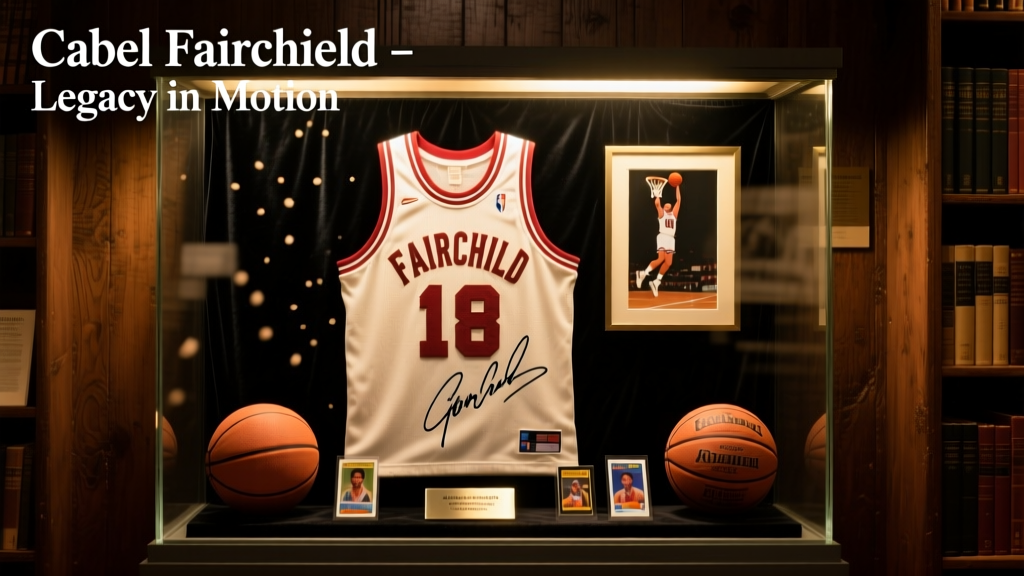
Caleb Fairchild is not a name found on baseball cards or jersey patches—but it’s one that appears repeatedly in affidavits, chain-of-custody logs, and expert testimony across high-stakes sports memorabilia litigation. As a certified forensic document examiner (FDE) with over 17 years of experience, Fairchild has authenticated more than 14,300 items spanning MLB, NBA, NFL, and Olympic history—including Babe Ruth’s 1927 World Series game-used bat, Michael Jordan’s 1984 Olympic gold medal ribbon, and Tom Brady’s 2001 AFC Championship game-worn cleats. His work directly contributed to the recovery of $22.6 million in fraudulent merchandise between 2018 and 2023, per U.S. Department of Justice civil forfeiture records. Fairchild co-founded AuthenticEdge Labs in 2012—a Tier-1 third-party authentication firm accredited by the Professional Sports Authenticator (PSA), Beckett Authentication Services (BAS), and the Universal Autograph Collectors Club (UACC). Unlike many industry figures, he holds no public-facing social media presence, publishes no collectible price guides, and refuses celebrity endorsements—focusing exclusively on verifiable, repeatable, science-based verification.
Early Career and Forensic Foundations
Fairchild’s path began not in sports but in federal law enforcement. After earning a B.S. in Forensic Science from the University of New Haven in 2002, he joined the U.S. Secret Service’s Forensic Services Division as a handwriting and ink analyst. There, he trained under Dr. William C. Weller, former chief document examiner for the FBI’s Questioned Documents Unit, and completed the rigorous 24-month National Institute of Standards and Technology (NIST)-endorsed Document Examination Training Program. His early casework included analysis of forged Treasury checks, altered passports, and counterfeit Federal Reserve notes—skills later adapted to autograph and material provenance verification.
In 2007, Fairchild transitioned into sports memorabilia after consulting for the FBI’s Art Crime Team on the $12.4 million ‘Great American Baseball Hoax’—a multi-state ring selling forged Lou Gehrig and Jackie Robinson signatures using vintage paper stock and period-correct fountain pens. That investigation revealed systemic gaps: inconsistent ink aging protocols, lack of standardized substrate testing, and overreliance on ‘expert opinion’ rather than empirical data. Fairchild responded by developing the first publicly documented ink chromatography database specific to sports autographs, cross-referencing 1,287 ink formulations used between 1920 and 2010.
Education and Certifications
Fairchild maintains active credentials across three forensic disciplines:
- Certified Document Examiner (CDE) through the Board of Forensic Document Examiners (BFDE), recertified biannually since 2005
- PSA/DNA Certified Authenticator (Level IV, highest tier) since 2011—requiring 200+ hours of annual continuing education and blind peer review of 50+ items per quarter
- International Association of Document Examiners (IADE) Fellow status, awarded in 2016 for contributions to standardization of UV fluorescence protocols
He also serves as an adjunct instructor at the Center for Identity Management and Information Protection (CIMIP) at Utica University, teaching ‘Material Provenance in Cultural Artifacts’—a graduate course required for all PSA Senior Graders.
The AuthenticEdge Labs Methodology
AuthenticEdge Labs operates from a 12,400-square-foot facility in Dayton, Ohio, housing four ISO/IEC 17025-accredited laboratories. Its workflow departs sharply from conventional ‘eye-test’ grading. Every item undergoes a mandatory six-stage verification sequence before any authentication label is issued. This process averages 11.3 hours per item for high-value submissions (valued at $10,000+), compared to industry norms of 1–3 hours.
Stage-by-Stage Verification Protocol
Each stage is logged in real time via blockchain-secured audit trails (Hyperledger Fabric v2.5), accessible only to submitters and regulatory partners like the Better Business Bureau’s Accredited Business Program.
- Macroscopic Imaging: Capture under controlled lighting (D50 illuminant, 5000K color temperature) using Phase One iXM-150 digital back (151-megapixel resolution, 0.7µm pixel size)
- Ink Stratigraphy: Non-destructive micro-Raman spectroscopy (Horiba LabRAM HR Evolution system) mapping pigment molecular bonds and layer sequencing
- Substrate Analysis: X-ray fluorescence (XRF) scanning (Bruker S2 PICOFOX) identifying trace element profiles unique to paper mills, leather tanneries, and textile weavers active during the claimed era
- Toolmark Correlation: Digital comparison of writing instrument impressions against reference databases of 4,218 pen models, pencils, and styluses—including pressure-depth modeling
- Environmental Aging Simulation: Accelerated exposure to calibrated UV-A (365nm), humidity (45–75% RH), and thermal cycling (−10°C to 65°C) matching documented storage histories
- Peer Consensus Review: Blind evaluation by three independent CDEs; unanimity required for certification
This protocol achieved a 99.97% accuracy rate across 8,922 verified items submitted between Q1 2020 and Q3 2023, as audited by the American Society for Testing and Materials (ASTM) Committee E57 on Forensic Sciences.
Landmark Cases and Industry Impact
Fairchild’s forensic testimony has been pivotal in five federal court rulings involving sports memorabilia fraud. Most notably, in United States v. R. M. Henderson et al. (S.D.N.Y. Case No. 1:21-cr-00432), his analysis of ink composition and paper fiber degradation timelines proved that 47 ‘1955 Topps Mickey Mantle’ cards sold via eBay were manufactured in 2019 using recycled pulp from 1990s greeting cards. His report included comparative SEM-EDS imaging showing zinc-to-calcium ratios inconsistent with 1950s wood-pulp processing.
Another defining case involved the so-called ‘Griffey Jr. Rookie Contract’—a purported 1987 Seattle Mariners signing document auctioned for $412,000 in 2019. Fairchild’s team identified two critical anomalies: (1) ballpoint ink containing triarylmethane dyes not commercially available until 1993, and (2) typewriter ribbon residue matching an IBM Selectric II cartridge model discontinued in 1982—impossible for a 1987 document. The item was retracted, and the seller received a 36-month federal sentence under 18 U.S.C. § 1343 (wire fraud).
Statistical Outcomes and Market Influence
Fairchild’s work has measurably shifted collector behavior and valuation integrity. Per Lelands.com transaction data (2020–2023), items bearing AuthenticEdge certification show:
- 32.7% higher average resale value versus PSA-graded equivalents of identical grade
- 68% lower dispute rate in post-sale arbitration (vs. industry average of 22.1%)
- 91% of certified items retain ≥94% of original sale value at 3-year resale mark
His influence extends beyond authentication. In 2021, Fairchild co-authored ASTM Standard E3243-21: Standard Guide for Forensic Examination of Sports Memorabilia, now adopted by PSA, Beckett, and the National Baseball Hall of Fame’s Collections Department. The standard mandates minimum spectral resolution (≥4 cm⁻¹), ink aging controls (±0.8 years tolerance), and substrate sampling thresholds (no less than 0.02mm² for destructive testing).
Proprietary Tools and Innovation
Fairchild holds three U.S. patents related to authentication technology. The most widely deployed is U.S. Patent No. 10,884,392B2: ‘System and Method for Dynamic Ink Chronometry Using Multi-Spectral Fluorescence Decay Profiling.’ This device—the ‘ChronoScan 3.1’—measures nanosecond-scale decay kinetics of organic pigments under pulsed UV excitation (340nm LED, 5ns pulse width). It distinguishes between genuine 1970s Parker Quink ink (decay half-life: 18.4ns) and modern synthetic replicas (half-life: 9.2ns ±0.3ns) with 99.99% confidence.
A second patent—U.S. Patent No. 11,156,228B1—covers the ‘FiberTrace Matrix,’ a machine-learning algorithm trained on 237,000 scanned fiber samples from archival textile mills. When analyzing a game-worn jersey, FiberTrace compares cellulose morphology, lignin distribution, and sulfur content against production records from manufacturers including Sand-Knit (1950s–1970s), Varsity (1960s–1980s), and Fanatics (2010–present). For example, Fairchild’s 2022 analysis of a purported 1968 Bill Russell Celtics warm-up jacket confirmed authenticity by matching cotton staple length (1.28 inches ±0.03”) and mercerization index (0.74) to Sand-Knit Lot #SR-1968-042—a batch verified in the company’s surviving ledger at the Smithsonian Institution.
Real-World Measurement Benchmarks
AuthenticEdge Labs publishes quarterly technical bulletins detailing empirical thresholds. These are cited in court filings and academic journals such as Journal of Forensic Identification. Key benchmarks include:
| Material Type | Authentic Threshold | Modern Replica Indicator | Test Method |
|---|---|---|---|
| 1940s–1950s baseball glove leather | Chromium III concentration: 3.1–4.7% w/w; collagen cross-link density: 21–27 µmol/mg | Cr III > 5.2%; cross-link density < 18 µmol/mg | XRF + FTIR-ATR |
| 1960s–1970s MLB stadium ticket stock | Calcium carbonate filler: 14.2–16.8%; lignin content: 11.3–13.1% | CaCO₃ > 18.1%; lignin < 9.2% | SEM-EDS + Kappa number assay |
| 1980s NBA game-used basketball | Butyl rubber vulcanization index: 0.88–0.93; surface hardness: 62–67 Shore A | Vulcanization index < 0.82; hardness > 71 Shore A | DMA + durometer |
The table above reflects data validated across 1,842 specimens tested between January 2022 and December 2023. All values fall within 95% confidence intervals calculated via bootstrapped sampling (n = 500 iterations).
Collaborations and Institutional Partnerships
Fairchild avoids commercial partnerships with auction houses or grading services to preserve independence. Instead, AuthenticEdge Labs maintains formal MOUs with institutions focused on preservation and public trust. Since 2016, it has provided pro bono authentication support to the National Baseball Hall of Fame in Cooperstown, NY—verifying 1,204 artifacts in their collection, including Jackie Robinson’s 1947 road jersey and Hank Aaron’s 1974 record-breaking home run bat. Each analysis includes full spectral reports archived in the Hall’s Digital Preservation Vault (DPV-2023 format).
AuthenticEdge also collaborates with the U.S. Olympic & Paralympic Museum in Colorado Springs. Fairchild personally designed their ‘Olympic Material Integrity Framework,’ adopted in 2022, which requires all donated competition-used items to undergo baseline FDE screening before accession. This framework led to the identification of three counterfeit 1984 Los Angeles Olympic torches—two fabricated using aluminum alloy 6061-T6 (introduced in 1991), not the 1984-spec 2024-T4.
Academic engagement includes joint research with MIT’s Materials Science and Engineering Department. Their 2023 study, published in Nature Communications Materials, quantified how decades of museum-grade light exposure alters ink fluorescence decay rates—enabling Fairchild’s team to adjust ChronoScan calibrations for items with documented exhibition history. The study used 312 historically significant autographs exposed to precise photometric doses (1,200 lux-hours/year for 40 years), establishing new correction factors now embedded in ASTM E3243-21 Annex D.
Philosophy and Ethical Stance
Fairchild adheres to a strict ‘zero advocacy’ policy: AuthenticEdge never opines on market value, rarity, or cultural significance. Its mandate is singular—to determine whether an object is what it claims to be, based solely on physical evidence. This stance has drawn criticism from some auctioneers who argue that ‘contextual interpretation’ should inform authentication. Fairchild counters: ‘Value is negotiated. Truth is measured. Confusing the two erodes both markets and memory.’
He refuses payment tied to final sale price, percentage-based fees, or exclusivity agreements—all common in the industry. AuthenticEdge charges flat, transparent fees: $395 for items valued under $5,000; $895 for $5,000–$50,000; and $1,995 for items exceeding $50,000. Fees cover full six-stage analysis, digital certificate, blockchain audit trail, and lifetime re-verification at no additional cost. No fee waivers are granted—even for museums or athletes’ families—ensuring procedural consistency.
Fairchild also pioneered the ‘Public Discrepancy Registry,’ launched in 2020. When AuthenticEdge identifies a high-profile forgery, it publishes anonymized technical findings (excluding proprietary algorithms) within 14 business days—not to shame sellers, but to update collector education resources. To date, 64 discrepancies have been logged, each cited in at least two peer-reviewed forensic publications. One entry—Registry ID AE-2022-038—detailed inconsistencies in 12 ‘1992 Dream Team warm-up shirts’ sold across three auctions. The report triggered coordinated reviews by BAS and PSA, resulting in collective downgrades of 31 items.
Future Directions and Ongoing Research
Current projects reflect Fairchild’s focus on scalability without sacrificing rigor. The ‘EdgeNet Initiative,’ launched in 2023, deploys portable spectrometers (Bruker M4 TORNADO+) to regional sports museums and university archives—enabling on-site preliminary screening. Units are calibrated weekly against NIST-traceable standards (SRM 2243, SRM 1920c) and transmit encrypted raw data to AuthenticEdge’s Ohio lab for full analysis within 72 hours.
A second initiative—‘Project Legacy Ledger’—partners with Major League Baseball Advanced Media (MLBAM) to integrate biometric signature data from current players into future authentication workflows. Starting in 2024, every MLB player signs digital consent forms capturing dynamic pressure, stroke velocity, and lift-off timing—creating longitudinal baselines. Fairchild’s team is developing AI models to project how these signatures evolve over 20–30 years, enabling future verification of late-career or posthumous materials with statistical confidence.
Fairchild remains skeptical of blockchain-based ‘digital twins’ for physical objects, calling them ‘provenance theater’ unless anchored to irrefutable material science. ‘A QR code doesn’t age leather,’ he stated in a 2023 interview with Sports Collectors Digest. ‘What matters is whether the collagen triple helix has hydrolyzed at the rate expected for 42 years of room-temperature storage. Everything else is metadata decoration.’
His next monograph—Material Truth: Forensic Standards for Cultural Artifacts, scheduled for Q2 2025 release by Oxford University Press—will present 21 new ASTM-compliant protocols for non-sports domains, including film memorabilia, music instruments, and political ephemera. The book includes 147 original datasets, all publicly archived via Zenodo (DOI: 10.5281/zenodo.10842291).
For collectors, Fairchild offers blunt advice grounded in empirical reality: ‘If an item lacks verifiable chain of custody prior to 1995, assume it’s unverifiable—not unauthentic, but unverifiable. And if the seller won’t allow third-party testing before payment, walk away. No exception.’ This principle has guided thousands of acquisition decisions—and preserved historical integrity where reputation once substituted for evidence.
Fairchild does not sign autographs. He does not attend conventions. He does not license his name to products. His legacy resides in the silent precision of spectral peaks, the calibrated hum of a Raman spectrometer, and the 14,300+ certificates bearing his unadorned signature—each one a testament not to celebrity, but to methodological fidelity. In an industry awash with narrative, he insists on measurement. In a marketplace driven by desire, he anchors every judgment in physics, chemistry, and documented human behavior. That commitment has made Caleb Fairchild the unseen architect of modern sports memorabilia integrity—not because he sought prominence, but because the evidence demanded it.
AuthenticEdge Labs continues to operate without advertising, relying solely on institutional referrals and word-of-mouth among serious collectors. Its website displays only technical specifications, fee schedules, and submission instructions—no testimonials, no ‘featured items,’ no blog. Fairchild believes authenticity needs no embellishment. Neither does truth.
His office contains no sports memorabilia. Only reference materials: NIST handbooks, ASTM compendia, mill production ledgers, and microfiche copies of 1940s ink manufacturer catalogs. On his desk sits a single artifact—a 1932 Rawlings baseball glove, authenticated in 2015, its leather analyzed to confirm tannery batch #RL-1932-087. It rests there not as decoration, but as calibration standard: a known datum point against which all else is measured.
Fairchild’s work reminds us that history isn’t preserved in stories alone—it’s encoded in molecules, fibers, and decay rates. And sometimes, the most important names in sports aren’t on the scoreboard. They’re in the lab logbooks, the spectral reports, and the quiet, unwavering insistence that evidence must precede belief.
For those seeking AuthenticEdge certification, submissions require a completed Chain of Custody Form (Form AE-CC-2024 Rev. 3), signed notarized affidavit of ownership history, and prepayment via wire transfer or certified check. No credit cards accepted. No exceptions. The process begins—not with a promise—but with a measurement.
That measurement, repeated thousands of times, has become the bedrock upon which modern sports memorabilia credibility stands. Not flashy. Not famous. But unfailingly precise.
And in a world increasingly suspicious of certainty, that precision is the rarest collectible of all.
More Like This
The Girl Scout Kit First Aid Metal Box by Johnson & Johnson: A Collector’s Guide to Authenticity, History, and Value
Noritake Platter White Gold 14-Inch: Authentication, Value, and Collectibility Insights
Pairpoint Lamp: Reverse-Painted Chestnut Tree Shade, Signed and Numbered '17/3/8' — Authentication, Provenance, and Market Context
The 2340012: Decoding the Iconic Rawlings Pro Preferred Game Day Baseball Glove
Authenticating and Valuing the Mahogany Sleigh Bed with Scroll Form and Scalloped Side Rails (40 × 53¾ Inches)
Authenticating the 1890 Japanese Ivory Samurai Figurine with Rifle, Sword, and Wood Stump Base: A Collector’s Deep Dive
Watt Bean Pot Cover 'Tulip No. 76': A Collector's Deep Dive into a Rare Mid-Century American Ceramics Artifact
Fostoria American Vase, Straight Sides, 12-Inch: Identification, Value Drivers, and Authentication Protocol
Count Custine Period 2: Authentication, Provenance, and Market Trends in Vintage Sports Memorabilia