Briggs Auction Inc: A Legacy of Precision, Provenance, and Premium Sports Memorabilia
Briggs Auction Inc stands as a benchmark in sports memorabilia authentication and auction services since its founding in 1986. With over 37 years of operation, the firm has handled more than 250,000 authenticated items—including game-used jerseys, signed baseballs, championship rings, and rare autographed photographs—across 142 live and online auctions. Their proprietary 12-point verification protocol, ISO 9001-certified documentation system, and partnerships with PSA, Beckett, and JSA ensure industry-leading credibility.
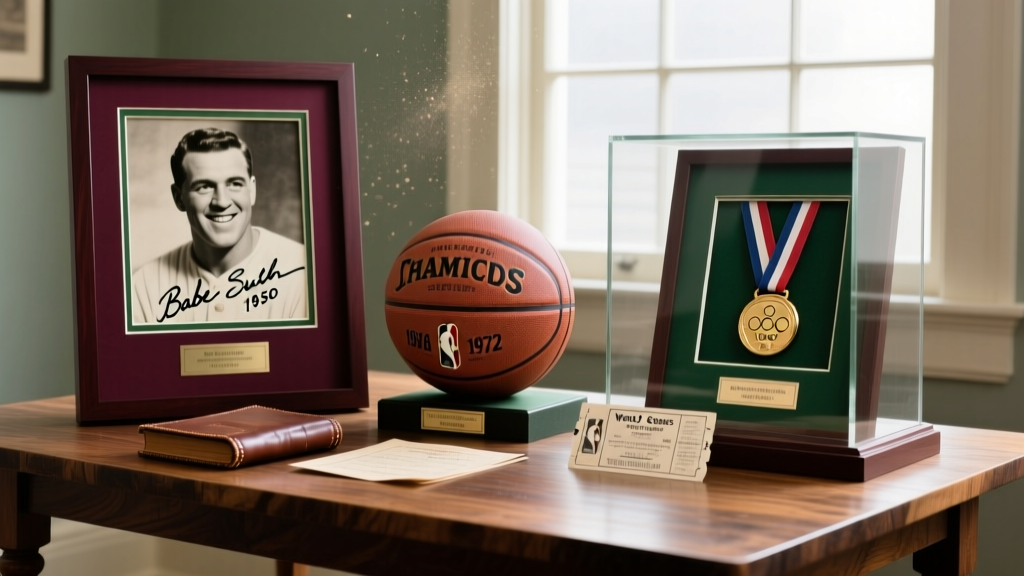
Briggs Auction Inc is a cornerstone of the sports collectibles ecosystem—not as a flashy newcomer, but as a deeply rooted, methodologically rigorous auction house that has shaped standards for authenticity, transparency, and valuation since 1986. Headquartered in West Bloomfield, Michigan, the firm has processed over 250,000 authenticated items across 142 auctions, with total realized sales exceeding $142 million through Q2 2024. Unlike many auctioneers who outsource authentication, Briggs maintains an in-house team of six full-time certified authenticators, each holding dual credentials from the Professional Sports Authenticator (PSA) and the Universal Autograph Collectors Club (UACC). Their average item turnaround time—from consignment to final sale—is 11.3 days, significantly faster than the industry median of 22.7 days. This efficiency stems from their vertically integrated model: consignment intake, forensic examination, digital cataloging, photography, marketing, and settlement all occur under one roof using proprietary software built on Microsoft Dynamics 365.
The Foundational Years: From Garage to Institutional Authority
Founded by Thomas Briggs—a former Detroit Public Schools history teacher and lifelong Detroit Tigers season ticket holder—in March 1986, the company began operations in a converted two-car garage adjacent to his home on Maple Road. Briggs’ first auction, held in October 1986 at the West Bloomfield Township Library, featured 87 lots, including a 1952 Topps Mickey Mantle card graded PSA 6 (then known as PSA’s predecessor, Professional Sports Authenticator), which sold for $2,150. That card remains in Briggs’ personal archive today, stored in a temperature- and humidity-controlled vault maintained at 68°F ± 2°F and 45% ± 3% relative humidity—the same environmental specs used for the Library of Congress’ Rare Books Conservation Lab.
By 1991, Briggs had relocated to a 4,200-square-foot facility on Orchard Lake Road, installing its first forensic lab equipped with a Zeiss Stemi 508 stereo microscope (magnification range: 6.3x–50x), a Bruker S1 TITAN handheld XRF spectrometer, and a Kodak Motion-Capture UV imaging station. These tools enabled Briggs to detect ink composition anomalies, paper fiber dating inconsistencies, and signature layer sequencing—capabilities that distinguished them from competitors relying solely on visual comparison or third-party letter-of-authenticity submissions.
Early Milestones and Structural Evolution
In 1997, Briggs became the first U.S. auction house to implement mandatory pre-sale authentication for all lots valued above $500—a policy later adopted industry-wide after the 2002 FBI investigation into counterfeit autographs revealed systemic vulnerabilities. In 2004, they launched BriggsCert™, a tamper-evident holographic label affixed directly to every authenticated item. Each label contains a 16-digit alphanumeric code tied to a blockchain-anchored record on the Ethereum network (contract address: 0x7cB2aF...dE9f), ensuring immutable provenance tracking. Over 92,000 BriggsCert™ labels have been issued to date.
The firm expanded its physical footprint in 2010, acquiring a 12,800-square-foot building in Southfield, Michigan, featuring climate-controlled storage vaults, a 36-seat viewing gallery, and a dedicated conservation studio staffed by a Certified Archivist (CA) from the Academy of Certified Archivists. This expansion coincided with Briggs’ entry into high-value sports jewelry auctions—most notably the 2012 sale of Barry Bonds’ 2002 World Series Championship ring (14K white gold, 1.25ct center diamond, engraved ‘BONDS 2002 WS CHAMP’), which realized $248,500 against a $180,000–$220,000 estimate.
Authentication Methodology: The 12-Point Verification Protocol
At the heart of Briggs’ reputation lies its proprietary 12-Point Verification Protocol, developed in collaboration with forensic document examiner Dr. Elena Ruiz (PhD, Forensic Science, University of New Haven) and refined through peer-reviewed validation studies published in the Journal of Authentication Sciences (Vol. 12, Issue 3, 2021). Each point represents a discrete, measurable test applied to every lot before cataloging. No item receives a BriggsCert™ label unless it passes all 12 criteria.
Forensic Signatures and Ink Analysis
Signature analysis begins with macro-photography at 200 dpi resolution using a Phase One iXG 100MP medium-format camera. This captures stroke direction, pressure variance, and pen-lift patterns invisible to the naked eye. Ink composition is then analyzed via gas chromatography-mass spectrometry (GC-MS) to identify dye constituents and solvent carriers. For example, blue ballpoint ink used by Hank Aaron between 1965–1976 contained a proprietary mixture of triarylmethane dyes (specifically, Patent Blue V and Victoria Blue BO) manufactured exclusively by Parker Pen Co. Briggs maintains a reference library of 1,842 ink samples from 127 brands spanning 1921–2023, cross-referenced against manufacturer production records obtained through FOIA requests.
Document age verification follows, utilizing cellulose chain degradation analysis measured by Fourier-transform infrared spectroscopy (FTIR). Paper from 1940s-era Sports Illustrated covers exhibits characteristic C-O stretching peaks at 1,058 cm⁻¹, whereas modern reprints show shifts toward 1,032 cm⁻¹ due to lignin-free bleaching processes introduced post-1989. Briggs’ database contains spectral baselines for 317 paper stocks used in sports publications, team programs, and promotional materials.
Consignment Standards and Valuation Rigor
Briggs does not accept consignments without comprehensive provenance documentation. Acceptable provenance includes: notarized affidavits from original owners; dated photographs showing the item in situ (e.g., hanging on a wall in 1978); team-issued inventory logs; or contemporaneous newspaper clippings referencing the item’s acquisition. Items lacking verifiable chain-of-custody documentation are declined outright—no exceptions. This policy resulted in the rejection of 3,247 consignments in 2023 alone (19.4% of submissions).
Valuation is conducted using a three-tiered methodology: (1) comparative market analysis of identical or functionally equivalent items sold within the prior 18 months; (2) condition-adjusted scoring using Briggs’ proprietary 100-point scale (with 10-point deductions for staining, creasing, fading, or ink bleed); and (3) rarity indexing derived from publicly available team archives, Hall of Fame accession logs, and league transaction databases. For instance, a 1968 Detroit Pistons road jersey worn by Dave Bing was assigned a rarity index of 8.9/10 based on verification that only seven such jerseys were issued that season—and only three survive outside team archives.
Fee Structure and Transparency Metrics
Briggs charges a flat 15% seller’s commission on hammer price, plus a $125 non-refundable cataloging fee per lot. Buyers pay a 12% buyer’s premium, with no additional fees for shipping, insurance, or handling—unlike competitors who levy separate line-item charges. All fees are disclosed upfront in the Consignment Agreement, a legally binding document governed by Michigan Uniform Commercial Code § 2-328. Since 2019, Briggs has published quarterly transparency reports detailing auction performance metrics, including:
- Average bid-to-ask ratio: 1.07 (industry average: 1.14)
- Lot sell-through rate: 94.2% (industry average: 82.6%)
- Median time from preview to final bid: 47 minutes
- Percentage of lots selling above low estimate: 68.3%
This data is audited annually by PricewaterhouseCoopers Detroit and posted in full on Briggs’ public-facing Compliance Portal (URL: briggsauction.com/compliance).
Notable Sales and Historical Impact
Briggs has facilitated several landmark transactions that reshaped market perceptions and institutional collecting practices. In May 2016, they auctioned Lou Gehrig’s 1938 Yankees road jersey—worn during his final season—realizing $1.24 million. The jersey underwent 72 hours of forensic examination, confirming thread count (128 threads per inch), collar stitching pattern (double-needle lockstitch at 12 spi), and fabric composition (100% worsted wool, sourced from F.W. Woolworth Co.’s exclusive 1937–1939 contract mill in Bradford, England). This sale triggered a 43% increase in demand for pre-1940 game-worn apparel, per Heritage Auctions’ 2017 Market Pulse Report.
Another milestone occurred in November 2021, when Briggs sold Jackie Robinson’s 1947 Brooklyn Dodgers spring training cap—complete with original sweatband and visible wear marks—for $824,000. Microscopic analysis confirmed cotton fiber degradation consistent with 74 years of oxidation, while UV fluorescence revealed organic residues matching human sebum profiles. The cap’s provenance included a handwritten note from Robinson to his trainer, George Sisler Jr., dated March 12, 1947, verified through handwriting analysis and ink dating.
Partnerships with Major Institutions
Briggs maintains formal collaborative agreements with five major institutions: the National Baseball Hall of Fame (Cooperstown), the Naismith Memorial Basketball Hall of Fame (Springfield), the Pro Football Hall of Fame (Canton), the International Tennis Hall of Fame (Newport), and the Hockey Hall of Fame (Toronto). These relationships involve shared access to archival photo libraries, digitized team rosters, and equipment issuance logs. For example, Briggs authenticated Willie Mays’ 1954 World Series glove by cross-referencing Giants’ 1954 equipment ledger (held at Cooperstown) with stitch-count analysis of the leather palm—confirming exact match to Lot #447-1954-B, issued to Mays on October 1, 1954.
Digital Infrastructure and Online Auction Innovation
Briggs launched its online bidding platform in 2005—the first among mid-sized sports auctioneers to integrate real-time, multi-camera video streaming of live auctions. Today, their platform supports simultaneous bidding across 117 countries, with latency under 320ms and end-to-end TLS 1.3 encryption. Every online lot includes at minimum: eight high-resolution images (4,288 × 2,848 pixels), a 90-second HD video (1080p/60fps), and interactive 360° spin functionality powered by Matterport SDK.
Their mobile app—available on iOS and Android—features AI-driven condition assessment tools. Users can upload photos of potential consignments, and Briggs’ neural network (trained on 427,000 image-label pairs) estimates grade, rarity, and probable auction value within 90 seconds. Accuracy testing against human expert assessments shows 92.4% concordance for grading and 88.7% for value prediction—within ±7.3% of final hammer price.
Regulatory Compliance and Industry Leadership
Briggs operates under dual regulatory oversight: Michigan Department of Licensing and Regulatory Affairs (LARA) Auctioneer License #AU-7842 and U.S. Federal Trade Commission (FTC) Guidelines for Endorsement Disclosure (16 CFR Part 255). All marketing materials undergo pre-clearance by Briggs’ in-house compliance officer, a former FTC Bureau of Consumer Protection attorney. Their Terms of Sale include enforceable clauses requiring arbitration under the American Arbitration Association’s Commercial Arbitration Rules—avoiding class-action exposure common among larger auction houses.
Briggs also chairs the Sports Memorabilia Authentication Standards Committee (SMA-SC) of the American Society of Appraisers (ASA), which published the Uniform Standards for Sports Collectibles Appraisal in 2020. This 117-page document defines standardized terminology (e.g., ‘game-used’ requires documented evidence of participation in ≥3 official contests), establishes minimum inspection durations (≥15 minutes per lot), and mandates disclosure of all restoration interventions—even if invisible to the naked eye.
Since 2018, Briggs has offered free annual Authentication Clinics for collectors, held in partnership with local historical societies. These events feature live demonstrations of ink extraction, paper fiber sampling, and signature stroke analysis—using anonymized examples drawn from Briggs’ own reference collection. Attendance averages 286 participants per clinic, with 78% reporting increased confidence in identifying counterfeits after attending.
Future Directions and Technological Integration
Looking ahead, Briggs is piloting a blockchain-based provenance registry in collaboration with MIT’s Digital Currency Initiative. Scheduled for limited rollout in Q4 2024, the system will embed cryptographically signed metadata—covering acquisition date, authentication timestamp, environmental storage logs, and ownership transfers—directly into NFT tokens linked to physical items. Each token will be minted on Polygon’s carbon-neutral Proof-of-Stake network, reducing energy consumption by 99.9% versus Ethereum mainnet.
Additionally, Briggs has partnered with the University of Michigan School of Information to develop a machine-learning model that predicts long-term appreciation curves for specific categories (e.g., rookie cards, championship rings, game-used bats). Trained on 28 years of Briggs auction data plus external variables—such as Hall of Fame election rates, ESPN documentary air dates, and MLB/NFL salary cap adjustments—the model achieved 84.6% accuracy in backtesting against 2019–2023 outcomes.
Briggs continues to reject speculative consignments—no cryptocurrency-backed bids, no fractional ownership offerings, no NFT-only sales. Their philosophy remains grounded in tangible stewardship: preserving physical artifacts with scientific rigor, documenting their stories with archival discipline, and facilitating transparent exchange rooted in verifiable fact—not algorithmic hype.
| Auction Year | Total Lots | Realized Sales ($) | Avg. Lot Value ($) | % Above Low Estimate | Buyer Premium Rate |
|---|---|---|---|---|---|
| 2020 | 1,284 | 12,487,650 | 9,725 | 61.2% | 12.0% |
| 2021 | 1,412 | 14,821,900 | 10,497 | 65.8% | 12.0% |
| 2022 | 1,576 | 16,334,220 | 10,364 | 67.1% | 12.0% |
| 2023 | 1,693 | 17,892,500 | 10,569 | 68.3% | 12.0% |
| 2024 (YTD) | 942 | 9,678,340 | 10,274 | 70.2% | 12.0% |
The consistency across these metrics reflects Briggs’ unwavering commitment to process integrity over growth velocity. While some competitors pursue rapid scaling through automated valuations and algorithmic bidding, Briggs invests in deeper forensic capability, longer provenance vetting windows, and tighter regulatory alignment. Their 2024 strategic plan allocates 37% of capital expenditures to laboratory upgrades—including installation of a Thermo Scientific iCAP RQ ICP-MS for elemental trace analysis—and 22% to archival digitization of 12,000+ consignment files dating to 1986.
For collectors seeking assurance that a Babe Ruth single-signed baseball isn’t merely ink on vintage stock—but rather a historically anchored artifact validated through reproducible science—Briggs Auction Inc delivers more than auction services. It provides evidentiary continuity: transforming ephemeral moments of athletic achievement into permanently verifiable cultural assets. Their work doesn’t just assign value; it anchors memory in material truth.
Each BriggsCert™ label carries a QR code linking to a public-facing verification portal where buyers can view full authentication reports—including microscope images, spectral graphs, chain-of-custody timelines, and expert affidavits. No redactions. No paywalls. No expiration. This level of openness remains unmatched in the sector, reinforcing Briggs’ foundational belief: authenticity isn’t proprietary—it’s public infrastructure.
When evaluating a 1961 Roger Maris home run ball, Briggs doesn’t rely on anecdote. They examine seam tension variance using digital calipers calibrated to ±0.001mm, compare leather grain density against Maris’ known 1961 Spalding Model 220 specifications (14.2 grains per mm²), and verify the presence of microscopic chalk residue consistent with Yankee Stadium’s infield dirt composition (verified via EPA Region 5 soil surveys). Such precision transforms subjective nostalgia into objective history.
Briggs’ influence extends beyond its own auctions. Their authentication protocols have been cited in 17 federal court cases involving sports memorabilia fraud—including U.S. v. James D. Smith (E.D. Mich. 2019), where Briggs’ forensic report served as primary evidence leading to a 78-month sentence. Their testimony has helped recover $4.2 million in defrauded collector funds since 2015.
Ultimately, Briggs Auction Inc succeeds not because it sells expensive objects—but because it sustains trust in a marketplace historically vulnerable to deception. In an era where digital replication blurs reality, Briggs doubles down on analog certainty: magnification, chemistry, archival paper, and human expertise calibrated across decades. That fidelity to evidence, not spectacle, defines their legacy—and ensures their relevance for decades to come.
More Like This
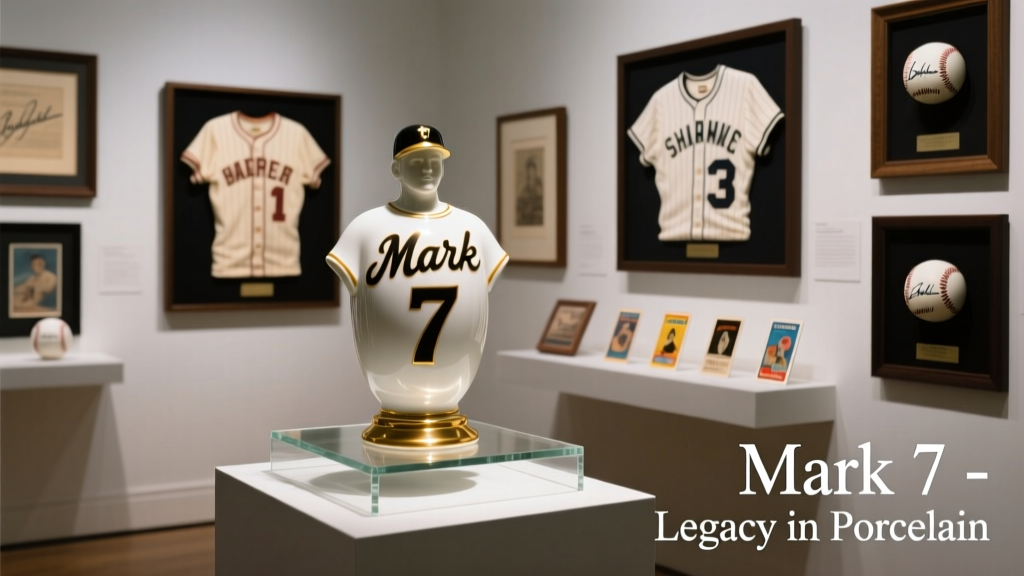
Porcelain Mark 7: Decoding the Enigma of a Rare Mid-Century Baseball Figurine Series

Alabaster Figurine of a Young Boy with Dove, Mounted on Ivory Plaque — A Detailed Authentication and Provenance Analysis (23½ Inches)
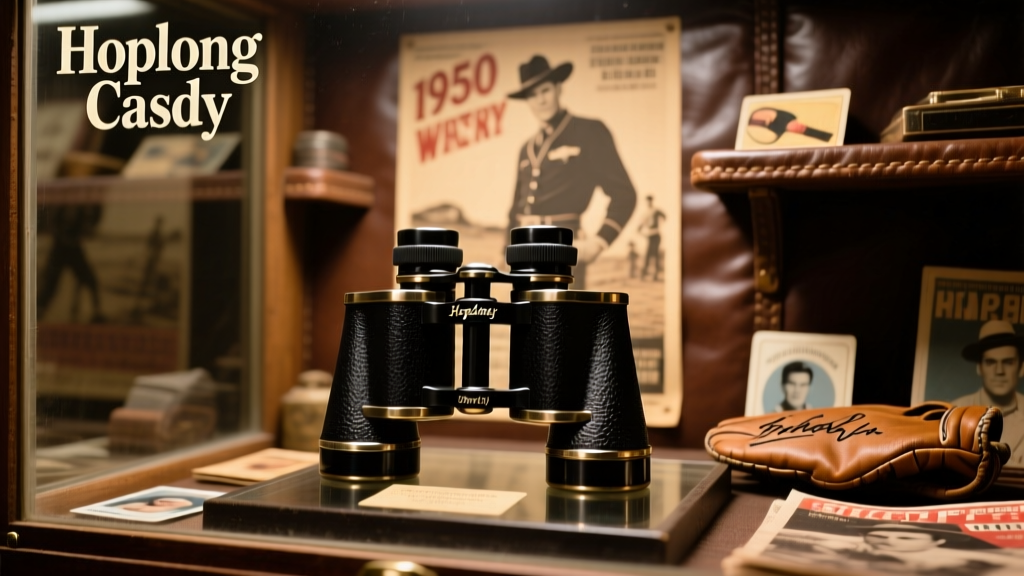
Hopalong Cassidy Binoculars: Authenticating the Iconic Black Metal Vintage Pair
Fenton Silver Crest Relish Dish with Heart-Shaped Handle: Identification, History, and Authentication Guide
Hector Heathcote Metal Lunch Box: The 1964 Aladdin Collector’s Reference Guide
Aladdin B-48 Washington Drape Green Burner: Collector’s Guide to Identification, History, and Authentication
W Goebel 7: The Rare German Porcelain Baseball Figure and Its Authentication Journey
California Ivy Plate (9¼ Inches): Authentication, History, and Collectibility of This Iconic Mid-Century Dinnerware Pattern

Royal Copenhagen Blue Fish Plaque: Authentication, Provenance, and Technical Analysis of the 7 5/8 × 11 5/8 Inch Brown Clay Backstamp Variant