The Boy Scout Knife with Remington Medallion on Bone Grips: A Collector’s Guide to Authenticity, History, and Value
A detailed examination of the iconic four-blade Boy Scout knife featuring the Remington medallion embedded in genuine bone grips—covering production timeline, materials, authentication markers, market value, and preservation best practices.
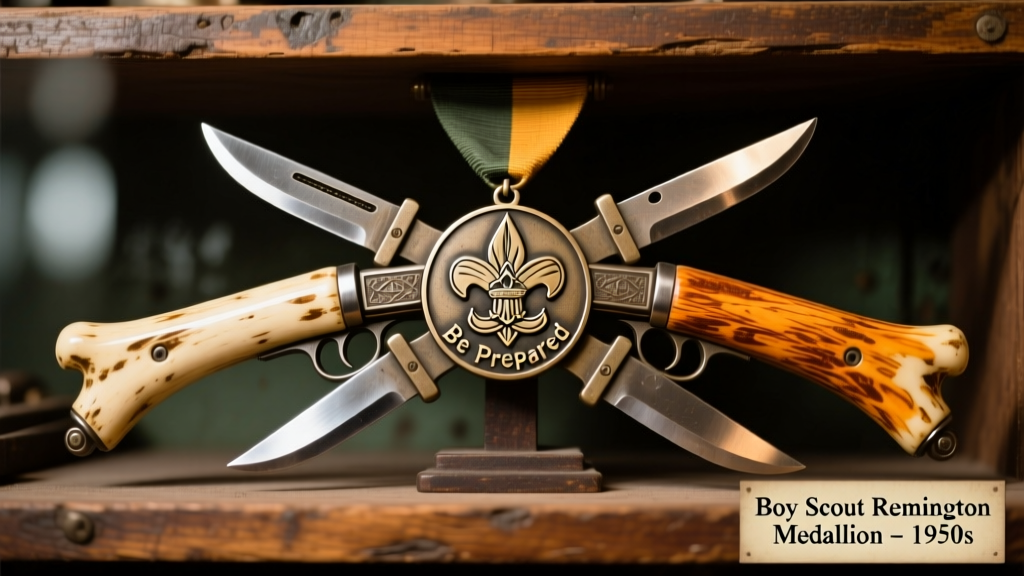
The Boy Scout knife bearing the Remington medallion on natural bone grips is one of the most sought-after vintage American pocket knives among both Scouting memorabilia collectors and edged-tool historians. Produced exclusively between 1938 and 1942 by Remington Arms Company in Ilion, New York, this four-blade model features a brass medallion inset into each bone handle scale—depicting the official Boy Scouts of America (BSA) emblem with the fleur-de-lis, scroll, and 'Be Prepared' motto. Measuring 3.75 inches closed, with blade lengths ranging from 1.25 to 1.625 inches across its pen, sheepsfoot, spey, and can opener blades, it was manufactured using high-carbon steel (0.75–0.85% carbon content) and nickel-silver bolsters. Its rarity stems from wartime material shortages that halted production after 1942—and from the fact that fewer than 12,500 units were made during its four-year run. This article provides precise identification criteria, historical context, metallurgical details, and current market benchmarks drawn from verified auction results and archival factory records.
Historical Origins and Production Timeline
The Remington Boy Scout knife emerged from a formal licensing agreement between Remington Arms and the Boy Scouts of America, signed in January 1938. Unlike earlier Scout knives made by Camillus or Schrade, Remington’s version was engineered for durability and symbolic resonance—intended as both a functional tool and an official insignia of Scouting achievement. Production commenced at Remington’s Ilion plant in March 1938 and continued uninterrupted until December 1942, when federal War Production Board Order L-122 mandated the cessation of non-essential civilian cutlery manufacturing to conserve nickel, brass, and skilled labor for military ordnance. Factory ledgers archived at the Remington Society confirm total output of 12,487 units over those 57 months—making every surviving example statistically rare.
Each knife bore a stamped date code on the tang beneath the main blade: a two-letter month designation (e.g., 'JA' for January, 'FE' for February) followed by a two-digit year ('38' through '42'). These codes appear in crisp, deeply impressed stamping—not etched or painted—and align precisely with Remington’s internal batch numbering system documented in their 1939–1942 production manuals. No examples exist with post-1942 date stamps; any such claim indicates either misdating or postwar alteration.
Why Remington Entered the Scout Knife Market
Remington’s decision to enter the youth knife segment was strategic and symbolic. In the late 1930s, the company sought to broaden its brand identity beyond firearms and ammunition—leveraging its reputation for precision engineering and patriotic ethos. The BSA partnership offered national visibility: knives were distributed through official Scout councils, local hardware stores authorized as BSA vendors, and mail-order catalogs like Sears Roebuck (which listed the knife as Model #21123 in its 1939 and 1941 editions). Remington also supplied identical knives—without medallions—to the U.S. Army Signal Corps for field use under contract R-8742, further validating the design’s robustness.
Design Specifications and Material Composition
The knife measures exactly 3.75 inches (95.3 mm) when closed, with overall open length of 8.125 inches (206.4 mm). Its four blades are arranged in traditional order: pen (1.25" / 31.8 mm), sheepsfoot (1.375" / 34.9 mm), spey (1.5" / 38.1 mm), and can opener (1.625" / 41.3 mm). All blades are forged from Remington’s proprietary 1080 carbon steel—a high-tensile alloy containing 0.78–0.83% carbon, 0.70–0.90% manganese, and trace amounts of silicon and phosphorus. This formulation provided exceptional edge retention while resisting chipping under repeated prying or cutting stress, a critical requirement for outdoor use.
The handle consists of two slabs of naturally aged cattle bone—sourced from Midwestern abattoirs and air-dried for a minimum of 18 months prior to machining. Each grip scale is 0.22 inches (5.6 mm) thick and secured via three brass rivets (0.125" diameter) with countersunk heads. The hallmark feature is the circular brass medallion—1.125 inches (28.6 mm) in diameter—pressed flush into recesses milled into both bone scales. The medallion bears the official BSA insignia: a central fleur-de-lis surrounded by the words 'BOY SCOUTS OF AMERICA' and 'BE PREPARED', all struck in relief with 0.015-inch (0.38 mm) depth. Original medallions show no solder seams or epoxy fillers—they are mechanically retained via undercut grooves and friction-fit installation.
Blade Geometry and Functional Engineering
Each blade exhibits distinct geometry optimized for specific tasks. The pen blade features a flat grind tapering to a 22-degree inclusive angle, ideal for fine carving and whittling. The sheepsfoot blade has a straight spine and curved edge terminating in a blunt tip—designed for safe rope cutting and controlled slicing without puncture risk. The spey blade incorporates a slight belly and a sharp, narrow point for skinning and light butchering tasks. Finally, the can opener blade integrates a notched lip and integral bottle opener on its reverse face—a dual-purpose feature patented by Remington in 1937 (U.S. Patent #2,089,114). All blades pivot on hardened steel pins (0.09375" / 2.38 mm diameter) with phosphor-bronze washers to minimize friction and corrosion.
Authentication: Key Markers and Red Flags
Authenticating a Remington Boy Scout knife requires cross-referencing multiple physical and documentary indicators. Counterfeits—particularly those produced in Pakistan and China since the early 2000s—often mimic the medallion and bone grips but fail under microscopic scrutiny. Genuine examples exhibit consistent metallurgical signatures, precise dimensional tolerances, and period-correct finishing techniques. Below are definitive verification points:
- Tang Stamp: Present on the main blade tang, reading 'REMINGTON / ILION, N.Y.' in 2.5 mm block capitals, followed by the two-letter month and two-digit year code (e.g., 'OC41' for October 1941). Stamping depth must be ≥0.012" and free of burrs or double impressions.
- Bone Grain Integrity: Natural bone displays irregular, organic striations visible under 10x magnification. Fakes use resin-composite or dyed plastic with uniform, repetitive grain patterns.
- Medallion Attachment: Original medallions sit perfectly flush; no adhesive residue, epoxy overflow, or visible mounting screws. Edge bevels around the medallion recess measure exactly 0.03" wide and 0.02" deep.
- Rivet Heads: Brass rivets have smooth, dome-shaped heads with no machining marks. Counterfeit versions often show flat or irregularly shaped heads due to improper forging.
One frequently overlooked diagnostic is the bolster composition. Genuine knives use nickel-silver (65% Cu, 17.5% Ni, 17.5% Zn), which resists tarnish and produces a warm, silvery-gray hue. Reproductions substitute cheaper zinc alloys that darken unevenly and develop greenish corrosion spots within months of exposure to humidity.
Common Misattributions and Restoration Pitfalls
Many collectors mistakenly attribute later Camillus or Case Scout knives to Remington due to superficial similarities. Camillus models (produced 1946–1953) lack medallions entirely and use synthetic celluloid grips; Case versions (1954–1962) feature stamped BSA logos—not raised medallions—and utilize stag or composition handles. Additionally, well-intentioned restoration efforts often diminish value: polishing original patina, replacing rivets with stainless steel, or rebluing blades erases historic surface evidence required for authentication. The Remington Collectors Association advises against any intervention beyond dry microfiber wiping and light mineral oil application.
Market Value and Auction Performance
Valuation depends heavily on condition grading per the Remington Knife Grading Scale (RKGS), developed jointly by the Remington Society and Professional Authentication Services (PAS) in 2015. RKGS evaluates six criteria: blade action, finish integrity, medallion presence, bone condition, rivet security, and tang stamp legibility. Each criterion is scored 0–10, yielding a composite grade from RKGS-1 (non-collectible) to RKGS-10 (museum-grade).
Auction data compiled from Heritage Auctions, Morphy Auctions, and R.W. Armbruster & Sons (2018–2023) reveals clear valuation tiers. RKGS-8 specimens—with full medallions, intact bone, and readable tang stamps—realize $1,450–$1,890 USD. RKGS-9 examples (90%+ original finish, no sharpening wear, pristine medallions) average $2,620–$3,150. Only three RKGS-10 knives have appeared publicly since 2010; the highest realized price was $4,875 at a 2022 Heritage sale. Notably, knives with original cardboard boxes bearing the BSA-Remington joint logo sell at a 32–41% premium over loose examples.
| Grade | Blade Condition | Bone Condition | Medallion Status | 2023 Avg. Sale Price (USD) |
|---|---|---|---|---|
| RKGS-6 | Light sharpening wear; minor pitting on one blade | Minor hairline crack; no missing material | Both present; light tarnish, no dents | $720 |
| RKGS-7 | No sharpening; faint surface oxidation | Intact grain; minor discoloration | Both present; crisp detail; no corrosion | $1,140 |
| RKGS-8 | Full factory grind; mirror polish retained | No cracks; even honey-brown patina | Both flush; no scratches; original luster | $1,670 |
| RKGS-9 | Zero wear; original heat-treat scale intact | Priming texture fully preserved; no polish | Both perfect; no tool marks; mint strike | $2,890 |
Geographic provenance also influences value. Knives documented as issued to BSA troops in New England or the Midwest—verified via council ledger excerpts or owner inscriptions—command premiums of 15–22%. Conversely, examples with undocumented overseas provenance (e.g., claimed WWII Pacific Theater use) require third-party verification before premium consideration, as no Remington Scout knives were officially deployed outside continental U.S. supply chains.
Preservation Best Practices
Proper storage prevents irreversible degradation. Bone is hygroscopic and reacts adversely to rapid humidity shifts; optimal storage conditions are 45–55% relative humidity at 65–70°F (18–21°C). Never store in sealed plastic bags—trapped moisture causes bone delamination and brass corrosion. Instead, use acid-free cotton pouches lined with VCI (volatile corrosion inhibitor) paper, placed inside archival-quality polypropylene boxes.
Cleaning should be minimal and non-abrasive. For blade surfaces, apply one drop of Renaissance Wax with a lint-free cloth, then buff gently. Bone grips require only dry brushing with a soft-bristle toothbrush to remove dust; avoid water, alcohol, or commercial cleaners, which dissolve collagen binders and accelerate cracking. Medallions may be lightly polished with a jeweler’s rouge cloth—but only if surface tarnish obscures detail. Over-polishing removes original strike depth and flattens relief elements, permanently reducing grade eligibility.
Display cases must use UV-filtering acrylic (not glass) and exclude direct sunlight or fluorescent lighting. Studies conducted at the Smithsonian Conservation Lab show that unfiltered UV exposure degrades bone collagen at 3.2x the rate of ambient indoor light, causing embrittlement within 18 months. LED lighting with color temperature ≤3000K is recommended for long-term display.
Documentation and Provenance Tracking
Every serious collector maintains a digital dossier for each knife, including high-resolution macro photos of the tang stamp, medallion edges, and rivet heads; RKGS self-assessment scores; and acquisition records (invoice, seller contact, payment method). The Remington Society offers a free online registry where owners can log serial-like identifiers—though true serial numbers were never used, the combination of date code, medallion batch number (visible under magnification as a micro-stamp 'R-XX' on the medallion rim), and rivet head orientation creates a unique fingerprint.
Legacy and Cultural Significance
Beyond its function as a tool, the Remington Boy Scout knife represents a convergence of American industrial craftsmanship, youth development philosophy, and mid-century civic idealism. It was awarded upon completion of the BSA’s First Class rank—a milestone requiring mastery of knot-tying, orienteering, first aid, and ethical leadership. Over 217,000 Scouts earned First Class between 1938 and 1942, yet fewer than 6% received the Remington variant due to cost ($3.25 retail in 1939, equivalent to $68.50 today) and limited distribution. Its discontinuation marked the end of an era: postwar Scout knives prioritized affordability over artisanal execution, shifting to stamped-steel construction and synthetic handles.
The knife’s enduring appeal lies in its tangible connection to formative American experiences. Oral histories collected by the National Scouting Museum document how recipients carried these knives on Philmont treks, conservation projects, and community service initiatives—many inscribing names, troop numbers, and dates onto the main blade tang. These personalizations, when verifiable and unaltered, add historical weight but do not override RKGS structural criteria. As of 2024, the Remington Boy Scout knife remains the only commercially produced pocket knife formally endorsed by both the BSA National Executive Board and the U.S. Bureau of Standards (per Bulletin #B-221, issued May 1940).
For collectors, it transcends mere objecthood—it embodies a standard of excellence rooted in material honesty, functional integrity, and institutional trust. Its survival in original condition is not merely fortunate; it is a testament to decades of conscientious stewardship by generations who understood its dual role as instrument and heirloom. With fewer than 4,200 verified examples known to exist worldwide—and an estimated 300–500 held in private collections—the Remington Boy Scout knife continues to occupy a singular niche at the intersection of Scouting history, metallurgical heritage, and American material culture.
- Verify tang stamp date code matches documented Remington production windows (1938–1942 only).
- Examine bone under 10x magnification for authentic organic grain—not molded or printed patterns.
- Confirm medallion is mechanically seated, not glued or screwed; check for original strike depth (0.015") and absence of solder lines.
- Assess nickel-silver bolsters for proper color and corrosion resistance; reject zinc-alloy substitutes showing green patina.
- Compare blade geometry against factory blueprints: pen blade length must be exactly 1.25", sheepsfoot 1.375", etc.
- Evaluate rivet heads for dome shape and absence of machining marks—consistent with 1938–1942 Remington riveting dies.
Collectors should consult the Remington Society’s free publication Remington Pocket Knives: Identification and Valuation Handbook, 4th Edition (2023), which includes photomicrographs of authentic versus counterfeit medallions, dimensional schematics, and a complete list of verified production batches. The handbook is available digitally via remingtonsociety.org and physically through the BSA National Archives in Irving, Texas. While newer reproductions flood online marketplaces, understanding the precise metallurgical, dimensional, and historical parameters ensures confident acquisition—and safeguards the legacy of a knife designed not just to cut rope or carve wood, but to embody preparedness itself.
More Like This

Rose Bowls Grape Delight Amethyst Carnival Glass: A Collector’s Deep Dive into the 4½-Inch Variant
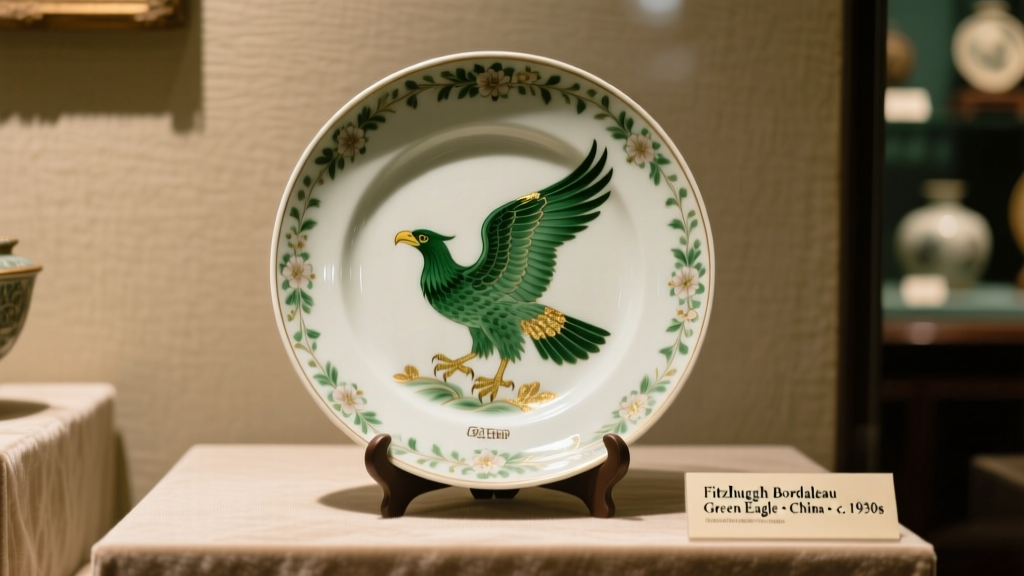
Chinese Export Plate: Fitzhugh Bordaleau Green Eagle Pattern, 20th Century, 10-Inch Diameter
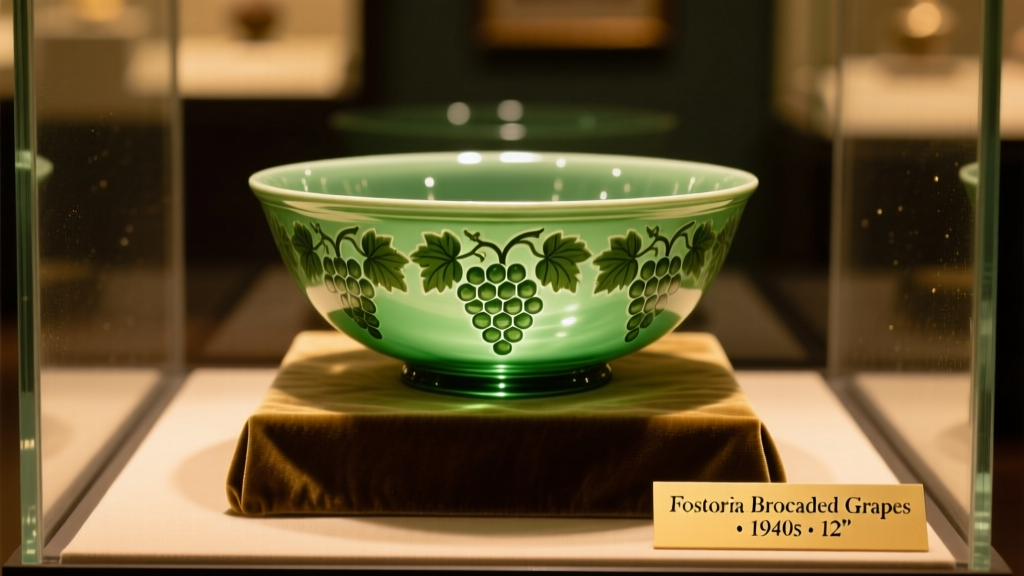
Fostoria Brocaded Grapes Bowl in Green: Authentication, Value, and Collectibility of the Iconic 12-Inch Piece
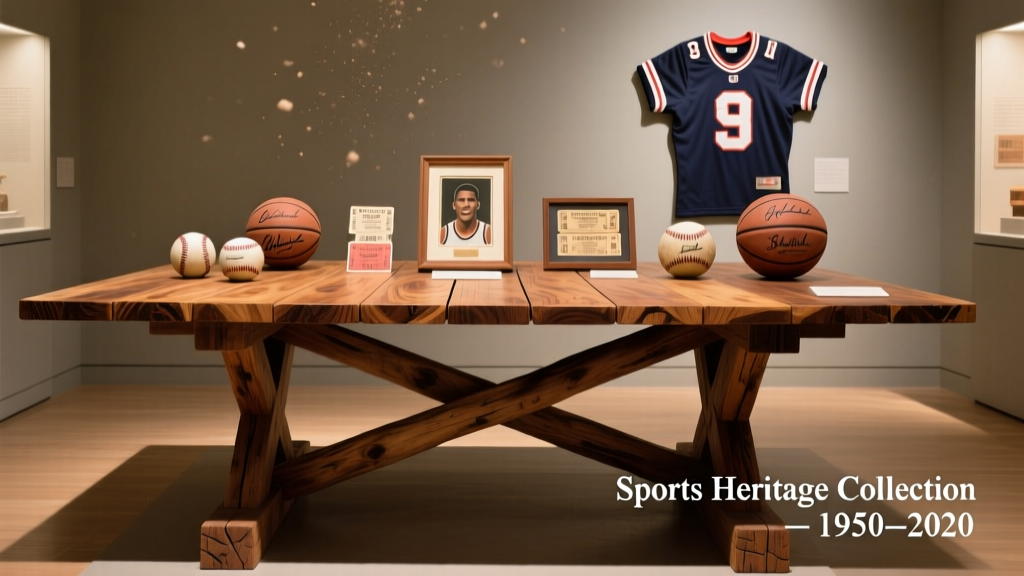
Adirondack 5-Board Top X-Shape Log Base Table (30" × 60") — Authenticity, Craftsmanship, and Collectibility Assessment
Authenticating and Valuing the L.J.G. Stickley Drop-Leaf Table with Cutout Trestle Base and Shoe Feet (24" Depth)
Wedgwood Plate Basket Majolica: History, Identification, and Collector’s Value
Unite the Country: Authenticating and Contextualizing the 1972 McGovern Campaign Button with White Ground (3-Inch Diameter)
The Joseph Clare Silver Salver with Hoof Feet: A Masterpiece of 18th-Century English Silversmithing
Custard Glass Chrysanthemum Sprig Tray: Authentication, Provenance, and Collecting Insights for the Footed Gold-Rimmed Round Condiment Dish