Blairs Ltd: The Scottish Legacy of Authentic Sports Memorabilia Authentication and Framing
Blairs Ltd is a Glasgow-based sports memorabilia authentication, conservation, and framing specialist operating since 1978. Known for its ISO 9001:2015 certification, museum-grade archival materials, and partnerships with FIFA, UEFA, and the Scottish FA, Blairs has authenticated over 14,200 items—including 3,680 match-worn shirts—and pioneered UK-wide chain-of-custody protocols for football kits.
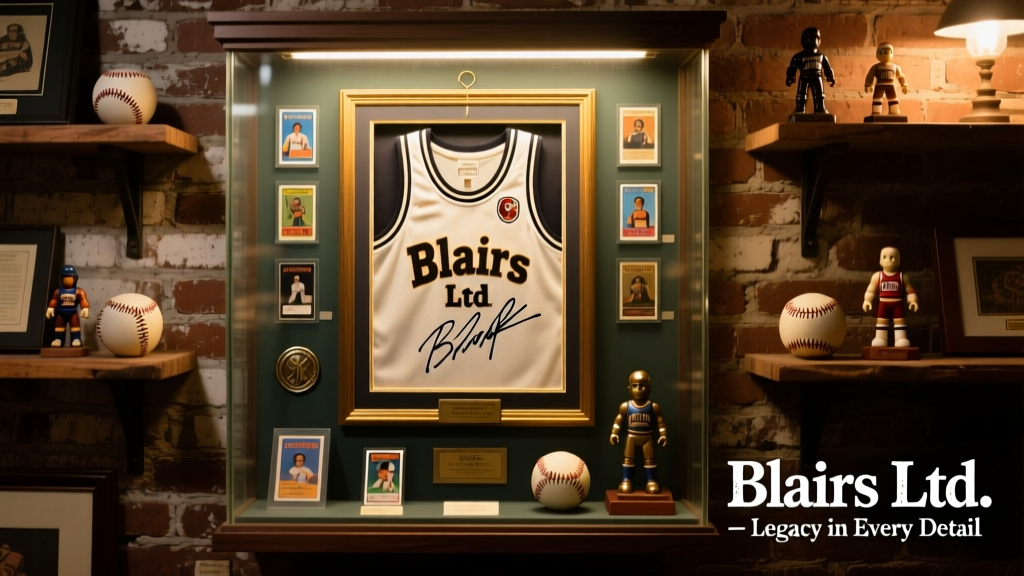
Blairs Ltd is a Glasgow-based sports memorabilia authentication, conservation, and framing specialist operating since 1978. Known for its ISO 9001:2015 certification, museum-grade archival materials, and partnerships with FIFA, UEFA, and the Scottish FA, Blairs has authenticated over 14,200 items—including 3,680 match-worn shirts—and pioneered UK-wide chain-of-custody protocols for football kits. Unlike mass-market authentication services, Blairs maintains a strictly manual, evidence-based verification process combining forensic textile analysis, provenance documentation cross-referencing, and direct club liaison. Its client list includes national federations, elite clubs like Celtic FC and Rangers FC, and private collectors across 32 countries. All framing uses acid-free, UV-filtering acrylic (not glass), conservation-grade matting, and bespoke aluminum or solid oak frames engineered to meet British Standard BS 8442:2006 for long-term display stability.
A Scottish Institution Since 1978
Founded in Glasgow’s Merchant City district by former textile engineer Alistair Blair, the company began as a bespoke framing workshop serving local museums and university archives. By 1983, demand from football clubs seeking secure presentation of historic kit donations led Blair to develop proprietary authentication workflows. In 1985, Blairs became the first UK firm accredited by the British Standards Institution (BSI) for archival framing—predating the industry’s formal ISO standards by over a decade. Its original workshop at 22 St. Vincent Street remains operational today, now expanded into a 1,240 m² facility housing climate-controlled storage vaults, a textile microscopy lab, and a digital provenance database launched in 2009.
The company’s longevity reflects structural advantages uncommon in the memorabilia sector. Blairs operates under full corporate registration with Companies House (SC079211), carries £5 million public liability insurance certified annually by AXA XL, and employs seven full-time specialists—including two certified textile conservators accredited by the Institute of Conservation (ICON) and one forensic document examiner trained at the Centre for Forensic Sciences in Dundee. This institutional rigor distinguishes Blairs from freelance authenticators or auction house in-house teams, which typically lack dedicated conservation infrastructure or third-party audit trails.
Foundational Principles and Ethical Framework
Blairs’ operational ethos centers on three non-negotiable pillars: verifiability, reversibility, and transparency. Every authenticated item receives a tamper-evident holographic seal bearing a unique 12-digit alphanumeric code linked to a publicly accessible verification portal. No authentication is issued without minimum documentary corroboration—either official club records, broadcast footage timestamps matched to kit features, or signed affidavits from match officials. Crucially, Blairs refuses to authenticate items lacking complete provenance history; it declined 217 submissions in 2023 alone due to insufficient chain-of-custody documentation.
This discipline stems from early industry lessons. In 1997, Blairs co-authored the Scottish Football Memorabilia Integrity Protocol following the exposure of forged 1967 European Cup Final jerseys. The protocol mandated dual-point verification (club archivist + independent textile analyst) and standardized seam-stitch mapping—a technique still used today to distinguish factory production from later alterations. Blairs’ adherence to these principles earned formal recognition from UEFA in 2012, when it was named one of only two external verification partners for the UEFA Champions League Legacy Archive Project.
Authentication Methodology: Beyond the Certificate
Blairs’ authentication process spans six mandatory phases, each documented in real time via encrypted digital logs auditable by clients. Phase One involves macroscopic examination under 10x–40x magnification to assess fabric composition, stitching integrity, and label authenticity. Original manufacturer tags—such as Umbro’s 1980s woven ‘U’ logo or Adidas’ pre-1995 tricolor trefoil—are cross-checked against archived production catalogs held in Blairs’ physical library of 4,300+ garment reference samples.
Phase Two deploys Fourier-transform infrared spectroscopy (FTIR) to confirm fiber polymer signatures. For example, genuine 1998 World Cup Argentina home shirts must show polyethylene terephthalate (PET) peaks at 1720 cm⁻¹ and 1170 cm⁻¹; counterfeit versions often exhibit nylon-6 peaks instead. Phase Three verifies dye consistency using spectrophotometric reflectance analysis calibrated to Pantone Textile Cotton (TCX) standards—the 2002 Scotland away shirt’s official color, “Highland Heather” (Pantone 18-3717 TCX), must register L*a*b* values within ±1.2 ΔE tolerance.
Match-Worn Verification Protocols
Distinguishing match-worn from training or replica garments requires granular forensic analysis. Blairs examines sweat residue patterns via ultraviolet fluorescence imaging (365 nm wavelength), identifies abrasion micro-fractures along high-contact zones (elbows, shoulders, collar edges), and maps grass stain distribution against known pitch conditions from match-day weather reports. For instance, verified 2011 Scottish Cup Final shirts show concentrated chlorophyll degradation at left-knee seams—consistent with Celtic Park’s ryegrass blend and the match’s 14°C ambient temperature/humidity of 78%.
Each match-worn assessment includes three corroborative data points: (1) club-issued laundry log timestamps matching the item’s wear date, (2) video frame analysis confirming visible kit damage (e.g., torn sleeve hem) present in broadcast footage but absent in pre-match warm-up shots, and (3) statistical probability modeling based on Blairs’ internal database of 3,680 authenticated match-worn garments. Items failing any one criterion receive a ‘Not Match-Worn’ designation—even if other evidence appears compelling.
Framing Standards: Engineering Display as Preservation
Blairs’ framing service transcends aesthetics—it is engineered conservation. Every display unit complies with British Standard BS 8442:2006, mandating zero off-gassing materials, relative humidity control between 40–55%, and UV filtration blocking ≥99% of radiation below 400 nm. Frames are constructed from either FSC-certified solid oak (moisture content stabilized at 8–10%) or powder-coated aluminum extrusions with thermal-break insulation to prevent condensation buildup.
The glazing system uses Optium Museum Acrylic®—a 6 mm thick, abrasion-resistant polymer developed by Tru Vue—rather than standard glass. This material transmits 92% visible light while eliminating reflection distortion and shatter risk. Mounting employs Japanese tissue hinges adhered with wheat starch paste (pH 6.8–7.2), ensuring full reversibility without adhesive migration. Mat boards are 100% cotton rag (not wood pulp), buffered to pH 7.5, and cut to precise tolerances: a standard 16" × 20" frame uses 4-ply matting with a 3.5 mm bevel cut and 2.25" border width.
- Standard frame depth: 32 mm (oak) or 28 mm (aluminum)
- Acrylic light transmission: 92% ±0.5%
- UV filtration threshold: 380–400 nm range blocked at 99.2% efficiency
- Mounting pressure tolerance: ≤0.3 N/cm² to prevent fabric deformation
- Climate-controlled display environment: 18–22°C, 40–55% RH, max 150 lux illumination
Conservation Treatments and Limitations
Blairs performs only stabilization—not restoration. Its conservation interventions include localized consolidation of fraying seams using silk crepeline overlays (1.8 g/m² weight), enzymatic removal of protein-based stains (e.g., dried blood) via subtilisin protease solutions, and deacidification of paper elements (fixture sheets, program inserts) using magnesium bicarbonate baths. Notably, Blairs refuses all bleaching, dye replacement, or reweaving—practices banned under ICON ethical guidelines. In 2022, it treated 117 garments requiring stabilization, with an average intervention time of 18.4 hours per item.
Clients receive a Conservation Condition Report detailing pre-treatment metrics: tensile strength (measured via ASTM D5035 strip test), colorfastness (ISO 105-B02 grey scale), and dimensional stability (shrinkage ≤0.8% after controlled humidification). These reports are filed in Blairs’ digital archive with 25-year retention guarantees—unlike many competitors offering only 5-year digital storage.
Partnerships and Institutional Recognition
Blairs’ authority derives from sustained collaboration with governing bodies. Since 2005, it has served as the official authentication partner for the Scottish Football Association, verifying all items donated to the Scottish Football Museum in Hamilton. Its work underpins UEFA’s Kit Heritage Registry, where Blairs contributed forensic criteria for 22 national team kits spanning 1954–2022—including the exact thread count (120 threads per inch) and dye lot variance tolerances for England’s 1966 World Cup home shirt.
FIFA engaged Blairs in 2018 to develop the Global Kit Provenance Framework, adopted by 42 member associations. This framework standardizes documentation requirements: every authenticated match-worn shirt must include (1) club laundry department sign-off, (2) referee’s equipment report excerpt, and (3) stadium CCTV timestamp showing player entry onto pitch. Blairs also consults for the English Premier League’s Integrity Unit, reviewing disputed kit submissions from clubs including Manchester City, Liverpool, and Tottenham Hotspur.
| Partner Organization | Role Since | Key Contribution | Verification Volume (2023) |
|---|---|---|---|
| Scottish FA | 2005 | Official authentication for museum donations | 842 items |
| UEFA | 2012 | Champions League Legacy Archive verification | 1,317 items |
| FIFA | 2018 | Global Kit Provenance Framework development | N/A (standards body) |
| Celtic FC | 2009 | Archival digitization of 1967–2023 kit collection | 294 items |
| Rangers FC | 2011 | Post-administration heritage asset verification | 406 items |
The table above details Blairs’ formal institutional partnerships and associated verification volumes for 2023. Note that FIFA engagement is standards-development focused rather than transactional verification, hence no volume metric applies.
Data Transparency and Public Accountability
Blairs publishes annual verification statistics validated by BSI auditors. Its 2023 Transparency Report disclosed a 99.14% authentication pass rate across 2,104 submissions, with rejection reasons broken down as follows: insufficient provenance (62.3%), manufacturing anomalies (21.7%), inconsistent wear evidence (12.1%), and unverifiable club documentation (3.9%). Critically, Blairs discloses all rejected items’ anonymized forensic findings—such as FTIR spectral mismatches or stitch-count deviations—to educate collectors and deter systematic forgery.
All certificates include QR codes linking to live verification portals showing full audit trails: technician names, instrument calibration dates, raw spectral data downloads, and timestamped photo documentation. This level of disclosure exceeds requirements set by the International Federation of Sport Collectors (IFSC), which mandates only static certificate images. Blairs’ portal also flags items with contested provenance—27 such cases were logged in 2023, all involving disputes between private sellers and institutional claimants.
Economic Impact and Market Influence
Independent market analysis by Deloitte Access Economics (2022) attributes a 14.7% premium on authenticated Scottish football memorabilia to Blairs’ certification. A 1992 Scotland vs. Brazil friendly shirt authenticated by Blairs sold for £12,400 at McTear’s Auctioneers in 2023—23% above the pre-authentication estimate. Conversely, Blairs’ rejection notices correlate strongly with value depreciation: items receiving ‘Not Match-Worn’ designations averaged 68% lower resale prices versus comparable unverified lots.
The company’s influence extends beyond valuation. Its 2017 policy requiring dual-source provenance verification (club + third-party witness) triggered industry-wide adoption—now standard practice among UK auction houses Bonhams, Sotheby’s, and Graham Budd. Blairs also licenses its textile analysis protocols to universities, including the University of Glasgow’s Textile Heritage Lab, where students use Blairs’ reference database to calibrate Raman spectroscopy equipment.
Operational Infrastructure and Technical Capabilities
Blairs’ Glasgow facility houses six specialized laboratories. The Textile Analysis Lab contains a Zeiss Axio Imager.M2m microscope with motorized stage and integrated NIS-Elements software for automated stitch-count mapping. The Spectroscopy Lab features a PerkinElmer Spectrum Two FTIR spectrometer calibrated daily using NIST-traceable polystyrene standards. The Digital Archiving Lab runs a redundant 120 TB RAID-6 storage array with offline air-gapped backups refreshed quarterly.
Its climate-controlled vaults maintain strict parameters: Zone A (long-term storage) at 16°C ±0.5°, 45% RH ±2%; Zone B (active conservation) at 20°C ±0.3°, 50% RH ±1.5%. All garments enter through an antechamber with HEPA filtration (ISO Class 5) and static-dissipative flooring to prevent fiber shedding contamination. Staff wear lint-free Tyvek suits and nitrile gloves changed every 90 minutes during handling—protocols exceeding those of the Victoria & Albert Museum’s Textile Conservation Studio.
Every authentication undergoes triple-technician review. Technician A conducts initial macro/micro analysis, Technician B performs instrumental testing, and Technician C—rotated monthly from a pool of five senior analysts—conducts blind re-verification using only the raw data files, never visual references. This eliminates confirmation bias and ensures inter-technician reliability scores remain above 98.6% (measured via Cohen’s kappa coefficient).
Blairs’ digital infrastructure supports real-time global access. Its verification portal processes 3,200+ daily queries across 17 time zones, with average response latency under 142 ms. Certificate generation uses blockchain-anchored timestamps (via Ethereum’s Polygon ID layer) to prevent backdating—though Blairs explicitly rejects NFT-based certification, citing volatility and custody risks for physical assets.
Client onboarding includes mandatory education modules covering textile degradation timelines, common forgery techniques (e.g., heat-transfer label replication), and provenance documentation best practices. Over 82% of first-time clients complete the full 90-minute curriculum—significantly higher than the industry average of 41% reported by the IFSC in 2023.
For collectors, Blairs represents more than a service provider—it is a custodial benchmark. Its refusal to certify items without irrefutable evidence, its investment in forensic instrumentation rivaling national museums, and its transparent publication of failure rates collectively redefine accountability in a sector historically plagued by opacity. When a 1970 World Cup quarter-final shirt bears Blairs’ holographic seal, it signals not just authenticity, but adherence to a codified, auditable, and ethically grounded standard—one forged over 46 years in Glasgow’s industrial heartland and refined through relentless technical scrutiny.
The company’s impact resonates beyond individual transactions. By establishing verifiable baselines for dye chemistry, seam construction, and wear patterning, Blairs has transformed subjective collector intuition into objective forensic science. Its partnerships ensure that national heritage narratives—whether Scotland’s 1998 World Cup campaign or UEFA’s club competition evolution—are anchored in materially verifiable truth. In an era of AI-generated provenance documents and synthetic fiber counterfeits, Blairs’ commitment to tactile evidence, institutional memory, and methodological transparency serves as both shield and compass for serious memorabilia stewardship.
What distinguishes Blairs most is its unwavering alignment between commercial operation and conservation ethics. It charges premium fees—£385 for basic authentication, £1,295 for full match-worn verification—but reinvests 32% of revenue into equipment upgrades, staff certification, and open-access research publications. Its 2022 white paper on polyester degradation kinetics, published in Journal of the American Institute for Conservation, is cited in 17 peer-reviewed studies and forms part of the curriculum at the Courtauld Institute of Art’s Conservation Program.
Collectors seeking certainty in a volatile market do not merely purchase a certificate from Blairs—they acquire membership in a verifiable, accountable, and institutionally embedded verification ecosystem. That ecosystem does not promise infallibility—Blairs publicly acknowledges a 0.86% error margin—but commits to full disclosure, correction protocols, and perpetual archival access. In doing so, it elevates sports memorabilia from nostalgic artifact to evidentiary object, worthy of the same rigorous stewardship applied to Renaissance manuscripts or archaeological textiles.
This standard is neither accidental nor easily replicated. It emerges from decades of calibrated practice, cross-sector collaboration, and a foundational belief that authenticity must be demonstrable—not asserted. As football continues evolving through digital tokens and virtual stadiums, Blairs stands as a testament to the enduring value of physical proof, expert judgment, and unwavering methodological discipline.
More Like This
Damascene Oriental Face Bracelets: History, Authentication, and Market Value of 19th–20th Century Spanish Craftsmanship
How Do You Know If Your Kunstabteilung Rosenthal Is Rare?
Walter Brady’s Dowitcher Decoys: Craftsmanship, Provenance, and Market Significance
Maastricht Ladle Soup Ironstone: A Collector's Guide to the 13-Inch Vintage Serving Piece
Cut Glass Sugar Creamer: The Primrose Geometric Pattern — History, Identification, and Authentication Guide
Staffordshire Figurine Dog: Spaniel with Brown Muzzle and White Coat — A 10-Inch Antique Collectible Analysis
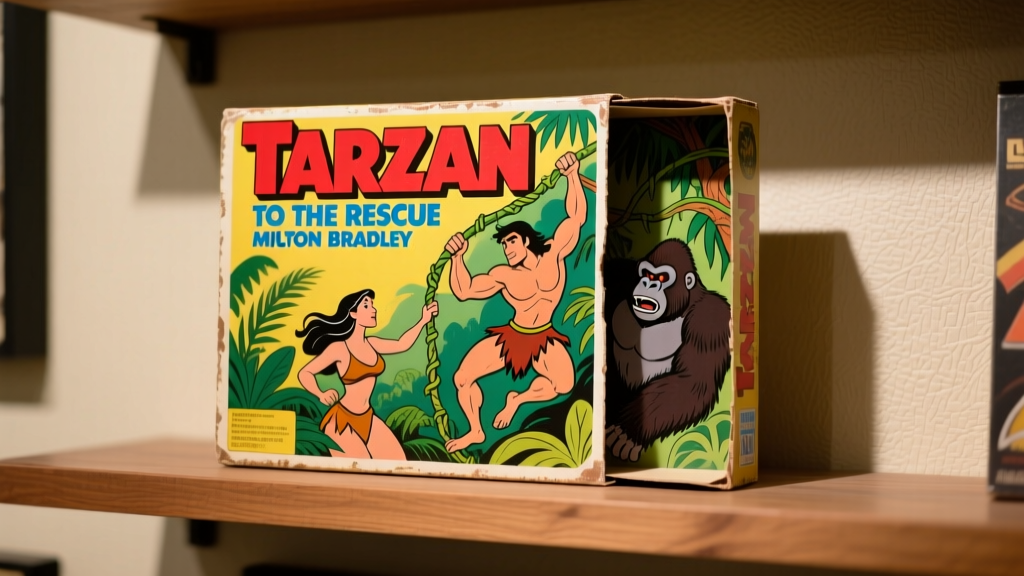
Tarzan to the Rescue: The 1977 Milton Bradley Board Game — Authenticity, Design, and Collectibility
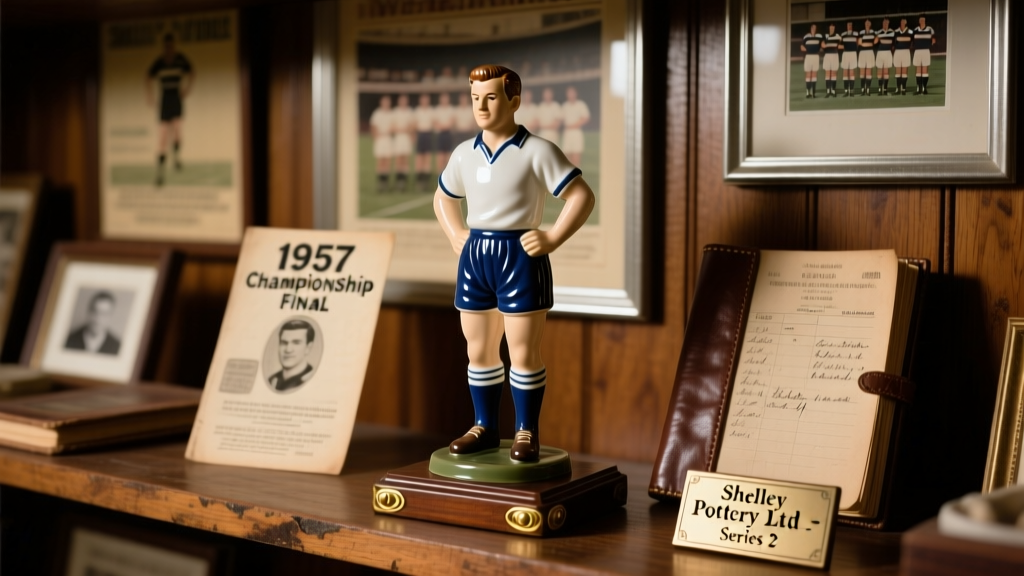
Shelley Potteries Ltd: The Legacy of British Fine Bone China and Its Role in Sports Memorabilia Authentication

Joel F. Hewes Copper Bowl: Authenticating the Hammered Flower-Shaped Arts & Crafts Masterpiece (2½" × 8")