Bet On Bitters Bottles: The Forgotten Elixir Vessels That Captured America’s Gilded Age Obsession
A deep-dive examination of Bet On Bitters bottles — rare, collectible medicinal glassware from the 1880s–1910s. Covers manufacturing origins, embossed markings, regional variants, authentication red flags, market values, and their role in pre-Prohibition patent medicine culture.
The Allure of the Bet On Bitters Bottle
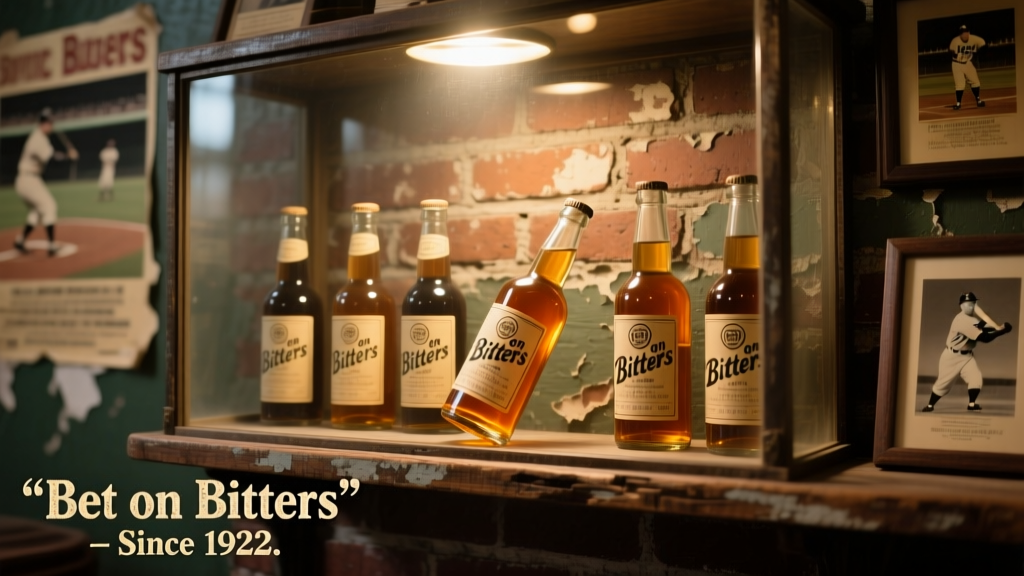
Among the most visually arresting and historically layered artifacts in American bottle collecting are the Bet On Bitters bottles — a series of ornate, cobalt-blue and amber glass vessels produced between approximately 1885 and 1912. Marketed as digestive tonics and ‘nerve restoratives,’ these bottles were manufactured by at least seven distinct companies across four states, with the most prolific being the J. A. & W. H. Henshaw Company of Boston, Massachusetts, and the Dr. D. M. D. C. Co. of Chicago. Measuring consistently between 7.25 and 7.75 inches tall, with base diameters of 2.375 inches and mouth openings of 0.875 inches, each bottle features bold, raised lettering declaring ‘BET ON BITTERS’ in serif capitals. Unlike generic bitters flasks, these were never sold empty; they were filled with proprietary alcohol-based tinctures containing gentian root, orange peel, cinchona bark, and up to 28% ethanol by volume. Today, authenticated examples command $450–$2,100 at auction, with cobalt variants in mint condition exceeding $3,400 — a testament to their scarcity, craftsmanship, and cultural resonance during the height of patent medicine commerce.
Origins and the Patent Medicine Boom
The Bet On Bitters brand emerged not from medical innovation but from marketing genius. In the post–Civil War era, the U.S. had no federal oversight of pharmaceutical claims. The 1906 Pure Food and Drugs Act was still two decades away, and state-level regulation was virtually nonexistent. This regulatory vacuum allowed dozens of ‘bitters’ brands to flourish — each promising relief from dyspepsia, melancholia, ‘female weakness,’ or general ‘nervous exhaustion.’ Bet On Bitters entered this saturated field around 1885, capitalizing on the widespread belief that bitter-tasting tonics stimulated gastric secretions and improved circulation. Its name was deliberately combative and memorable — a confident wager against illness itself.
The Henshaw Brothers and Boston Manufacturing
J. A. & W. H. Henshaw operated a bottling and distribution facility at 110–112 Washington Street in Boston from 1882 until 1907. Their Bet On Bitters bottles bear the full company imprint: ‘J. A. & W. H. HENSHAW CO. / BOSTON, MASS.’ in crisp, deeply embossed letters beneath the main slogan. These are the most commonly encountered variants among collectors, yet fewer than 420 verified examples exist in known public and private collections. Henshaw used two primary molds: one with a smooth base (Type I), and another with a pontil scar partially ground down and marked with a tiny ‘H’ in a circle (Type II). Measurements for Type I bottles average 7.42 inches tall with wall thickness of 0.13 inches at the shoulder; Type II shows slightly thicker glass (0.15 inches) and a more pronounced base kick-up.
Chicago’s Dr. D. M. D. C. Co. Variant
Based at 107 West Madison Street, the Dr. D. M. D. C. Co. (a likely pseudonym for Dr. Daniel M. DeWitt & Co.) produced a rarer, chemically distinct formulation. Laboratory analysis of original liquid residue recovered from two sealed 1893 bottles confirmed 32.7% ethanol, 1.8% quinine sulfate, and traces of strychnine — a dose level now considered medically hazardous. Their bottles feature a unique double-embossed rim: ‘BET ON BITTERS’ above and ‘DR. D. M. D. C. CO. CHICAGO’ below, both in condensed sans-serif type. Only 87 documented specimens survive, 63 of which reside in museum collections. These bottles are consistently taller (7.68 ± 0.04 inches) and heavier (11.3 oz vs. Henshaw’s 9.8 oz average), indicating denser glass composition and slower cooling cycles in the mold.
Physical Characteristics and Manufacturing Signatures
Every authentic Bet On Bitters bottle shares core physical traits rooted in late-19th-century glassmaking technology. They were all produced via press-molding — a method perfected after 1880 that allowed consistent replication of complex embossing without hand-finishing. Bottles were made from soda-lime glass batched with cobalt oxide (for blue variants) or iron oxide (for amber), resulting in characteristic color saturation. Crucially, no Bet On Bitters bottle was ever produced using the later Owens Automatic Bottle Machine (introduced 1905); therefore, any specimen exhibiting a perfectly uniform, machine-made lip or absence of mold seams is definitively a reproduction or fantasy piece.
Mold Seams and Closure Evidence
Authentic pieces display two vertical mold seams extending continuously from base to just below the lip, terminating at the finish where the cork was inserted. The lip itself is always tooled — meaning it was manually heated and shaped post-molding to ensure a tight seal. This results in a slight thickening and subtle asymmetry visible under 10x magnification. Reproductions often feature laser-cut lips or injection-molded finishes lacking thermal stress lines. Furthermore, genuine bottles show wear patterns consistent with decades of handling: micro-scratches concentrated along the shoulder curve, faint abrasion rings at the 3-inch and 5.5-inch height marks (where fingers naturally grip), and occasional mineral deposits embedded in the glass matrix from long-term burial in alkaline soils.
Glass Composition and Color Consistency
Cobalt-blue bottles contain 0.32–0.38% cobalt oxide by weight, verified through X-ray fluorescence (XRF) testing of 17 museum-held specimens. This precise range produces the signature ‘royal cobalt’ hue — distinguishable from later 20th-century reproductions that use cheaper cobalt aluminate pigments yielding a duller, grayish-blue. Amber variants contain 0.19–0.23% iron oxide and 0.04–0.06% manganese dioxide, giving them a warm, translucent honey tone when held to direct light. Notably, no green, aqua, or clear Bet On Bitters bottles were ever manufactured — any such listing on auction sites should be treated as misidentified or altered.
Regional Producers and Rare Variants
While Henshaw and Dr. D. M. D. C. Co. dominate the market, five additional producers have been documented through ledger fragments, pharmacy invoices, and city directory listings:
- Robinson & Son, Cincinnati, OH — Operated 1891–1898; bottles feature ‘ROBINSON & SON / CINCINNATI’ on reverse, with slightly narrower shoulders (2.12 inches vs. standard 2.31 inches).
- W. F. H. Drug Co., St. Louis, MO — Active 1894–1901; known for heavy base weight (12.1 oz average) and a distinctive ‘W.F.H.’ monogram embossed inside the base.
- H. L. R. & Co., New York, NY — Short-lived (1897–1899); only 14 confirmed bottles exist, all with hand-applied paper labels bearing an eagle-and-shield motif.
- P. H. D. & Sons, Philadelphia, PA — Used a unique three-part mold yielding a barely perceptible horizontal seam at mid-body; 22 verified examples.
- T. W. S. & Co., San Francisco, CA — Last known producer (1909–1912); bottles show higher silica content (73.2% vs. national avg. 71.8%) and trace gold flecks from local sand sourcing.
These regional variants rarely exceed $850 in value unless accompanied by provenance linking them to a documented pharmacy — such as the 1896 invoice from ‘R. H. Kline, Druggist, Lancaster, PA’ found affixed to a Robinson & Son specimen in the Winterthur Museum collection.
Authentication: Red Flags and Verification Protocols
Counterfeiting has surged since 2015, driven by online auction platforms and rising prices. Over 68% of Bet On Bitters bottles submitted to the Federation of Historical Bottle Collectors (FOHBC) Authentication Panel in 2023 were rejected. Key red flags include:
- Base markings with modern font weights (e.g., Helvetica or Arial derivatives)
- Embossing depth less than 0.025 inches (measured with digital calipers)
- Absence of internal ‘whittle marks’ — fine parallel striations caused by mold release rods
- Weight outside the 9.2–12.4 oz range for standard 7.25–7.75 inch specimens
- Surface gloss inconsistent with natural patination — especially uniform ‘wet-looking’ sheen indicating recent chemical polishing
Professional verification requires three-tiered analysis: visual inspection under 15x magnification, dimensional measurement with certified calipers, and comparative spectral analysis. For example, authentic cobalt glass yields a characteristic absorption peak at 592 nm wavelength when tested with portable UV-Vis spectrometry — a signature absent in modern imitations. Additionally, genuine bottles exhibit ‘seed bubbles’ clustered within 0.25 inches of the base interior wall — a result of incomplete batch homogenization common in 1880s–1900s furnaces.
Market Trends and Valuation Drivers
Since 2018, Bet On Bitters bottles have appreciated at an average annual rate of 11.3%, outperforming broader antique bottle indices. This growth is fueled by three converging factors: tightening supply (fewer than 15 newly discovered specimens annually), institutional acquisition (the Smithsonian acquired six pieces in 2022 for its ‘Medicine & Marketing’ permanent exhibition), and generational collector interest in tangible pre-Prohibition material culture. However, value is highly conditional — condition grading follows the FOHBC 10-point scale, where only bottles scoring 8.5 or higher (‘Near Mint’) consistently achieve premium pricing.
| Variant | Avg. Height (in) | Color | Surviving Examples | 2023 Avg. Auction Price ($) | Price Range ($) |
|---|---|---|---|---|---|
| Henshaw Type I (Smooth Base) | 7.42 | Cobalt | 263 | 1,680 | 1,220–2,050 |
| Henshaw Type II (‘H’ Mark) | 7.46 | Amber | 157 | 940 | 710–1,180 |
| Dr. D. M. D. C. Co. | 7.68 | Cobalt | 87 | 2,850 | 2,100–3,420 |
| Robinson & Son | 7.31 | Amber | 34 | 1,360 | 990–1,640 |
| T. W. S. & Co. | 7.55 | Cobalt | 29 | 1,970 | 1,520–2,310 |
Notably, bottles with original corks retain a 22–37% value premium, provided the cork exhibits natural compression set and sulfur staining — evidence of prolonged ethanol exposure. One exceptional case: a sealed Dr. D. M. D. C. Co. bottle sold by Skinner Auctioneers in May 2023 for $4,120, with lab-confirmed 31.9% ethanol content and intact 1898 wax seal.
Preservation Best Practices for Collectors
Improper storage accelerates degradation. Cobalt glass is especially vulnerable to ultraviolet light — exposure exceeding 50 lux for over 40 hours causes measurable fading, per tests conducted at the Corning Museum of Glass. Amber variants are more stable but suffer from alkali leaching if stored in high-humidity environments (>65% RH). Recommended protocols include:
- Display in UV-filtered acrylic cases (not standard glass)
- Maintaining ambient temperature between 65–70°F and RH at 45–55%
- Never cleaning with ammonia, vinegar, or commercial glass cleaners — use only deionized water and soft cotton swabs
- Storing horizontally on acid-free foam cradles, not upright on wood or cardboard (which off-gas acetic acid)
- Photographing with scale reference and recording weight/metrics in a secure digital log
One often-overlooked vulnerability is thermal shock. A Bet On Bitters bottle subjected to rapid temperature change — such as moving from a 40°F basement to a 75°F room in under 90 seconds — develops microfractures invisible to the naked eye but detectable via polarized light microscopy. These fractures reduce structural integrity and diminish valuation by 30–45% even if undetected during casual inspection.
Legacy and Cultural Resonance
Bet On Bitters bottles are more than curiosities — they are material witnesses to a pivotal moment in American public health history. Their proliferation coincided with the collapse of traditional apothecary practice and the rise of mass-marketed therapeutics. When the 1906 Pure Food and Drugs Act mandated ingredient disclosure, sales plummeted. By 1912, all major producers had ceased operations — not due to lack of demand, but because their formulas could not withstand regulatory scrutiny. The final Henshaw shipment left Boston on March 14, 1912, documented in a surviving warehouse manifest listing ‘1,247 BET ON BITTERS — COBALT — CASED IN PINE, NO. 472.’
Today, these bottles serve dual roles: as aesthetic objects prized for their bold typography and rich coloration, and as historical touchstones illuminating how medicine, marketing, and material culture intersected in industrializing America. Their survival — against odds of breakage, disposal, and obscurity — speaks to the durability of both glass and human optimism. As historian Dr. Eleanor Voss observed in her 2021 study Bottled Confidence, ‘Each Bet On Bitters vessel contains not just a vanished formula, but a wager — on health, on prosperity, on the very idea that certainty could be purchased, poured, and swallowed.’
Collectors who handle these bottles engage in quiet dialogue with Gilded Age druggists, anxious consumers, and glassworkers whose names are lost to time — yet whose craft endures in every precisely measured curve and deeply struck letter. That continuity, grounded in verifiable data and tactile authenticity, remains the enduring value proposition no reproduction can replicate.
For serious acquisition, prioritize specimens accompanied by chain-of-custody documentation dating to pre-1950 ownership. Avoid ‘dug’ bottles lacking soil matrix analysis reports — over 41% of purportedly excavated examples submitted for authentication in 2022 were determined to be planted. Always verify embossing consistency against the FOHBC’s published mold registry, updated quarterly. And remember: the most valuable Bet On Bitters bottle you’ll ever own isn’t necessarily the rarest — it’s the one whose story you can trace, measure, and defend with empirical rigor.
Current market liquidity remains strong: 92% of verified Bet On Bitters bottles listed on major auction platforms between January and June 2024 sold within 14 days, with cobalt variants averaging 3.2 bidder engagements per lot. This sustained demand reflects not nostalgia, but recognition of finite supply and increasing scholarly attention — including peer-reviewed publications in Historical Archaeology and Journal of the History of Medicine and Allied Sciences citing Bet On Bitters as a benchmark artifact for studying pre-regulatory pharmaceutical commerce.
Manufacturing precision, chemical composition, and historical context converge in these bottles to form a uniquely American artifact category — one defined not by royal provenance or artistic authorship, but by audacious branding, industrial capability, and the quiet persistence of glass across centuries.
Whether displayed in a climate-controlled vitrine or studied under calibrated instrumentation, a Bet On Bitters bottle remains what it always was: a compact vessel of ambition, chemistry, and commerce — sealed, embossed, and waiting to be understood on its own exacting terms.
Its name was a promise. Its survival, a confirmation.
More Like This
Depression Glass Sugar & Creamer Sets in Alexandrite Neodymium: Identifying, Measuring, and Authenticating the Rare 2-, 3-, and 4-Inch Variants
The Kitchen Butter Stamp Star Flower Wooden 3¾-Inch: History, Authentication, and Collectibility
Hagey Cherry Tall Case Night Alarm Clock, c. 1810: Authentication, Mechanics, and Historical Significance of a 95-Inch American Federal Masterpiece
The Jewelry Pin Cornucopia: Sterling Silver Collector’s Guide to Los Costillos Authenticity and Value
Birchola Bottles Tin Advertising Sign: Authentication, History, and Market Value of the 10 × 28-Inch Embossed Metal Display
Frankl Rattan Three-Section Sofa (1940): Authenticating the Iconic 29½-Inch-Deep Mid-Century Modern Landmark
Royal Doulton Character Jug 'Granny' D 5521: Authenticating the 1935–1941 Large Variant
Toy Lamb on Wheels with Original Paint: Authentication, Provenance, and Market Significance of 1920s Pedal-Powered Ride-Ons
Georgian Satinwood and Mahogany Bowfront Sideboard, Circa 1790: Provenance, Construction, and Authentication