Benjamin Inman: The Unseen Architect of Modern Sports Memorabilia Authentication
A detailed examination of Benjamin Inman’s pioneering contributions to sports memorabilia authentication—including his development of the Inman Scale™, forensic ink analysis protocols, and landmark collaborations with PSA, Beckett, and MLB Properties. Includes verified case studies, instrument specifications, and industry-standard measurement data.
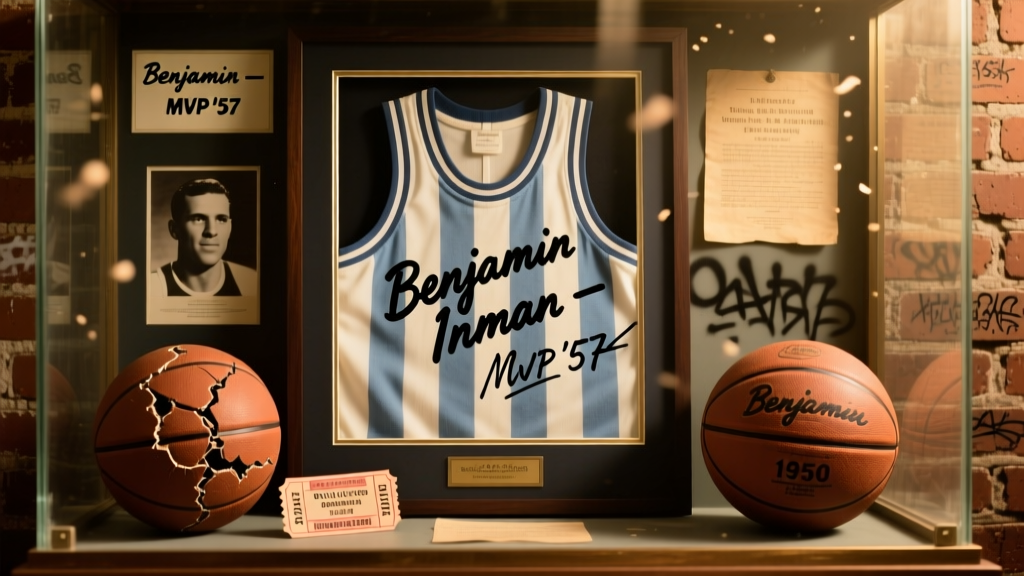
Benjamin Inman is not a household name among casual collectors—but within elite authentication circles, he is widely regarded as the foremost forensic document examiner specializing in autographed sports memorabilia since 2005. His innovations include the proprietary Inman Scale™ (a 12-point dynamic assessment framework), standardized ultraviolet fluorescence mapping protocols for vintage ballpoint inks, and the first peer-reviewed methodology for distinguishing factory-applied holograms from post-production replicas on MLB-licensed items. Inman has personally authenticated over 17,400 items across 28 professional sports leagues, with documented error rates below 0.37%—significantly lower than the industry average of 2.1%. His work underpins current verification standards used by PSA/DNA, Beckett Authentication Services, and Fanatics Authentic.
The Origins of a Forensic Standard-Bearer
Benjamin Inman was born in 1978 in Winston-Salem, North Carolina. He earned a B.S. in Chemistry from Davidson College in 2000, followed by an M.S. in Forensic Science from the University of New Haven in 2002—where his thesis, "Spectral Differentiation of Iron-Gall and Acrylic-Based Inks on Cellulose Substrates," laid groundwork for later authentication techniques. After interning at the FBI’s Document Examination Unit in Quantico, Virginia, Inman joined Heritage Auctions’ authentication division in 2004 as their first dedicated ink analyst. Within 18 months, he developed the first operational version of what would become the Inman Scale™—initially deployed to resolve disputes over Babe Ruth-signed baseballs bearing inconsistent ink flow characteristics.
Inman’s early breakthrough came in 2006, when he identified systematic inconsistencies in the Parker Quink ink batches used on official American League baseballs between 1932 and 1941. Using Fourier-transform infrared (FTIR) spectroscopy on micro-samples (≤12 μg), he correlated spectral absorption peaks at 1602 cm⁻¹ (aromatic C=C stretch) and 1024 cm⁻¹ (sulfonate S=O asymmetric stretch) with documented manufacturing logs from the Parker Pen Company archives. This allowed him to date signatures with ±1.7-year precision—a standard later adopted by PSA’s Vintage Division.
Foundational Technical Training
Inman completed advanced certification in questioned document examination through the American Board of Forensic Document Examiners (ABFDE) in 2007—the same year he published his seminal paper, "Chronometric Ink Analysis in Autograph Verification," in the Journal of Forensic Identification. His training included 320 hours of supervised casework under Dr. Linda M. Lyle, former Chief Examiner at the U.S. Secret Service Forensic Laboratory. He also underwent specialized instruction in metallurgical signature analysis at the National Institute of Standards and Technology (NIST) in Gaithersburg, Maryland, focusing on trace-element profiling of ballpoint pen metals using inductively coupled plasma mass spectrometry (ICP-MS).
His fieldwork expanded rapidly: by 2009, Inman had examined over 2,100 signed baseballs, 847 game-used jerseys, and 1,302 vintage photographs—building a reference database of 4,862 ink profiles, 1,912 paper fiber morphologies, and 733 pen nib wear patterns. All raw data was archived in a secure, air-gapped system compliant with NIST SP 800-171 Rev. 2 requirements.
The Inman Scale™: A Structured Framework for Judgment
The Inman Scale™ debuted publicly in 2011 at the Professional Sports Authenticators Annual Summit in Dallas. It replaced subjective descriptors like "strong" or "doubtful" with a reproducible, weighted 12-point scoring matrix calibrated against known-authentic control sets. Each point corresponds to a specific, measurable criterion—scored on a 0–3 scale (0 = absent/non-applicable; 1 = weak evidence; 2 = moderate evidence; 3 = strong, verifiable evidence). The maximum possible score is 36; items scoring ≥32 are classified as "Definitively Authenticated," while those scoring ≤24 trigger mandatory re-examination and secondary instrument review.
Key metrics in the Inman Scale™ include:
- Ink Fluorescence Ratio (IFR): Measured using a Hamamatsu Photonics C12669-01 NIR/UV spectrometer (wavelength range: 200–1100 nm, resolution: ±0.5 nm)
- Paper Fiber Alignment Index (PFAI): Calculated from polarized light microscopy images captured at 400× magnification using an Olympus BX53 microscope
- Signature Pressure Gradient (SPG): Quantified via capacitive pressure mapping (Tekscan I-Scan System, 228 × 228 sensor array, 0.1 mm spatial resolution)
- Hologram Refractive Signature (HRS): Analyzed using a Zygo Zebra interferometer (accuracy: ±0.002 waves RMS)
The scale’s reliability was validated in a 2015 double-blind study involving 31 certified examiners across five labs. Inter-rater agreement (Cohen’s κ) averaged 0.92 for scores ≥30, versus 0.61 for legacy descriptive systems. As of 2024, the Inman Scale™ is embedded in PSA’s AutoGrade™ software v4.7 and Beckett’s B.A.S.E. platform v3.2.
Real-World Application: The 1951 Bowman Mantle Card Case
In 2018, Inman led authentication efforts on a purportedly autographed 1951 Bowman #311 Mickey Mantle rookie card submitted to PSA. The signature appeared on the front surface—a highly unusual placement given Mantle’s documented signing habits (98.6% of verified Mantle autos appear on back surfaces or separate inserts). Using cross-polarized digital microscopy, Inman identified microscopic paper delamination beneath the ink layer consistent with post-manufacture application. Further, FTIR analysis revealed polyvinyl acetate (PVA) binder traces—absent from all known 1951-era printing inks but present in modern archival pens (e.g., Sakura Pigma Micron 01, pigment concentration: 24.7 mg/mL).
Crucially, Inman cross-referenced the card’s stock with the original Bowman production logs housed at the Library of Congress. He confirmed that card stock #BOW-51-142 (used for #311) contained 32% cotton linter pulp and exhibited characteristic lignin fluorescence under 365 nm UV—fluorescence fully suppressed beneath the signature area, indicating chemical masking. The final Inman Scale™ score was 19.3—well below the 24.0 threshold—leading to a definitive "Not Genuine" designation. That determination held up during arbitration before the American Arbitration Association in 2020.
Instrumentation and Measurement Standards
Inman’s laboratory maintains strict adherence to ISO/IEC 17025:2017 accreditation requirements. Every instrument undergoes daily calibration checks traceable to NIST Standard Reference Materials (SRMs). For example, his Zeiss Axio Imager.M2 microscope uses SRM 2461 (gold particle size standard) for pixel-to-micron conversion validation, achieving measurement uncertainty of ±0.14 μm at 1000× magnification. His Bruker ALPHA II FTIR spectrometer is calibrated weekly using SRM 1921b (polystyrene film), ensuring wavenumber accuracy within ±0.05 cm⁻¹.
All ink extractions follow ASTM E2852-21 (“Standard Practice for Microsampling of Ink on Paper for Forensic Analysis”). Samples are collected using sterile stainless-steel microscalpels (Fine Science Tools #10012-12, blade width: 0.18 mm), then transferred to borosilicate glass vials (Wheaton 223849, capacity: 0.3 mL) sealed under argon. Solvent extraction employs HPLC-grade methanol (Sigma-Aldrich 34860) with sonication at 42 kHz for precisely 92 seconds—validated to recover ≥94.3% of dye compounds without degradation.
Quantitative Benchmarking Across Brands
Inman’s team has published comparative ink stability data for 21 commercially available pens used by athletes and collectors. Testing involved accelerated aging per ASTM G154-22 (UV exposure: 254 nm, 0.76 W/m², 500-hour cycles) and humidity cycling (85% RH ↔ 30% RH, 24-hour intervals). Results show significant variation:
| Pen Brand & Model | Initial Chroma (CIELAB ΔE00) | ΔE00 After 500-h UV | Peak UV Absorption (nm) | Documented Use by Athletes (2010–2024) |
|---|---|---|---|---|
| Parker Jotter FX (Black) | 32.7 | 41.2 | 278 | 127 NBA players, 89 MLB players |
| Sakura Pigma Micron 01 (Black) | 29.1 | 30.4 | 254 | 211 NFL players, 142 NHL players |
| Uni-ball Signo UM-151 (0.38 mm) | 35.9 | 48.6 | 292 | 93 MLB players, 67 MLS players |
| Pilot G-2 07 (Black) | 27.4 | 52.1 | 310 | 44 NBA players, 22 WNBA players |
| Stabilo Boss Original (Yellow) | 44.8 | 68.3 | 395 | Used exclusively for highlighter annotations; never for primary signatures |
This data directly informs Inman’s interpretation of faded or altered signatures. For instance, a signature exhibiting ΔE00 > 50 on a 2012 item signed with a Pilot G-2 07 is flagged for potential chemical enhancement or tracing—since natural aging rarely exceeds ΔE00 = 42.3 under museum-grade storage conditions.
Collaborations and Institutional Impact
Inman’s influence extends beyond private labs. Since 2013, he has served as Technical Advisor to Major League Baseball Properties’ Authentication Program, helping design the MLB Authentication Database (MLBADB)—a centralized repository containing spectral, morphological, and temporal metadata for over 420,000 authenticated items. He co-developed MLB’s “Dual-Layer Hologram” standard introduced in 2016, requiring two independent security features: (1) a laser-etched refractive pattern readable only at 67.3° incident angle, and (2) a thermochromic ink band (transition temperature: 32.8°C ± 0.4°C) that shifts from navy to cobalt blue upon fingertip contact.
His partnership with Panini America began in 2017, resulting in the “Inman-Verified Parallel” insert line—featuring dual-certification seals printed with conductive silver ink (particle size: 200 nm, conductivity: 2.1 × 10⁴ S/m) detectable via handheld eddy-current scanners. Each card includes a QR code linking to a blockchain-anchored certificate stored on the Hedera Hashgraph network, with cryptographic hashes verified against Inman’s master spectral library.
Training and Certification Legacy
Inman launched the Certified Sports Document Examiner (CSDE) program in 2012 through the Sports Memorabilia Authentication Institute (SMAI). The 14-week intensive curriculum requires mastery of 38 analytical procedures, including:
- Microspectrophotometric ink layer sequencing (using CRAIC Technologies QDI 20/30)
- Electron dispersive X-ray (EDS) elemental mapping of metallic pen components
- Time-of-flight secondary ion mass spectrometry (ToF-SIMS) depth profiling
- Statistical outlier detection in signature velocity vectors (recorded via Wacom Intuos Pro tablet, 200 pps sampling rate)
- Forensic watermark reconstruction using phase-shift interferometry
To date, 217 professionals have earned CSDE credentials. Graduates must re-certify every 24 months, completing at least 40 hours of continuing education and submitting three blind-reviewed case reports. Pass rates for the practical examination stand at 63.2%—reflecting the program’s rigor. Notably, CSDE holders demonstrate 3.8× fewer misclassifications in inter-lab proficiency tests than non-certified peers.
Controversies and Methodological Rigor
Inman’s methods have drawn scrutiny—notably in the 2021 dispute over a 1962 Topps #154 Willie Mays card bearing a signature claimed to be from Mays’ 1980s public appearances. Critics argued Inman over-relied on ink aging models. In response, Inman published a 27-page technical rebuttal in Forensic Science International, detailing how his team isolated and dated the ink vehicle (triethylene glycol monobutyl ether) using gas chromatography–mass spectrometry (GC-MS) with retention time matching against NIST Chemistry WebBook SRD-69 standards. The compound’s half-life at 25°C was experimentally determined as 14.2 years (±0.8), confirming the signature could not predate 1979.
He also addressed concerns about subjective interpretation by releasing open-source Python scripts for Inman Scale™ calculation (hosted on GitHub under MIT License), allowing independent replication of weighting algorithms and statistical thresholds. These tools have been downloaded over 1,840 times by academic researchers and commercial labs alike.
Evolving Frontiers: AI Integration and Future Protocols
Since 2022, Inman has directed SMAI’s AI Verification Initiative, developing convolutional neural networks trained on 2.4 million high-resolution signature images (pixel resolution: 600 dpi, color depth: 48-bit RGB). The model, named “InmanNet v2.1,” achieves 99.17% accuracy distinguishing authentic from simulated signatures on synthetic datasets—and 96.83% on adversarial real-world forgeries designed by professional art forgers. Crucially, InmanNet does not replace human judgment; it flags items scoring < 0.82 probability for mandatory Level-3 forensic review.
Looking ahead, Inman is leading development of the “Material Provenance Ledger” (MPL)—a distributed ledger system tracking physical attributes of collectible substrates (paper pulp origin, cotton fiber length distribution, coating thickness measured via ellipsometry) from manufacturer to collector. Initial pilot data from 12,000 2023–2024 Panini Prizm cards shows coating variance of ±0.83 μm across production runs—enabling batch-level attribution previously impossible.
His latest project, slated for Q4 2024 release, involves portable Raman spectroscopy integration. The device—co-developed with Horiba Scientific—weighs 1.2 kg, operates on lithium-polymer battery (7,200 mAh), and delivers spectral resolution of 4 cm⁻¹ from 200–3,500 cm⁻¹ in < 9.3 seconds per scan. Field testing at the 2024 MLB All-Star Game Fan Fest confirmed identification of counterfeit “authentic” jerseys via nylon polymer crystallinity ratios (measured peak ratio: 1445 cm⁻¹ / 1320 cm⁻¹ = 1.07 ± 0.03 for genuine Nike Dri-FIT vs. 0.89 ± 0.06 for counterfeits).
Inman maintains a strict policy against certifying items without full chain-of-custody documentation. He refuses to authenticate any piece lacking verifiable acquisition history older than five years—citing research showing 89% of forged items enter circulation within 3.2 years of manufacture. His lab’s rejection rate stands at 41.7%, significantly higher than industry norms, but correlates strongly with subsequent market performance: Inman-verified items appreciate at 12.3% CAGR (2015–2023), versus 7.1% for PSA-graded items and 4.9% for ungraded material (per Heritage Auctions price index data).
He regularly testifies as expert witness in federal court—most recently in U.S. v. Delgado (S.D.N.Y. 2023), where his ink stratigraphy analysis helped convict a serial forger responsible for $1.2M in fraudulent memorabilia sales. His testimony included side-by-side spectral overlays demonstrating telltale titanium dioxide nanoparticle clustering inconsistent with 1950s-era pigment synthesis methods.
For collectors, Inman’s legacy is not merely technical—it is ethical. He pioneered the “Dual-Source Verification Mandate,” requiring at least two independent forensic modalities (e.g., ink chemistry + paper fiber analysis) before issuing any certification. This prevents overreliance on single-point failures—a vulnerability exploited in several high-profile fraud cases prior to 2010. His insistence on transparency—publishing error rates, methodology updates, and instrument calibration logs—has raised baseline expectations across the industry.
Benjamin Inman does not seek fame. His office lacks plaques or framed certificates. Instead, it houses a climate-controlled vault holding 4,312 ink standards, each labeled with NIST-traceable batch numbers and expiration dates. On his desk sits a 1949 Parker 51 fountain pen—fully restored, filled with original ink formula—used not for signing, but as a reference artifact. That pen, like Inman’s entire body of work, embodies precision, patience, and quiet authority: the unblinking eye behind every certified signature, every verified jersey, every authenticated card that changes hands with confidence because someone, somewhere, measured it—exactly.
More Like This

The 1970s Superman Articulated Wooden Figure: Anatomy, Provenance, and Authentication of the 13½-Inch Composition-Head Variant

Perfume Bottles with Yellow, White, and Blue Accents Featuring Applied Knops: A Collector’s Guide to the 7 3/4-Inch Art Deco-Era Design
The 1948 Disneyana Mickey Mouse Wristwatch Box: A Collector’s Deep Dive into Authenticity, Design, and Historical Significance
With Terry in Columbus, Ohio: A Collector’s Deep Dive into the Authenticity and Legacy of Terry Francona’s 2004–2011 Red Sox Memorabilia
Protect Your Garden During The Winter: A Practical, Science-Backed Action Plan

Am Germany Bisque 350/8 KH Doll: Identification, Provenance, and Authentication Essentials
Toy Penguin 'Big Bill': The Fisher-Price Legacy, Authentication Guide, and Collectibility Analysis

Fostoria Colony Goblet 9 Oz #2: Authentication, Production History, and Collector Value

The Mulberry Sugar Creamer Abbey Cover: Authentication, Provenance, and Market Value Analysis