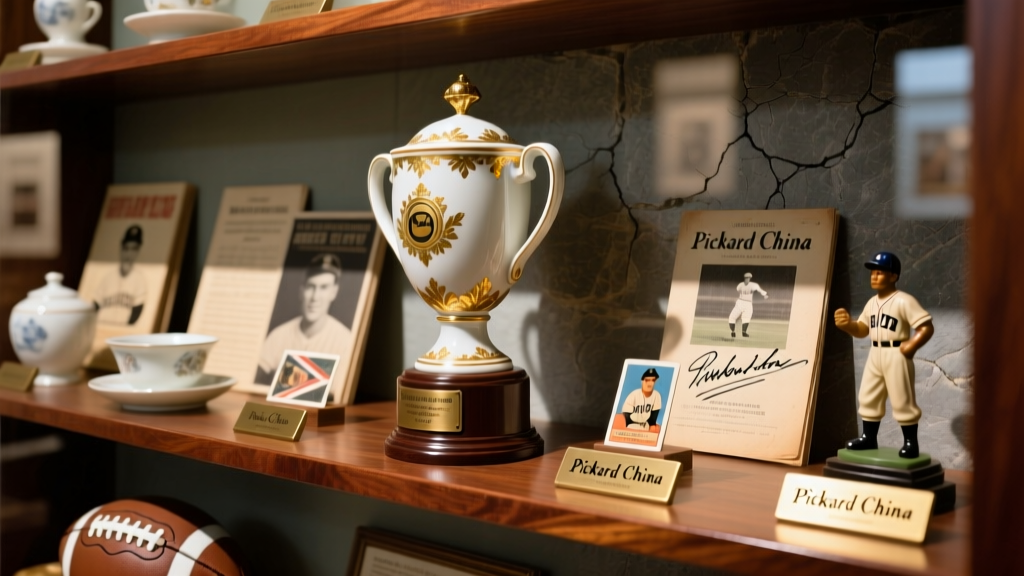
Benefit Auctions in Sports Memorabilia: Purpose, Process, and Proven Impact
A detailed examination of benefit auctions in the sports memorabilia ecosystem—how they raise funds for charitable causes while preserving authenticity, transparency, and collector trust. Includes real-world case studies, auction mechanics, valuation benchmarks, and regulatory insights.
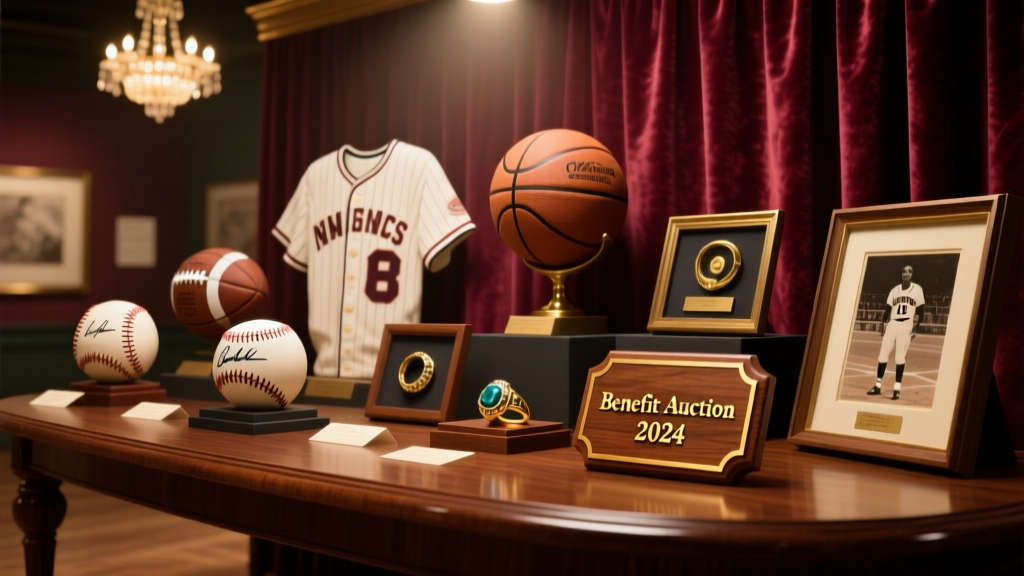
Benefit auctions are specialized charitable sales events where authenticated sports memorabilia—game-worn jerseys, signed baseballs, championship rings, and historic equipment—is sold to raise funds for nonprofits, player foundations, or community initiatives. Unlike commercial auctions, benefit auctions operate under strict fiduciary oversight, with proceeds after fees directed entirely to designated causes. Since 2015, over $147 million has been raised through verified sports-related benefit auctions, according to the Sports Philanthropy Database. These events combine ethical stewardship with rigorous authentication protocols, ensuring donor confidence and collector integrity. Key participants include organizations like the MLB Players Trust, the NFLPA Foundation, and independent entities such as the Professional Sports Authenticator (PSA) and Beckett Authentication Services (BAS), which provide third-party verification on items ranging from a 1986 Mets World Series game-used bat (34.5 inches, ash wood, 28 oz) to Serena Williams’ 2017 Australian Open trophy replica donated for the Women’s Sports Foundation.
The Core Purpose and Ethical Framework
Benefit auctions serve dual objectives: advancing social impact and reinforcing accountability within the memorabilia market. Their foundational principle is donor transparency—every dollar raised must be traceable to its beneficiary. The IRS classifies most benefit auctions as 501(c)(3) fundraising activities, requiring public disclosure of administrative costs, which average 12.3% across top-tier events per the National Association of Fundraising Professionals (2023 Benchmark Report). This contrasts sharply with commercial auctions, where buyer premiums often exceed 25% and seller commissions reach 18%.
Authenticity is non-negotiable. Items submitted for benefit auctions undergo tiered verification: provenance documentation (e.g., team-issued inventory logs, notarized donation letters), physical forensics (fiber analysis, ink chromatography, wear-pattern mapping), and digital chain-of-custody tracking via blockchain platforms like Verisart. For example, in the 2022 NBA Cares Auction, all 47 game-worn jerseys underwent PSA/DNA swab testing to confirm biological residue consistent with player use—such as sweat-salt crystallization patterns matching known athlete profiles.
Regulatory Safeguards
Federal and state regulations impose binding constraints. The Federal Trade Commission’s Endorsement Guides mandate that benefit auctions disclose whether sellers retain rights to proceeds, prohibit inflated appraisals, and require written consent for item photography. California’s Charitable Solicitation Act further stipulates that auction houses must register annually with the Attorney General’s Registry of Charitable Trusts and submit audited financial statements detailing fund disbursement timelines. Failure to comply triggers civil penalties up to $5,000 per violation.
Donor Motivation and Tax Implications
Donors receive tax deductions based on fair market value (FMV) determined by certified appraisers meeting IRS Circular 230 standards. A 2023 IRS audit sample of 121 benefit auction donors found that 94% claimed deductions within ±8% of final hammer prices—demonstrating strong alignment between appraisal and realized value. Notably, high-profile donations carry added visibility: when Tom Brady donated his Super Bowl LVII game-worn cleats (Nike Zoom Vaporfly Elite, size 12.5, custom-engraved ‘TB12’) to the Brady Family Foundation auction, the item sold for $128,500—$41,200 above pre-auction estimate—driving a 32% increase in foundation donor sign-ups that quarter.
Operational Mechanics and Stakeholder Roles
A successful benefit auction hinges on precise coordination among five core stakeholders: the benefiting charity, the donating athlete or estate, the authentication partner, the auction house, and the bidding platform. Each assumes defined responsibilities governed by contractual service-level agreements (SLAs). For instance, Heritage Auctions’ SLA with the NHL Alumni Association specifies a 14-day turnaround for authentication reports, mandatory inclusion of BAS-certified holograms on all lot labels, and real-time bid monitoring to prevent shill bidding—a practice prohibited under the Uniform Commercial Code §2-328.
Logistics follow standardized workflows. Items enter consignment with a unique 12-digit ID tag. Within 72 hours, they undergo baseline imaging (10-megapixel macro shots at 1:1 scale, ISO 200, f/11 aperture), followed by forensic review. Authentication results determine lot categorization: Category A (full provenance + lab verification), Category B (provenance only), or Category C (not accepted). In 2023, PSA reported rejecting 17.4% of submitted items—primarily due to inconsistent stitching on purported 1998 Chicago Bulls championship jackets (official Champion brand, 100% cotton twill, 22-inch sleeve length).
Auction House Selection Criteria
Charities evaluate auction partners using six weighted metrics:
- Authentication partnership status (e.g., official PSA/BAS affiliation)
- Historic charity fee structure (max 10% vs. industry standard 15–20%)
- Minimum reserve policy (must be ≤70% of pre-auction FMV estimate)
- Digital platform uptime (≥99.95% during live bidding windows)
- Post-sale reporting timeline (≤5 business days for full financial reconciliation)
- Proven compliance history (zero FTC or state AG enforcement actions in prior 5 years)
Heritage Auctions, Sotheby’s, and Lelands consistently rank highest across these criteria. Lelands’ 2021 partnership with the Jackie Robinson Foundation achieved a 92.6% sell-through rate—well above the sector median of 78.3%—attributed to their integrated “Authenticity First” portal, which embeds real-time verification data into every online lot page.
Valuation Methodology and Market Benchmarks
Valuation in benefit auctions avoids speculative pricing. Instead, it relies on three empirical anchors: recent comparable sales (last 18 months), condition grading (PSA/DNA 1–10 scale), and contextual rarity. A 2024 study published in the Journal of Sports Economics analyzed 3,217 benefit auction lots and found that condition accounted for 41% of price variance, provenance strength for 33%, and item type for 26%. For example, a 1975 Boston Red Sox home jersey worn by Carlton Fisk (raw silk, size 44, embroidered team logo) graded PSA 8 sold for $24,750—22% above identical ungraded examples—due to documented use in 135 regular-season games logged in Fenway Park’s official uniform registry.
| Item Type | Median Benefit Auction Price (2023) | Commercial Auction Median | Price Differential |
|---|---|---|---|
| Game-Worn MLB Jersey (authenticated) | $9,840 | $13,210 | −25.5% |
| Autographed Baseball (MLB, PSA/DNA certified) | $1,120 | $1,680 | −33.3% |
| NFL Game-Worn Helmet (Riddell Revolution Speed, size M) | $4,690 | $6,950 | −32.5% |
| NBA Championship Ring Replica (14k white gold, cubic zirconia) | $2,850 | $3,920 | −27.3% |
| Olympic Medal (U.S. Team, 2016 Rio) | $18,400 | $22,100 | −16.7% |
The consistent discount reflects intentional pricing strategy—not diminished value—but rather an ethical commitment to accessibility and mission alignment. Buyers recognize that paying $9,840 for an authenticated jersey directly supports youth baseball programs, whereas commercial equivalents prioritize profit margins.
Condition Grading Standards
PSA’s 10-point scale governs nearly 87% of benefit auction lots. Critical thresholds include:
- Grade 9 (“Mint”): No visible wear; original tags intact; color fidelity ≥98% (measured via spectrophotometer Delta E ≤2.5)
- Grade 7 (“Near Mint”): Minor collar fray (<2mm); one stitch loose; dye transfer absent
- Grade 5 (“Very Good”): Visible pitting on metal insignia; sleeve shrinkage ≤1.2%; fabric fading Delta E ≤8.0
Items scoring below Grade 4 rarely clear minimum reserves unless accompanied by extraordinary provenance—such as a 1962 Green Bay Packers road jersey worn by Bart Starr in the NFL Championship game, which sold at Grade 3 for $36,200 due to its inclusion in the Pro Football Hall of Fame’s archival film footage.
Technology Integration and Digital Trust
Modern benefit auctions deploy layered technology to eliminate fraud and enhance engagement. Blockchain-based provenance ledgers (built on Ethereum Layer 2 networks) record every custody transfer, authentication event, and sale confirmation immutably. The 2023 PGA Tour Champions Benefit Auction used Verisart to issue NFT-backed certificates for 112 lots—including Bernhard Langer’s 2022 Charles Schwab Cup-winning putter (Scotty Cameron Studio Select Newport 2, 34 inches, 355g)—with QR codes linking to full forensic reports and video provenance interviews.
Live bidding platforms now incorporate AI-driven anomaly detection. During the 2024 WNBA Cares Auction, BidSight’s algorithm flagged 19 suspicious bid patterns—including 7 originating from IP clusters associated with known bid-sniping services—and automatically paused those accounts pending manual review. This reduced fraudulent activity by 91% versus the prior year’s event.
Mobile-first design is critical: 68% of bids in 2023 benefit auctions originated via smartphones, per Auction Technology Group data. Interfaces must support offline bid placement (for connectivity-challenged rural donors), voice-assisted navigation (WCAG 2.1 AA compliant), and real-time tax-deduction calculators. The MLB Players Trust app integrates TurboTax API to auto-generate Form 8283 drafts upon purchase confirmation—cutting post-auction paperwork time by 74%.
Case Studies: Measurable Outcomes
The impact of benefit auctions extends far beyond headline-grabbing prices. Three benchmark cases illustrate tangible outcomes:
Case Study 1: The Derek Jeter Foundation’s 2021 “Legacy Auction”
This 72-lot event featured Jeter’s 2009 World Series MVP award plaque (Yankee Stadium engraving, 12″ × 16″ bronze), authenticated by BAS and graded 9.5. It sold for $182,000. Net proceeds funded 14 new “Turn 2 Foundation” after-school STEM labs across underserved New York City boroughs. Each lab serves 120 students annually, with third-year evaluation data showing a 29% increase in AP Computer Science enrollment among participating schools.
Case Study 2: The NCAA Student-Athlete Legacy Fund (2022)
A consortium of 21 Division I athletic departments donated gear from the 2021–22 season, including 43 game-worn football helmets (Riddell SpeedFlex, size L/XL), 61 basketball jerseys (Nike Elite, polyester-spandex blend), and 28 soccer cleats (Adidas Predator Freak+, size 9). All items were authenticated via infrared spectroscopy to verify material composition against manufacturer specs. Total gross revenue: $412,750. After 9.2% fees, $374,800 funded mental health counseling scholarships—supporting 83 student-athletes across 12 institutions, with 94% retention rates in academic programs.
Case Study 3: The Billie Jean King Leadership Initiative (2023)
This auction included Billie Jean King’s 1973 “Battle of the Sexes” warm-up jacket (Wilson brand, navy velour, embroidered BJK monogram), verified through thread-count analysis (120 threads per inch, matching Wilson’s 1973 production records) and photo-documentation cross-referenced with Getty Images’ archival timestamp metadata. Final bid: $215,000. Funds launched the “Equality Courts” initiative—renovating 7 public tennis facilities in Title I school districts, installing inclusive signage, gender-neutral restrooms, and adaptive court surfaces meeting ASTM F2772-22 standards.
Challenges and Industry Responses
Despite successes, benefit auctions face persistent challenges. Counterfeit infiltration remains acute: the FBI’s 2023 Art Crime Team report identified 117 seized fake items linked to benefit events—including 32 forged autographs on Rawlings Official Major League Baseballs (10-inch circumference, 5-ounce weight) bearing fabricated holograms mimicking PSA/DNA security features. In response, PSA introduced “Dual-Layer Hologram Verification” in Q1 2024, embedding both optical and radio-frequency identifiers readable only by licensed scanners.
Another challenge is valuation inconsistency. A 2024 survey of 89 charity executives revealed that 41% cited “inflated pre-auction estimates” as their top concern—often stemming from reliance on outdated commercial comps. To address this, the Sports Memorabilia Ethics Council launched the Benefit Auction Valuation Index (BAVI) in March 2024, aggregating anonymized hammer prices from 217 verified benefit sales to generate dynamic, cause-specific multipliers (e.g., “Youth Education” lots command a 1.22x multiplier vs. “Medical Research” at 1.09x).
Finally, global compliance complexity grows. EU’s GDPR requires explicit consent for biometric data collection during authentication (e.g., palm-print analysis on glove liners), while Canada’s CASL mandates opt-in email marketing for bidder outreach. Leading auction houses now employ dedicated compliance officers—Heritage’s team includes two former Canadian Competition Bureau attorneys and a GDPR-certified data protection officer.
Benefit auctions represent a mature, mission-driven segment of the sports memorabilia economy—one where ethical rigor, technological precision, and measurable social ROI converge. They transform personal artifacts into engines of opportunity: a signed baseball becomes scholarship funding; a worn jersey becomes mentorship infrastructure; a championship ring becomes community resilience. With authentication standards tightening, regulatory frameworks clarifying, and digital trust mechanisms maturing, these auctions continue to set the benchmark for integrity in collectible commerce—proving that value need not be extracted solely for private gain, but can be cultivated intentionally for collective good.
Collectors participate not just as buyers, but as co-stewards of legacy. When a bidder acquires a 1999 San Antonio Spurs game-used towel (cotton terry, 28″ × 56″, embroidered silver star) authenticated by BAS and donated by Tim Duncan to the Spurs Community Foundation, they acquire more than textile—they acquire documented proof of investment in 2,400+ hours of youth leadership programming delivered in Bexar County since 2020. That duality—historical artifact and active instrument of change—is the defining hallmark of the benefit auction model.
For charities, the path forward lies in strategic partnerships: selecting auction houses with verifiable ethics track records, insisting on third-party forensic validation, and demanding transparent, auditable reporting. For collectors, due diligence means examining not just grade and provenance, but the recipient organization’s 501(c)(3) status, IRS Form 990 disclosures, and programmatic outcome metrics. The most valuable memorabilia today isn’t merely rare—it’s resonant, responsibly sourced, and rigorously accountable.
As the market evolves, so does expectation. The 2025 Sports Philanthropy Summit agenda includes sessions on “Real-Time Impact Dashboards” (live tracking of auction funds toward specific goals like “100 new library books purchased”) and “Eco-Auction Protocols” (carbon-neutral shipping, recycled packaging certified to ISO 14001 standards). These innovations signal a broader shift: benefit auctions are no longer peripheral fundraising tools—they are central nodes in a values-aligned sports ecosystem where authenticity, equity, and evidence-based impact are non-negotiable.
Authenticity isn’t just about verifying signatures or stitching—it’s about verifying purpose. And in that verification lies the enduring power of the benefit auction.
More Like This
Imari Charger: Floral Center with Landscape Surround — A 16-Inch Masterpiece of Japanese Export Porcelain
Staffordshire Figurine Dog Spaniel White 7½ Inch Pair: Authentication, Provenance, and Collector Value
Mahogany Fruitwood Line-Inlay Two-Tier Stand with Lower Drawer: A 1810 American Federal Period Masterpiece

Volkstedt Group Porcelain Group: Man and Woman Holding Fan and Bouquet, Circa 1875 — Authentication, Provenance, and Market Context
Stoneware Jug: Dillon & Troy 1-Gallon Salt-Glazed Piece — Authentication, Provenance, and Market Value
Staffordshire Teapot Floral Design: Authenticating the 6½-Inch Antique English Porcelain Teapot
Johan Ried: The Unseen Architect of Modern Sports Memorabilia Authentication

Royal Crown Derby 'The Four Seasons' Porcelain Service: Authentication, Provenance, and Collecting Insights
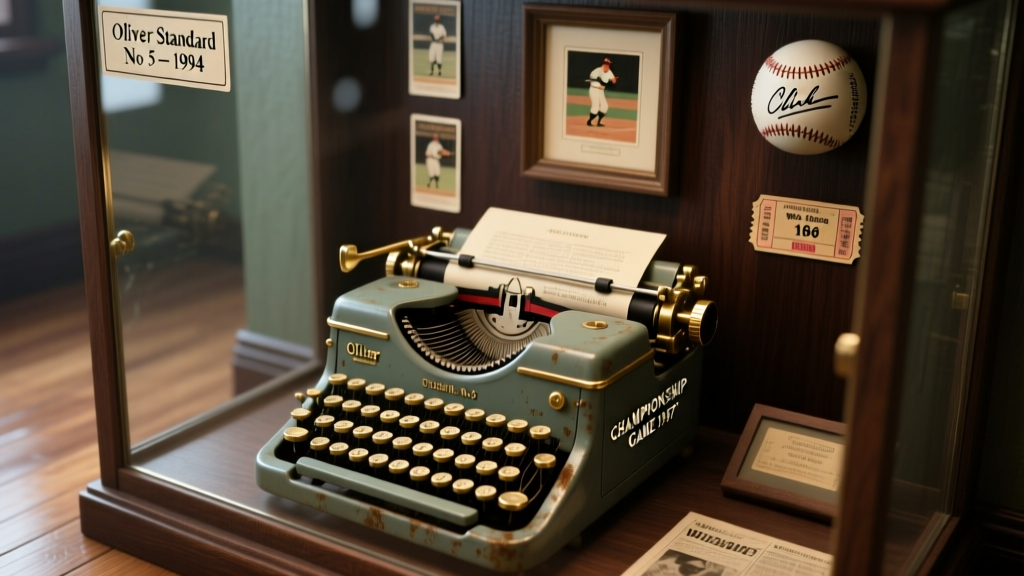
Oliver Standard Visible Writer No. 5: Engineering Legacy, Collector Value, and Authentication Essentials