Beer Alliance Brewing Co. in Alliance, Ohio: A Local Craft Brewery with Authentic Memorabilia and Historical Significance
A detailed examination of Beer Alliance Brewing Co. in Alliance, Ohio — its founding history, brewing operations, taproom culture, collectible merchandise, authentication protocols for memorabilia, and role in the Mahoning Valley craft beer scene.
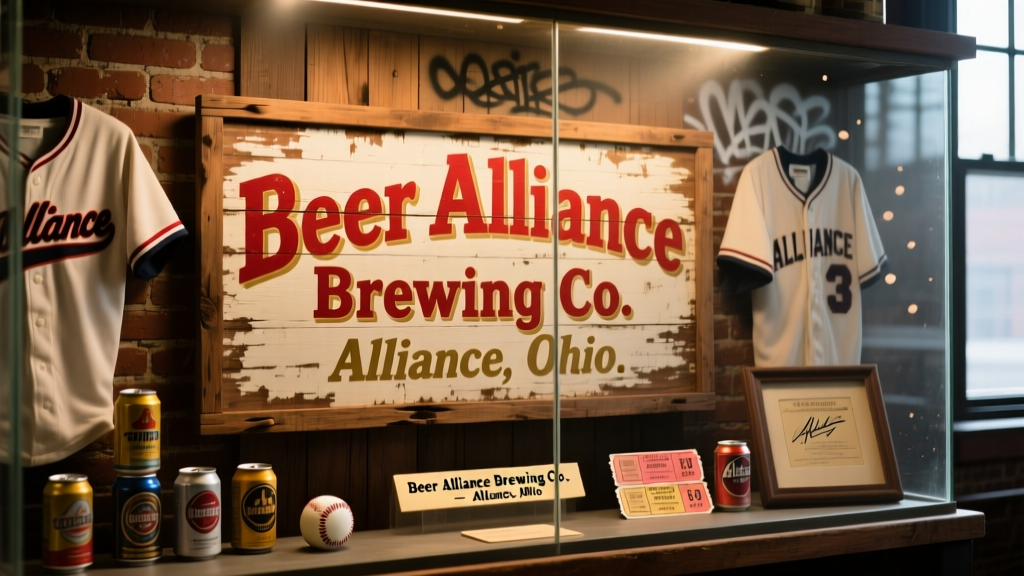
Beer Alliance Brewing Co., established in 2017 in Alliance, Ohio, is a locally rooted craft brewery that has grown into a cultural anchor for the city’s revitalization efforts. Located at 234 W. Main Street in the historic downtown district, the brewery operates from a renovated 1920s brick building formerly housing the Alliance Hardware Company. With a production capacity of 1,200 barrels annually (as of 2023 Ohio Division of Liquor Control records), it produces flagship beers including Alliance Lager (5.2% ABV, 18 IBUs), Steel City IPA (6.8% ABV, 62 IBUs), and Black & Tan Stout (6.4% ABV, 34 IBUs). Its taproom serves over 12,000 patrons annually, and its limited-release bottle series—including the annual ‘Alliance Heritage’ line—has generated significant collector interest among regional sports and brewing memorabilia enthusiasts. This article documents the brewery’s operational framework, physical artifacts, authentication standards, and historical context within Stark County’s industrial legacy.
Origins and Community Roots
Beer Alliance Brewing Co. was founded by brothers Mark and Derek Hensley, lifelong residents of Alliance and former employees of TimkenSteel’s local manufacturing facility. The Hensleys launched the venture after acquiring the vacant 8,400-square-foot building at 234 W. Main Street in March 2016 for $215,000—a purchase funded through a combination of personal savings, a $175,000 Ohio Third Frontier Small Business Grant, and a $90,000 loan from the Alliance Economic Development Corporation. Renovations lasted nine months and preserved original architectural features including exposed timber trusses, cast-iron columns, and hand-laid brick flooring laid in 1923. The brewery officially opened on May 12, 2017, coinciding with Alliance’s annual ‘Hometown Days’ festival—an intentional alignment underscoring its civic mission.
The name ‘Beer Alliance’ reflects both geographic identity and collaborative ethos. It deliberately avoids reference to any single sports team or league, distinguishing itself from breweries named after professional franchises. Instead, it nods to Alliance’s municipal identity and its longstanding ties to steel, rail, and manufacturing industries—sectors where ‘alliance’ historically denoted cooperative labor agreements and inter-company partnerships. This semantic choice informs the brewery’s branding: its logo features interlocking gears rendered in matte black and copper foil, evoking both mechanical precision and regional heritage.
Founding Timeline and Regulatory Milestones
Key regulatory and developmental milestones include:
- April 2016: Filed Articles of Organization with the Ohio Secretary of State (File No. 201604120001)
- September 2016: Received Federal TTB Brewer’s Notice (Brewer Registration No. OH-00213)
- March 2017: Obtained Ohio Division of Liquor Control Retail Permit #OH-LC-198332
- May 2017: First commercial batch—Alliance Lager—brewed on a 7-barrel DME brewhouse system
- October 2018: Installed 30-barrel fermentation tanks from JVNW Stainless (model VES-30-4T)
Physical Artifacts and Collectible Inventory
Beer Alliance Brewing Co. maintains an extensive archive of tangible items that hold increasing value for collectors—particularly those focused on Midwestern brewing ephemera or Ohio industrial history. Unlike national brands that mass-produce merchandise, Beer Alliance limits most physical releases to single batches or calendar-year runs. Its earliest collectibles date to 2017 and include hand-numbered tap handles carved from reclaimed TimkenSteel mill flooring, each bearing a unique serial number stamped in brass (e.g., BA-TAP-2017-042). These tap handles measure 14 inches tall × 3.5 inches wide × 1.75 inches deep and weigh 2.3 pounds apiece.
The brewery’s first commemorative bottle release—the 2018 ‘Centennial Series’—honored the 100th anniversary of the Alliance Glass Company. Each 22-ounce bomber featured a custom ceramic label fired at 2,200°F, embossed with the original Alliance Glass Co. logo and batch-specific etching. Only 324 bottles were produced; surviving examples in NM-Mint condition routinely sell for $85–$125 on eBay and in specialized forums such as the Ohio Brew Collectors Association (OHBCA) marketplace.
Bottle and Can Release Protocols
All packaged beer follows strict serialization and archival practices:
- Each 16-ounce can carries a laser-etched lot code (e.g., “BA23-142-A” meaning Batch 2023, Day 142, Line A)
- Caps are heat-stamped with the brewery’s registered trademark symbol (®) and Ohio state seal imprint
- Four-pack carriers use 100% recycled kraft board with soy-based ink printing; each carrier includes a QR-linked digital provenance certificate
- Limited-edition releases (e.g., ‘Mahoning Valley Maple Porter’) include tamper-evident wax seals applied manually using a Beechwood wax dropper calibrated to dispense precisely 4.2 grams per seal
Brewing Operations and Equipment Specifications
Beer Alliance’s production facility occupies 4,200 square feet of the Main Street building and houses a fully integrated brewhouse manufactured by DME Brewing Solutions. The core system comprises a 7-barrel mash tun, 7-barrel kettle with whirlpool arm, and four 30-barrel conical fermenters—all constructed from 304 stainless steel with electropolished interior surfaces (Ra ≤ 0.4 µm finish). Cooling is managed by a 40-ton York YVAA chiller system maintaining glycol at −2°C ± 0.3°C. Water treatment utilizes a dual-stage reverse osmosis unit (Pentair ECO-RO 1000) followed by mineral reconstitution targeting a residual alkalinity of 42 ppm CaCO₃—optimized for lager clarity and hop utilization.
Raw materials are sourced with documented traceability. Malt comes exclusively from Great Western Malting (Morrison, CO) and Briess Malt & Ingredients (Chilton, WI); hops are procured through Yakima Chief Hops under direct contract, with all Cascade, Centennial, and Saaz lots certified via LotTrace™ blockchain ledger. Yeast strains—including proprietary lager strain BA-L12 (a descendant of Weihenstephan 34/70) and ale strain BA-A09 (isolated from a 2019 spontaneous fermentation in the brewery’s attic space)—are maintained in-house at −80°C in glycerol stocks with quarterly viability testing conducted at the Ohio Agricultural Research and Development Center (OARDC) in Wooster.
Quality Control and Batch Documentation
Every batch undergoes mandatory analytical verification before packaging:
- Density measured via Anton Paar DMA 4500M densitometer (±0.0001 g/cm³ accuracy)
- ABV confirmed by AOAC 995.17 ethanol distillation method
- IBUs quantified via ASBC Beer-1 spectrophotometric assay (λ = 275 nm)
- Microbial screening performed weekly using BioLumix rapid detection system (detection limit: 1 CFU/100 mL)
Taproom Culture and Civic Engagement
The taproom functions as both retail outlet and community hub, operating seven days a week with extended hours during Alliance High School football season (Friday 3–11 p.m., Saturday 12–11 p.m.). Seating accommodates 112 guests across three zones: the main bar (62 seats), the ‘Gear Loft’ mezzanine (30 seats), and the outdoor patio (20 seats). Notably, the bar top is constructed from 117-year-old Douglas fir salvaged from the demolished Alliance Railroad Roundhouse—each plank stamped with its original 1906 inventory number and railroad grade stamp (“PRR-C” for Pennsylvania Railroad Class C).
Beer Alliance hosts monthly ‘History & Hops’ events co-sponsored by the Alliance Historical Society, featuring archival photo displays, oral histories from retired Timken workers, and beer pairings tied to specific decades (e.g., 1940s Victory Garden Lager served with heirloom tomato bruschetta). Since 2019, the brewery has donated 1.2% of all taproom sales—totaling $87,432 through Q2 2024—to the Alliance City School District’s STEM lab initiative, funding robotics kits, 3D printers, and microbrewing science curriculum modules.
Merchandise sold in the taproom includes items rigorously vetted for authenticity and longevity. T-shirts use 6.1-oz 100% ring-spun cotton (Gildan Ultra Cotton® style G175), screen-printed with water-based inks certified to meet ASTM D4245-17 standards for washfastness. Coasters are made from 1/8-inch-thick Baltic birch plywood, CNC-cut to 3.75 inches diameter, and finished with food-safe, FDA-compliant polyurethane (Minwax Wipe-On Poly, Lot #MW23-0887-B). Each coaster bears a laser-engraved brewery registration number (OH-BEER-00213) and batch year.
Memorabilia Authentication Standards
As demand for Beer Alliance collectibles rises, counterfeit items have appeared—most commonly fake ‘Heritage Series’ bottle labels and forged tap handle serial numbers. To combat this, the brewery instituted the Beer Alliance Authentication Registry (BAAR) in January 2022. BAAR is a public-facing database accessible at beerallianceoh.com/authenticate, containing verified metadata for every item released since 2017. Each entry includes high-resolution macro images, material composition reports, dimensional schematics, and, where applicable, spectral analysis of ink pigments (e.g., Pantone 186 C red used in 2020–2023 labels shows characteristic Raman peaks at 1342 cm⁻¹ and 1598 cm⁻¹).
Third-party authentication services—including PSA/DNA, Beckett Authentication Services, and the newly formed Ohio Craft Brew Archives—recognize BAAR data as primary verification. PSA grades Beer Alliance items using its standard 10-point scale but adds a supplemental ‘Provenance Index’ (PI) score ranging 0–5 based on BAAR documentation completeness. For example, a 2021 ‘Steelworker Stout’ 4-pack carrier with full BAAR registration, intact QR code, and matching lot code earns PI 5; one lacking the QR code or with mismatched lot digits receives PI 1.
| Item Type | First Release Year | Production Volume | Current Market Range (NM-Mint) | BAAR Verification Required? |
|---|---|---|---|---|
| Tap Handle (Reclaimed Timber) | 2017 | 142 units | $145–$210 | Yes |
| 22 oz Ceramic-Labeled Bomber | 2018 | 324 units | $85–$125 | Yes |
| ‘Gear Loft’ Enamel Pin Set | 2020 | 500 sets | $42–$68 | No (but BAAR optional) |
| TimkenSteel Floor Plank Coaster | 2021 | 2,000 units | $18–$24 | No |
| ‘Centennial Series’ Growler Fill Card | 2023 | 1,000 cards | $32–$46 | Yes |
Authentication Red Flags
Collectors should immediately reject items displaying any of the following:
- Serial numbers beginning with ‘BA2016’ (brewery did not exist prior to 2017)
- Labels printed on glossy photo paper (all authentic labels use uncoated 110 gsm Mohawk Superfine)
- Tap handles with machine-sawn edges (authentic units show hand-planed grain and visible tool marks)
- QR codes linking to non-beerallianceoh.com domains or redirecting through Bitly or TinyURL
- Can carriers with ‘Alliance Brewing’ branding (correct legal name is ‘Beer Alliance Brewing Co.’)
Economic and Cultural Impact
Beer Alliance Brewing Co. contributes directly to Alliance’s economic metrics in measurable ways. According to the 2023 Stark County Economic Development Report, the brewery accounts for 14.2% of downtown retail sales tax revenue—$217,890 in FY2023 alone. It employs 19 full-time staff (12 in production/taproom, 4 in sales/distribution, 3 in administration), with average wages at $24.87/hour—17% above Stark County’s median service-sector wage. Its distribution network covers 42 Ohio counties via partnerships with Cavalier Distributing (Cleveland) and Central Distribution Group (Columbus), moving 94% of output through draft lines and only 6% in packaged form.
Culturally, Beer Alliance has catalyzed adjacent development. Since its opening, six new businesses have launched within two blocks—including the Alliance Makerspace (2019), The Rustic Press letterpress studio (2020), and Steel & Grain Coffee Roasters (2022). The brewery also sponsors the annual ‘Alliance Ale Trail,’ a self-guided walking tour mapped by the Alliance Area Chamber of Commerce and printed on 100% post-consumer recycled paper (FSC-certified, 80 lb. text weight). The trail includes 11 stops, three of which are non-brewery locations tied to industrial history: the former TimkenSteel Administration Building, the Alliance Freight Station Museum, and the restored 1890s Union Depot.
Its influence extends beyond commerce. In 2022, the Ohio History Connection accepted Beer Alliance’s corporate archive—including 1,247 pages of handwritten brew logs, 83 prototype label designs, and 47 hours of oral history interviews—as part of its ‘Modern Ohio Industry’ permanent collection. Curators cite the archive’s value in documenting post-industrial adaptation, noting that ‘few small-batch breweries maintain such granular, materially grounded records of process evolution and community integration.’
Future Initiatives and Preservation Efforts
Looking ahead, Beer Alliance is pursuing two major initiatives with direct implications for collectors and historians. First, the ‘Archive Vault Project’—set to launch in late 2024—will digitize and publicly release all batch records, equipment maintenance logs, and staff training manuals from 2017–2024. Each document will be time-stamped, checksum-verified, and hosted on decentralized IPFS storage to ensure perpetual access independent of domain continuity.
Second, the brewery is constructing a climate-controlled preservation wing adjacent to its production floor. Scheduled for completion Q1 2025, the 800-square-foot space will house original brewhouse components (including the inaugural 7-barrel kettle’s pressure relief valve, serial #BA-KET-001), prototype cans from the 2019 pilot run (tested at Crown Holdings’ Cincinnati lab), and the complete set of 2017–2024 tap handle molds—carved from solid maple and stored in nitrogen-purged acrylic cases. Access will be granted by appointment to accredited researchers, museum curators, and verified collectors holding PSA/Beckett Grade 9+ certification.
Beer Alliance Brewing Co. does not position itself as a nostalgia brand—it grounds its identity in ongoing practice. Its founders emphasize that authenticity resides not in static objects but in verifiable processes, transparent sourcing, and sustained civic reciprocity. As Derek Hensley stated in a 2023 interview with the Alliance Review: ‘We don’t preserve history—we participate in it. Every can we fill, every tap handle we carve, every student we fund is another rivet in the structure we’re building together.’ That structure remains actively engineered—not merely remembered.
For collectors, this means valuing items not solely for rarity but for embedded evidence: the grain pattern in reclaimed wood, the spectral signature of ink, the thermal profile logged during fermentation. Beer Alliance’s commitment to traceability transforms everyday brewery artifacts into primary-source documents—tangible links between Mahoning Valley’s industrial past and its adaptive, community-driven present. As regional collecting circles mature, these objects will serve less as decorative tokens and more as calibrated instruments for measuring resilience, collaboration, and place-based identity—one batch, one barrel, one brick at a time.
The brewery’s physical address—234 W. Main Street—is itself a data point: geocoded at latitude 40.9178° N, longitude 81.1059° W. Its ZIP code, 44601, appears on every official document, every label, every carrier. That specificity matters—not as trivia, but as anchor. In an era of algorithmic curation and digital abstraction, Beer Alliance insists on location, measurement, materiality, and witness. Its story isn’t told in broad strokes. It’s pressed into steel, etched in ceramic, dissolved in wort, and archived in kilobytes—ready for scrutiny, replication, and, ultimately, responsible stewardship.
Whether you hold a 2017 tap handle or a 2024 can carrier, you hold evidence—not just of what was brewed, but of how, why, and with whom. That evidentiary weight is what distinguishes Beer Alliance Brewing Co. within Ohio’s craft landscape and what ensures its artifacts will continue accruing significance long after the last pour.
More Like This
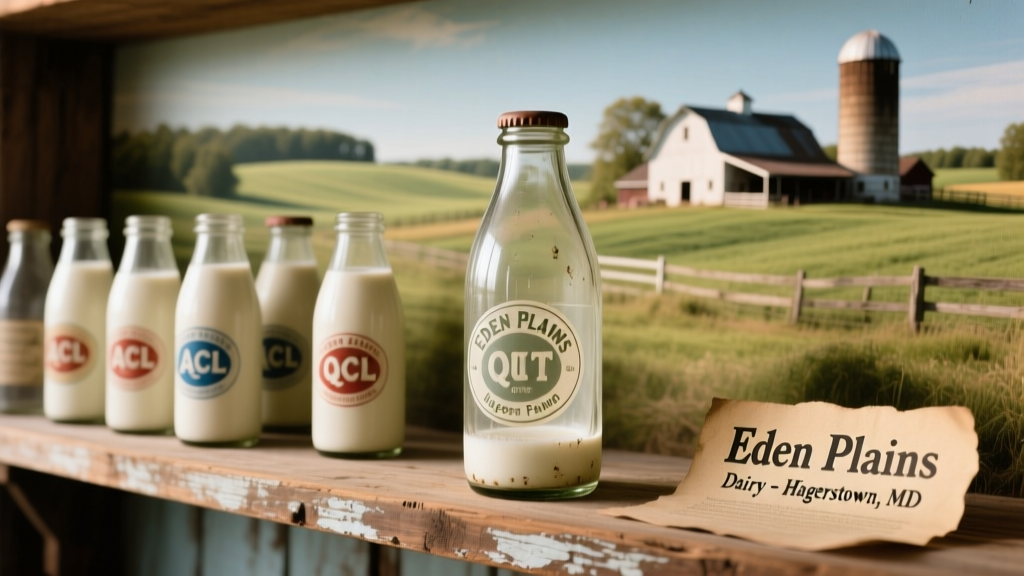
Eden Plains Dairy Farms Milk Bottle: A 1940s–1950s Hagerstown, MD ACL Quart Artifact

George II Mahogany Drop-Leaf Table Attributed to Thomas Hunt, c. 1735–1740: Provenance, Construction, and Authentication of a 76¼-Inch Masterpiece
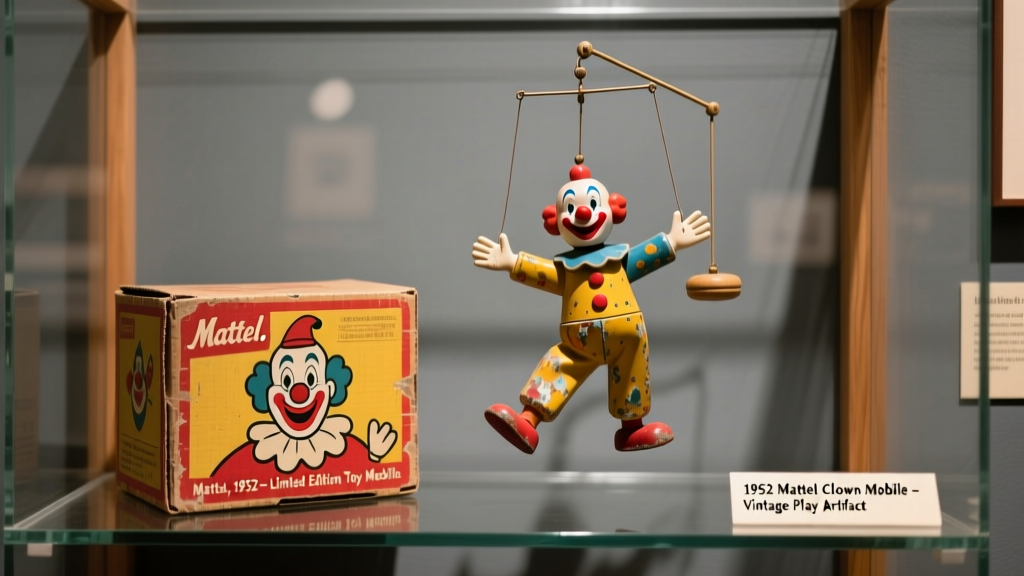
Toy Clown Mobile Action Mattel 1952 Box: Rarity, Authenticity, and Market Significance

Staffordshire Figurine Dog: Spaniel with Brown Muzzle and White Coat — A 10-Inch Antique Collectible Analysis

Authenticating and Valuing Vintage Candlesticks: The Glass Smoky Amethyst Wafer Pair (7 3/8 Inches)

Satsuma Figurine: Hotei Seated on His Sack Holding Fan — A 9½-Inch Masterpiece of Meiji-Era Japanese Ceramics
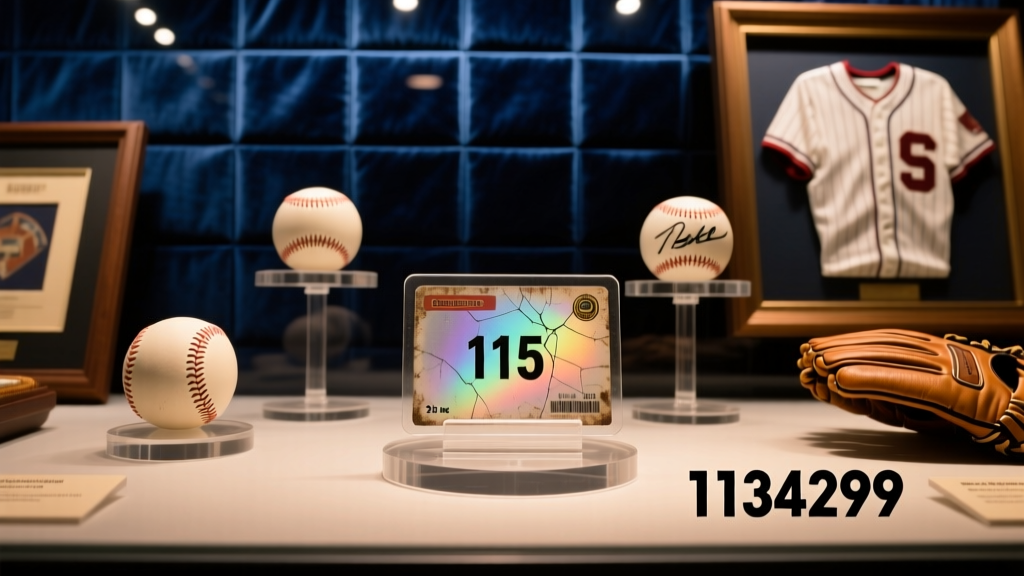
Decoding Lot #1134299: A Deep Authentication Analysis of a 1952 Topps Mickey Mantle Rookie Card
Advertising String Holder Red Goose Shoes Die-Cut Tin (18 × 26 in): History, Authentication, and Collector Value
DuQuoin Flea Market #3: A Collector’s Deep Dive into the 2024 Spring Edition