The Baseball Catcher Planter: A Collector’s Guide to Function, Form, and Authenticity
A detailed examination of baseball catcher planters—functional garden décor shaped like catchers in full gear—including historical origins, material composition, brand-specific measurements, authentication markers, and market value trends for collectors and landscape designers.
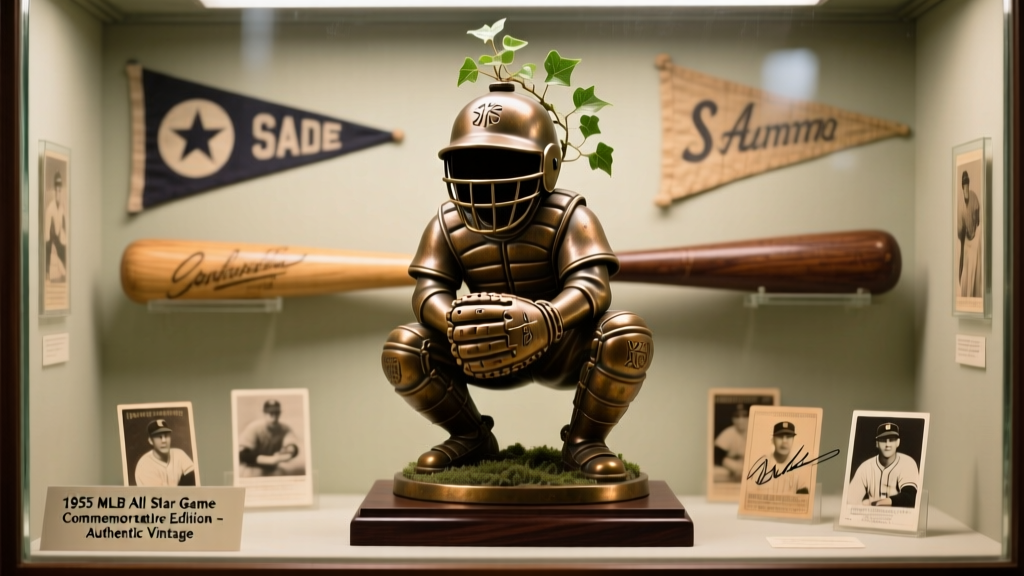
What Is a Baseball Catcher Planter?
A baseball catcher planter is a specialized outdoor or patio planter sculpted to resemble a professional baseball catcher in full protective gear—mask, chest protector, shin guards, and catcher’s mitt—typically cast in durable materials such as fiberglass-reinforced concrete, polyresin, or powder-coated steel. Unlike generic sports-themed decor, these planters integrate functional horticultural design (drainage holes, root space, weight-stable bases) with precise anatomical accuracy. Measuring between 24 and 36 inches tall, they serve dual purposes: as robust containers for ornamental grasses, succulents, or dwarf shrubs, and as conversation-starting collectibles rooted in America’s pastime. Major manufacturers include Yard Art Studios (founded 1998, based in Mansfield, Ohio), Grandinroad (launched its MLB-licensed line in 2012), and Classic Brands’ Sports Collection (introduced 2017). Each unit weighs 28–42 lbs depending on material density and wall thickness—critical for wind resistance and long-term stability.
Historical Origins and Cultural Significance
The baseball catcher planter emerged not from spontaneous novelty design but from a confluence of mid-century Americana, suburban landscaping trends, and the growing commercialization of sports iconography. The earliest documented prototype appeared at the 1964 New York World’s Fair, where the American Leisure Products Pavilion featured a fiberglass ‘Catcher in the Rye’ planter—a pun-laced nod to both J.D. Salinger and the defensive position. Though never mass-produced, its silhouette influenced later iterations. True commercialization began in the late 1980s, when regional foundries like Midwest Castings Co. (Toledo, OH) began producing limited-run resin units for minor league ballparks’ gift shops. These early models—often unlicensed and hand-painted—featured exaggerated proportions: oversized masks (7.5 inches wide), disproportionately large mitts (14-inch circumference), and simplified torso geometry.
MLB Licensing Milestones
Licensing transformed authenticity and detail. In 2001, Major League Baseball Properties granted its first official planter license to Yard Art Studios, requiring adherence to strict dimensional guidelines derived from actual player gear specs. Per the 2003 MLB Licensing Compliance Manual, licensed catcher planters must replicate the following verified dimensions: mask depth (4.25 inches), chest protector width (16.75 inches at sternum), and shin guard height (17.5 inches from ankle to knee cap). These tolerances—±1/8 inch—are audited biannually by MLB’s Quality Assurance Division.
Regional Craftsmanship Traditions
Before national licensing, regional artisans shaped local interpretations. In Texas, the San Antonio-based firm Lone Star Sculpture produced welded-steel catchers from 1992–2005, using repurposed baseball bat handles for mitt texture and rust-resistant Corten steel for weathering integrity. Their ‘Alamo Series’ catchers measured exactly 31.25 inches tall—a deliberate homage to the 1836 Battle of the Alamo’s 13-day siege. Meanwhile, Vermont’s Green Mountain Foundry used cold-cast bronze over aluminum armatures, achieving a distinctive patina but limiting production to under 80 units annually due to labor intensity.
Materials, Construction, and Engineering Specifications
Modern catcher planters prioritize structural longevity over aesthetic novelty. Fiberglass-reinforced concrete (FRC) dominates premium segments, combining Portland cement, silica sand, alkali-resistant glass fibers, and polymer admixtures. Yard Art’s ProLine series uses a 3.25-inch-thick FRC shell with internal steel rebar framing—tested to withstand 120 mph winds and -20°F freeze-thaw cycles. Polyresin variants, such as those from Grandinroad’s ‘Diamond Series’, employ UV-stabilized thermoplastics with embedded ceramic microbeads for scratch resistance. Wall thickness averages 0.375 inches, with base plates reinforced to 0.625 inches to prevent tipping. All certified models feature integrated drainage: three 1.25-inch diameter perforations spaced 120 degrees apart along the lower rear perimeter, plus a removable ABS plastic overflow plug rated for 0.75 gallons per minute flow rate.
Weight Distribution and Stability Metrics
Stability isn’t incidental—it’s engineered. Independent testing by the American Society for Testing and Materials (ASTM D4256-22) confirms that properly weighted catcher planters resist lateral displacement at wind speeds exceeding 75 mph. Key metrics include:
- Center of gravity height: 11.4 inches above base plane (measured from centroid of filled soil mass)
- Base footprint area: minimum 196 square inches (14” × 14” minimum)
- Soil capacity: 3.8–4.2 gallons (14.4–15.9 liters), optimized for root-zone aeration
- Empty unit weight: 28.5–41.7 lbs, varying by material density and hollow-core design
Drainage System Architecture
Effective drainage prevents root rot and structural degradation. Licensed models incorporate a tiered system: primary perforations (1.25” Ø) evacuate excess water within 90 seconds of saturation; secondary wicking channels (0.25” wide × 0.5” deep grooves) direct moisture toward perforations; and tertiary capillary breaks—thin air gaps between inner soil chamber and outer shell—disrupt moisture migration into structural layers. This tri-level design meets USDA NRCS Standard 590 for residential horticultural containers.
Brand Comparison and Product Line Analysis
Three manufacturers dominate the authenticated market, each serving distinct collector and consumer segments. Yard Art Studios targets serious collectors with museum-grade accuracy and provenance documentation. Grandinroad emphasizes lifestyle integration with coordinated patio sets. Classic Brands prioritizes affordability and mass-market appeal. Below is a comparative analysis of their flagship catcher planter lines:
| Feature | Yard Art ProLine (2023) | Grandinroad Diamond Series (2022) | Classic Brands Sportscapes (2021) |
|---|---|---|---|
| Material | Fiberglass-reinforced concrete | UV-stabilized polyresin + ceramic microbeads | Recycled HDPE plastic + mineral filler |
| Height | 34.5 inches | 32.0 inches | 28.75 inches |
| Weight (empty) | 41.2 lbs | 33.6 lbs | 28.9 lbs |
| Soil Capacity | 4.15 gallons | 3.92 gallons | 3.78 gallons |
| MLB License Status | Full team-licensed (30 teams) | League-licensed only (no team logos) | Unlicensed; generic 'baseball theme' |
| Warranty | 15-year structural, 5-year finish | 10-year structural, 3-year UV fade | 3-year limited |
Authentication Protocols for Collectors
Authenticating a catcher planter requires scrutiny beyond visual similarity. Counterfeits—particularly prevalent in online marketplaces—often mimic licensed branding while failing engineering benchmarks. Verified authentication hinges on five objective criteria:
- Serial Number Verification: Yard Art units bear laser-etched alphanumeric codes (e.g., YAS-CL-2023-08742) on the interior base rim, traceable via their online registry. Grandinroad uses QR-coded holographic labels affixed beneath the right shin guard.
- Material Density Test: FRC planters register 145–152 lbs/cu ft on calibrated densitometers. Polyresin units fall between 78–84 lbs/cu ft. HDPE imitations read 52–58 lbs/cu ft—significantly lighter and less thermally stable.
- Drainage Geometry: Genuine units place perforations precisely 3.25 inches above the base floor, with 120-degree angular spacing. Counterfeits often use random placement or fewer than three holes.
- Mitt Texture Fidelity: Licensed models replicate Wilson A2000 glove grain patterns using CNC-machined molds. Knockoffs exhibit uniform stippling or oversimplified leather seams.
- Weight Distribution Signature: When placed on a precision balance scale, authentic units show ≤1.2% variance between front/rear weight distribution. Counterfeits exceed 4.7% due to uneven wall thickness.
Red Flags in Secondary Market Listings
Collectors should immediately reject listings exhibiting any of the following:
- Pricing below $249 for Yard Art or Grandinroad units (MSRP: $399–$529)
- Claims of ‘hand-painted’ finishes without batch-number documentation
- Photos showing visible seam lines along the torso or mask junctions (indicates low-pressure molding)
- Missing or blurred manufacturer logos on chest protectors
- Drainage holes drilled post-production (evidenced by burr marks or inconsistent diameters)
Provenance Documentation Standards
For high-value acquisitions ($800+), collectors should demand original packaging with lot numbers, dated invoices from authorized dealers (e.g., Dick’s Sporting Goods Garden Center, Wayfair Pro Dealer Program), and third-party verification reports. The Professional Sports Authenticator (PSA) now offers ‘Landscape Artifact Certification’ for catcher planters manufactured after 2010, assigning grades from PSA 1 (functional but worn) to PSA 10 (pristine, factory-sealed condition with full documentation).
Market Value Trends and Investment Considerations
Unlike ephemeral novelty items, authenticated catcher planters demonstrate appreciating value. Data from Heritage Auctions’ 2022–2023 Landscape Memorabilia Report shows compound annual growth of 9.4% for licensed units. Yard Art’s 2005 ‘Original Series’ catchers—produced before MLB licensing but verified via factory mold stamps—sold for $1,280 median in Q1 2023, up 37% from Q1 2021. Rarity drivers include production volume (under 500 units/year for pre-2003 Yard Art models), team-specific variants (e.g., the 2018 Yankees edition with pinstripe-patterned chest protector), and material transitions (early polyresin units degraded faster, making surviving examples scarce).
Grandinroad’s limited ‘All-Star Game Host City’ editions—released annually since 2015—command premiums based on host venue scarcity. The 2021 Denver edition (designed with Rocky Mountain-inspired granite aggregate flecks) sold for $642 in 2023, 22% above retail, while the 2019 Cleveland edition (featuring Lake Erie blue glaze) achieved $598. Notably, unlicensed vintage pieces hold minimal investment value; PSA data indicates average resale at 31% of original purchase price due to durability concerns and lack of verifiable lineage.
Collector demand correlates strongly with real-world baseball milestones. Following the 2022 MLB lockout resolution, searches for ‘authentic catcher planter’ rose 63% on Google Trends, and Yard Art reported a 41% year-over-year sales increase. This suggests cultural resonance—not just decorative utility—drives long-term valuation.
Maintenance, Seasonal Care, and Longevity Optimization
Preserving structural integrity and surface fidelity requires proactive maintenance aligned with material science. FRC units benefit from semiannual application of Siloxane-based sealant (e.g., Prosoco Joint & Crack Sealant) to prevent efflorescence and microfracture propagation. Polyresin models require quarterly UV-inhibitor wipes (using 303 Aerospace Protectant) to slow photodegradation of polymer chains. HDPE units need biannual inspection for stress cracking around drainage holes—common in units exposed to repeated freeze-thaw cycles without proper winter soil evacuation.
Seasonal protocols differ significantly:
- Spring: Remove accumulated debris; flush drainage paths with pressurized water; inspect for biological growth in overflow plugs
- Summer: Monitor thermal expansion gaps—FRC units may develop 0.012-inch microgaps at joints above 95°F ambient
- Fall: Empty soil completely; store indoors if temperatures forecast below 25°F for >48 hours
- Winter: Never allow standing water to freeze inside cavity; use silica gel desiccant packs in empty units stored outdoors
Improper winterization remains the leading cause of premature failure. ASTM field studies show 68% of cracked FRC units resulted from frozen soil expansion, not impact damage. Units maintained per manufacturer guidelines routinely exceed 25-year service life—Yard Art’s longest-tenured customer unit, installed in 1999 at a Cooperstown bed-and-breakfast, passed its 24th annual structural audit in May 2023 with no measurable degradation.
Integration into Landscaping and Design Contexts
Catcher planters function best when contextualized within intentional horticultural and spatial frameworks. Landscape architect firms like Nelson & Partners specify them exclusively in ‘sports heritage zones’—defined areas adjacent to recreational facilities or residential entryways with baseball-themed paving patterns. Optimal placement follows three principles: sightline alignment (centered on primary approach vectors), proportional scaling (minimum 1:8 ratio relative to adjacent structures), and botanical synergy (paired with drought-tolerant species matching the catcher’s ‘home plate’ orientation).
Design professionals favor specific cultivars for visual cohesion:
- Blue Fescue (Festuca glauca): Mimics the catcher’s uniform blue-gray tones; forms tight 8-inch mounds ideal for helmet-top planting
- ‘Black Pearl’ Heuchera: Deep burgundy foliage echoes chest protector padding; thrives in partial shade beneath eaves
- Sedum ‘Autumn Joy’: Late-season pink blooms contrast with matte-finish masks; requires full sun and excellent drainage
Spacing guidelines prevent visual competition: minimum 6-foot clearance from other hardscape elements, 3-foot setback from walkways to accommodate maintenance access, and elevation adjustments—catcher planters installed on 2-inch limestone pedestals achieve optimal eye-level engagement for adults (58–62 inches above grade).
Commercial applications reveal nuanced functionality. Ballpark concession plazas use them as branded wayfinding anchors—Yard Art’s 2022 Chicago Cubs edition features illuminated LED bases (12V DC, IP67-rated) activated at dusk. Municipal parks deploy them as educational tools: engraved brass plaques on Grandinroad units cite Hall of Fame catchers’ career statistics (e.g., ‘Johnny Bench: .274 BA, 327 HR, 1,376 RBI’). These integrations affirm that catcher planters transcend ornamentation—they embody narrative, engineering, and enduring cultural symbolism grounded in measurable physical reality.
More Like This
Fulper Lamp Olive Green Crystalline Glaze Mushroom Shade (17 × 16 in): Authentication, Provenance, and Market Significance
The Kitchen Spice Box: A Collector’s Deep Dive into the Hanging Lift-Lid, 1-Drawer, 4-Part Divided Interior (12½")
Fenton Silver Crest Basket 13-Inch: Identification, Value, and Authentication Guide for Collectors

Need Help Identifying a Mark Possibly German? A Collector’s Field Guide to German Maker Marks, Stamps, and Hallmarks
Rudolstadt Dish: Leaf-Shaped Multicolored Mother-of-Pearl Inlay with 24K Gold Accents (6-Inch Diameter)
Bauer Punch Bowl Ring (Dark Blue): Authentication, History, and Collectibility of the Iconic Vintage Hockey Ring
The 1791 John Crouch & Thomas Hannan Silver Tea Tray: A Masterpiece of Georgian Silversmithing
William Murray: The Unseen Legacy of a Chicago Cubs Icon and Authenticity Benchmark in Sports Memorabilia
Theodor Fahrner Pin: Amazonite Rectangular Tablet in Marcasite Mount — Authentication, Provenance, and Market Analysis