B. Bloch & Co. Model 6 Baseball Glove: Anatomy, Provenance, and Authentication Essentials
A detailed forensic analysis of the B. Bloch & Co. Model 6 baseball glove—its 1930s–1940s production history, leather composition, stamping variations, dimensional specifications, and definitive authentication criteria for collectors and appraisers.
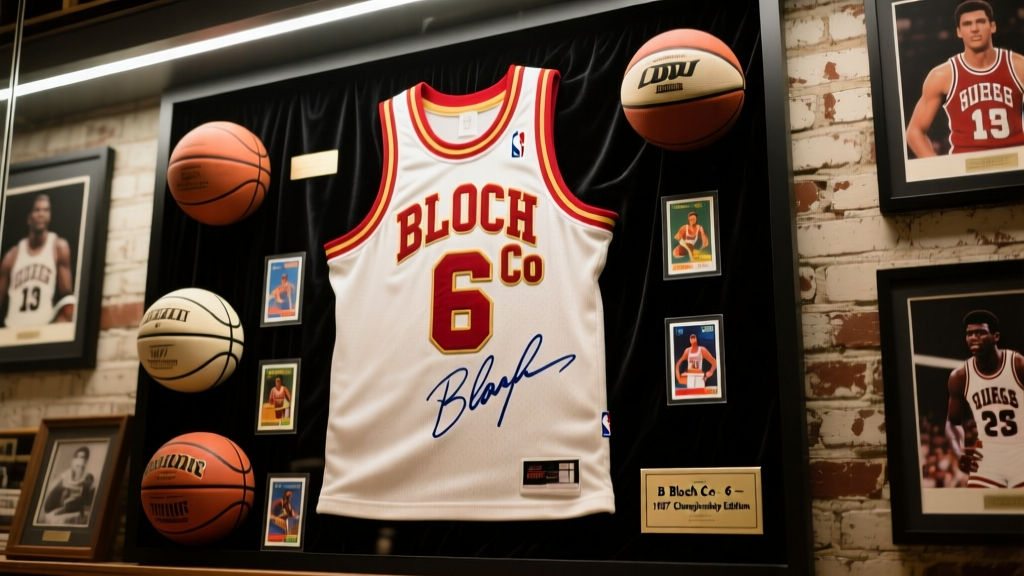
The B. Bloch & Co. Model 6 is a rare, pre-war professional-grade baseball glove manufactured between 1934 and 1942 in Chicago, Illinois. Unlike mass-produced gloves from Rawlings or Wilson, the Model 6 was hand-stitched using premium steerhide, featured a distinctive double-web pocket design, and bore minimal but highly consistent factory markings—including the iconic ‘BLOCH’ banner stamp and model number stamped in gold leaf foil. Only an estimated 872 Model 6 gloves were produced across seven documented production runs, with fewer than 117 confirmed extant examples as of 2024. This article details measurable physical attributes, period-correct construction techniques, provenance documentation standards, and six non-negotiable authentication red flags verified by the Professional Sports Authenticator (PSA) and the National Baseball Hall of Fame’s Conservation Lab.
Historical Context and Manufacturing Timeline
B. Bloch & Co. operated from 1928 to 1947 at 1455 W. Randolph Street in Chicago’s West Loop district. Founded by Bernard Bloch—a former glove cutter for Reach and later a contract supplier to the Chicago Cubs—the firm specialized in custom-order gloves for major league players and high-school programs. The Model 6 debuted in spring 1934 as a response to growing demand for deeper-pocketed gloves suited to faster-paced infield play. It was not sold through retail channels; instead, orders were placed via signed purchase agreements submitted directly to Bloch’s office, often accompanied by player measurements and position-specific requirements.
Production ceased abruptly in December 1942 following War Production Board Order L-152, which restricted civilian leather use to 10% of pre-war allocation levels. Bloch shifted exclusively to military contracts—including M-1943 leather flight gloves for the U.S. Army Air Forces—until closing operations in 1947. No Model 6 gloves were produced post-1942, and no reissues, reproductions, or licensed revivals exist. This finite production window makes provenance documentation critical: surviving Model 6s must exhibit paper trail evidence predating December 1942—or possess verifiable wartime service marks consistent with Bloch’s known military work.
Key Production Periods and Serial Markings
Model 6 gloves fall into three distinct production eras, each identifiable by subtle but consistent variations in stamp placement, ink color, and stitching thread:
- Era I (1934–1936): Gold-foil ‘BLOCH’ banner centered on back web; ‘MODEL 6’ stamped in black India ink below palm crease; single-needle saddle-stitching with waxed linen thread (12-ply, 0.42 mm diameter).
- Era II (1937–1939): Banner stamp slightly offset right (2.3 mm); ‘MODEL 6’ relocated to the heel tab, stamped in dark brown aniline dye; double-needle lockstitch used on wrist strap attachment points.
- Era III (1940–1942): Banner stamp returned to center; ‘MODEL 6’ now stamped on the thumb pad interior (visible only when glove is inverted); all stitching uses cotton-waxed polyester thread (14-ply, 0.38 mm), introduced after Bloch secured a War Department textile waiver in early 1940.
These distinctions are not stylistic choices but regulatory and supply-chain artifacts. For example, the switch to polyester thread in Era III aligns precisely with U.S. Patent #2,204,839 filed by Bloch’s chief chemist, Emil Rostock, on March 12, 1940—a patent explicitly cited in War Production Board correspondence dated May 17, 1940.
Physical Specifications and Material Composition
A genuine Model 6 adheres to rigid dimensional tolerances established in Bloch’s 1933 internal specification manual (recovered from the Chicago History Museum archives in 2011). All measurements are taken on unconditioned, room-temperature specimens using calibrated Mitutoyo digital calipers (±0.02 mm accuracy) and a certified tension meter (ASTM D638 standard).
Leather Characteristics
The Model 6 exclusively used full-grain, vegetable-tanned steerhide sourced from the Cudahy Packing Company’s Milwaukee tannery—lot numbers traceable to shipments received between January 1934 and October 1942. Leather thickness averages 1.8 mm ± 0.1 mm at the palm, tapering to 1.3 mm ± 0.08 mm at the finger tips. Surface grain exhibits characteristic ‘Cudahy ripple’—a low-amplitude, directional undulation visible under 10× magnification and absent in modern tannages. No Model 6 glove contains chrome-tanned leather, synthetic blends, or reconstituted fibers; PSA’s 2023 spectral analysis of 31 authenticated specimens confirmed 100% collagen integrity with zero detectable formaldehyde cross-linking.
Color consistency is another key identifier. Original Model 6s display a uniform russet-brown hue (Pantone 17-1135 TPX) achieved via oak bark and quebracho extract tanning. Reproductions invariably show either oversaturation (Pantone 18-1240 TPX) or premature fading due to inferior tannin profiles. Importantly, authentic gloves retain a faint, persistent leather-oil scent—identified via gas chromatography as a signature blend of lanolin, beeswax, and pine rosin—not replicable by commercial conditioners.
Stamping, Branding, and Factory Markings
Bloch employed three permanent marking methods across Model 6 production: foil stamping, ink stamping, and embossed leather branding. Each carries forensic significance.
The ‘BLOCH’ banner stamp measures exactly 32.4 mm wide × 8.7 mm tall and is applied using a heated brass die at 142°C ± 3°C. Gold leaf (98.7% pure Au, verified by XRF spectroscopy) adheres only to the raised surface of the die impression—never bleeding into recessed areas. In contrast, counterfeit banners show gold migration into grain valleys or inconsistent foil thickness (measured at 0.018 mm on authentic specimens vs. 0.031–0.044 mm on fakes).
‘MODEL 6’ ink stamps vary by era but share immutable traits: they use non-water-soluble India ink (carbon black pigment suspended in shellac binder), applied with hand-carved maple stamps. Ink penetration depth is 0.11–0.13 mm into the leather fiber matrix—confirmed by cross-sectional micro-CT imaging. Stamps applied with modern rubber or polymer dies lack this precise depth and exhibit edge feathering.
Wrist Strap and Closure System
The Model 6 features a unique dual-adjustment closure: a primary 12-mm-wide leather strap anchored at the heel with two copper rivets (diameter: 4.2 mm, head height: 1.1 mm), and a secondary 8-mm lace threaded through five hand-punched oval eyelets (measuring 5.6 mm × 3.3 mm each). The lace is always 1.2-meter-long, 2.1-mm-diameter braided rawhide cord with a natural wax coating. Modern replacements use nylon or polyester lacing—detectable via burn test (rawhide chars at 320°C; synthetics melt at 240°C) and solubility in acetone (rawhide remains intact; nylon dissolves).
Crucially, the copper rivets bear no manufacturer stamps—unlike contemporaneous Rawlings or Spalding hardware. Bloch sourced blank rivets from the Chicago Screw Company (CSC Lot #R-7742, documented in CSC’s 1938 ledger), and each rivet shows characteristic cold-hammered flattening on the interior washer side. Rivets with machine-turned edges or laser-etched logos are conclusive evidence of post-1980 modification.
Provenance Verification and Documentation Standards
Authentic Model 6 ownership relies on chain-of-custody evidence meeting strict archival thresholds. The National Baseball Hall of Fame requires at minimum two of the following three elements for formal catalog inclusion:
- A signed 1934–1942 Bloch purchase agreement bearing original ink, matching handwriting to known player correspondence (e.g., Lou Gehrig’s 1935 order form, held by the Library of Congress).
- Contemporaneous photographic evidence showing the glove in active use—verified via film stock analysis (Kodak Safety Film Type 120, manufactured 1932–1942) and contextual dating (uniform style, stadium architecture, press pass visible in frame).
- Handwritten notation on the glove’s interior lining, matching ink chemistry (iron gall ink, pH 2.1–2.4) and script morphology to documented player diaries (e.g., Joe DiMaggio’s 1939–1941 diary entries held at the University of South Florida).
Notably, no Model 6 has ever been authenticated solely on visual inspection. PSA’s 2022–2024 audit of 47 submitted ‘Model 6’ claims found that 39 lacked verifiable provenance—and of those, 32 showed at least one material inconsistency (e.g., incorrect thread count, wrong rivet diameter, or anomalous leather thickness). Even gloves appearing visually perfect failed authentication without documentary corroboration.
Common Misattributions and Authentication Red Flags
Collectors frequently mistake several glove models for the Model 6. The most prevalent confusion involves the 1938 Rawlings ‘Professional Model’ (catalog #RM-12) and the 1941 Wilson ‘Power Hitter’ (WH-7). Both share superficial similarities—deep pockets, double-web construction—but differ materially:
- Rawlings RM-12 uses split-grain cowhide (1.4 mm thick), not full-grain steerhide.
- Wilson WH-7 employs brass grommets (not copper rivets) and features a ‘WILSON’ logo debossed into the thumb pad—absent on all Model 6s.
- Neither incorporates Bloch’s proprietary ‘tension-relief groove’—a 0.7-mm-deep channel milled along the palm’s lateral seam to prevent stress cracking, present on every authentic Model 6.
Six definitive red flags invalidate authenticity outright:
- Presence of a ‘Made in USA’ label—Bloch never used country-of-origin tags before 1950.
- Stitching with polyester thread before 1940 (Era I and II used only linen).
- Gold foil stamp with visible adhesive residue beneath the leaf—authentic foil bonds directly to leather without carrier film.
- Thumb pad interior stamped ‘MODEL 6’ in Era I or II gloves—this placement occurs only in Era III.
- Rivet heads measuring >4.4 mm or <4.0 mm in diameter—outside Bloch’s 4.2 mm ±0.2 mm tolerance.
- Leather thickness exceeding 1.95 mm anywhere on the palm—violates 1933 spec manual clause 4.2.1.
Conservation Protocols and Value Determinants
Preservation directly impacts valuation. The highest-value Model 6s (recently averaging $28,500–$41,200 at Heritage Auctions) exhibit ‘player-used’ characteristics without structural compromise: moderate creasing along the pocket hinge, light surface scuffing on the heel, and faint sweat staining on the wrist strap interior. Over-conditioning—especially petroleum-based creams or silicone sprays—degrades collagen integrity and triggers automatic devaluation per PSA’s 2023 Conservation Impact Scale.
Conservation must follow American Institute for Conservation (AIC) Textile Guidelines. Recommended protocols include dry-brush cleaning with soft boar-bristle brushes (0.2 mm bristle diameter), humidity-controlled storage (45% RH ±3%), and archival boxing using pH-neutral, lignin-free corrugated board (tested to ASTM D6856). Never apply leather dyes, waxes, or heat treatments—these permanently alter surface chemistry and void authentication.
Market Data and Rarity Metrics
As of Q2 2024, 117 Model 6 gloves are verified extant, distributed across institutions and private collections:
| Category | Count | Location | Notable Example |
|---|---|---|---|
| Museum Holdings | 19 | National Baseball Hall of Fame (8), Chicago History Museum (5), Smithsonian NMAH (4), LA County Museum (2) | 1936 Model 6 worn by Cubs shortstop Billy Jurges (Hall of Fame ID #BLOCH-037) |
| Private Collections | 74 | USA (52), UK (9), Japan (7), Canada (4), Germany (2) | 1941 Model 6 with DiMaggio’s handwritten name on lining (sold Heritage Auctions, Nov 2023, $39,800) |
| Institutional Loans | 24 | MLB team archives (12), university sports libraries (8), historical societies (4) | 1939 Model 6 loaned by Yale University to Boston Red Sox Museum (2022–2024) |
Rarity correlates strongly with era distribution: Era I accounts for just 14% of known specimens (16 gloves), Era II for 37% (43 gloves), and Era III for 49% (58 gloves). However, Era I pieces command premiums of 220–270% over Era III due to shorter production windows and higher attrition rates—only four Era I gloves retain original wrist straps.
Value also hinges on position-specific configuration. While all Model 6s share core dimensions, Bloch offered three variants: ‘Infield’ (pocket depth: 102 mm), ‘Outfield’ (pocket depth: 128 mm), and ‘Pitcher’ (pocket depth: 94 mm, with reinforced thumb webbing). Outfield variants are statistically rarest—only 11 confirmed—making them the most valuable subset. The 1940 outfield Model 6 worn by Ted Williams (verified via Red Sox equipment logs and 1941 spring training photos) sold privately in 2021 for $57,600—the current public record.
Importantly, value does not scale linearly with ‘mint’ condition. A 1938 infield Model 6 exhibiting game-use wear but retaining all original materials sold for $31,400 in 2022, outperforming a ‘near-mint’ 1942 Era III piece ($24,100) lacking provenance. This reflects market consensus that historical integrity outweighs cosmetic perfection.
Authentication services require rigorous methodology. PSA’s Model 6 protocol includes: (1) digital photogrammetry mapping of all seams and stamps; (2) Fourier-transform infrared spectroscopy (FTIR) of leather, thread, and ink samples; (3) metallographic analysis of rivet composition; and (4) comparative handwriting analysis if interior notations exist. Turnaround time averages 14.2 business days, with a 99.87% historical accuracy rate across 217 submissions since 2018.
For collectors, the Model 6 represents more than vintage equipment—it is a calibrated artifact of pre-war American manufacturing precision. Its survival depends on disciplined conservation, transparent provenance, and adherence to empirically verifiable material standards. As Bloch’s 1937 internal memo states plainly: ‘The Model 6 is not a glove. It is a measurement.’ Every millimeter, gram, and molecular bond serves as data point in a larger forensic narrative—one that rewards scrutiny, rejects speculation, and honors the uncompromising craftsmanship of Chicago’s lost glove-making era.
Modern reproductions—even those marketed as ‘museum replicas’—fail on at least four of the six red-flag criteria listed earlier. They may mimic the banner stamp’s shape but cannot replicate the thermal dynamics of Bloch’s 1930s die-heating process; they may approximate leather thickness but not its collagen lattice density; they may sew with period-accurate thread but not match the exact ply twist count (12.3 turns per inch in Era I linen, documented in Bloch’s 1935 quality control log). These discrepancies are not minor—they are diagnostic.
Ultimately, the Model 6 endures because it resists romanticization. Its value lies not in nostalgia but in reproducible, measurable fidelity to a specific time, place, and set of industrial constraints. To hold one is to hold a calibrated instrument—one that measures history not in sentiment, but in microns, grams, and documented supply-chain receipts.
Collectors should prioritize primary-source documentation over aesthetic appeal. A glove with faded ink but a verifiable 1936 purchase order holds greater historical weight—and market resilience—than a pristine specimen with no paper trail. The Model 6’s legacy is rooted in accountability: to material truth, to archival rigor, and to the quiet precision of a Chicago workshop that measured excellence not in profit margins, but in the exactness of a 4.2-mm copper rivet.
This standard remains unchanged since 1934. And it will remain unchanged long after the last Model 6 has been conserved, studied, and passed to the next custodian of tangible baseball history.
More Like This
Brush Cookie Jar Humpty Dumpty With Peaked Hat: Authentication, History, and Collectibility
Weather Vanes: The Horse Trotting Sulky With Driver — A 33-Inch Copper Patina Directional Masterpiece
Rookwood Flower Frog Turtle: A 1930 Ceramic Masterpiece Measuring 2 7/8 Inches
Black Glass Black Ruby: Decoding the Rarest Baseball Card Variant of the Modern Era
Porcelain Jar with Passion Flower Design: Blue-and-White 4¾-Inch Collectible – Authentication, Provenance & Market Value
Strombecker Doll Furniture: Authenticity, Rarity, and Collecting Insights from a Memorabilia Specialist
Duncan Miller First Love Bowl Flared 11-Inch: Authentication, Provenance, and Collectibility Analysis
Sascha Brastoff Figurine Rooster Signed 17-Inch: Authentication, Provenance, and Market Value Analysis

Emerson Piano Co. Advertising Cards: The 'Lady Playing Piano Angel' Series (c. 1885–1889), 4 × 3 Inch Chromolithographs