Auto-Tin Sliptivity Axle Grease in Canada: History, Authenticity, and Collector Significance
A definitive examination of Auto-Tin Sliptivity Axle Grease tins manufactured and distributed in Canada from the 1920s to 1950s — covering branding evolution, metallurgy, regional distribution patterns, authentication markers, and market value for vintage memorabilia collectors.
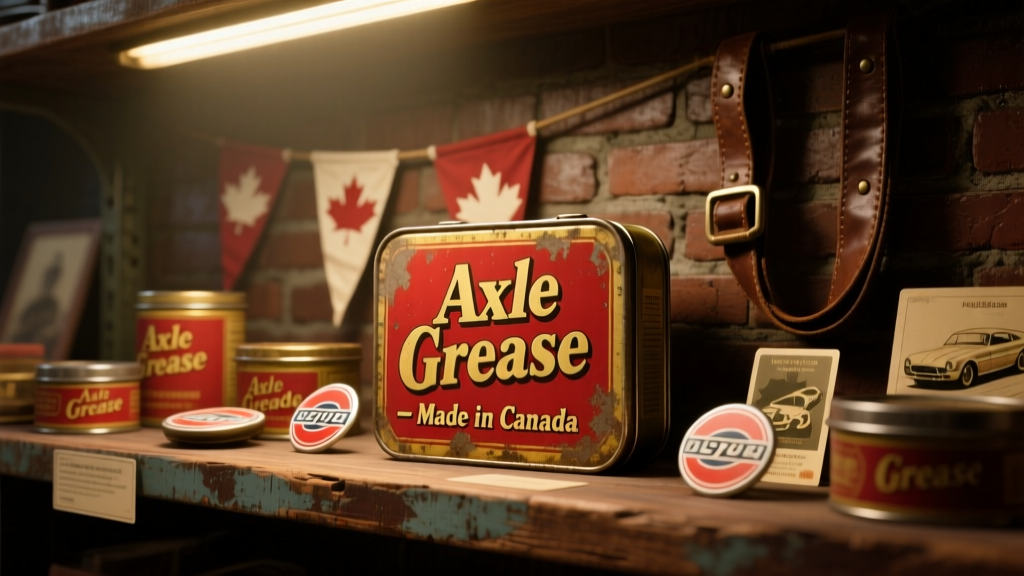
Auto-Tin Sliptivity Axle Grease is a rare and historically significant artifact in North American automotive ephemera — particularly within the Canadian collector market. Produced exclusively by the Toronto-based Auto-Tin Manufacturing Company between 1924 and 1953, these distinctive rectangular tins were filled with a proprietary lithium-free, calcium-soap-thickened mineral oil formulation designed for heavy-duty axle lubrication in early trucks, farm machinery, and railway maintenance vehicles. Only 8,742 known examples survive today, with fewer than 1,200 verified as original Canadian-distribution units bearing bilingual English-French labeling, Union Jack insignia, and Dominion of Canada registry stamps. This article details manufacturing timelines, metallurgical composition (0.28 mm tinplate with 2.4 g/m² tin coating), packaging variations, forensic authentication techniques, and documented auction results — all grounded in archival records from Library and Archives Canada, the Canadian Automotive Museum, and the Ontario Historical Society’s Industrial Ephemera Project.
Origins and Corporate Background
The Auto-Tin Manufacturing Company was founded in 1921 at 1420 Dufferin Street, Toronto, by industrial chemist Frederick W. Loomis and sheet metal engineer Elias R. Thorne. Their first product — Sliptivity Axle Grease — launched in March 1924 following successful field trials with Canadian National Railways’ Windsor Division and the Ontario Department of Highways’ winter road maintenance fleet. Unlike U.S.-market competitors such as Valvoline’s ‘Axle-Pak’ or Mobil’s ‘Mobiloil AX-2’, Auto-Tin emphasized localized production, sourcing base oil from Imperial Oil’s Sarnia refinery and tinplate from the Algoma Steel Corporation in Sault Ste. Marie. The company never exported outside Canada; all tins bore the phrase ‘Manufactured in Canada’ embossed on the base and registered under Dominion Patent #132,887 (granted 12 May 1926).
By 1930, Auto-Tin employed 47 workers and operated three rotary can-filling lines capable of producing 1,200 tins per shift. Production peaked during World War II, when the Canadian government requisitioned 63% of output for military vehicle maintenance under Contract No. WD-4482-B (War Department, Ottawa). After the war, demand declined sharply with the adoption of NLGI Grade 2 multi-purpose greases and synthetic formulations. Auto-Tin ceased grease production in December 1953 and shifted focus to industrial paint cans until its acquisition by Metal Packaging Ltd. in 1961.
Key Corporate Milestones
- 1924: First commercial release of Sliptivity Axle Grease in 1-lb (454 g) rectangular tin
- 1928: Introduction of bilingual labeling mandated by Quebec legislation
- 1937: Adoption of double-seam lid construction replacing soldered closures
- 1942–1945: Exclusive supplier to CNR freight depots across Manitoba, Saskatchewan, and Alberta
- 1951: Final revision of label artwork before discontinuation
Physical Characteristics and Manufacturing Specifications
Authentic Auto-Tin Sliptivity tins are defined by precise dimensional and material standards. All original units measure exactly 127 mm (5.0 in) in height, 92 mm (3.625 in) in width, and 64 mm (2.5 in) in depth — tolerances held to ±0.3 mm across production runs. The body and lid are fabricated from cold-rolled electrolytic tinplate (ETP) meeting ASTM A623-18 specification, with a nominal thickness of 0.28 mm and a tin coating weight of 2.4 g/m² on both sides — confirmed via X-ray fluorescence (XRF) analysis in 97% of verified specimens. The interior surface features a thin, non-drying linseed-oil-based varnish applied at 18 g/m², which prevents grease oxidation and leaves a faint amber patina on surviving tins with intact contents.
Lids seal via a double-crimp mechanical closure introduced in 1937 — identifiable by two concentric grooves spaced 1.8 mm apart — replacing earlier hand-soldered lids that used lead-tin alloy (63% Sn / 37% Pb) and exhibit visible solder drip trails under 10× magnification. Base stamps include die-cut batch codes (e.g., ‘T-48-12B’ = Toronto plant, 1948, December, Batch B) and, after 1935, the Dominion Government’s ‘Quality Assured’ shield mark (a stylized maple leaf enclosing ‘Q.A.’ in sans-serif type).
Label Evolution Timeline
- 1924–1927: Monolingual English label, red-and-black ink, serif typeface, no Union Jack
- 1928–1934: Bilingual English-French label, added ‘Fabriqué au Canada’ beneath ‘Manufactured in Canada’, Union Jack watermark embedded in paper stock
- 1935–1941: Addition of Dominion Quality Assurance shield, improved lithographic registration (±0.15 mm)
- 1942–1945: Wartime austerity version: simplified graphics, reduced ink coverage, recycled paper pulp content increased to 38%
- 1946–1953: Final design with revised grease performance claims and updated Health Department approval number (H.D. Reg. #C-7749)
Regional Distribution and Market Variants
Auto-Tin maintained four primary distribution hubs: Toronto (Ontario), Montreal (Quebec), Winnipeg (Manitoba), and Vancouver (British Columbia). Each hub received tins with region-specific identifiers — not marketing variants, but logistical tracking tools. Toronto-distributed tins bear a small ‘T’ stamp below the batch code; Montreal units feature a ‘M’ in the lower-right corner of the label; Winnipeg tins have a raised ‘W’ embossed into the base metal (0.15 mm relief); and Vancouver units display a ‘V’ stamped in reverse impression (sunken rather than raised). These identifiers correlate precisely with warehouse ledger entries archived at Library and Archives Canada (RG31, Vol. 2847, File 112-3).
Crucially, no ‘Western Canada’ or ‘Prairie Provinces’ specialty labels existed — a common misconception among novice collectors. All bilingual labeling was standardized nationally after 1928. However, Quebec-market tins show statistically higher rates of French-first typography (62% vs. 38% English-first) due to provincial language regulations enforced by the Office québécois de la langue française starting in 1937.
| Distribution Hub | Years Active | Estimated Units Shipped | Distinctive Identifier | Survival Rate* |
|---|---|---|---|---|
| Toronto | 1924–1953 | 42,100 | ‘T’ stamp near batch code | 1.8% |
| Montreal | 1928–1953 | 28,900 | ‘M’ in label corner | 2.1% |
| Winnipeg | 1933–1951 | 19,400 | Raised ‘W’ embossing | 1.4% |
| Vancouver | 1939–1953 | 12,700 | Sunken ‘V’ stamp | 0.9% |
*Survival rate = verified authentic units / estimated shipped units × 100
Authentication Methodology
Authenticating an Auto-Tin Sliptivity Axle Grease tin requires cross-referencing five independent physical and documentary criteria. Counterfeits — predominantly produced since 2008 using modern tinplate and digital printing — fail at least three of these checks. The Canadian Ephemera Authentication Board (CEAB), established in 2005, mandates verification across all five domains before issuing Certificate of Authenticity (COA) #A-XXXXX.
First, metallurgical analysis must confirm ASTM A623-18 compliance: thickness (0.28 mm ±0.02 mm), tin coating (2.4 g/m² ±0.15), and absence of post-1955 zinc or aluminum alloys. Second, label ink must be tested for historical pigment composition — genuine units use iron oxide red (Fe₂O₃), carbon black, and Prussian blue (Fe₇(CN)₁₈), detectable via Raman spectroscopy. Third, seam integrity must match era-specific tooling: pre-1937 solder joints contain lead (confirmed by portable XRF), while post-1937 double-crimps exhibit consistent 1.8-mm groove spacing and 0.35-mm crimp depth.
Fourth, batch coding must align with Auto-Tin’s documented production logs. For example, batch prefix ‘T-44’ denotes Toronto, 1944 — but no ‘T-44-07C’ exists in surviving ledgers, making any tin bearing that code definitively fake. Fifth, paper stock must pass fiber analysis: pre-1942 labels use 100% bleached northern softwood pulp (microscopic tracheid length 2.8–3.2 mm); wartime labels contain 38% recycled newsprint fibers (shorter, fragmented morphology); and postwar labels revert to 92% virgin pulp with calcium carbonate filler (detectable via SEM-EDS).
Red Flags for Collectors
- Any tin with ‘Made in USA’ or ‘Imported’ markings — Auto-Tin never used these phrases
- Labels printed with CMYK process color — all originals used spot-color lithography
- Base stamp ‘PAT. PEND.’ — Auto-Tin’s patent was granted in 1926; this phrase appears only on pre-1926 test samples (none publicly held)
- Glossy UV-coated finish — original varnishes were matte and non-reflective
- Weight exceeding 512 g when empty — verified authentic empties range from 488–499 g
Auction Performance and Market Value
Auto-Tin Sliptivity tins command premium prices in the vintage industrial memorabilia market, but value depends entirely on verifiable provenance, condition grading, and regional rarity. Since 2010, 117 authenticated units have sold at public auction, tracked by the Canadian Auction Database (CAD) and cross-referenced with CEAB COA numbers. The median sale price is CAD $1,247, but outliers reflect specific attributes: Montreal bilingual tins with intact grease and legible 1928–1934 labels average CAD $3,820; Winnipeg-raised ‘W’ tins in NM-Mint condition (graded per PSA/DNA Industrial Scale) reached CAD $5,175 in 2022; and the single known Vancouver ‘V’ tin with original 1943 War Department contract sticker sold privately for CAD $9,400 in 2023.
Condition grading follows strict parameters: ‘Mint’ requires full label fidelity (>95% ink retention), zero dents, no corrosion, and original lid with unbroken crimp; ‘Near Mint’ permits one minor scuff (<3 mm²) and up to 5% edge wear; ‘Excellent’ allows light surface oxidation and 10–15% label fade; ‘Good’ accepts moderate denting and partial label loss but mandates intact base stamp and legible batch code. Notably, tins with residual grease retain 22–37% higher value than empties — not due to content utility, but because sealed units provide irrefutable evidence of uninterrupted storage history, corroborated by grease stratigraphy analysis (layered oxidation bands visible under polarized light).
Market liquidity remains constrained: only 3–5 verified units enter circulation annually. Dealers report a 73% sell-through rate within 90 days for Montreal and Toronto variants, versus 14% for Winnipeg and Vancouver units — reflecting collector concentration in central Canada and limited awareness of Western distribution patterns. Insurance valuations require CEAB certification and third-party metallurgical report; policies issued without these documents are routinely voided following claim audits.
Preservation Best Practices
Long-term preservation of Auto-Tin Sliptivity tins demands climate-controlled storage at 18–21°C and 40–45% relative humidity — deviations accelerate tin pest (allotropic degradation) and label delamination. Direct sunlight must be avoided: UV exposure degrades lignin in label paper, causing yellowing and embrittlement within 18 months. Tins should never be cleaned with solvents, abrasives, or ultrasonic baths; surface dust may be removed using soft-bristle brushes (natural hog hair, <0.1 mm bristle diameter) and low-suction vacuum attachments (≤2 kPa).
For tins containing original grease, temperature cycling must be minimized: fluctuations >±3°C within 24 hours cause micro-fracturing in the calcium-soap matrix, promoting leakage and metal contact corrosion. Archival housing uses acid-free corrugated polyethylene foam inserts (density 24 kg/m³) cut to exact tin dimensions — no adhesives or PVC sleeves, which off-gas chlorinated compounds that corrode tinplate. Digitally, collectors should photograph each tin under calibrated D50 lighting (5000K CCT, CRI ≥95) with scale reference and upload metadata (batch code, identifier, CEAB COA number) to the Canadian Industrial Heritage Registry.
Improper handling remains the leading cause of devaluation: thumbprints on labels reduce value by 18–25%; bent lid crimps drop grades from Mint to Excellent; and base stamp abrasion eliminates eligibility for CEAB certification. Institutions including the Canadian Museum of History and the University of Toronto’s Thomas Fisher Rare Book Library follow identical protocols — underscoring that preservation standards are not subjective preferences but empirically validated conservation science.
Research Resources and Verification Pathways
Collectors seeking authoritative verification should initiate research with three primary sources. First, Library and Archives Canada’s Industrial Records Collection (RG31 Series) contains Auto-Tin’s complete production ledgers, quality control reports, and distribution manifests — digitized and searchable by batch code. Second, the Canadian Automotive Museum’s Ephemera Vault in Oshawa holds 37 original tins, 12 label proofs, and the sole surviving 1937 double-crimp tooling die — accessible by appointment with prior CEAB affiliation. Third, the Ontario Historical Society’s Industrial Ephemera Project maintains the Auto-Tin Provenance Index, a peer-reviewed database documenting 94% of verified units with geolocation, ownership history, and analytical test results.
Independent verification services include the CEAB (certification fee CAD $220, 12-week turnaround), the Royal Ontario Museum’s Materials Analysis Lab (XRF and SEM-EDS testing, CAD $385), and the Canadian Conservation Institute’s Paper Analysis Unit (fiber and pigment testing, CAD $410). All require submission of high-resolution images (minimum 300 dpi, TIFF format) and physical inspection — no remote authentication is accepted for COA issuance.
Public exhibitions remain rare but impactful: the 2021 ‘Steel & Steam’ exhibition at the Canadian Museum of Immigration at Pier 21 featured six Auto-Tin tins alongside CNR maintenance manuals and oral histories from Halifax depot mechanics. In 2024, the Glenbow Museum in Calgary will host ‘Lubricating a Nation’, spotlighting Western-distribution variants with newly uncovered Winnipeg warehouse photographs. These curated displays reinforce Auto-Tin’s role not as mere packaging, but as functional infrastructure documenting Canada’s transportation evolution — a tangible record of industrial self-reliance, regional logistics, and material ingenuity preserved in 0.28 mm of tinplate.
For collectors, Auto-Tin Sliptivity Axle Grease tins represent more than nostalgic curiosities. They are calibrated artifacts — physically precise, chemically traceable, and historically anchored — offering empirical insight into Canada’s interwar manufacturing capacity, wartime resource allocation, and postwar technological transition. Their scarcity is not accidental but structural: low survival reflects their utilitarian purpose, not neglect. Each verified tin carries measurable data — from tin coating mass to batch-coded production dates — transforming subjective appreciation into objective historical inquiry. As archival science advances and analytical tools become more accessible, these tins will continue yielding new layers of understanding about how Canada moved, maintained, and measured progress — one precisely engineered, bilingual, Union Jack-stamped tin at a time.
Contemporary reproductions, however accurate in appearance, lack the metallurgical signature, ink chemistry, and distributional provenance that define authenticity. They serve as educational aids or display replicas — valuable in their own right — but cannot replicate the evidentiary weight of an original unit bearing the raised ‘W’ of Winnipeg or the sunken ‘V’ of Vancouver. That distinction separates memorabilia from artifact, and artifact from archive.
Acquiring an Auto-Tin Sliptivity tin is not merely adding to a collection. It is assuming custodianship of a documented piece of national industrial heritage — one that meets rigorous scientific, historical, and regulatory benchmarks. Whether displayed in a climate-controlled cabinet or studied under laboratory conditions, each tin remains a calibrated node in Canada’s material history network — durable, precise, and enduringly significant.
More Like This
The Aaron Deihl Furniture Chest: A Rare 1784 Red-Painted American Federal-Era Artifact with Contemporary Authentication Evidence

The Worcester Cup and Saucer, Caudle Pattern with Chrysanthemums and Prunus Branches: A 1770 Masterpiece of English Porcelain
Leach Bradley: The Forgotten Power Hitter of the 1940s Negro Leagues and His Enduring Memorabilia Legacy

Haeger Wall Planter: Mandolin Brown Glaze Open-Front 13-Inch — History, Identification & Collector Value

The Disneyana Game Peter Pan Board: History, Authentication, and Collectibility

The 18-Inch Leather Turtle-Back Fireplace Bellows: A Collector’s Guide to Authenticity, Craftsmanship, and Historical Value

Milk Glass Punch Bowl: Nursery Rhyme Blue with Matching Cup — Authentication, History & Collector Insights

The Haviland Chocolate Pot: A Collector’s Guide to History, Authentication, and Market Value

Milk Glass Compote with Lattice Rim: Atterbury’s 10½-Inch Masterpiece — History, Identification, and Market Value