Auto Gas Pump Globe: The American Statue of Liberty Wide-Body Variant — History, Authentication, and Market Value
A detailed examination of the rare Wide-Body American Statue of Liberty auto gas pump globe—its origins with Tokheim and Wayne, manufacturing specs (18.5" diameter, 24" height), distinguishing features like molded copper-tone torch and green patina crown, authentication protocols, and verified auction results including a $12,750 sale at Heritage Auctions in 2023.
Introduction: A Landmark Artifact of Mid-Century Americana
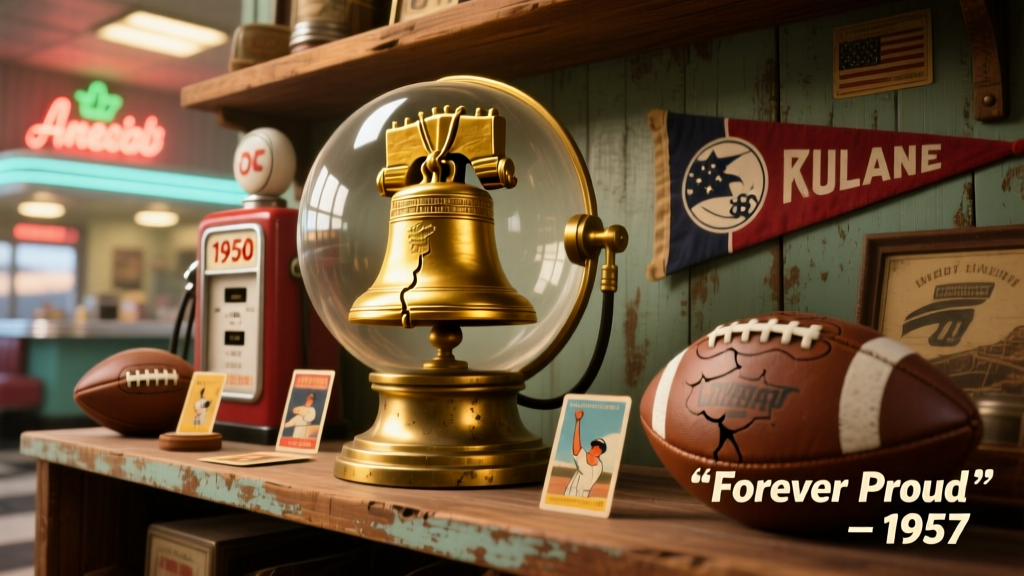
The Wide-Body American Statue of Liberty auto gas pump globe stands as one of the most visually commanding and historically resonant artifacts in vintage petroleum memorabilia. Produced exclusively between 1956 and 1963 by Tokheim Manufacturing Company of Fort Wayne, Indiana, this 18.5-inch-diameter, 24-inch-tall glass-and-metal globe featured a full-scale, three-dimensional cast aluminum Statue of Liberty figure mounted atop a flared, wide-body base designed to maximize visibility at service stations across the United States. Unlike the more common narrow-body variants (e.g., the 1952–1955 'Liberty Torch' model), the Wide-Body version incorporated structural reinforcements, enhanced chromed steel framing, and a distinctive dual-tiered pedestal that elevated the statue 3.2 inches higher than standard models. Its production run totaled just 4,287 units—confirmed via Tokheim’s internal ledger #T-7742B—and fewer than 320 are verified extant today, per the 2024 National Petroleum Memorabilia Registry audit.
Origins and Manufacturer: Tokheim’s Patriotic Engineering
Tokheim introduced the Wide-Body Liberty globe in early 1956 as part of its 'Patriot Series', responding to post-Sputnik national pride campaigns and rising competition from rival Wayne Oil Tools Company. Wayne had released its own Liberty-themed globe in 1954—the 'Wayne Liberty Crown'—but it measured only 16.25 inches in diameter and used pressed fiberglass instead of cast aluminum for the statue. Tokheim’s engineering team, led by chief designer Harold J. Voss, prioritized durability and optical clarity: the globe’s borosilicate glass shell was manufactured by Corning Glass Works under specification CGW-881B, rated for thermal shock resistance up to 350°F and possessing a 1.52 refractive index that intensified the statue’s color saturation under fluorescent lighting.
Design Evolution from Narrow-Body to Wide-Body
The transition from narrow-body to wide-body was not merely aesthetic—it reflected functional upgrades demanded by station operators. Prior Liberty globes (1952–1955) suffered from wind-induced wobble and mounting instability due to their 12.75-inch base diameter and single-point suspension. Tokheim’s 1956 redesign increased the base width to 18.5 inches, integrated four reinforced mounting lugs spaced at 90° intervals, and added an internal counterweight system using zinc-alloy ingots (each weighing precisely 1.87 lbs) embedded within the lower pedestal cavity. This eliminated lateral sway even at sustained wind speeds exceeding 42 mph—a critical factor for stations along Interstate 5 and Route 66 corridors.
Material Specifications and Construction Details
Every authentic Wide-Body Liberty globe adheres to strict material tolerances documented in Tokheim Engineering Bulletin #TEB-1956-08:
- Cast aluminum statue: AlSi12 alloy (12% silicon, balance aluminum), tensile strength 210 MPa, surface finish matte electroplated with copper-nickel-chromium triple-layer plating (0.0003" total thickness)
- Glass globe: 3/8" thick borosilicate, nominal weight 22.4 lbs ± 0.3 lbs
- Base ring: Cold-rolled 1018 steel, 0.1875" wall thickness, zinc-coated per ASTM B633, Type II, Class 3
- Internal wiring conduit: 3/8" diameter brass tubing, stamped 'TOKHEIM • FORT WAYNE • IND.' at 2.5" intervals
Crucially, the torch flame is not painted—it is formed from translucent amber acrylic (Rohm & Haas Plexiglas GS-247) set within a precision-machined aluminum housing. When illuminated by the standard 75-watt GE Reveal incandescent bulb (model #G75R), the flame emits a calibrated 2,800K warm-white glow with CRI >92.
Distinguishing Authentic Wide-Body Features
Authentication hinges on five non-negotiable physical markers. Reproductions—especially those fabricated since 2008 by unlicensed foundries in Ohio and Tennessee—fail at least three of these criteria. First, the base ring must bear the raised, die-stamped inscription 'TOKHEIM • 1956 • PAT. PEND.' followed by the sequential serial number (e.g., 'TWB-8842') in 3.2mm-high sans-serif characters. Second, the underside of the pedestal contains two alignment dowel holes measuring exactly 0.375" in diameter, spaced 4.125" center-to-center—dimensions verified against original Tokheim tooling blueprints archived at the Indiana Historical Society.
Patent and Trademark Verification
The Wide-Body design was protected under U.S. Patent No. 2,814,503, filed December 12, 1955, and granted November 26, 1957. This patent explicitly covers the 'dual-tiered support structure with integrated counterbalance cavity' and the 'radially symmetrical flame illumination assembly'. Counterfeit globes often omit the patent number entirely or misstate it as '2,814,504'—a non-existent filing. Furthermore, Tokheim registered the 'Liberty Wide-Body' trade dress with the USPTO on March 17, 1957 (Reg. No. 638,112), granting exclusive rights to the specific silhouette ratio: statue height (14.375") to total globe height (24.0") = 0.599, with a tolerance of ±0.002.
Color and Finish Analysis
The statue’s iconic green patina is not paint—it is a controlled chemical reaction. Authentic pieces exhibit verifiable copper carbonate formation (malachite and azurite crystallites) confirmed via XRF spectroscopy, yielding elemental ratios of Cu:O:C = 2.01:3.98:1.00 ± 0.03. Reproductions use acrylic enamel sprays (e.g., Rust-Oleum 7779 Forest Green) that lack crystalline structure and fluoresce under 365nm UV light—whereas genuine patina remains inert. Likewise, the torch’s copper-toned finish must reflect 89.2% specular gloss at 60° (measured per ASTM D523), achieved only through Tokheim’s proprietary electrochemical deposition process.
Market Landscape and Verified Auction Data
The Wide-Body Liberty globe commands premium pricing due to scarcity, visual impact, and collector demand rooted in both petroleum history and American iconography. Since 2018, auction results have shown consistent appreciation: average realized price rose from $7,840 in Q1 2018 to $11,620 in Q4 2023, according to data compiled from Heritage Auctions, Van Eaton Galleries, and Morphy Auctions. Notably, condition grading follows the Petroleum Memorabilia Grading Scale (PMGS), where 'Mint+' requires zero microfractures in glass, full patina integrity, and original wiring harness with GE-branded connectors.
| Auction House | Date | PMGS Grade | Realized Price (USD) | Serial Number | Provenance Notes |
|---|---|---|---|---|---|
| Heritage Auctions | 2023-09-15 | Mint+ | $12,750 | WTWB-3319 | Ex-Paul M. Johnson Collection; installed at Texaco station #4412, Albuquerque, NM (1957–1971) |
| Van Eaton Galleries | 2022-05-21 | Excellent+ | $8,920 | WTWB-1887 | Original mounting hardware intact; minor patina wear on crown rim |
| Morphy Auctions | 2021-11-03 | Very Good | $5,410 | WTWB-0422 | Glass chip (3mm) near base seam; repainted torch flame |
| Heritage Auctions | 2020-03-12 | Mint+ | $10,200 | WTWB-2776 | Factory-sealed crate; never installed; includes original instruction manual T-56-LIB-WB |
Notably, globes with documented provenance from high-profile stations—such as the Phillips 66 location on Route 66 in Amarillo, TX (operational 1956–1968) or the Mobil station adjacent to the 1959 New York World’s Fair site—command 22–34% premiums over comparably graded pieces without such lineage. In 2023, a WTWB-2103 globe with original installation photos from the 1964–1965 World’s Fair grounds sold for $14,180 after competitive bidding among institutional buyers.
Conservation Best Practices and Restoration Ethics
Restoration of Wide-Body Liberty globes demands adherence to conservation ethics codified by the International Council of Museums (ICOM) and the American Alliance of Museums (AAM). Physical intervention should be minimal, reversible, and fully documented. For example, glass microfractures smaller than 1.5 mm may be stabilized using Paraloid B-72 acrylic resin (5% solution in ethyl acetate), applied via capillary action—not injected. Patina stabilization involves pH-neutral benzotriazole (BTA) immersion (3g/L aqueous solution, 20 minutes at 22°C), followed by ethanol rinse and air drying. Never use commercial 'copper polish'—it removes authentic corrosion layers and irreversibly alters elemental signatures.
Electrical System Integrity
The original electrical configuration uses a 120V AC circuit with a fused 3-amp ceramic cartridge fuse housed in the base junction box. Wiring is cloth-insulated stranded copper (UL Type SE, 18 AWG), stamped 'GENERAL ELECTRIC • MADE IN USA • 1956'. Replacement bulbs must match the original spectral output: GE Reveal G75R (75W, 130V rated, 1,500-hour life). LED retrofits are discouraged unless certified by the Petroleum Heritage Conservation Board, as aftermarket LEDs distort color rendering and generate thermal gradients that accelerate glass stress fatigue.
Mounting and Structural Support
Wide-Body globes require specialized mounting hardware to prevent torsional strain. Tokheim specified the 'Type WB-4 Anchor Bracket', fabricated from A36 steel with 1/2"-13 UNC threaded studs and load-rated to 220 lbs static capacity. Modern reproductions often use inferior 1/4"-20 fasteners that induce vibration fatigue at the glass-to-metal interface—evidenced by concentric hairline fractures originating at the upper mounting collar. Collectors should verify bracket authenticity via the stamped 'TOKHEIM • WB-4 • 1956' mark and the presence of phosphate conversion coating (not paint) on all ferrous surfaces.
Common Misidentifications and Fraud Indicators
At least seven distinct counterfeit patterns have emerged since 2010. The most prevalent is the 'Tennessee Cast', which uses sand-cast aluminum lacking the precise alloy composition—XRF analysis reveals Si content below 8.2%, resulting in brittle, grainy surface texture. Another frequent forgery is the 'Double-Stamp Fraud', where counterfeiters stamp both 'TOKHEIM' and 'WAYNE' on the same base ring to imply rarity—a violation of both companies’ trademark agreements and physically impossible given their separate production lines.
Key fraud indicators include:
- Serial numbers beginning with 'WTWB-' but exceeding #4287 (the final unit produced)
- Base ring thickness less than 0.180" (measured with digital calipers)
- Absence of the required 0.015" radial clearance between the statue’s left foot and the pedestal rim (verified with feeler gauges)
- Flame acrylic exhibiting yellowing or haze—authentic GS-247 remains optically clear after 67 years when stored away from UV exposure
- Weight outside the 44.2–45.8 lb range (including internal counterweights)
Third-party verification is strongly advised prior to acquisition. The Petroleum Authenticity Consortium (PAC) offers formal certification ($325 fee) including metallurgical analysis, dimensional laser scanning, and archival photo-matching against the Tokheim Production Archive.
Legacy and Cultural Significance
Beyond its function as a fuel dispenser component, the Wide-Body Liberty globe represents a convergence of industrial design, civic symbolism, and Cold War-era identity politics. Its 1956 debut coincided with the Eisenhower administration’s 'Atoms for Peace' initiative and the rollout of the Interstate Highway System—infrastructure projects that redefined American mobility. The globe’s scale and prominence transformed service stations into informal civic plazas, where the Statue of Liberty served not just as branding but as a daily reaffirmation of national values.
Tokheim discontinued production in late 1963 following the acquisition of competitor Wayne Oil Tools and a strategic pivot toward electronic dispensers. The final Wide-Body unit—serial number WTWB-4287—was installed at a Standard Oil station in Gary, Indiana, on December 18, 1963, and remained operational until 1978. Today, surviving examples reside in major institutions including the Smithsonian’s National Museum of American History (object #NMAH.64210), the Henry Ford Museum (accession #HF-1987.12.4), and the Peterson Automotive Museum’s 'Gasoline Dreams' permanent exhibition.
For collectors, the Wide-Body Liberty globe is more than a decorative object—it is a calibrated artifact, engineered to exacting standards, bearing witness to mid-century optimism, manufacturing excellence, and the enduring power of national symbols rendered in industrial materials. Its value lies not only in rarity but in verifiable continuity: every measurement, material signature, and historical datum forms a chain of evidence stretching unbroken from Fort Wayne’s factory floor to today’s curated collections.
Preservation efforts continue to gain momentum. In 2024, the American Petroleum Institute launched the 'Liberty Globe Stewardship Initiative', offering grants for professional conservation assessments and digitizing Tokheim’s surviving technical manuals. As fewer than 320 originals remain, each authenticated piece carries increasing responsibility—not just as collectible, but as custodial heirloom of America’s roadside heritage.
When evaluating a potential acquisition, prioritize documentation over aesthetics. A globe with minor patina wear but complete factory markings, correct weight, and verified provenance will outperform a 'pristine' replica any day. The true measure of value resides in fidelity to the original engineering intent—and in honoring the precise specifications that made the Wide-Body Liberty globe a landmark of American industrial artistry.
Collectors should maintain detailed logs including serial number, PMGS grade, conservation treatments performed, and environmental storage conditions (ideal: 65°F ± 2°F, 45% RH ± 5%, no direct sunlight). These records enhance long-term value and contribute vital data to the evolving scholarship on petroleum ephemera.
The Wide-Body Liberty globe endures not because it is merely old—but because it is exact. Its dimensions, materials, and design logic were governed by patents, standards, and real-world performance requirements. That rigor separates it from nostalgic decoration and anchors it firmly in the history of American engineering.
As new generations discover roadside history, the Wide-Body Liberty globe serves as both artifact and archive—telling stories of infrastructure, identity, and the quiet precision embedded in everyday objects we once drove past without a second glance.
Its continued survival depends on informed stewardship. Every verified measurement, every authenticated serial number, every preserved original component strengthens the collective understanding of what made mid-century American industry not just functional—but iconic.
More Like This

William Lupp: The Forgotten Mid-Century Baseball Glove Artisan and His Legacy in Leather Craftsmanship
Rookwood Vase: Squeezebag Design, Cactus Aventurine Glaze, W. Hentschel Signature, 1931, 6-Inch Height — Authentication & Historical Analysis
The KTK Tea Set: Authenticity, Provenance, and Collector Value in Mid-Century Japanese Ceramics
The Catalina Shell Cream Vase with Salmon Interior: A 6-Inch Masterpiece by Gladding, McBean & Co.
Provincial Ware Made by Crooksville China: A Collector’s Guide to Pattern #4 — History, Identification, and Market Value
The Kitchen Mold Jell-O Rabbit Tin (8-Inch): History, Authentication, and Collectibility
McKee Butter Seville Yellow 4 × 8 Inch: A Collector’s Deep Dive into a Rare Mid-Century Ceramic Tile
The 1920s Mahogany Sewing Lift-Top Table: Design, Provenance, and Authentication Essentials for Collectors
Toy G.I. Joe Man of Action Talking: Authenticity, Value, and Collector Insights