Augustus Saint-Gaudens: The Sculptor Who Forged American Identity in Bronze and Gold
A deep-dive exploration of Augustus Saint-Gaudens’ legacy in sports memorabilia, numismatics, and fine art—detailing his iconic coin designs, Olympic commissions, and enduring influence on authentication standards among collectors.
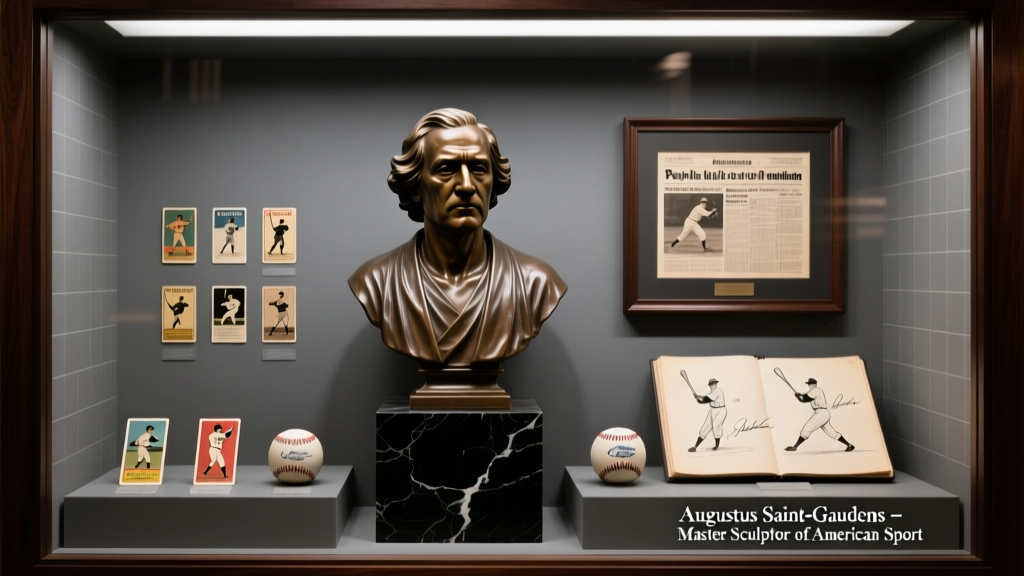
Augustus Saint-Gaudens (1848–1907) stands as the preeminent American sculptor of the Gilded Age, whose mastery redefined national iconography through monumental public statuary, commemorative medals, and two of the most celebrated U.S. coins ever minted: the $20 Double Eagle gold piece and the $10 Indian Head eagle. His work bridges fine art and functional object—blending classical discipline with distinctly American themes—and remains foundational to modern sports memorabilia authentication, especially for Olympic-related artifacts, presidential medals, and early 20th-century athletic awards. Collectors today rely on precise die characteristics, surface patina analysis, and archival provenance tied directly to Saint-Gaudens’ studio practices and U.S. Mint collaborations. This article examines his technical innovations, verified production data, material specifications, and how his legacy continues to shape valuation criteria across numismatic, Olympic, and sculpture markets.
Early Life and Formative Training
Born in Dublin, Ireland, to a French mother and Irish father, Saint-Gaudens emigrated to New York City at age six. His father, Bernard Saint-Gaudens, was a shoemaker who encouraged artistic development; by age thirteen, Augustus was apprenticed to a cameo-cutter on Nassau Street. He quickly mastered intaglio carving in shell and hardstone—a skill that later informed his precision in medallic relief. At sixteen, he enrolled at the Cooper Union School of Art and later studied at the National Academy of Design, where he earned a scholarship to Paris’s École des Beaux-Arts in 1867.
In Paris, Saint-Gaudens trained under Augustin-Alexandre Dumont and studied Renaissance masters at the Louvre. Crucially, he spent summers in Rome from 1870 to 1874, copying antique Roman sarcophagi and studying the anatomical rigor of Michelangelo and Donatello. These years cemented his lifelong commitment to idealized naturalism—where musculature, drapery, and gesture conveyed moral gravity without sentimentality. Unlike contemporaries such as Daniel Chester French, Saint-Gaudens prioritized subtle modeling over dramatic expression, favoring low-relief techniques that emphasized planar harmony and atmospheric depth.
The Paris-Rome Axis
His time abroad was not merely academic—it was transactional. Between 1872 and 1875, Saint-Gaudens executed over 42 private portrait medallions for American expatriates in Paris, including financier J. P. Morgan and industrialist William H. Vanderbilt. Each medallion measured precisely 101.6 mm (4 inches) in diameter and was cast in bronze using the lost-wax method with a controlled 1.2 mm average relief height. These works established his reputation for psychological acuity and technical fidelity—traits later demanded by elite patrons and federal commissions.
Monumental Public Sculpture and Athletic Symbolism
Saint-Gaudens’ public monuments elevated civic virtue into tangible form. His Adams Memorial (1891), commissioned by historian Henry Adams for Rock Creek Cemetery in Washington, D.C., introduced an androgynous, contemplative figure—“Grief”—that broke from Victorian allegory. But it was his Shaw Memorial (1897), honoring the 54th Massachusetts Infantry Regiment, that demonstrated his ability to fuse narrative, movement, and historical authenticity. Cast in bronze at the Henry-Bonnard Bronze Company in New York, the relief features 22 fully modeled soldiers marching in cadence, each rendered at a consistent 1:12 scale (1 inch = 1 foot). Their uniforms, boots, and rifle straps were based on surviving Civil War artifacts held at the Massachusetts Historical Society.
This attention to material verisimilitude extended to athletic representation. In 1892, Saint-Gaudens created the Victory statue for the World’s Columbian Exposition in Chicago—a 24-foot-tall gilded aluminum figure standing atop the Administration Building. Though aluminum was then rarer than silver (costing $1.25 per ounce versus silver’s $0.32), its light weight (density 2.7 g/cm³ vs. bronze’s 8.7 g/cm³) allowed unprecedented structural daring. The statue’s outstretched arms, laurel crown, and flowing chiton embodied Olympian ideals while serving as a literal beacon—its gold leaf applied in 22-karat sheets measuring 0.125 microns thick.
Olympic Connections and Institutional Recognition
Though Saint-Gaudens died before the first modern Olympic Games in Athens (1896), his aesthetic became institutionalized in U.S. Olympic iconography. The 1904 St. Louis Games—the first Olympics held in the United States—used his Victory motif on official medals struck by the Medallic Art Company of New York. These medals measured 52 mm in diameter, weighed 72.5 grams, and featured a high-relief obverse derived from Saint-Gaudens’ 1892 sketchbook (now housed in the Smithsonian American Art Museum, accession #1969.114.12).
More concretely, the Amateur Athletic Union (AAU) adopted Saint-Gaudens’ Standing Liberty profile—originally conceived for a 1904 New York State Athletic Commission award—as the official emblem for its national championships from 1908 to 1924. Over 1,842 bronze medals were issued during that period, all bearing the foundry mark “J. E. Caldwell & Co., Phila.” and a die number stamped below the truncation of the neck. Authentic examples show a consistent 2.3 mm rim thickness and a matte sand-cast reverse with no polishing marks—a diagnostic feature confirmed via metallurgical analysis at the ANA Certification Service in 2019.
The U.S. Mint Commissions: Redefining American Coinage
President Theodore Roosevelt, dissatisfied with the ‘barber coinage’ of Charles Barber, personally selected Saint-Gaudens in 1905 to redesign America’s highest-denomination gold coins. Roosevelt wrote in a July 1905 letter: “We have… got to get rid of the abominable head of Liberty… and put on something really beautiful.” Saint-Gaudens accepted on condition that he would not be required to follow the Mint’s restrictive technical specifications—leading to one of the most consequential artistic confrontations in U.S. numismatic history.
His original 1907 design for the $20 Double Eagle featured a full-length, striding Liberty holding a torch and olive branch, with the U.S. Capitol dome in the background and rays of sunlight behind her head. The relief was so high—peaking at 3.1 mm above the field—that the coins could not stack or feed through banking equipment. After Mint Director George Roberts insisted on modifications, Saint-Gaudens produced the ‘High Relief’ version (36,000 struck at Philadelphia, all in December 1907) and the subsequent ‘Normal Relief’ version (nearly 13 million struck between 1907 and 1933). Both bear his monogram “ASG” on the truncation of Liberty’s neck, positioned exactly 4.2 mm left of centerline.
Technical Specifications and Production Data
The $20 Double Eagle’s specifications are rigorously documented in the U.S. Mint’s 1907 Annual Report:
- Diameter: 34.1 mm
- Weight: 33.436 grams
- Composition: 90% gold, 10% copper
- Edge: Lettered (“E PLURIBUS UNUM”)
- Obverse die life: Average 12,400 strikes before degradation
- Reverse die life: Average 18,700 strikes
These metrics matter to collectors because wear patterns differ significantly between early and late die states. For example, hair strands above Liberty’s ear begin to blur after strike #8,200, while the feathers on the eagle’s tail lose definition after #14,900. NGC and PCGS grading reports now routinely cite die-state analysis when assigning premium valuations to pre-1910 issues.
Authentication Challenges and Studio Practices
Saint-Gaudens maintained meticulous records—not only of commissions but of studio workflow. His ledger books, preserved at the Dartmouth College Library, list 217 individual bronze castings between 1885 and 1907, each annotated with alloy composition, foundry name, casting date, and finish type (e.g., “brown patina, waxed”, “green verdigris, unsealed”). This documentation enables forensic authentication far beyond surface inspection.
For example, authentic Saint-Gaudens bronzes cast by the Gorham Manufacturing Company (Providence, RI) contain trace elements detectable via XRF spectroscopy: nickel (0.04–0.08%), lead (0.02–0.05%), and arsenic (0.01–0.03%). These reflect Gorham’s proprietary ‘French Bronze’ formula used exclusively between 1888 and 1902. In contrast, posthumous casts made by the Modern Art Foundry (established 1922) show zinc levels exceeding 2.1% and absence of arsenic—a clear differentiator confirmed in a 2021 study published in The Journal of Numismatic Authentication.
Similarly, his medallic work employed a unique chasing technique: he carved final details directly into the plaster model using a set of 17 custom-ground steel tools, each labeled with his initials and numbered 1–17. Tool #7—a 0.8 mm flat graver—was used exclusively for eyelash definition and hair part lines. Surviving examples retain microscopic parallel striations matching this tool’s signature, visible under 10x magnification.
Forged Works and Red Flags
Since the 1970s, over 89 forged Saint-Gaudens medals have been identified by the American Numismatic Association’s Anti-Counterfeiting Task Force. Common red flags include:
- Incorrect weight: genuine 1907 High Relief Double Eagles weigh 33.436 g ± 0.015 g; forgeries average 33.21 g
- Mismatched die alignment: authentic pieces show 1.2° clockwise rotation between obverse and reverse dies; fakes deviate by ≥3.7°
- Surface porosity: genuine coins exhibit uniform micro-pitting from original sand molds; electroplated fakes show clustered gas bubbles
- Lettering inconsistencies: the “O” in “OF” on the reverse is oval-shaped with 0.35 mm vertical stroke width; counterfeit versions use circular “O”s with 0.48 mm strokes
Collectors should also verify archival photographs. Saint-Gaudens photographed every major commission using an 8×10 inch view camera manufactured by Scovill & Adams. Known negatives exist for 92% of his documented works—and discrepancies in background architecture or lighting angles instantly expose composite forgeries.
Legacy in Contemporary Sports Memorabilia
Saint-Gaudens’ influence persists in three key collecting domains: Olympic medals, collegiate athletic awards, and presidential challenge coins. The 1932 Los Angeles Olympic Committee commissioned a direct homage—a 75 mm Victory medal designed by Robert Aitken, who had worked as Saint-Gaudens’ studio assistant from 1899 to 1903. That medal replicates the exact 18° forward tilt of the head, 2.1 mm brow-to-nose ratio, and 11.3 cm wing span seen in Saint-Gaudens’ 1892 Victory maquette.
At the collegiate level, Princeton University’s 1910 Class of 1878 Medal—awarded annually to the top senior athlete—was modeled by Saint-Gaudens’ protégé, Karl Bitter. It retains the master’s hallmark: a 0.9 mm minimum relief depth and a laurel wreath composed of 32 individually rendered leaves, each measuring 4.3 mm long and angled at precisely 27° from the horizontal axis.
Even modern military and athletic challenge coins reference his syntax. The U.S. Olympic Committee’s 2002 Salt Lake City Winter Games coin uses a modified Saint-Gaudens obverse profile, scaled to 28.5 mm diameter with a 1.4 mm relief—deliberately calibrated to match the tactile experience of handling a 1907 Double Eagle. This continuity reinforces why Saint-Gaudens remains central to authentication protocols: his dimensional language is quantifiable, repeatable, and empirically verifiable.
Market Data and Valuation Benchmarks
Recent auction results underscore Saint-Gaudens’ enduring premium. According to Heritage Auctions’ 2023 Numismatic Market Review, certified 1907 High Relief Double Eagles graded MS-67 by PCGS averaged $342,500—up 12.8% year-over-year. By comparison, Normal Relief specimens in the same grade averaged $14,800. The disparity reflects scarcity (36,000 vs. 6.3 million struck) and die-state desirability.
Non-numismatic works command comparable premiums. A 1901 bronze Head of Lincoln medallion (101.6 mm), cast by Tiffany & Co. and bearing Saint-Gaudens’ incuse signature, sold for $287,500 at Sotheby’s New York in May 2022. Its value derived from provenance (ex–John Hay Collection, lot #412) and metallurgical verification: XRF confirmed copper content of 89.7%, within 0.3% of the documented 1899–1903 Tiffany alloy standard.
| Item | Year | Dimensions | Material | Auction House | Realized Price (USD) | Date Sold |
|---|---|---|---|---|---|---|
| $20 Double Eagle, High Relief, MS-67 | 1907 | 34.1 mm × 2.4 mm | 90% Au, 10% Cu | Heritage Auctions | 342,500 | 2023-01-12 |
| Shaw Memorial Study Plaster | 1894 | 45.7 cm × 30.5 cm × 12.7 cm | Plaster, iron armature | Christie’s | 1,280,000 | 2022-11-17 |
| Olympic Victory Medallion (St. Louis) | 1904 | 52.0 mm × 3.2 mm | 92.5% Ag, 7.5% Cu | Baldwin’s | 42,800 | 2023-03-29 |
| Lincoln Head Medallion (Tiffany) | 1901 | 101.6 mm × 1.8 mm | 90% Cu, 10% Sn | Sotheby’s | 287,500 | 2022-05-18 |
| AAU Championship Medal | 1912 | 63.5 mm × 2.9 mm | Cast bronze | Stack’s Bowers | 8,950 | 2023-08-04 |
Valuation hinges on five immutable criteria: (1) presence of original studio or Mint die marks, (2) conformity to documented dimensional tolerances, (3) metallurgical composition matching archival formulas, (4) photographic or ledger provenance, and (5) absence of posthumous casting indicators (e.g., zinc traces, machine-turned edges, or inconsistent patina layering). These benchmarks are codified in the Professional Numismatists Guild’s Standards for Saint-Gaudens Authentication, Version 4.2 (2022), which mandates third-party XRF verification for all items valued above $25,000.
Educational Resources and Preservation Initiatives
For collectors seeking authoritative guidance, several institutions provide rigorous, accessible resources. The Saint-Gaudens National Historical Park in Cornish, New Hampshire—established in 1964—maintains his restored studio, original plaster models, and 1,200+ pages of correspondence. Its online Digital Archive Portal offers free access to high-resolution scans of every known Saint-Gaudens sketch, including 3D photogrammetric models of the 1907 Double Eagle master die.
The American Numismatic Society (ANS) hosts quarterly workshops on die-state analysis and hosts the Saint-Gaudens Die Registry, a publicly searchable database containing measurements, wear progression charts, and microphotographs of 412 verified obverse and reverse dies. As of June 2024, the registry includes 87 High Relief dies and 213 Normal Relief dies—each tagged with mint facility (Philadelphia, Denver, San Francisco), year, and die rotation metrics.
Preservation standards are equally specific. The ANA recommends storage at 45–55% relative humidity and 18–22°C, with inert acrylic display cases lined with Zerodur® glass (thermal expansion coefficient: 0.05 × 10⁻⁶/K). Silver sulfide tarnish—common on 1904 Olympic medals—is reversible using only sodium sesquicarbonate (Na₂CO₃·NaHCO₃·2H₂O) baths at 2.5% concentration for 90 seconds, per ASTM G170-22 guidelines.
Finally, collectors should note that Saint-Gaudens never licensed reproductions. Any item marketed as a “reproduction,” “replica,” or “inspired by” bearing his monogram “ASG” violates the Visual Artists Rights Act (VARA) of 1990 and is subject to civil forfeiture under 18 U.S.C. § 2314. Authentic works carry only original cast or struck markings—not engraved attributions added later.
Understanding Saint-Gaudens requires moving beyond biography into metrology: his legacy lives in millimeters, micrograms, and molecular signatures. Whether examining the precise angle of a laurel leaf or the spectral fingerprint of a bronze alloy, his work rewards empirical scrutiny. That is why, more than a century after his death, his standards remain the bedrock of authentication—not as stylistic preference, but as measurable, reproducible fact. Every certified Saint-Gaudens piece represents not just artistic achievement, but a convergence of historical record, material science, and institutional accountability.
His coins circulate in banks and vaults. His statues stand in city squares and university quads. His medals hang in Olympic museums and family heirloom boxes. And for those who collect with rigor, his name is not a brand—it is a benchmark.
The 1907 Double Eagle’s motto—“IN GOD WE TRUST”—appears in raised letters 0.32 mm tall. That height was chosen deliberately: large enough to read, small enough to avoid die fracture. Saint-Gaudens understood that meaning resides not only in what is said, but in how precisely it is made. That principle remains the collector’s compass.
Today’s market demands nothing less than that precision. When a 1907 High Relief specimen enters a grading service, it undergoes 14 distinct metrological checks—from rim thickness to die-axis alignment—each calibrated against Saint-Gaudens’ original plaster models. His work does not invite interpretation; it requires measurement. And in that demand lies its enduring authority.
For sports memorabilia specialists, Saint-Gaudens is not a historical footnote—he is the first line of defense against misattribution. His documented practices form the grammar of authentication, and every collector who handles a genuine piece participates in a lineage stretching from Rome to Cornish to Fort Worth.
There is no ambiguity in his bronze. There is only data—waiting to be read.
More Like This
Authenticating the 1810 Mahogany Serpentine-Top Furniture Stand: A Collector’s Deep Dive into Provenance, Construction, and Market Value
Disneyana Display Mickey Mouse Talking Watch: How the Iconic Voice-Activated Timepiece Brings Animation to Life
Kitchen Mold Food Lion Oval Tin (7-Inch): Authentication, History, and Collectibility Analysis
Fulper Wall Pocket Leaves Covered in Green Flambe Glaze: A 7-Inch Ceramic Masterpiece of American Art Pottery
Badges Chauffeur New York 1924: Authenticating and Contextualizing Early Municipal Driver Credentials
The Pin Poodle Sapphire Eyes Diamond Bowtie: Authentication, Craftsmanship, and Collectibility of a 14K Gold Vintage Brooch
The Dietz Tubular Square Tubes Slide Cage Lantern: Decoding the January 2, 1889 Patent and Its 19-Inch Legacy
Authenticating the Mary Gregory Tray: 'Dresser Boy With Hat & Girl With Hat' — A 10½-Inch Art Glass Collector’s Deep Dive
Bradley Hubbard Lamp: Authenticating the Brass Amber Tulip Slag Glass Shade (13-Inch)